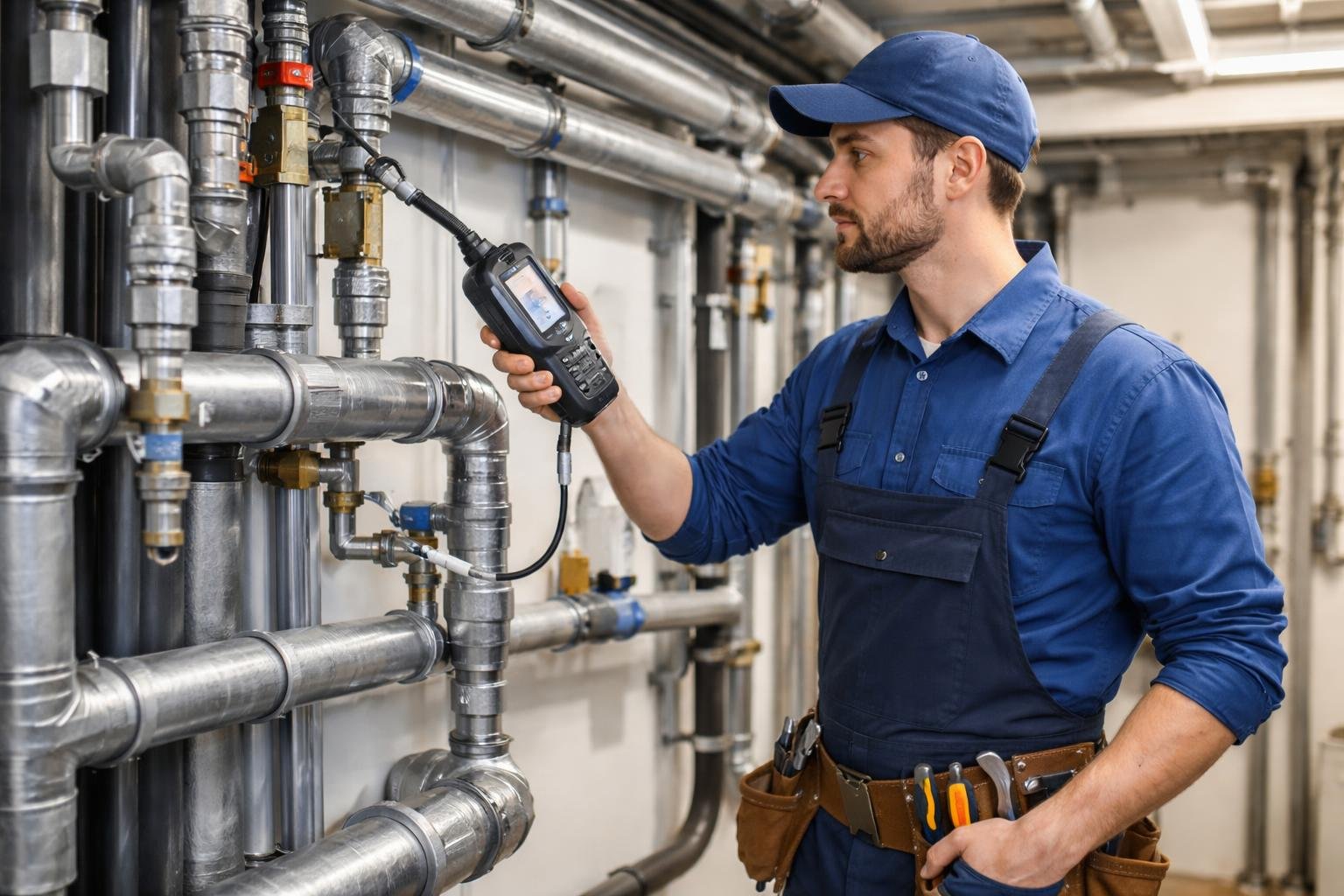
Fleet Telematics Analytics Platform: How Real-Time Data Transforms Fleet Management Efficiency
How to start saving money
Lorem ipsum dolor sit amet, consectetur adipiscing elit lobortis arcu enim urna adipiscing praesent velit viverra sit semper lorem eu cursus vel hendrerit elementum morbi curabitur etiam nibh justo, lorem aliquet donec sed sit mi dignissim at ante massa mattis.
- Neque sodales ut etiam sit amet nisl purus non tellus orci ac auctor
- Adipiscing elit ut aliquam purus sit amet viverra suspendisse potent
- Mauris commodo quis imperdiet massa tincidunt nunc pulvinar
- Excepteur sint occaecat cupidatat non proident sunt in culpa qui officia
Why it is important to start saving
Vitae congue eu consequat ac felis placerat vestibulum lectus mauris ultrices cursus sit amet dictum sit amet justo donec enim diam porttitor lacus luctus accumsan tortor posuere praesent tristique magna sit amet purus gravida quis blandit turpis.

How much money should I save?
At risus viverra adipiscing at in tellus integer feugiat nisl pretium fusce id velit ut tortor sagittis orci a scelerisque purus semper eget at lectus urna duis convallis. porta nibh venenatis cras sed felis eget neque laoreet suspendisse interdum consectetur libero id faucibus nisl donec pretium vulputate sapien nec sagittis aliquam nunc lobortis mattis aliquam faucibus purus in.
- Neque sodales ut etiam sit amet nisl purus non tellus orci ac auctor
- Adipiscing elit ut aliquam purus sit amet viverra suspendisse potenti
- Mauris commodo quis imperdiet massa tincidunt nunc pulvinar
- Adipiscing elit ut aliquam purus sit amet viverra suspendisse potenti
What percentege of my income should go to savings?
Nisi quis eleifend quam adipiscing vitae aliquet bibendum enim facilisis gravida neque. Velit euismod in pellentesque massa placerat volutpat lacus laoreet non curabitur gravida odio aenean sed adipiscing diam donec adipiscing tristique risus. amet est placerat in egestas erat imperdiet sed euismod nisi.
“Nisi quis eleifend quam adipiscing vitae aliquet bibendum enim facilisis gravida neque velit euismod in pellentesque”
Do you have any comments? Share them with us on social media
Eget lorem dolor sed viverra ipsum nunc aliquet bibendum felis donec et odio pellentesque diam volutpat commodo sed egestas aliquam sem fringilla ut morbi tincidunt augue interdum velit euismod eu tincidunt tortor aliquam nulla facilisi aenean sed adipiscing diam donec adipiscing ut lectus arcu bibendum at varius vel pharetra nibh venenatis cras sed felis eget.
Fleet managers often struggle with disconnected data systems. Information from vehicles, drivers, and operations is scattered, making it hard to find patterns or improve performance.
A fleet telematics analytics platform brings together vehicle data from GPS trackers, sensors, and onboard diagnostics. It turns raw information into actionable insights for optimizing operations, reducing costs, and improving safety.
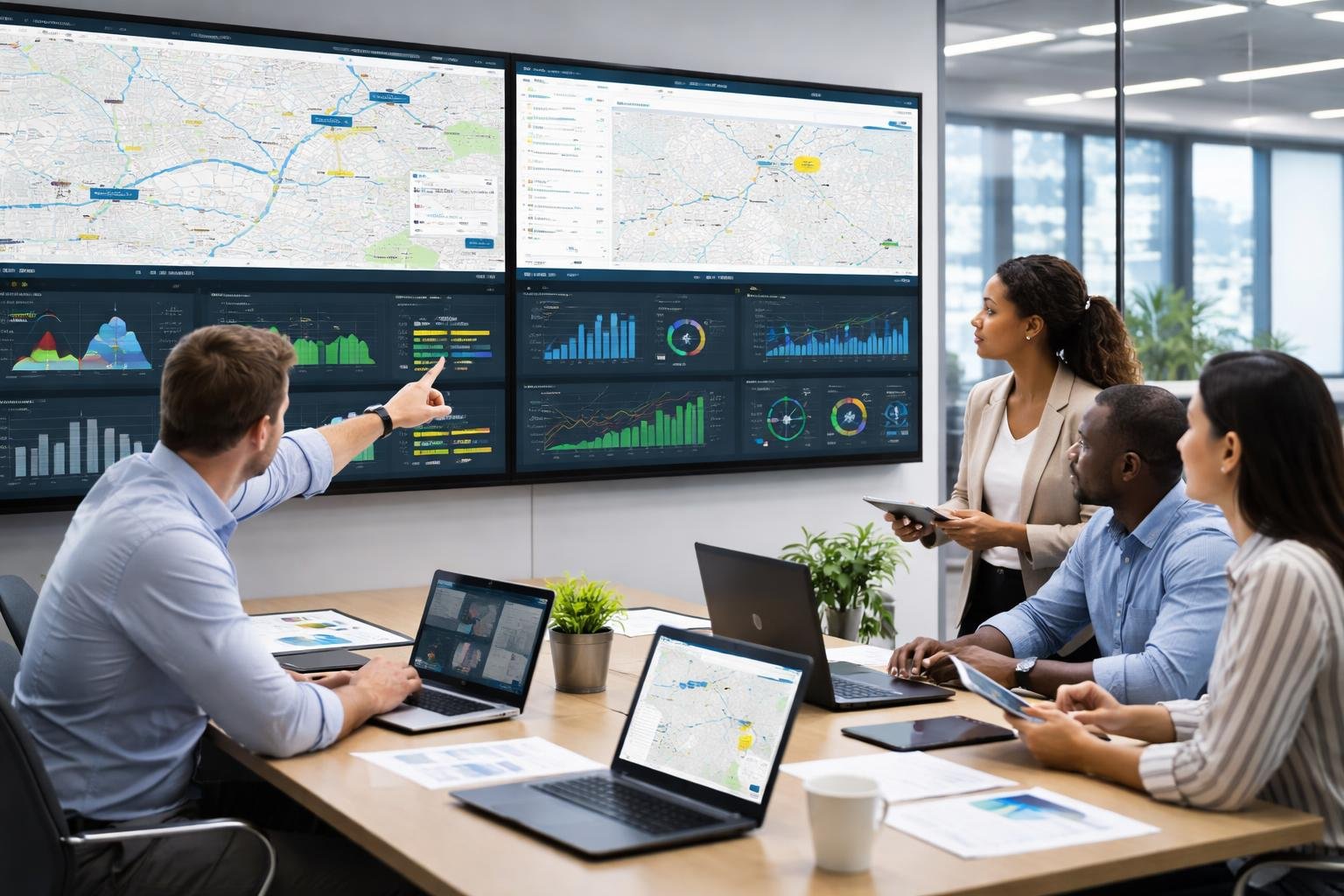
These platforms use telematics hardware and cloud-based software to process real-time and historical data. Vehicle location, engine diagnostics, fuel use, driver behavior, and maintenance needs all appear on a centralized dashboard.
Analytics tools find trends, generate alerts, and create reports to help with decision-making. This unified approach makes it easier for managers to act quickly.
Understanding how these platforms collect and analyze data helps organizations choose the right solution. The right platform enables proactive management, whether the goal is to cut fuel costs, avoid breakdowns, or boost driver safety.
What Is a Fleet Telematics Analytics Platform?
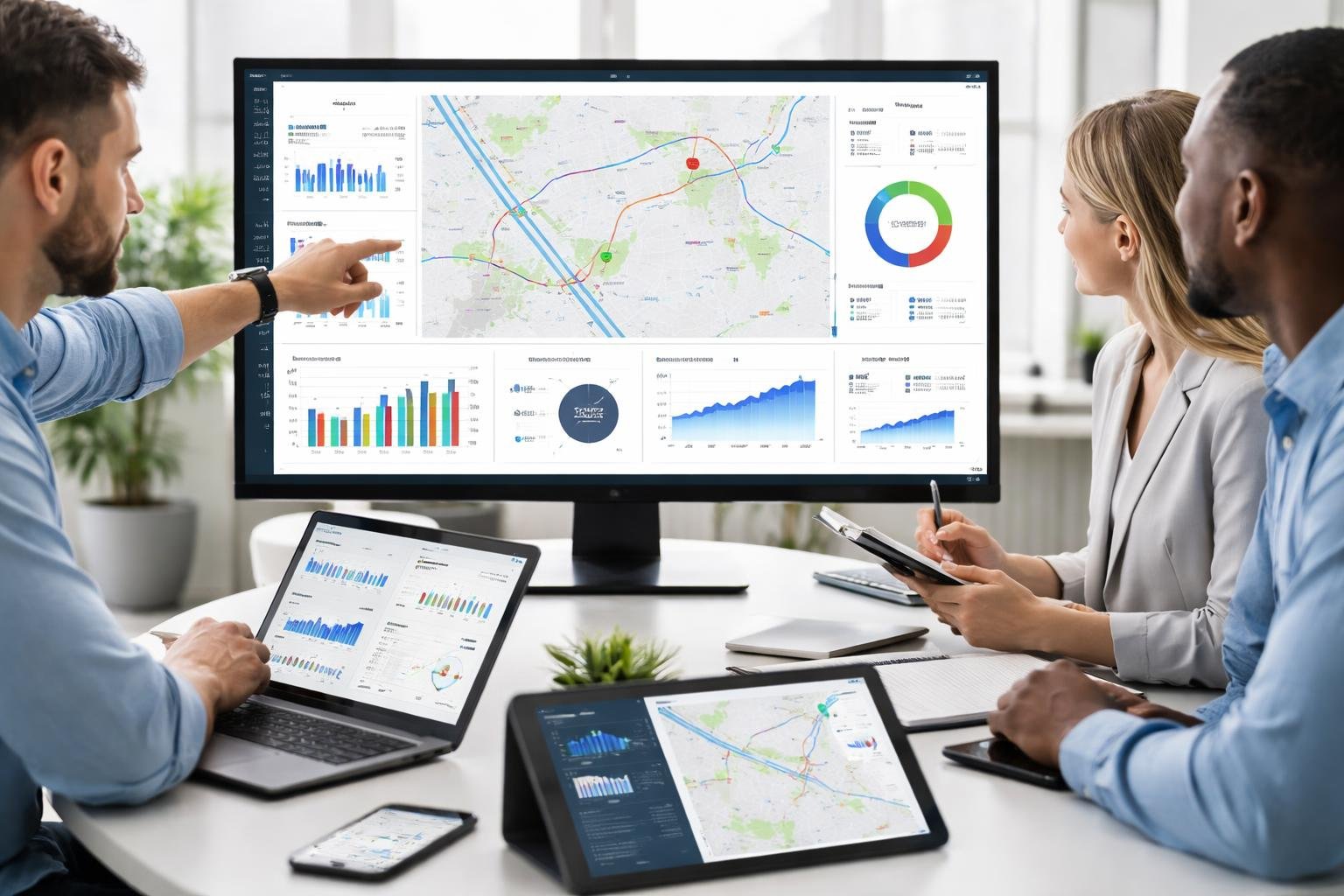
A fleet telematics analytics platform combines GPS tracking, onboard diagnostics, wireless communications, and data analytics. This system monitors vehicle performance and driver behavior in real time.
It processes telematics data using cloud-based analytics engines. The result is actionable insights for fleet operations.
Core Components and Functionality
A fleet telematics analytics platform connects several technologies into one system. GPS devices and onboard sensors collect data on vehicle location, speed, fuel use, engine health, and driver behavior.
This data is sent wirelessly to cloud servers. Analytics software then processes the information.
The platform offers a centralized dashboard with real-time data from all connected devices. Fleet managers can view vehicle diagnostics, fuel monitoring, compliance reports, and operational metrics in one place.
This system removes the need for multiple vendor portals or separate tracking tools.
Key functional components include:
- Real-time GPS tracking and geofencing
- Onboard diagnostics and engine health monitoring
- Driver behavior analysis and safety scoring
- Fuel consumption and efficiency tracking
- Automated compliance reporting for ELD and regulations
- Predictive maintenance alerts based on data patterns
The analytics layer turns sensor data into visual reports, trend analysis, and predictive models.
How It Differs From Standard Fleet Management Platforms
Standard fleet management platforms mostly offer basic vehicle tracking and scheduling. A fleet telematics analytics platform adds advanced data processing and predictive features.
The analytics component sets this technology apart. Basic platforms show vehicle locations, but analytics platforms reveal patterns in fuel use, predict maintenance needs, and track driver performance over time.
Telematics analytics platforms process data from many IoT devices and sensors at once. This creates cross-device analytics that show connections between different operational factors.
Standard platforms usually handle each data stream separately. They do not combine information into broader operational insights.
Role in Modern Fleet Operations
Fleet telematics analytics platforms support data-driven decisions in transportation management and delivery. Managers use real-time driver and vehicle data to improve routing and dispatch.
These platforms use predictive analytics to cut costs and improve return on investment. By reviewing historical vehicle performance, the technology finds ways to lower fuel and maintenance costs and improve safety.
Dispatchers use these systems to make better decisions about resources and routes. Managers can respond quickly to changes, monitor compliance, and make targeted improvements using real performance data.
Key Types of Telematics Data Captured and Processed

Fleet telematics analytics platforms handle many data streams from vehicles. These include location, engine diagnostics, driver actions, and mechanical indicators.
These data types give managers a full view of fleet operations and asset use.
Vehicle Telemetry and GPS Tracking
GPS tracking is the base of vehicle telemetry. Devices record location, altitude, and timestamps to track vehicle movement.
Vehicle telemetry also covers motion-related metrics. Speed, acceleration, braking, and direction are sent in real time to cloud platforms.
Motion sensors detect harsh braking, rapid acceleration, and sharp turns. These factors affect vehicle wear and safety.
The frequency of data collection affects accuracy. High-resolution tracking captures data every few seconds, while lower-resolution systems record less often to save bandwidth.
Fleet and Trip Data
Trip data covers the full journey from ignition on to off. Each trip record has start and end times, duration, distance, and route.
Fleet managers use this information to check service completion and improve routes.
Fleet data combines information from all vehicles. Utilization metrics show how often assets are used, total mileage, and idle time.
Odometer readings from telematics track mileage for billing, compliance, and maintenance. Geofence data alerts managers when vehicles enter or leave set areas.
Driver Behavior Metrics
Telematics systems log driver actions that affect safety and fuel use. Hard braking, fast acceleration, sharp turns, and speeding are recorded with time and location.
These metrics help spot risky driving that needs coaching. Seatbelt use appears in many data streams through integrated sensors.
Some systems detect distracted driving or phone use. Driver scoring algorithms turn these behaviors into ratings.
Individual performance is compared to fleet averages to find top performers and those needing training.
Maintenance and Fault Code Data
Engine diagnostics include fault codes from onboard systems. These codes flag issues like check engine warnings or brake alerts.
Early detection allows for predictive maintenance, preventing breakdowns. Fuel use data comes directly from engine controls, not estimates.
Real-time fuel monitoring can prevent theft and spot inefficient vehicles or routes. Other health indicators include engine hours, battery voltage, coolant temperature, and oil pressure.
Maintenance scheduling uses odometer and engine hour data to trigger service reminders. Tire pressure monitoring also connects to telematics to alert managers to underinflated tires.
How a Fleet Telematics Analytics Platform Works
A fleet telematics analytics platform works through three main steps. It collects data from many sources, standardizes it, and delivers insights as events happen.
These platforms turn raw vehicle data into useful information for managers.
Data Ingestion and Integration
The platform starts by collecting information from across the fleet. Data ingestion gathers telemetry from GPS devices, engine sensors, onboard diagnostics, and mobile apps.
This process runs nonstop, capturing data like location, fuel use, engine temperature, brake status, and driver behavior.
Data integration brings in information from external systems. The platform connects to maintenance software, fuel card systems, inspection reports, and repair databases.
Each system may use a different format. The platform connects through APIs, database links, or file transfers.
All this data flows into a central repository. A single vehicle might send data every few seconds, while maintenance records update weekly and fuel transactions update daily.
The platform manages these different frequencies and volumes, making sure no information is lost.
Data Normalization and Enrichment
Raw data often comes in different formats. The platform standardizes measurements, aligns timestamps, and maps similar data points to unified names.
For example, temperature readings may be in Fahrenheit from one sensor and Celsius from another. Normalization makes them consistent.
Enrichment adds context. The platform matches GPS points to routes or job sites.
It calculates extra metrics like miles per gallon or idle time. Driver IDs are linked to trips for individual performance tracking.
Real-Time Updates and Alerts
Real-time telematics processing checks incoming data against set rules as it arrives. The platform looks for conditions needing quick action.
If a vehicle speeds, enters a restricted area, or shows a fault code, the system sends real-time updates to staff.
Maintenance alerts are generated automatically based on engine hours, mileage, or fault codes. Notifications go out through mobile apps, email, or SMS when service is needed.
Fleet managers get real-time insights into vehicle health without manual checks.
Fleet Analytics and Advanced Insights
Modern fleet telematics platforms collect large amounts of data. Advanced analytics turn this data into useful intelligence.
These tools help managers spot patterns, predict issues, and improve operations.
Operational Efficiency and Cost Reduction
Fleet analytics platforms use real-time data from GPS, telematics, and sensors to find inefficiencies. They track fuel use, idle time, unauthorized vehicle use, and driver behaviors that raise costs.
Dashboards highlight vehicles with high fuel use, routes with extra mileage, and drivers with costly habits. This helps managers focus on improvements.
Operational analytics save more than just fuel. Managers can lower insurance by proving better safety, reduce maintenance costs, and optimize driver schedules.
Advanced analytics track metrics across the whole fleet. This enables comparisons between vehicles, drivers, and routes to find best practices and problem areas.
Predictive Analytics for Maintenance
Predictive maintenance uses past data and real-time diagnostics to forecast failures. Telematics systems monitor engine and transmission health, brake wear, and other parameters for early warning signs.
This shifts maintenance from reactive repairs to planned service. Managers get alerts when sensor data shows abnormal patterns, like low battery voltage.
Predictive models estimate how long components will last. Cost savings include less downtime, lower emergency repairs, and longer vehicle life.
Fleets avoid expensive roadside breakdowns and keep vehicles running longer.
Route Optimization and Performance Reporting
Advanced analytics platforms evaluate route efficiency by combining GPS data with traffic patterns, delivery times, and fuel consumption metrics. These systems find ways to reduce miles driven, avoid traffic, and improve on-time performance.
Performance reporting turns telematics data into clear metrics that measure fleet effectiveness. Key indicators include cost per mile, revenue per vehicle, driver safety scores, and customer service metrics.
Analytics dashboards present these metrics in customizable formats. Managers can view trends for the whole fleet or zoom in on individual vehicles.
Route optimization algorithms consider delivery windows, vehicle capacity, driver hours, and real-time traffic. The recommendations balance priorities to create routes that lower costs and meet service requirements.
Enabling Driver Safety and Risk Management
Fleet telematics analytics platforms improve safety management by continuously monitoring driver behavior and detecting hazardous patterns. These systems provide insights that help fleet managers reduce accidents, lower insurance costs, and stay compliant with regulations.
Driver Behavior Analysis and Coaching
Telematics platforms collect detailed data on acceleration, braking, cornering, and traffic law compliance. The system flags harsh braking, rapid acceleration, excessive idling, and speeding violations in real time.
This data creates a risk profile for each driver. Fleet managers use these profiles to implement targeted driver coaching programs.
The platform highlights specific areas for each driver to improve. Drivers get immediate feedback through in-cab alerts when unsafe behaviors happen, allowing quick self-correction.
Analytics dashboards rank drivers by safety scores. Managers can recognize top performers and focus coaching on high-risk drivers.
The data supports fair evaluations based on objective metrics.
Anomaly Detection for Incidents
Advanced algorithms spot unusual patterns in driving behavior or vehicle performance. The system sets baseline parameters for each driver and vehicle, then flags significant deviations.
Anomalies can signal accidents or equipment issues. Incident detection triggers include sudden impacts, airbag deployment, extreme G-forces, and sharp route changes.
The platform alerts fleet managers right away and can contact emergency services for severe incidents. Video telematics integration adds visual evidence for investigations.
Predictive models use historical data to find high-risk scenarios before they happen. The system looks at factors like time of day, weather, route, and driver fatigue to forecast risk periods.
Fleet managers can then make changes such as adjusting routes or scheduling rest breaks.
Customer Satisfaction Through Safety Programs
Strong safety records help fleets keep and attract customers in transport industries. Clients often require safety certifications and performance data before awarding contracts.
Telematics platforms provide compliance reports and safety metrics to meet these needs. Real-time tracking lets customers see shipment locations and get accurate delivery estimates.
This transparency builds trust in service reliability. When safety incidents happen, detailed telematics data allows for a quick response and clear communication with customers.
Insurance providers may lower premiums for fleets with proven safety programs backed by telematics data. These savings can lead to more competitive pricing for customers.
Safety-focused fleets also reduce cargo damage claims and delivery delays, improving customer satisfaction.
Integrating With Existing Fleet Operations and Technology Ecosystems
Fleet telematics analytics platforms must connect with various hardware providers, enterprise systems, and operational tools. Flexibility is important to fit the specific needs of each fleet.
The ability to scale integrations across different vehicle types and organizations helps platforms support existing workflows.
Multi-Provider and Cross-Device Compatibility
Fleet operations often use mixed hardware environments with different tracking devices and sensors. A strong analytics platform processes data from providers like Geotab and competitors without requiring all vehicles to use the same hardware.
Cross-device compatibility prevents vendor lock-in and protects technology investments. The platform standardizes data formats from different sources into unified reporting structures that managers can easily understand.
API-based architectures allow real-time data collection from any device. Fleets can add vehicles or change providers without rebuilding integrations or retraining staff.
Key compatibility requirements include:
- Standardized data protocols across manufacturers
- Support for both OEM and aftermarket telematics
- Compatibility with legacy tracking systems
- Device-agnostic reporting dashboards
IoT, ERP, and Third-Party Platform Integration
Modern fleet tech goes beyond vehicle tracking to include fuel management, maintenance scheduling, route optimization, and ERP platforms. Telematics analytics platforms must share data with these systems for complete operational visibility.
Integration with ERP systems links fleet data to financial planning, asset tracking, and budgeting. Maintenance systems get diagnostic codes and usage data automatically, triggering service orders based on real vehicle conditions.
Third-party fuel card systems, route planning apps, and driver safety platforms work better when telematics data flows smoothly between them. Open APIs make these connections easy without custom development.
Digital twin technology uses these integrations to create virtual models of fleet assets. These models show real-time status, maintenance history, and performance trends from multiple data sources.
Scaling and Customization in Large Fleets
Enterprise fleets with thousands of vehicles across multiple regions need platforms that fit different regulatory requirements. These fleets also have varied operational procedures and reporting hierarchies.
Fleet solutions must support role-based access controls. They should include custom dashboards and region-specific compliance rules.
Scalability includes both technical infrastructure and configurability. The platform should handle more data as the fleet grows without slowing down.
Operations managers should be able to change workflows and alert settings. They should also adjust analytical models as needed.
Custom data fields and configurable KPIs help organizations adapt the platform to their needs. Modular reporting tools add flexibility.
Granular permission structures give regional managers access to the right data. At the same time, executive leaders can maintain centralized oversight.