Fleet Operational Efficiency Analytics: Leveraging Data to Reduce Costs and Maximize Performance
How to start saving money
Lorem ipsum dolor sit amet, consectetur adipiscing elit lobortis arcu enim urna adipiscing praesent velit viverra sit semper lorem eu cursus vel hendrerit elementum morbi curabitur etiam nibh justo, lorem aliquet donec sed sit mi dignissim at ante massa mattis.
- Neque sodales ut etiam sit amet nisl purus non tellus orci ac auctor
- Adipiscing elit ut aliquam purus sit amet viverra suspendisse potent
- Mauris commodo quis imperdiet massa tincidunt nunc pulvinar
- Excepteur sint occaecat cupidatat non proident sunt in culpa qui officia
Why it is important to start saving
Vitae congue eu consequat ac felis placerat vestibulum lectus mauris ultrices cursus sit amet dictum sit amet justo donec enim diam porttitor lacus luctus accumsan tortor posuere praesent tristique magna sit amet purus gravida quis blandit turpis.

How much money should I save?
At risus viverra adipiscing at in tellus integer feugiat nisl pretium fusce id velit ut tortor sagittis orci a scelerisque purus semper eget at lectus urna duis convallis. porta nibh venenatis cras sed felis eget neque laoreet suspendisse interdum consectetur libero id faucibus nisl donec pretium vulputate sapien nec sagittis aliquam nunc lobortis mattis aliquam faucibus purus in.
- Neque sodales ut etiam sit amet nisl purus non tellus orci ac auctor
- Adipiscing elit ut aliquam purus sit amet viverra suspendisse potenti
- Mauris commodo quis imperdiet massa tincidunt nunc pulvinar
- Adipiscing elit ut aliquam purus sit amet viverra suspendisse potenti
What percentege of my income should go to savings?
Nisi quis eleifend quam adipiscing vitae aliquet bibendum enim facilisis gravida neque. Velit euismod in pellentesque massa placerat volutpat lacus laoreet non curabitur gravida odio aenean sed adipiscing diam donec adipiscing tristique risus. amet est placerat in egestas erat imperdiet sed euismod nisi.
“Nisi quis eleifend quam adipiscing vitae aliquet bibendum enim facilisis gravida neque velit euismod in pellentesque”
Do you have any comments? Share them with us on social media
Eget lorem dolor sed viverra ipsum nunc aliquet bibendum felis donec et odio pellentesque diam volutpat commodo sed egestas aliquam sem fringilla ut morbi tincidunt augue interdum velit euismod eu tincidunt tortor aliquam nulla facilisi aenean sed adipiscing diam donec adipiscing ut lectus arcu bibendum at varius vel pharetra nibh venenatis cras sed felis eget.
Fleet managers face pressure to reduce costs, improve safety, and maximize operational performance in a competitive transportation landscape. Fleet operational efficiency analytics transforms raw data from vehicles, drivers, and maintenance systems into actionable insights that lower fuel consumption, optimize routes, and extend asset lifecycles.
This data-driven approach helps fleet management move from reactive problem-solving to proactive optimization.

The process collects and analyzes information from sources like telematics devices, fuel systems, maintenance records, and driver behavior monitors. These analytics reveal patterns and inefficiencies that are hard to spot in daily operations.
Fleet managers can find areas where small changes lead to significant improvements.
Modern analytics tools combine real-time monitoring with historical trend analysis. This supports smarter decisions across all fleet operations.
Predictive maintenance prevents costly breakdowns, while driver coaching programs cut accidents and fuel waste. Data analytics creates a foundation for ongoing improvement.
Knowing how to collect, interpret, and act on this information helps fleets control costs and boost efficiency.
Understanding Fleet Operational Efficiency Analytics
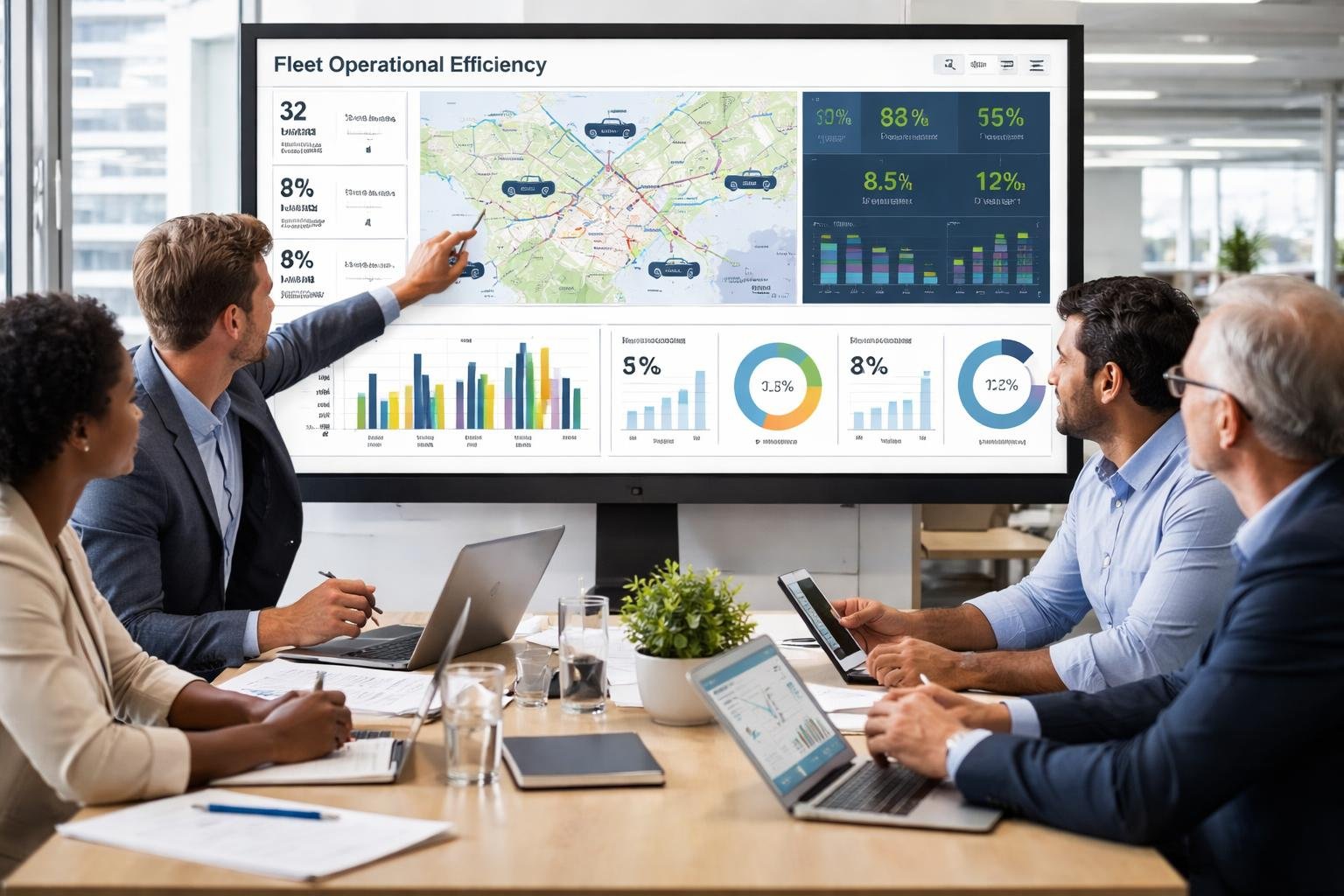
Fleet operational efficiency analytics uses systematic data collection and performance measurement to optimize vehicle use, reduce costs, and improve service delivery. This framework relies on multiple data sources and collaboration to turn raw data into strategic business decisions.
Definition and Core Concepts
Fleet operational efficiency analytics means collecting, processing, and interpreting data from vehicles, drivers, and systems to create actionable insights that improve performance. It includes monitoring vehicle health, tracking fuel use, analyzing driver habits, and reviewing maintenance patterns through connected systems and telematics devices.
Core concepts include real-time data processing for immediate visibility and performance benchmarking to compare metrics against past data or industry standards. Information comes from GPS, onboard diagnostics, fuel management, and maintenance records.
Analytics platforms turn this data into patterns that highlight inefficiencies and opportunities. The main goal is to use vehicle-generated data for decisions that boost efficiency and cut costs.
This approach replaces guesswork with evidence-based management.
Importance for Modern Fleet Management
Modern fleet management depends on analytics to control costs, meet regulations, and stay competitive. Data-driven insights help managers spot maintenance needs before breakdowns, reducing emergency repairs.
Analytics also improve fuel management by showing consumption patterns, finding waste, and optimizing routes. Managers use these insights to train drivers and adjust routes for better fuel economy.
Asset utilization improves by identifying underperforming vehicles and optimizing schedules. Organizations gain a clear view of ownership costs, helping with purchasing and retirement choices.
Key Stakeholders in Fleet Efficiency
Fleet efficiency analytics affects many roles in an organization. Fleet managers use dashboards to track vehicle performance, plan maintenance, and monitor driver behavior.
Operations teams depend on route optimization and real-time tracking for deliveries and appointments. Finance departments use cost analytics for budgeting and finding savings.
Drivers get feedback that boosts safety and efficiency. Senior leaders use aggregated analytics for planning, fleet expansion, and sustainability.
Maintenance supervisors rely on predictive analytics to schedule service and manage parts inventory.
Types of Data and Metrics in Fleet Analytics

Fleet analytics uses data from many sources and tracks key metrics to drive improvements. The quality and management of data affect whether managers can trust the insights for decisions about maintenance, routing, and resource use.
Fleet Data Sources and Collection Methods
Telematics devices are the main way fleets collect data, capturing GPS location, speed, engine diagnostics, and fuel use in real time. These devices send data to central platforms, where it combines with fuel card info, maintenance records, and driver logs.
Vehicle sensors provide continuous data on engine temperature, brake wear, tire pressure, and emissions. This data creates both historical records for trends and real-time alerts for unsafe conditions.
Manual data entry is still used for inspection reports, work orders, and incident reports. Fleet management systems merge these sources into unified databases for full analysis.
Critical Fleet Metrics for Operational Efficiency
Financial metrics include cost per mile, fuel spend per route, maintenance costs versus budget, and total cost of ownership. These show which vehicles are costly and where changes pay off most.
Operational metrics measure vehicle utilization, on-time performance, route efficiency, and idle time. Utilization rates show if fleet size matches demand, while idle time reveals wasted fuel.
Maintenance metrics track preventive maintenance compliance, mean time between failures, mean time to repair, and work order backlog. PM compliance shows if maintenance happens on time. Mean time between failures reveals reliability patterns.
Safety metrics include hard braking, speeding, collisions, and driver scorecards. These help find risky behaviors and vehicles that need attention.
Role of Data Quality and Governance
Data quality affects the reliability of analytics. Bad odometer readings, missing fuel receipts, or faulty sensors create poor insights.
Good data governance sets standards for data entry, regular checks, and clear data ownership. Managers should flag oddities like impossible fuel efficiency or conflicting times.
Master data management keeps vehicle records clean, uses standard names, and organizes assets and costs properly. Without these practices, reports can be misleading and true performance is hidden.
Fuel Efficiency and Cost Optimization Analytics
Fuel makes up 28 to 35% of total fleet costs, making it the largest controllable expense. Analytics help managers track fuel use, spot spending trends, and use strategies that can cut fuel costs by up to 22%.
Fuel Consumption Monitoring
Real-time tracking shows fuel use for each vehicle and across the fleet. Analytics measure miles per gallon (MPG) by vehicle type, route, and conditions to set performance baselines.
Managers use telematics to monitor engine performance, idling, and driving habits. This highlights wasteful practices like excessive idling and aggressive driving.
Advanced systems connect with fuel cards to check purchases against actual use. Differences can show theft, misuse, or equipment problems. Dashboards display consumption by vehicle, driver, route, and time to target improvements.
Fuel Spend and Savings Analysis
Fuel cost per mile and cost per mile (CPM) show the real expense of running the fleet. Analytics combine purchase data with odometer readings and routes.
Managers review fuel spend to find savings. Data shows price differences by location and time. Directing drivers to preferred stations or changing refueling schedules can save 8-12%.
Fuel savings compare actual results to baselines or benchmarks. Analytics track gains from training, maintenance, and route changes. Reports break down savings to show the impact of each program.
Fuel Optimization Through Analytics
Fuel management analytics use models and machine learning to suggest efficiency improvements. Route optimization cuts fuel use by reducing miles, avoiding traffic, and considering terrain and weather.
Driver analytics spot habits like harsh braking, speeding, and idling. Targeted feedback helps drivers improve MPG by 10-15%.
Predictive maintenance stops fuel waste from mechanical issues. Monitoring detects underinflated tires, dirty filters, and engine problems before they waste fuel. Cost analytics show the financial impact of maintenance on fuel use.
Maintenance and Predictive Analytics for Fleet Operations
Predictive analytics changes fleet maintenance by using real-time data and machine learning to predict failures. This shift from reactive repairs to data-driven scheduling cuts costs, prevents breakdowns, and keeps fleets compliant.
Predictive Maintenance and Scheduling
Predictive maintenance uses sensors, telematics, and machine learning to monitor vehicles and forecast failures. It analyzes engine diagnostics, oil quality, brake wear, and tire pressure to create maintenance alerts based on real conditions.
Managers can prioritize vehicles needing attention and extend service for those performing well. The system uses past records and real-time data to spot trends before failures.
Advanced platforms combine mileage, hours, loads, and environment to set maintenance windows. This reduces unnecessary work and catches issues early.
Reducing Unplanned Downtime
Unplanned downtime is costly for fleets, disrupting schedules and affecting revenue. Predictive analytics helps by finding mechanical issues before they cause failures.
Monitoring systems alert managers when data shows abnormal engine temperature, vibrations, or battery decline. Early warnings let fleets schedule repairs during low-demand times.
Fleets using predictive maintenance can cut unplanned downtime by up to 45%. This saves on repairs, towing, emergency service, and lost productivity.
Maintenance Records and Compliance Insights
Digital records track all service, parts, and inspections. Managers use these to check PM compliance, meet regulations, and show safety standards during audits.
Analytics flag vehicles nearing inspection deadlines or overdue for service. Reports identify assets needing attention to keep certifications.
Maintenance data reveals reliability trends and recurring issues with certain models. Managers can compare costs across vehicle types and vendors to improve asset choices and supplier deals.
Driver Performance and Behavior Insights
Driver actions have a direct impact on fleet costs, safety, and efficiency. Collecting and analyzing driver behavior data helps fleet managers find risk patterns, reduce incidents, and optimize vehicle use through targeted coaching.
Monitoring Driver Behavior Data
Telematics systems use GPS, accelerometers, and vehicle sensors to track driver behavior. They record events like harsh braking, rapid acceleration, excessive idling, speeding, and sharp cornering in real time.
Fleet managers view this data on centralized dashboards. These dashboards show individual driver scores and fleet-wide trends.
The monitoring process highlights both good behaviors and risky patterns that need attention.
Key metrics collected include:
- Speed compliance – tracking when drivers exceed speed limits
- Braking patterns – measuring how often and how hard drivers brake suddenly
- Acceleration habits – detecting aggressive acceleration
- Idle time – measuring unnecessary engine running
- Seatbelt usage – checking for safety compliance
- Hours of service – ensuring drivers follow regulations
Data collection happens automatically without driver input. Most systems create daily or weekly reports that show outliers and trends.
Driver Coaching and Training Programs
Coaching turns behavior data into better driver performance. Fleet managers use risk patterns to create personalized training for each driver.
Coaching sessions are most effective when they use data and constructive feedback. Managers discuss specific incidents with drivers and explain the safety and cost impacts of their actions.
This creates accountability and gives drivers clear ways to improve. Programs often start with initial training and add refresher courses or special modules for drivers with ongoing issues.
Some fleets use gamification, offering rewards or competitions for drivers with high safety scores. Recognition programs encourage good behavior and teamwork.
Driver Safety and Performance Metrics
Measurable metrics give fleet managers a way to evaluate drivers and track safety improvements. These indicators can be used to compare drivers and set benchmarks.
Core performance metrics include:
MetricPurposeSafety scoreRating based on violationsAccident rateNumber of incidents per mile or time periodFuel efficiencyMPG or fuel use compared to baselineCompliance rateFollowing speed limits and regulationsMaintenance triggersDriver actions causing extra service needs
These measurements show links between driver habits and costs. Drivers who brake hard often increase brake and fuel expenses.
Those who accelerate smoothly and follow speed limits help lower maintenance and insurance costs. Regular reviews help managers find top performers and those who need more support.
Fleet Utilization and Asset Management Analytics
Analytics help fleet managers measure vehicle performance, allocate resources, and spot underperforming assets. Tracking utilization metrics and using real-time monitoring leads to better decisions, lower costs, and higher returns.
Analyzing Fleet and Asset Utilization Rates
Fleet utilization shows how well vehicles are used compared to their availability. It is calculated by dividing active hours by total available hours.
A low utilization rate means the fleet may be too large or not allocated well. Vehicles with less than 60-70% utilization often add unnecessary costs.
Analytics platforms use odometer readings, engine hours, and trip logs to give accurate utilization data for each vehicle.
Key utilization metrics include:
- Time-based utilization: Active hours vs. available hours
- Mileage-based utilization: Miles driven vs. potential
- Revenue utilization: Income per asset vs. costs
- Seasonal patterns: Usage changes during the year
Asset utilization covers more than vehicles. It includes trailers, equipment, and other assets.
Managers should analyze by vehicle type, route, and function to find specific areas for improvement.
Right-Sizing and Route Planning Optimization
Right-sizing removes extra vehicles while keeping service levels steady. Analytics help find which vehicles are not needed by comparing utilization data to operational needs.
Route optimization looks at fuel use, travel time, and delivery rates to find inefficiencies. Data shows where drivers take long routes or face frequent delays.
Route planning tools use past data to suggest better routes that save mileage and improve utilization.
Pool management systems let fleets share vehicles instead of assigning them to one driver. This increases utilization by matching vehicles to current demand.
Analytics track vehicle availability, location, and maintenance needs to help with resource allocation.
Fleet Monitoring and Real-Time Tracking
Real-time tracking systems show vehicle location, status, and performance at all times. GPS tracking sends data to analytics platforms that check route adherence, spot unauthorized stops, and compare actual vs. planned arrival times.
Fleet monitoring also includes engine diagnostics, fuel use, and driver behavior. Telematics devices send this information continuously, helping managers fix issues early.
Live dashboards show current fleet status and highlight vehicles that need attention. Combining historical analytics with real-time data gives a full view for both immediate and long-term planning.
Technologies and Tools Driving Fleet Analytics
Fleet analytics depend on three main technologies: connected vehicle sensors, centralized software platforms, and artificial intelligence systems. These tools turn raw data into useful insights for fleet managers.
Telematics and IoT Sensors
Telematics systems use GPS and IoT sensors to collect data from vehicles. Sensors measure engine performance, fuel use, tire pressure, brake status, and more in real time.
GPS tracking provides accurate location data for route optimization and geofencing. IoT sensors also track engine diagnostics, driver behavior, and vehicle health.
Data from vehicles is sent to central servers, giving a complete picture of fleet operations. Modern telematics devices are smaller, more reliable, and support different connectivity options for consistent data transmission.
Fleet Management Software and Dashboards
Fleet management software processes telematics data and displays it on dashboards. These platforms combine data from all vehicles into one interface that managers can access from any device.
A typical dashboard shows vehicle locations, fuel efficiency, maintenance schedules, driver scores, and compliance status. Some systems let managers customize views to focus on key metrics.
The software manages data storage, user access, alerts, and integration with other business tools. Many platforms have mobile apps for drivers and field staff to access routes, checklists, and communication tools.
AI Analytics and Automated Reporting
AI analytics use machine learning to find patterns, predict maintenance needs, and optimize operations. These systems look at trends to forecast fuel costs, estimate arrival times, and flag vehicles that may need service soon.
Automated reporting creates regular reports on fuel use, driver safety, and efficiency without manual work. Reports can be customized by time, vehicle group, or metric and delivered automatically.
Real-time AI analytics process new data instantly to spot issues like harsh braking, idling, or route changes. This allows managers to act quickly before problems grow.
Implementing Data-Driven Decision Making in Fleet Operations
Implementing data-driven decision making means changing operational culture, building strong integration systems, and committing to ongoing performance review. These steps help organizations make data the main driver of fleet decisions.
Building a Data-Driven Fleet Culture
A data-driven culture starts with leaders who support evidence-based decisions. Managers should show that data matters more than intuition or tradition.
Training programs should teach staff basic data skills. Drivers need to know how their performance is tracked. Dispatchers should learn about route analytics, and maintenance teams benefit from understanding predictive maintenance.
Key cultural elements include:
- Sharing performance metrics openly
- Holding regular data review meetings with clear action items
- Rewarding improvements based on data
- Encouraging open questions about data quality
Staff may resist change if they feel watched instead of supported. Organizations can address this by showing how data helps improve operations and rewards good performance.
When drivers see how fuel data helps them save money or earn bonuses, they are more likely to support these changes.
Integrating Analytics with Fleet Operations
Data integration connects different systems into one analytics platform. Fleet data management brings together information from telematics, fuel cards, maintenance, GPS, and driver logs.
Modern integration uses APIs and cloud platforms for real-time data flow. For example, a fleet system may get diagnostics from vehicle sensors, match them to maintenance schedules, and create work orders automatically.
Critical integration points:
System TypeData ProvidedOperational ImpactTelematicsSpeed, location, idle timeRoute optimization, driver behaviorFuel ManagementConsumption, costs, locationsFuel theft detection, efficiency trackingMaintenanceService history, parts inventoryPreventive scheduling, downtime reductionERP SystemsFinancial data, procurementCost allocation, budget planning
The integration layer must keep data accurate and consistent. Using standard formats and validation rules helps prevent errors.
Continuous Improvement and Performance Benchmarking
Continuous improvement relies on setting baseline metrics and tracking changes over time. Organizations choose key performance indicators that match their goals, like reducing fuel costs or improving delivery times.
Benchmarking compares current performance to past data, industry standards, or similar fleets. This helps measure the impact of efficiency efforts.
Regular reviews look for trends and improvement opportunities. For example, monthly analysis might show that some routes use more fuel than others.
Effective benchmarking practices:
- Set targets based on past performance and industry data
- Track early indicators of future results
- Update benchmarks as fleet or operations change
- Record lessons from both successes and failures
Performance dashboards show progress toward targets in real time. This makes it easier for teams to see results and make quick adjustments.
Cost Control and Total Cost of Ownership Analysis
Fleet managers who use total cost of ownership (TCO) analysis can find hidden expenses and make targeted cost reductions. Data-driven financial management helps turn fleets into valuable assets.
Evaluating and Reducing Total Cost of Ownership
TCO includes all expenses for fleet vehicles over their lifespan. This covers purchase or lease payments, fuel, insurance, registration, maintenance, repairs, driver wages, and depreciation.
Fleet management systems collect financial data to calculate TCO for each vehicle and class. Managers can compare models, find costly assets, and decide when to replace vehicles based on real data.
Key TCO Components:
- Fixed Costs: Purchase price, depreciation, insurance, registration, financing
- Variable Costs: Fuel, maintenance, repairs, tires, tolls
- Operational Costs: Driver labor, training, downtime, accident expenses
Analytics platforms track these costs in real time. This helps managers benchmark against industry standards and spot vehicles with high expenses.
With this visibility, managers can make better choices about vehicle selection, replacement timing, and policies.
Expense Analytics and Cost Reduction Strategies
Expense analytics reveal opportunities for cost reduction through pattern recognition and comparative analysis. Fleet managers use software to monitor spending trends and detect anomalies.
They also measure the financial impact of operational changes. Maintenance costs are one of the largest controllable expenses in fleet operations.
Proactive maintenance scheduling based on predictive analytics helps prevent costly emergency repairs. This approach also extends vehicle lifespan.
Fuel management systems identify inefficient driving behaviors. They also highlight route optimization opportunities that reduce fuel consumption.
Telematics data uncovers inefficiencies such as excessive idling and unauthorized vehicle use. It also reveals suboptimal routing that increases operating costs.
Fleet managers use driver scorecards and incentive programs based on these metrics. These tools encourage cost-conscious behaviors across the workforce.
Long-Term Financial Impact of Fleet Analytics
Fleet analytics platforms help organizations reduce costs over time. They also improve financial planning.
Data-driven fleet management leads to better vehicle utilization and lower maintenance costs per mile within the first year. Predictive insights allow fleet managers to forecast expenses more accurately.
This helps with better budget allocation and capital planning. Historical data shows seasonal cost patterns and vehicle reliability trends.
Analytics tools compare traditional vehicles with electric alternatives using real operational data. This supports informed decisions about fleet composition and sustainability while maintaining financial efficiency.