How to start saving money
Lorem ipsum dolor sit amet, consectetur adipiscing elit lobortis arcu enim urna adipiscing praesent velit viverra sit semper lorem eu cursus vel hendrerit elementum morbi curabitur etiam nibh justo, lorem aliquet donec sed sit mi dignissim at ante massa mattis.
- Neque sodales ut etiam sit amet nisl purus non tellus orci ac auctor
- Adipiscing elit ut aliquam purus sit amet viverra suspendisse potent
- Mauris commodo quis imperdiet massa tincidunt nunc pulvinar
- Excepteur sint occaecat cupidatat non proident sunt in culpa qui officia
Why it is important to start saving
Vitae congue eu consequat ac felis placerat vestibulum lectus mauris ultrices cursus sit amet dictum sit amet justo donec enim diam porttitor lacus luctus accumsan tortor posuere praesent tristique magna sit amet purus gravida quis blandit turpis.

How much money should I save?
At risus viverra adipiscing at in tellus integer feugiat nisl pretium fusce id velit ut tortor sagittis orci a scelerisque purus semper eget at lectus urna duis convallis. porta nibh venenatis cras sed felis eget neque laoreet suspendisse interdum consectetur libero id faucibus nisl donec pretium vulputate sapien nec sagittis aliquam nunc lobortis mattis aliquam faucibus purus in.
- Neque sodales ut etiam sit amet nisl purus non tellus orci ac auctor
- Adipiscing elit ut aliquam purus sit amet viverra suspendisse potenti
- Mauris commodo quis imperdiet massa tincidunt nunc pulvinar
- Adipiscing elit ut aliquam purus sit amet viverra suspendisse potenti
What percentege of my income should go to savings?
Nisi quis eleifend quam adipiscing vitae aliquet bibendum enim facilisis gravida neque. Velit euismod in pellentesque massa placerat volutpat lacus laoreet non curabitur gravida odio aenean sed adipiscing diam donec adipiscing tristique risus. amet est placerat in egestas erat imperdiet sed euismod nisi.
“Nisi quis eleifend quam adipiscing vitae aliquet bibendum enim facilisis gravida neque velit euismod in pellentesque”
Do you have any comments? Share them with us on social media
Eget lorem dolor sed viverra ipsum nunc aliquet bibendum felis donec et odio pellentesque diam volutpat commodo sed egestas aliquam sem fringilla ut morbi tincidunt augue interdum velit euismod eu tincidunt tortor aliquam nulla facilisi aenean sed adipiscing diam donec adipiscing ut lectus arcu bibendum at varius vel pharetra nibh venenatis cras sed felis eget.
FleetGO helps companies manage vehicles, logistics, and transport operations through connected technology. It offers tools that monitor vehicle location, automate reporting, and improve decision-making with accurate, real-time data.
It gives businesses complete visibility and control over their transport and logistics activities.

By combining hardware tracking devices with cloud-based software, FleetGO simplifies how organizations track fleets, analyze performance, and maintain compliance. Its system integrates across fleet management, transport coordination, and warehouse operations to create a data-driven environment.
As operations become more complex, FleetGO enables companies to use precise information instead of assumptions. From monitoring driver activity to forecasting arrival times, it supports efficient logistics decisions that reduce costs and improve productivity.
What Is FleetGO?

FleetGO is a fleet management software platform that helps organizations monitor, track, and optimize vehicle operations. It combines IoT-enabled devices with cloud-based analytics to improve visibility, lower fuel costs, and ensure compliance with transport regulations.
Company Background
FleetGO started as a technology company focused on digital fleet and transport management. It has developed into a provider of connected mobility solutions across industries such as logistics, delivery, and transportation.
The company integrates hardware and software to gather live telemetry and operational data. These data points include GPS location, driver activity, and vehicle diagnostics.
Its emphasis on data accuracy and regulatory compliance—such as certified trip logging standards—supports companies that must meet auditing or safety requirements. FleetGO positions itself as a data-driven business partner rather than only a tracking tool provider.
By enabling automated reporting, the platform reduces administrative work. It improves how transport managers make operational decisions.
Core Offerings
FleetGO’s main product is a cloud-based fleet management platform that unifies real-time monitoring, analytics, and reporting in one interface. Users can access dashboards showing each vehicle’s performance, including mileage, fuel consumption, and maintenance status.
Core features include:
- Real-time GPS tracking and route playback
- Tachograph management for compliance and driver hours monitoring
- Driver behavior insights such as harsh braking and idling
- Maintenance reminders and fault code alerts
- Fuel analysis and efficiency reporting
The platform integrates with vehicle systems via CAN and FMS data channels for accurate measurements. Fleet managers can tailor reports, export trip logs, and set custom alerts to help control costs and enhance operational safety.
Geographical Reach
FleetGO operates primarily in Europe with an expanding presence in other markets. The company maintains offices in the Netherlands, Germany, and the United Kingdom, supporting a diverse client base.
Its multilingual support, regional data compliance, and adaptable software modules make it suitable for fleets of various sizes. Through cloud infrastructure, the system can be deployed globally without extensive installation.
FleetGO extends its partnerships with logistics firms and vehicle manufacturers to refine integrations and maintain relevance within the mobility software sector.
FleetGO Solutions for Fleet Management
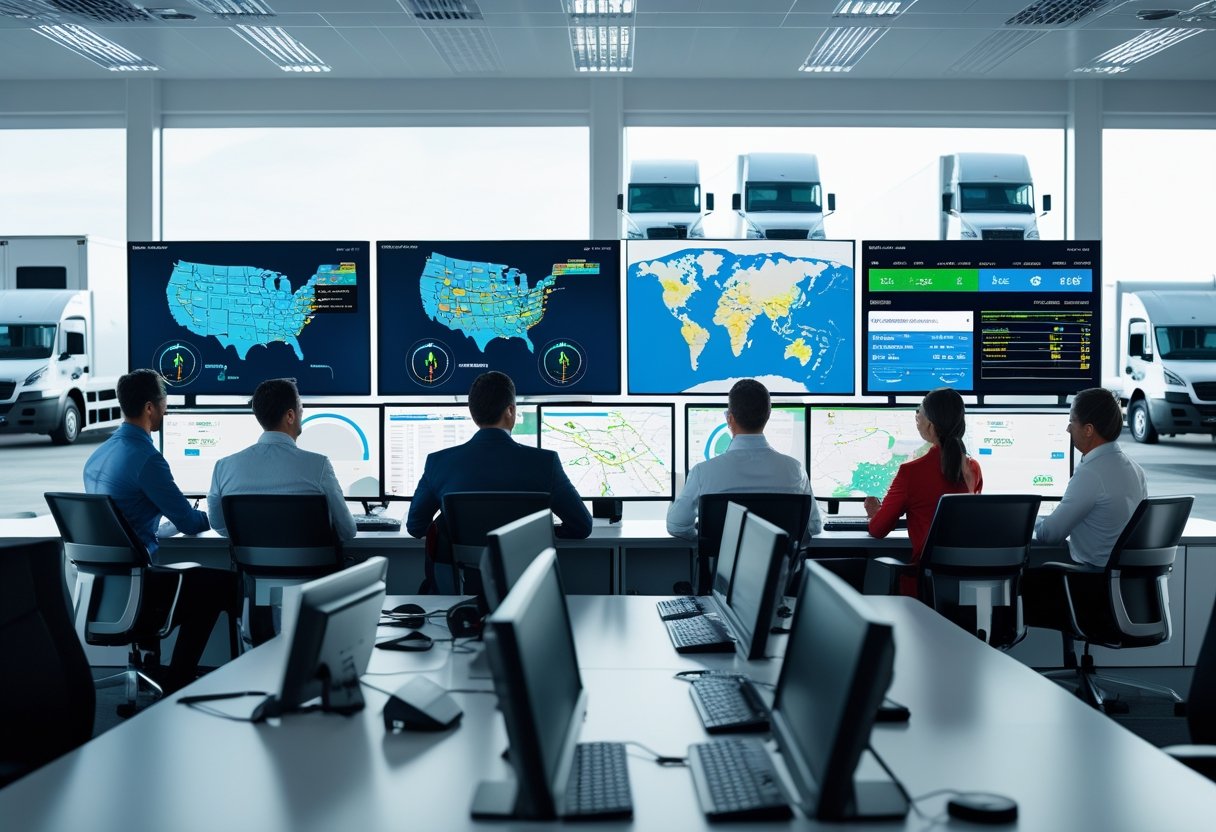
FleetGO provides software tools that help fleets operate with greater precision, safety, and efficiency. Its platform integrates GPS tracking, vehicle diagnostics, and driver analytics to support data-driven decisions and optimize resource use.
Fleet Tracking Features
FleetGO uses real-time GPS tracking to give fleet operators visibility of each vehicle’s location, route, and trip history. It helps dispatchers monitor deliveries, adjust routes based on traffic, and verify arrival times.
This feature also enables geofencing alerts when vehicles enter or exit designated areas. The system logs detailed position, speed, and timestamp data, providing historical insights for auditing and route analysis.
Fleet managers use this information to detect inefficient routes and improve scheduling. The dashboard is visual, displaying fleet activity on a live map with color-coded statuses.
This transparency minimizes communication delays and improves coordination among teams. The platform’s cloud-based design ensures users can access tracking information securely from any connected device.
Vehicle & Asset Monitoring
FleetGO’s platform offers advanced vehicle and asset monitoring tools. It collects data from onboard diagnostics (OBD) and telematics devices to monitor engine health, fuel usage, tire pressure, and maintenance schedules.
This reduces unplanned downtime by identifying early signs of wear or faults. Fleet managers can set automatic alerts for service intervals, fuel irregularities, or critical fault codes.
These alerts help plan maintenance at the right time. For companies operating mixed fleets, sensors can track equipment such as trailers or refrigerated units.
The interface organizes equipment data in clear tables showing asset ID, performance status, next maintenance date, and last inspection. Keeping these records centralized supports faster decision-making and compliance with regulations.
Driver Behavior and Reporting
FleetGO evaluates driver performance metrics such as acceleration, braking, idling time, and speed limit adherence. The software uses this data to generate reports that highlight areas for improvement and reward safe driving habits.
Fleet managers can compare individual driver profiles to company benchmarks. This encourages accountability and safer road practices, which can lower fuel costs and reduce vehicle wear.
The reporting module’s charts and scorecards make reviewing performance trends easy. Additional tools provide summaries on trip patterns, idle ratios, and fuel usage per driver.
These insights allow operators to tailor training sessions and optimize route assignments. By turning driving data into feedback, FleetGO strengthens efficiency and safety across fleet operations.
Transport Management Capabilities
FleetGO delivers tools that help logistics operators manage fleets, optimize delivery efficiency, and ensure regulatory compliance. Its software platform brings together trip monitoring, routing intelligence, and zone-based management within a unified system.
Transport Management System (TMS)
FleetGO’s Transport Management System (TMS) enables companies to handle daily logistics workflows from a single dashboard. It supports order assignment, trip scheduling, and real-time tracking, giving dispatchers accurate visibility into every vehicle’s status.
Each trip benefits from continuous ETA recalculations, helping coordinators adjust quickly when delays arise. The platform links route planning with asset performance data, allowing teams to track progress, document handling, and driver performance in one place.
Key features include automated reporting, digital document storage, and integration with billing systems.
A concise overview of core functions:
FunctionDescriptionOrder AssignmentAllocates loads based on vehicle capacity and proximityETA UpdatesRecalculates arrival times using live traffic dataDocument ManagementStores delivery and compliance documents digitally
This unified approach reduces manual work and provides operational transparency across logistics departments.
Route Optimization
Using real-time data and PTV-powered routing engines, FleetGO calculates the most efficient travel paths for each trip. The system evaluates distance, traffic flow, and time windows, then suggests the best combinations to minimize idle hours and fuel costs.
Route modifications occur dynamically as conditions change, such as weather events or accidents. Dispatchers can apply rule-based preferences, for example, avoiding tolls or specific urban zones.
This helps meet delivery targets without overextending driver hours. The platform also tracks historical route patterns to identify recurring inefficiencies.
Fleet managers use this data to refine planning strategies and align vehicle utilization with business demand.
Geofencing and Compliance
FleetGO integrates geofencing tools that create virtual boundaries around key sites like warehouses, delivery zones, or restricted areas. When a vehicle enters or exits a zone, automatic alerts and logs record the event.
These data points improve accountability and support adherence to service-level agreements. In compliance management, the system monitors driver behavior, rest periods, and fuel reporting to ensure operations meet EU and local regulations.
Automated data export simplifies audit preparation and reduces the risk of fines. Geofencing also enhances security by flagging unexpected movements outside designated regions.
Combined with continuous GPS tracking, these features maintain visibility and ensure legitimate use of company assets.
Smart Logistics and Warehouse Integration
FleetGO uses connected logistics systems to link fleet operations with warehouse processes. It combines data from multiple sources to improve planning accuracy, reduce idle time, and streamline order fulfillment through centralized tracking and automation.
Warehouse Management System
FleetGO’s Warehouse Management System (WMS) functions as the central hub for logistics coordination. It connects inventory movement, vehicle routing, and order processing within a single software platform.
This integration allows users to plan shipments based on stock levels, available drivers, and delivery priorities. The system uses rules-based automation to assign resources efficiently.
For example, it can automatically schedule loading bays and update dispatch teams when inventory is ready. Managers gain visibility into warehouse performance metrics, helping them reduce bottlenecks and improve on-time delivery.
Key WMS Functions:
FunctionPurposeInventory synchronizationMaintains consistent data across warehouse and fleet systemsRoute alignmentAdjusts dispatch based on product availability and locationLoad optimizationMatches deliveries with capacity and timing requirements
RFID and Inventory Tracking
FleetGO incorporates RFID tagging to maintain precise inventory control. These sensors record each movement of goods from storage to vehicle loading, feeding this information directly into the logistics platform.
Staff members can instantly locate items, confirm quantities, and verify dispatch accuracy without manual data entry. RFID tracking also supports cycle counting and automatic restocking alerts.
When stock levels drop below a set threshold, the system can trigger a new order or reallocation from another warehouse. Real-time item visibility reduces picking errors and helps businesses maintain an accurate product flow.
This technology simplifies auditing by keeping timestamped records of every transaction. It enables clear traceability, which supports compliance and supply chain transparency.
Real-Time Updates
Real-time logistics updates ensure communication between vehicles, warehouses, and dispatch systems. FleetGO’s platform sends automatic notifications about shipment status, route changes, and estimated arrival times.
Drivers receive dynamic route adjustments if traffic or inventory issues appear. This live data exchange allows warehouse teams to prepare for loading and unloading as trucks approach.
It reduces downtime and supports responsive scheduling. FleetGO also enables management dashboards that compile key performance data.
Users can monitor delivery progress, identify recurring delays, and analyze route performance to maintain efficiency and control across logistics networks.
Technology Infrastructure and Data Integration
FleetGO enables continuous data exchange across connected systems to maintain performance insights and operational control. Its infrastructure emphasizes real-time visibility, secure connectivity, and streamlined workflows that depend on stable integrations among digital tools.
Platform Interoperability
Fleet Go’s software platform acts as a central hub for vehicle data, telematics, and analytics. It supports multiple data models and communication protocols, allowing different devices and services to work together automatically.
This reduces data silos and helps stakeholders make decisions from a single, reliable source.
Its intelligent software uses modular design. Services can scale on their own, ensuring the system stays available during busy times.
The system uses standard frameworks for telematics, cloud storage, and machine learning. It adapts easily as new data sources are added.
Fleet Go uses security authentication, encryption, and automated updates to keep data safe. These features ensure compliance with IT standards.
FeatureBenefitModular architectureEasier scaling and updatesUnified data modelsConsistent reportingCloud-based processingReal-time accessibility
API and CRM Integrations
Fleet Go connects with CRM, ERP, and logistics tools using clear APIs. This keeps data synchronized and lets users manage vehicles and accounts in one place.
The APIs use REST-based standards, making integration with other software simple. Access tokens and permission controls protect data and limit access to approved apps.
CRM integration combines customer data with fleet activity, giving a full view of performance and service. Automated workflows, like maintenance alerts and client notifications, boost response times and cut down on admin work.
These integrations help businesses keep accurate, real-time communication across all systems.
Business Benefits of FleetGO
FleetGO helps organizations manage vehicles with automation, real-time tracking, and data insights. Its tools help managers control costs, follow regulations, and maintain strong service.
Cost Reduction and Efficiency
FleetGO helps lower operational costs by improving fleet visibility and control. Real-time GPS tracking lets managers monitor driver routes and vehicle use, reducing fuel waste and extra mileage.
With better route planning and automatic maintenance schedules, fleets have less downtime and vehicles last longer.
The platform supports fuel and cost management with detailed reports. Managers can spot high fuel users and compare vehicles to improve efficiency.
Integration with telematics data helps find mechanical issues early, cutting repair expenses.
FleetGO’s dashboards gather data from all vehicles in one place. This makes logging, compliance, and paperwork easier.
Streamlined processes help companies budget better and get more value from their fleet.
Customer Experience Enhancement
Better fleet coordination improves how businesses serve customers.
With real-time vehicle tracking, companies can provide more accurate delivery estimates. They can also inform clients about expected arrival times.
This transparency builds trust and reliability, especially in logistics and transport.
FleetGO’s dispatch and route optimization features help businesses respond faster to changing customer needs.
Managers can quickly assign the nearest driver or adapt to traffic conditions. This reduces wait times without adding extra work.
Data from driver performance reports helps maintain consistent service quality.
Businesses can set clear standards and track compliance to ensure timely deliveries.