Landscaping Fleet Performance Metrics: Essential KPIs for Maximizing Efficiency and ROI
How to start saving money
Lorem ipsum dolor sit amet, consectetur adipiscing elit lobortis arcu enim urna adipiscing praesent velit viverra sit semper lorem eu cursus vel hendrerit elementum morbi curabitur etiam nibh justo, lorem aliquet donec sed sit mi dignissim at ante massa mattis.
- Neque sodales ut etiam sit amet nisl purus non tellus orci ac auctor
- Adipiscing elit ut aliquam purus sit amet viverra suspendisse potent
- Mauris commodo quis imperdiet massa tincidunt nunc pulvinar
- Excepteur sint occaecat cupidatat non proident sunt in culpa qui officia
Why it is important to start saving
Vitae congue eu consequat ac felis placerat vestibulum lectus mauris ultrices cursus sit amet dictum sit amet justo donec enim diam porttitor lacus luctus accumsan tortor posuere praesent tristique magna sit amet purus gravida quis blandit turpis.

How much money should I save?
At risus viverra adipiscing at in tellus integer feugiat nisl pretium fusce id velit ut tortor sagittis orci a scelerisque purus semper eget at lectus urna duis convallis. porta nibh venenatis cras sed felis eget neque laoreet suspendisse interdum consectetur libero id faucibus nisl donec pretium vulputate sapien nec sagittis aliquam nunc lobortis mattis aliquam faucibus purus in.
- Neque sodales ut etiam sit amet nisl purus non tellus orci ac auctor
- Adipiscing elit ut aliquam purus sit amet viverra suspendisse potenti
- Mauris commodo quis imperdiet massa tincidunt nunc pulvinar
- Adipiscing elit ut aliquam purus sit amet viverra suspendisse potenti
What percentege of my income should go to savings?
Nisi quis eleifend quam adipiscing vitae aliquet bibendum enim facilisis gravida neque. Velit euismod in pellentesque massa placerat volutpat lacus laoreet non curabitur gravida odio aenean sed adipiscing diam donec adipiscing tristique risus. amet est placerat in egestas erat imperdiet sed euismod nisi.
“Nisi quis eleifend quam adipiscing vitae aliquet bibendum enim facilisis gravida neque velit euismod in pellentesque”
Do you have any comments? Share them with us on social media
Eget lorem dolor sed viverra ipsum nunc aliquet bibendum felis donec et odio pellentesque diam volutpat commodo sed egestas aliquam sem fringilla ut morbi tincidunt augue interdum velit euismod eu tincidunt tortor aliquam nulla facilisi aenean sed adipiscing diam donec adipiscing ut lectus arcu bibendum at varius vel pharetra nibh venenatis cras sed felis eget.
Managing a landscaping fleet requires tracking specific performance indicators that influence operational costs, service quality, and profitability.
Fleet performance metrics provide landscaping companies with data to optimize vehicle use, reduce maintenance expenses, control fuel consumption, and improve operational efficiency.
Without these benchmarks, managers lack clear visibility into what drives costs or where improvements can yield the greatest returns.

The challenge is identifying which metrics matter most among many possible data points.
Landscaping operations face unique demands with seasonal workload changes, equipment-intensive tasks, and tight service windows.
Fleet performance is critical to meeting customer commitments.
Tracking utilization rates, maintenance schedules, driver behavior, and cost metrics enables data-driven decisions.
This guide examines essential performance metrics landscaping fleet managers need to monitor across operations, maintenance, asset utilization, and cost control.
Core Fleet Performance Metrics for Landscaping
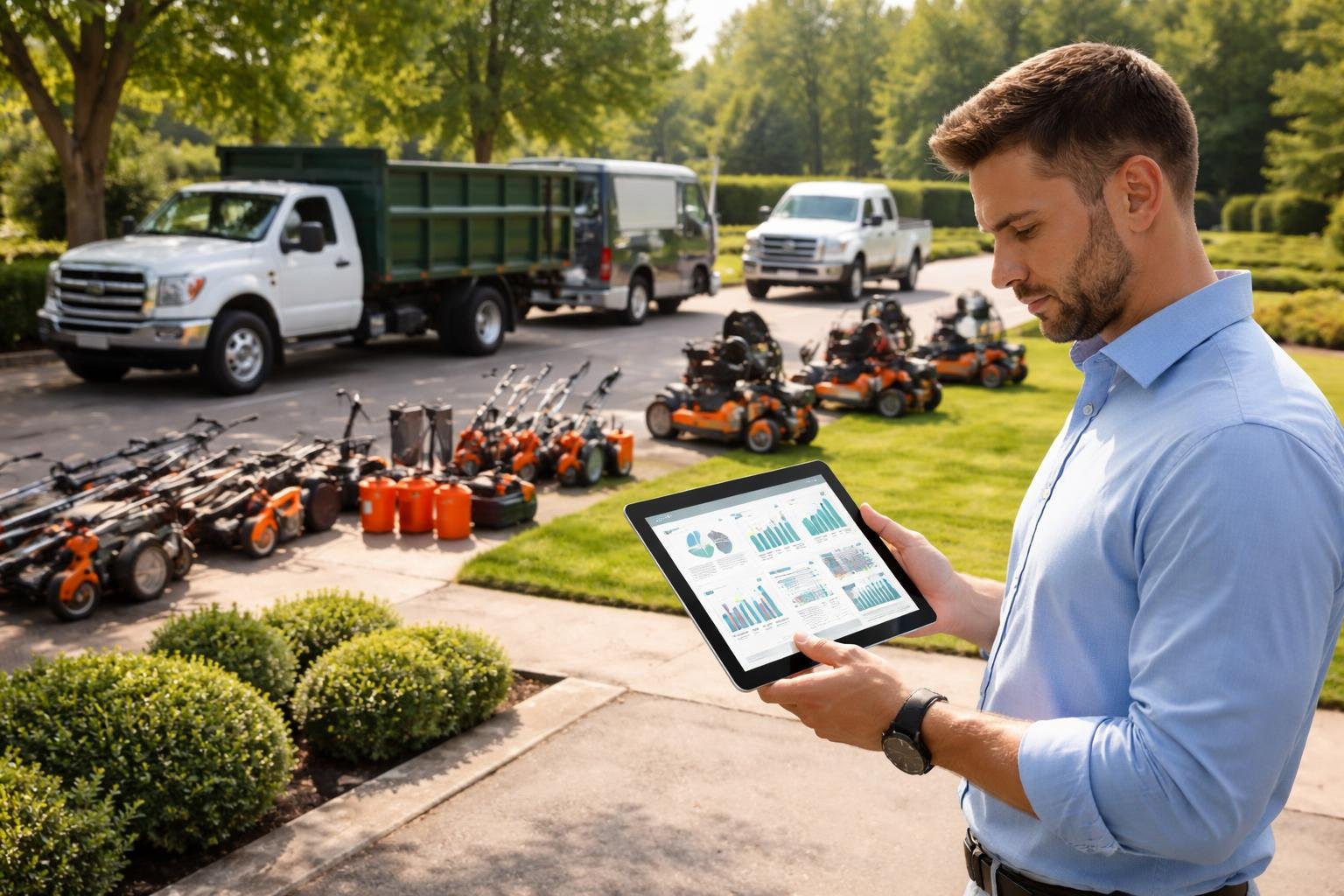
Landscaping operations depend on equipment reliability and cost control across seasonal demands.
Tracking utilization rate, fuel efficiency, downtime, and maintenance expenses gives managers data to optimize performance and protect profit margins.
Utilization Rate in Landscaping Fleets
Utilization rate measures the percentage of time equipment generates revenue versus sitting idle.
For landscaping fleets, this metric shows whether mowers, aerators, and trucks deliver good returns on investment.
Fleet managers calculate utilization by dividing operating hours by available hours in a period.
For example, a mower available 40 hours per week but used 28 hours has 70% utilization.
Landscaping equipment often has seasonal fluctuations.
Spring and summer can push utilization above 80%, while winter may drop below 30% in some regions.
Low utilization means oversized fleets or poor scheduling.
High utilization beyond 85-90% suggests equipment strain and possible breakdowns.
Managers monitor monthly trends and adjust fleet size to match seasonal demand.
Fuel Consumption and Fuel Efficiency Tracking
Fuel consumption is one of the largest variable costs in landscaping.
Tracking gallons used per service hour or per acre serviced sets a baseline for each equipment type.
Fuel efficiency varies between equipment classes.
Commercial mowers often use 1.5-3 gallons per hour, depending on deck size and terrain.
Trucks average 8-12 miles per gallon when hauling equipment.
Setting these benchmarks helps managers spot underperforming assets.
Key fuel tracking methods include:
- GPS-integrated fuel card systems linking purchases to vehicles
- Engine hour meters with fuel logs for equipment without telematics
- Route optimization software to reduce unnecessary mileage
Drops in efficiency often signal maintenance needs like clogged air filters or low tire pressure.
Regular monitoring helps catch problems before they become costly repairs.
Downtime and Uptime Analysis
Downtime tracking separates planned maintenance from unexpected breakdowns.
Uptime percentages show fleet reliability during peak seasons.
Fleet managers categorize downtime as scheduled (preventive maintenance, winterization) or unscheduled (breakdowns, accidents).
Unscheduled downtime during high-demand months directly affects customer commitments and crew productivity.
A fleet with 95% uptime from April through October shows strong preventive maintenance.
Rates below 90% suggest deferred maintenance or aging equipment needing replacement.
Tracking downtime by equipment type reveals which models have more problems.
Maintenance Costs and Cost Per Mile
Maintenance costs include all repairs, parts, labor, and preventive service.
Cost per mile (CPM) divides total maintenance spending by miles driven.
Landscaping fleets track CPM for trucks and cost per hour for equipment.
Trucks averaging $0.15-$0.25 per mile for maintenance are within industry norms.
Costs above $0.35 per mile indicate vehicles nearing end-of-life.
For mowers and equipment, managers calculate cost per hour.
If maintenance costs exceed 60% of an asset’s current value annually, it is usually time to replace it.
Critical maintenance cost categories include:
- Routine service (oil changes, filters, blade sharpening)
- Tire replacement and repairs
- Engine and hydraulic system work
- Body and frame repairs
Tracking these categories separately shows if costs are from normal wear or operational issues.
Operational Efficiency Metrics and KPI Development
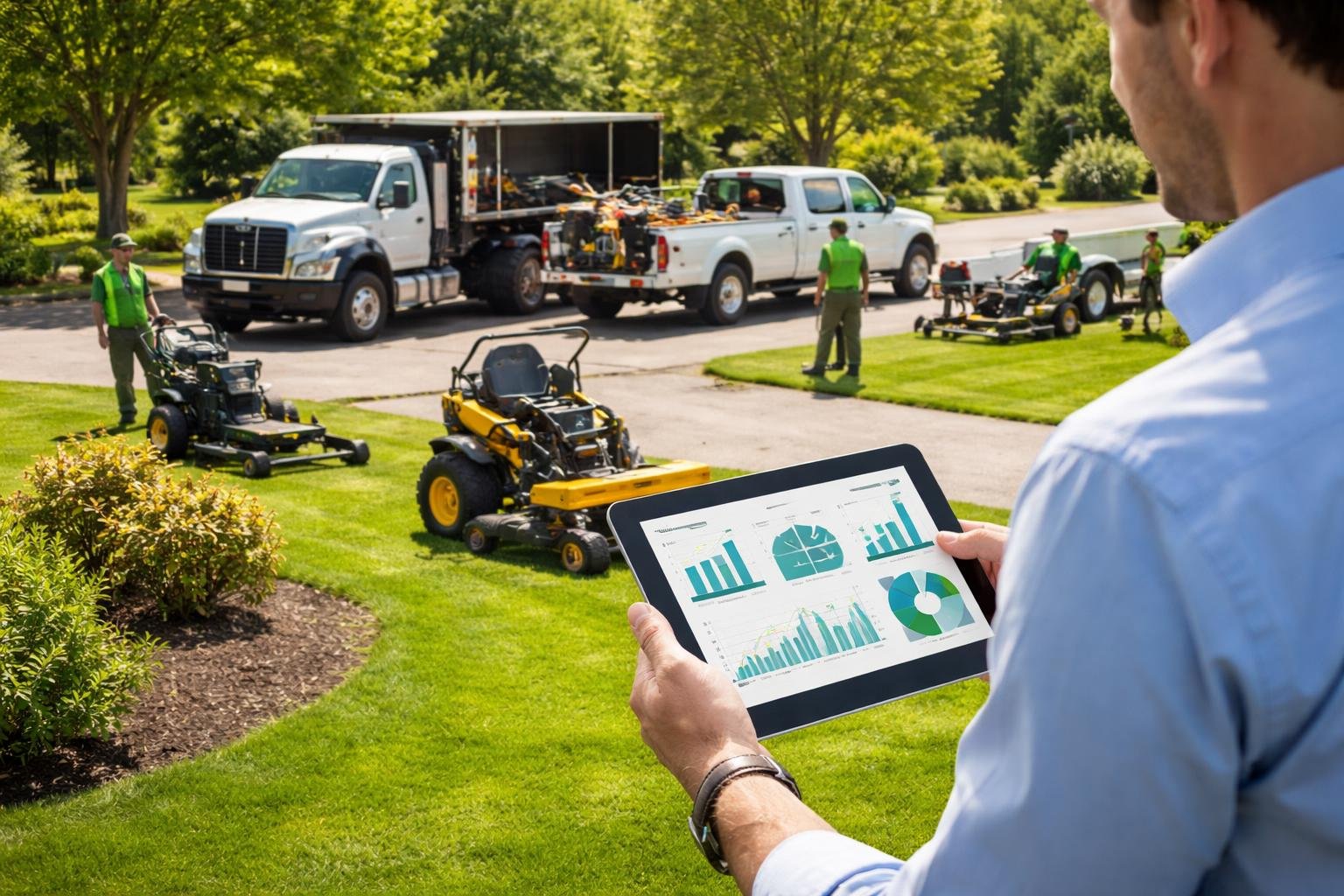
Fleet managers need specific metrics to measure performance, control costs, and stay competitive.
Tracking the right KPIs enables data-driven decisions that impact total cost of ownership and operational efficiency.
Key Performance Indicators (KPIs) for Landscaping Fleets
Fleet performance measurement starts with selecting relevant KPIs that align with business goals.
Essential metrics include vehicle utilization rates, which measure how much time equipment is in use versus idle.
Fuel efficiency tracking reveals consumption patterns and identifies ways to cut costs.
Fuel often represents 24-28% of total fleet expenses.
Maintenance KPIs show asset reliability and longevity.
Mean time between failures (MTBF) indicates equipment dependability.
Maintenance cost per vehicle helps managers budget and spot problem assets.
Downtime tracking measures hours equipment is out of service, affecting crew productivity and project completion.
Safety metrics protect personnel and reduce company liability.
These include incident rates, preventive maintenance compliance, and driver behavior scores.
Response time KPIs measure how quickly crews reach job sites, impacting customer satisfaction and daily job capacity.
KPI CategoryPrimary MetricsImpact AreaUtilizationActive hours, idle timeRevenue generationCost ControlFuel efficiency, maintenance spendOperating expensesReliabilityMTBF, downtime hoursService deliverySafetyIncident rate, complianceRisk management
Operational Efficiency and Total Cost of Ownership
Total cost of ownership (TCO) includes all expenses over a vehicle's life.
TCO covers acquisition costs, fuel, maintenance, insurance, depreciation, and disposal value.
This view helps managers make informed replacement and vendor decisions.
Operational efficiency affects TCO through good routing, load management, and preventive maintenance.
Reducing unnecessary mileage cuts fuel costs and wear.
Timely servicing prevents expensive breakdowns.
Right-sizing equipment ensures crews have the right vehicles for each task without overspending.
Labor efficiency improves when vehicles are reliable and routes are optimized.
Crews spend more time on billable work.
Tracking revenue per vehicle hour combines fleet utilization with operational productivity.
Benchmarking for Continuous Improvement
Benchmarking sets performance standards by comparing current metrics against past data and industry averages.
Fleet managers should track month-over-month trends to spot seasonal patterns and catch issues early.
Year-over-year comparisons show if improvement efforts are working.
Industry benchmarking provides context for internal metrics.
Comparing fuel efficiency, maintenance costs, and utilization rates against similar operations highlights gaps and opportunities.
Regional differences should be considered when evaluating benchmarks.
Setting targets based on benchmark data drives improvement.
Incremental goals help teams focus, such as reducing idle time by 10% or improving fuel efficiency by 5%.
Regular reviews keep KPIs aligned with business priorities and market conditions.
Utilization and Asset Management in Landscaping Fleets
Effective asset management requires tracking equipment deployment, monitoring performance, and maintaining the right parts inventory.
These metrics show if fleet resources generate value or sit idle at extra cost.
Equipment Utilization and Asset Tracking
Equipment utilization measures the percentage of time vehicles and machinery are working versus idle.
A landscaping fleet with 70% utilization means assets spend 70% of available hours on jobs.
Low utilization rates suggest the fleet could be reduced or equipment redistributed.
Asset tracking systems provide real-time location data and usage patterns.
GPS tracking shows which assets move between sites and which stay in one place.
This helps managers identify underused equipment that could be reassigned or sold.
Tracking also records operational hours for each asset.
This data supports maintenance scheduling and replacement planning.
For companies with equipment at multiple locations, centralized tracking prevents duplicate purchases and ensures crews have the tools they need.
Average Miles Per Driver and Vehicle Operational Life
Average miles per driver tracks how much each operator uses fleet vehicles.
This metric helps spot drivers who exceed normal mileage, which may mean inefficient routing or unauthorized use.
Landscaping companies see mileage variations based on territory size and workload.
Vehicle operational life measures the total years or miles a truck or equipment delivers before replacement.
Most landscaping trucks operate effectively for 150,000 to 200,000 miles with good maintenance.
Tracking this metric helps predict capital expenses and prevents replacing assets too early.
Regular maintenance extends operational life.
Vehicles with scheduled oil changes, tire rotations, and inspections last longer.
Parts Inventory and Inventory Value
Parts inventory management means having needed components available without overstocking.
Landscaping fleets need common parts like air filters, belts, blades, and hydraulic fluid to reduce downtime.
Inventory value is the total dollar amount tied up in stored parts.
High inventory value strains cash flow, while too little stock causes delays.
Most managers target 30-45 days of commonly used parts based on past use.
Key inventory metrics include:
- Stock turnover rate – how quickly parts are used and restocked
- Obsolete parts value – cost of items for equipment no longer in the fleet
- Emergency purchase frequency – rushed orders showing inventory gaps
Digital inventory systems track part use by vehicle, predict future needs, and flag slow-moving items.
Maintenance Performance and Scheduling
Tracking maintenance completion rates and repair turnaround times shows if a landscaping fleet operates efficiently or wastes resources.
Fleet maintenance software and telematics integration provide the data needed to monitor these indicators and optimize scheduling workflows.
Preventive Maintenance and On-Time Completion Rate
The PM on-time completion rate measures the percentage of scheduled preventive maintenance tasks completed by their due date. This metric affects equipment reliability and operational costs for landscaping fleets.
A healthy PM on-time completion rate is between 85% and 95%. Rates below this range suggest scheduling problems, workforce shortages, or poor prioritization of preventive work.
When maintenance schedules slip, the risk of unexpected breakdowns increases during peak landscaping seasons. Fleet managers should track this metric by vehicle type and maintenance category.
Mowers, aerators, and trucks each need different service intervals. Breaking down completion rates by equipment type helps find specific problem areas.
Consistent delays in preventive maintenance often point to deeper operational problems. Lack of technician capacity, parts shortages, or poor communication between field supervisors and maintenance teams can cause missed deadlines.
Time to Repair and Work Order Management
Time to repair measures how long it takes from when a vehicle enters the shop to when it returns to service. This metric shows maintenance efficiency and highlights repair process bottlenecks.
Landscaping fleets should aim for average repair times based on work order complexity:
Repair TypeTarget TimeMinor repairs2-4 hoursStandard service4-8 hoursMajor repairs1-3 days
Longer repair times may mean delays in getting parts, diagnostic problems, or uneven technician workloads. Work order management systems track these times automatically and flag vehicles that exceed targets.
Fleet managers can monitor work orders from start to finish. Digital systems record labor hours, parts used, and reasons for delays.
This data shows recurring issues with certain vehicle models or equipment that spend too much time in the shop.
Scheduled Versus Unscheduled Service Events
The ratio of scheduled to unscheduled maintenance shows how well a fleet avoids failures. More unscheduled repairs mean reactive maintenance, which raises costs and lowers equipment availability.
Well-managed landscaping fleets aim for 70-80% of service events to be scheduled. Unscheduled breakdowns should make up only 20-30% of total maintenance.
If emergency repairs become common, the fleet operates less efficiently and faces higher expenses. Tracking this ratio by vehicle age and equipment type gives useful insights.
Older vehicles need more unscheduled attention, but frequent emergency repairs on newer equipment may mean preventive maintenance is lacking or equipment is misused.
Seasonal patterns affect this metric in landscaping operations. Spring and summer often bring more unscheduled maintenance as equipment works harder.
Fleet Maintenance Software and Telematics Integration
Fleet maintenance software manages work orders, maintenance schedules, and performance tracking in one platform. These systems automate PM scheduling based on mileage, engine hours, or calendar intervals for each piece of landscaping equipment.
Telematics integration adds real-time usage data from vehicles and equipment. GPS tracking, engine diagnostics, and hour meters feed directly into fleet management software to trigger maintenance alerts.
This removes the need for manual meter readings and lowers the risk of missing service intervals. Modern platforms create dashboards showing PM on-time completion rates, repair time trends, and scheduled versus unscheduled service ratios.
Fleet managers can access this information without manual data entry or spreadsheets. Integration with parts inventory systems streamlines repairs.
When technicians create work orders, the software checks parts availability and flags items that need to be ordered. This reduces delays and improves repair times across the fleet.
Fleet Data Analytics and Real-Time Monitoring
Modern fleet management platforms turn raw telematics data into actionable intelligence through analytics dashboards. These dashboards track vehicle health, location patterns, and operational costs.
These systems let landscaping companies monitor equipment performance constantly and respond to issues before they cause downtime.
Leveraging Telematics Data and Alerts
Telematics data provides information on vehicle location, speed, idle time, and mechanical status. Fleet managers get automated alerts when diagnostic trouble codes (DTC) appear, so they can address engine problems right away.
The system watches engine health and sends alerts when limits are exceeded. For example, if a mower's engine temperature goes too high, the fleet tracking app notifies the driver and manager immediately.
This early warning system helps prevent small issues from turning into major repairs.
Key telematics alerts include:
- Engine fault alerts and DTCs
- Geofence boundary violations
- Excessive idle time notifications
- Harsh braking or acceleration events
- Maintenance due reminders
Real-Time Monitoring for Fleet Performance
Real-time dashboards show current vehicle locations, crew activity, and job site progress for all assets. Landscape fleet managers can check arrival times, track routes, and spot vehicles that go off schedule.
The dashboard shows speed, stop duration, and driver behavior as they happen. This helps dispatchers redirect crews or assist vehicles facing delays.
Fleet tracking apps let supervisors in the field access the same data as the office. Real-time fuel use tracking spots inefficient vehicles and shows where route changes or equipment upgrades could cut costs.
The system also tracks equipment utilization, highlighting underused assets that could be reassigned or removed.
Predictive and Data Analytics in Fleet Benchmarking
Predictive analytics uses historical telematics data to forecast maintenance needs before failures happen. The system finds vehicles that need frequent repairs, calculates average costs by asset, and predicts when parts will likely need replacement.
Data analytics lets managers compare performance across vehicle types, time periods, and conditions. They can see which trucks have the lowest cost per mile or which crews finish jobs fastest.
These comparisons highlight high-cost vehicles and guide fleet decisions. Analytics platforms track trends in fuel use, maintenance costs, and utilization over time.
This long-term view helps managers see the results of policy changes and spot seasonal patterns in fleet performance.
Driver Behavior and Compliance Metrics
Tracking how drivers operate vehicles and follow safety protocols affects both costs and regulatory compliance. Landscaping fleets must monitor behavioral patterns and required inspection activities to maintain standards and reduce risk.
Driver Management and Behavioral Metrics
Fleet managers need clear data on how drivers handle company vehicles. Important metrics include harsh braking, rapid acceleration, speeding, and idling.
These behaviors impact fuel use, vehicle wear, and accident risk. A driver scorecard assigns ratings based on set thresholds.
For example, speeding by more than 10 mph triggers a flag, while hard braking above 8 mph deceleration is recorded. Regular monitoring shows patterns that may need action.
Critical behavioral metrics to track:
- Speeding frequency – how often drivers exceed speed limits
- Harsh braking and acceleration – sudden speed changes
- Idle time – engine running while stopped
- Seat belt usage – safety compliance
- After-hours vehicle use – unauthorized activity
Coaching sessions use these metrics to address specific driver habits. Managers can spot top performers and those needing more training based on the data.
Vehicle Inspections and DVIR Completion Rate
The Driver Vehicle Inspection Report (DVIR) completion rate measures how often drivers finish required pre-trip and post-trip inspections. Federal rules require these inspections for commercial vehicles.
Landscaping fleets should aim for 100% DVIR completion, and anything below 95% shows a problem. Missing or late reports create compliance risks and can hide mechanical issues.
Digital DVIR systems track completion rates automatically and remind drivers who haven't submitted reports. These platforms reduce errors and provide time-stamped proof for audits.
Fleet managers can monitor completion trends by driver, route, or vehicle to find gaps.
Inspection Pass/Fail Rate and Compliance Standards
The inspection pass rate is the percentage of defect-free DVIRs out of all inspections submitted. This shows vehicle condition and maintenance quality.
A fleet with 85% of inspections showing no defects has better preventive maintenance than one at 60%. Common failure items in landscaping fleets include fluid leaks, tire issues, broken lights, and trailer coupling problems.
Tracking which parts fail most often helps set maintenance priorities and replacement plans. Compliance rules require that all defects be documented and fixed before vehicles return to service.
The time from defect identification to repair affects vehicle availability. Fleets should track this repair time along with pass/fail rates to measure maintenance response.
Regulatory inspections from DOT or state agencies provide outside checks on compliance. Annual inspection pass rates from third-party certifiers should be over 90% for well-maintained fleets.
Cost Analysis and Business Impact
Landscaping fleet operations need close financial management to stay profitable and competitive. Direct costs like fuel, maintenance, and labor combine with overhead expenses to create the true financial picture.
Cost Efficiency and Lifetime Value in Landscaping Fleets
Cost efficiency in landscaping fleets covers more than just buying vehicles. It includes the total lifetime value of each asset.
Fleet managers should look at direct costs like fuel, routine maintenance, and repairs, plus indirect expenses such as overhead and insurance. Vehicle acquisition choices affect long-term costs.
Leasing lowers upfront costs and turns large purchases into predictable payments. Buying requires analysis of expected service life, usually 5-7 years for light trucks and 3-5 years for specialized equipment.
Lifetime value calculations should include:
- Depreciation rates based on use and market trends
- Maintenance frequency based on schedules and demand
- Fuel efficiency compared to industry averages
- Resale value at end of use
Data analytics helps managers find assets that cost too much due to downtime or repairs. Tracking cost per mile or service hour shows which vehicles provide the best value.
Customer Acquisition Cost and Project Turnaround
Customer acquisition cost (CAC) is linked to fleet performance through project turnaround and service reliability. Fleet availability affects how quickly companies can start new jobs and finish work on time.
Faster project turnaround lowers CAC by letting crews serve more clients with the same resources. A fleet with 85% uptime can complete about 20% more projects each year than one at 70% uptime.
Fleet reliability improves client retention and referrals, which reduce CAC. Equipment failures that delay jobs hurt reputation and make it more expensive to replace lost customers.
Companies tracking these metrics often find that a 10% boost in on-time completion can cut CAC by 15-25% through better word-of-mouth. Efficient project scheduling depends on accurate fleet data.
Managers who use real-time tracking can optimize crew assignments and reduce idle time between jobs, improving the return on customer acquisition investments.
Sustainability and Environmental Performance
Sustainability metrics now influence fleet costs through fuel expenses, regulatory compliance, and client preferences. Modern landscaping companies track emissions per service hour and fuel consumption rates as important indicators.
Fleet electrification involves higher initial costs but leads to lower operating expenses. Electric vehicles can reduce fuel costs by 60-70% compared to gasoline vehicles. They also eliminate oil changes and reduce brake maintenance due to regenerative systems.
Environmental performance impacts customer acquisition in commercial markets. Sustainability certifications can influence contract awards.
Companies that show measurable emissions reductions gain advantages when bidding for corporate campuses, municipal contracts, and LEED-certified properties.
Route optimization software lowers fuel consumption by 12-18% through efficient job sequencing and fewer deadhead miles. These systems also reduce vehicle wear and extend service intervals, which saves money over the fleet's operational life.