Landscaping Vehicle Telematics: How GPS Tracking Improves Fleet Efficiency and Reduces Operational Costs
How to start saving money
Lorem ipsum dolor sit amet, consectetur adipiscing elit lobortis arcu enim urna adipiscing praesent velit viverra sit semper lorem eu cursus vel hendrerit elementum morbi curabitur etiam nibh justo, lorem aliquet donec sed sit mi dignissim at ante massa mattis.
- Neque sodales ut etiam sit amet nisl purus non tellus orci ac auctor
- Adipiscing elit ut aliquam purus sit amet viverra suspendisse potent
- Mauris commodo quis imperdiet massa tincidunt nunc pulvinar
- Excepteur sint occaecat cupidatat non proident sunt in culpa qui officia
Why it is important to start saving
Vitae congue eu consequat ac felis placerat vestibulum lectus mauris ultrices cursus sit amet dictum sit amet justo donec enim diam porttitor lacus luctus accumsan tortor posuere praesent tristique magna sit amet purus gravida quis blandit turpis.

How much money should I save?
At risus viverra adipiscing at in tellus integer feugiat nisl pretium fusce id velit ut tortor sagittis orci a scelerisque purus semper eget at lectus urna duis convallis. porta nibh venenatis cras sed felis eget neque laoreet suspendisse interdum consectetur libero id faucibus nisl donec pretium vulputate sapien nec sagittis aliquam nunc lobortis mattis aliquam faucibus purus in.
- Neque sodales ut etiam sit amet nisl purus non tellus orci ac auctor
- Adipiscing elit ut aliquam purus sit amet viverra suspendisse potenti
- Mauris commodo quis imperdiet massa tincidunt nunc pulvinar
- Adipiscing elit ut aliquam purus sit amet viverra suspendisse potenti
What percentege of my income should go to savings?
Nisi quis eleifend quam adipiscing vitae aliquet bibendum enim facilisis gravida neque. Velit euismod in pellentesque massa placerat volutpat lacus laoreet non curabitur gravida odio aenean sed adipiscing diam donec adipiscing tristique risus. amet est placerat in egestas erat imperdiet sed euismod nisi.
“Nisi quis eleifend quam adipiscing vitae aliquet bibendum enim facilisis gravida neque velit euismod in pellentesque”
Do you have any comments? Share them with us on social media
Eget lorem dolor sed viverra ipsum nunc aliquet bibendum felis donec et odio pellentesque diam volutpat commodo sed egestas aliquam sem fringilla ut morbi tincidunt augue interdum velit euismod eu tincidunt tortor aliquam nulla facilisi aenean sed adipiscing diam donec adipiscing ut lectus arcu bibendum at varius vel pharetra nibh venenatis cras sed felis eget.
Managing a landscaping fleet involves coordinating multiple vehicles, equipment, and crews across different job sites. Controlling costs and maintaining accountability are key priorities.
Telematics systems provide landscaping businesses with GPS tracking, real-time vehicle monitoring, and data analytics. These tools help reduce fuel consumption, prevent equipment theft, and improve operational efficiency.
These technologies have become essential for companies looking to optimize fleet operations. They also help increase profitability.
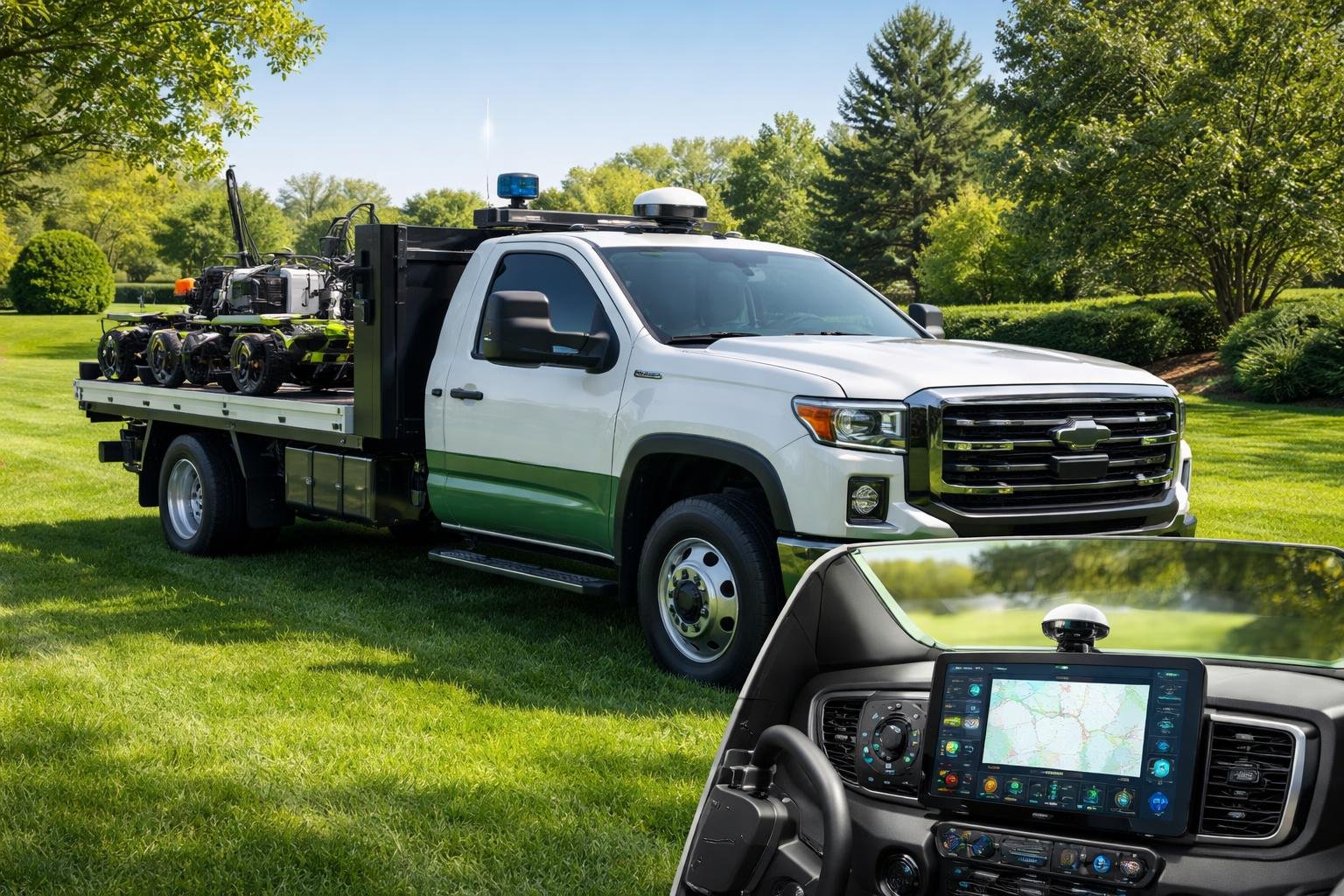
Fleet managers can see vehicle locations, driver behavior, and equipment usage through telematics platforms. These platforms are accessible on smartphones, tablets, and computers.
The systems track metrics such as fuel efficiency, maintenance intervals, hours of use, and route optimization. This information helps businesses make better decisions about their operations.
Understanding Landscaping Vehicle Telematics
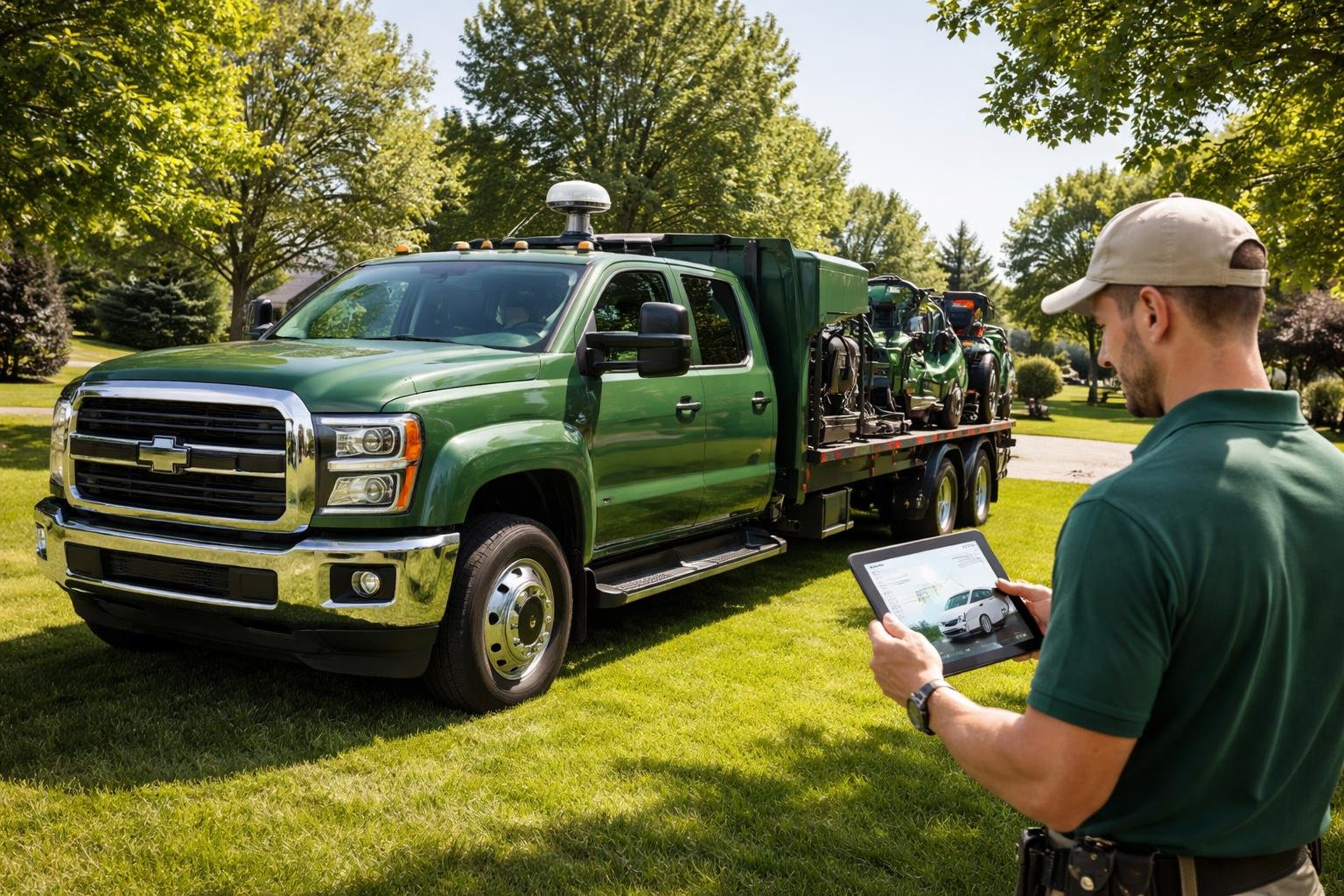
Telematics systems combine GPS tracking, vehicle diagnostics, and wireless communication. They give landscaping companies real-time visibility into their fleet operations.
These systems collect data on vehicle location, equipment usage, driver behavior, and maintenance needs. This helps businesses optimize their daily operations.
What Is Telematics in Landscaping?
Telematics in landscaping refers to technology systems that monitor and send data from vehicles, equipment, and mobile assets used in lawn care and landscape maintenance. The technology uses GPS satellites, onboard diagnostics, and cellular networks to capture fleet activity.
A typical telematics system includes hardware installed in trucks and equipment. This hardware connects to a central platform that processes and displays the data.
Managers can view real-time locations, track job progress, and receive alerts about vehicle issues or unauthorized usage. The system tracks multiple data points:
- Vehicle location and movement patterns
- Engine diagnostics and fault codes
- Fuel consumption rates
- Equipment runtime hours
- Driver behavior metrics
Landscapers use this information to answer important operational questions. They can see where crews are, check if equipment is used efficiently, and know which vehicles need maintenance.
How Telematics Transforms Landscaping Operations
Telematics changes how landscaping companies manage daily operations by replacing manual tracking with automated data collection. Managers no longer need paper timesheets or phone calls to locate crews.
Now, they can access a digital dashboard showing real-time fleet status. Route optimization becomes easier when telematics systems analyze travel patterns and highlight inefficient routes.
Companies can lower fuel costs by tracking idle time and adjusting dispatch schedules based on traffic. The technology records the exact time spent at each property, which helps with accurate job costing.
Driver accountability improves with documented proof of service visits and automated timekeeping. Telematics systems verify when crews arrive and leave job sites.
GPS tracking also deters theft and helps recover stolen assets. Geofencing alerts notify managers when vehicles leave designated areas during off-hours.
Telematics Technology Overview
Landscaping telematics systems have three main parts. The first is the tracking device installed in vehicles, which includes a GPS receiver, cellular modem, and connection to the vehicle's diagnostic port.
The second part is the cellular network that sends data from vehicles to cloud servers. This can happen continuously or at set intervals.
The third part is the software platform where landscapers access their fleet data. These platforms turn raw data into insights using dashboards, reports, and notifications.
Modern telematics systems can connect with other business software like scheduling tools, invoicing systems, and customer management platforms. This integration removes duplicate data entry and gives a complete view of operations.
Key Features of Landscaping Vehicle Telematics Systems
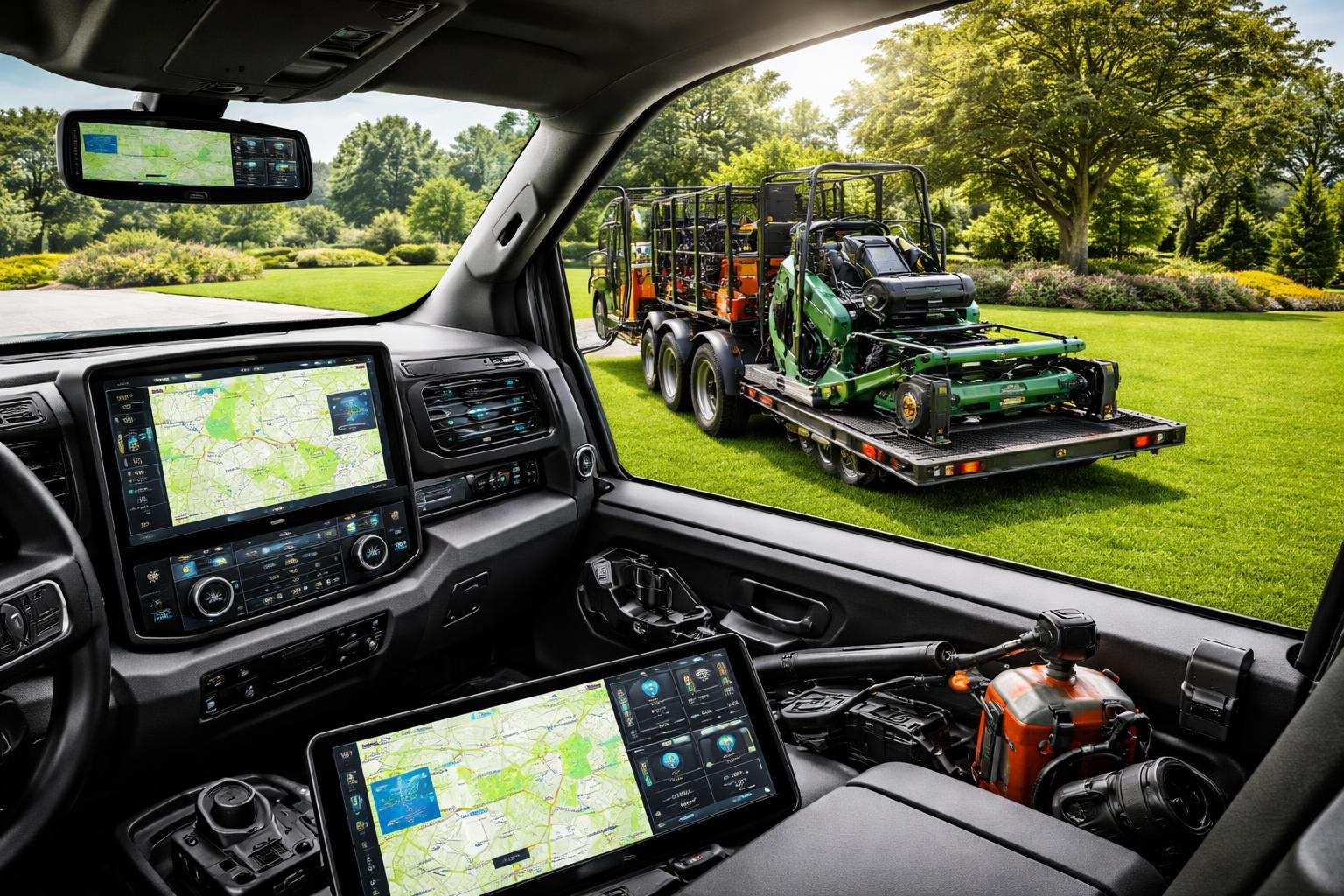
Landscaping vehicle telematics systems combine GPS tracking, fleet monitoring, and automated maintenance tools. These features provide clear visibility into vehicle locations, driver activities, and equipment health.
GPS Tracking Capabilities
GPS tracking is the core of any telematics system for landscaping fleets. The technology shows vehicle locations throughout the workday and records movement between job sites.
This data helps managers verify service completion and calculate travel times. It also helps answer customer questions about crew arrival.
Fleet tracking captures routing information and highlights inefficient paths and extra mileage. Managers can review historical GPS data to improve service areas and assign crews based on proximity.
Real-time tracking gives instant oversight of active vehicles. Dispatchers can find the nearest crew for emergency or last-minute jobs.
The visibility also helps prevent unauthorized vehicle use and supports equipment recovery if theft happens.
Real-Time Fleet Monitoring
Real-time fleet monitoring gives continuous updates on vehicle status, driver behavior, and operational metrics. The systems track speed, harsh braking, rapid acceleration, and idle time as they happen.
Fleet managers get instant notifications when drivers exceed preset limits for these behaviors. Monitoring also covers fuel consumption and engine diagnostics.
Telematics platforms show fuel usage by vehicle and spot inefficiencies like excessive idling. This helps companies lower fuel costs through driver coaching and policy changes.
Activity reports show how crews spend their time during each shift. Managers can track time spent driving, working, and taking breaks to improve scheduling and billing.
Maintenance Scheduling and Alerts
Telematics systems automate vehicle maintenance tracking using engine hours, mileage, and diagnostic codes. Platforms send alerts when vehicles are due for oil changes, tire rotations, or other routine tasks.
This approach prevents missed maintenance and costly breakdowns during busy seasons. The systems monitor diagnostic trouble codes and engine performance to spot mechanical issues early.
Maintenance schedules can be based on actual vehicle usage, not just time intervals. Companies using telematics for maintenance reduce downtime by fixing problems before they cause failures.
Alerts can be customized for different vehicles and equipment. Fleet managers get notifications through mobile apps or email when action is needed.
Fleet Management Solutions for Landscaping Businesses
Modern fleet management solutions help landscaping companies track vehicles, manage equipment maintenance schedules, and coordinate crews across job sites. Software platforms provide real-time data on fleet operations while optimizing routing and scheduling.
Fleet Management Software Comparison
Fleet management software for landscaping businesses comes with different features, pricing, and specializations. Azuga offers GPS tracking with productivity monitoring and asset protection.
GPS Trackit provides telematics systems that track vehicles and equipment like mowers. This helps managers keep up with service schedules for all machinery.
SureCam combines dashcam technology with fleet tracking, offering video telematics and accident detection. RAM Tracking provides solutions for managing trucks, equipment, and field crews together.
Most platforms include real-time GPS tracking, maintenance alerts, and usage monitoring. The main differences are in features like equipment tracking, video integration, or geofencing.
Companies should choose features that match their priorities, such as theft prevention, maintenance scheduling, or crew accountability.
Route Planning and Optimization
Route planning tools help reduce fuel use and let crews complete more service appointments each day. Fleet management software looks at job locations, traffic, and crew availability to create efficient routes.
Real-time route adjustments let dispatchers handle schedule changes or traffic delays without disrupting the day. Dynamic routing allows managers to reassign crews to nearby jobs when appointments change.
Geofencing creates virtual boundaries around offices, customer properties, and service zones. Managers get alerts when vehicles enter or leave these areas, making it easier to track crew movements and job site arrivals.
Driver and Crew Scheduling
Crew scheduling in fleet management platforms matches personnel assignments with vehicle availability and equipment needs. Managers can track which crews have special certifications or training to assign the right team to each job.
Integration between scheduling and GPS tracking shows actual job completion times. This data helps improve future scheduling and highlights crews who work faster or slower than expected.
Mobile access lets field supervisors view schedules, update job statuses, and communicate changes from anywhere. Time tracking records when crews clock in, arrive at job sites, and finish work, creating accurate payroll and billing data.
Enhancing Fleet Safety and Performance
Telematics systems give landscaping fleet managers real-time visibility into driver actions, vehicle conditions, and safety risks. These tools help companies spot dangerous driving, reduce accidents, and lower insurance costs through safety improvements.
Driver Behavior Monitoring
Telematics platforms track important driving metrics like harsh braking, rapid acceleration, speeding, and sharp cornering. The system records every time drivers exceed preset limits for these actions.
GPS sensors detect when vehicles go over speed limits or company-set maximum speeds. Accelerometers measure sudden stops or sharp turns, highlighting risky patterns.
Fleet managers get instant alerts when drivers engage in unsafe behaviors. This feedback allows supervisors to address safety concerns quickly.
The data shows which drivers need more training or coaching to improve their habits.
Dashcams and AI-Powered Alerts
Modern dashcam systems work with telematics platforms to capture video of driving events and road conditions. Dual-facing cameras record both the road and the driver's actions inside the cab.
AI algorithms analyze video feeds in real time to spot distracted driving, cell phone use, or not wearing seatbelts. When unsafe actions are detected, the system gives instant audio alerts to the driver.
Cameras automatically save footage during hard braking, collisions, or other incidents. This evidence protects companies from false insurance claims and helps with accident investigations.
Driver Performance Reporting
Telematics systems generate individual performance scorecards that rank drivers based on safety metrics and operational efficiency. These reports compile data on idling time, fuel consumption, route adherence, and safety violations.
Fleet managers can compare driver performance across their team to identify top performers and those who need improvement. The scoring systems usually give more weight to safety factors, rewarding drivers who maintain clean records and complete tasks efficiently.
Regular performance reports create accountability. Many landscaping companies tie these scores to incentive programs or recognition initiatives that reward consistent safe driving.
Driver Safety Initiatives
Safety programs built around telematics data reduce accidents more effectively than general training. Companies set baseline safety metrics and then implement targeted interventions for drivers who fall below standards.
Common safety initiatives include:
- Monthly safety coaching sessions for drivers with declining scores
- Reward programs for maintaining zero safety violations over set periods
- Remedial training focused on behaviors like speed management or proper braking
- Team-based competitions that encourage peer accountability
Fleet managers use trend data to identify safety issues across their operations. If several drivers struggle with the same behavior in certain locations, managers can address environmental factors like poorly marked work zones or hazardous road conditions.
Asset and Equipment Tracking for Landscapers
Landscaping companies manage assets beyond vehicles, such as mowers, aerators, trailers, and hand tools across multiple job sites. Tracking systems monitor equipment location, usage patterns, and maintenance needs to prevent theft and improve asset utilization.
Equipment Tracking Devices
Equipment tracking devices attach to mowers, skid-steers, aerators, and other machinery to monitor their real-time location and status. These devices use GPS and cellular technology to transmit data about equipment movement, run time, and idle periods.
Most tracking solutions offer compact, weatherproof devices that withstand moisture, vibration, and temperature changes. Battery-powered trackers suit non-powered equipment like trailers and push mowers, while hardwired units integrate with powered machinery.
The data helps managers identify underused equipment and schedule maintenance based on real usage hours. Instant alerts notify managers when equipment moves outside designated areas.
Many systems allow geofences around job sites or storage facilities. This feature detects unauthorized movement immediately.
Trailer and Landscaping Equipment Monitoring
Trailers are high-value assets often carrying expensive equipment and tools. GPS trackers installed on trailers provide continuous location monitoring and can detect hitching, unhitching, and movement.
Specialized tracking devices monitor both the trailer and equipment inside through a single dashboard. These systems track items like compact excavators, walk-behind mowers, blowers, and edgers that move between job sites.
Some providers offer individual trackers for smaller tools, helping companies maintain accountability across multiple crews.
Monitoring systems generate usage reports that show which equipment sits idle and which pieces are used most. This information helps businesses decide on equipment purchases, rentals, or asset redistribution.
Fuel Management and Cost Control
Fuel is one of the largest operating expenses for landscaping fleets. Telematics systems provide real-time data on consumption patterns, driver behaviors, and route efficiency to reduce waste and lower costs.
Fuel Consumption Tracking
Telematics systems collect detailed fuel data from each vehicle using GPS and on-board diagnostics. Information is transmitted in real-time via wireless networks.
Fleet managers can monitor consumption patterns across their operation and identify vehicles or drivers that deviate from efficiency standards. The technology assigns unique PINs to employees and vehicles, ensuring accountability when fuel is dispensed.
This prevents unauthorized usage and requires accurate entry at the pump. Controllers integrated with the system capture analytics that support informed decisions about fuel purchases and budgeting.
Consumption anomalies can indicate mechanical issues. When telematics data reveals unusual fuel usage, managers can cross-reference maintenance records to identify problems like engine inefficiencies or tire pressure issues.
Reducing Fuel Waste and Idling
Excessive idling is a common source of fuel waste in landscaping fleets. Telematics platforms detect when vehicles remain stationary with engines running and generate reports showing total idle time per vehicle and driver.
Fleet managers can set idle time thresholds and receive alerts when limits are exceeded. This data enables targeted coaching for drivers who frequently idle, addressing a behavior that wastes fuel.
Some operations reduce idling by 20-30% within months of using monitoring systems. Speed management features also help reduce waste.
Telematics tracks speed patterns and flags aggressive acceleration or high speeds that lower fuel efficiency. These insights help managers develop training focused on economical driving.
Traffic Updates and Efficient Routing
Route optimization powered by telematics reduces fuel consumption by minimizing unnecessary mileage. The systems use real-time traffic updates to adjust routes dynamically, steering vehicles away from congestion.
GPS tracking shows actual paths taken compared to planned routes. Managers can analyze this data to create optimized service areas that reduce travel between job sites.
Efficient routing decreases fuel costs and vehicle wear. It also allows crews to complete more jobs per day.
The technology considers road conditions and time-of-day traffic patterns when suggesting routes. This approach helps crews avoid predictable congestion, saving fuel and improving on-time arrival rates.
Ensuring Proof of Service and Accountability
Telematics systems provide landscaping companies with clear documentation of completed work and create transparent records that strengthen customer relationships. These digital verification methods eliminate disputes and build trust through accurate service records.
Service Verification with Telematics Data
GPS tracking creates timestamped records of vehicle arrival and departure times at each job site. This data serves as digital proof that crews completed scheduled services.
The system automatically logs location coordinates, duration of stay, and route information without manual input from workers. Telematics platforms generate reports that show exact service windows for each property.
Managers can access this information instantly to verify completion dates and times. The data also tracks equipment usage patterns, which helps document the scope of work performed.
Many systems include geofencing that triggers notifications when vehicles enter or exit service areas. These alerts create a clear audit trail of all property visits.
Companies can export this information as formatted reports with maps, timestamps, and service duration metrics for client records or billing.
Customer Communication and Satisfaction
Real-time GPS data enables landscaping companies to provide accurate arrival time estimates to customers. Dispatchers can monitor vehicle locations and send updates about delays or early arrivals based on actual position data.
This transparency reduces customer frustration. Telematics records support customer service teams when addressing service inquiries or complaints.
Representatives can quickly access historical visit data to confirm service dates and resolve billing questions. The documented proof protects companies from unfounded claims and demonstrates professionalism.
Access to service verification data helps landscaping businesses build customer loyalty through consistent reliability. Clients appreciate companies that can instantly confirm completion details and maintain detailed service histories.
This level of accountability sets professional operations apart from competitors who rely on manual tracking.
Advanced Telematics Strategies
Modern telematics systems enable landscaping fleets to move beyond basic tracking by using data analytics for maintenance forecasting and ensuring compliance with federal regulations. These advanced approaches help reduce operational costs and meet legal requirements for commercial vehicle operations.
Predictive and Preventative Maintenance
Telematics platforms collect continuous data on engine performance, fluid levels, and component wear to identify maintenance needs early. The system monitors metrics like engine hours, fault codes, and temperature changes to generate alerts when vehicles approach service thresholds.
Predictive maintenance uses historical data and algorithms to forecast when specific parts will likely fail. For example, the system might analyze brake wear patterns across similar vehicles to predict replacement timing for individual trucks.
Preventative maintenance schedules regular service based on actual vehicle usage rather than set time intervals. Telematics tracks mileage, idle time, and operating conditions to determine optimal service intervals for oil changes, filter replacements, and inspections.
Fleet managers receive automated notifications when vehicles require attention. This strategy extends equipment lifespan and minimizes costly downtime that can disrupt appointments and project timelines.
Integrating ELD and Regulatory Compliance
Electronic Logging Devices (ELD) work with telematics systems to automatically record driver hours of service. This helps landscaping companies meet Federal Motor Carrier Safety Administration rules.
Companies operating commercial vehicles over 10,001 pounds must follow these regulations. Failure to comply can result in significant penalties.
The telematics platform tracks duty status changes, driving time, and rest periods. Drivers no longer need to fill out manual logbooks.
This integration helps prevent paperwork errors. It also ensures accurate records for roadside inspections.
Managers can view real-time compliance reports. This allows them to spot and address potential violations early.
Driver vehicle inspection reports and maintenance records are managed in the same system. International Fuel Tax Agreement data is also included.
A centralized system makes regulatory reporting easier. It reduces the administrative workload for landscaping operations with multiple vehicles.