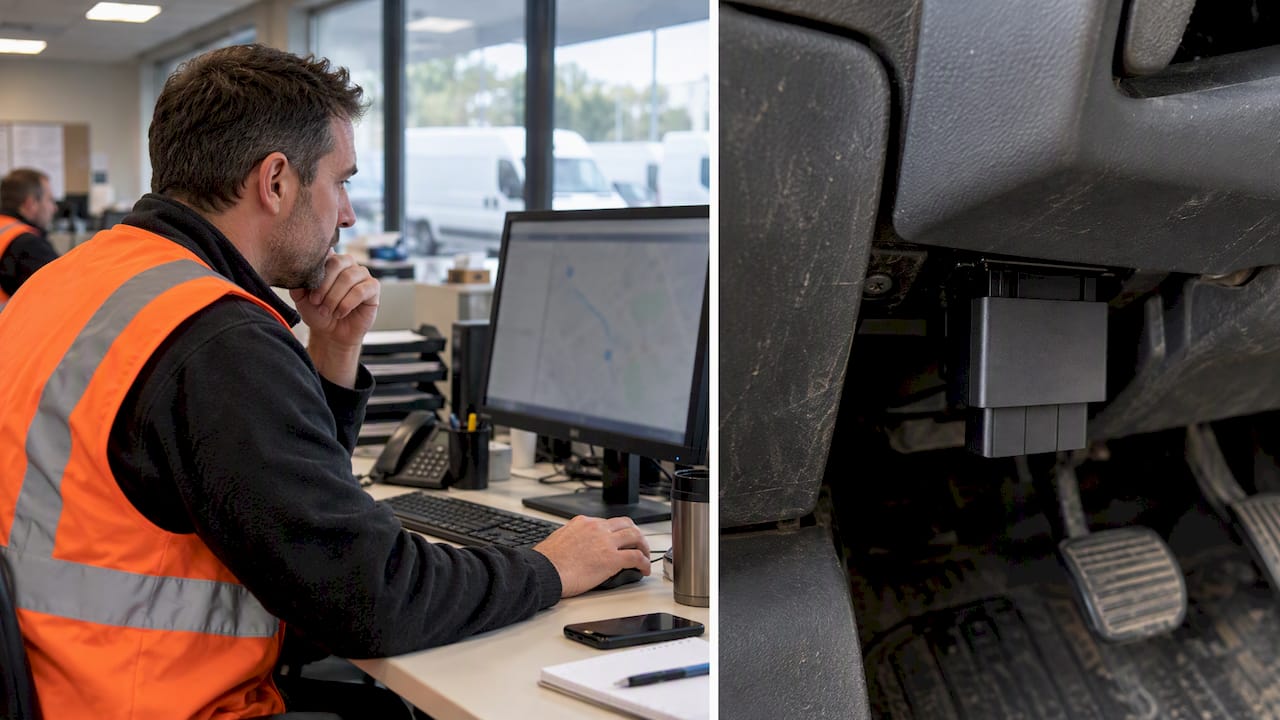
Electrical Fleet Analytics: Optimizing Performance and Reducing Operational Costs in 2026
How to start saving money
Lorem ipsum dolor sit amet, consectetur adipiscing elit lobortis arcu enim urna adipiscing praesent velit viverra sit semper lorem eu cursus vel hendrerit elementum morbi curabitur etiam nibh justo, lorem aliquet donec sed sit mi dignissim at ante massa mattis.
- Neque sodales ut etiam sit amet nisl purus non tellus orci ac auctor
- Adipiscing elit ut aliquam purus sit amet viverra suspendisse potent
- Mauris commodo quis imperdiet massa tincidunt nunc pulvinar
- Excepteur sint occaecat cupidatat non proident sunt in culpa qui officia
Why it is important to start saving
Vitae congue eu consequat ac felis placerat vestibulum lectus mauris ultrices cursus sit amet dictum sit amet justo donec enim diam porttitor lacus luctus accumsan tortor posuere praesent tristique magna sit amet purus gravida quis blandit turpis.

How much money should I save?
At risus viverra adipiscing at in tellus integer feugiat nisl pretium fusce id velit ut tortor sagittis orci a scelerisque purus semper eget at lectus urna duis convallis. porta nibh venenatis cras sed felis eget neque laoreet suspendisse interdum consectetur libero id faucibus nisl donec pretium vulputate sapien nec sagittis aliquam nunc lobortis mattis aliquam faucibus purus in.
- Neque sodales ut etiam sit amet nisl purus non tellus orci ac auctor
- Adipiscing elit ut aliquam purus sit amet viverra suspendisse potenti
- Mauris commodo quis imperdiet massa tincidunt nunc pulvinar
- Adipiscing elit ut aliquam purus sit amet viverra suspendisse potenti
What percentege of my income should go to savings?
Nisi quis eleifend quam adipiscing vitae aliquet bibendum enim facilisis gravida neque. Velit euismod in pellentesque massa placerat volutpat lacus laoreet non curabitur gravida odio aenean sed adipiscing diam donec adipiscing tristique risus. amet est placerat in egestas erat imperdiet sed euismod nisi.
“Nisi quis eleifend quam adipiscing vitae aliquet bibendum enim facilisis gravida neque velit euismod in pellentesque”
Do you have any comments? Share them with us on social media
Eget lorem dolor sed viverra ipsum nunc aliquet bibendum felis donec et odio pellentesque diam volutpat commodo sed egestas aliquam sem fringilla ut morbi tincidunt augue interdum velit euismod eu tincidunt tortor aliquam nulla facilisi aenean sed adipiscing diam donec adipiscing ut lectus arcu bibendum at varius vel pharetra nibh venenatis cras sed felis eget.
Electric fleets are a major investment for organizations moving to sustainable transportation. Managing these assets requires more than traditional vehicle tracking.
Electrical fleet analytics uses real-time monitoring, artificial intelligence, and predictive insights to optimize battery health, charging schedules, route planning, and operational efficiency. This approach helps fleet managers cut costs, extend vehicle life, and meet sustainability targets while keeping service reliable.
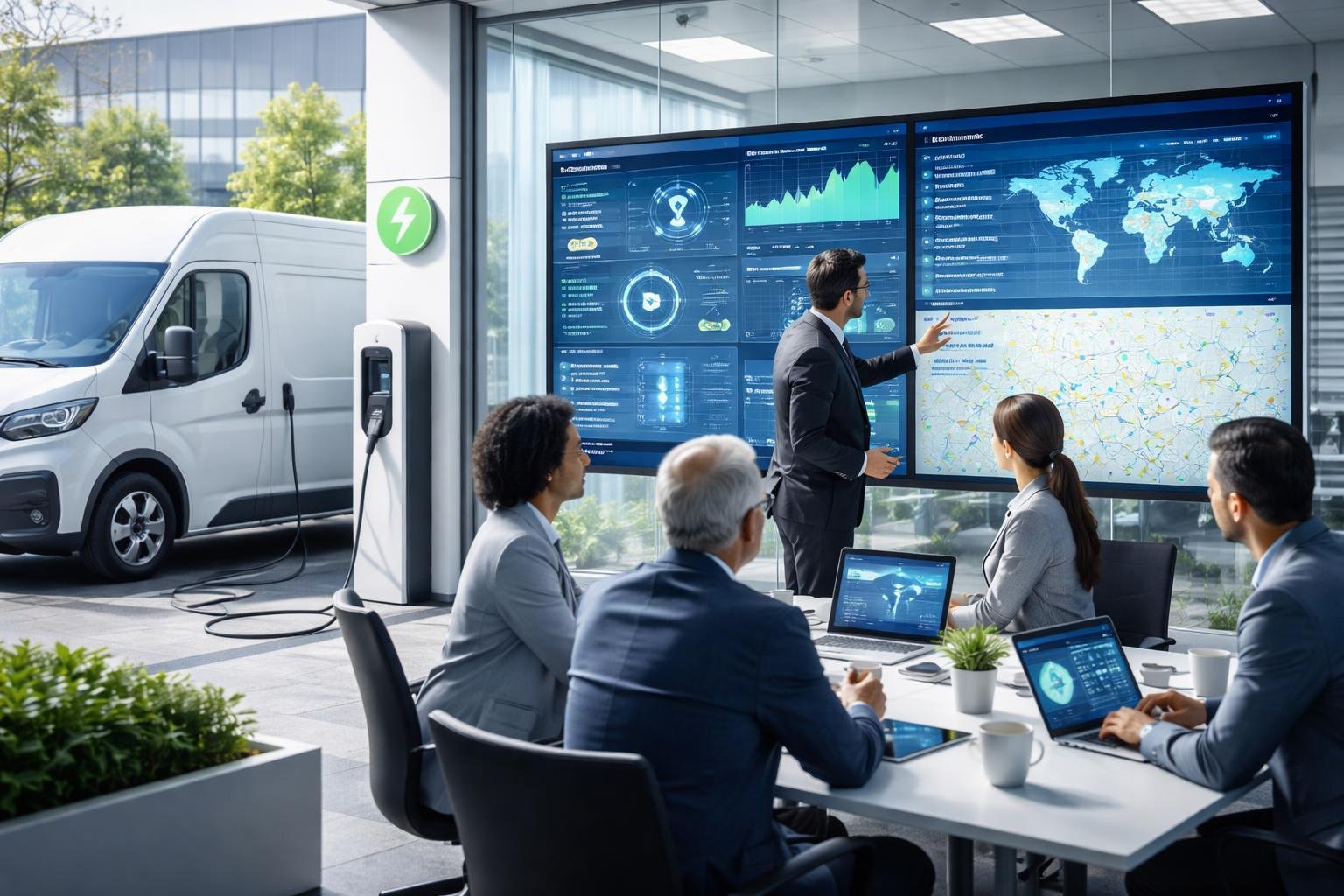
Electric vehicle operations are more complex than conventional fleet management. Battery performance changes with temperature, usage, and charging habits.
Energy costs can vary depending on time-of-use rates and grid demand. Analytics platforms help manage these challenges using continuous data collection and smart analysis.
Modern analytics systems give visibility into vehicle health, energy use, and maintenance needs before problems develop. Organizations can make better decisions about fleet makeup, charging infrastructure, and operational strategies while tracking environmental goals.
Understanding Electrical Fleet Analytics

Electrical fleet analytics turns raw operational data into useful information for managing electric vehicle fleets. This data-driven approach uses telematics, battery diagnostics, and charging data to boost performance and cut costs.
Definition and Scope of Electrical Fleet Analytics
Electrical fleet analytics involves collecting and analyzing data from electric vehicle fleets to improve efficiency. Data sources include GPS tracking, battery management systems, charging metrics, and maintenance records.
Organizations use this data to guide fleet deployment and resource planning. The scope includes predictive modeling and forecasting.
Analytics platforms process real-time data from vehicle diagnostics, environmental sensors, and charging systems to spot patterns and issues. Fleet managers can see energy use, range limits, and charging needs across the fleet.
Machine learning algorithms predict future outcomes and help prevent problems. These systems analyze past performance and current conditions to improve route planning, charging, and maintenance.
Key Stakeholders in Electric Vehicle Fleet Analytics
Fleet managers are the main users of analytics platforms. They use data to coordinate daily operations and long-term planning.
They monitor charging, track vehicle performance, and manage electricity demand through dashboards. Fleet mechanics now use analytics for diagnostics.
They check battery health, predict failures, and perform maintenance based on data trends. Project teams and fleet customers assess travel patterns and electrification needs during planning.
Energy providers and charging infrastructure operators use fleet analytics data to manage the grid and plan charging stations.
Importance for EV Fleet Operations
Analytics help electric fleets manage challenges that differ from traditional fleets. Range limits and charging logistics require accurate data to ensure vehicles complete routes.
Fleet operators use analytics to find the best times and places to charge based on usage. Cost reduction is a key benefit.
Organizations spot inefficiencies in energy use, avoid unnecessary charging, and reduce downtime with predictive maintenance. Data insights reveal savings that support electrification.
Battery performance improves with continuous monitoring. Real-time analytics track battery wear, temperature effects, and charging habits to extend battery life.
Automated data systems make compliance and reporting easier. Fleet operators can show environmental benefits, track sustainability, and meet regulations with analytics.
Core Components of Electric Fleet Analytics
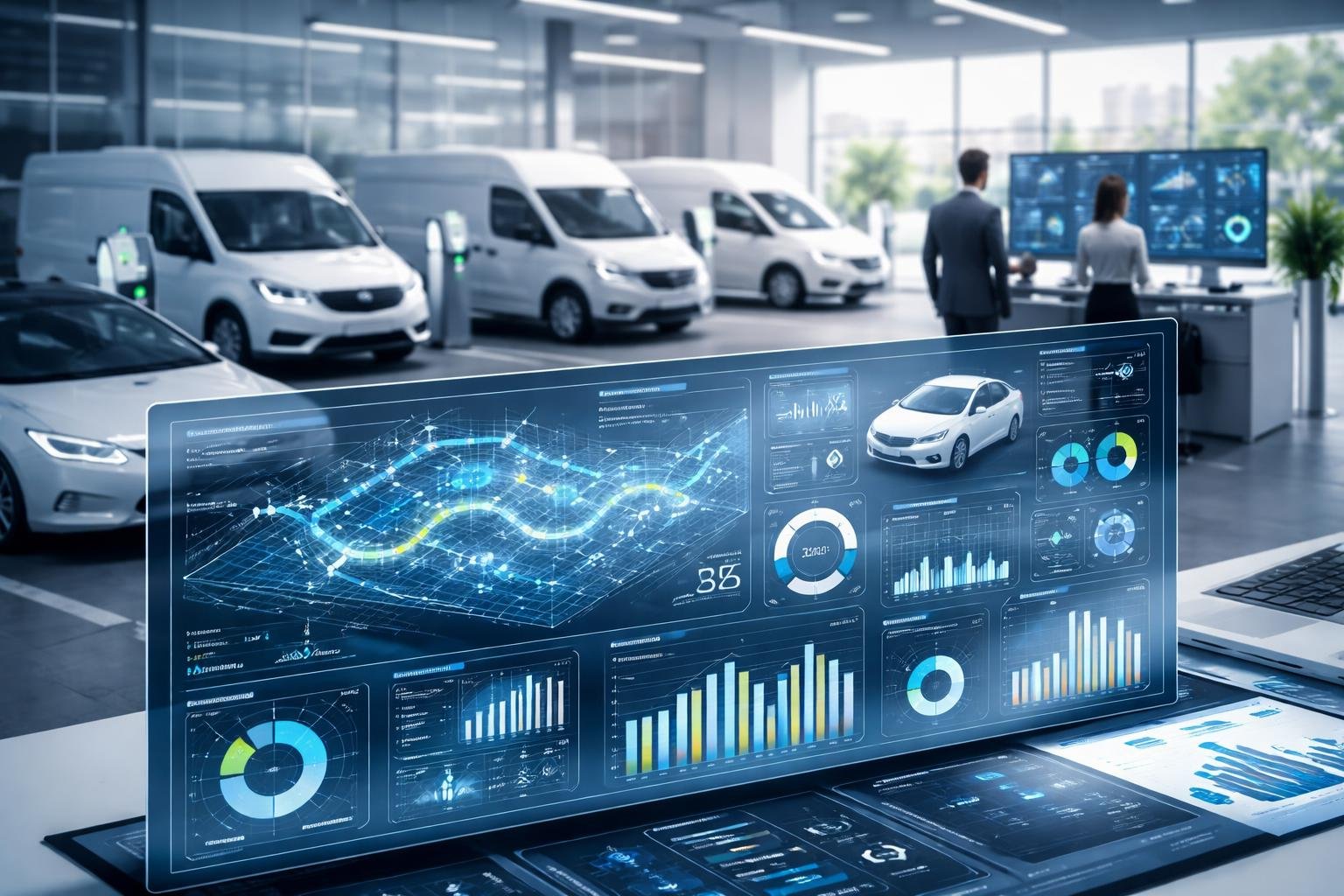
Electric fleet analytics systems use integrated data from vehicles, charging stations, and networks to provide insights. These platforms combine telemetry, battery monitoring, and real-time dashboards to improve performance and cut costs.
Data Collection and Telemetry
Fleet analytics platforms collect data from onboard sensors, telematics devices, and IoT-connected charging stations. Telemetry captures vehicle location, speed, driving patterns, and energy use during each trip.
Data collection systems also gather maintenance logs, technician notes, and charging session details. This centralization helps spot patterns affecting efficiency.
Telematics devices send real-time data over cellular networks, so managers can check vehicle status remotely. Data includes temperature, climate control use, and braking efficiency, all of which affect energy use.
Battery Health and State of Charge Monitoring
Analytics systems track battery temperature, charge cycles, and wear to estimate battery life. State of charge monitoring gives constant updates on energy levels, helping with route planning.
Predictive analytics look at past charging data to find batteries losing capacity or showing temperature issues. Maintenance teams can act before failures happen.
Monitoring also checks regenerative braking and its effect on battery charge. Operators use this data to improve driving habits and extend battery life.
Real-Time Monitoring and Reporting
Dashboards show live vehicle locations, battery levels, and charging status for the whole fleet. Administrators get alerts if vehicles leave planned routes, have issues, or need charging.
Reporting tools create performance metrics like energy efficiency, charging cost comparisons, and vehicle use rates. These reports guide decisions about fleet growth and charging investments.
Real-time data helps adjust routes based on traffic, available charging, and energy needs for each trip.
AI and Machine Learning in EV Fleet Analytics
Artificial intelligence changes how fleets monitor vehicles, predict maintenance, and optimize charging. Machine learning processes large amounts of data to find patterns and provide actionable insights.
Role of Artificial Intelligence in Fleet Operations
AI systems analyze data from charging stations, vehicle sensors, and environmental factors to optimize fleet performance. They process information on charging habits, traffic, vehicle locations, and weather to support decisions.
Fleet management platforms use AI for predictive energy modeling, estimating each vehicle's needs for planned routes. The technology also manages charging loads to avoid grid overload and lower electricity costs.
AI systems let administrators monitor battery health, track driver behavior, and adjust routes as needed. IoT sensors provide constant data for machine learning, improving predictions over time.
Machine Learning for Predictive Analytics
Machine learning examines past and real-time data to forecast maintenance needs before failures. This reduces downtime and costs by fixing issues during scheduled service.
Analytics models check battery wear, charging efficiency, and component use to create maintenance plans for each vehicle. Operators get alerts when vehicles need attention, helping them use resources wisely.
The technology considers route history, climate, driving, and charging habits to predict energy use more accurately. Advanced models can find subtle links between factors affecting fleet performance.
EVE-Ai and Fleet Data Intelligence
EVE-Ai is a battery fleet analytics platform using AI-powered predictions and real-time monitoring. The system provides insights for electric fleet and energy operations through advanced dashboards.
This platform tracks key indicators, normalizes metrics across vehicle types, and compares performance to industry benchmarks. Managers see data on charging efficiency, battery trends, and operational issues.
The analytics engine uses machine learning to improve predictions as it gathers more data. Administrators can spot underperforming vehicles, optimize charging infrastructure, and make informed decisions about fleet changes.
Battery Performance and Management Systems
Electric fleet operators use advanced battery monitoring and analytics to extend asset life, prevent failures, and cut operational costs. These tools combine real-time diagnostics, smart management, and predictive analytics for fleet-wide insights.
Battery Health Diagnostics and Performance Tracking
Battery diagnostics monitor key parameters like state of charge, health, capacity, resistance, and temperature to assess battery condition. Real-time systems collect data from cells and battery packs to catch issues early.
These systems measure voltage, charge cycles, and thermal behavior to set performance baselines. Predictive analytics use this data to forecast battery life and warn managers about batteries near critical wear.
Fleet analytics aggregate data across vehicles to spot patterns and compare performance. Operators can see how usage, environment, and charging affect battery life.
Battery Management Systems and Technology
Battery management systems (BMS) control lithium-ion battery packs in electric vehicles. They regulate charging, balance cell voltages, and keep temperatures safe.
The BMS prevents overcharging, deep discharge, and overheating. It works with vehicle controls to optimize power and energy recovery.
Advanced BMS connect to telematics platforms to send diagnostic data to operators. This allows remote monitoring of battery status for all vehicles.
Operators use dashboards to see real-time performance for each vehicle.
Battery Intelligence and Analytics
Battery intelligence uses AI and machine learning to turn sensor data into strategic insights. These platforms analyze past performance, environment, and operations to guide fleet decisions.
Cloud-based analytics process data from diagnostics, GPS, and sensors to build battery health profiles. The technology spots anomalies that could signal failures.
Fleet operators use these platforms to improve maintenance, optimize charging, and extend asset life. The systems suggest operational changes based on current and predictive data.
Data insights help fleets lower energy costs, reduce battery replacement expenses, and keep vehicles available.
Optimizing Operations: Routing, Charging, and Efficiency
Fleet analytics platforms help operators coordinate vehicle routing with charging schedules while managing energy costs. These systems analyze operational data to improve route planning, infrastructure use, energy management, and power flows.
Route Planning and Optimization
Route optimization for electric fleets considers vehicle range, charging station locations, and delivery schedules. Fleet management systems use GPS tracking to monitor real-time vehicle positions and energy use.
Dispatchers adjust routes based on remaining battery capacity and available charging stations. Advanced routing algorithms find efficient paths by considering traffic, delivery windows, and charging stops.
These systems reduce distance traveled and ensure vehicles have enough charge. Fleet operators can review past route data to find ways to consolidate stops or change departure times.
Dispatch systems connect route planning with charging status to avoid range-related delays. The software assigns vehicles based on charge level and route needs, reducing the risk of mid-route charging.
Charging Infrastructure and Scheduling
Charging infrastructure optimization balances vehicle availability, electricity costs, and grid limits. Fleet operators review schedules to set charging speeds and times for each vehicle, avoiding demand spikes.
Key charging schedule factors include:
- Vehicle return and departure times
- Charging speed needed (Level 2 or DC fast charging)
- Time-of-use electricity rates
- Grid capacity limits
Open Charge Point Protocol (OCPP) allows centralized management of charging stations from different brands. This protocol lets fleet platforms monitor charging sessions, control speeds, and collect energy data.
Operators schedule charging during off-peak hours to lower costs. The system prioritizes vehicles with early departures and adjusts charging speeds based on the time before the next route.
Reducing Energy Consumption and Costs
Reducing energy costs starts with analyzing usage patterns across routes, driving styles, and conditions. Fleet analytics track energy use per mile to find inefficiencies from acceleration, climate control, or route type.
Real-time monitoring alerts operators to abnormal energy use, which may signal maintenance or driver issues. These platforms compare actual energy use to predictions based on routes and vehicle specs.
Demand charge management helps large fleets cut costs by spreading charging loads and avoiding peak rates. Some systems adjust charging speeds to keep facility power draw within limits.
Fleet managers compare energy costs with operational needs to find the best charging strategies.
Vehicle-to-Grid and Energy Distribution
Vehicle-to-Grid (V2G) technology lets electric fleet vehicles send stored energy back to the grid during peak times. Fleets with V2G-capable vehicles and bidirectional chargers can earn revenue by providing grid services.
Energy distribution strategies coordinate charging and discharging based on real-time electricity prices and grid needs. The system decides when to charge at low rates and when to sell energy back at higher prices.
V2G planning ensures vehicles keep enough charge for scheduled routes. Analytics calculate how much battery capacity can be used without affecting next-day operations.
Fleet operators set minimum charge levels for each vehicle based on assigned routes. Grid operators benefit from the extra energy storage, and fleets lower net energy costs by joining demand response programs.
Fleet Management Systems and Security
Electric vehicle fleet management systems integrate real-time tracking, diagnostics, and maintenance scheduling. They require strong security to protect operational data and connected networks.
EV Fleet Management System Features
Modern EV fleet management platforms provide real-time GPS tracking for vehicle locations and battery status. These systems monitor charging schedules, energy use, and route efficiency.
Fleet managers use dashboards to see key metrics like state of charge, charger availability, and estimated charging times. The software calculates the best charging times based on rates and operational needs.
Key features include:
- Real-time battery and range monitoring
- Automated charging schedule optimization
- Energy cost tracking and reports
- Vehicle utilization analytics
- Driver behavior monitoring
Telematics hardware enables two-way communication between vehicles and management systems. This supports software updates, remote diagnostics, and alerts for battery or charging issues.
Diagnostics, Predictive Maintenance, and ELD
Electric vehicle diagnostics monitor battery health, motor performance, and electrical systems through continuous data collection. Fleet management systems track voltage, temperature, and charging cycles to spot problems early.
Predictive maintenance uses historical data to forecast when parts like batteries or cooling systems need service. This reduces downtime and extends asset life.
Electronic Logging Device (ELD) compliance is required for commercial electric fleets. Systems automatically record driving hours, rest periods, and duty status, integrating with electric vehicle data.
ELD data combines with battery diagnostics to ensure drivers have enough charge for routes while staying compliant. Maintenance alerts trigger based on actual wear instead of fixed schedules, reflecting the lower maintenance needs of electric vehicles.
Cybersecurity and Data Protection
Fleet management systems handle sensitive data like vehicle locations and driver info. Encryption protects data transmission between vehicles, chargers, and servers.
User access is controlled through role-based permissions and multi-factor authentication. Network segmentation separates critical vehicle controls from administrative systems.
Regular security audits find vulnerabilities in telematics and charging interfaces. Operators use firewalls and intrusion detection to monitor for unauthorized access.
Data backup ensures continuity during cyberattacks or failures. Compliance with data protection rules governs how driver and vehicle data is stored and shared.
Future Trends and Sustainability in Electrical Fleet Analytics
Electrical fleet analytics are advancing with better batteries, more electric vehicles, and new environmental regulations. Organizations use these changes to optimize operations and meet sustainability goals.
Fleet Electrification and Market Outlook
Fleet electrification is growing as organizations switch from combustion to electric vehicles. Predictive analytics help fleet managers plan replacements, check total ownership costs, and choose the best vehicles for each route.
AI-driven platforms analyze vehicle use, charging needs, and energy use to support electrification decisions. These systems consider daily mileage, payload, and location to recommend which fleet segments to electrify first.
Market forecasts show commercial EV adoption will rise through 2030. Analytics tools help organizations model finances, track incentives, and follow advances in battery range and charging speed.
Energy Storage and Advanced Technologies
Battery analytics are key for fleet efficiency and asset life. Systems monitor battery health, thermal management, and charging cycles to predict maintenance needs before failures.
Advanced analytics collect data from vehicle batteries, stationary storage, and the grid to optimize energy use. Fleet managers use these insights to schedule smart charging and reduce electricity costs.
Machine learning processes battery data to predict remaining life and suggest the best charging protocols. These tools help organizations extend battery warranties, lower replacement costs, and keep vehicles available.
Sustainability Reporting and Compliance
Emissions tracking and environmental reporting are now required by law in many places. Fleet analytics platforms help by automatically calculating carbon reductions and energy use.
These platforms also compare the environmental impact of electric and conventional vehicles. Organizations use them to create reports for sustainability standards and government regulations.
The platforms track Scope 1 and Scope 2 emissions. They also monitor renewable energy usage and progress toward decarbonization goals.
Analytics tools offer detailed insights into fleet performance with real-time dashboards. Automated reports make it easier to plan strategies for reducing emissions.