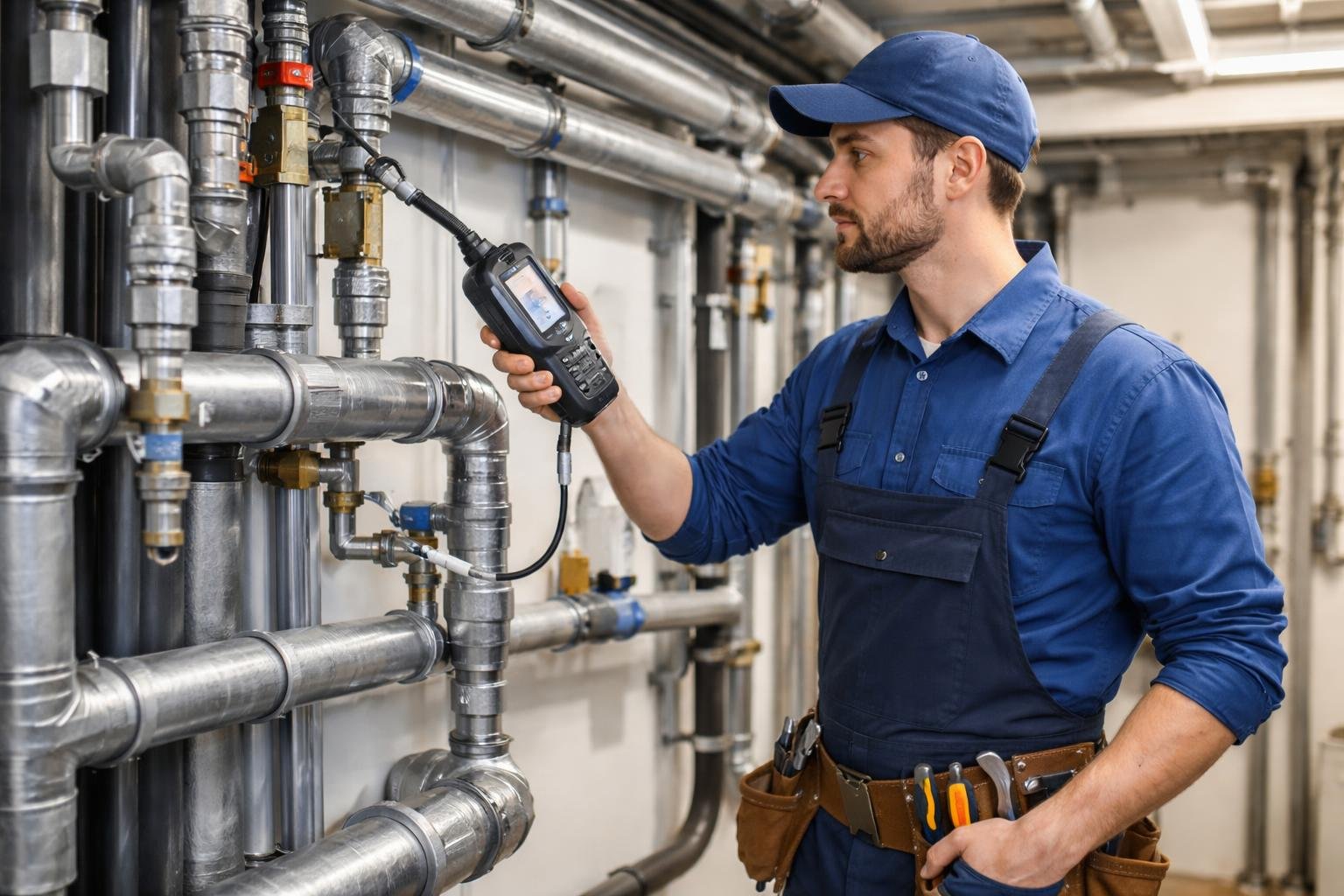
HVAC Fleet Efficiency: Proven Strategies to Reduce Costs and Maximize Performance
How to start saving money
Lorem ipsum dolor sit amet, consectetur adipiscing elit lobortis arcu enim urna adipiscing praesent velit viverra sit semper lorem eu cursus vel hendrerit elementum morbi curabitur etiam nibh justo, lorem aliquet donec sed sit mi dignissim at ante massa mattis.
- Neque sodales ut etiam sit amet nisl purus non tellus orci ac auctor
- Adipiscing elit ut aliquam purus sit amet viverra suspendisse potent
- Mauris commodo quis imperdiet massa tincidunt nunc pulvinar
- Excepteur sint occaecat cupidatat non proident sunt in culpa qui officia
Why it is important to start saving
Vitae congue eu consequat ac felis placerat vestibulum lectus mauris ultrices cursus sit amet dictum sit amet justo donec enim diam porttitor lacus luctus accumsan tortor posuere praesent tristique magna sit amet purus gravida quis blandit turpis.

How much money should I save?
At risus viverra adipiscing at in tellus integer feugiat nisl pretium fusce id velit ut tortor sagittis orci a scelerisque purus semper eget at lectus urna duis convallis. porta nibh venenatis cras sed felis eget neque laoreet suspendisse interdum consectetur libero id faucibus nisl donec pretium vulputate sapien nec sagittis aliquam nunc lobortis mattis aliquam faucibus purus in.
- Neque sodales ut etiam sit amet nisl purus non tellus orci ac auctor
- Adipiscing elit ut aliquam purus sit amet viverra suspendisse potenti
- Mauris commodo quis imperdiet massa tincidunt nunc pulvinar
- Adipiscing elit ut aliquam purus sit amet viverra suspendisse potenti
What percentege of my income should go to savings?
Nisi quis eleifend quam adipiscing vitae aliquet bibendum enim facilisis gravida neque. Velit euismod in pellentesque massa placerat volutpat lacus laoreet non curabitur gravida odio aenean sed adipiscing diam donec adipiscing tristique risus. amet est placerat in egestas erat imperdiet sed euismod nisi.
“Nisi quis eleifend quam adipiscing vitae aliquet bibendum enim facilisis gravida neque velit euismod in pellentesque”
Do you have any comments? Share them with us on social media
Eget lorem dolor sed viverra ipsum nunc aliquet bibendum felis donec et odio pellentesque diam volutpat commodo sed egestas aliquam sem fringilla ut morbi tincidunt augue interdum velit euismod eu tincidunt tortor aliquam nulla facilisi aenean sed adipiscing diam donec adipiscing ut lectus arcu bibendum at varius vel pharetra nibh venenatis cras sed felis eget.
HVAC companies face unique challenges when managing service vehicle fleets. Coordinating technician schedules and controlling operating costs are top concerns.
Every truck sitting idle, inefficient route, or unexpected breakdown directly impacts profitability and customer satisfaction. HVAC fleet efficiency focuses on maximizing vehicle uptime, reducing fuel consumption, and optimizing technician productivity through strategic fleet management practices.
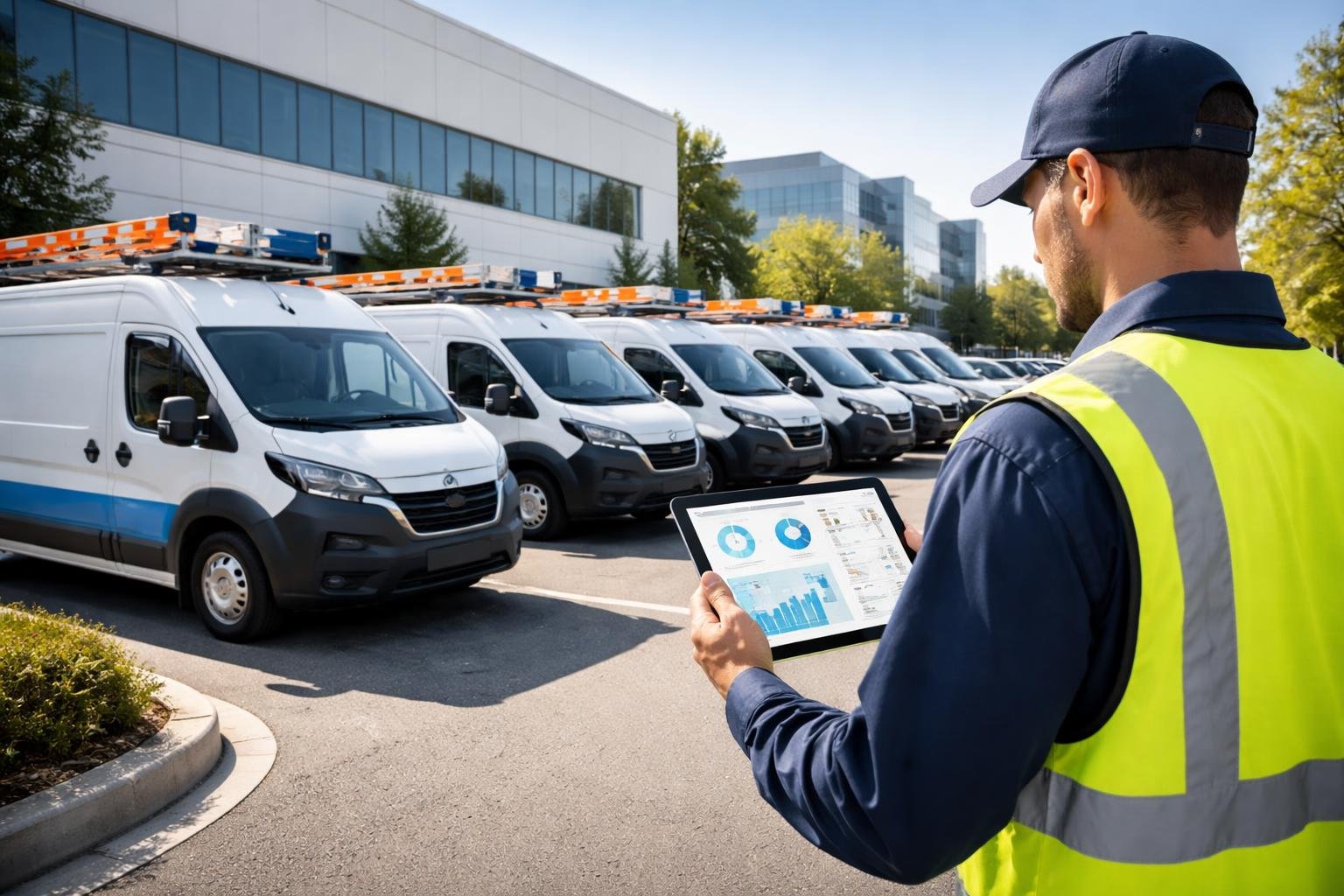
Modern fleet management is more than dispatching trucks. Companies must track performance metrics, schedule preventive maintenance, and use technology for data-driven decisions.
The difference between efficient and inefficient fleet operations often determines which HVAC businesses stay competitive. Rising costs can quickly challenge those with inefficient fleets.
This guide covers the essentials of HVAC fleet efficiency. Learn how to set performance benchmarks, adopt new technologies, and reduce expenses.
Operators will find practical strategies to improve service delivery and scale operations without adding more vehicles.
Core Principles of HVAC Fleet Efficiency
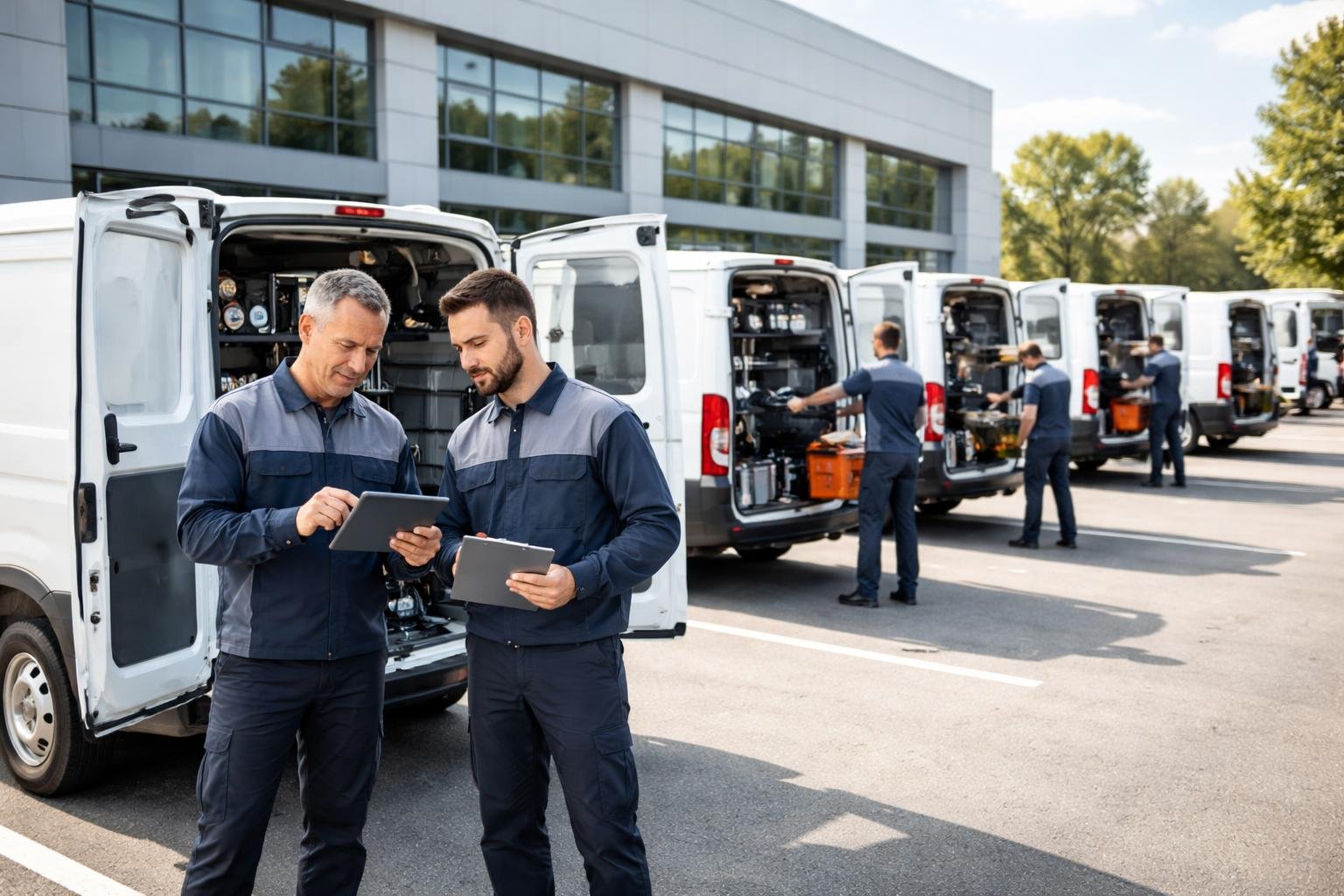
HVAC fleet efficiency means maximizing vehicle performance while minimizing operational costs. Strategic resource management is key.
Fleet optimization balances fuel use, maintenance schedules, and route planning. The goal is to maintain service quality without extra expenses.
What is HVAC Fleet Efficiency?
HVAC fleet efficiency measures how well service vehicles turn fuel, time, and resources into completed service calls and satisfied customers. It includes fuel economy, vehicle use rates, maintenance costs, and technician productivity.
Fleet efficiency goes beyond miles-per-gallon. It covers idle time, route optimization, proper vehicle sizing, and preventive maintenance schedules.
An efficient HVAC fleet completes more service calls with less fuel and fewer breakdowns. Key metrics include cost per mile, jobs completed per vehicle per day, and total cost of ownership.
These measurements help HVAC companies spot inefficiencies and track progress. Modern systems provide real-time data through telematics and GPS tracking.
Importance of Fleet Efficiency in HVAC Operations
Fleet efficiency directly affects HVAC business profits. Fuel costs often make up 30-40% of total fleet expenses, so fuel efficiency is crucial.
Efficient fleets respond faster to customer calls. This reduces wait times and improves satisfaction.
Technicians spend more time on service calls and less time driving or dealing with breakdowns. Higher productivity allows companies to serve more customers without adding vehicles.
Key operational benefits include:
- Reduced fuel consumption and costs
- Lower maintenance expenses
- Increased daily service capacity per vehicle
- Longer vehicle lifespan and better asset use
- Better customer service with reliable arrival times
Operational efficiency also boosts employee satisfaction. Technicians with well-maintained vehicles can focus on service instead of vehicle issues.
Common Challenges and Hidden Costs
HVAC companies face many barriers to fleet efficiency. Unplanned maintenance and emergency repairs disrupt schedules and cause delays.
These breakdowns cost much more than preventive maintenance. Inefficient routing wastes both fuel and technician time.
Without route optimization tools, dispatchers may send technicians across town several times a day. Excessive idle time—waiting for job details or customer availability—burns fuel without results.
Hidden costs frequently overlooked:
Cost CategoryImpactVehicle downtimeLost revenue from canceled appointmentsExcess inventoryCapital tied up in underused vehiclesFuel wastePoor routing and idlingInsurance premiumsAccidents from rushed driving or fatigueAdministrative burdenManual tracking and reporting tasks
Poorly standardized vehicle setups cause problems when technicians share vehicles or cover new areas. Missing tools mean extra trips for supplies, reducing completed service calls.
Inconsistent maintenance schedules lead to unexpected failures. This can leave technicians stranded and customers waiting.
Benchmarking and Measuring Fleet Efficiency
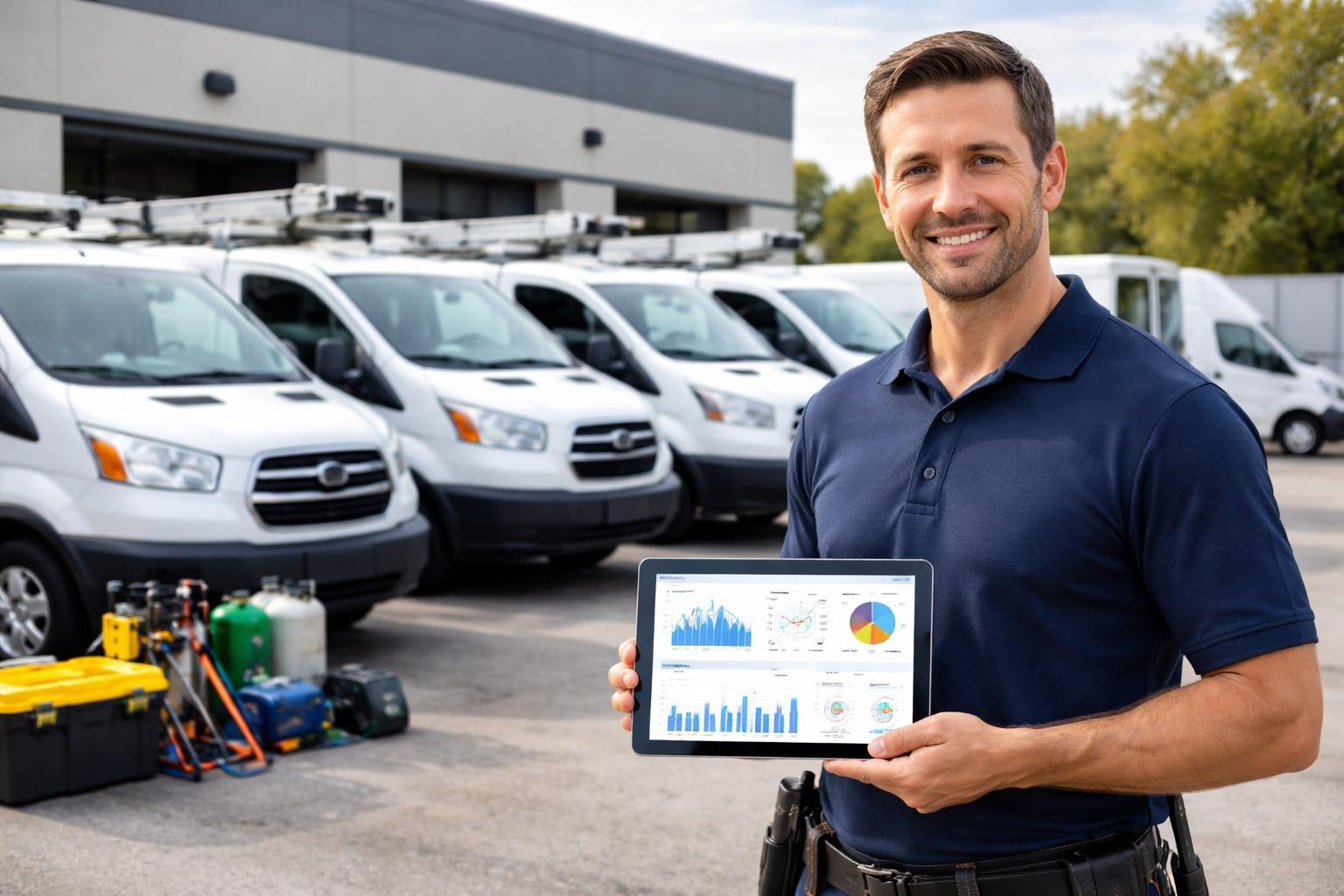
Effective measurement begins with the right metrics. HVAC fleet managers need specific data to see where improvements will have the most impact.
Key Performance Indicators for HVAC Fleets
Fleet efficiency depends on tracking metrics that affect costs and customer satisfaction. First-time fix rate measures the percentage of service calls resolved on the first visit, usually 70-85% for top HVAC fleets.
This metric affects fuel costs, labor, and customer loyalty. Vehicle utilization tracks productive hours for each truck.
Well-managed fleets reach 60-75% utilization during busy seasons. Route efficiency measures miles driven per completed service call, with top operations staying below 15 miles per call in cities.
Technician productivity metrics include calls completed per day and billable hours as a percentage of total hours. Leading HVAC fleets average 4-6 calls per technician daily, with 75-80% billable hours.
Utilization Metrics and Data Analysis
Fleet visibility from GPS tracking and telematics gives the data needed for analysis. These systems track idle time, which should be under 20% of total engine hours.
High idle time signals routing or scheduling issues. Data analysis shows patterns in fuel use, maintenance costs, and downtime.
Successful managers compare trends across vehicles to spot underperformers. They also look at seasonal changes to adjust fleet size and reduce excess capacity during slow periods.
Maintenance effectiveness shows in metrics like mean time between failures and preventive maintenance completion rates. Fleets in harsh conditions should keep compliance above 95% to avoid breakdowns.
Setting Realistic Efficiency Targets
Performance targets should consider geography, fleet age, and business model. A commercial fleet in city centers faces different benchmarks than one serving suburbs.
Industry data shows mid-sized HVAC fleets spend $0.45-$0.65 per mile on total vehicle costs. Managers should set baseline measurements before aiming for 5-10% improvement each year.
Incremental goals keep changes manageable and build momentum. Input from dispatchers, technicians, and managers helps set practical targets.
Goals linked to recognition or compensation encourage faster adoption.
Fleet Management Strategies for Optimal Efficiency
Effective fleet management uses systematic approaches and strategic deployment of resources. Modern HVAC companies reach peak efficiency through integrated management systems and careful resource planning.
Implementing HVAC Fleet Management Systems
Fleet management software centralizes vehicle tracking, maintenance scheduling, and route planning. These systems give real-time visibility into vehicle locations, fuel use, and driver behavior.
Dispatchers can assign jobs based on technician proximity and skill, reducing fuel use and travel time. The software logs maintenance intervals and sends alerts when vehicles need service, helping prevent breakdowns.
Data from these systems shows vehicle utilization and highlights underperforming assets. Managers can review idle time, miles per gallon, and cost per mile to decide on replacements and fleet size.
Integrating GPS and telematics improves monitoring of driving habits like harsh braking and speeding. This supports driver coaching programs for safety and reduced wear.
Resource Allocation and Workforce Planning
Resource allocation assigns technicians and vehicles to service calls based on location, equipment needs, and urgency. Good planning keeps the fleet running at optimal capacity.
Strategic scheduling matches technician certifications, vehicle inventory, and service zones to minimize extra travel. Companies that match fleet size to demand avoid the costs of excess vehicles and ensure coverage during busy times.
Standardizing vehicle setups simplifies inventory and technician transitions. Consistent equipment placement saves time and improves first-time fix rates.
Workforce planning includes vehicle availability in shift scheduling. Managers track which vehicles need maintenance and adjust assignments to keep service levels steady.
Fleet Tracking and Telematics Integration
Modern telematics systems combine GPS tracking with vehicle diagnostics and driver data. This gives HVAC fleet managers detailed operational insights.
Real-time fleet visibility enables faster responses, better routes, and proactive maintenance. All of these directly improve service and control costs.
Telematics for Real-Time Monitoring
Telematics systems collect and send data from service vehicles throughout the day. They monitor engine performance, fuel use, idle time, and diagnostic codes, along with location and route progress.
Real-time GPS tracking lets dispatchers see vehicle positions and make quick assignment decisions. For emergency calls, managers can find the nearest available technician and give customers accurate arrival times.
Key monitoring capabilities include:
- Engine diagnostics and fault alerts
- Fuel tracking
- Driver behavior metrics (braking, acceleration, speeding)
- Temperature monitoring for refrigerant transport
- Door sensor data for inventory security
Data flows into fleet management platforms, triggering alerts for maintenance needs or unsafe driving. Immediate visibility helps fix small issues before they become costly breakdowns.
Benefits of GPS Tracking for HVAC Fleets
GPS tracking improves efficiency and customer service. Managers can optimize routes using real-time traffic, cutting fuel costs by 15-25% and increasing daily service calls.
Accurate location data prevents time theft and unauthorized vehicle use. Managers can confirm technician arrival times and provide customers with precise ETAs.
The technology also boosts driver safety with speed monitoring and geofencing. Alerts for speeding or entering restricted zones support targeted coaching.
Insurance providers may offer premium discounts of 10-35% for fleets using GPS tracking because of better safety and theft recovery.
Analyzing Fleet Data for Continuous Improvement
Fleet telematics generate data on vehicle performance, driver behavior, and efficiency. HVAC managers should review this information weekly to find improvement opportunities.
Critical metrics to analyze:
MetricTarget ImpactFuel efficiency per vehicle15-20% improvementIdle time percentageUnder 10% of total runtimePreventive maintenance compliance95%+ completion rateAverage stops per route20-30% increase
Comparing historical data shows which vehicles need more repairs, helping managers replace them before breakdown costs rise. Driver data highlights top performers and training needs.
Integrating maintenance management systems automates service schedules based on actual mileage and engine hours. This prevents both early maintenance costs and unexpected failures.
Maximizing Fuel and Route Efficiency
Fuel costs are one of the largest expenses for HVAC fleets. They often account for 25-40% of total fleet spending.
Targeted strategies for fuel management, route optimization, and idle time reduction can cut these expenses by 15-30%. These strategies also improve service delivery.
Strategies for Reducing Fuel Usage
Regular vehicle maintenance is essential for fuel efficiency. Clean air filters, properly inflated tires, and timely oil changes can improve fuel economy by 10-15%.
Technicians should check tire pressure weekly. Under-inflated tires reduce fuel efficiency by up to 3% per PSI below the recommended level.
Choosing the right vehicle size helps control fuel costs. Using vehicles that match job requirements prevents unnecessary fuel use from oversized trucks.
Fleet managers should assess whether technicians need full-size vans or if smaller vehicles can handle most service calls. Specialized equipment can be carried on dedicated trucks for larger jobs.
Driver behavior affects fuel usage. Aggressive acceleration, hard braking, and speeding can lower fuel efficiency by 20-30%.
Driver training programs should teach smooth acceleration and steady speeds. Technicians should also learn to anticipate stops for better fuel economy.
Telematics systems provide real-time data on fuel use and driver behavior. These systems help managers identify vehicles and drivers that need improvement.
Route Optimization Techniques
Route optimization software reduces fuel use by 10-20%. It creates efficient paths between service calls based on traffic, appointment times, and technician locations.
AI-powered routing tools use historical data to predict the best departure times and service sequences. They adjust routes automatically when emergencies arise or jobs take longer than expected.
Fleet managers can improve efficiency with these practices:
- Geographic clustering: Assign technicians to specific service zones
- Time-window scheduling: Group appointments by location and time
- Real-time traffic integration: Reroute vehicles around congestion
- Workload balancing: Evenly distribute service calls among technicians
Scheduling morning appointments in one area and afternoon calls in another reduces daily miles driven by 15-25%. This approach saves both time and fuel.
Making the Most of Fleet Fuel Cards
Fleet fuel cards track every fuel purchase with details like date, location, gallons, and cost per gallon. This data helps managers spot unusual consumption and unauthorized purchases.
Many fuel cards offer network discounts of 5-15 cents per gallon at partner stations. Fleet managers should direct drivers to these stations when possible.
Advanced fuel cards can limit purchases to certain hours or categories. Managers can restrict purchases to fuel only, blocking other items.
Mileage-to-gallon ratios from card data show which vehicles need inspection. Integration with fleet management software automates expense tracking and flags anomalies.
This setup eliminates manual receipt processing and quickly identifies issues like unauthorized fuel purchases or fills that exceed tank capacity.
Managing Idle Time for Greater Savings
Excessive idling wastes about 0.5-1 gallon of fuel per hour and increases engine wear. HVAC technicians often idle vehicles for equipment or comfort, but alternatives can save fuel.
Telematics systems track idle time for each vehicle and driver. Fleet managers should set policies limiting idle time to 3-5 minutes, except when powering essential equipment.
Drivers who exceed idle limits need coaching on fuel-saving habits. Auxiliary power units (APUs) or battery-powered systems can run equipment without idling the engine.
These solutions cost $2,000-$5,000 per vehicle. They pay for themselves within 12-18 months through fuel savings for vehicles that idle often.
Technicians should turn off engines during service calls lasting more than two minutes. Remote start systems can cool or warm vehicles just before returning, reducing idle time for climate control.
Maintenance Management for HVAC Fleets
Effective maintenance management keeps vehicles operational and controls operating expenses. This is achieved through preventive care, automated tracking, and data-driven scheduling.
Preventive and Predictive Maintenance Approaches
Preventive maintenance follows schedules based on time or mileage to service vehicles before problems occur. Common tasks include oil changes every 5,000 miles, tire rotations every 6,000-8,000 miles, brake inspections every 12,000 miles, and regular fluid checks.
Predictive maintenance uses real-time data to spot potential failures early. Telematics systems monitor engine performance, transmission temperature, battery voltage, and brake wear to flag issues.
Fleet managers should combine both strategies. Preventive maintenance covers routine needs, while predictive analytics catch problems between scheduled services.
This approach extends vehicle lifespan by 20-30% compared to only fixing vehicles after they break down.
Automated Scheduling and Maintenance Alerts
Maintenance automation removes the need for manual tracking. Fleet management software sends alerts when vehicles reach service intervals.
Automated systems track each vehicle's maintenance history and upcoming needs. The software schedules maintenance during low-use periods to avoid disrupting operations.
Digital work orders are sent automatically to repair facilities with full service records.
Key automation features include:
- Real-time mileage tracking
- Service countdown timers
- Multi-channel alerts (email, SMS, dashboard)
- Integration with parts ordering
- Automated compliance tracking for DOT inspections
- Digital logs replacing paper records
Reducing Maintenance Costs and Downtime
Vehicle maintenance costs make up 10-15% of total fleet expenses for HVAC companies. Proper scheduling prevents costly repairs from neglected service.
A $200 oil change can prevent $3,000-$5,000 in engine damage. Scheduling maintenance during off-peak hours or maintaining backup vehicles reduces downtime.
Fleet managers should find low-activity periods, such as early mornings or mid-week days, for maintenance. This keeps technicians working without service delays.
Standardizing fleet vehicles to two or three models lowers parts inventory costs and simplifies repairs. Mechanics get familiar with common tasks, reducing labor time by 15-20%.
Buying parts in bulk for standardized vehicles saves 10-12% compared to maintaining many vehicle types.
Enhancing Driver Performance and Safety
Driver performance affects HVAC fleet efficiency by reducing accidents, lowering insurance costs, and improving service delivery. Training programs, clear safety policies, and metrics like first-time fix rates help improve operations.
Driver Training and Coaching Strategies
Structured driver training covers vehicle operation and job-specific challenges. Initial training should include defensive driving, handling heavy equipment, and navigating tight residential areas.
Ongoing coaching uses data to find performance gaps. Fleet managers can review harsh braking, rapid acceleration, and speeding to give targeted feedback.
Telematics systems provide real-time performance monitoring and automated coaching alerts. These tools track idling, unauthorized use, and route deviations.
Successful programs combine technology insights with human oversight. Recognition programs for safe driving encourage positive behaviors and offer incentives for clean records.
Safe Driving Policies in the HVAC Industry
Clear safety policies set expectations for driver behavior. HVAC fleets should have written rules for speed limits, mobile device use, seat belts, and pre-trip inspections.
Distracted driving policies must address customer communication and job coordination. Companies should require hands-free devices and instruct drivers to pull over before checking route or customer info.
Daily pre-trip inspections help prevent breakdowns. Drivers should check tire pressure, fluids, brakes, and secure equipment.
Documentation of inspections creates accountability. Weather policies should guide drivers on when to delay travel and what safety gear to carry.
Tracking and Improving First-Time Fix Rates
First-time fix rates show how often technicians resolve issues on the first visit. Higher rates reduce return trips, fuel use, and vehicle wear.
Well-stocked vehicles with common parts, tools, and diagnostic equipment support higher first-time fix rates. Regular inventory checks ensure vehicles carry the right parts for the area and season.
Key factors affecting first-time fix rates:
- Accurate customer diagnostics
- Complete parts inventory
- Technician skill and certification
- Access to technical support
- Quality dispatch information
GPS tracking and route optimization help technicians arrive on time. Late arrivals can lead to rescheduled appointments and extra trips.
Performance dashboards should show first-time fix rates by technician, service type, and area. This data helps improve inventory, training, and service processes.
Leveraging Technology and Software Solutions
Modern HVAC fleet management relies on specialized software for scheduling, vehicle diagnostics, and real-time insights. Choosing the right platform and using AI and diagnostic tools can boost efficiency.
Evaluating HVAC Fleet Management Software
HVAC companies should choose fleet management software based on their needs. Important features include automated scheduling, GPS tracking, maintenance alerts, and mobile access for technicians.
Software should assign jobs based on technician location, skills, and vehicle equipment. Real-time updates let dispatchers reassign jobs quickly during emergencies.
Integration is key for smooth operations. The software should work with accounting, CRM, and inventory systems.
Companies should test the software with actual workflows before committing.
Integration with Vehicle Diagnostics and AI Tools
Vehicle diagnostic integration lets managers monitor engine performance, fuel use, and maintenance needs automatically. Telematics devices send data on tire pressure, brake wear, battery health, and engine codes to the management platform.
AI analyzes diagnostic data to predict maintenance needs before breakdowns. These systems spot patterns like declining fuel efficiency or unusual engine temperature.
Predictive alerts help managers schedule repairs during slow periods instead of responding to breakdowns during busy times.
Diagnostics and AI together can reduce vehicle downtime by 20-30%. Automated alerts notify managers of needed oil changes, tire rotations, or brake checks based on actual usage.
Popular Platforms: FieldEdge, ServiceTitan, FieldAx, Azuga, and Fleetio
FieldEdge specializes in service management. It offers strong scheduling tools and customer communication features.
The platform handles job dispatching and invoice generation. It also tracks customer history within a single interface.
ServiceTitan provides business management features, including fleet tracking. Its main focus is on customer service workflows.
The system offers mobile apps for technicians. It integrates with QuickBooks for financial management.
FieldAx supports field service operations. It emphasizes work order management and technician scheduling.
It includes basic GPS tracking and route optimization. This makes it suitable for smaller HVAC fleets.
Azuga focuses on fleet telematics and vehicle diagnostics. The platform excels at fuel monitoring and driver safety scoring.
It also offers maintenance scheduling based on vehicle performance data.
Fleetio offers fleet maintenance management. It provides detailed service histories and parts inventory tracking.
Automated service reminders help companies manage 10 or more vehicles. It is ideal for fleets with complex maintenance needs.
PlatformPrimary StrengthBest ForFieldEdgeService dispatch automationSmall to mid-size HVAC companiesServiceTitanAll-in-one business managementGrowing companies needing integrated systemsFieldAxWork order managementField service schedulingAzugaVehicle telematics and diagnosticsFleet performance monitoringFleetioMaintenance trackingCompanies with larger fleets
Future Trends in HVAC Fleet Efficiency
HVAC fleet managers are seeing rapid technological changes. These changes are improving operations through smarter data and automation.
Developments now focus on connected devices and intelligent systems. Managers must prepare for regulatory and market changes.
Adoption of Advanced Telematics and IoT
Vehicle telematics systems provide detailed data on driver behavior and fuel use. HVAC fleet managers use this information to cut costs and improve service.
Modern telematics platforms track vehicle location, idle time, speed, and maintenance alerts in real time.
IoT sensors on HVAC equipment and service vehicles create real-time fleet visibility. These sensors monitor vehicle diagnostics, refrigerant levels, and tool inventory.
The integration of telematics with fleet management software allows managers to:
- Analyze fuel efficiency across routes and drivers
- Spot vehicles needing preventive maintenance
- Optimize dispatch based on live traffic and vehicle availability
- Monitor equipment temperature during transport
Fleet operators report fuel cost reductions of 15-25% after using telematics systems. The data helps identify inefficient driving habits like harsh braking and excessive idling.
The Role of AI and Automation in Fleet Operations
AI-powered systems are changing how HVAC fleets manage maintenance scheduling and efficiency. Machine learning analyzes maintenance records and sensor data to predict when components need service.
Maintenance automation platforms handle routine tasks. They generate work orders, order parts, and schedule service appointments automatically.
These systems reduce administrative work. They also help prevent missed maintenance that can cause breakdowns.
AI agents optimize daily dispatch by considering technician skills, inventory, vehicle capacity, and customer appointments. This improves scheduling and resource use.
Predictive analytics spot patterns in fleet performance that may signal problems. For example, an AI system can adjust maintenance schedules for vehicles in coastal areas.
Route optimization algorithms adapt to traffic, job site needs, and fuel prices. They use historical data to improve travel time and lower costs.
Preparing for Industry Changes and Growth
Refrigerant regulations are changing. HVAC fleets must adapt vehicle configurations for new coolant types and transport needs.
Fleet managers need vehicles that can handle A2L refrigerants. Safety protocols are also important as R-410A is phased out.
Electric and hybrid service vehicles are becoming more common in HVAC fleets. These vehicles need different maintenance, charging plans, and route adjustments due to battery range.
Workforce development is important as fleets use more advanced technologies. Technicians need training on digital tools and automated systems, which are different from traditional skills.
Fleet size optimization tools help determine the right number and type of vehicles. Data-driven planning prevents extra fleet costs and service delays.
Regulatory compliance tracking systems automate documentation for emissions, safety inspections, and driver certifications. These platforms notify managers about expiring credentials and upcoming deadlines, reducing compliance risks.