How to start saving money
Lorem ipsum dolor sit amet, consectetur adipiscing elit lobortis arcu enim urna adipiscing praesent velit viverra sit semper lorem eu cursus vel hendrerit elementum morbi curabitur etiam nibh justo, lorem aliquet donec sed sit mi dignissim at ante massa mattis.
- Neque sodales ut etiam sit amet nisl purus non tellus orci ac auctor
- Adipiscing elit ut aliquam purus sit amet viverra suspendisse potent
- Mauris commodo quis imperdiet massa tincidunt nunc pulvinar
- Excepteur sint occaecat cupidatat non proident sunt in culpa qui officia
Why it is important to start saving
Vitae congue eu consequat ac felis placerat vestibulum lectus mauris ultrices cursus sit amet dictum sit amet justo donec enim diam porttitor lacus luctus accumsan tortor posuere praesent tristique magna sit amet purus gravida quis blandit turpis.

How much money should I save?
At risus viverra adipiscing at in tellus integer feugiat nisl pretium fusce id velit ut tortor sagittis orci a scelerisque purus semper eget at lectus urna duis convallis. porta nibh venenatis cras sed felis eget neque laoreet suspendisse interdum consectetur libero id faucibus nisl donec pretium vulputate sapien nec sagittis aliquam nunc lobortis mattis aliquam faucibus purus in.
- Neque sodales ut etiam sit amet nisl purus non tellus orci ac auctor
- Adipiscing elit ut aliquam purus sit amet viverra suspendisse potenti
- Mauris commodo quis imperdiet massa tincidunt nunc pulvinar
- Adipiscing elit ut aliquam purus sit amet viverra suspendisse potenti
What percentege of my income should go to savings?
Nisi quis eleifend quam adipiscing vitae aliquet bibendum enim facilisis gravida neque. Velit euismod in pellentesque massa placerat volutpat lacus laoreet non curabitur gravida odio aenean sed adipiscing diam donec adipiscing tristique risus. amet est placerat in egestas erat imperdiet sed euismod nisi.
“Nisi quis eleifend quam adipiscing vitae aliquet bibendum enim facilisis gravida neque velit euismod in pellentesque”
Do you have any comments? Share them with us on social media
Eget lorem dolor sed viverra ipsum nunc aliquet bibendum felis donec et odio pellentesque diam volutpat commodo sed egestas aliquam sem fringilla ut morbi tincidunt augue interdum velit euismod eu tincidunt tortor aliquam nulla facilisi aenean sed adipiscing diam donec adipiscing ut lectus arcu bibendum at varius vel pharetra nibh venenatis cras sed felis eget.
A fleet management system helps organizations monitor, maintain, and optimize their vehicles and equipment. It gives companies real-time visibility into fleet operations, helping them cut costs and improve safety.
By centralizing data and automating daily tasks, fleet management systems make logistics easier to manage. Decisions become data-driven and more efficient.

With rapid changes in technology and regulations, efficient fleet management is now essential for any business that relies on transportation. These systems combine GPS tracking, maintenance scheduling, driver monitoring, and compliance tools in one platform.
This approach leads to a more precise and cost-effective way to manage vehicles. It also helps companies stay proactive in their operations.
Core Functions of Fleet Management Systems

A fleet management system uses telematics, automation, and data analytics to oversee vehicles, drivers, and logistics. It relies on real-time tracking, predictive maintenance, and behavior monitoring to reduce costs and maintain compliance.
Vehicle Tracking and Real-Time Location
GPS tracking lets fleet managers monitor vehicle positions at all times. With real-time updates, they can check performance, confirm routes, and respond quickly to delays.
This awareness helps keep deliveries on schedule and reduces unauthorized vehicle use. A typical fleet tracking system includes a telematics unit, communication tools, and a dashboard for easy access.
Fleet managers can review current locations, stop durations, and route history. Real-time tracking also supports security and asset recovery.
If a vehicle goes off its expected route, the system sends alerts. This improves control and helps save fuel by reducing idle time and detours.
Key BenefitsDescriptionVisibilityTracks all fleet assets in real timeSecurityEnables quick response to theft or misuseEfficiencySupports data-driven decision making
Route Optimization and Planning
Route optimization uses maps and traffic data to find the best paths for vehicles. The system considers distance, fuel use, delivery times, and road conditions.
Effective route planning lowers costs and reduces travel time. Systems often use live traffic and weather updates to adjust schedules as needed.
Automated route updates improve driver safety and comfort. Drivers face fewer delays, and businesses save on fuel and vehicle wear.
Maintenance Management and Scheduling
Maintenance management keeps fleets reliable by planning service and repairs before breakdowns. Telematics and sensors detect issues like high engine temperature or low fuel efficiency.
Scheduled and predictive maintenance tracks odometer readings, engine hours, and diagnostic codes. This helps prevent unplanned downtime and extends vehicle life.
Digital maintenance records help with compliance and warranty claims. Managers can view upcoming service dates in simple dashboards, making sure no task is missed.
This approach lowers repair costs and maximizes vehicle uptime.
Driver Management and Behavior Monitoring
Driver management tracks driver activity and safety. Systems record speed, braking, idling, and acceleration through telematics.
Managers use reports to spot risky habits. Real-time alerts warn drivers and supervisors of unsafe actions, allowing quick coaching.
Monitoring driver behavior helps save fuel and reduces accidents. Safer driving lowers insurance costs and risk.
Consistent feedback encourages responsible driving and builds a safety-focused culture.
Fleet Management System Features and Tools
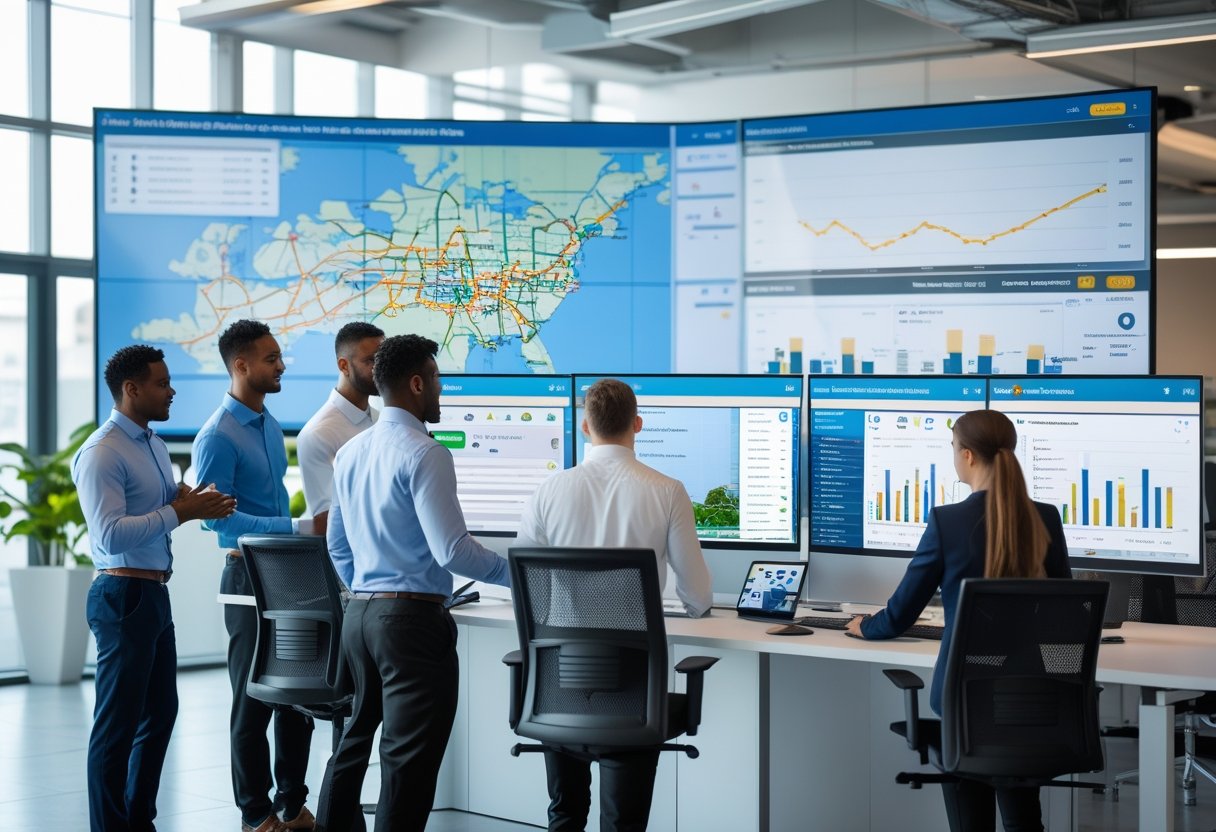
Modern fleet management systems use digital tools to monitor vehicles and ensure compliance. They rely on telematics, diagnostics, analytics, and compliance features to cut downtime and fuel costs.
Telematics and Diagnostics
Telematics connects vehicles to a central platform using GPS, wireless networks, and sensors. It captures live data such as location, speed, fuel use, and engine health.
Fleet managers can view vehicle movements on real-time maps and spot problems like idling or unauthorized routes.
Diagnostic tools alert managers to maintenance issues early. Engine fault codes, battery health, and oil life are reported automatically.
This allows for preventive maintenance and helps fleet assets last longer. Advanced telematics tools also track driver behavior, giving insights into harsh braking or unsafe driving.
Data from telematics supports driver coaching and improves safety and fuel use. Integrated telematics and maintenance software keep vehicles healthy with less manual work.
Common telematics features include:
FunctionDescriptionGPS TrackingMonitors vehicle position and route historyDiagnostic AlertsSends notifications for mechanical issuesDriver Behavior MonitoringTracks performance and safety metrics
Reporting and Analytics
Reporting and analytics turn raw data into useful insights. Fleet management solutions offer dashboards that show fuel trends, maintenance costs, and vehicle status.
Managers can filter reports by region, department, or vehicle type to find issues. Historical data helps predict future maintenance and budgets.
Automated reports keep everyone informed. Data can be exported for audits or financial analysis.
Predictive analytics find risk factors for breakdowns or compliance problems. These tools help decide when to replace vehicles or optimize routes.
Accurate analytics improve accountability and help track return on investment.
Compliance and Regulatory Management
Fleet operators must follow rules on service hours, emissions, and tax reports. Compliance tools in fleet software automate tasks like ELD (Electronic Logging Device) monitoring and Driver Vehicle Inspection Report (DVIR) submissions.
These tools record data from vehicles and drivers, reducing paperwork mistakes. Systems for IFTA (International Fuel Tax Agreement) reporting collect mileage and fuel data by jurisdiction for accurate tax filing.
Alerts notify managers when inspections or certifications are due. Automated workflows help enforce safety policies.
Digital records make compliance checks easier and reduce penalty risks. Combining telematics and inspection data creates a clear record that meets company and government standards.
Fleet Management Software and Platforms
Modern fleet management software offers centralized systems for monitoring vehicles and drivers. It helps organizations cut costs, improve use, and stay compliant through automation and real-time analytics.
Cloud-Based and Integrated Solutions
Most fleet management platforms are cloud-based. Managers can access dashboards from any device.
These systems combine GPS tracking, maintenance, and telematics data in one place. Updates are automatic.
Integration is important for performance. Fleet software connects with dispatch, fuel card systems, and compliance databases.
This makes driver logs and maintenance forecasting more accurate. Leading platforms like Samsara, Geotab, and Fleetio use software-as-a-service (SaaS) models.
They offer real-time route planning and analytics without local installation. Cloud systems are scalable as fleets grow.
Some platforms, such as Onfleet and Motive, offer APIs for easy connections to logistics or customer tools. This streamlines dispatch and communication.
Top Fleet Management Software Providers
Several vendors lead the 2025 market for fleet tracking software and fleet management platforms. They offer solutions for different needs:
ProviderKey StrengthsTypical Use CaseSamsaraReal-time GPS tracking, environmental sensors, driver safety analyticsLogistics, delivery, and construction fleetsGeotab / MyGeotabDeep data analysis, open API, regulatory compliance toolsLarge mixed-vehicle operationsFleet CompleteMobile workforce integration and asset trackingField service managementFleetioMaintenance tracking, fuel management, inspection automationMid-sized commercial fleetsAzugaDriver behavior monitoring, safety scoringSmall to mid-size fleetsTrimble, Teletrac Navman, GPS Insight, Spireon, US Fleet Tracking, Rhino Fleet TrackingGPS tracking and telematics solutions with customizable reportingFleet operators across industries
These providers focus on reliability, data accuracy, and integration. Their performance depends on connectivity, data refresh rates, and compatibility with other systems.
Fleet Management Software Pricing and Cost Considerations
Fleet management software pricing depends on user count, features, and hardware. Most providers charge a subscription, often $15–$40 per vehicle per month.
Setup or device costs may be extra. Some vendors bundle hardware with service, while others sell devices separately.
Total cost depends on which features are needed. Advanced analytics or compliance tracking can raise costs but may save money by reducing downtime and accidents.
Businesses often compare software by return on investment (ROI), not just price. Efficient routing and maintenance alerts lower operating costs, making fleet management software a valuable tool.
Operational Efficiency and Cost Optimization
Fleet management systems help organizations run vehicles efficiently, manage costs, and keep productivity high. They enable precise tracking of fuel use, asset performance, and total expenses with integrated tools and clear data.
Fuel Management and Fuel Card Integration
Effective fuel management helps control operating costs and reduces environmental impact. Fleet systems analyze fuel consumption to spot problems like excessive idling or poor route planning.
Managers use real-time telematics data to track fuel use for each vehicle. This data helps compare performance across the fleet.
Fuel cards make payment management easier and help prevent unauthorized spending. When fuel cards are integrated with the management system, each transaction is automatically linked to specific vehicles and drivers.
This setup provides accurate reports and reduces manual errors. It also helps spot unusual fueling that may indicate misuse or theft.
Dashboards and exception reports show cost patterns by location, supplier, or vehicle type. Over time, these insights support efforts like better routing, driver training, or moving to hybrid or electric vehicles.
Asset and Inventory Management
Good asset and inventory control keeps vehicles ready and available. The system tracks resources like spare parts, tires, and tools through automated inventory tracking.
This reduces downtime by ensuring needed parts are on hand for maintenance. Automated tracking also helps with timely preventive care.
A clear inventory database prevents duplicate purchases and excess stock. With asset tracking, managers always know where vehicles and equipment are and can check their condition and usage.
Tracking helps forecast when parts need replacing and what maintenance will cost. Analytics let teams compare data to find underused vehicles or equipment.
Maximizing use of existing assets helps lower capital expenses.
Total Cost of Ownership and ROI
Tracking the total cost of ownership (TCO) gives a clear view of long-term fleet expenses. TCO covers costs like fuel, maintenance, depreciation, insurance, and admin over each vehicle’s life.
Fleet software gathers these costs into automated reports. This helps managers make strategic decisions.
ROI analysis shows if vehicles or technology investments are worthwhile. Managers can see how maintenance, routing, or driver habits affect total costs.
Comparing costs helps spot rising expenses or areas for improvement:
Cost CategoryTypical ContributorsOptimization FocusFuelConsumption rate, idle timeDriver behavior, route changesMaintenanceRepairs, partsPreventive schedulingDepreciationVehicle age, mileageReplacement strategyAdministrationLicensing, complianceAutomation, integration
These insights guide when to keep, repair, or replace assets for better financial results.
Safety, Monitoring, and Performance
Fleet safety relies on strong monitoring systems, regular driver evaluation, and accurate incident reviews. Data from vehicles, telematics, and cameras help fleets spot risks early and take action.
Driver Coaching and Scorecards
Driver coaching uses data on speed, braking, idling, and compliance. Fleet management systems build driver scorecards to rank performance.
Managers use these scores to reward safe driving and address problem areas. Structured feedback boosts accountability and encourages safer habits.
Systems often send automated alerts for unsafe actions, helping drivers correct behavior immediately. Some platforms use telematics to send data to safety dashboards, reducing manual work.
Scorecards help managers track trends:
MetricSourceCoaching FocusHarsh brakingOnboard telematicsSmooth driving habitsSpeed violationsGPS trackingCompliance with speed limitsIdle timeEngine dataFuel management
Dashcam Technology and Incident Analysis
Modern dashcam technology records video for safety and performance monitoring. Dual-facing dash cams capture the road and driver actions, providing evidence for training and claims.
High-definition footage and AI-based event triggers spot issues like distracted driving or sudden maneuvers. When incidents happen, video clips upload automatically for secure review.
Managers use this footage to find root causes and check policy compliance. Quick access to video helps resolve disputes and supports accountability.
Video records also help meet FMCSA and DOT requirements by proving safety practices during audits.
Fleet Safety Programs
Effective fleet safety programs combine technology, training, and clear procedures. They set rules for driver conduct, vehicle maintenance, and emergency reporting.
Fleet managers review safety data from telematics and dashcams to ensure goals are met. Linking driver safety monitoring with coaching programs helps reduce accidents and repair costs.
Rewards for high driver scores support safe habits. Performance reports highlight key indicators like incident rates and compliance.
Regular audits and data-driven enforcement help keep safety programs effective.
Integration, Customization, and Support
Strong fleet management relies on good connections between systems, flexible options, and helpful support. Data integration, customization, and responsive help ensure the technology fits business needs.
Software Integrations and Third-Party Apps
Modern fleet management systems connect with business tools to unify data and simplify work. Integrations with Transportation Management Software (TMS), Customer Relationship Management (CRM), and accounting platforms like QuickBooks keep records accurate and reduce duplication.
A central data hub lets information from telematics, maintenance logs, and driver reports flow between apps. This gives managers a single view of fleet data.
Many companies use AI and machine learning to predict repairs and schedule predictive maintenance based on real-time data.
Common integration types include:
Integration TypeExample PlatformPrimary FunctionAccountingQuickBooksExpense tracking, billingCRMSalesforce, HubSpotCustomer records and communicationTMSOracle, SAPRoute planning, freight management
Integrations cut down on manual work and let teams automate tasks like preventive maintenance scheduling or compliance reporting.
Customization and Scalability
Every organization has unique needs, so software flexibility is important. Customizable platforms let administrators set up dashboards, change reports, and create alerts for metrics like fuel use, maintenance, or driver safety.
Scalability means the system can handle more data as the fleet grows. Adding new modules, such as employee management or warehouse tools, should be easy.
Modular interfaces let companies enable or adjust features like maintenance, routing, or telematics as needed. A clear API makes future integrations with other business apps simpler and less costly.
Customer Support and Training
Strong customer support helps maintain system performance and builds user confidence. Fleet managers rely on responsive service teams for quick issue resolution and software updates.
Vendors that offer 24/7 help lines or ticketing systems can reduce downtime and minimize workflow disruptions.
Structured training programs are also important. Training may include onboarding sessions, webinars, or online guides to help users learn reporting tools and automated maintenance scheduling.
Dedicated account managers help organizations adjust system settings to meet their goals. Regular feedback allows vendors to improve their products and increase customer satisfaction.