How to start saving money
Lorem ipsum dolor sit amet, consectetur adipiscing elit lobortis arcu enim urna adipiscing praesent velit viverra sit semper lorem eu cursus vel hendrerit elementum morbi curabitur etiam nibh justo, lorem aliquet donec sed sit mi dignissim at ante massa mattis.
- Neque sodales ut etiam sit amet nisl purus non tellus orci ac auctor
- Adipiscing elit ut aliquam purus sit amet viverra suspendisse potent
- Mauris commodo quis imperdiet massa tincidunt nunc pulvinar
- Excepteur sint occaecat cupidatat non proident sunt in culpa qui officia
Why it is important to start saving
Vitae congue eu consequat ac felis placerat vestibulum lectus mauris ultrices cursus sit amet dictum sit amet justo donec enim diam porttitor lacus luctus accumsan tortor posuere praesent tristique magna sit amet purus gravida quis blandit turpis.

How much money should I save?
At risus viverra adipiscing at in tellus integer feugiat nisl pretium fusce id velit ut tortor sagittis orci a scelerisque purus semper eget at lectus urna duis convallis. porta nibh venenatis cras sed felis eget neque laoreet suspendisse interdum consectetur libero id faucibus nisl donec pretium vulputate sapien nec sagittis aliquam nunc lobortis mattis aliquam faucibus purus in.
- Neque sodales ut etiam sit amet nisl purus non tellus orci ac auctor
- Adipiscing elit ut aliquam purus sit amet viverra suspendisse potenti
- Mauris commodo quis imperdiet massa tincidunt nunc pulvinar
- Adipiscing elit ut aliquam purus sit amet viverra suspendisse potenti
What percentege of my income should go to savings?
Nisi quis eleifend quam adipiscing vitae aliquet bibendum enim facilisis gravida neque. Velit euismod in pellentesque massa placerat volutpat lacus laoreet non curabitur gravida odio aenean sed adipiscing diam donec adipiscing tristique risus. amet est placerat in egestas erat imperdiet sed euismod nisi.
“Nisi quis eleifend quam adipiscing vitae aliquet bibendum enim facilisis gravida neque velit euismod in pellentesque”
Do you have any comments? Share them with us on social media
Eget lorem dolor sed viverra ipsum nunc aliquet bibendum felis donec et odio pellentesque diam volutpat commodo sed egestas aliquam sem fringilla ut morbi tincidunt augue interdum velit euismod eu tincidunt tortor aliquam nulla facilisi aenean sed adipiscing diam donec adipiscing ut lectus arcu bibendum at varius vel pharetra nibh venenatis cras sed felis eget.
Managing equipment efficiently helps businesses control costs, uptime, and productivity. An equipment management system tracks every asset, maintenance schedule, and usage detail in one place.
It enables organizations to know exactly where their equipment is, how it performs, and when it needs service. This eliminates guesswork and helps prevent costly downtime.
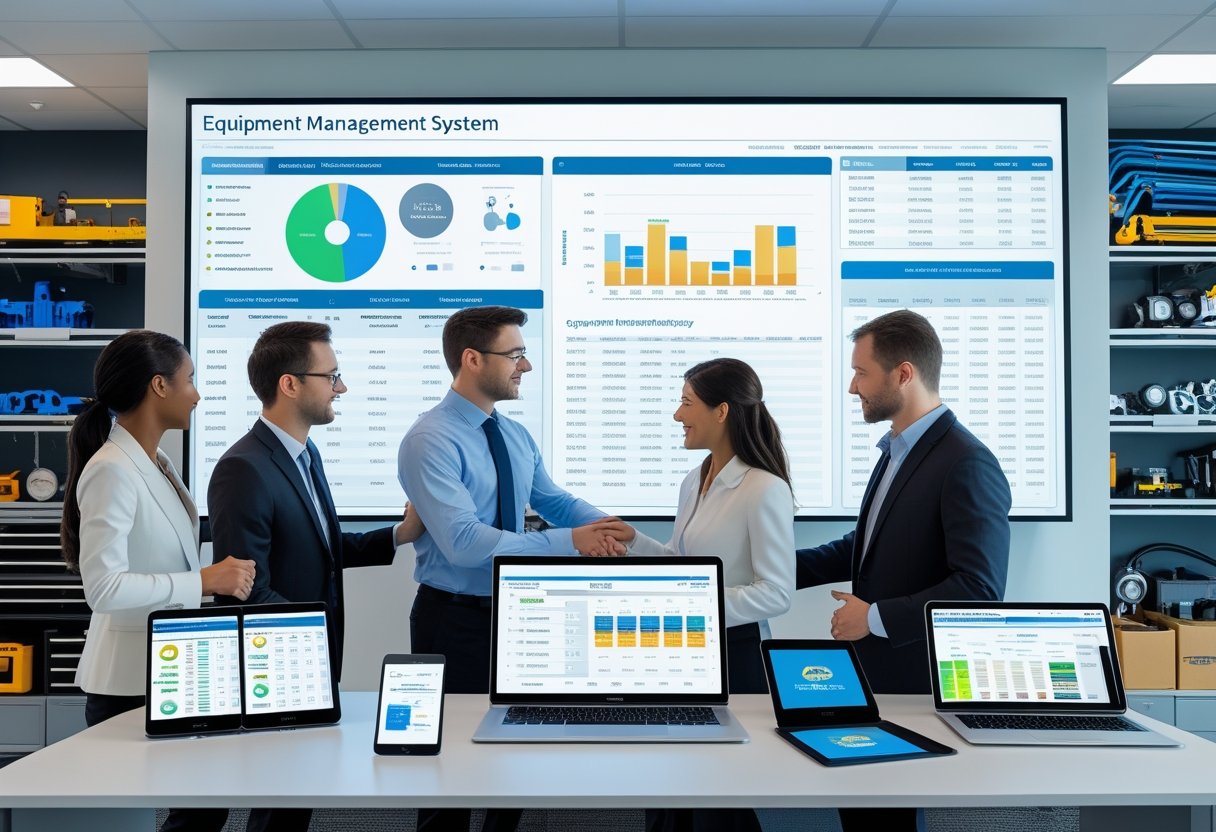
Industries like construction, manufacturing, and logistics use these systems to move from reactive maintenance to planned operations. They gain visibility, improve asset utilization, and meet compliance standards without relying on manual tracking.
Each tool offers different strengths, from lifecycle monitoring to integration with enterprise asset management software. As businesses look to 2026, equipment management systems are evolving with analytics, automation, and advanced reporting.
Understanding how these systems work and what features to prioritize helps companies choose solutions that fit their operations and long-term goals.
What Is an Equipment Management System?

An equipment management system (EMS) is a platform that tracks, maintains, and optimizes assets throughout their lifecycle. It helps organizations preserve asset value, reduce downtime, and improve operational visibility through centralized data and real-time monitoring.
Key Components of Equipment Management Systems
An EMS usually includes asset tracking, inventory control, maintenance management, and reporting tools.
Asset tracking uses barcodes, RFID, or GPS to record equipment locations and movements. This allows managers to see where each asset is and how it’s being used.
Maintenance management schedules routine checks, automates service reminders, and keeps maintenance histories to reduce unscheduled repairs. Inventory control manages spare parts and consumables, making sure field teams have the resources they need.
Reporting and analytics generate performance metrics, such as utilization rate or mean time between failures (MTBF). These insights support cost control and planning.
Centralized databases and cloud-based interfaces ensure that teams can access equipment data securely from anywhere.
Benefits for Organizations
Organizations use EMS platforms to extend asset lifespan, increase equipment utilization, and control operational costs. By tracking equipment in real time, businesses can identify underused assets and reallocate them as needed.
Automated maintenance scheduling reduces downtime and helps prevent safety issues. The system also tracks compliance requirements and inspection records, supporting industry regulations.
Integration with purchasing and accounting software provides a unified view of equipment spending and depreciation. Cloud-based systems make data sharing between sites easier.
Types of Equipment Managed
An EMS covers many types of assets, depending on the industry. In construction and manufacturing, it tracks heavy machinery, tools, and vehicles.
Healthcare providers use it for medical devices and diagnostic equipment to ensure calibration and safety compliance. Utilities and transport sectors monitor fleet assets and service equipment, while laboratories track research instruments.
In IT and corporate environments, the focus is on hardware assets like servers, laptops, and peripherals.
CategoryExample EquipmentCommon Tracking MethodConstructionExcavators, cranesGPS or RFIDHealthcareImaging systems, monitorsBarcode scanningManufacturingProduction tools, conveyorsIoT sensorsITServers, laptopsNetwork or barcode tracking
This range shows how EMS solutions adapt to different operational and compliance needs.
Core Features of Equipment Management Systems
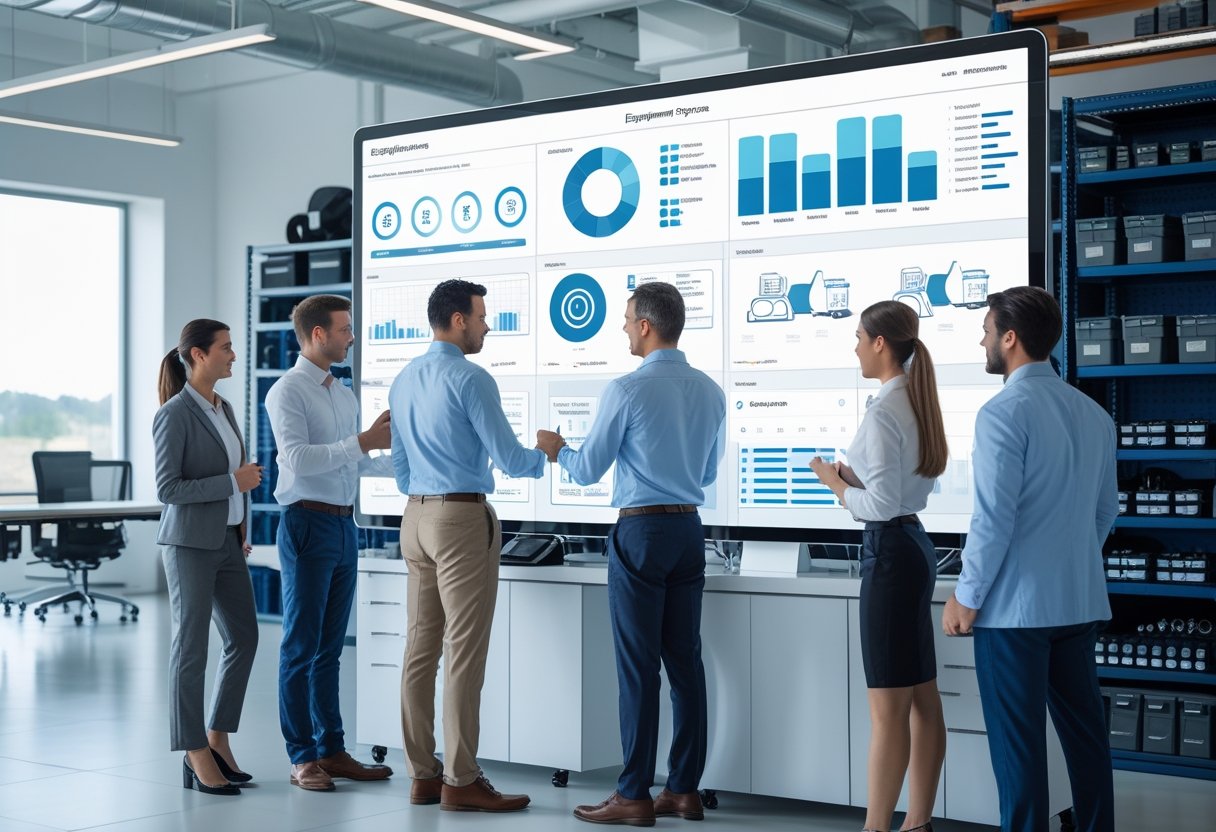
An equipment management system centralizes asset data for better control over location, maintenance, utilization, and inventory. It reduces manual work by integrating real-time tracking, automated work orders, and predictive maintenance tools.
Equipment Tracking and Monitoring
Equipment tracking provides visibility into asset location, usage time, and operational status. The system uses barcode, RFID, or GPS technology to record where equipment is and how often it’s used.
This data helps find underused assets and supports better allocation decisions. Real-time updates improve accountability by showing who last handled each item and when.
Having a tracking dashboard supports preventive actions when usage patterns show potential problems.
Key data points commonly tracked include:
- Equipment ID and type
- Location and assigned user
- Operation hours and service intervals
Accurate tracking enables timely maintenance, reduces search time, and lowers the risk of loss or duplication.
Work Order Management
Work order management organizes repair and maintenance requests from start to finish. A centralized system lets technicians, supervisors, and planners track priorities, assign tasks, and record completion details.
Each work order stores information like problem description, required parts, labor hours, and costs. Well-structured tracking helps teams find recurring equipment issues and manage technician workload.
Common fields in a digital work order include:
FieldDescriptionWork Order IDUnique identifier for trackingAssigned TechnicianResponsible person or teamStatusOpen, In Progress, CompletedEquipment LinkedSpecific asset ID
This module improves communication between departments and helps make maintenance workflows traceable.
Maintenance Scheduling and Automation
Automated maintenance scheduling ensures tasks happen before failures occur. The system uses time intervals, usage hours, or sensor data to generate service reminders and assign technicians.
This reduces the need for manual calendar tracking and supports preventive maintenance. Automation rules let managers create schedules for inspections, calibration, or warranty checks.
When combined with condition monitoring, the system can adjust maintenance frequency based on real performance data.
Typical automation features include:
- Preventive maintenance triggers based on usage
- Automatic notifications for overdue tasks
- Maintenance history logs for compliance
Consistent schedules help preserve asset reliability and maintain safety standards.
Inventory and Spare Parts Control
Good inventory control ensures spare parts are available when needed. The system tracks stock levels, reorder points, supplier details, and part usage.
Accurate inventory management reduces excess stock and prevents delays from missing parts. A well-designed database links spare parts to equipment models, making identification and tracking easier.
Key features include:
- Automatic reorder alerts at set thresholds
- Parts traceability with lot numbers and suppliers
- Consumption reports for budgeting
Balanced spare parts inventory helps control costs and keeps maintenance running smoothly.
Maintenance Management and Optimization
Effective maintenance management uses structured scheduling, data insights, and automation to prevent failures. A strong system improves visibility, reduces downtime, and helps assets last longer through timely intervention.
Preventive Maintenance Strategies
Preventive maintenance uses scheduled inspections and servicing to avoid unexpected problems. Organizations use preventive maintenance scheduling to plan tasks based on hours used, frequency, or manufacturer advice.
This proactive method reduces emergency repairs and extends asset life. Modern equipment maintenance tracking tools record service history and remind technicians of upcoming tasks.
They store data on inspections, part replacements, and labor time for full traceability. A clear maintenance calendar helps avoid conflicts with production schedules.
Teams often use standard checklists for consistent quality control.
Predictive Maintenance and IoT Integration
Predictive maintenance uses IoT sensors and analytics to spot wear before failure. Sensors monitor temperature, pressure, or vibration to detect problems in real time.
When data shows a potential issue, the system alerts technicians. This approach reduces unnecessary servicing compared to fixed schedules.
Predictive systems often use machine learning models that get better with more data. IoT devices connect to the main maintenance management platform for automatic schedule updates.
Repairs then happen only when needed, saving labor and parts and avoiding disruptions.
Maintenance Workflows and Automation
Structured maintenance workflows help teams manage requests, approvals, and assignments. Each stage—from inspection to completion—is documented.
Automation removes repetitive manual updates and lowers the chance of missed deadlines. A typical workflow covers request submission, review, scheduling, execution, and verification.
Integration with inventory ensures parts and tools are ready before work starts.
Workflow StagePrimary FunctionRequest LoggingCapture maintenance needSchedulingAssign tasks and set priorityExecutionPerform maintenance activityReportingDocument completion and feedback
Automated notifications and digital approvals help teams coordinate and stay accountable.
Reducing Downtime and Repair Costs
Minimizing equipment downtime uses real-time monitoring and smart resource planning. Equipment management systems use dashboards to find performance trends and spot at-risk assets.
Centralized maintenance data lets decision makers prioritize important equipment and manage budgets. Quick access to repair histories helps find chronic issues.
Forecasting tools help balance maintenance frequency with operational needs. By aligning maintenance with production goals, organizations reduce both repair costs and disruptions.
Asset and Lifecycle Management
Effective asset and lifecycle management keeps equipment performing well and cost-efficient from purchase to disposal. It tracks assets accurately, analyzes utilization and depreciation, and guides replacement decisions.
Asset Lifecycle Tracking
Tracking assets across their lifecycle gives organizations visibility into condition, location, and value. It starts at procurement and continues through installation, operation, maintenance, and disposal.
Each phase needs different data, from purchase details to performance metrics, to assess asset health and budgets.
Modern systems use sensors and IoT tools for real-time monitoring. These capture maintenance intervals, usage hours, and environmental conditions to support predictive maintenance programs.
Accurate tracking reduces downtime and ensures assets meet safety and regulatory standards.
A centralized asset register stores key information such as:
AttributeExampleSerial NumberEQP-2047LocationPlant 3 - Line BStatusIn MaintenanceExpected Life (Years)8
Properly maintained records support accountability, audit readiness, and lifecycle analysis.
Depreciation and Utilization Analytics
Analyzing depreciation and utilization helps organizations understand the financial and operational effects of equipment ownership. Depreciation tracking measures value loss over time and aligns accounting with actual wear.
This process supports better budgeting and forecasting for replacements.
Utilization analytics track how often and how efficiently equipment is used. Metrics like operating hours and capacity utilization reveal which assets are underused or overworked.
Managers use these insights to adjust workloads and improve maintenance schedules.
Some systems use performance dashboards to show:
- Asset performance over time
- Cost per operating hour
- Maintenance frequency versus downtime
These indicators help companies focus investments and ensure each asset supports production goals.
Disposal and Replacement Planning
End-of-life planning reduces waste and increases return on investment. Disposal decisions consider maintenance history, residual value, and compliance with regulations.
Responsible asset management includes documenting when and how equipment is decommissioned.
Replacement planning should start before equipment fails. Organizations use condition-based data to find the point where repair costs exceed replacement value.
This method balances cost and reliability.
Factors in replacement evaluation include:
- Maintenance cost trend
- Downtime impact on production
- Energy efficiency of new models
- Salvage value of retired assets
Choosing the Right Equipment Management Software
Selecting a platform depends on how well it matches operational goals and technology needs. The best solutions are easy to use, scalable, and integrate with current systems.
They should also support proactive maintenance and asset tracking.
Evaluation Criteria and Key Considerations
Good equipment management software offers real-time asset tracking, preventive maintenance scheduling, and performance analytics. These features help minimize downtime and improve resource use.
Businesses should check if the interface is intuitive and if technicians can use the system on mobile devices.
Security, compliance, and data protection are important. User permissions and audit trails keep data safe.
Costs include licensing, setup, training, and support.
Important evaluation points include:
CriteriaDescriptionFunctionalityComprehensive tracking and maintenance featuresEase of UseClear navigation and minimal training timeReporting ToolsData-driven insights for performance and cost controlSupport & UpdatesReliable vendor assistance and regular software improvements
Cloud-Based vs On-Premises Solutions
Cloud-based equipment management software offers scalability, remote access, and lower upfront costs. Users can see data in real time from anywhere, which helps industries with assets in the field.
Updates and security patches are automatic, reducing IT work.
On-premises software gives more control over data and system setup. It suits businesses with strict data policies but requires internal infrastructure and technical staff.
Companies must balance control with flexibility. Those needing mobility and less hardware often choose cloud-based software, while strict compliance needs may require on-premises systems.
Integration With Business Systems
Strong integration allows data to flow between equipment management, asset management, maintenance management, and enterprise systems like ERP or accounting.
This alignment improves maintenance planning and budgeting.
APIs and standard data formats support easy connections and reduce duplicate data entry.
Integrated systems also improve reporting accuracy. For example, linking work orders with inventory data can predict part shortages.
Organizations should check for open API support and compatibility with existing business tools.
Scalability and Customization Options
As equipment inventories grow, scalable platforms prevent system slowdowns. The software should handle more users, assets, and data without major upgrades.
Scalability also means adjusting licenses or adding modules as needed.
Customizable workflows help teams adapt the system to their maintenance processes. This ensures the software fits the business, not the other way around.
Options like custom dashboards, KPI tracking, and user roles improve usability. A flexible system grows with the organization and supports more complex needs over time.
Industry Applications and Use Cases
Equipment management systems are vital for operations that rely on asset availability, accurate tracking, and preventive maintenance. They help teams in technical and resource-heavy fields standardize workflows using real-time data.
Construction and Heavy Equipment
Construction companies use equipment management software to coordinate machinery across job sites. It tracks each unit’s location, operating hours, and maintenance schedule.
This reduces downtime and manual errors.
Many systems connect to telematics sensors to collect usage data automatically. Project managers can monitor how equipment is used and assign machines as needed.
Key features include:
- Preventive maintenance scheduling
- Digital inspection checklists
- Cost tracking by project or asset
Structured reporting helps firms meet safety and environmental rules and extend equipment life.
Fleet and Vehicle Management
Organizations with vehicles use fleet management software to manage fuel, driver activity, and fleet tracking. It centralizes maintenance data and flags service needs automatically.
Fleet managers can see both individual vehicle health and overall performance.
Most systems use GPS and IoT devices for real-time tracking. This helps reduce unauthorized use and improves route planning.
Typical benefits include:
- Lower fuel costs through route optimization
- Fewer unplanned repairs
- Accurate mileage-based maintenance
Location and performance analytics help companies keep fleets productive.
Laboratories and Sample Tracking
A laboratory management system manages samples, instruments, and maintenance records. It ensures each specimen is traceable from collection to analysis.
Barcoding or RFID tagging prevents mix-ups and helps meet standards like ISO 17025.
Automated alerts remind technicians to calibrate or service equipment before accuracy drops.
Distinct advantages include:
- Centralized inventory of reagents and instruments
- Controlled access to sensitive data
- Audit trails for quality assurance
Digital workflows reduce manual record-keeping and keep testing conditions consistent.
Field Service Operations
Companies with field technicians use field service management software to coordinate tasks, assets, and maintenance outside the office. Dispatchers assign resources based on technician availability and equipment location.
Mobile apps let field workers access repair histories and checklists in real time.
These platforms often connect with equipment management systems to record which assets were serviced and what parts were replaced.
Key functions include:
- Work order management
- Mobile data capture in remote locations
- Performance analytics by asset type
These tools help service teams respond faster and keep equipment running.
Best Practices and Future Trends
Equipment management is changing with advanced analytics, mobile technology, and new safety regulations. Digital systems improve visibility, speed up decisions, and help meet compliance requirements.
Regulatory Compliance and Safety
Compliance and safety are central to equipment management. Organizations must follow laws on inspection intervals, operator training, and documentation.
Regular equipment safety inspections ensure machinery meets standards and helps prevent accidents.
Modern systems automate compliance tracking with alerts and audit logs. These tools confirm that certifications are current and safety tests meet regulations.
Automation reduces errors and makes audits easier.
Integrating compliance modules into the equipment management system allows safety officers to view inspection histories, schedule tests, and make reports in one place.
Centralized records support quick action when issues arise.
Key BenefitDescriptionAutomated AlertsPrevents lapses in certification and inspection schedulesCentralized DocumentationSimplifies audits and internal reviewsReal-Time Condition DataIdentifies safety issues before operational failure
AI and Real-Time Analytics
Artificial intelligence and real-time data analytics support proactive asset management. Machine learning detects abnormal patterns and predicts failures before downtime happens.
This helps maintenance teams move from reactive to predictive maintenance and lowers repair costs.
IoT sensors provide continuous insight into equipment use and performance. Real-time dashboards highlight efficiency gaps and help plan maintenance.
AI analytics also support lifecycle planning. By combining historical and live data, the system can suggest the best times to replace or upgrade equipment.
These decisions improve asset life and reduce costs.
Mobile Applications and Accessibility
Mobile technology improves access for field and maintenance staff. With a mobile application, teams can perform inspections, log data, or update job statuses from anywhere.
Instant updates lead to faster responses and better team coordination.
Cloud connectivity keeps all data in sync. Managers can review changes, maintenance progress, or compliance records in real time.
Features like barcode scanning, photo documentation, and offline access improve accuracy. A user-friendly mobile interface reduces errors and ensures field data reaches management quickly.
Mobile accessibility key functions:
- Real-time updates on inspection results
- GPS-based asset tracking
- User-specific permissions for secure data access
Cost Savings and ROI
Equipment management systems provide clear cost savings through efficiency and preventive maintenance. Automated scheduling and monitoring reduce unplanned downtime and repair costs.
Collected data helps with better resource allocation and planning.
ROI improves when equipment is used more and maintenance labor is optimized. Metrics like mean time between failures (MTBF) and maintenance cost per asset show performance.
Linking inventory and procurement data reduces extra purchases and improves spare part forecasts. This extends asset life and gives decision-makers a clear financial view based on real data.
Leading Equipment Management System Solutions
Modern equipment management systems combine asset tracking, preventive maintenance, and analytics to cut downtime and improve resource use. They range from large enterprise tools to cloud-based platforms that integrate with inventory and financial systems.
Overview of Top Providers
Several platforms lead the equipment management software market. Each offers features for different industries and organization sizes.
MaintainX, Limble CMMS, and UpKeep are top CMMS platforms. They focus on maintenance scheduling, real-time tracking, and mobile accessibility.
These systems help teams log repairs and set preventive tasks. Teams can also view asset performance history without using paper or spreadsheets.
Fiix and eMaint CMMS are designed for larger operations. They link equipment data with work orders and analytics dashboards.
Asset Panda and GoCodes focus on portable asset tracking. They use QR codes and customizable reports, which are helpful for field assets.
Enterprise solutions like ManageEngine AssetExplorer and NetSuite Equipment Management add IT integration and financial tools. These features support unified resource oversight.
For construction and field operations, Assignar, Fleetio, and AI Field Management support equipment dispatching and vehicle maintenance. In labs or compliance-heavy settings, Qualtrax offers documentation control and equipment management.
Feature Comparisons
ProviderCore FocusKey DifferentiatorsMaintainX / Limble CMMSMaintenance PlanningMobile forms, real-time alertsFiix / eMaint CMMSEnterprise MaintenanceAdvanced analytics, integration APIsAsset Panda / GoCodesInventory and Asset TrackingQR/barcode features, field data captureUpKeepMobile CMMSIoT support, offline accessManageEngine AssetExplorer / NetSuiteEnterprise IntegrationFinancial and asset lifecycle trackingAssignar / FleetioFleet and Field EquipmentGPS tracking, compliance reports
Most solutions automate routine maintenance and monitor asset conditions. They also store historical service data.
Cloud CMMS platforms help maintenance and finance teams coordinate tasks. EAM systems focus on cost analysis and lifecycle visibility.
Implementation and Customer Support
Successful implementation needs structured onboarding and data migration. Platforms like Fiix and eMaint CMMS often include consultants to map existing workflows and set up preventive maintenance schedules.
Mid-sized tools such as Limble CMMS and UpKeep offer interactive setup guides and video training. They also provide mobile support to help users get started quickly.
Customer support quality is important for long-term use. MaintainX and Asset Panda provide 24/7 help desks and in-app chat support.
GoCodes and ToolSense focus on email and knowledge-base self-service. Cloud vendors usually update their systems automatically, so users do not need to handle manual version control.
For regulated or high-availability environments, some providers offer compliance tracking and audit trails. Examples include Qualtrax and ManageEngine AssetExplorer, which help simplify documentation.