How to start saving money
Lorem ipsum dolor sit amet, consectetur adipiscing elit lobortis arcu enim urna adipiscing praesent velit viverra sit semper lorem eu cursus vel hendrerit elementum morbi curabitur etiam nibh justo, lorem aliquet donec sed sit mi dignissim at ante massa mattis.
- Neque sodales ut etiam sit amet nisl purus non tellus orci ac auctor
- Adipiscing elit ut aliquam purus sit amet viverra suspendisse potent
- Mauris commodo quis imperdiet massa tincidunt nunc pulvinar
- Excepteur sint occaecat cupidatat non proident sunt in culpa qui officia
Why it is important to start saving
Vitae congue eu consequat ac felis placerat vestibulum lectus mauris ultrices cursus sit amet dictum sit amet justo donec enim diam porttitor lacus luctus accumsan tortor posuere praesent tristique magna sit amet purus gravida quis blandit turpis.

How much money should I save?
At risus viverra adipiscing at in tellus integer feugiat nisl pretium fusce id velit ut tortor sagittis orci a scelerisque purus semper eget at lectus urna duis convallis. porta nibh venenatis cras sed felis eget neque laoreet suspendisse interdum consectetur libero id faucibus nisl donec pretium vulputate sapien nec sagittis aliquam nunc lobortis mattis aliquam faucibus purus in.
- Neque sodales ut etiam sit amet nisl purus non tellus orci ac auctor
- Adipiscing elit ut aliquam purus sit amet viverra suspendisse potenti
- Mauris commodo quis imperdiet massa tincidunt nunc pulvinar
- Adipiscing elit ut aliquam purus sit amet viverra suspendisse potenti
What percentege of my income should go to savings?
Nisi quis eleifend quam adipiscing vitae aliquet bibendum enim facilisis gravida neque. Velit euismod in pellentesque massa placerat volutpat lacus laoreet non curabitur gravida odio aenean sed adipiscing diam donec adipiscing tristique risus. amet est placerat in egestas erat imperdiet sed euismod nisi.
“Nisi quis eleifend quam adipiscing vitae aliquet bibendum enim facilisis gravida neque velit euismod in pellentesque”
Do you have any comments? Share them with us on social media
Eget lorem dolor sed viverra ipsum nunc aliquet bibendum felis donec et odio pellentesque diam volutpat commodo sed egestas aliquam sem fringilla ut morbi tincidunt augue interdum velit euismod eu tincidunt tortor aliquam nulla facilisi aenean sed adipiscing diam donec adipiscing ut lectus arcu bibendum at varius vel pharetra nibh venenatis cras sed felis eget.
Trucking management software helps transportation companies plan routes, assign loads, track fleets, manage drivers, and handle back-office tasks. By combining dispatching, billing, compliance, and maintenance in one system, it allows carriers and fleet operators to manage logistics more efficiently.
It provides a central solution that reduces manual work and improves accuracy. This keeps freight moving on schedule.

As the trucking industry faces tighter margins and more regulations, the right software becomes essential. It supports data-driven decisions and improves communication between dispatchers and drivers.
The software connects all business aspects, from route planning to financial management. Companies using modern trucking management systems can better maintain compliance, control costs, and serve customers.
This article covers the main functions that make trucking management software valuable. It explains features like load and route optimization, maintenance tracking, and accounting integration.
Core Features of Trucking Management Software

Trucking management software combines dispatch, fleet oversight, billing, and reporting tools into a single system. It provides automation, real-time visibility, and accurate data management across departments.
Dispatch Operations
Effective dispatch management is at the core of a trucking management system. The software automates key tasks such as load assignment, route planning, and driver scheduling.
Real-time GPS tracking lets dispatchers monitor driver locations and adjust routes for traffic, weather, or delivery priorities. Automated alerts for delays help teams respond quickly to issues.
This automation limits idle time and maximizes vehicle use. Some platforms include customer communication portals to keep shippers updated on delivery progress.
By combining order details, driver data, and route information in one place, trucking software reduces errors and speeds up decision-making. Dispatchers get a complete view of operations and can allocate resources more effectively.
Fleet Management Capabilities
Fleet management tools help maintain vehicle performance and driver productivity. A trucking management system tracks maintenance schedules, fuel use, and inspection records with automated logs.
These features reduce downtime by spotting maintenance needs early. Many systems offer telematics integration for real-time engine diagnostics and performance reports.
This helps managers plan fueling and maintenance to control costs. Driver behavior monitoring, such as speed and idling, also improves compliance.
Centralized fleet data allows companies to evaluate asset use and extend vehicle life. Viewing fleet health, mileage, and maintenance costs supports better planning.
Billing and Invoicing Tools
Accurate billing and invoicing ensure financial transparency and quicker payments. The system connects shipment data with rate tables and customer profiles to generate invoices automatically after delivery.
This reduces paperwork and speeds up payment cycles. Built-in accounting integrations manage payables, receivables, and expenses.
Custom invoice templates, automated tax calculations, and currency support help with multi-region operations. The software tracks accessorial charges, fuel surcharges, and detention times for precise billing.
Automating finance tasks reduces errors and keeps revenue data consistent.
Reporting and Analytics
Reporting and analytics tools give insights into performance, cost, and compliance. Managers can track KPIs like on-time delivery rates, expenses, and profit margins.
Advanced systems turn raw data into visual summaries for quick review. Common reports include shipment history, driver performance, and cost analysis by route or vehicle.
Some tools offer trend forecasting for capacity planning and pricing. Analytics help organizations find inefficiencies, monitor compliance, and measure improvements.
Consistent reporting allows companies to make evidence-based changes.
Load and Route Planning
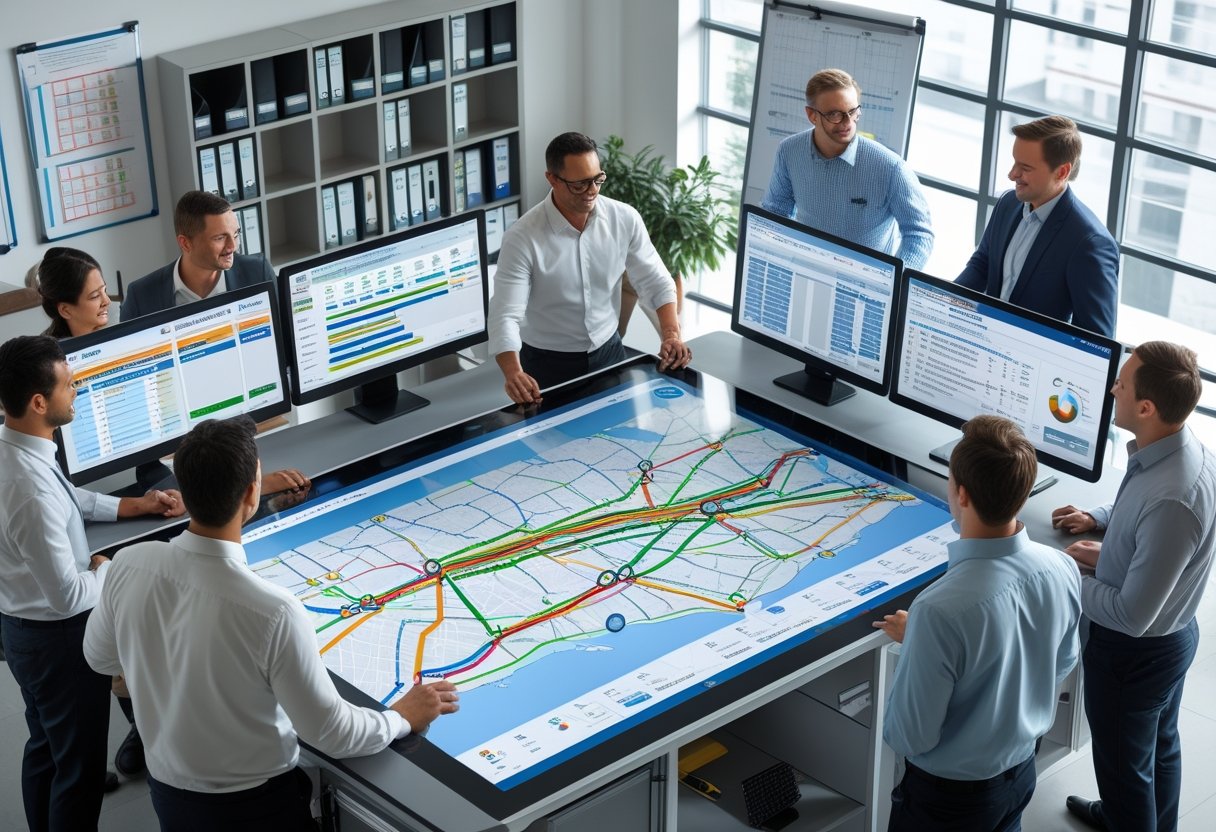
Efficient load and route planning ensure trucks operate at full capacity and follow optimized routes. Strong planning tools combine dispatch operations, GPS tracking, and real-time visibility to help carriers reduce empty miles and control fuel costs.
Load Management Processes
Trucking management software organizes freight assignments with automated load creation, scheduling, and allocation. Dispatchers match freight with available drivers and equipment based on weight limits, route suitability, and deadlines.
This improves asset use and reduces empty backhauls. Systems like LoadMaster or LoadRight support multi-stop loads, drag-and-drop planning, and integration with electronic logging devices (ELDs).
Dispatchers get immediate visibility into load status and available capacity. Digital documentation tools handle bills of lading, proof of delivery, and weigh tickets in one place.
This minimizes manual data entry and ensures compliance without duplicate paperwork.
Key FeatureBenefitLoad matching algorithmsReduced empty milesAutomated schedulingImproved on-time performanceIntegrated document controlFaster billing and record accuracy
Route Optimization Strategies
Route planning software calculates efficient paths using distance, traffic, delivery windows, and fuel costs. Modern systems use real-world data and maps to find savings for carriers.
Advanced optimization engines recalculate routes when weather or congestion changes. Dispatchers can reroute trucks instantly to minimize idle time.
Many solutions allow planners to simulate alternate routes and compare costs. Well-optimized route plans also extend vehicle life by reducing mileage and unnecessary detours.
Centralized routing dashboards help fleets coordinate across multiple regions and reduce communication gaps.
Real-Time Tracking and GPS
Real-time GPS tracking gives continuous visibility of trucks and shipments. With telematics, dispatchers monitor speed, route adherence, and stop times on a live map.
This enables quick intervention when routes change. Fleet tracking modules combine location with driver behavior and engine data for a full operational view.
Integrating these data points ensures accurate estimated time of arrival (ETA) updates for customers and management. Geofencing alerts staff automatically when a vehicle enters or leaves a zone.
Such features make operations more predictable and improve communication with partners and clients.
Order and Shipment Tracking
Order and shipment tracking links customer orders with live transport activity. Each shipment includes pickup, route, and delivery details that update automatically.
Integrated tracking reduces calls and emails about status. Carriers can offer customer portals or automated notifications with accurate ETAs and shipment histories.
Shipment tracking tools support proof-of-delivery capture, letting drivers upload signatures or photos from mobile devices. This speeds up invoicing and helps resolve disputes with verifiable records.
Load visibility and order tracking make operations measurable. Dispatchers can spot delays early and adjust loads or reassign vehicles as needed.
Driver and Workforce Management
A trucking management system coordinates people as well as trucks. It manages the full employee cycle—from scheduling and communication to payroll and compliance.
Driver Scheduling and Logs
Driver scheduling tools combine dispatch, route planning, and time tracking. Managers can assign loads, track hours of service, and keep drivers within legal limits.
Real-time visibility prevents underutilization and fatigue. Systems often sync with telematics devices to automatically record driver logs.
This supports compliance and provides up-to-date performance insights.
Key benefits include:
- Fewer scheduling conflicts
- Less recordkeeping time
- Better audit accuracy
- Improved visibility into availability
Aligning calendars and logs helps fleets stay reliable and make better dispatch decisions.
Driver Communication Tools
Good communication reduces delays and confusion. Trucking management software includes messaging and alert systems connecting drivers, dispatchers, and supervisors in one app.
Drivers can confirm load details, submit forms, and receive updates in real time. Some tools support voice messaging for safety and convenience.
Managers can broadcast updates to multiple drivers or filter messages by route. Clear records of exchanges help maintain accountability and simplify coordination.
Payroll and Settlements
Accurate pay builds trust and keeps drivers satisfied. Trucking management software automates payroll and settlements, using data from trip sheets, fuel cards, and load records.
The system calculates pay, deductions, and reimbursements based on mileage or hours. Owner-operators get itemized digital statements showing earnings and expenses.
Automation reduces errors and applies recurring deductions correctly. Many systems connect payroll data with accounting modules or external services for faster reconciliation.
Driver Safety and Compliance
Safety and compliance features protect drivers and carriers from violations. Modern software tracks routine checks, maintenance, and certifications, alerting managers before documents or inspections expire.
Compliance management tools monitor driver behavior through telematics. Alerts flag speeding, harsh braking, or long driving hours.
Some systems generate reports formatted for DOT audits or insurance reviews. Using automated logs and safety data, fleets maintain accountability and improve over time.
Fleet and Vehicle Maintenance
Effective fleet and vehicle maintenance keeps trucks safe, reduces downtime, and extends equipment life. Tracking repair history, scheduled service, and real-time maintenance alerts gives managers and technicians the visibility needed for efficient and compliant operations.
Preventative Maintenance Scheduling
Preventative maintenance scheduling helps fleet managers plan service before costly breakdowns occur. Software tools use odometer readings, engine hours, and service intervals to generate work orders or reminders.
This ensures vehicles receive routine inspections, oil changes, tire rotations, and component replacements based on real data. Managers can set recurring schedules by mileage or time period.
Some systems integrate telematics to pull live data from vehicle sensors. This allows maintenance planning that reflects actual usage.
A clear schedule supports better budgeting and resource allocation. The table below outlines common maintenance intervals:
Maintenance TaskTypical Interval (Miles)Typical Interval (Time)Engine Oil Change7,500–10,0003–6 monthsTire Rotation6,000–8,0006 monthsBrake Inspection10,000–15,00012 months
Repair History Tracking
Repair history tracking provides a detailed log of all maintenance and repair events for each vehicle. This record supports regulatory compliance and helps identify recurring failures or parts with short lifespans.
Modern fleet maintenance systems store digital histories that include service dates, costs, technicians, and invoices. Historical data allows managers to forecast when major components may require replacement.
By tracking each repair, fleets can compare the total cost of ownership of different vehicles and plan replacements more accurately. Quick access to previous work helps technicians avoid redundant maintenance and ensures consistent service quality.
Maintenance Alerts and Notifications
Maintenance alerts and notifications keep maintenance teams aware of issues before they escalate. Fleet management platforms use diagnostic trouble codes (DTCs), sensor data, or user-defined thresholds to trigger alerts in real time.
When a truck shows abnormal conditions—such as overheating, low oil pressure, or missed service intervals—the system notifies relevant personnel by email, SMS, or in-app message. Automated notifications support faster response times and reduce unplanned downtime.
Managers can prioritize alerts based on severity, ensuring safety-related issues receive immediate attention. Regular alerts strengthen maintenance discipline and promote proactive decision-making.
Financial Management and Accounting
Trucking management software integrates financial management tools that monitor cash flow, automate billing, and generate accurate reports. These features reduce errors, improve record consistency, and provide better visibility into operating costs and profit margins.
Expense Tracking Systems
Effective expense tracking helps companies identify cost patterns and improve budgeting accuracy. Modern trucking management systems record spending in real time, capturing fuel, maintenance, tolls, and lodging expenses from driver logs or digital receipts.
Most platforms automatically categorize costs in the general ledger and link them to specific trips or vehicles. This allows managers to see how each route or driver impacts overall operations.
Some systems integrate fuel card data, giving precise tracking of purchase details and discounts. A few software options also include tools to flag irregular spending or duplicate entries.
Well-organized expense data supports faster tax preparation and cost-control planning.
Accounts Payable and Receivable
Accounts payable (AP) and accounts receivable (AR) modules manage outgoing and incoming payments. AP tools track supplier invoices, schedule due dates, and log payment history, reducing missed or late vendor payments.
AR features produce digital invoices, apply customer credits, and update the general ledger automatically. Automated alerts help staff follow up on overdue balances or reconcile unmatched transactions.
Batch processing accelerates repetitive billing tasks and reduces manual data entry. Some trucking software integrates with banking platforms, allowing electronic payments and tracking deposit confirmations in one dashboard.
Clear reconciliation between AP and AR gives companies a more reliable view of current cash flow and working capital.
Profitability and Cost Management
Monitoring profitability requires accurate cost allocation for each shipment, route, or driver. Trucking management software calculates cost per mile, separating fixed and variable expenses such as leases, fuel, and maintenance.
This detail shows whether a route is financially sustainable and where rate adjustments are necessary. Many systems compare revenue and cost data across time periods to display profit trends.
Managers can then adjust dispatch strategies or negotiate fuel contracts to improve margins. Some software provides configurable financial dashboards that highlight gross profit, net profit, and labor efficiency.
This helps operators make decisions backed by consistent accounting records.
IFTA Reporting and Tax Compliance
IFTA (International Fuel Tax Agreement) reporting is a key part of transportation accounting. Software that supports IFTA compliance collects fuel and mileage data by jurisdiction, reducing manual effort for quarterly tax reports.
Automated tracking ensures that data from electronic logging devices (ELDs) and fuel purchases are accurate and matched with routes. Built-in validation rules detect missing odometer readings or inconsistent fuel entries before submission.
Some systems generate tax-ready summaries compatible with state and provincial filing formats. Others integrate with third-party tax applications for streamlined e-filing.
Accurate IFTA management lowers audit risks and ensures timely compliance across multiple regions.
Integrations and Platform Usability
Effective trucking management software relies on seamless integrations and intuitive design. Reliable connectivity between electronic logging devices, mobile tools, and third-party systems helps carriers maintain accuracy and comply with regulations.
ELD Integration and Telematics
Accurate ELD integration and advanced telematics are essential for compliant and efficient fleet management. Drivers’ hours of service, vehicle diagnostics, and location data automatically sync into the system.
Modern logistics software uses telematics sensors to track fuel use, idle time, and driver behavior in real time. Fleet managers view this data in unified dashboards, identifying patterns that affect cost and uptime.
Some platforms integrate ELD data directly with dispatch and billing modules. This ensures that shipment updates and compliance logs flow through the same interface.
Reliable synchronization across devices minimizes downtime and gives administrators confidence in reporting accuracy.
Mobile App Capabilities
A practical mobile app connects drivers to dispatchers and back-office staff wherever they are. Essential features include load assignments, document uploads, messaging, and live GPS tracking.
With a mobile-friendly interface, drivers can update delivery status or capture proof of delivery without returning to the office. Well-designed apps also support offline mode for areas with weak connectivity.
Information syncs automatically once the device reconnects. This keeps workflows consistent and reduces missed reporting.
Security and usability matter equally. Mobile apps must use login controls, encrypted channels, and simple layouts that minimize taps to perform frequent actions.
When implemented correctly, mobile access increases engagement and cuts administrative time.
Third-Party Software Connections
Third-party software connections expand the usefulness of trucking management systems. Integrations with ERP, accounting, fuel cards, and load boards simplify multi-system workflows.
Instead of switching windows or re-entering data, users manage everything from a single hub. For example, syncing invoices with QuickBooks or Xero automates billing accuracy, while integration with telematics or compliance tools keeps operational data aligned.
Many trucking software solutions also offer API access, allowing carriers to connect custom apps or partner platforms.
Integration TypePrimary BenefitCommon ToolsAccountingAutomated invoicing and paymentsQuickBooks, XeroLoad BoardsStreamlined load matchingDAT, Truckstop.comFuel ManagementCost tracking and optimizationWEX, ComdataERP/WMSCentralized resource planningSAP, Oracle
Open connectivity strengthens analytical capabilities and allows fleets to adjust systems as operations evolve.
User Experience and Ease of Use
Good user experience ensures a system supports day-to-day logistics. A clear dashboard, accessible menus, and consistent icon layouts reduce training time for new staff.
Buttons and workflows must match real-world trucking processes. Ease of use directly affects adoption.
Dispatchers work faster when scheduling shipments, drivers spend less time navigating, and administrators find reports quickly. Leading platforms emphasize role-based views, where each user sees information relevant to their tasks.
Combined with responsive design and fast load speeds, this creates efficient, predictable software that aligns with industry demands.
Customer Experience and Industry Applications
Trucking management software strengthens customer relationships through accurate tracking, transparent communication, and dependable delivery verification. It also adapts to sectors such as retail, manufacturing, and logistics brokerage, ensuring tailored workflows that reduce delays.
Shipment Visibility for Clients
Real-time shipment visibility improves trust between carriers and their clients. With integrated tracking dashboards, customers can view load status, route progress, and estimated delivery times without contacting support.
This automation helps dispatchers respond quickly to route deviations or traffic disruptions. Many systems combine GPS tracking, telematics data, and route optimization to update shipment details in near real time.
Clients benefit from consistent information accuracy. Some platforms also send proactive alerts when shipments reach checkpoints or experience delays.
Transparent visibility supports better scheduling on both ends of the supply chain, making operations more predictable.
Proof of Delivery Features
Proof of Delivery (POD) tools verify that shipments reach destinations as planned. Modern trucking management platforms often include digital signatures, barcode scanning, and photo capture to confirm handoffs.
These digital records replace paper copies, reducing disputes between carriers and clients. Drivers can upload confirmation instantly through a mobile app, which updates the central platform and notifies the customer.
This real-time confirmation speeds up invoicing and ensures all stakeholders view consistent delivery data. POD features also assist compliance efforts by storing delivery evidence securely for audits or claims.
They provide clear accountability between dispatchers, customers, and carriers.
Industry-Specific Solutions
Different industries require unique configurations. For example, retail distribution demands high-volume delivery tracking, while manufacturing logistics focuses on inbound raw material coordination.
Trucking management software often includes customizable modules to match these priorities.
IndustryPrimary FocusKey FeatureRetail & E-commerceFrequent shipments, short deadlinesAutomated order syncingManufacturingSupply chain continuityRoute scheduling by production cycleFreight BrokersMulti-carrier coordinationCentralized load board
This flexibility lets fleet managers and dispatchers configure workflows suited to their sector.
Choosing the Right Trucking Management Software
Selecting effective trucking management software depends on operational scale, available resources, and integration needs. Companies must balance functionality with usability, ensuring the system fits their current workflow without adding unnecessary complexity.
Assessing Fleet Size and Business Needs
Fleet size affects which trucking management system is most suitable. Smaller carriers often prioritize cost control and ease of use.
They look for essential dispatch features. Large fleets need advanced tracking, analytics, and enterprise-level integrations.
A company with 10 trucks may choose affordable trucking dispatch software that manages routes, invoices, and compliance. Fleets with over 100 trucks require detailed equipment management, driver performance data, and ELD connectivity.
These features help streamline dispatch and reduce administrative work.
The table below shows general priorities by fleet size:
Fleet SizeKey FeaturesExample Systems1–10 trucksSimplicity, mobile access, billingTruckLogics, TruckingOffice11–50 trucksDispatch optimization, maintenance trackingTailwind, TruckBase51+ trucksIntegration with ERP, real-time analyticsAxon, Verizon Connect, Samsara
Evaluating goals like reducing downtime or improving load tracking helps guide the choice. It is also important to check vendor support quality and scalability.
Top Software Providers and Comparisons
Leading trucking management software platforms have different strengths. TruckLogics offers a web-based interface for small and mid-size carriers.
It combines dispatch automation, driver settlements, and IFTA reporting. TruckingOffice provides tools for load management and trip tracking, making it a good fit for growing fleets.
Axon is designed for larger operations. It integrates accounting, dispatch, and maintenance in one system.
Verizon Connect and Samsara focus on real-time telematics, GPS tracking, and compliance monitoring. These are ideal for enterprises with large fleets.
Tailwind TMS and TruckBase serve carriers between small and enterprise sizes. They offer accounting links, EDI compatibility, and cloud access while keeping costs reasonable.
Considerations for Owner Operators and Small Fleets
Owner operators and small fleets benefit from systems that focus on usability and essential dispatch control. These systems avoid complex integrations.
TruckLogics supports single-owner dispatching and load documentation. It also offers automatic IFTA reporting, which saves administrative time.
TruckingOffice provides practical expense tracking and load logging tools. Users do not need technical expertise to use these features.
Leased operators need systems that are compatible with carrier requirements. Straightforward data sharing through cloud-based portals is important.
Mobile functionality is critical for managing dispatches, fuel expenses, and trip logs on the road. This increases efficiency for small fleets and owner operators.
Some small-fleet tools integrate with accounting apps like QuickBooks. This helps reduce redundant work.
Affordable pricing and clear setup processes are important for small fleets. These features help them stay compliant and focus on daily hauling operations.