How to start saving money
Lorem ipsum dolor sit amet, consectetur adipiscing elit lobortis arcu enim urna adipiscing praesent velit viverra sit semper lorem eu cursus vel hendrerit elementum morbi curabitur etiam nibh justo, lorem aliquet donec sed sit mi dignissim at ante massa mattis.
- Neque sodales ut etiam sit amet nisl purus non tellus orci ac auctor
- Adipiscing elit ut aliquam purus sit amet viverra suspendisse potent
- Mauris commodo quis imperdiet massa tincidunt nunc pulvinar
- Excepteur sint occaecat cupidatat non proident sunt in culpa qui officia
Why it is important to start saving
Vitae congue eu consequat ac felis placerat vestibulum lectus mauris ultrices cursus sit amet dictum sit amet justo donec enim diam porttitor lacus luctus accumsan tortor posuere praesent tristique magna sit amet purus gravida quis blandit turpis.

How much money should I save?
At risus viverra adipiscing at in tellus integer feugiat nisl pretium fusce id velit ut tortor sagittis orci a scelerisque purus semper eget at lectus urna duis convallis. porta nibh venenatis cras sed felis eget neque laoreet suspendisse interdum consectetur libero id faucibus nisl donec pretium vulputate sapien nec sagittis aliquam nunc lobortis mattis aliquam faucibus purus in.
- Neque sodales ut etiam sit amet nisl purus non tellus orci ac auctor
- Adipiscing elit ut aliquam purus sit amet viverra suspendisse potenti
- Mauris commodo quis imperdiet massa tincidunt nunc pulvinar
- Adipiscing elit ut aliquam purus sit amet viverra suspendisse potenti
What percentege of my income should go to savings?
Nisi quis eleifend quam adipiscing vitae aliquet bibendum enim facilisis gravida neque. Velit euismod in pellentesque massa placerat volutpat lacus laoreet non curabitur gravida odio aenean sed adipiscing diam donec adipiscing tristique risus. amet est placerat in egestas erat imperdiet sed euismod nisi.
“Nisi quis eleifend quam adipiscing vitae aliquet bibendum enim facilisis gravida neque velit euismod in pellentesque”
Do you have any comments? Share them with us on social media
Eget lorem dolor sed viverra ipsum nunc aliquet bibendum felis donec et odio pellentesque diam volutpat commodo sed egestas aliquam sem fringilla ut morbi tincidunt augue interdum velit euismod eu tincidunt tortor aliquam nulla facilisi aenean sed adipiscing diam donec adipiscing ut lectus arcu bibendum at varius vel pharetra nibh venenatis cras sed felis eget.
Managing a fleet involves more than keeping vehicles on the road. It also means maintaining visibility, efficiency, and compliance across every route and driver.
A tracking and fleet management system helps organizations monitor vehicles in real time, streamline maintenance, improve productivity, and reduce operational costs. With accurate data and automated insights, fleet managers can make informed decisions that keep business operations running smoothly.

Businesses of all sizes use these systems to unify vehicle tracking, fuel management, route optimization, and driver performance into one platform. By integrating GPS and telematics technology, they gain a clear view of how assets move and perform every day.
Companies in logistics, construction, delivery, and public services increasingly rely on these tools to ensure reliability and cost control.
The following sections explain how tracking and fleet management systems work and what key features to look for. You’ll also learn how software platforms from providers like Verizon Connect, Webfleet, and GoFleet support different fleet needs.
What Is a Tracking and Fleet Management System?
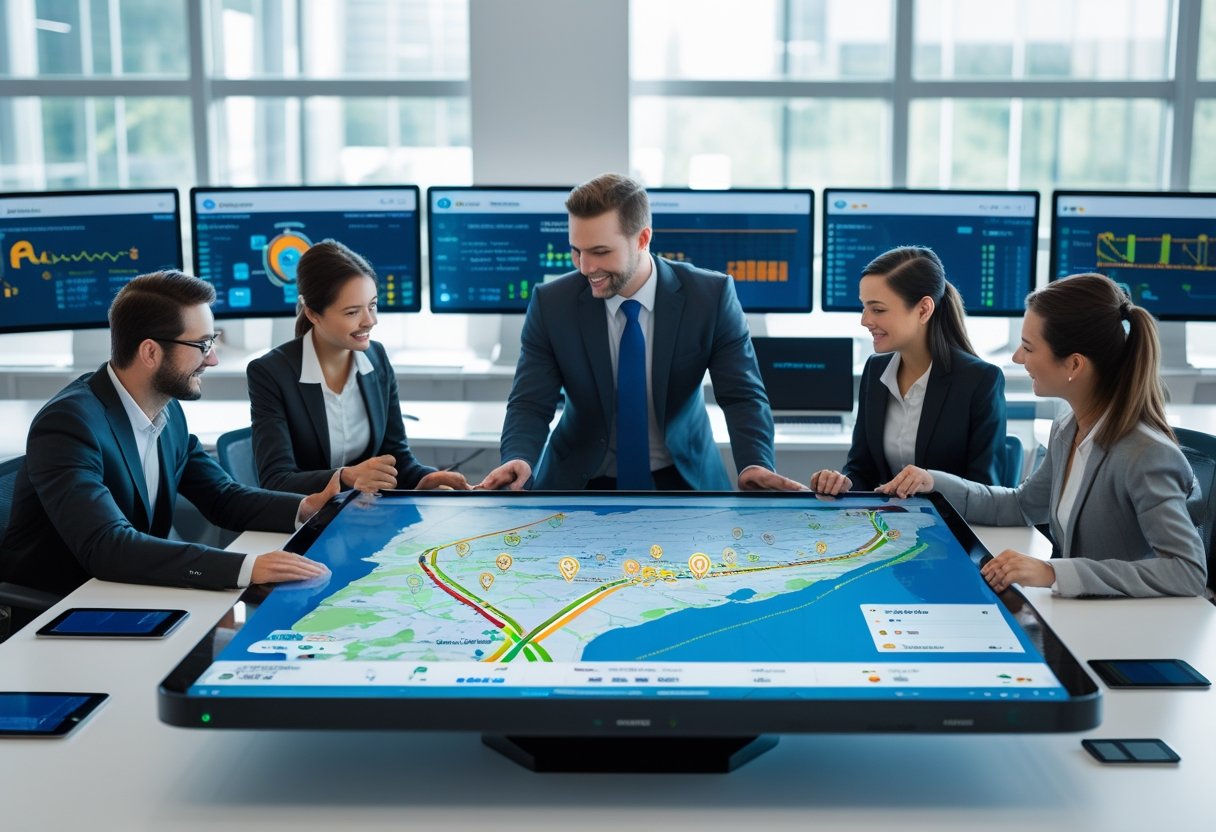
A tracking and fleet management system uses software, hardware, and communication tools to monitor vehicles and gather real-time data. It helps organizations maintain productivity, safety, and cost efficiency through features like tracking, performance analytics, and maintenance management.
Core Components of Fleet Tracking
A fleet tracking system includes several integrated technologies that record, transmit, and analyze vehicle data. The main components are GPS receivers, onboard sensors, cellular or satellite communication devices, and management software.
These tools let managers see vehicle locations, fuel usage, driver behavior, and maintenance status at any time. The software converts raw data into useful insights.
Through reports and dashboards, managers can spot idle time, inefficient routes, or high fuel use. Alerts and automation features—such as maintenance or speeding notifications—help solve issues quickly.
Key components often include:
- GPS hardware for real-time location tracking
- Telematics modules that collect diagnostic and performance data
- Cloud-based dashboards for monitoring and analytics
- APIs to integrate with payroll, logistics, or compliance systems
These features work together to improve fleet visibility and support better management.
Key Differences Between Tracking Systems and Fleet Management Solutions
A tracking system focuses on location monitoring. It answers questions like where a vehicle is, how fast it’s moving, and whether it follows assigned routes.
A fleet management system (FMS) offers more tools beyond tracking. It includes maintenance planning, fuel monitoring, driver management, and compliance reporting.
An FMS brings together data from many sources to give a full picture of fleet performance.
FeatureTracking SystemFleet Management SystemReal-time vehicle location✓✓Maintenance scheduling✗✓Fuel consumption reports✗✓Driver behavior analysis✓ (basic)✓ (advanced)Compliance and documentation✗✓
A tracking system gives visibility, while a fleet management system enables full control and optimization of operations.
The Role of GPS and Telematics
GPS provides accurate, real-time positioning for each vehicle. Telematics adds more detail by recording speed, engine use, route history, and vehicle health.
This data supports predictive maintenance and helps with regulatory compliance. Telematics systems also track driver behavior, such as harsh braking, rapid acceleration, or unsafe driving hours.
These insights help reduce risks and lower insurance costs. Modern fleet management platforms combine GPS and telematics data in a single dashboard.
This setup allows efficient routing, cost analysis, and reporting. GPS and telematics together form the backbone of a strong fleet management system.
Essential Features of Tracking and Fleet Management Systems

An effective tracking and fleet management system brings together GPS data, driver analytics, route intelligence, and maintenance oversight. These systems help lower costs, reduce downtime, and improve driver accountability.
Real-Time Vehicle Tracking
Real-time GPS tracking is the core of any fleet management platform. It provides constant visibility into vehicle location, speed, and status using satellite or cellular data.
Managers use dashboards to monitor live positions and route histories. Consistent tracking data improves response to delays or emergencies.
Operators can spot inefficiencies like unauthorized stops or idle time. This information leads to more accurate delivery estimates and better coordination between dispatchers and drivers.
Modern vehicle tracking systems often have geo-fencing features. These send alerts when vehicles enter or leave certain areas, which helps prevent theft and ensures compliance with service zones.
Real-time monitoring also gives customers more transparency about deliveries.
Route Optimization and Planning
Route optimization helps fleets cut travel distance, fuel use, and costs. The software analyzes traffic, delivery windows, and road conditions to find the best routes.
Advanced route planning tools consider driver shifts, vehicle capacity, and delivery priority. With live GPS tracking, these systems can adjust routes automatically if there’s traffic or bad weather.
Some platforms use analytics to test different route scenarios. Fleet managers can compare efficiency, fuel use, and travel time before sending out vehicles.
Over time, these tools reveal trends that affect fleet performance.
Driver Safety and Behavior Monitoring
Monitoring driver safety and behavior protects both people and vehicles. Sensors collect data on acceleration, braking, cornering, and speeding.
Supervisors can review these metrics through dashboards that highlight risky behavior. This tracking supports targeted training.
Drivers get feedback through scorecards or alerts that encourage safer habits. These changes lower collision risk and can reduce insurance costs.
Some systems include cameras or apps to document incidents. The data helps investigate accidents and ensures accountability.
Regular monitoring builds a culture of safety and professionalism.
Maintenance and Service Scheduling
Fleet maintenance software uses sensor data and odometer readings to track service needs. Automated maintenance scheduling ensures timely inspections, oil changes, and part replacements.
Predictive maintenance looks at trends in diagnostics to find problems before they cause breakdowns. This approach makes vehicles last longer and reduces downtime.
Maintenance teams can prioritize vehicles based on usage and service history. Most platforms offer reminders, checklists, or links to maintenance vendors.
Managers can see maintenance records, compare costs, and analyze performance over time. Regular service keeps fleets reliable and compliant.
Fleet Management Software: Platforms and Providers
Modern fleet management relies on software platforms that combine vehicle tracking, maintenance, analytics, and compliance in one system. Leading providers use cloud-based tools, GPS hardware, and mobile apps to keep fleets visible and under control.
Top Fleet Management Solutions
The most effective fleet management platforms offer real-time GPS tracking, automated maintenance, and strong reporting. Samsara, Verizon Connect, and Geotab are popular for large fleets due to their detailed telematics, route optimization, and fuel monitoring.
For smaller fleets, Fleetio, Azuga, and Rhino Fleet Tracking provide easy-to-use systems with mobile dashboards and simple cost tracking. Omnitracs and Teletrac Navman focus on compliance and safety analytics, which are important for regulated industries.
A quick comparison of notable platforms:
ProviderDistinguishing FeatureIdeal ForSamsaraCloud-based real-time analyticsLarge fleets needing integrationsVerizon ConnectRoute optimization and safety monitoringDelivery and logistics operationsFleetioMaintenance and inspection trackingMixed-vehicle fleetsGeotabStrong API access and data insightsCustomizable enterprise useAzugaDriver behavior analyticsSafety-focused companies
Popular GPS Fleet Tracking Devices
Reliable GPS devices are essential for every fleet tracking system. Devices from One Step GPS, ClearPathGPS, and GPS Insight provide real-time location data and geofencing.
Many systems now use OBD-II plug-in hardware to send vehicle diagnostics straight to the platform. Hardware-integrated systems help detect engine faults, idle time, and harsh driving.
Zubie and Fleet Complete offer plug-and-play solutions for both old and new vehicles. The best trackers support cellular and satellite connections for updates even in low-signal areas.
When choosing hardware, businesses should look for accuracy, easy installation, and platform compatibility. Many providers include hardware in a bundled subscription to simplify setup.
Integration Capabilities and Mobile Apps
Integration and mobility are key for a fleet management platform. Leading systems like GPS Trackit, Onfleet, and AUTOsist connect easily with payroll, dispatch, and accounting tools.
This integration removes duplicate data entry and gives unified reports across departments. Most major solutions are mobile-first and support real-time alerts, tracking, and digital forms through iOS and Android apps.
This keeps managers and drivers connected on the go. APIs and open data frameworks add more flexibility.
For example, Geotab’s Marketplace and Samsara’s partner integrations let businesses connect telematics with HR or ERP software. These features help organizations scale operations while keeping clear visibility over every vehicle and asset.
Fleet Operations: Optimization and Efficiency
Fleet operations depend on efficiency, accurate tracking, and proactive management of vehicles and equipment. Data-driven monitoring helps organizations control costs, reduce downtime, and improve compliance with timely, informed decisions.
Fuel Management and Efficiency
Effective fuel management reduces operational costs and provides insight into how vehicles consume energy. Telematics tools monitor fuel levels, driving behavior, and idle time to spot inefficiencies.
By comparing fuel consumption per mile, operators can find underperforming vehicles or inefficient routes. Modern platforms integrate fuel tracking with route optimization and driver analytics.
This helps reduce unnecessary miles and supports cost reduction. Fleet managers use automated reporting to evaluate fuel efficiency trends and plan refueling schedules based on operational needs.
Fuel cards and real-time monitoring help detect fuel theft and unauthorized purchases. Automated alerts trigger when fuel usage changes unexpectedly.
A structured fuel management program improves accountability and long-term fleet performance.
Work Order and Asset Tracking
Work order management systems link maintenance tasks, parts usage, and labor hours for better control over vehicle upkeep. Fleet operators use digital platforms to prioritize preventive maintenance and reduce breakdowns from delayed service.
Asset tracking tools increase visibility of both mobile and stationary assets. Using GPS and RFID, managers can locate vehicles, monitor usage rates, and ensure maintenance happens on time.
Automated reminders and maintenance histories help cut administrative workload.
The following table shows examples of tracked elements:
CategoryMonitored MetricsPurposeVehiclesMileage, engine hoursMaintenance schedulingEquipmentUtilization time, locationAsset deployment efficiencyWork OrdersStatus, cost, completion timeWorkflow control
Accurate tracking supports better resource allocation and more efficient operations.
Inventory and Vehicle Inspections
Inventory management in fleet systems ensures critical parts and materials are available when needed. By monitoring reorder points and supplier lead times, fleets avoid delays that could increase downtime and repair costs.
Integration with maintenance schedules keeps spare parts aligned with expected demand. Routine vehicle inspections maintain safety, compliance, and readiness.
Drivers or technicians record inspection data using mobile devices connected to central systems. Digital inspection management enables quick defect reporting and automatic repair scheduling.
Regular inspections help identify early signs of wear that could impact safety or fuel efficiency. Keeping precise records of inspections and repairs improves accountability and reduces unexpected failures.
Scalability and Customization for Different Fleet Sizes
Scalable fleet management lets companies stay efficient as they grow from a few vehicles to hundreds. Customizable features allow operators to adapt tools for routing, maintenance, compliance, and analytics to fit their needs and budgets.
Small vs. Large Fleet Needs
Small fleets typically need basic tracking, fuel monitoring, and maintenance tools. Cost efficiency and easy setup are important, as owners often manage operations directly.
Cloud-based systems with pay-as-you-go options reduce upfront costs while providing core visibility. Large fleets focus on integration, scalability, and centralized control.
They require advanced analytics, predictive maintenance, and driver performance tracking for multi-region operations. Scalable systems ensure stable performance with thousands of vehicles.
Fleet TypeKey PrioritiesExample FeaturesSmallCost efficiency, setup speedGPS tracking, basic reports, service remindersLargeScalability, automation, integrationTelematics APIs, route optimization, compliance tools
Different fleet sizes need different data strategies. A small fleet may use shared dashboards, while an enterprise system needs multi-level access and automated alerts across departments.
Customization and Modular Features
Modern fleet systems use modular architectures so organizations can tailor components to their operations. Modules for telematics, maintenance tracking, or dispatch can be added or removed as needs change.
This keeps systems simple for smaller operators and allows expansion later. Custom dashboards let managers focus on the most relevant data for their roles.
An owner-operator may track live vehicle status and fuel logs, while a logistics company may monitor driver scorecards and route efficiency. Integration flexibility is also important.
Systems that connect with ERP, CRM, or accounting software streamline workflows and improve decision-making.
Enterprise Fleet Management Tools
Enterprises with large fleets rely on data analytics, automation, and integration for daily efficiency. Fleet Management Systems (FMS) give centralized visibility into drivers, vehicles, and assets.
Tools like real-time tracking, maintenance scheduling, and AI route planning help optimize resources across large areas. Predictive analytics spot trends in fuel use and repairs, reducing downtime and costs.
Scalability allows new vehicles, routes, and data to be added without slowing performance. Automation in compliance checks and reporting helps large organizations stay consistent and safe.
Compliance, Safety, and Data Analytics
Modern fleet management relies on accurate data, regulatory compliance, and turning analytics into safer driving practices. Operators use integrated compliance tools, driver scorecards, and analytics to lower risk, monitor performance, and ensure all vehicles and drivers meet standards.
ELD Compliance and Hours of Service
Electronic Logging Devices (ELDs) automate tracking of Hours of Service (HOS) to ensure drivers stay within legal limits. This reduces fatigue-related risks and helps carriers keep accurate records.
Fleet management systems often include compliance dashboards showing driver log status and violation alerts in real time. Automatic syncing with vehicle engines records driving time, engine hours, and location data.
Compliance managers use these tools to spot potential HOS violations, such as late log submissions or too much driving time. Integrating ELD data with safety monitoring improves accountability and helps dispatchers plan routes and rest periods according to regulations.
Key Compliance FeaturesPurposeAutomated log trackingEliminates manual record errorsViolation alertsWarns before exceeding HOS limitsReport generationSimplifies audits and inspections
Scorecards and Reporting Tools
Driver scorecards turn performance data into clear insights. They measure speeding, harsh braking, idling, and compliance with safety rules.
Fleet managers use these reports to recognize top drivers and address recurring issues. A clear scoring system encourages accountability and improvement.
Tools may include incident reporting modules for recording accidents or near-misses. Regular reporting supports safety meetings and driver coaching.
Visual metrics, like charts comparing driver performance over time, make trends easy to spot. Consistent tracking links feedback with reductions in risky behavior and lower maintenance costs.
Example scorecard metrics:
- Harsh braking events per 1,000 miles
- Average speed vs. posted limits
- Idle time percentage
- Safety rule compliance score
Artificial Intelligence and Predictive Analytics
Artificial Intelligence (AI) and analytics help spot safety and maintenance issues early. Systems with AI dashcams and real-time telemetry analyze driver behavior, road conditions, and vehicle status together.
Machine learning detects distracted or aggressive driving and provides instant alerts or post-trip feedback. Predictive analytics uses this data to estimate component wear, forecast accident risk, and plan maintenance.
Combining AI with telematics leads to faster decisions. Fleet managers learn which routes are riskier or which drivers need retraining. This integration reduces incidents, supports compliance, and improves reliability.
Choosing the Right Tracking and Fleet Management System
Selecting a tracking and fleet management system means matching software features with business goals, budget, and support needs. Important factors include operational fit, clear pricing, and responsive vendor support.
Assessing Operational Needs
Each fleet has different needs based on size, vehicle types, and locations. Companies should identify their top priorities, such as real-time GPS tracking, driver monitoring, or vehicle diagnostics.
Logistics managers may focus on route optimization and fuel monitoring. Service providers may value driver scheduling and maintenance alerts.
Core features to evaluate:
- Real-time tracking: See vehicle locations and routes.
- Telematics integration: Gather data like fuel use and idle time.
- Reporting tools: Make compliance and reviews simpler.
Compatibility with current systems is important. Businesses using transportation management software (TMS) should ensure smooth integration to avoid duplicate data. The best systems balance advanced features with easy use for all employees.
Pricing Models and Free Trials
Fleet management software is usually subscription-based, charged per vehicle per month. Monthly prices range from a few dollars for basic GPS tracking to higher amounts for advanced analytics and compliance features.
Some vendors include free hardware like GPS devices with long-term plans, while others separate hardware and software costs.
Pricing FeatureWhat to CheckWhy It MattersMonthly ratePer-vehicle cost and tier optionsHelps forecast ongoing expensesContract lengthMonthly vs. annual termsDetermines flexibility and cancellation optionsFree trial availabilityDuration and feature accessAllows real-world testing before purchase
Free trials and demos let users test dashboards, mobile apps, and reporting before buying. Transparent pricing and service terms help with long-term cost planning.
Customer Support and User Experience
Effective customer support helps resolve technical issues that can interrupt fleet operations. Many businesses prefer vendors offering 24/7 support through phone, chat, or ticketing systems.
Support quality affects system uptime and reliability. This is especially important for fleets working in different time zones.
User experience is important for long-term satisfaction. Clear interfaces and organized menus reduce training time and frustration.
Responsive mobile applications also make daily tasks easier. Reading fleet management software reviews can reveal common issues or positive feedback about vendor support.
Some providers offer dedicated account managers and onboarding help. This service is valuable for fleets moving from manual systems or older software.