How to start saving money
Lorem ipsum dolor sit amet, consectetur adipiscing elit lobortis arcu enim urna adipiscing praesent velit viverra sit semper lorem eu cursus vel hendrerit elementum morbi curabitur etiam nibh justo, lorem aliquet donec sed sit mi dignissim at ante massa mattis.
- Neque sodales ut etiam sit amet nisl purus non tellus orci ac auctor
- Adipiscing elit ut aliquam purus sit amet viverra suspendisse potent
- Mauris commodo quis imperdiet massa tincidunt nunc pulvinar
- Excepteur sint occaecat cupidatat non proident sunt in culpa qui officia
Why it is important to start saving
Vitae congue eu consequat ac felis placerat vestibulum lectus mauris ultrices cursus sit amet dictum sit amet justo donec enim diam porttitor lacus luctus accumsan tortor posuere praesent tristique magna sit amet purus gravida quis blandit turpis.

How much money should I save?
At risus viverra adipiscing at in tellus integer feugiat nisl pretium fusce id velit ut tortor sagittis orci a scelerisque purus semper eget at lectus urna duis convallis. porta nibh venenatis cras sed felis eget neque laoreet suspendisse interdum consectetur libero id faucibus nisl donec pretium vulputate sapien nec sagittis aliquam nunc lobortis mattis aliquam faucibus purus in.
- Neque sodales ut etiam sit amet nisl purus non tellus orci ac auctor
- Adipiscing elit ut aliquam purus sit amet viverra suspendisse potenti
- Mauris commodo quis imperdiet massa tincidunt nunc pulvinar
- Adipiscing elit ut aliquam purus sit amet viverra suspendisse potenti
What percentege of my income should go to savings?
Nisi quis eleifend quam adipiscing vitae aliquet bibendum enim facilisis gravida neque. Velit euismod in pellentesque massa placerat volutpat lacus laoreet non curabitur gravida odio aenean sed adipiscing diam donec adipiscing tristique risus. amet est placerat in egestas erat imperdiet sed euismod nisi.
“Nisi quis eleifend quam adipiscing vitae aliquet bibendum enim facilisis gravida neque velit euismod in pellentesque”
Do you have any comments? Share them with us on social media
Eget lorem dolor sed viverra ipsum nunc aliquet bibendum felis donec et odio pellentesque diam volutpat commodo sed egestas aliquam sem fringilla ut morbi tincidunt augue interdum velit euismod eu tincidunt tortor aliquam nulla facilisi aenean sed adipiscing diam donec adipiscing ut lectus arcu bibendum at varius vel pharetra nibh venenatis cras sed felis eget.
Fleet telematics companies are essential for modern businesses managing vehicles and monitoring driver behavior. The right platform connects vehicles and data sources to deliver insights that improve safety, reduce costs, and ensure compliance.
The top fleet telematics companies help organizations make data-driven decisions that increase efficiency and regulatory confidence.
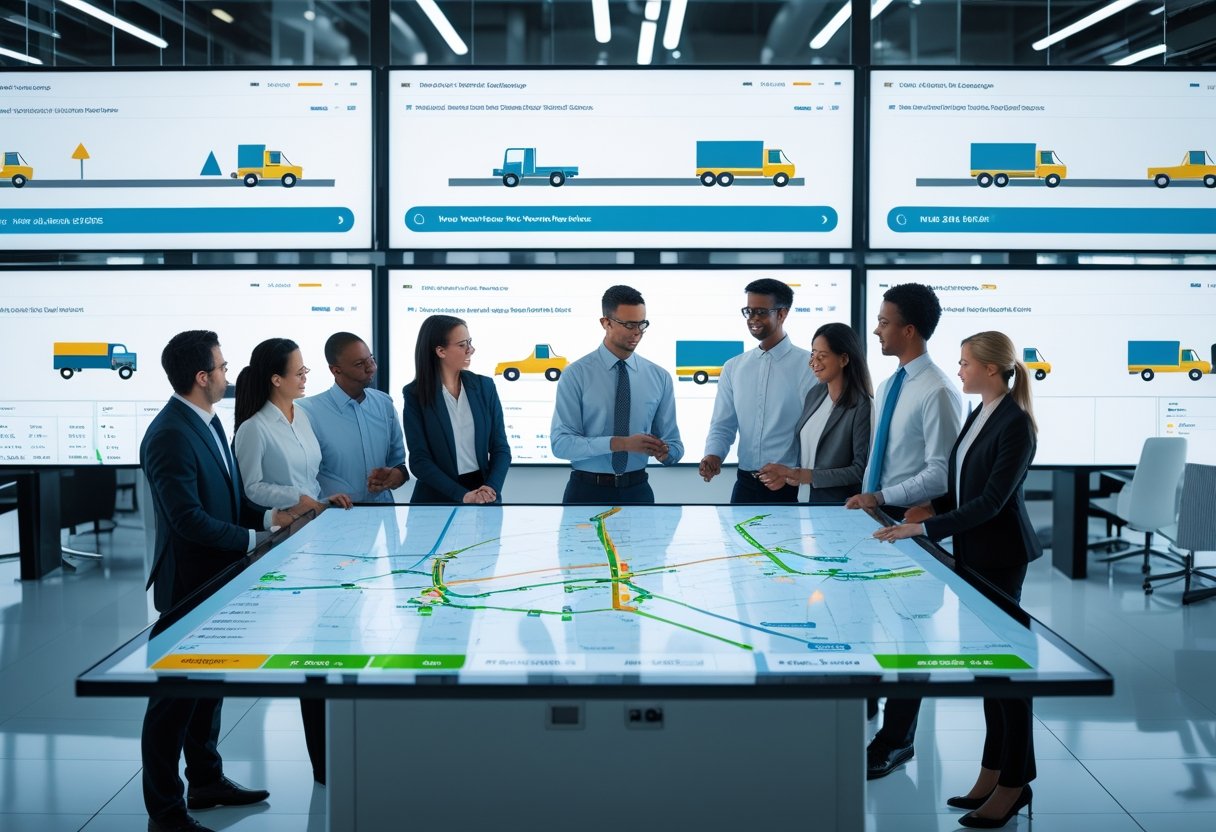
Companies in logistics, delivery, and construction now rely on telematics for real-time performance monitoring. Leading providers offer analytics, GPS tracking, maintenance alerts, and integration tools that work with existing fleet management systems.
Each solution varies in scope and specialization. Ranking top fleet telematics companies helps businesses find the best fit for their operational goals.
Ranking the Top Fleet Telematics Companies

Fleet telematics providers differ in data accuracy, integration options, and compliance tools. The best systems offer real-time visibility, maintenance automation, and safety features while scaling across different fleet sizes and vehicle types.
Geotab
Geotab is a well-known telematics provider with a strong analytics ecosystem and open data platform. It supports over 3 million connected vehicles and integrates with more than 200 third-party applications.
The platform offers customizable insights on fuel usage, driver behavior, and maintenance forecasting. Geotab’s software works with both light and heavy-duty vehicles, providing detailed reports through cloud dashboards.
It supports regulatory compliance, including Hours of Service (HOS) and IFTA reporting. Geotab’s modular approach allows adding features without replacing hardware.
Samsara
Samsara offers real-time data visibility and IoT connectivity. The system combines vehicle diagnostics, AI-driven dash cameras, and driver performance analytics in one interface.
Samsara is easy to use and quick to set up. Cloud management, automatic data sync, and modern design make it accessible for operators with minimal IT resources.
It supports U.S. and Canadian ELD mandates and integrates video and sensor data to improve safety. The system’s live GPS tracking provides frequent updates on fleet activity.
With route optimization and maintenance planning, Samsara is popular in logistics, delivery, and field service sectors.
Verizon Connect
Verizon Connect, a subsidiary of Verizon Communications, provides telematics tools that combine communications and tracking. The platform delivers precise GPS data, route optimization, and driver performance scoring.
Its product portfolio includes Reveal, a cloud solution for small to mid-sized fleets. Features like geofencing, fuel monitoring, and customizable alerts improve efficiency.
Verizon Connect emphasizes compliance and data security. Integration with Verizon’s cellular network enhances reliability for large fleets.
Powerfleet
Powerfleet offers telematics solutions for vehicles, assets, and industrial equipment using wireless technology. It serves logistics, construction, and manufacturing industries.
The system tracks assets with IoT-enabled technology, providing visibility across mixed fleets. Powerfleet monitors fuel usage, engine diagnostics, and environmental conditions such as temperature.
Predictive analytics help anticipate maintenance needs and reduce downtime. Battery-powered wireless sensors allow flexible installation on various equipment types.
Azuga
Azuga combines telematics with driver safety and rewards programs. Its solution includes GPS tracking, route optimization, and driver scoring based on real-time habits like harsh braking or speeding.
The Azuga Fleet dashboard offers reports on fuel efficiency, utilization, and trip history. Built-in gamification tools encourage safe driving.
The mobile app gives fleet managers and drivers live updates and reports. Azuga also integrates with insurance and compliance tools to help reduce risk.
Omnitracs
Omnitracs is known for compliance, routing intelligence, and safety. Its solutions serve both trucking fleets and service vehicles.
The telematics platform uses real-time diagnostics, driver workflow tools, and analytics to optimize operations. Routing and dispatch tools help reduce idle time and improve delivery consistency.
Omnitracs integrates with transportation management systems (TMS) and legacy logistics software. Its reliability makes it a strong choice for large operators.
Motive
Motive, formerly KeepTruckin, centers on AI-powered cameras and automation. It offers GPS tracking, vehicle diagnostics, and safety coaching with automatic event detection.
The platform analyzes driving patterns and uses computer vision to spot risky behaviors. Managers can review incidents in real time or schedule coaching sessions.
Motive’s ELD-certified hardware ensures compliance in North America. The cloud dashboard integrates with dispatch and maintenance systems, supporting both small and large fleets.
Teletrac Navman
Teletrac Navman combines GPS telemetry with business analytics to improve transparency. It tracks vehicle location, driver hours, and engine performance while providing cost and resource insights.
The software supports ELD compliance, safety scorecards, and fleet benchmarking. AI dashboards highlight inefficiencies in fleet operations.
Teletrac Navman has global reach, covering over 80 countries. Its modular structure adapts to regional regulatory requirements.
Trimble
Trimble develops telematics technologies for asset tracking, route optimization, and back-office integration. Its solutions target logistics-heavy industries.
Trimble’s tools capture vehicle health and driver data in real time. Route modeling algorithms help fleets cut fuel waste and maintain delivery schedules.
Integration with Trimble’s Transportation Cloud connects dispatch, maintenance, and driver management. Analytics highlight cost drivers and optimize asset use.
Zonar Systems
Zonar Systems focuses on reliability and safety through inspection automation and smart data. Electronic verification tools like Zonar EVIR simplify inspection documentation.
Real-time GPS tracking and engine diagnostics help managers spot maintenance needs early. Zonar’s RFID system enables detailed asset tracking.
Zonar partners with Continental AG and uses secure cloud data for fleet information. Its strengths are compliance reporting, driver visibility, and consistent uptime for public sector, trucking, and transit fleets.
Key Features of Leading Fleet Telematics Platforms

Modern telematics systems use connected sensors, onboard modules, and analytics to give managers visibility into vehicle activity and driver behavior. These platforms combine GPS tracking, video telematics, and monitoring tools to improve safety and compliance.
Real-Time Vehicle Tracking
Real-time tracking uses GPS modules and networks to send live vehicle data. Managers can monitor position, engine status, fuel use, and route progress from a dashboard.
This improves fleet visibility and helps spot inefficiencies like idling or unauthorized use.
Geofencing lets users set digital boundaries and get alerts when vehicles enter or leave zones. This supports scheduling, asset security, and customer service by predicting arrivals and delivery status.
Most platforms store travel data for review. Managers can analyze route bottlenecks or delays and adjust routes as needed.
Reliable tracking reduces downtime, controls fuel costs, and keeps drivers accountable.
Driver Behavior Monitoring
Driver behavior tools collect data from onboard sensors. They track speeding, harsh braking, rapid acceleration, and sharp turns.
Systems score drivers on safety and efficiency. Managers use these scores to target training and improve results.
Alerts can notify managers immediately about unsafe actions. Over time, this reduces accidents, insurance claims, and maintenance costs.
Video Telematics and Dashcams
Video telematics uses dashcams and event recording in management software. Cameras capture the road and the driver’s actions.
Footage helps verify events like collisions or harsh braking. It also protects drivers by clarifying liability and speeding up claims.
Cloud storage keeps video data accessible for analysis and training. Leading platforms combine road and cabin views with speed, GPS, and timestamps for a full picture of driving conditions.
Safety, Compliance, and Regulatory Capabilities
Modern telematics platforms reduce operational risk with real-time safety data, compliance automation, and accurate reporting. These systems help organizations meet legal obligations and improve driver accountability.
Driver Safety Systems
Fleet telematics companies emphasize driver safety systems that monitor and improve driver behavior. Features include real-time alerts, video event detection, and scorecards for speeding, harsh braking, or distraction.
Many platforms offer coaching modules based on telematics data. In-cab notifications can remind drivers to slow down or keep safe distances.
Managers review safety reports to plan coaching sessions. Advanced systems use AI to combine camera, sensor, and GPS data for actionable insights.
This helps fleets correct unsafe habits before they cause accidents or compliance issues, supporting safety and lowering insurance risk.
ELD and DVIR Compliance
Compliance management tools help fleets meet Electronic Logging Device (ELD) and Driver Vehicle Inspection Report (DVIR) requirements. Telematics vendors integrate these tools to simplify Hours of Service (HOS) tracking and ensure records meet federal standards.
ELD systems automatically log driving time, duty status, and rest periods. This reduces manual errors and saves administrative time.
Drivers submit DVIR reports digitally from mobile apps. This ensures vehicle inspection documentation is completed and stored for audits.
Fleet managers get instant visibility into compliance status. Automated alerts notify them when drivers near hour limits or if a vehicle inspection shows unresolved defects.
Some solutions provide audit-ready data exports for the Department of Transportation (DOT). This streamlines communication during reviews or roadside checks.
IFTA and Reporting Tools
Accurate reporting is crucial for International Fuel Tax Agreement (IFTA) compliance and cost tracking. Leading platforms automate fuel consumption, mileage by jurisdiction, and trip records to generate verified tax reports.
These systems use GPS and odometer data to calculate taxable miles per state or province. Managers can view summaries through dashboards or export detailed logs for submission.
Automation eliminates manual entry errors and speeds up quarterly filing. Comprehensive reporting tools also support internal analysis, identifying inefficiencies in routing or fuel use.
By combining IFTA data with other compliance reports, fleets gain a unified view of operational and regulatory performance. This reduces administrative effort and keeps fleets audit-ready.
Operational Efficiency and Optimization
Fleet telematics systems improve how vehicles, equipment, and cargo perform. They deliver gains in uptime, cost control, and resource use through continuous tracking, diagnostic insights, and route scheduling.
Maintenance Tracking and Predictive Maintenance
Effective fleet optimization relies on consistent maintenance tracking and accurate predictive maintenance alerts. Telematics platforms monitor vehicle diagnostics such as engine hours, temperature, and fluid levels to detect signs of wear.
When thresholds are reached, automated maintenance alerts notify managers before a breakdown occurs. This proactive approach extends fleet life and reduces downtime.
Systems use historical trend data to forecast part failures. Maintenance is then scheduled strategically, not reactively.
Fleet managers can compare service intervals across assets. This ensures vehicles meet compliance standards and avoids unnecessary work.
Key benefits include:
- Lower repair costs by avoiding secondary damage.
- Reduced unplanned downtime.
- Better scheduling for workshops and technicians.
Predictive insights from telematics tools help companies improve reliability. These insights turn raw sensor data into actionable maintenance decisions.
Route Optimization and Planning
Telematics technology enhances route optimization by combining real-time traffic updates, driver behavior data, and delivery schedules. These systems evaluate congestion, road restrictions, and fuel use to select the most efficient routes.
Modern software uses AI-based route planning that adjusts based on conditions. Managers can compare routes by time, fuel, or distance to identify patterns that reduce mileage and idle time.
For large logistics operations, small improvements across many vehicles lead to measurable fuel savings.
A sample set of planning factors often includes:
FactorTypical SourceImpactTraffic congestionReal-time dataReduces delaysDelivery sequenceSchedule inputOptimizes timingDriver patternsBehavior dataImproves efficiency
Efficient routing not only lowers operating costs but also supports on-time delivery. This directly influences customer satisfaction and service consistency.
Asset and Cold Chain Monitoring
Accurate asset tracking and asset monitoring protect mobile resources such as trailers, containers, and high-value goods. Telematics solutions track usage, location, and condition to prevent unauthorized use and improve asset utilization.
In temperature-sensitive logistics, cold chain monitoring is essential. Sensors report real-time temperature, humidity, and door status, allowing immediate action when conditions change.
Automated alerts help reduce product spoilage and ensure compliance with health and safety standards. Companies review sensor data through centralized dashboards to spot underused assets and guarantee chain-of-custody accuracy.
Continuous location reporting helps reduce idle storage and improve cost effectiveness.
Technology Innovations in Fleet Telematics
Modern telematics systems use automation, seamless connectivity, and real-time analytics. These tools help fleet operators improve routing, reduce fuel costs, ensure compliance, and make faster decisions.
Artificial Intelligence and Machine Learning
Telematics companies now integrate AI and machine learning to process vehicle and driver data. Algorithms detect patterns in fuel use, idling, and route efficiency to help predict maintenance needs.
AI-based driver monitoring analyzes behaviors like harsh braking or speeding. This helps improve safety.
Platforms use machine learning for predictive modeling. The system recommends adjustments based on past trends and external factors like traffic or weather.
Some providers use computer vision for video telematics. Cameras combined with AI detect unsafe conditions, increasing accountability and efficiency.
Integration, APIs, and Mobile Apps
Fleet management workflows depend on how well the telematics platform integrates with other business systems. Open APIs connect telematics data with logistics software, HR systems, or fuel management tools.
This integration reduces duplication and creates a unified data environment. Mobile apps extend functionality to drivers and field managers, providing route updates, inspection checklists, and instant reporting.
Many apps support offline data capture for areas with limited connectivity. Telematics providers also design custom dashboards through API integrations.
This flexibility ensures each stakeholder accesses only the data relevant to their role.
Data Analytics and Reporting
Data analytics is the foundation of modern telematics systems. Real-time reporting tools turn sensor data into insights for fleet performance, compliance, and cost management.
Managers can track utilization rates, idle time, and driver performance using customizable reports. Advanced companies offer cloud-based analytics dashboards that support multi-fleet operations.
These dashboards often include benchmarking to compare trends across different sites or periods. Accurate reporting helps organizations comply with regulations like Hours of Service (HOS) rules and environmental standards.
By linking analytics with maintenance records and GPS tracking, telematics platforms deliver a clearer picture of fleet health and productivity.
Selecting the Best Fleet Telematics Solution for Your Business
Choosing the right fleet telematics platform means matching technology to your company’s operational structure, regulatory needs, and performance goals. Fleet size, integration, and service support affect how well a system improves mobility, compliance, and overall fleet efficiency.
Fleet Size and Industry Requirements
The best telematics solution depends on how many vehicles a company operates and the type of fleet activities. A small delivery fleet may need easy-to-use, affordable GPS tracking.
A large logistics operation often requires compliance management, maintenance scheduling, and analytics dashboards. Industry-specific needs also shape selections.
Public transportation providers focus on passenger safety and route optimization. Construction fleets need equipment monitoring and idle-time data to manage fuel costs.
Field service operators benefit from dispatch tools that integrate routing with real-time job tracking. Fleet management companies should check if the platform supports regulatory standards, such as Hours of Service (HOS) compliance or Electronic Logging Device (ELD) functionality.
This ensures transportation law compliance and improves vehicle utilization while reducing downtime.
Key considerations:
- Type and size of vehicles
- Industry regulations and reporting needs
- Geographic coverage of operations
Scalability and Customization
A strong fleet management solution adapts as operations grow. Scalable systems let organizations add vehicles, users, and integrations without disrupting service.
Companies expanding through acquisitions or new territories benefit from platforms with modular software structures and open APIs for integration with existing systems.
Customization aligns dashboards, alerts, and reports with a business’s workflow. For example, logistics fleets might track delivery time accuracy, while service providers could monitor technician response times.
Flexible telematics architecture reduces the need for a full system overhaul as needs change. When evaluating vendors, decision-makers should compare feature scalability, available data fields, and optional modules like AI-powered route optimization or predictive maintenance analytics.
Cost, Support, and Implementation
Price should reflect both immediate needs and long-term returns. Subscription models in fleet management software vary by features, data frequency, and hardware type.
Compare the total cost of ownership, including hardware installation and data plan fees. This gives a clearer view of financial impact.
Implementation time and vendor support can influence adoption more than price. Providers with dedicated onboarding teams, training resources, and 24/7 technical assistance help fleets become efficient faster.
Check the vendor’s update cycle and data security practices. Ongoing software improvements ensure compliance with new regulations, and good support reduces downtime.
Evaluation AreaConsiderationsPricing ModelSubscription tiers, hardware costsSupportOnboarding, training, customer serviceImplementationIntegration speed, compatibilityLong-Term ValueMaintenance updates, system reliability