Plumbing Fleet Reporting: How to Track Performance and Maximize Efficiency
How to start saving money
Lorem ipsum dolor sit amet, consectetur adipiscing elit lobortis arcu enim urna adipiscing praesent velit viverra sit semper lorem eu cursus vel hendrerit elementum morbi curabitur etiam nibh justo, lorem aliquet donec sed sit mi dignissim at ante massa mattis.
- Neque sodales ut etiam sit amet nisl purus non tellus orci ac auctor
- Adipiscing elit ut aliquam purus sit amet viverra suspendisse potent
- Mauris commodo quis imperdiet massa tincidunt nunc pulvinar
- Excepteur sint occaecat cupidatat non proident sunt in culpa qui officia
Why it is important to start saving
Vitae congue eu consequat ac felis placerat vestibulum lectus mauris ultrices cursus sit amet dictum sit amet justo donec enim diam porttitor lacus luctus accumsan tortor posuere praesent tristique magna sit amet purus gravida quis blandit turpis.

How much money should I save?
At risus viverra adipiscing at in tellus integer feugiat nisl pretium fusce id velit ut tortor sagittis orci a scelerisque purus semper eget at lectus urna duis convallis. porta nibh venenatis cras sed felis eget neque laoreet suspendisse interdum consectetur libero id faucibus nisl donec pretium vulputate sapien nec sagittis aliquam nunc lobortis mattis aliquam faucibus purus in.
- Neque sodales ut etiam sit amet nisl purus non tellus orci ac auctor
- Adipiscing elit ut aliquam purus sit amet viverra suspendisse potenti
- Mauris commodo quis imperdiet massa tincidunt nunc pulvinar
- Adipiscing elit ut aliquam purus sit amet viverra suspendisse potenti
What percentege of my income should go to savings?
Nisi quis eleifend quam adipiscing vitae aliquet bibendum enim facilisis gravida neque. Velit euismod in pellentesque massa placerat volutpat lacus laoreet non curabitur gravida odio aenean sed adipiscing diam donec adipiscing tristique risus. amet est placerat in egestas erat imperdiet sed euismod nisi.
“Nisi quis eleifend quam adipiscing vitae aliquet bibendum enim facilisis gravida neque velit euismod in pellentesque”
Do you have any comments? Share them with us on social media
Eget lorem dolor sed viverra ipsum nunc aliquet bibendum felis donec et odio pellentesque diam volutpat commodo sed egestas aliquam sem fringilla ut morbi tincidunt augue interdum velit euismod eu tincidunt tortor aliquam nulla facilisi aenean sed adipiscing diam donec adipiscing ut lectus arcu bibendum at varius vel pharetra nibh venenatis cras sed felis eget.
Managing a plumbing business means coordinating multiple service vehicles and tracking technician locations. You also need to monitor equipment usage and respond to emergency calls quickly.
Without proper oversight, fleet operations can suffer from delayed response times and rising fuel costs. Unauthorized vehicle use and inefficient routing can frustrate both customers and drivers.
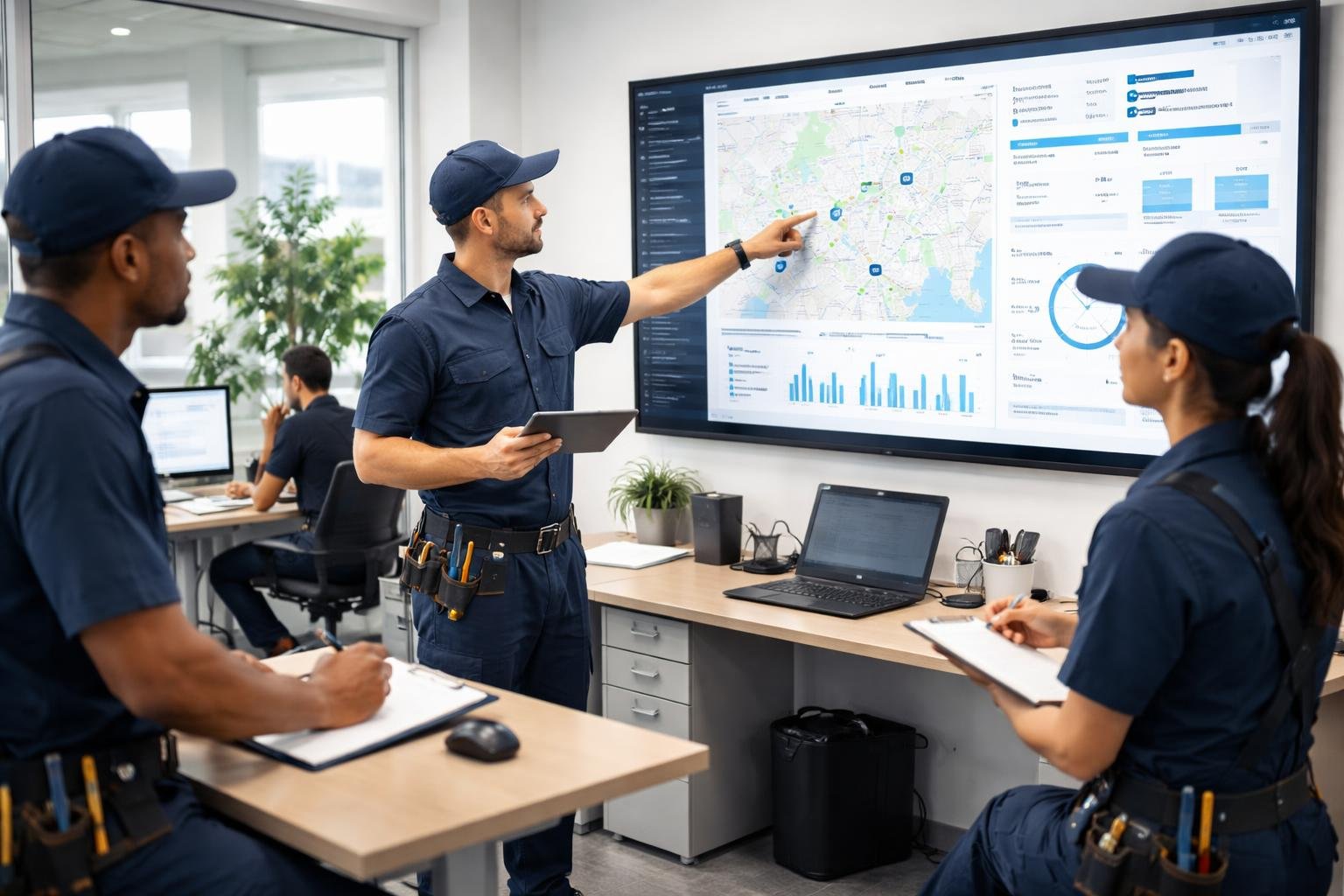
Plumbing fleet reporting provides real-time data and analytics to help business owners track vehicle locations and monitor driver behavior. These systems also manage maintenance schedules and optimize dispatch operations.
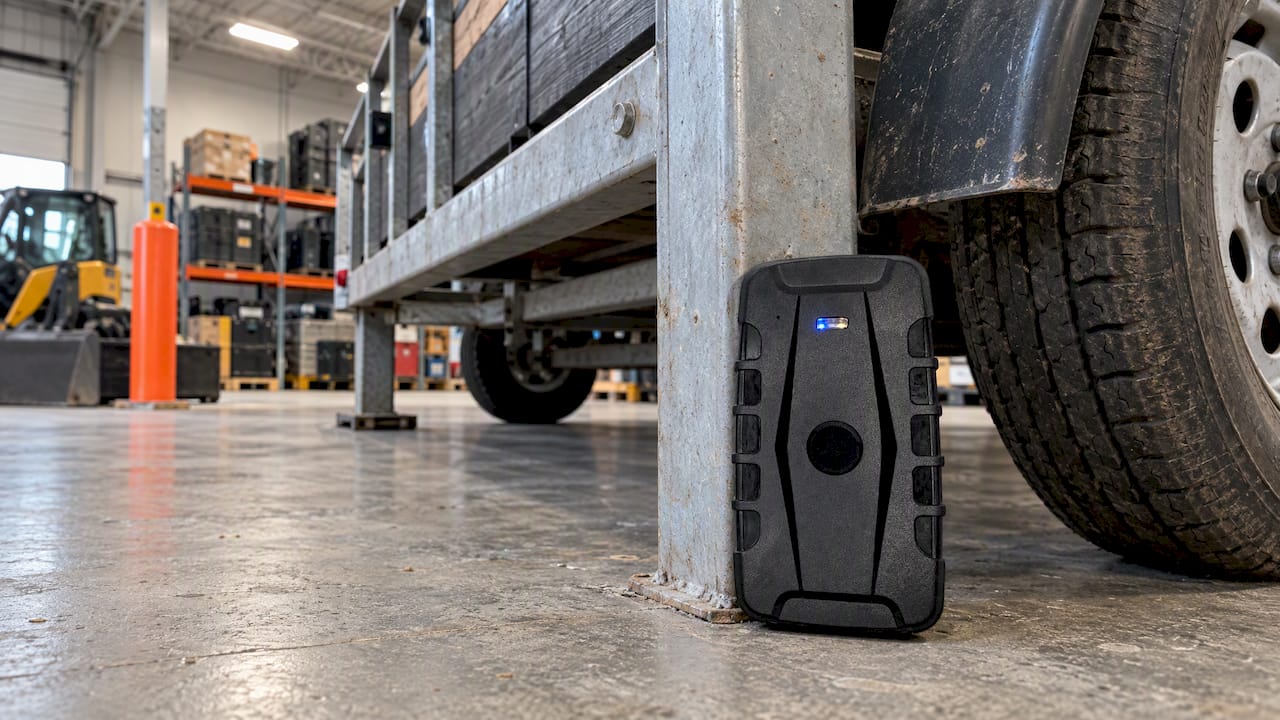
Modern fleet reporting systems collect data from GPS tracking devices, telematics sensors, and vehicle diagnostics. This data generates actionable insights.
Reports reveal patterns in fuel consumption and track service completion times. They also identify excessive idling and measure overall fleet performance.
The right reporting tools turn raw fleet data into useful business intelligence. Plumbing companies use these insights to reduce costs, improve customer service, verify billing, and extend vehicle lifespans through proactive maintenance.
Understanding Plumbing Fleet Reporting
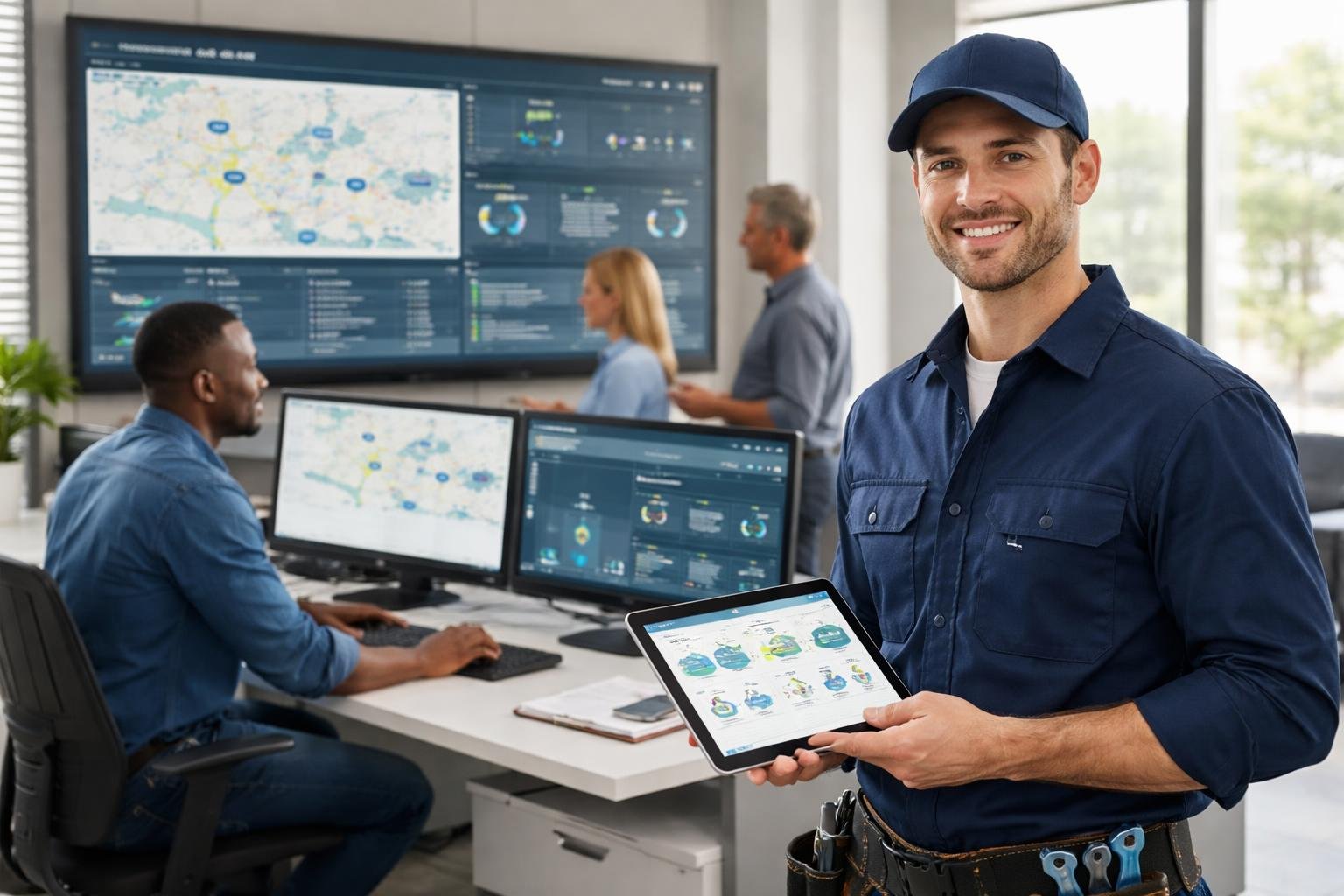
Plumbing fleet reporting turns raw vehicle and operational data into useful information. This helps managers optimize service delivery and control costs.
Reports track everything from vehicle locations and maintenance schedules to technician performance and fuel use.
What Is Plumbing Fleet Reporting?
Plumbing fleet reporting is the systematic collection and analysis of data from service vehicles and mobile technicians. It captures information about vehicle locations, driving behaviors, job completion times, route efficiency, and equipment status.
Fleet reporting systems generate summaries that show how vehicles are used throughout the day. Managers can access reports on fuel use, idle time, maintenance needs, and response times to customer calls.
These reports help identify which vehicles need attention and which routes waste time or resources. The process pulls data from GPS tracking devices, telematics systems, and fleet management software.
This information is compiled into daily, weekly, or monthly reports. These reports highlight operational patterns and areas for improvement.
Core Components of Fleet Reporting
Vehicle performance metrics are the foundation of fleet reporting. These include fuel consumption rates, maintenance schedules, repair costs, and vehicle utilization.
Driver behavior data tracks speed, harsh braking, acceleration, and unauthorized vehicle use. This helps managers spot training needs and reduce risks.
Operational efficiency indicators measure job completion times, miles driven per service call, customer arrival times, and route optimization. These metrics impact profitability and customer satisfaction.
Cost tracking elements monitor expenses for fuel, maintenance, insurance, and depreciation. This enables accurate budgeting and highlights vehicles that drain resources.
The Role of Data in Fleet Operations
Data drives decision-making for plumbing fleet managers. Real-time information allows dispatchers to send the closest technician to emergency calls, reducing response times and fuel waste.
Historical data reveals patterns in vehicle performance and maintenance needs. Managers can identify which trucks need frequent repairs or use too much fuel, supporting replacement decisions.
Fleet reports also document compliance with safety regulations and maintenance standards. Accurate reporting reduces administrative work by automating timesheet verification and mileage logs.
The data helps determine optimal fleet size and schedule preventive maintenance. It also supports evaluating technician productivity.
This information is valuable as many customers expect technology proficiency from their plumbing service providers.
Key Benefits of Plumbing Fleet Reporting
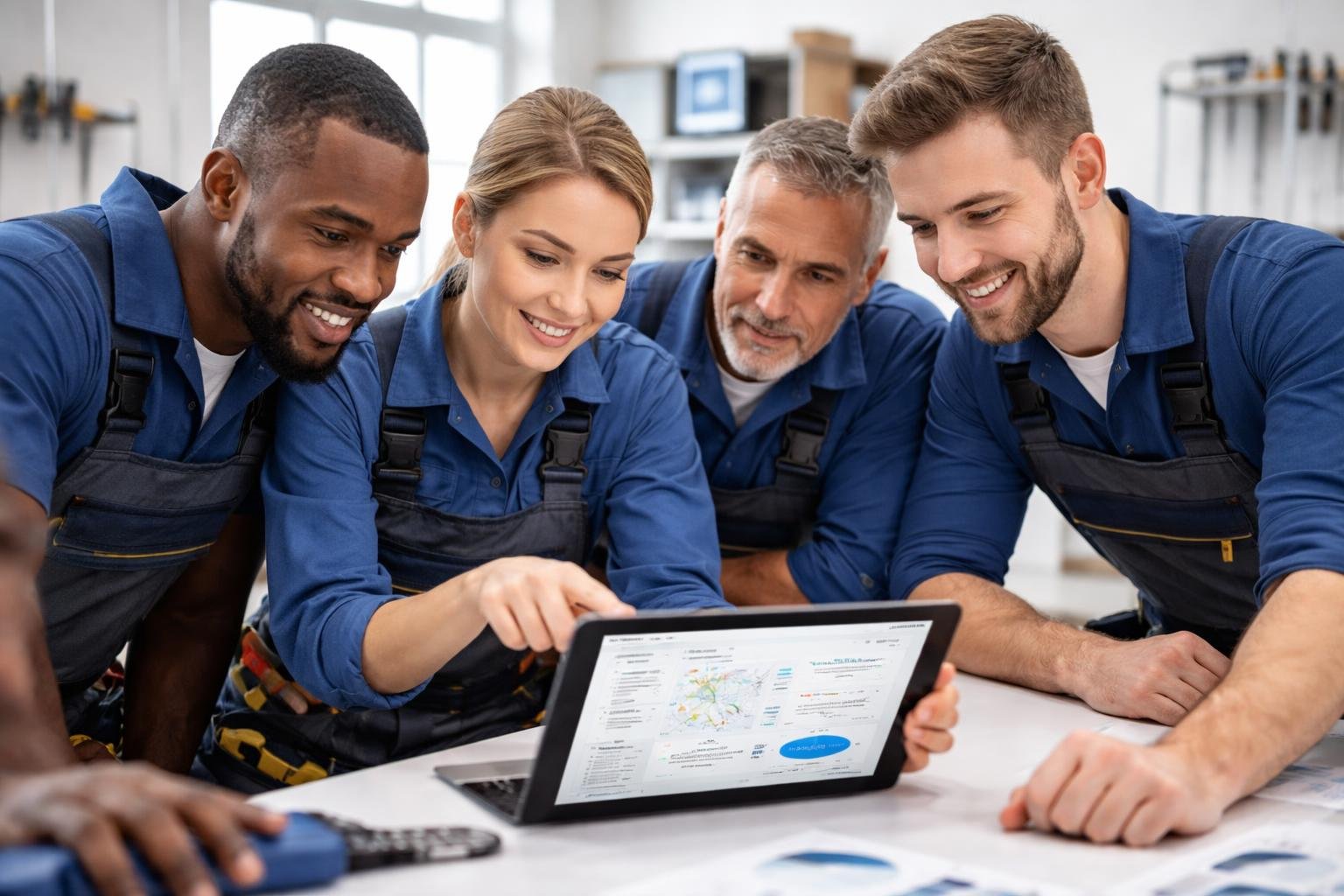
Fleet reporting systems give plumbing businesses actionable data that improves daily operations. These tools enhance visibility, efficiency, cost management, and service quality.
Enhancing Fleet Visibility and Accountability
Fleet reporting gives business owners complete visibility into vehicle locations, driver behavior, and asset use. Real-time tracking shows where each service vehicle is throughout the day.
The data creates accountability among technicians. When drivers know their routes and speeds are monitored, they follow company policies more closely.
Key visibility metrics include:
- Vehicle location and movement history
- Driving behavior patterns (speeding, harsh braking, acceleration)
- Actual time spent at job sites versus travel time
- After-hours vehicle usage
Detailed reports reveal patterns that might otherwise go unnoticed. For example, a plumber who consistently takes longer routes or makes unauthorized stops can be quickly identified.
This information protects company assets and ensures vehicles are used for business purposes.
Increasing Productivity and Efficiency
Plumbing fleet reporting increases the amount of work teams complete each day. Route optimization features analyze traffic and job locations to reduce time spent driving between service calls.
Dispatchers can assign the nearest technician to emergency calls. Data from reports helps managers spot inefficiencies in scheduling and dispatching.
If technicians spend too much time returning to the shop for parts or tools, reporting highlights this waste. Businesses can then stock vehicles better or adjust inventory procedures.
Idle time reports show when vehicles sit running unnecessarily. Reducing idle time means more billable service calls and more jobs completed each week.
Driving Cost Savings
Fleet reporting pinpoints where plumbing businesses lose money. Fuel consumption reports break down costs by vehicle and driver, showing which units are inefficient.
Companies often reduce fuel expenses by 10-20% after using reporting systems and fixing issues. Maintenance tracking prevents costly breakdowns by scheduling service based on actual use.
Reports show when vehicles need service, allowing proactive maintenance that costs less than emergency repairs. This extends vehicle lifespan and reduces downtime.
Common cost reductions include:
- Lower fuel use through reduced idling and better routes
- Decreased maintenance costs from preventive scheduling
- Reduced insurance premiums from improved safety records
- Less overtime from better route planning
Unauthorized vehicle use is easy to spot in reporting data. Personal trips, long breaks, and after-hours use appear in reports, helping businesses eliminate these costs.
Boosting Customer Satisfaction
Accurate reporting helps plumbing companies provide better customer service with improved response times. Dispatchers can give customers realistic arrival windows using exact vehicle locations.
Fleet data helps companies keep appointment times more consistently. Historical route information makes scheduling more accurate.
Technicians arrive when expected, which customers value highly. Service history reports ensure technicians have the right parts and tools for each job.
This preparation reduces return trips and increases first-time fix rates. Emergency response is faster with real-time fleet visibility, so dispatchers can quickly send the nearest plumber to urgent calls.
Essential Features of Plumbing Fleet Reporting Solutions
Effective plumbing fleet reporting solutions combine GPS tracking, maintenance oversight, and asset management in one platform. These features help businesses monitor vehicle locations, prevent equipment failures, and manage inventories.
Real-Time GPS Tracking and Alerts
GPS tracking provides location data for every service vehicle. Real-time tracking lets dispatchers find the nearest technician for emergency calls, reducing wait times and fuel costs.
Real-time alerts notify managers when vehicles go off route, speed, or enter unauthorized areas. Geofencing triggers alerts when vehicles enter or exit service zones.
Tracking data feeds into reporting systems that generate metrics on cost per mile, route efficiency, and technician productivity. Managers can review historical data to verify service calls and improve future routing.
This transparency builds accountability and provides documentation for customer service.
Maintenance Scheduling and Downtime Prevention
Fleet maintenance tracking helps prevent unexpected vehicle breakdowns. Reporting solutions monitor engine hours, mileage, and diagnostics to schedule preventive maintenance.
Automated alerts notify managers when vehicles need service. This approach prevents downtime by fixing small issues before they become big problems.
Maintenance trend reports identify vehicles with recurring problems. The systems track maintenance costs per vehicle, helping managers budget and spot units with high expenses.
Downtime reports measure the business impact of vehicle unavailability.
Asset and Equipment Tracking
Asset tracking monitors tools, parts inventory, and specialized equipment assigned to each truck. RFID tags or barcodes record which technician has specific assets and when items move between vehicles or warehouses.
Equipment tracking reduces losses from theft or misplacement. It ensures technicians have the tools needed for each job.
Inventory reports show parts usage patterns, helping managers keep the right stock levels. This prevents technicians from arriving at jobs without required equipment.
Reporting systems generate asset utilization metrics to identify underused equipment. They also track calibration schedules for tools and certifications for safety equipment.
Fleet Management and Dispatch Optimization
Modern plumbing fleet management uses strategic dispatching and route optimization to boost productivity and lower operational costs. These systems help plumbing businesses respond faster to service calls while reducing fuel use and vehicle wear.
Efficient Dispatching and Route Planning
Fleet management software automates job assignments based on location, skill set, and workload. The system matches jobs with available personnel using multiple factors.
Route planning algorithms calculate the most efficient paths between job sites. These tools consider real-time traffic, road closures, and appointment windows to optimize schedules.
Advanced systems can reorganize routes when new emergency calls come in or job durations change. Route density optimization groups service calls in the same area, allowing more jobs per day.
Plumbing companies using these strategies often increase daily job completion rates without adding more vehicles or staff.
Accurate ETAs and Efficient Scheduling
GPS tracking provides precise vehicle locations. Dispatch systems calculate accurate ETAs for customers and update arrival times automatically as technicians move through their routes.
Scheduling tools prevent overbooking by tracking each technician's capacity and job duration. The system adds buffer times between appointments for unexpected delays.
Automated customer notifications keep clients informed of arrival times. Fleet management platforms use service history data to estimate job durations based on similar past work.
This historical data improves scheduling accuracy as the system learns typical completion times for different service types.
Emergency Response and Fast Response Times
Dispatch software uses real-time GPS data to identify the nearest available technician for urgent service calls. The system can quickly reassign scheduled maintenance to prioritize emergencies like burst pipes or severe leaks.
Fast response times depend on clear visibility into fleet locations and technician availability. Modern platforms show all vehicles on a single map, helping dispatchers make quick decisions.
The software sends mobile notifications to alert technicians about priority calls. This ensures technicians are immediately aware of critical situations.
Emergency routing focuses on speed, bypassing standard optimization algorithms. The system calculates the fastest route to the emergency and can reroute other technicians to cover non-urgent appointments.
Driver Safety and Behavior Monitoring
Driver behavior monitoring systems track how plumbing fleet operators handle their vehicles. This data helps managers reduce accidents, lower costs, and improve safety.
These systems use telematics data, real-time alerts, and video evidence to create effective driver safety programs.
Monitoring Driver Habits and Performance
Fleet managers can monitor driving behaviors such as speeding, harsh braking, rapid acceleration, and sharp turns. These metrics help identify risky habits before they lead to accidents or damage.
Driver behavior reports typically include data points such as:
- Speed violations – exceeding posted limits or company thresholds
- Harsh maneuvers – sudden braking, acceleration, or sharp turns
- Idle time – excessive engine running while stationary
- Seatbelt usage – compliance with safety requirements
- Hours of service – factors related to driver fatigue
This information helps managers identify drivers who need coaching or immediate attention. Regular performance reviews based on these metrics promote safer driving across the fleet.
Driver Safety Reporting and Dash Cams
Dash cams with AI capabilities provide video evidence of driving events and road conditions. They automatically record footage when risky behaviors or potential collisions are detected.
Modern dash cams can identify distracted driving, such as phone use or looking away from the road. Some also monitor fatigue using facial recognition to detect drowsiness.
Video evidence protects plumbing companies from fraudulent insurance claims and offers training material for coaching. Fleet managers can review footage remotely and receive instant alerts for dangerous situations.
Reducing Risk through Real-Time Data
Real-time monitoring allows immediate intervention when unsafe behaviors occur. Managers receive instant notifications for critical events like excessive speeding or aggressive driving.
This immediate feedback helps drivers correct behaviors quickly. Studies show that real-time alerts reduce risky driving incidents more effectively than after-the-fact reporting.
Fleet safety improvements lead to cost savings. Companies using driver behavior monitoring often see fewer accidents, lower maintenance costs, reduced fuel use, and lower insurance premiums. These systems also help maintain safety compliance and protect company reputation.
Fleet Maintenance and Cost Control
Controlling maintenance expenses requires structured preventive programs, cost tracking, and automated scheduling. These systems help reduce reactive repairs and extend vehicle lifespans.
Preventive and Preventative Maintenance Strategies
Preventive maintenance involves scheduled inspections and service based on mileage, engine hours, or time intervals. This approach usually reduces maintenance costs by 20-30% compared to waiting for breakdowns.
Fleet maintenance systems track service intervals for oil changes, brake inspections, tire rotations, and fluid checks. Plumbing fleets should account for heavy equipment and tools, which increase wear on suspension and brakes.
Regular maintenance catches minor issues before they become expensive failures. Replacing a worn belt during scheduled service is cheaper than an emergency roadside repair.
Tracking Maintenance Costs and Service Histories
Detailed maintenance records show which vehicles are costly and which service providers offer value. Managers should track costs per vehicle, per mile, and by maintenance category.
Service histories record every repair, part replacement, and inspection for each vehicle. This data helps decide when to retire aging vehicles versus keeping newer ones with predictable costs.
Real-time reporting platforms give visibility into maintenance spending across the fleet. Data-driven tracking helps reduce unnecessary expenses by identifying inefficient repair patterns or vehicles that have become liabilities.
Automating Work Orders and Maintenance Schedules
Automated work orders eliminate manual spreadsheets and prevent missed scheduled service. Maintenance software generates work orders automatically when vehicles reach set mileage or time thresholds.
Digital systems send alerts to managers and technicians when maintenance is due. This prevents missed service that could void warranties.
Automated schedules adjust to actual vehicle usage. A van driving 200 miles daily needs more frequent service than one covering 50 miles, and automation adapts intervals without manual effort.
Advanced Plumbing Fleet Reporting Tools and Integrations
Modern plumbing fleet reporting uses software that combines GPS tracking, telematics data, and automated alerts. These tools help businesses monitor vehicle locations, driver behavior, maintenance schedules, and service efficiency through integrated dashboards.
Implementing Fleet Management Software
Fleet management software acts as the central hub for collecting and reporting fleet data. These platforms combine information from vehicle diagnostics, fuel use, maintenance records, and job completion times into unified dashboards.
The software includes customizable reporting templates for tracking key plumbing metrics. Managers can generate reports on emergency response times, vehicle utilization, and technician productivity.
Integration features connect fleet management software with dispatch, inventory, and accounting systems. This eliminates duplicate data entry and improves reporting accuracy. Many platforms offer API access for custom integrations with plumbing service applications.
Telematics and GPS Fleet Tracking Solutions
GPS fleet tracking provides real-time visibility into vehicle locations and movement patterns. Telematics devices in plumbing vehicles send data on speed, idle time, harsh braking, and acceleration.
Real-time tracking allows dispatchers to assign jobs based on current technician locations. This reduces travel time and improves emergency response.
Historical GPS data helps optimize routes by identifying inefficient travel patterns. Telematics reports also include engine diagnostics, fuel use, and maintenance alerts, helping managers address issues before breakdowns occur.
Geofencing and Real-Time Alerts
Geofencing creates virtual boundaries around locations like customer sites or warehouses. The system generates reports when vehicles enter or exit these zones, providing accurate arrival and departure times.
Real-time alerts notify managers when vehicles deviate from routes, idle excessively, or are used after hours. These notifications enable quick action to fix problems before they grow.
Geofence reporting verifies technician time logs and service claims by matching GPS data with job times. This reduces billing disputes and provides proof of service for customers.
Reporting Best Practices and Business Insights
Effective fleet reporting turns raw data into decisions that cut costs and improve service. Data-rich reporting and asset tracking help managers spot inefficiencies, forecast maintenance needs, and allocate resources wisely.
Generating Actionable Fleet Reports
Fleet reports are most useful when they focus on metrics that impact operations. Managers should prioritize reports on vehicle utilization, fuel use, maintenance schedules, and service response times.
Reporting systems consolidate data from GPS devices, fuel cards, and maintenance logs. This reduces manual work and errors from isolated data.
Key components of actionable reports include:
- Real-time alerts for maintenance needs
- Comparative analysis of vehicle performance
- Cost breakdowns by vehicle, route, or territory
- Compliance documentation for inspections and certifications
Reports should be distributed according to decision-making cycles. Daily reports help optimize routes, while monthly reports support budget planning and fleet replacement decisions.
Utilizing Business Analytics for Strategic Decisions
Business analytics turn historical fleet data into predictive insights. Managers can find patterns in equipment failures, seasonal demand, and driver behavior that affect profits.
Analytics platforms calculate total cost of ownership by combining fuel, maintenance, insurance, and depreciation. This shows which vehicles drain resources and which routes are most profitable.
Trend analysis helps forecast when vehicles will need major repairs or replacement. This allows companies to plan capital expenses in advance.
Performance benchmarking compares vehicles and drivers against fleet averages. Managers can then target training for drivers with excessive idling or harsh braking that increases wear.
Integrating Asset and Equipment Reporting
Asset tracking includes vehicles, specialized plumbing equipment, tools, and inventory in service vans. Integrated reporting shows the location and condition of all business assets at once.
RFID tags and barcode systems help track high-value equipment like pipe cameras and hydro-jetters. These systems also monitor diagnostic tools across different vehicles and job sites.
This tracking helps reduce replacement costs for lost or misplaced equipment. Equipment reporting should also capture utilization rates to support purchase decisions.
Identifying underused assets allows for better redistribution. Maintenance records for specialized tools help prevent service delays caused by equipment failures.
Combined vehicle and equipment reports provide a full view of operations. Managers can make sure vehicles are properly maintained and stocked with the right tools for each service call.
This approach helps reduce return trips and improves first-time fix rates.