Fleet Management System Comparison: Evaluating Performance, Features, and Value
How to start saving money
Lorem ipsum dolor sit amet, consectetur adipiscing elit lobortis arcu enim urna adipiscing praesent velit viverra sit semper lorem eu cursus vel hendrerit elementum morbi curabitur etiam nibh justo, lorem aliquet donec sed sit mi dignissim at ante massa mattis.
- Neque sodales ut etiam sit amet nisl purus non tellus orci ac auctor
- Adipiscing elit ut aliquam purus sit amet viverra suspendisse potent
- Mauris commodo quis imperdiet massa tincidunt nunc pulvinar
- Excepteur sint occaecat cupidatat non proident sunt in culpa qui officia
Why it is important to start saving
Vitae congue eu consequat ac felis placerat vestibulum lectus mauris ultrices cursus sit amet dictum sit amet justo donec enim diam porttitor lacus luctus accumsan tortor posuere praesent tristique magna sit amet purus gravida quis blandit turpis.

How much money should I save?
At risus viverra adipiscing at in tellus integer feugiat nisl pretium fusce id velit ut tortor sagittis orci a scelerisque purus semper eget at lectus urna duis convallis. porta nibh venenatis cras sed felis eget neque laoreet suspendisse interdum consectetur libero id faucibus nisl donec pretium vulputate sapien nec sagittis aliquam nunc lobortis mattis aliquam faucibus purus in.
- Neque sodales ut etiam sit amet nisl purus non tellus orci ac auctor
- Adipiscing elit ut aliquam purus sit amet viverra suspendisse potenti
- Mauris commodo quis imperdiet massa tincidunt nunc pulvinar
- Adipiscing elit ut aliquam purus sit amet viverra suspendisse potenti
What percentege of my income should go to savings?
Nisi quis eleifend quam adipiscing vitae aliquet bibendum enim facilisis gravida neque. Velit euismod in pellentesque massa placerat volutpat lacus laoreet non curabitur gravida odio aenean sed adipiscing diam donec adipiscing tristique risus. amet est placerat in egestas erat imperdiet sed euismod nisi.
“Nisi quis eleifend quam adipiscing vitae aliquet bibendum enim facilisis gravida neque velit euismod in pellentesque”
Do you have any comments? Share them with us on social media
Eget lorem dolor sed viverra ipsum nunc aliquet bibendum felis donec et odio pellentesque diam volutpat commodo sed egestas aliquam sem fringilla ut morbi tincidunt augue interdum velit euismod eu tincidunt tortor aliquam nulla facilisi aenean sed adipiscing diam donec adipiscing ut lectus arcu bibendum at varius vel pharetra nibh venenatis cras sed felis eget.
Choosing the right fleet management system affects how efficiently a business tracks and maintains its vehicles. Many software options promise better visibility, lower fuel costs, and improved driver safety, but each delivers these benefits differently.
A clear comparison of top fleet management systems helps business leaders find a solution that fits their goals and budget.

Modern fleet operations use real-time data to control costs and minimize downtime. Companies can monitor maintenance schedules, driver behavior, and route efficiency from a single dashboard.
Understanding how each system handles these functions makes it easier to choose the right option.
This comparison explores key decision criteria and leading solutions. It looks at efficiency, safety, and support to help decision-makers select software that matches their needs.
Key Criteria for Comparing Fleet Management Systems

Evaluating a fleet management platform means checking how it supports core operational needs, integrates with existing tools, and scales with company growth. It is important to choose technology that meets real business requirements.
Core Functionalities and Modules
A good fleet management system centralizes vehicle tracking, maintenance scheduling, driver management, fuel monitoring, and reporting in one platform. Systems with real-time GPS tracking and automated alerts enable faster decisions.
Maintenance modules should support service reminders and inspection records. Fuel management features like consumption analysis and purchase logging help control expenses.
Driver behavior analytics monitor speed, idling, and route adherence to improve safety and reduce vehicle wear.
Some systems offer add-ons like route optimization or asset utilization dashboards. Buyers should confirm that core modules work reliably before adding extra tools.
The best solutions maintain consistent data accuracy across all functions.
Integration Capabilities
Effective integration lets a fleet management platform share data with other business systems. Common integrations include ERP, accounting, payroll, and HR software.
APIs and webhooks make it easier to share data in real time. It is helpful if the system supports industry-standard data formats and provides clear documentation.
Integration should also cover hardware compatibility. Telematics devices, fuel cards, and diagnostic readers must sync easily with the software.
Solutions with open architecture usually reduce setup time and simplify maintenance.
Scalability and Customization
Scalability means the system can handle more users, vehicles, and locations as the business grows. Cloud-based platforms often scale quickly by adjusting storage and user capacity as needed.
Customization lets fleets tailor dashboards, reports, and workflows. Some systems provide modular licensing, so organizations can activate only the features they need.
Administrators can create custom alerts or filters to match safety or compliance policies. A scalable and customizable tool helps avoid system replacement as operations change.
Deployment Options
Fleet management tools are available as cloud-based, on-premises, or hybrid models. Each option has its own benefits and challenges.
Deployment TypeTypical BenefitsKey ConsiderationsCloud-basedLow upfront cost, automatic updates, remote accessDependent on stable internet connectionOn-premisesFull control over data and security settingsRequires in-house IT support and higher initial costHybridCombines flexibility of cloud with local data retentionMore complex setup and licensing
Organizations often choose cloud deployment for scalability and remote access. Highly regulated sectors may prefer on-premises hosting for stricter data control.
Evaluating reliability, data protection, and vendor support for each option helps ensure the deployment fits business needs.
Top Fleet Management Solutions: Overview
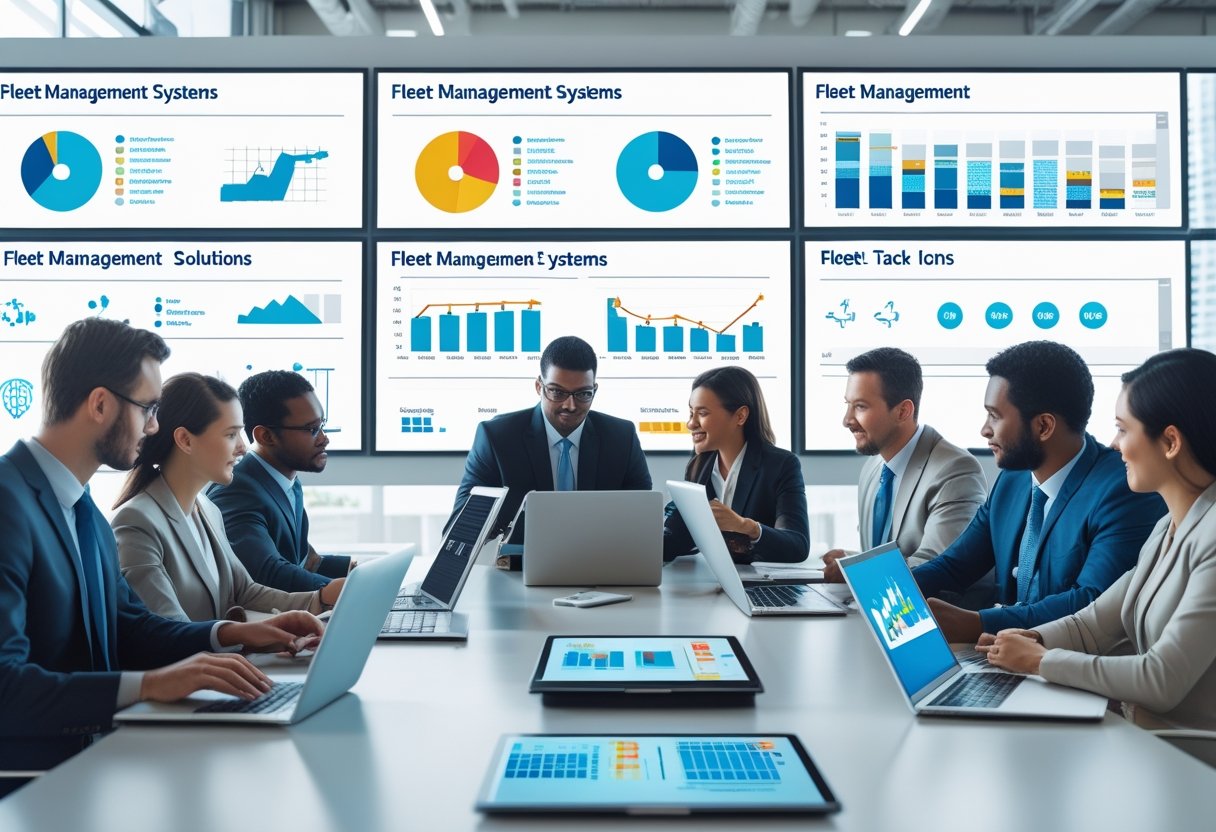
Modern fleet management platforms use GPS tracking, telematics, and analytics to help organizations control costs and keep vehicles running. Providers differ by scale, integration options, and industry focus.
Leading Providers and Market Leaders
Several vendors lead the fleet management market through technology and support. Samsara, Verizon Connect, and Geotab are among the top platforms in 2025.
These systems offer real-time tracking, driver behavior reports, and maintenance automation for large and midsize fleets.
Motive (formerly KeepTruckin) stands out for driver safety tools and compliance features for transportation and logistics firms. Omnitracs focuses on enterprise fleets needing advanced route optimization and regulatory data management.
Other strong options like Lytx, Teletrac Navman, and Azuga emphasize telematics, video-based safety, and analytics.
ProviderCore StrengthIdeal Fleet TypeSamsaraReal-time visibility, IoT integrationLarge commercial fleetsVerizon ConnectScalable platform, broad compliance toolsEnterprise and regional fleetsGeotabCustom reporting, extensible marketplaceMixed-vehicle operationsFleetioCloud-based simplicity, mobile-first designSmall to midsize fleetsOmnitracsRouting, compliance, and performance analyticsLong-haul and logistics fleets
Overview of Solution Types
Fleet management software usually falls into three categories: cloud-based systems, on-premises platforms, and hybrid deployments. Cloud-based options like Fleetio and AMS offer fast deployment and easy scalability.
On-premises and hybrid models, often used by large logistics companies, provide more data control and custom configuration.
Most systems cover these five areas:
- Vehicle tracking and telematics
- Maintenance scheduling
- Fuel and cost management
- Driver monitoring and safety
- Regulatory compliance
Integrated dashboards let users manage all these elements in one place. Vendors such as Fleet Complete and Nextraq add predictive analytics to help prevent downtime and forecast maintenance needs.
Best Solutions for Different Fleet Sizes
Fleet needs depend on size. Small fleets often use simple, mobile-friendly software like AUTOsist or Fleetio.
These tools focus on maintenance tracking and driver logs with easy-to-use interfaces.
Mid-sized companies need more automation and integration. Providers such as Azuga and Fleet Complete combine cost controls with strong telematics and allow gradual feature expansion.
Large fleets use enterprise-grade systems like Samsara, Verizon Connect, and Omnitracs. These manage thousands of assets and offer API integrations with ERP systems and dispatch platforms.
Real-time diagnostics, customizable alerts, and route optimization make them suitable for nationwide operations.
Comparative Feature Analysis
Accurate fleet oversight depends on reliable tracking, structured maintenance, and efficient route planning. Key differences among fleet management systems often relate to how well these features integrate and automate.
Vehicle and Asset Tracking
Fleet platforms use GPS and IoT-based vehicle tracking to provide real-time location data. Systems record speed, route history, and idle time to help managers reduce fuel waste.
Many combine vehicle and asset tracking in one dashboard.
Key tracking features include:
- Real-time tracking with frequent updates
- Map dashboards with geofencing alerts
- Historical route and event reports
Some providers use AI-assisted fleet tracking to spot irregular use or possible theft. This gives companies better control over driver compliance and asset use.
Maintenance and Repair Management
Maintenance modules focus on keeping vehicles running through preventive, predictive, and scheduled maintenance. Systems with automated scheduling use telematics data like mileage to trigger service reminders.
Advanced solutions support maintenance tracking with work order and parts inventory management. This ensures service teams have the parts they need, reducing downtime.
Maintenance dashboards often show:
- Upcoming tasks
- Repair histories and costs
- Vendor and warranty details
Predictive maintenance uses sensor data to forecast failures, helping extend asset life. Automated notifications help managers act before small issues become major problems.
Route Optimization and Planning
Route optimization helps dispatchers reduce drive time and fuel use. Algorithms analyze traffic, delivery windows, and vehicle capacity.
Systems with AI-powered route optimization find the best routes quickly.
Key features include:
- Dynamic route planning that adapts in real time
- Integration with location tracking for live updates
- Automatic re-routing during delays or bad weather
Some platforms use past data to improve future plans, while others connect to customer systems for arrival alerts and proof-of-delivery.
Driver Management and Safety
Effective driver management relies on continuous monitoring and accurate performance data. Modern systems use telematics, cameras, and analytics to improve compliance and support driver training.
Monitoring Driver Behavior
Driver behavior monitoring uses telematics data from sensors to track speed, acceleration, braking, cornering, and idle time. Fleet managers use this data to find unsafe habits.
Many platforms include video telematics with dash cams that capture both road and driver views. These systems provide evidence during incidents and help verify driver behavior.
A typical platform may present behavior metrics in a table or scorecard:
MetricDescriptionExample ThresholdSpeeding FrequencyNumber of speed limit violations>5 per 100 milesHarsh BrakingSudden deceleration events>3 per tripIdling DurationTime vehicle remains idle>15 minutes
By reviewing these reports, managers can address issues before they lead to accidents or repairs. Automated alerts help enforce safety policies in real time.
Driver Safety Technology
Safety technology improves oversight and reduces accident risk. Dash cams, lane-departure alerts, and forward-collision warnings help detect hazards early.
Managers can review dash cam footage for incident detection or reporting. Some systems use AI to spot distracted driving or mobile phone use, sending immediate notifications for corrective action.
Vehicle telematics track important data such as seatbelt usage and sudden acceleration. This helps maintain compliance with transportation regulations.
Advanced driver safety monitoring solutions can integrate with maintenance tools. This links unsafe driving with increased wear on brakes, tires, and engines.
Managers can use this connection to make cost-saving decisions about driver performance and vehicle health.
Performance Scoring and Training
Performance scoring turns behavioral data into a driver scorecard or safety score. The score reflects adherence to traffic rules and a safe driving history.
Managers compare individual results to identify who needs coaching or recognition. Training programs often align with these scores.
Drivers with higher risk scores receive personalized training modules. These cover topics like defensive driving, fuel-efficient habits, or hours-of-service compliance.
Organizations may use an employee management cycle, where performance data informs training. Training outcomes then guide further behavior analysis.
Operational Efficiency and Cost Control
Fleet management systems improve productivity by reducing fuel waste and automating compliance tasks. These systems turn operational data into measurable insights.
Organizations can maintain consistent performance while controlling expenses across vehicles, drivers, and routes.
Fuel Management and Efficiency
Fuel is often one of the highest expenses in fleet operations. Modern fuel management systems provide real-time data on consumption, refueling, and mileage.
By integrating telematics, managers can spot inefficiencies such as idling, harsh acceleration, or unauthorized fuel use. Many platforms combine fuel cards, GPS data, and driver analytics in one dashboard.
This integrated tracking supports accurate cost reduction strategies and helps monitor performance trends. Operators can set real-time alerts to flag unusual fuel activity for prompt action.
Automated route optimization tools help reduce unnecessary miles. These tools consider traffic, vehicle type, and load requirements to minimize fuel use.
When combined with performance analytics, fleet managers can forecast efficiency and plan maintenance schedules that keep fuel costs low.
FeatureFunctionBenefitFuel usage reportsTrack liters/gallons per tripDetect waste and inefficiencyMileage trackingMonitor distance by vehicleSupport preventive maintenanceRoute optimizationAdjust paths dynamicallyReduce fuel consumption and travel time
Compliance and Regulation Tracking
Compliance management ensures fleets meet transport regulations. Fleet systems now automate ELD compliance, IFTA reporting, and vehicle inspection scheduling.
Digital records verify driver hours, maintenance checks, and tax documentation. This removes the need for paper logs.
Managers use compliance dashboards to monitor documentation deadlines. Real-time alerts notify them of violations or upcoming renewals.
Automation lowers the risk of regulatory fines and improves reliability. In regulated markets, a centralized compliance system supports faster auditing and transparent reporting.
Analytics and Reporting
Performance analytics turn operational data into actionable insights. Real-time reporting lets managers track fuel costs, driver performance, and maintenance spending from one platform.
Advanced systems use predictive analytics to forecast breakdown risks and plan resource allocation. These analyses help track costs across departments or vehicle categories.
Custom dashboards show trends like operational efficiency and asset utilization. Identifying underperforming vehicles or routes allows for precise improvements that boost productivity and reduce waste.
User Experience, Support, and Pricing
Fleet management platforms vary in usability, support, and cost structures. Some focus on intuitive dashboards and quick setup, while others offer scalable pricing or extended support for large fleets.
Interface design, onboarding quality, and total cost of ownership often determine if a system fits operational goals.
Ease of Use and User Interface
Modern fleet management systems prioritize simple navigation and clear data presentation. Responsive interfaces let managers access reports, vehicle status, and alerts from desktops or mobile apps.
Systems like Verizon Connect and Samsara offer dashboards that display key performance indicators in one view. Customization options such as role-based access and drag-and-drop scheduling help users tailor their workspace.
Visual clarity is important for mixed-fleet or field service environments where fast updates guide dispatch decisions.
Common usability benchmarks:
FeatureBenefitMobile applicationField access and updatesSearch and filter toolsFaster vehicle trackingConfigurable alertsReal-time decision-making
Consistent layouts and standard icons reduce training times and increase adoption rates.
Customer Support and Service
Reliable support prevents technical issues from interrupting fleet operations. Leading vendors provide 24/7 chat, email, or phone support along with online documentation.
Businesses with multiple sites benefit from dedicated account managers. Fast response times and knowledgeable staff improve satisfaction.
Many providers also offer proactive services like automated diagnostics and performance monitoring. An accessible support structure adds value beyond the platform’s features.
Pricing Models and Value
Fleet management pricing depends on fleet size, number of devices, and chosen modules. Most vendors use subscription models billed per vehicle per month.
Some offer usage-based plans for seasonal or small fleets.
Example pricing structures:
ModelDescriptionTypical FitPer‑vehicle licenseScales by fleet sizeGrowing fleetsTiered plansBundles by feature setMid to large fleetsPay‑as‑you‑goFlexible for irregular useSmall operators
Value depends more on fuel savings, downtime reduction, and compliance automation than on price alone. Buyers should compare included features to avoid hidden integration or hardware costs.
Deployment and Onboarding
Implementation times vary. Same-day setup is possible for cloud solutions. More complex integrations may take several weeks.
Cloud-based systems need little local infrastructure. On-premise deployments require IT support for server setup and data migration.
Training resources help teams become productive faster. Many vendors offer online webinars and quick-start guides. Live onboarding sessions are also available for drivers and managers.
Checklists and progress tracking let users confirm when vehicles are synced. These tools also ensure that alerts are working.
Clear communication between vendors and fleet administrators is important. Providers who coordinate installation, SIM activation, and device setup can help reduce downtime.