Construction Route Optimization: Reducing Fuel Costs and Project Delays in 2026
How to start saving money
Lorem ipsum dolor sit amet, consectetur adipiscing elit lobortis arcu enim urna adipiscing praesent velit viverra sit semper lorem eu cursus vel hendrerit elementum morbi curabitur etiam nibh justo, lorem aliquet donec sed sit mi dignissim at ante massa mattis.
- Neque sodales ut etiam sit amet nisl purus non tellus orci ac auctor
- Adipiscing elit ut aliquam purus sit amet viverra suspendisse potent
- Mauris commodo quis imperdiet massa tincidunt nunc pulvinar
- Excepteur sint occaecat cupidatat non proident sunt in culpa qui officia
Why it is important to start saving
Vitae congue eu consequat ac felis placerat vestibulum lectus mauris ultrices cursus sit amet dictum sit amet justo donec enim diam porttitor lacus luctus accumsan tortor posuere praesent tristique magna sit amet purus gravida quis blandit turpis.

How much money should I save?
At risus viverra adipiscing at in tellus integer feugiat nisl pretium fusce id velit ut tortor sagittis orci a scelerisque purus semper eget at lectus urna duis convallis. porta nibh venenatis cras sed felis eget neque laoreet suspendisse interdum consectetur libero id faucibus nisl donec pretium vulputate sapien nec sagittis aliquam nunc lobortis mattis aliquam faucibus purus in.
- Neque sodales ut etiam sit amet nisl purus non tellus orci ac auctor
- Adipiscing elit ut aliquam purus sit amet viverra suspendisse potenti
- Mauris commodo quis imperdiet massa tincidunt nunc pulvinar
- Adipiscing elit ut aliquam purus sit amet viverra suspendisse potenti
What percentege of my income should go to savings?
Nisi quis eleifend quam adipiscing vitae aliquet bibendum enim facilisis gravida neque. Velit euismod in pellentesque massa placerat volutpat lacus laoreet non curabitur gravida odio aenean sed adipiscing diam donec adipiscing tristique risus. amet est placerat in egestas erat imperdiet sed euismod nisi.
“Nisi quis eleifend quam adipiscing vitae aliquet bibendum enim facilisis gravida neque velit euismod in pellentesque”
Do you have any comments? Share them with us on social media
Eget lorem dolor sed viverra ipsum nunc aliquet bibendum felis donec et odio pellentesque diam volutpat commodo sed egestas aliquam sem fringilla ut morbi tincidunt augue interdum velit euismod eu tincidunt tortor aliquam nulla facilisi aenean sed adipiscing diam donec adipiscing ut lectus arcu bibendum at varius vel pharetra nibh venenatis cras sed felis eget.
Construction projects face constant pressure to reduce costs, minimize delays, and improve efficiency. Moving materials, equipment, and personnel across job sites requires careful coordination that directly affects project timelines and budgets.
Route optimization in construction is the process of finding the most efficient paths for transporting resources. It analyzes factors like distance, traffic, delivery windows, vehicle capacity, and site-specific constraints.

Poor routing leads to wasted fuel, delayed deliveries, and higher labor costs. A delivery truck stuck in traffic or a crew waiting for materials results in lost productivity.
Modern construction logistics use systematic approaches to improve performance. Technology now allows managers to move beyond manual planning and spreadsheets.
Software solutions process multiple data points at once, considering real-time conditions and project requirements. Understanding route optimization helps construction teams implement strategies that improve efficiency and control costs.
What Is Construction Route Optimization?
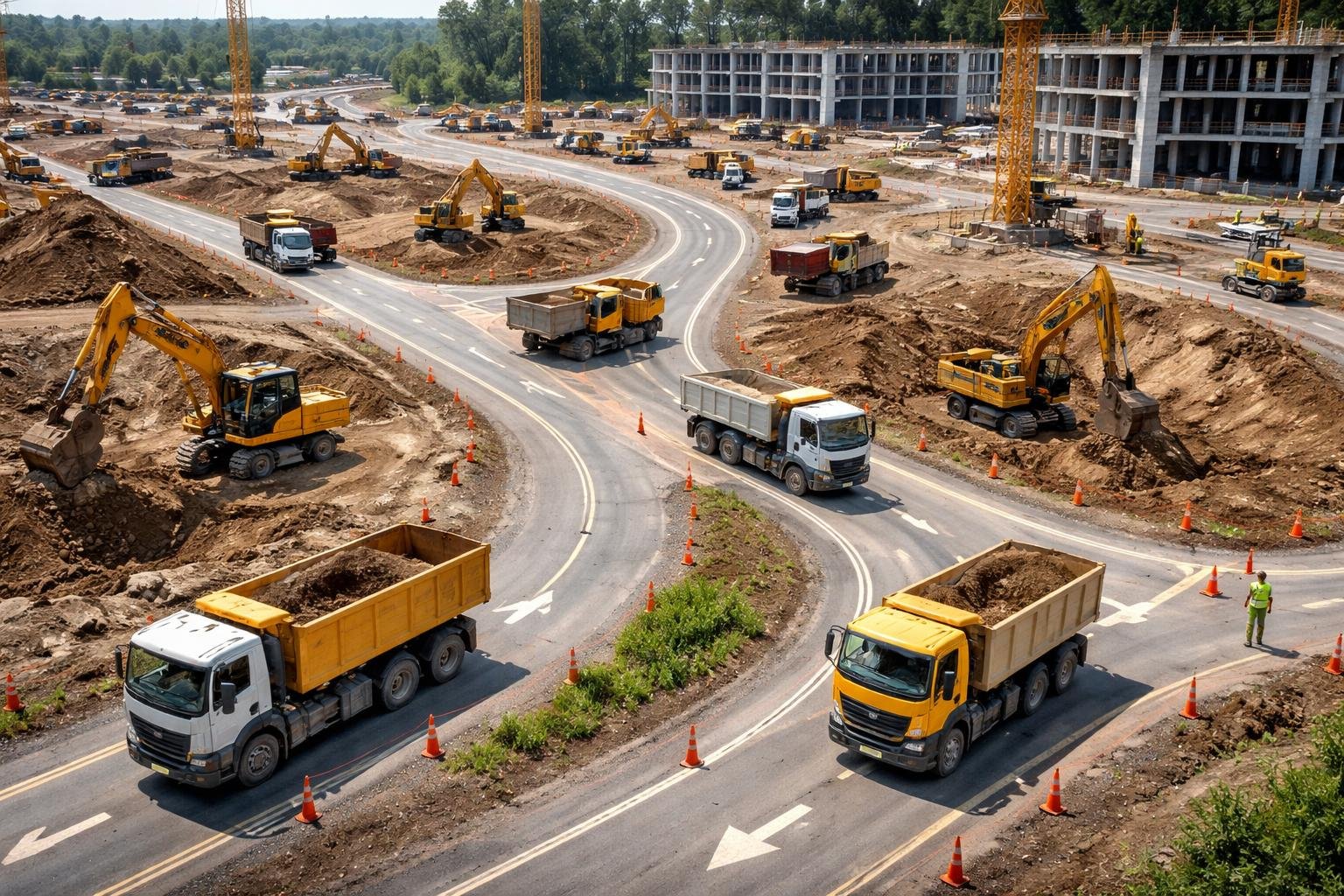
Construction route optimization streamlines the movement of materials, equipment, and personnel to reduce costs and delays. It uses advanced planning to solve the unique logistics challenges of construction.
Definition and Core Principles
Construction route optimization finds the most efficient paths and schedules for transporting resources. It considers variables like vehicle load, delivery time windows, site access, and traffic.
The main goal is to minimize total travel time, not just distance. Construction projects often need heavy equipment transport, bulk deliveries, and coordinated crew movements.
Route optimization algorithms analyze data like equipment availability, delivery schedules, and site readiness. Real-time adaptation is also important.
Construction projects face changing conditions like weather, site access, and urgent material needs. Dynamic route adjustments are often required.
Key Benefits for Construction Projects
Route optimization can reduce fuel costs by 10-30% through better planning and less idle time. This has a direct impact on project budgets, especially for operations with many deliveries.
Productivity improvements include:
- Increased daily job capacity by up to 20%
- Reduced vehicle downtime between deliveries
Better crew utilization comes from coordinated arrivals. Fewer missed delivery windows help keep projects on schedule.
Optimized routes prevent delays that can disrupt later tasks. Labor teams spend more time working, not waiting.
Technology allows construction operations to handle more deliveries with the same fleet. This reduces the need for extra vehicles and drivers.
Comparison With General Route Optimization
Construction route optimization is different from standard delivery routing. General routing often deals with uniform packages and flexible delivery times.
Construction projects require moving heavy loads, specialized equipment, and working within strict site access windows. Construction sites have unique constraints, such as limited unloading zones and specific equipment arrival sequences.
A concrete truck must arrive after formwork is complete but before the weather changes. Standard delivery routes reset daily, but construction route optimization must consider multi-week project schedules and changing site needs.
Routes must adapt as projects move from excavation to finishing work.
Essential Components of Effective Route Optimization

Construction route optimization needs technical capabilities and strategic planning. It relies on advanced planning, real-time traffic data, precise scheduling, and vehicle-specific logistics.
Advanced Route Planning Techniques
Modern construction route planning goes beyond basic navigation. Planners must consider vehicle restrictions, load limits, and site access.
Multi-stop sequencing is central to construction route optimization. The system finds the best order for deliveries across multiple sites.
It evaluates road types, bridge weight limits, and low-clearance areas. Construction route planning also requires accurate geocoding for sites without traditional addresses.
GPS coordinates and access notes help drivers reach the right delivery points. Algorithms consider material dependencies, like concrete needing to arrive within a set time frame.
Incorporating Real-Time Traffic Data
Real-time traffic data turns static plans into dynamic delivery systems. Construction vehicles cannot always reroute like cars due to size and load.
Traffic systems monitor congestion, accidents, and road closures. When problems arise, the system finds alternative paths that fit the vehicle’s requirements.
Weather-related delays are also important. Real-time alerts help dispatchers adjust schedules before problems occur.
Estimated arrival times update automatically based on current conditions. Site managers get notifications about delays before vehicles leave, allowing them to adjust plans.
Utilizing Delivery Windows in Construction
Delivery windows in construction are stricter than in standard deliveries. Concrete trucks, for example, must arrive within specific times to maintain workability.
Time windows consider site access hours, crew availability, material requirements, and equipment rental periods. Projects often require narrow delivery windows to avoid disrupting other operations or public traffic.
Route optimization systems prioritize time-sensitive deliveries. They batch flexible shipments during off-peak hours.
The software adds buffer times between stops using historical data. This helps prevent delays from one late delivery affecting others.
Considering Vehicle Capacity and Constraints
Vehicle capacity planning involves weight limits, dimensions, and equipment needs. The route planner matches loads with the right vehicles and compliant routes.
Payload optimization keeps vehicles at maximum legal capacity without exceeding limits. This reduces trips and maintains safety.
Different materials need different vehicle types. Bulk materials require dump trucks, while precast elements need flatbeds.
Route optimization considers vehicle height, length, and turning radius. Construction vehicles often cannot use residential streets or low bridges, so vehicle-specific routing is essential.
Construction Route Optimization Software Solutions
Modern construction companies use specialized software for vehicle routing, equipment delivery, and crew dispatch. These platforms use advanced algorithms and real-time data to lower fuel costs and reduce delays.
Key Features of Route Optimization Software
Construction route optimization software must handle industry-specific needs. Multi-stop planning allows dispatchers to organize visits to many job sites, considering delivery windows and crew schedules.
Real-time traffic integration adjusts routes based on current road conditions and construction zones. This helps keep deliveries on time.
Geofencing triggers alerts when vehicles enter or leave certain areas. Managers use this to track deliveries and equipment movement.
Route editing tools let users modify planned routes when things change. Custom constraints can include vehicle capacity, driver hours, site access, and time-sensitive deliveries.
Leading Software Options
Route4Me handles large fleets and complex routes with many stops. It supports different vehicle types and site requirements.
Routific is simple and automates route generation. It can quickly create schedules and adjust when crews or vehicles are unavailable.
MyRouteOnline offers mapping features that show all project sites on one interface. It allows spreadsheet imports and integrates delivery windows.
OptimoRoute balances driver workloads and considers skill requirements. Its mobile app lets dispatchers and field teams communicate.
SoftwareBest ForKey StrengthRoute4MeLarge fleetsHigh-volume stop managementRoutificQuick deploymentAutomated optimizationMyRouteOnlineVisual planningSite mapping interfaceOptimoRouteSkilled laborWorkload balancing
Integration With Field Service Management Tools
Route planning software is most valuable when connected to field service management systems. API integrations allow data to flow between routing and construction management platforms.
Dispatch software integration lets route assignments trigger work orders and notify crews. This keeps field teams updated with job details and optimized routes.
Many platforms work with GPS tracking systems, showing vehicle locations and estimated arrivals. Project managers can share this information with site supervisors and clients.
Accounting system connections record mileage, fuel use, and time at each location. These integrations reduce paperwork and improve cost tracking for projects.
Optimization Objectives and Constraints in Construction Logistics
Construction logistics must balance many demands while working within limits of time, resources, and budget. Effective route planning needs clear goals and strategies for managing priorities and adapting to changes.
Setting Optimization Objectives
Construction logistics teams often have several goals at once. Cost minimization is a top priority, covering fuel, vehicle wear, labor, and equipment use.
Time efficiency is also important, especially when delays can idle crews or stop work. Multi-objective models help planners balance cost and delivery timing.
Some projects need to minimize transport costs while fitting deliveries into specific time slots. Risk management is another goal.
Routes that avoid weight restrictions or congested areas reduce the chance of delays or damage. Fleet management includes vehicle capacity, driver hours, and maintenance schedules.
Managing Priority Stops and Resource Allocation
Priority stops are sequenced based on material needs and project schedules. Foundation materials come before finishing supplies when certain deliveries are needed to start work.
Resource allocation means distributing vehicles, drivers, and loading equipment where needed. Projects face limits like:
- Fleet capacity: Number and type of vehicles available
- Labor availability: Loading crews and delivery personnel
- Site access windows: Restricted delivery hours
- Storage limitations: On-site laydown area capacity
Planners assign resources by weighing delivery urgency and efficiency. Low-priority deliveries can be combined, improving vehicle use.
High-priority stops may need dedicated vehicles to ensure on-time arrival.
Handling Alternative Routes and Exceptions
Alternative routes offer backup options when main paths are blocked or slow. Planners find routes that fit vehicle size and load, even with road closures or weather issues.
Exception handling covers schedule changes. Traffic delays may trigger rerouting or rescheduling of lower-priority stops.
Material shortages or supplier issues may require changing pickup locations. Dynamic optimization adjusts routes in real time as conditions change.
GPS tracking and traffic data help managers redirect vehicles when better options appear. Communication systems let drivers report site access problems, prompting quick replanning for remaining stops.
Advanced Algorithms and Emerging Technologies
Construction route optimization now uses advanced computational methods to balance objectives like fuel costs and delivery deadlines. Neural networks and adaptive algorithms allow real-time adjustments based on site conditions and traffic.
Multi-Objective Optimization in Route Planning
Construction logistics must balance priorities such as travel time, fuel use, road wear, and delivery windows. Multi-objective optimization evaluates trade-offs between these goals instead of focusing on only one.
These algorithms create sets of solutions where improving one goal may worsen another. Transportation teams can then choose routes that fit their project’s needs.
A hauler might select the shortest route for urgent deliveries, even if it costs more in fuel. Others may avoid residential areas during certain hours, even if travel takes longer.
This approach is useful when projects face regulations, environmental concerns, and cost limits. Route planners can see the trade-offs and make informed choices.
Application of Multi-Objective Genetic Algorithms
Multi-objective genetic algorithms use natural selection principles to find efficient routes across several criteria. They keep groups of possible routes and use crossover and mutation to create new, better solutions.
This method handles the complex nature of construction route planning where older methods fail. Each round produces a variety of strong solutions, so planners can pick what matches their needs.
The algorithms can include limits like vehicle size, delivery times, road rules, and available equipment. Construction companies use them to plan routes for deliveries, equipment moves, and waste removal.
The system keeps improving as it gets new data, adapting to traffic and site changes.
Role of Neural Networks in Optimization
Neural networks study past traffic, weather, and construction data to predict best routes more accurately than rule-based systems. They spot patterns in route choices that traditional algorithms miss, learning from many deliveries to predict delays.
Deep learning models use real-time information like traffic, road work, and site access to suggest route changes. These networks get better over time by learning from delivery results.
This helps reduce delays and lets managers use resources more efficiently. Neural networks also assess road conditions and land use, which is helpful in areas with limited data.
Adaptive and Dynamic Optimization Strategies
Adaptive optimization changes routes in real time as conditions shift during the day. It responds to accidents, weather, or new site priorities.
These systems track vehicle locations, traffic, and delivery schedules to update routes as needed. Machine learning can predict congestion and suggest route changes before problems occur.
Construction fleets benefit from ongoing optimization that reflects actual conditions, not just plans made in the morning. The systems connect with GPS and communication tools to send new directions to drivers.
Dynamic strategies are important for large projects with many deliveries. Coordination between vehicles prevents conflicts at loading zones and site entrances.
The algorithms aim to improve both individual route efficiency and overall fleet performance.
Environmental Impact and Sustainability Considerations
Construction route optimization affects the environment by reducing land disturbance, emissions, and protecting sensitive areas. Careful route selection balances project needs with lowering the carbon footprint and resource use.
Reducing Environmental Impact Through Optimization
Route optimization is key to lowering the construction industry’s environmental impact. By choosing paths that avoid sensitive zones, contractors protect wildlife, wetlands, and areas with rich biodiversity.
Digital terrain analysis and ecological maps help planners find routes that support ecosystem health. Optimized routes reduce earthwork, which cuts soil movement and erosion.
This also limits habitat fragmentation and keeps natural drainage patterns intact. Using environmental assessment tools during planning leads to better sustainability outcomes while staying on schedule.
Route selection also looks at how close paths are to existing infrastructure and utilities. This minimizes new land clearing and reduces the area disturbed by construction.
Optimizing for Cost, Fuel, and Emissions
Multi-objective optimization models now combine cost minimization with fuel consumption and emissions reduction targets.
Shorter, more efficient routes reduce the distance equipment and materials must travel. This cuts diesel fuel use and lowers greenhouse gas emissions.
These improvements lead to measurable cost savings during the project.
Advanced optimization frameworks consider terrain variations that affect fuel efficiency. Routes with gentler slopes need less energy for equipment and material transport.
Construction managers who use slope analysis can lower operational costs and carbon emissions.
Real-time route changes based on traffic and road conditions help save fuel. This approach also reduces unnecessary idling and the environmental impact of delivery vehicles.