How to start saving money
Lorem ipsum dolor sit amet, consectetur adipiscing elit lobortis arcu enim urna adipiscing praesent velit viverra sit semper lorem eu cursus vel hendrerit elementum morbi curabitur etiam nibh justo, lorem aliquet donec sed sit mi dignissim at ante massa mattis.
- Neque sodales ut etiam sit amet nisl purus non tellus orci ac auctor
- Adipiscing elit ut aliquam purus sit amet viverra suspendisse potent
- Mauris commodo quis imperdiet massa tincidunt nunc pulvinar
- Excepteur sint occaecat cupidatat non proident sunt in culpa qui officia
Why it is important to start saving
Vitae congue eu consequat ac felis placerat vestibulum lectus mauris ultrices cursus sit amet dictum sit amet justo donec enim diam porttitor lacus luctus accumsan tortor posuere praesent tristique magna sit amet purus gravida quis blandit turpis.

How much money should I save?
At risus viverra adipiscing at in tellus integer feugiat nisl pretium fusce id velit ut tortor sagittis orci a scelerisque purus semper eget at lectus urna duis convallis. porta nibh venenatis cras sed felis eget neque laoreet suspendisse interdum consectetur libero id faucibus nisl donec pretium vulputate sapien nec sagittis aliquam nunc lobortis mattis aliquam faucibus purus in.
- Neque sodales ut etiam sit amet nisl purus non tellus orci ac auctor
- Adipiscing elit ut aliquam purus sit amet viverra suspendisse potenti
- Mauris commodo quis imperdiet massa tincidunt nunc pulvinar
- Adipiscing elit ut aliquam purus sit amet viverra suspendisse potenti
What percentege of my income should go to savings?
Nisi quis eleifend quam adipiscing vitae aliquet bibendum enim facilisis gravida neque. Velit euismod in pellentesque massa placerat volutpat lacus laoreet non curabitur gravida odio aenean sed adipiscing diam donec adipiscing tristique risus. amet est placerat in egestas erat imperdiet sed euismod nisi.
“Nisi quis eleifend quam adipiscing vitae aliquet bibendum enim facilisis gravida neque velit euismod in pellentesque”
Do you have any comments? Share them with us on social media
Eget lorem dolor sed viverra ipsum nunc aliquet bibendum felis donec et odio pellentesque diam volutpat commodo sed egestas aliquam sem fringilla ut morbi tincidunt augue interdum velit euismod eu tincidunt tortor aliquam nulla facilisi aenean sed adipiscing diam donec adipiscing ut lectus arcu bibendum at varius vel pharetra nibh venenatis cras sed felis eget.
Trucking fleet maintenance keeps vehicles running safely and efficiently. It also ensures compliance with regulations.
This process involves regular inspections, preventive care, and scheduled services. These steps help avoid costly downtime and extend the life of each vehicle.
Effective fleet maintenance ensures reliable performance and lowers repair expenses. It also supports consistent delivery operations.
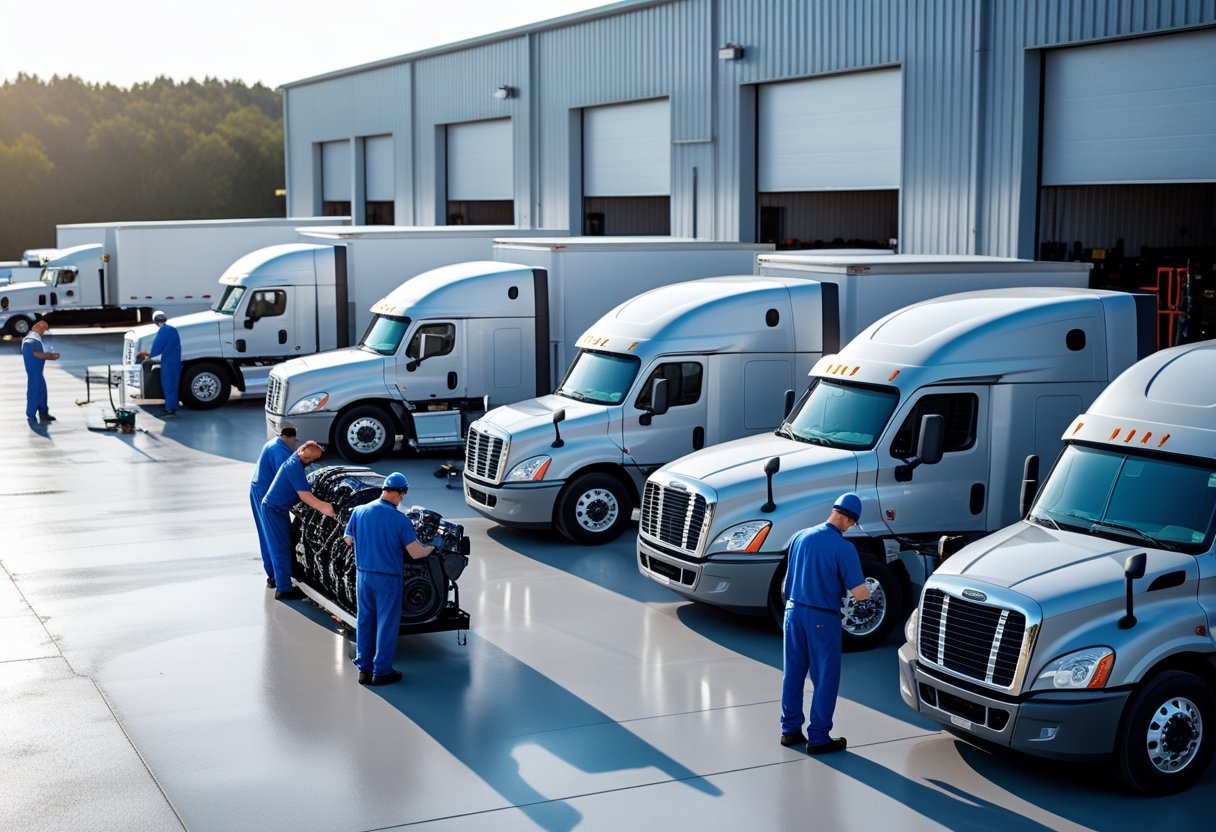
Companies that manage fleets rely on structured maintenance programs to control costs and maintain uptime. These programs use data tracking, maintenance schedules, and performance monitoring to find small issues before they become big problems.
Today’s fleets benefit from advanced tools like telematics and digital maintenance systems. These technologies simplify tracking and planning for maintenance.
With a clear understanding of maintenance types and technology options, any operation can improve performance and reduce risk.
What Is Trucking Fleet Maintenance?
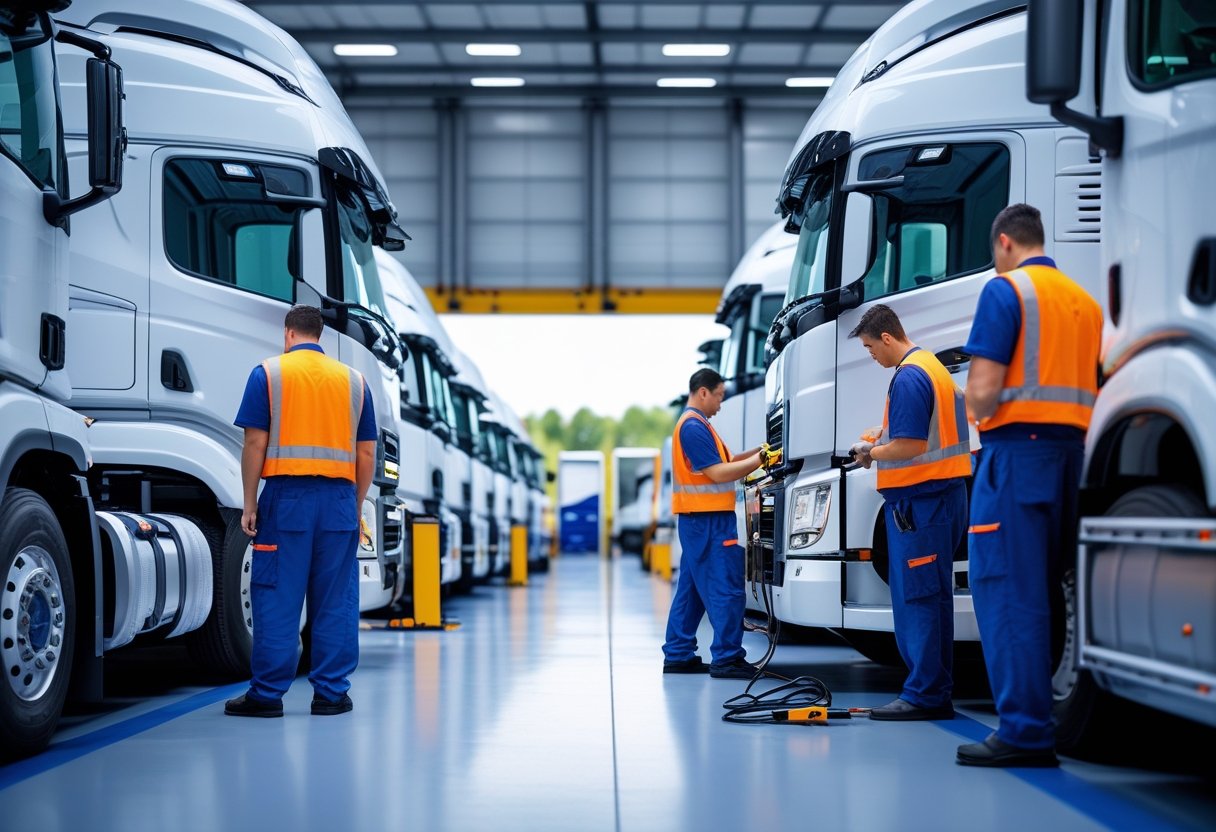
Trucking fleet maintenance is the systematic inspection, servicing, and repair of all vehicles in a company’s fleet. This keeps them roadworthy, efficient, and compliant.
It ensures reliability and extends vehicle lifespan. Maintenance also supports consistent delivery performance.
Definition and Scope
Trucking fleet maintenance is the organized process of managing the mechanical, safety, and regulatory needs of commercial trucks. It includes preventive maintenance, scheduled inspections, and corrective repairs for daily wear or unexpected breakdowns.
The scope covers vital systems such as engines, brakes, tires, cooling systems, and electrical components. Maintenance teams track mileage, fuel use, and fault codes using telematics and digital logs.
Proper maintenance management ensures compliance with regulations from agencies like the Federal Motor Carrier Safety Administration (FMCSA). Keeping good records is essential during audits or inspections.
Role in Fleet Operations
Maintenance is central to managing costs, safety, and operational efficiency. Fleet managers use structured maintenance programs to predict when each truck needs service and to plan repairs around delivery schedules.
A balanced approach combines preventive maintenance and predictive maintenance. This reduces downtime and helps trucks run at peak efficiency.
Maintenance also keeps drivers safe by ensuring vehicles are in good condition. Data from maintenance helps managers use assets better and decide when to replace aging vehicles.
Key Benefits
Effective truck fleet maintenance offers many benefits. A consistent schedule reduces unexpected repairs and limits downtime.
Key advantages include:
- Lower operating costs through early detection of mechanical issues.
- Longer asset life due to consistent servicing.
- Improved fuel efficiency from optimized engine performance.
- Enhanced safety by preventing equipment failures.
- Regulatory compliance through up-to-date inspections and documentation.
Using maintenance management tools and clear procedures, trucking companies can strengthen reliability and reduce risks.
Core Types of Fleet Maintenance
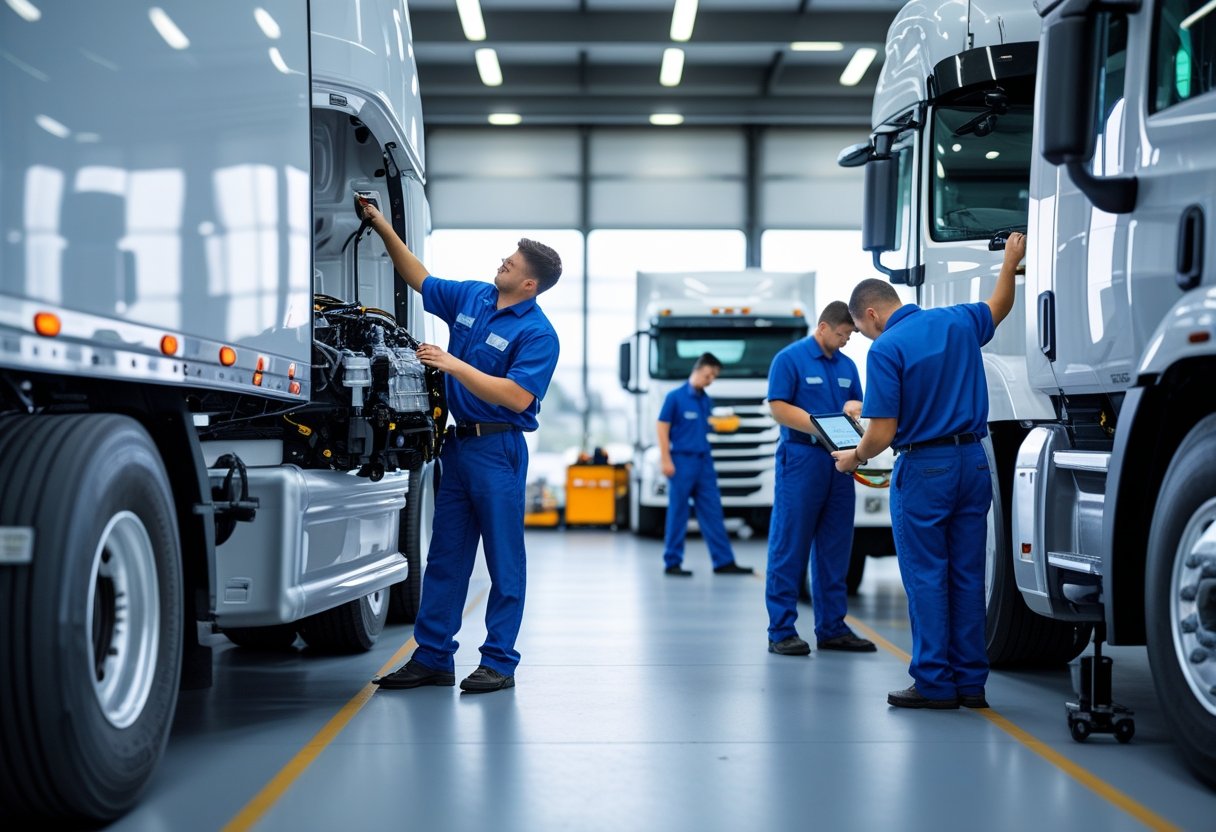
An effective fleet maintenance program uses structured plans, data, and regular inspections. These steps keep vehicles reliable and compliant.
The main approaches differ in timing and tools but share the same goal: reducing downtime and controlling costs.
Preventive Maintenance
Preventive maintenance focuses on scheduled inspections and service tasks at regular intervals. Fleets follow a maintenance plan that includes oil changes, fluid checks, tire rotations, and brake inspections.
This method reduces unexpected failures and helps maintain warranties. A well-managed preventive schedule often uses standardized checklists and digital tracking.
These tools record each service, monitor upcoming tasks, and flag overdue work. Tracking helps managers spot patterns, such as parts wearing out faster than expected.
Routine service minimizes expensive downtime and maintains compliance with safety rules. It is a proactive strategy to protect reliability.
Predictive Maintenance
Predictive maintenance uses real-time data and analytics to forecast when a vehicle part may fail. This method relies on telematics, engine diagnostics, and sensors to predict maintenance needs.
Common tools include onboard monitoring systems, fault codes, and predictive software. These estimate part life and alert managers before a failure occurs.
Fleets using predictive maintenance often avoid unnecessary part replacements and reduce unplanned downtime. This approach requires investment in data tools and trained technicians.
Combining predictive strategies with preventive measures creates a strong defense against major repairs.
Corrective Maintenance
Corrective maintenance includes repairs after a component or system fails. It covers fixing broken parts, replacing damaged tires, or repairing leaks.
While reactive, corrective maintenance is still essential. Technicians document each repair to track causes and spot recurring problems.
Managers prioritize quick response times and parts availability to reduce downtime. Efficient repairs keep unplanned issues from disrupting operations.
Building and Managing a Fleet Maintenance Program
An effective fleet maintenance program depends on structured planning and disciplined scheduling. Clear responsibility for each vehicle is important.
Setting standards, tracking performance, and documenting all activities help reduce downtime and improve control.
Developing a Maintenance Plan
A maintenance plan defines tasks, timelines, and inspection needs to keep vehicles safe and compliant. It guides daily operations and sets expectations for all maintenance actions.
Each plan should specify vehicle types, service intervals, and inspection checklists. These are based on manufacturer guidelines and how the vehicles are used.
Fleet managers often separate routine maintenance from major service work. This helps use resources efficiently.
A clear plan includes a recordkeeping system. Digital fleet management software or spreadsheets can track all maintenance.
Accurate records ensure accountability and help analyze repair trends and costs.
Setting Maintenance Schedules
A fleet maintenance schedule defines when services occur and how often vehicles are checked. Scheduling depends on mileage, hours of use, and operating conditions.
Heavy-use vehicles may need shorter intervals than lighter-duty ones. Fleet managers classify maintenance as preventive, predictive, or corrective.
Preventive work is recurring, predictive relies on data, and corrective addresses unexpected issues. This structure minimizes service interruptions.
Below is a simple example of a fleet maintenance schedule:
Service TypeIntervalResponsible PartyOil changeEvery 10,000 milesMaintenance teamTire inspectionMonthlyDriverBrake checkEvery 25,000 milesVendor/Shop
Tracking compliance with these intervals, either manually or with software, supports reliability and cost control.
Assigning Responsibilities
Effective fleet maintenance needs clear roles and communication. A fleet manager oversees the program and ensures compliance.
Technicians handle diagnostics and repairs. Drivers conduct daily inspections and report problems.
Responsibility matrices or checklists help clarify tasks for everyone involved. Regular training reinforces these duties.
Proper documentation of all activities ensures accountability. It also allows managers to track performance and downtime.
Key Maintenance Procedures and Best Practices
Effective fleet maintenance relies on consistency, good records, and timely replacement of parts and fluids. Clear procedures help extend vehicle life and minimize downtime.
Routine Inspections and DVIR
Routine inspections are the foundation of a solid maintenance program. Drivers should complete a Driver Vehicle Inspection Report (DVIR) before and after each trip.
These inspections cover brakes, tires, lights, mirrors, wipers, and other key components. Fleet managers use DVIRs to track issues and ensure quick repairs.
A structured checklist and digital reporting tools help maintain standards. Regular inspections keep vehicles safe and compliant.
Typical inspection frequency is as follows:
Inspection TypeFrequencyResponsible PartyPre-trip DVIRDailyDriverPost-trip DVIRDailyDriverDetailed Mechanical InspectionMonthly or 10,000 milesTechnician
Maintaining an accurate maintenance log creates accountability. Regular audits of inspection records help identify recurring problems.
Oil and Fluid Management
Proper oil and fluid management keeps engines running well and prevents wear. Engines, transmissions, and cooling systems need clean, full fluids to work efficiently.
Fleet managers should set intervals for oil changes and fluid checks based on manufacturer advice and how vehicles are used. Each service should include checking and replacing engine oil, coolant, brake fluid, power steering fluid, and transmission fluid.
Using high-quality lubricants protects components and prevents overheating. Keeping a fluid replacement log with dates and mileage supports predictive maintenance.
This helps spot trends such as early contamination or leaks, which may indicate deeper problems.
Tire Rotation and Pressure Checks
Tires affect fuel efficiency, handling, and load safety. Regular tire rotation distributes wear evenly and prevents early tire replacement.
Rotation intervals typically range from 6,000 to 8,000 miles. The exact timing depends on vehicle type and axle load.
Consistent tire pressure checks are also important. Underinflated or overinflated tires can reduce traction and increase the risk of blowouts.
Improper tire pressure raises fuel costs. Telematics or tire monitoring systems can simplify pressure checks and alert managers to problems.
Technicians should record each inspection and rotation in the maintenance log. These records help managers track wear and decide when to replace or adjust tires.
Brake System Inspections
Brake inspections are critical for fleet safety. Checks should include drums or rotors, pads or linings, hoses, air lines, and brake fluid.
Any uneven wear, vibration, or air leaks must be fixed immediately. This prevents failures on the road.
Brake evaluations should follow scheduled service intervals. Drivers should also report any decrease in responsiveness for prompt inspection.
Fleet managers often link brake checks to oil changes for convenience. This helps keep maintenance efficient.
Technicians must document all brake services in the maintenance log. Tracking inspection intervals and component life helps forecast replacements and ensures compliance.
Leveraging Fleet Maintenance Technology
Modern fleet technology gives operators better control over vehicle performance and planning. Digital tools make it easier to collect and use maintenance data.
Telematics and Predictive Analytics
Telematics systems collect real-time data on engine performance, fuel use, and driver behavior. Fleet managers use this data to spot early signs of wear or misuse.
Linking telematics to predictive analytics helps schedule maintenance before breakdowns happen. Predictive analytics analyzes service history and sensor data to find trends like recurring faults or reduced efficiency.
For example, the system may suggest inspecting brakes early if it detects small but regular issues. Fleets often use telematics with cellular or satellite networks for constant monitoring.
Benefits include:
- Less unplanned downtime
- Lower maintenance costs
- Better asset use
- Improved safety with alerts for critical issues
This approach shifts maintenance from reactive to proactive.
Fleet Maintenance Software
Fleet maintenance software centralizes information once kept in spreadsheets or on paper. Platforms like Fleetio manage work orders, parts, vendor communication, and reminders from one dashboard.
This setup increases accountability and simplifies compliance. Fleet managers can assign tasks, record labor hours, and track progress in real time.
Integration with telematics allows automatic service requests based on alerts or mileage. Automation reduces paperwork and ensures maintenance is not missed.
A typical software platform includes modules for:
FunctionPurposeWork Order ManagementAssign and monitor service jobsAsset TrackingView each vehicle’s condition and valuePreventive MaintenanceSet recurring service remindersAnalytics DashboardReview trends in cost and performance
This structure provides consistent control with accurate data.
Digital Service Records
Digital service records replace handwritten logs with cloud-based documentation. Each vehicle’s history, inspections, and part replacements are stored in an organized timeline.
This makes audits, resale, and warranty claims easier. Fleet operators can use mobile devices for digital inspections.
Technicians upload images, notes, and signatures directly into the record. Updates appear instantly across the system, keeping supervisors informed.
Accurate records also improve regulatory compliance. Connected tools can trigger reminders based on mileage, engine hours, or dates.
Over time, these logs support predictive models and better maintenance planning.
Compliance, Safety, and Regulatory Considerations
Trucking fleets must follow federal and state maintenance rules for safety and continuity. Standard procedures, clear documentation, and driver training protect both the company and its employees.
DOT Compliance and Inspections
The U.S. Department of Transportation (DOT) requires commercial fleets to meet safety and maintenance standards under the FMCSA. Fleets must schedule regular safety inspections for brakes, tires, lights, and other key parts.
These inspections should follow Preventive Maintenance (PM) schedules with documented maintenance logs. DOT inspectors check both vehicle condition and record accuracy.
To stay ready for audits, companies keep digital or printed logs showing completed Driver Vehicle Inspection Reports (DVIRs) and repairs. Common violations include missed inspections and incomplete paperwork.
Internal pre-trip and post-trip inspection routines and periodic roadworthiness audits help maintain compliance. Telematics-based maintenance tracking can identify service needs early.
Inspection TypeFrequencyResponsible PartyPre-trip DVIRDailyDriverPreventive PMMonthly/QuarterlyMaintenance Dept.DOT Annual InspectionAnnuallyCertified Inspector
Driver Safety and Training
Fleet safety relies on trained drivers. Drivers must complete FMCSA-compliant training in vehicle operation, inspections, cargo securement, and emergency response.
Refresher courses keep drivers updated on changing DOT and OSHA standards. Training focuses on practical skills, like spotting worn parts and reporting issues.
Supervisors review reports to confirm that critical defects are fixed before dispatch. Managers also use defensive driving and fatigue management programs to lower risk.
Telematics data and driver scorecards monitor speeding, hard braking, and out-of-service orders. Consistent training and monitoring encourage safer driving habits.
Record Keeping and Documentation
Accurate documentation is key for compliance and maintenance oversight. Records should include maintenance logs, repair invoices, parts replacements, and DVIRs kept for at least 12 months, as required by FMCSA.
A structured system makes DOT audit preparation easier. Centralized databases store inspection results, certifications, and driver files.
Digital records reduce lost paperwork and speed up compliance checks. Fleets benefit from organized data formats, such as:
- Equipment files with VIN, odometer, and service history
- Inspection reports with findings and repairs
- Driver files with training and license records
Complete documentation enables traceability and supports safety and maintenance improvements.
Fleet Maintenance Strategies for Cost and Performance Optimization
Effective maintenance controls costs, boosts vehicle productivity, and extends service life. Prioritizing preventive actions and fixing inefficiencies help lower cost per mile and keep fleets reliable.
Reducing Repair and Operating Costs
Preventive maintenance schedules limit unplanned repairs and downtime. Technicians inspect brakes, tires, engines, and electrical systems at set intervals.
Predictive maintenance uses telematics and diagnostics to forecast wear. Negotiating vendor rates and buying parts in bulk lowers expenses.
Fleet managers use cost-per-mile (CPM) tracking to find high-cost vehicles. Removing underperformers and managing inventory reduces waste.
Routine oil analysis, filter changes, and lubrication prevent friction-related failures. A computerized maintenance management system (CMMS) tracks service dates, expenses, and compliance for lower operating costs.
Improving Fuel Efficiency
Fuel is a major ongoing cost for fleets. Telematics can monitor fuel consumption and flag inefficient driving, like idling or hard acceleration.
Training drivers to use smooth throttle control and steady speeds saves fuel. Proper tire inflation and wheel alignment also boost performance and reduce resistance.
Synthetic lubricants reduce internal drag for better fuel economy. Fleet software can plan routes to avoid traffic and cut unnecessary miles.
Reducing idle time by even 30 minutes per vehicle daily can mean big savings in monthly fuel costs.
Extending Vehicle Lifespan
Consistent preventive maintenance extends vehicle lifespan and preserves resale value. Addressing minor issues like coolant leaks or worn belts early prevents expensive breakdowns.
Regular inspections of suspension and drivetrain components keep ride quality steady. This also helps minimize driver fatigue.
Using predictive analytics helps determine when to replace key parts before they fail. This ensures optimal uptime.
Scheduling overhauls by mileage thresholds avoids stress on engines and transmissions. It is better than waiting for repairs after a failure.
Documented maintenance histories enhance trade-in value. They also reduce uncertainty when planning replacements.
Fleets that monitor engine performance trends through diagnostics can adjust tuning or maintenance frequency. This helps maintain consistent fleet performance throughout the vehicle’s lifecycle.