HVAC Fleet Cost Reduction: Proven Strategies to Lower Operating Expenses in 2026
How to start saving money
Lorem ipsum dolor sit amet, consectetur adipiscing elit lobortis arcu enim urna adipiscing praesent velit viverra sit semper lorem eu cursus vel hendrerit elementum morbi curabitur etiam nibh justo, lorem aliquet donec sed sit mi dignissim at ante massa mattis.
- Neque sodales ut etiam sit amet nisl purus non tellus orci ac auctor
- Adipiscing elit ut aliquam purus sit amet viverra suspendisse potent
- Mauris commodo quis imperdiet massa tincidunt nunc pulvinar
- Excepteur sint occaecat cupidatat non proident sunt in culpa qui officia
Why it is important to start saving
Vitae congue eu consequat ac felis placerat vestibulum lectus mauris ultrices cursus sit amet dictum sit amet justo donec enim diam porttitor lacus luctus accumsan tortor posuere praesent tristique magna sit amet purus gravida quis blandit turpis.

How much money should I save?
At risus viverra adipiscing at in tellus integer feugiat nisl pretium fusce id velit ut tortor sagittis orci a scelerisque purus semper eget at lectus urna duis convallis. porta nibh venenatis cras sed felis eget neque laoreet suspendisse interdum consectetur libero id faucibus nisl donec pretium vulputate sapien nec sagittis aliquam nunc lobortis mattis aliquam faucibus purus in.
- Neque sodales ut etiam sit amet nisl purus non tellus orci ac auctor
- Adipiscing elit ut aliquam purus sit amet viverra suspendisse potenti
- Mauris commodo quis imperdiet massa tincidunt nunc pulvinar
- Adipiscing elit ut aliquam purus sit amet viverra suspendisse potenti
What percentege of my income should go to savings?
Nisi quis eleifend quam adipiscing vitae aliquet bibendum enim facilisis gravida neque. Velit euismod in pellentesque massa placerat volutpat lacus laoreet non curabitur gravida odio aenean sed adipiscing diam donec adipiscing tristique risus. amet est placerat in egestas erat imperdiet sed euismod nisi.
“Nisi quis eleifend quam adipiscing vitae aliquet bibendum enim facilisis gravida neque velit euismod in pellentesque”
Do you have any comments? Share them with us on social media
Eget lorem dolor sed viverra ipsum nunc aliquet bibendum felis donec et odio pellentesque diam volutpat commodo sed egestas aliquam sem fringilla ut morbi tincidunt augue interdum velit euismod eu tincidunt tortor aliquam nulla facilisi aenean sed adipiscing diam donec adipiscing ut lectus arcu bibendum at varius vel pharetra nibh venenatis cras sed felis eget.
HVAC companies face growing pressure to control fleet expenses while maintaining service quality. Fuel costs, vehicle maintenance, and operational inefficiencies can quickly erode profit margins if left unmanaged.
Fleet operating costs can be reduced by 18-28% through strategic management practices. These practices focus on maintenance optimization, technology integration, and data-driven decision-making.

Successful cost reduction requires a comprehensive approach that addresses multiple expense categories. From understanding the true drivers of fleet spending to implementing smart technologies, HVAC businesses have many opportunities to improve their bottom line.
The key is identifying which strategies will deliver the greatest impact for specific operational needs.
This guide covers methods for reducing HVAC fleet costs without compromising service delivery. Strategies include preventative maintenance planning, telematics deployment, optimizing dispatch operations, and calculating total cost of ownership.
Each approach helps build a more efficient, cost-effective fleet operation.
Understanding HVAC Fleet Cost Drivers
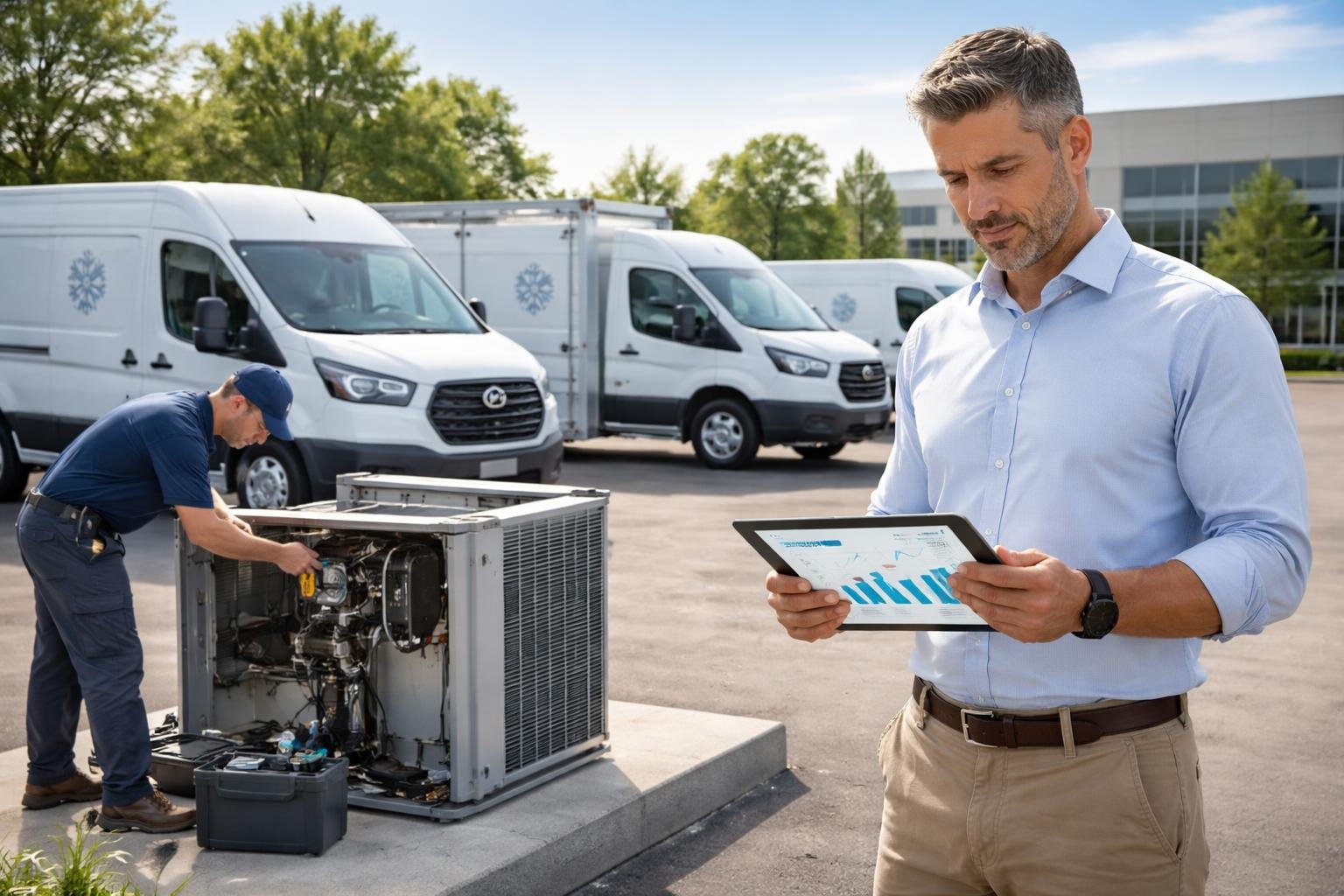
HVAC fleet costs typically consume 15-30% of total operational budgets. Expenses are spread across fuel, maintenance, labor, and underutilized assets.
Identifying where money flows helps fleet managers pinpoint inefficiencies. This allows for targeted cost reduction strategies.
Key Operating Expenses in HVAC Fleets
Fleet operating expenses break down into several major categories. Fuel costs are the most variable expense, changing with market prices and driving patterns.
Maintenance and repairs are the second-largest cost, including scheduled servicing, unexpected breakdowns, and parts replacement. Vehicle depreciation impacts the bottom line whether companies lease or own their fleet.
Insurance premiums, licensing fees, and registration costs add predictable annual expenses. Labor costs include technician wages and drive time between service calls.
Administrative overhead includes dispatching software, GPS tracking systems, and personnel dedicated to coordinating vehicles and routes. Vehicle downtime causes hidden costs through missed appointments and emergency repairs.
Analyzing Fuel Costs and Consumption
Fuel expenses account for 20-35% of total HVAC fleet costs, depending on territory size and vehicle efficiency. Tracking fuel consumption per vehicle reveals patterns in driver behavior and route efficiency.
Idle time significantly increases fuel waste. Service vehicles left running during appointments or between calls can consume 0.5-1 gallons per hour without productive output.
Route optimization reduces unnecessary mileage. Monitoring miles per gallon for each vehicle class helps identify deviations.
Aggressive acceleration, excessive speeding, and poor route planning all contribute to higher fuel consumption.
Assessing Vehicle Utilization Patterns
Vehicle utilization measures how effectively fleet assets generate revenue versus sitting idle. Many HVAC companies find vehicles are used only 40-60% of available hours, representing wasted capital.
Analyzing dispatch data reveals utilization gaps. Some vehicles may be assigned during non-working hours, or certain trucks remain parked while others are overused.
Seasonal demand fluctuations can lead to fleet sizes that exceed actual need. High utilization shows as consistent daily mileage and balanced workload distribution.
Low utilization appears as sporadic use, excessive parking time, or redundant capabilities. Companies improve vehicle utilization by rightsizing fleet numbers and reassigning underused vehicles.
Scheduling preventive maintenance during slow periods rather than peak times also helps.
Smart Fleet Management Strategies for Cost Reduction
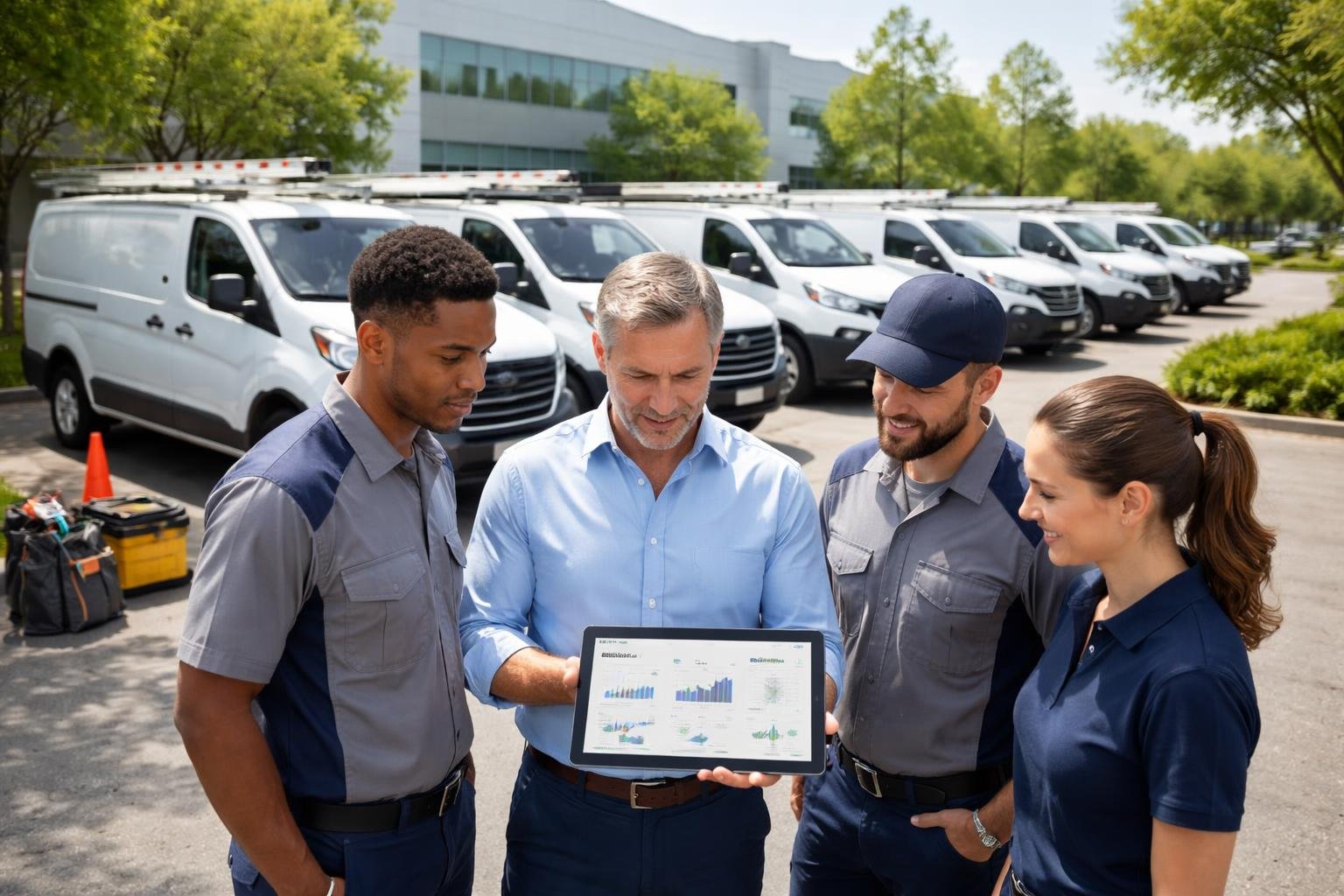
Fleet tracking systems and route optimization tools provide HVAC companies with measurable cost savings. These tools reduce fuel consumption and improve technician productivity.
Real-time visibility into vehicle locations and driver behavior enables managers to make data-driven decisions.
Fleet Tracking and Real-Time Visibility
GPS fleet tracking gives managers oversight of their HVAC service vehicles throughout the workday. The technology pinpoints vehicle locations, monitors driving patterns, and records stop times at customer sites.
Real-time GPS systems alert managers to unauthorized vehicle use, excessive idling, and route deviations. This helps identify inefficiencies that drain budgets.
Fleet managers can verify technician arrival times and respond quickly to service delays. They can also reassign nearby vehicles to urgent calls.
Key benefits of fleet visibility include:
- Improved technician accountability and time management
- Faster emergency response through location-based dispatching
- Reduced unauthorized vehicle use after hours
- Better customer communication with accurate arrival estimates
GPS tracking data also supports maintenance scheduling by recording mileage and engine hours. This prevents costly breakdowns by ensuring vehicles receive service at proper intervals.
Route Optimization and Idle Monitoring
Route optimization software analyzes customer locations, traffic patterns, and appointment times to create efficient daily schedules. The technology reduces drive time between service calls by organizing stops geographically.
HVAC companies using route optimization often reduce fuel costs by 10-20%. They also complete more service calls per day.
The software adjusts routes dynamically when urgent requests arrive or traffic delays occur. Idle monitoring tracks how long vehicles run without moving, highlighting wasted fuel.
A single vehicle idling one hour daily wastes about 150 gallons of fuel annually. Fleet management systems flag excessive idling and send alerts to drivers and managers.
Many companies set idle time policies, limiting unnecessary engine operation to five minutes or less. Combined with route optimization, idle monitoring creates significant fuel savings.
Maintenance Optimization to Minimize Expenses
HVAC fleet operators can reduce maintenance costs by 40% through strategic approaches. Shifting resources from emergency repairs to planned interventions saves money and prevents breakdowns.
Combining preventive schedules with predictive technologies extends vehicle lifespans.
Preventive and Predictive Maintenance Approaches
Preventive maintenance sets regular service intervals based on mileage, hours, or time periods. Fleet managers schedule oil changes, filter replacements, brake inspections, and fluid checks at set times.
Predictive maintenance uses real-time data from vehicle sensors to identify issues before they cause breakdowns. Alerts can be triggered by temperature changes, unusual vibrations, or declining battery performance.
The combination of both approaches delivers optimal results. Preventive maintenance handles routine wear items, while predictive maintenance catches emerging problems between scheduled services.
Fleet tracking systems monitor diagnostic codes and engine performance continuously. These systems generate maintenance recommendations based on actual vehicle condition.
Automated Maintenance Scheduling and Tracking
Maintenance automation eliminates manual scheduling errors. CMMS platforms automatically generate work orders when vehicles reach certain mileage or time periods.
Digital tracking systems keep complete service histories for each vehicle. This helps identify recurring issues and track warranty claims.
Automated systems integrate with parts inventory management to ensure necessary components are available. The software tracks part usage and generates purchase orders when stock is low.
This prevents service delays due to parts shortages.
Leveraging Telematics and Fleet Technology
Telematics systems provide HVAC companies with real-time visibility into vehicle location, driver behavior, and equipment diagnostics. Fleet management software centralizes this data for actionable insights.
These technologies help reduce operational costs by enabling data-driven decisions.
Benefits of Telematics Systems
Telematics improves driver safety and asset management. Many fleet managers already use these solutions.
GPS tracking monitors vehicle routes in real-time, allowing dispatchers to optimize service calls. Engine diagnostics alert managers to maintenance needs before breakdowns occur.
Driver behavior monitoring identifies harsh braking, rapid acceleration, and excessive idling. These behaviors increase fuel consumption and vehicle wear.
Route optimization features calculate efficient paths between job sites. This reduces fuel costs and allows technicians to complete more calls per day.
The technology also supports regulatory compliance by tracking driver hours and vehicle inspections. Real-time data enables quick responses to schedule changes or emergency calls.
Managers can identify the nearest available technician and dispatch them immediately.
Integrating Fleet Management Software
Fleet management software turns telematics data into comprehensive analytics for HVAC optimization. The platform consolidates information from multiple vehicles into a single dashboard.
Integration with maintenance management systems creates seamless workflows. Technicians receive automated job assignments based on their location and skills.
The software tracks vehicle utilization rates, identifying underused assets. Fuel monitoring capabilities pinpoint excessive consumption patterns and unauthorized vehicle use.
Connected vehicle technology provides detailed cost analysis across the entire fleet. This supports accurate budgeting and reveals opportunities to reduce operational expenses.
Enhancing Dispatch and Technician Productivity
Dispatch efficiency directly impacts fleet operating costs by reducing travel time. Companies can achieve cost savings by automating scheduling and improving first-time fix rates.
Automated Scheduling for Service Calls
Automated scheduling systems assign technicians to jobs based on location, skill set, and workload. These systems use GPS data to identify the nearest qualified technician.
The technology reduces idle time between jobs and minimizes windshield time. Dispatch software evaluates job priority, parts availability, and technician certifications to create optimized daily routes.
Real-time schedule adjustments occur when emergency calls come in or jobs finish early. The system fills gaps in technician schedules with nearby pending calls.
This dynamic scheduling approach can increase daily job capacity by up to 40% without adding vehicles or staff.
Improving First-Time Fix Rate
First-time fix rate measures how often technicians complete repairs during the initial visit. Higher rates reduce fuel costs, vehicle wear, and labor expenses from repeat visits.
Proper inventory management ensures technicians carry the right parts for scheduled jobs. Dispatchers can review appointments and verify trucks are stocked before technicians leave.
Pre-call diagnostics help technicians arrive prepared with the correct tools. When customers describe issues during scheduling, dispatchers can assign technicians with relevant expertise.
This preparation reduces incomplete jobs and additional trips.
Cost Control Tools and Resource Allocation
Strategic cost control in HVAC fleets requires tools that monitor spending patterns and streamline materials and labor deployment. Fuel cards and inventory management systems provide the foundation for reducing waste while maintaining service quality.
Utilizing Fuel Cards and Fuel Management
Fuel cards are centralized payment tools that track every gallon purchased across the fleet. These cards generate detailed reports showing which vehicles use fuel, where purchases happen, and the price per gallon.
HVAC contractors can set purchase limits and restrict transaction types. They receive instant alerts when unusual spending occurs.
Modern fuel card programs work with fleet management software to match fuel consumption with job locations and technician productivity. This helps spot inefficiencies like excessive idling or unauthorized vehicle use.
Many programs offer discounted rates at select stations, often saving 5-10 cents per gallon.
Real-time monitoring helps fleet managers detect fuel theft or misuse right away. The collected data enables accurate fuel budgeting based on real usage.
Optimizing Resource Allocation and Inventory
Effective resource allocation matches technician skills, vehicle equipment, and parts inventory to each job. GPS tracking with scheduling software helps dispatchers assign the nearest qualified technician.
This reduces unnecessary mileage and improves response times.
Centralized inventory systems prevent overstocking expensive parts while keeping key components available. These systems track part usage, location, and reorder points to avoid stockouts.
HVAC companies can reduce capital tied up in excess inventory. They also avoid emergency orders at higher prices.
Standardizing vehicle upfitting ensures technicians carry the right tools and parts for their jobs. This reduces vehicle weight, improves fuel economy, and saves time searching for equipment.
Fleet managers can use usage data to set the best stock levels for each vehicle class.
Managing Total Cost of Ownership for Long-Term Savings
Effective HVAC fleet management focuses on total cost of ownership, not just the purchase price. This includes acquisition costs, operating expenses, maintenance, and replacement timing.
Lifecycle Planning and Vehicle Replacement
Fleet managers should set replacement cycles based on actual performance data. Most HVAC service vehicles are best replaced between 150,000 and 200,000 miles, depending on maintenance and usage.
A structured lifecycle approach tracks each vehicle's maintenance costs, fuel use, and downtime. When annual repairs exceed 30-40% of a vehicle's value, replacement is usually more cost-effective.
Key lifecycle metrics to monitor:
- Monthly maintenance costs per vehicle
- Fuel efficiency trends
- Unplanned repair frequency
- Vehicle availability rates
- Age-adjusted depreciation
Reducing Operating Expenses and Maximizing Value
Operating expenses are often the largest part of total cost of ownership. These expenses can exceed the initial purchase price within three to four years.
Fuel costs, preventive maintenance, insurance, and licensing fees add up quickly for fleet operations. Managing these costs is essential for long-term savings.
Fleet telematics systems help lower operating expenses. They identify inefficient routes, excessive idling, and aggressive driving behaviors.
Companies using GPS tracking and route optimization often reduce fuel costs by 12-18%. These tools also improve customer response times.
Primary expense reduction strategies include:
- Bulk purchasing agreements for parts and fluids
- Scheduled preventive maintenance to avoid costly emergency repairs
- Driver training programs focused on fuel efficiency
- Regular tire pressure monitoring and maintenance
- Strategic vendor partnerships for predictable pricing
Centralizing fleet management decisions creates economies of scale. This approach helps with purchasing, maintenance scheduling, and compliance tracking.
Organizations with 10 or more HVAC vehicles should assign dedicated fleet oversight. This ensures consistent cost controls across all units.