Vehicle Telematics Data Analytics: Transforming Fleet Management and Driver Safety
How to start saving money
Lorem ipsum dolor sit amet, consectetur adipiscing elit lobortis arcu enim urna adipiscing praesent velit viverra sit semper lorem eu cursus vel hendrerit elementum morbi curabitur etiam nibh justo, lorem aliquet donec sed sit mi dignissim at ante massa mattis.
- Neque sodales ut etiam sit amet nisl purus non tellus orci ac auctor
- Adipiscing elit ut aliquam purus sit amet viverra suspendisse potent
- Mauris commodo quis imperdiet massa tincidunt nunc pulvinar
- Excepteur sint occaecat cupidatat non proident sunt in culpa qui officia
Why it is important to start saving
Vitae congue eu consequat ac felis placerat vestibulum lectus mauris ultrices cursus sit amet dictum sit amet justo donec enim diam porttitor lacus luctus accumsan tortor posuere praesent tristique magna sit amet purus gravida quis blandit turpis.

How much money should I save?
At risus viverra adipiscing at in tellus integer feugiat nisl pretium fusce id velit ut tortor sagittis orci a scelerisque purus semper eget at lectus urna duis convallis. porta nibh venenatis cras sed felis eget neque laoreet suspendisse interdum consectetur libero id faucibus nisl donec pretium vulputate sapien nec sagittis aliquam nunc lobortis mattis aliquam faucibus purus in.
- Neque sodales ut etiam sit amet nisl purus non tellus orci ac auctor
- Adipiscing elit ut aliquam purus sit amet viverra suspendisse potenti
- Mauris commodo quis imperdiet massa tincidunt nunc pulvinar
- Adipiscing elit ut aliquam purus sit amet viverra suspendisse potenti
What percentege of my income should go to savings?
Nisi quis eleifend quam adipiscing vitae aliquet bibendum enim facilisis gravida neque. Velit euismod in pellentesque massa placerat volutpat lacus laoreet non curabitur gravida odio aenean sed adipiscing diam donec adipiscing tristique risus. amet est placerat in egestas erat imperdiet sed euismod nisi.
“Nisi quis eleifend quam adipiscing vitae aliquet bibendum enim facilisis gravida neque velit euismod in pellentesque”
Do you have any comments? Share them with us on social media
Eget lorem dolor sed viverra ipsum nunc aliquet bibendum felis donec et odio pellentesque diam volutpat commodo sed egestas aliquam sem fringilla ut morbi tincidunt augue interdum velit euismod eu tincidunt tortor aliquam nulla facilisi aenean sed adipiscing diam donec adipiscing ut lectus arcu bibendum at varius vel pharetra nibh venenatis cras sed felis eget.
Vehicle telematics data analytics turns raw information from connected vehicles into insights that improve efficiency, safety, and cost management in fleet operations and the automotive industry.
Modern telematics systems use GPS tracking, IoT sensors, and real-time data processing to help organizations optimize vehicle performance, predict maintenance needs, and monitor driver behavior.
This technology has grown from simple location tracking into a full data ecosystem that supports important business decisions.

More than 90% of new vehicles in the United States can now collect and share operational data.
Fleet managers and automotive engineers use this steady flow of information to solve challenges in maintenance, fuel management, and risk reduction.
Advanced analytics in telematics platforms now make predictions that traditional fleet management could not offer.
Understanding how telematics data moves from vehicle sensors to dashboards involves looking at the technology, data processing steps, and how organizations use these systems.
This article covers the basic parts of telematics analytics, real-world applications, and new trends shaping the future of connected vehicles.
Understanding Vehicle Telematics Data Analytics
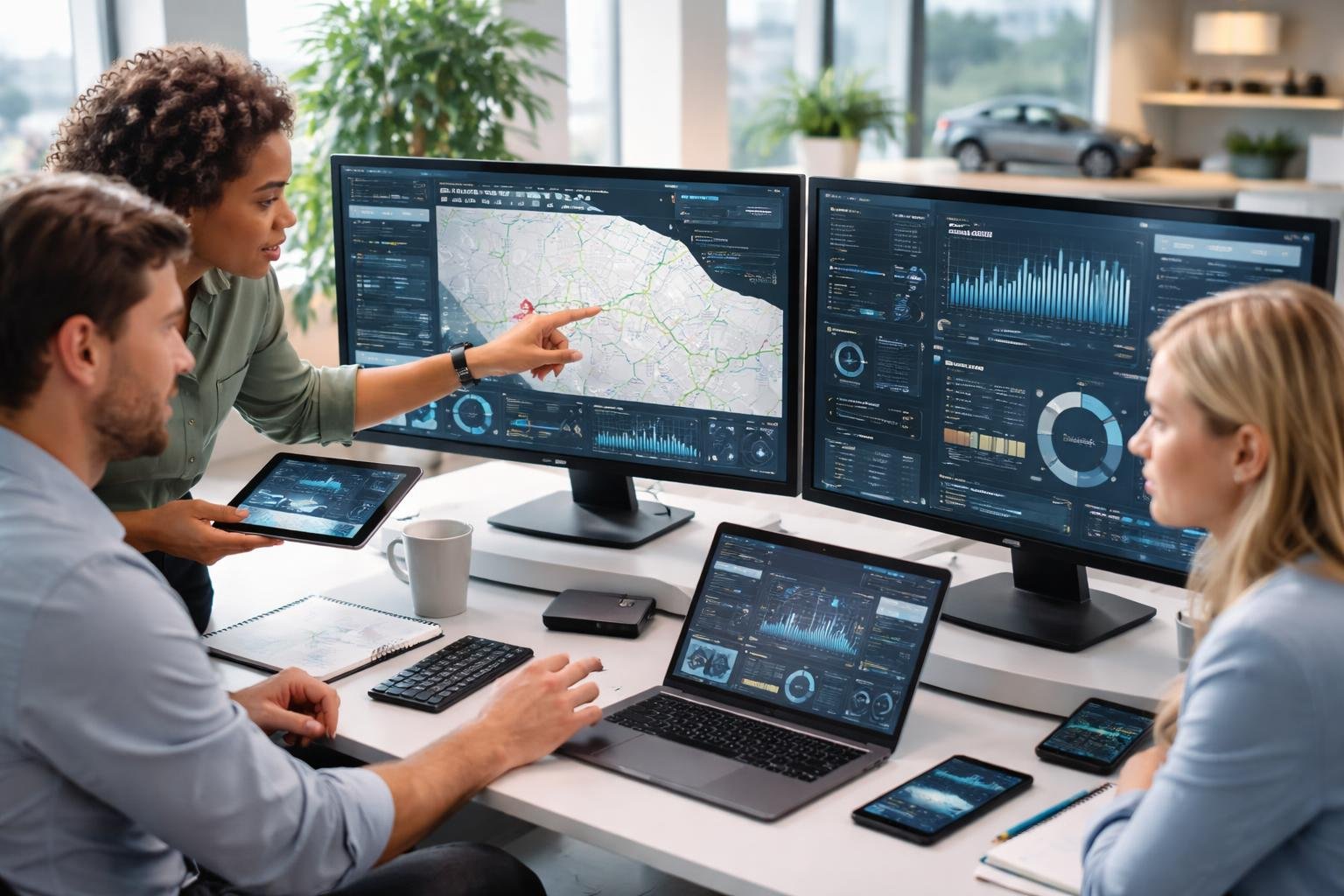
Vehicle telematics data analytics turns raw vehicle information into useful insights using telecommunications and data processing.
This field includes key definitions, technical terms, and a shift from basic GPS tracking to AI-powered connected vehicle systems.
What Is Vehicle Telematics Data Analytics
Vehicle telematics data analytics combines telecommunications and informatics to collect and analyze data from connected vehicles.
Devices installed in vehicles capture information about location, speed, fuel use, engine health, and driver actions.
This data is sent in real-time to central platforms where analytics tools process it.
Fleet managers and engineers use telematics analytics to monitor performance and spot patterns.
Over 90% of new vehicles in the U.S. now collect and send telematics data automatically.
Analytics uses statistics, machine learning, and visualization to find insights in the large amounts of data generated every day.
Core Concepts and Terminology
Telematics joins telecommunications and informatics to allow vehicles to share data with outside systems.
A connected vehicle has built-in systems that communicate with cloud platforms, other cars, and infrastructure.
Telematics data covers several types:
- Location data: GPS, routes, geofencing
- Vehicle diagnostics: Engine codes, battery voltage, tire pressure
- Driver behavior: Acceleration, braking, cornering speed
- Operational metrics: Idle time, mileage, fuel efficiency
Telematics Control Units (TCUs) are the main hardware collecting sensor data and sending it wirelessly.
These devices connect to a vehicle’s diagnostic port or are built in during manufacturing.
AI in telematics uses past data to predict maintenance, improve routes, and find safety problems.
Evolution of Telematics and Connected Vehicles
Telematics began in the 1990s with GPS tracking to recover stolen vehicles.
These early systems only recorded location data and sent it using cellular networks.
In the 2000s, telematics systems added access to engine data and maintenance codes.
This allowed for predictive maintenance and better fuel monitoring in fleets.
Modern connected cars now gather data from many sensors at once.
Current telematics platforms process information about the environment, traffic, and vehicle-to-vehicle communication.
Fleet telematics can improve efficiency by up to 40% using real-time data analytics and automated tools.
Since 2020, big data analytics and AI have sped up telematics advances.
Machine learning can now find hidden patterns in driving and predict failures before they happen.
Key Components of Telematics Data
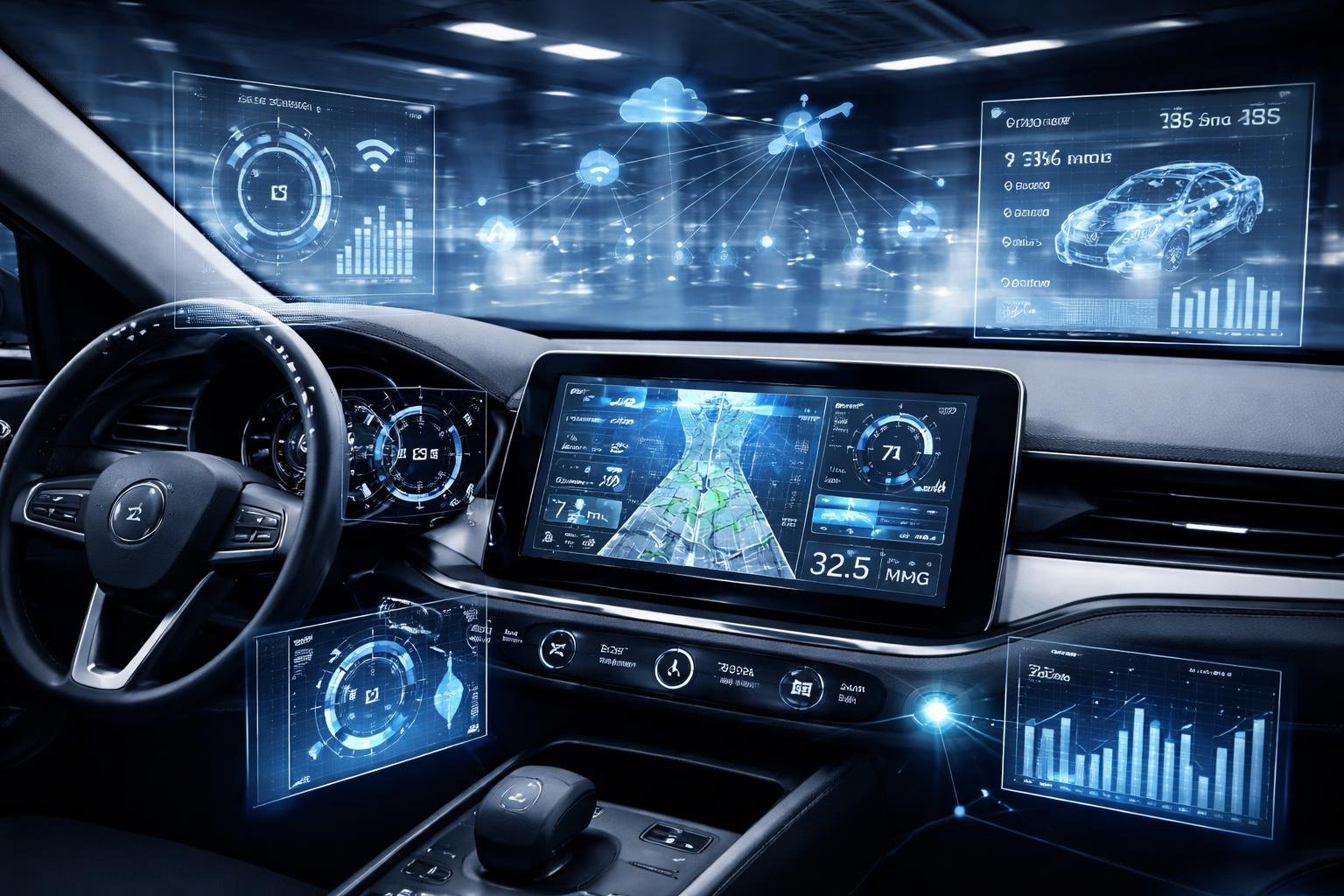
Telematics systems use many data sources to capture complete vehicle information.
The system combines hardware sensors, diagnostic interfaces, and wireless connections for real-time monitoring and analysis.
Sources of Telematics and Telemetry Data
Telematics data comes from several main components in vehicles.
GPS modules provide location tracking with accurate coordinates and times.
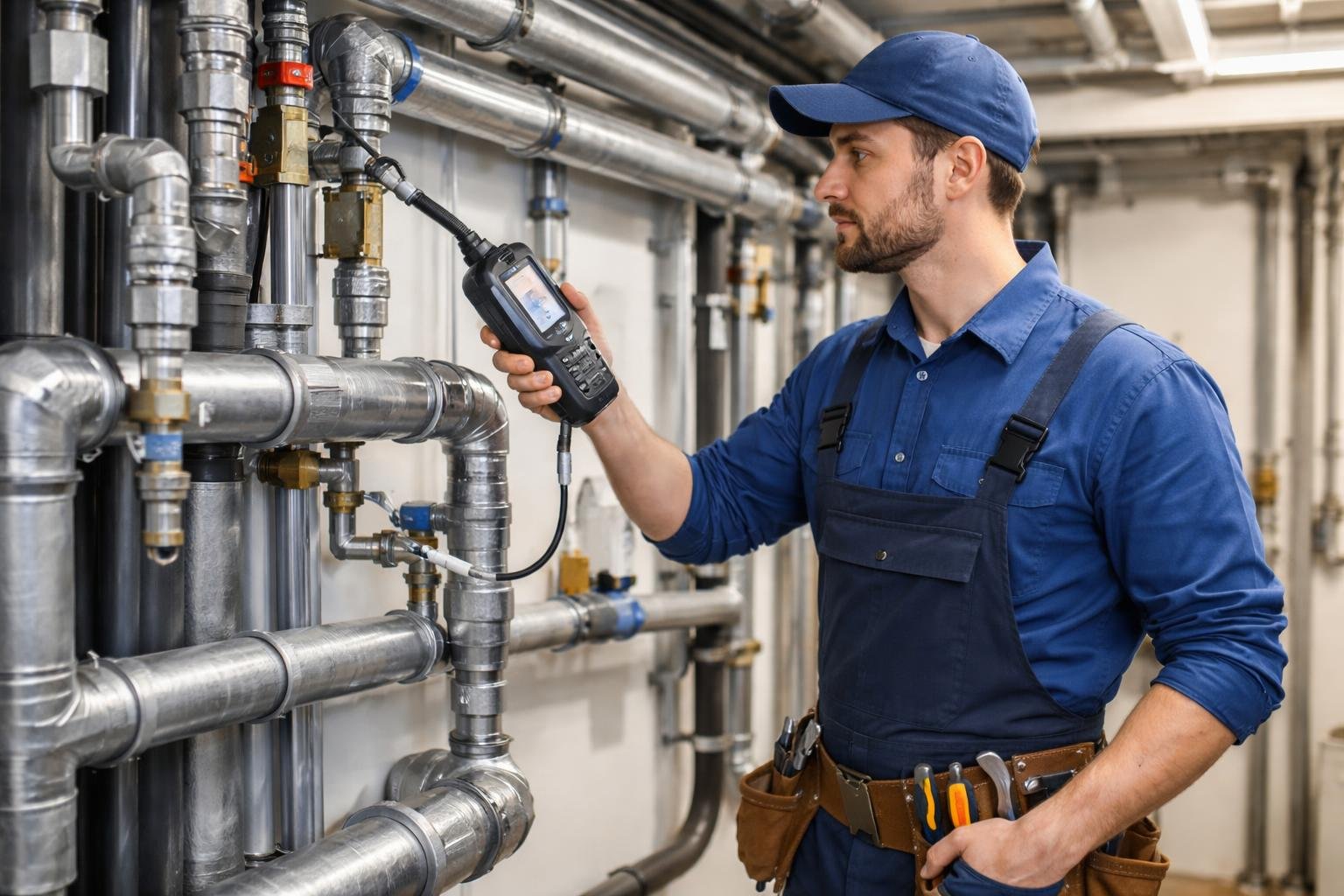
OBD-II (On-Board Diagnostics) devices connect to the vehicle’s diagnostic port to get engine metrics and fault codes.
Accelerometers and gyroscopes measure movement, including acceleration and turning.
These sensors record driving behavior such as hard braking and sharp turns.
Newer vehicles use built-in telematics control units (TCUs) to combine sensor data into a single stream.
Fleet vehicles may also use dash cameras, fuel sensors, and temperature monitors for more context.
Types of Data Collected
Location and Movement Data includes GPS, speed, direction, and idle times.
This is used for route optimization and tracking assets.
Vehicle diagnostics covers engine metrics, fuel use, battery voltage, coolant temperature, and trouble codes.
These signals give early warnings for maintenance and possible mechanical issues.
Driver Behavior Metrics record acceleration, braking, turning, and speed limit adherence.
These metrics help assess risk and improve safety training.
Environmental Data includes outside temperature, road conditions (when available), and event timestamps.
Modern systems collect data as often as every second during driving, or less often when parked.
Data Collection and Transmission Mechanisms
Telematics devices collect sensor data all the time and store it in onboard memory.
How often they collect data depends on the vehicle’s state.
Active driving triggers frequent sampling, while parked vehicles may only update hourly.
Data is sent using cellular networks (4G LTE, 5G) or satellites in remote areas.
Most systems send data in batches to save bandwidth, uploading every 30 seconds to several minutes.
Critical events like crashes trigger instant real-time transmission.
Some telematics units use edge computing to process data before sending it.
This reduces bandwidth by filtering out extra data and compressing packets.
Cloud platforms receive the vehicle telemetry, where analytics engines check, store, and analyze the information.
Telematics Data Processing and Analytics Workflows
Processing telematics data involves steps that turn raw vehicle information into useful business insights.
Organizations need strong data pipelines for cleaning, integrating, storing, and analyzing data from fleet operations.
Data Cleaning and Preparation
Raw telematics data often has errors, duplicates, or inconsistent values.
GPS data might have outliers from weak signals, and timestamps can be off.
Sensor readings sometimes show impossible values.
Data cleaning involves checking records against rules and fixing or removing errors.
Preparation also standardizes data formats from different devices.
Some platforms use their own data structures, which need to be converted into a common format.
This makes analysis consistent across a mixed fleet.
Automated scripts help flag strange patterns, like vehicles reporting impossible speeds or locations.
These checks ensure only good data is used in analytics.
Data Integration and Storage
Telematics platforms bring together data from GPS, engine diagnostics, driver behavior sensors, and other systems.
A good data pipeline combines these streams into a central repository for easy access and analysis.
Cloud storage can handle the constant flow of vehicle data.
Integration connects telematics data with other business systems like dispatch, maintenance, and reporting tools.
This allows for analysis that links vehicle performance to business results.
Storage is usually split between fast access for recent data and cheaper storage for older records.
Real-Time vs. Historical Analysis
Real-time analytics process data as soon as vehicles send it.
Fleet managers get instant alerts for harsh braking, route changes, or maintenance warnings.
This helps fix problems quickly and keeps operations running smoothly.
Historical analysis looks at past data to find trends and patterns.
Machine learning models use this history to predict maintenance, improve routes, and measure driver performance.
Organizations use real-time data for daily decisions and historical data for long-term planning.
Applications of Vehicle Telematics Data Analytics
Vehicle telematics data analytics is important in transportation and automotive sectors.
It lets organizations monitor assets in real-time, predict mechanical issues, and improve efficiency.
These uses range from managing large fleets to tracking individual vehicles, with data-driven insights improving maintenance and performance.
Fleet Management and Operations
Fleet telematics systems give clear visibility into vehicle locations, driver actions, and key metrics using GPS and IoT sensors.
Fleet managers use this data to plan better routes, cut idle time, and track fuel use.
Real-time analytics help teams find problems and fix them right away.
The technology also supports compliance, hours-of-service tracking, and safety checks.
Companies using these systems see better delivery times, fuel savings, and higher fleet use.
Analytics platforms combine data from many vehicles to spot trends for strategic decisions.
Fleet management software connects telematics data with business systems to automate reports and provide dashboards.
These tools also support driver performance scoring, helping with targeted training and reducing accidents.
Predictive and Remote Diagnostics
Predictive maintenance uses telematics data to spot parts that may fail soon.
Engine metrics, trouble codes, and sensor readings let maintenance teams plan repairs before breakdowns happen.
Remote diagnostics send real-time mechanical data to central systems, removing the need for physical checks.
This is valuable for fleets where vehicle uptime matters most.
Maintenance staff get alerts when readings go outside normal ranges, so they can act quickly.
Moving from reactive to predictive maintenance lowers costs and extends vehicle life.
Analytics platforms use pattern recognition on maintenance records to find links between use and wear.
This helps set better service schedules and plan parts replacements.
Vehicle Performance Optimization
Telematics data provides insights into engine efficiency, transmission behavior, and overall vehicle performance under different conditions.
Engineers and fleet operators use this information to spot issues and make calibration adjustments that improve fuel economy and reduce emissions.
Manufacturing teams rely on performance data throughout the vehicle lifecycle to validate design specifications.
They also identify areas for improvement in future models.
Monitoring acceleration patterns, braking behaviors, and load conditions helps guide engineering decisions.
This feedback from deployed vehicles supports ongoing enhancements in automotive design and manufacturing processes.
Performance benchmarking across similar vehicle types helps organizations set realistic expectations.
It also highlights outliers that need attention.
Telematics analytics optimize operational parameters like tire pressure, cargo loading, and maintenance schedules based on real usage patterns.
Enhancing Driver Safety and Connected Experiences
Vehicle telematics analytics enable real-time monitoring of driver actions and environmental conditions.
This creates opportunities for immediate safety interventions and personalized automotive services.
Connected vehicle technologies generate continuous data streams that support accident prevention and better user experiences.
Driver Behavior Analysis
Telematics systems track acceleration, braking intensity, cornering speeds, and following distances.
These metrics help fleet operators and insurance companies identify high-risk behaviors such as harsh braking, rapid acceleration, or excessive speeding.
Analytics platforms process this data to generate risk scores for each driver.
The systems set baseline patterns and flag deviations that indicate fatigue, distraction, or aggressive driving.
Real-time alerts notify drivers when they exceed safety thresholds.
Insurance providers use behavior data to offer usage-based insurance programs that adjust premiums based on actual driving quality.
Fleet managers use these insights to develop targeted training programs that address specific weaknesses.
Personalized Automotive Services
Connected car platforms use telematics data to deliver services tailored to individual preferences.
The system learns driver routines, preferred routes, and typical travel times to suggest optimal departure times based on current traffic.
Predictive maintenance alerts warn drivers about potential component failures before they happen.
These notifications specify which parts need attention and estimate the remaining operational lifespan.
Vehicle health reports include data on tire pressure, battery status, fluid levels, and engine performance.
Digital copilot features combine navigation, communication, and vehicle control through voice-activated interfaces to reduce driver distraction.
The connected vehicle ecosystem can sync with smart home devices and calendar apps to streamline daily routines.
Driver and Passenger Safety Improvements
Telematics-enabled safety systems detect collision risks using radar, cameras, and GPS data.
Features like forward collision warnings, lane departure alerts, and blind spot detection work continuously to help prevent accidents.
Emergency response protocols automatically notify authorities and provide location data when airbags deploy or severe impacts occur.
Driver monitoring systems use cabin-facing cameras and steering analysis to detect drowsiness or inattention.
The vehicle issues escalating warnings, including audible alerts, seat vibrations, and suggestions for rest stops when fatigue is detected.
Passenger safety features include automatic emergency braking, adaptive cruise control, and electronic stability control.
Geofencing allows parents to monitor teen drivers and receive notifications about speed violations or unauthorized vehicle use.
Security, Data Privacy, and Compliance in Telematics Analytics
Telematics systems collect large amounts of vehicle and driver data.
This creates important responsibilities around data protection and regulatory compliance.
Organizations must address both technical security measures and legal privacy requirements to safeguard sensitive information.
Data Security Challenges
Telematics devices generate continuous streams of location data, driving behavior metrics, and vehicle diagnostics.
This data needs strong protection against unauthorized access.
The connected nature of these systems creates multiple points where cyberattacks can occur, including wireless communication, cloud storage, and device hardware.
Hardware-based cryptographic chips encrypt data at the device level before transmission.
This protects against interception during wireless transfer and prevents tampering with stored information.
Organizations should use end-to-end encryption to secure data throughout its lifecycle.
Access control mechanisms must restrict data to authorized personnel only.
Multi-factor authentication, role-based permissions, and audit logging help monitor who accesses telematics data and when.
Regular security assessments can find vulnerabilities before they are exploited.
User Consent and Privacy Safeguards
Drivers must give explicit consent before telematics data collection begins.
They should receive clear explanations about what data is collected and how it will be used.
Regulations like GDPR in Europe and CCPA in California require specific consent and give users rights to access, modify, or delete their data.
Privacy-by-design means collecting only the data necessary for the stated purpose.
This includes limiting how long data is kept, anonymizing data when possible, and avoiding collecting personally identifiable information unless essential.
Transparency reports should inform users about data sharing with third parties such as insurance companies or government authorities.
Users have the right to withdraw consent and request complete data deletion.
Telematics systems must support these requests through automated processes.
Emerging Trends and Future Directions in Telematics Data Analytics
The field of telematics data analytics is changing quickly with artificial intelligence, software-defined vehicles, and connected mobility platforms.
These developments are turning telematics into intelligence networks that support predictive decision-making and automated fleet operations.
AI and Machine Learning Innovations
AI and machine learning are changing how telematics data is processed and used.
Modern systems use predictive analytics to forecast vehicle maintenance needs, driver behavior, and potential safety incidents.
Machine learning algorithms analyze historical telematics data to find links between vehicle performance, driving patterns, and outcomes.
These models get more accurate as they process more data, allowing fleet managers to anticipate problems.
Current AI applications include:
- Anomaly detection for unusual vehicle behavior or performance issues
- Route optimization using real-time traffic, weather, and vehicle condition data
- Driver coaching systems that give personalized feedback
- Fuel consumption prediction models that consider route and driving style
AI integration allows telematics platforms to process large amounts of sensor data in real time, providing insights that improve operations.
Fleet operators use these tools to reduce maintenance costs through predictive interventions.
Software-Defined Vehicles and Digital Engineering
Software-defined vehicles shift from hardware-centric to software-centric architectures.
These vehicles use centralized computing that can be updated remotely, like smartphone software.
Digital engineering lets manufacturers and fleet operators simulate vehicle performance, test features, and optimize systems before physical deployment.
This reduces development costs and speeds up innovation in telematics.
The software-defined approach allows telematics systems to:
- Add new analytics features without hardware changes
- Integrate with cloud-based data processing
- Enable over-the-air updates for better functionality
- Support modular analytics apps for specific needs
Fleet vehicles with software-defined architectures generate more detailed telemetry data.
This includes granular information about powertrain performance, battery health in electric vehicles, and advanced driver assistance system activity.
Integration with Smart Mobility Ecosystems
Telematics systems are changing. They are no longer just fleet management tools.
These systems are now key parts of larger smart mobility ecosystems. Vehicles, infrastructure, traffic management, and urban planning platforms are all connected.
With smart mobility integration, vehicles can talk to traffic signals, parking systems, and charging stations. This allows for coordinated routing and reduced congestion.
Energy consumption across transportation networks can also be optimized. Connectivity helps vehicles and infrastructure work together more efficiently.
Key integration points include:
- Vehicle-to-infrastructure (V2I) communication for real-time traffic optimization
- Electric vehicle charging network coordination based on route planning and battery status
- Urban traffic management systems using fleet movement data
- Multi-modal transportation platforms connecting different transit options
Telematics data is becoming a shared resource. Cities use this data to improve traffic flow and reduce emissions.
Fleet operators can access infrastructure data to enhance routing efficiency. This benefits both cities and fleets.