HVAC Fleet Utilization: Strategies to Maximize Equipment Efficiency and Reduce Operational Costs
How to start saving money
Lorem ipsum dolor sit amet, consectetur adipiscing elit lobortis arcu enim urna adipiscing praesent velit viverra sit semper lorem eu cursus vel hendrerit elementum morbi curabitur etiam nibh justo, lorem aliquet donec sed sit mi dignissim at ante massa mattis.
- Neque sodales ut etiam sit amet nisl purus non tellus orci ac auctor
- Adipiscing elit ut aliquam purus sit amet viverra suspendisse potent
- Mauris commodo quis imperdiet massa tincidunt nunc pulvinar
- Excepteur sint occaecat cupidatat non proident sunt in culpa qui officia
Why it is important to start saving
Vitae congue eu consequat ac felis placerat vestibulum lectus mauris ultrices cursus sit amet dictum sit amet justo donec enim diam porttitor lacus luctus accumsan tortor posuere praesent tristique magna sit amet purus gravida quis blandit turpis.

How much money should I save?
At risus viverra adipiscing at in tellus integer feugiat nisl pretium fusce id velit ut tortor sagittis orci a scelerisque purus semper eget at lectus urna duis convallis. porta nibh venenatis cras sed felis eget neque laoreet suspendisse interdum consectetur libero id faucibus nisl donec pretium vulputate sapien nec sagittis aliquam nunc lobortis mattis aliquam faucibus purus in.
- Neque sodales ut etiam sit amet nisl purus non tellus orci ac auctor
- Adipiscing elit ut aliquam purus sit amet viverra suspendisse potenti
- Mauris commodo quis imperdiet massa tincidunt nunc pulvinar
- Adipiscing elit ut aliquam purus sit amet viverra suspendisse potenti
What percentege of my income should go to savings?
Nisi quis eleifend quam adipiscing vitae aliquet bibendum enim facilisis gravida neque. Velit euismod in pellentesque massa placerat volutpat lacus laoreet non curabitur gravida odio aenean sed adipiscing diam donec adipiscing tristique risus. amet est placerat in egestas erat imperdiet sed euismod nisi.
“Nisi quis eleifend quam adipiscing vitae aliquet bibendum enim facilisis gravida neque velit euismod in pellentesque”
Do you have any comments? Share them with us on social media
Eget lorem dolor sed viverra ipsum nunc aliquet bibendum felis donec et odio pellentesque diam volutpat commodo sed egestas aliquam sem fringilla ut morbi tincidunt augue interdum velit euismod eu tincidunt tortor aliquam nulla facilisi aenean sed adipiscing diam donec adipiscing ut lectus arcu bibendum at varius vel pharetra nibh venenatis cras sed felis eget.
HVAC fleet utilization measures how well service vehicles are used to generate revenue and complete jobs. Poor utilization means companies pay for vehicles that sit idle, waste fuel on unnecessary trips, or carry technicians who could be more productive.
These inefficiencies hurt profitability and reduce service capacity.

Fleet utilization is calculated by dividing actual vehicle usage by total available vehicle time. Most successful HVAC companies aim for 70-85% utilization rates.
This metric helps businesses see if they have the right number of vehicles, if routing is efficient, and if technicians are spending time on revenue-generating work.
Improving fleet utilization involves looking at several areas, such as maintenance scheduling, technology for routing, and real-time performance tracking. Using targeted strategies can cut fleet costs by 15-30% and improve service delivery and customer satisfaction.
Understanding HVAC Fleet Utilization

Fleet utilization in HVAC measures how well companies use their service vehicles and technicians to generate revenue and complete service calls. This metric affects operational costs, customer response times, and profitability.
Definition of HVAC Fleet Utilization
HVAC fleet utilization is the percentage of time vehicles are actively generating revenue compared to their total available time. It is calculated by dividing productive hours by total available hours and multiplying by 100.
Service businesses track utilization in several ways. Time-based utilization measures hours spent on billable service calls versus total vehicle availability.
Distance-based utilization compares miles driven for customer jobs against total miles traveled, including non-productive travel.
Capacity utilization looks at how well technicians use the tools and parts carried in each van. This helps contractors know if vehicles are properly equipped or underused.
Why Utilization Matters in HVAC Operations
Higher fleet utilization lowers the cost per service call by spreading fixed expenses over more billable work. A service van sitting idle still has insurance, depreciation, and financing costs without making money.
Poor utilization points to problems in scheduling, routing, or technician productivity. Fleet management systems can spot vehicles that are parked too long or spend too much time on non-billable activities.
Better vehicle utilization lets contractors serve more customers with the same assets. This delays the need to buy more vehicles and reduces capital expenses.
Typical Utilization Benchmarks and Targets
Industry benchmarks suggest HVAC fleets should aim for 60-75% utilization for time-based metrics during regular business hours. High-performing operations often reach 70-80%, while rates below 50% show inefficiency.
Distance-based utilization usually ranges from 65-80% for well-managed fleets. The difference between total miles and billable miles often comes from commutes, parts runs, and routing issues.
During peak seasons, utilization can reach 85-90%. However, keeping rates above 80% for long periods can cause technician burnout and delay maintenance.
Factors Impacting Fleet Utilization
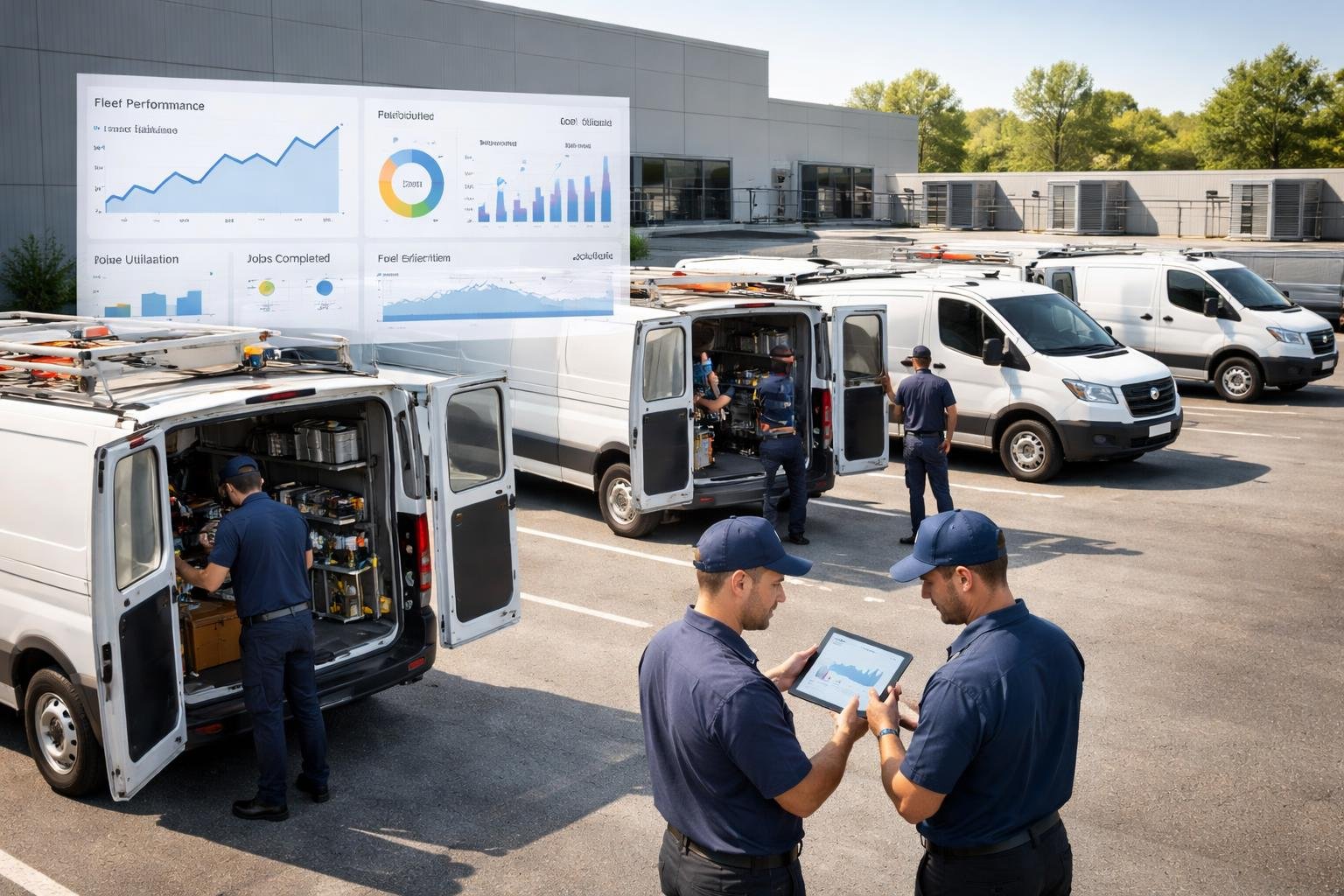
Several factors affect how well HVAC companies use their service vehicles. Work schedules, technician performance, and smart vehicle deployment all influence utilization rates.
Scheduling Efficiency
Good maintenance scheduling keeps vans from sitting idle and ensures technicians have steady work. Grouping service calls by area reduces travel time by 20-30%, allowing more appointments per shift.
Real-time scheduling fills gaps when appointments cancel or finish early.
Preventive maintenance should be done during off-peak hours to minimize downtime. Repairs during busy hours lower utilization rates.
Scheduling routine maintenance in the evenings or on specific days keeps vehicles available when demand is high.
Dispatchers who plan appointments based on technician skills and parts availability improve the chances of fixing problems on the first visit. This reduces the need for return trips that use up vehicle time without extra revenue.
Technician Productivity
Differences in technician efficiency can cause up to 30% variation in fuel use and service completion rates. Technicians who work quickly and carry the right parts make better use of each van.
Low productivity means vehicles spend more time parked at job sites.
Training that improves troubleshooting and parts identification helps technicians finish jobs faster. Mobile devices for real-time parts lookup and customer info also reduce time spent on paperwork during calls.
Vehicle Assignment and Routing
Assigning the right van to each job prevents using oversized vehicles for simple tasks or undersized vans for big projects. GPS route optimization can cut daily mileage by 15-25% compared to manual routing.
Dynamic routing that considers traffic, service windows, and emergencies improves vehicle utilization throughout the day.
Using dedicated vehicles for specialized services keeps equipment-heavy vans available for big jobs. Tracking utilization by vehicle type helps managers shift assets based on real demand.
Leveraging Technology to Optimize Utilization
Modern technology gives HVAC fleet managers real-time data and automated tools to improve vehicle and equipment utilization. These systems remove manual tracking and provide insights into fleet performance and efficiency.
Role of Telematics in Fleet Utilization
Telematics systems send data from vehicles to a central platform. Managers can monitor driver behavior, engine health, and equipment use.
These systems track idle time, harsh braking, rapid acceleration, and route following. All of these affect fuel costs and vehicle lifespan.
Telematics data helps managers spot underused vehicles and balance workloads. Companies using telematics often see a 10% or higher increase in vehicle utilization within 90 days.
Telematics also supports predictive maintenance by warning about mechanical issues before breakdowns happen. This reduces unplanned downtime and extends vehicle life.
GPS Fleet Tracking Capabilities
GPS fleet tracking shows the real-time location of every vehicle. Managers can see if vehicles are on the way to a job, parked, or off-route.
This technology gives accurate arrival times for customers. Dispatchers can quickly assign the nearest technician to urgent calls.
GPS tracking also detects unauthorized use, personal trips, and inefficient routes.
Key GPS tracking benefits include:
- Real-time location updates for all fleet vehicles
- Historical route playback for analysis
- Geofencing alerts when vehicles enter or leave certain areas
- Mileage verification for billing and tax reporting
Geofencing lets managers set virtual boundaries around service areas or company sites. The system sends alerts when vehicles cross these boundaries, helping with compliance and theft prevention.
Asset Tracking and Management Platforms
Asset tracking covers HVAC equipment, tools, refrigerant cylinders, and parts stored in service vehicles. These platforms use barcodes, RFID tags, or GPS devices to monitor asset location and status.
Managers can check which technician has certain equipment or if enough inventory is in field vehicles for scheduled jobs. This avoids delays from trips back to the warehouse.
Asset tracking reports show how often equipment is used versus sitting idle. This helps managers decide if they need to buy more assets or move existing inventory.
Fleet Management Software Solutions
Fleet management software brings together telematics, GPS, maintenance schedules, and fuel records. HVAC fleet management software often includes features like refrigerant tracking, EPA compliance, and integration with dispatch systems.
These platforms automate tasks like maintenance reminders, inspection schedules, and driver scorecards. The software reviews past patterns to improve route planning, reduce empty miles, and boost first-time fix rates.
Core software capabilities:
FeatureBusiness ImpactAutomated maintenance schedulingCuts vehicle downtime by 15-25%Route optimizationLowers fuel costs and increases daily service capacityDriver performance trackingImproves safety and lowers insurance costsCompliance managementEnsures DOT, EPA, and safety rule compliance
Advanced systems use AI analytics to spot utilization patterns and recommend actions like retiring old vehicles or changing service territories. Mobile apps give real-time fleet visibility to both field technicians and office staff.
Fleet Maintenance and Its Effect on Utilization
Regular maintenance affects how many hours HVAC vehicles are available each day. Good maintenance schedules and proactive service keep vehicles on the road.
Preventive Maintenance Schedules
A preventive maintenance schedule sets times for oil changes, brake checks, tire rotations, and other services based on mileage or time. HVAC fleets often schedule oil changes every 3,000 to 5,000 miles and full inspections every 6 months.
These schedules prevent breakdowns that take vehicles out of service during busy periods. Managers track each vehicle's maintenance history to spot trends and adjust intervals.
Common preventive maintenance intervals:
- Oil and filter changes: 3,000-5,000 miles
- Tire rotation: 5,000-7,500 miles
- Brake inspection: 10,000-15,000 miles
- Transmission service: 30,000-60,000 miles
Keeping up with maintenance also helps control maintenance costs by catching small problems early.
Maintenance Alerts and Notifications
Automated alerts tell managers when vehicles are due for maintenance or when problems appear. Alerts can be based on mileage, engine hours, or dates.
GPS systems send alerts for oil changes, inspections, and registration renewals. Managers get notifications by email or app, so they can plan service during quiet times.
Engine alerts warn about low tire pressure, battery issues, or check engine lights in real time. This quick notice helps prevent breakdowns.
Reducing Downtime Through Proactive Maintenance
Proactive maintenance keeps HVAC vehicles available for service calls. Managers use data to find parts that fail often and replace them before they break.
Scheduling maintenance during evenings or weekends keeps vehicles ready during business hours. Some fleets keep backup vehicles for use during maintenance.
Fleet management data shows which vehicles need frequent repairs. This helps managers know when to replace old vehicles that cause too much downtime.
Fleets using proactive maintenance often reduce downtime by 15-25% compared to waiting for breakdowns.
Cost Optimization and Performance Metrics
Tracking financial performance means measuring costs and expenses that affect profitability. Fleet managers review ownership costs, per-mile expenses, and asset value retention to find ways to lower overhead while keeping service quality high.
Total Cost of Ownership Analysis
Total cost of ownership includes all expenses related to acquiring, operating, and maintaining fleet vehicles over their lifecycle. This metric covers purchase price, financing, insurance, registration, fuel, maintenance, and eventual resale or disposal costs.
HVAC contractors should calculate TCO for each vehicle to find which assets offer the best value. Vehicles used more often spread fixed costs across more jobs, lowering the cost per service call.
Fleet managers can use TCO data to decide when to replace vehicles and choose specifications that reduce long-term expenses. Depreciation is a major part of ownership costs, often making up 20-30% of fleet expenses.
Regular maintenance and good vehicle care help keep value high and extend vehicle life. Tracking TCO each month helps managers spot cost trends early and adjust purchasing strategies.
Cost Per Mile and Operational Expenses
Cost per mile is calculated by dividing total operating expenses by miles driven. This metric lets managers compare fleet performance easily.
It includes fuel, maintenance, repairs, insurance, and depreciation for each mile. HVAC fleets often see operational costs take up about 30% of revenue.
To reduce cost per mile, managers should monitor fuel efficiency, limit idle time, and plan routes to avoid unnecessary trips. Establishing baseline metrics for each vehicle type helps track monthly changes.
Fuel costs can change quickly and need close attention. Using fuel cards with purchase controls and tracking each vehicle’s fuel use can reveal inefficient driving or mechanical issues.
Maintenance expenses should be tracked separately as preventive or corrective. Spending more on preventive care usually lowers total lifetime costs.
Improving Resale Value Through High Utilization
High utilization helps vehicles keep their value by keeping them active instead of letting them sit unused. Well-maintained vehicles with complete service records sell for higher prices in the used market.
Regular use keeps mechanical systems in good condition and avoids problems from long-term storage. HVAC vehicles that log steady service hours show reliability to buyers.
Standardized upfits and popular configurations also make resale easier. Fleet managers should record all maintenance and repairs to prove proper care.
Clean, well-maintained vehicles with 80,000-120,000 miles usually have better resale value than neglected low-mileage vehicles.
Ensuring Driver Safety and Accountability
Driver safety affects fleet utilization by reducing accidents, lowering downtime, and boosting technician productivity. Accountability measures and monitoring systems help HVAC companies keep fleet visibility and protect both staff and business operations.
Driver Behavior Monitoring
Real-time tracking gives managers insight into technician driving habits. These systems monitor speeding, hard braking, rapid acceleration, and other risky behaviors that raise accident risk and vehicle wear.
GPS-enabled telematics devices track specific metrics such as:
- Speed violations – when drivers exceed speed limits
- Harsh braking – sudden stops that may show distracted or aggressive driving
- Idle time – long periods of idling that waste fuel
- Route deviations – unauthorized stops or inefficient routes
Fleet managers can set up alerts for unsafe driving patterns. This data supports targeted coaching based on facts.
Regularly reviewing driving metrics helps identify technicians who need more training and those who practice safe driving. Companies using behavior monitoring often see safety improvements within 90 days.
Impact of Safety on Fleet Utilization
Vehicle accidents take service vans out of use for repairs, reducing fleet capacity. A single crash can sideline a vehicle for days or weeks.
Safe driving extends vehicle life by reducing wear on brakes, tires, and suspension. Technicians who avoid aggressive driving help lower maintenance costs per mile.
Insurance premiums drop when fleets show strong safety records. Insurers reward clean driving histories with lower rates, freeing up funds for fleet growth or upgrades.
Fewer accidents also mean fewer workers’ compensation claims and less paperwork. Technicians can focus on completing service calls instead of handling accident reports.
Policies for Technician Accountability
Written safety standards set clear expectations for vehicle use and maintenance. These policies should cover pre-trip inspections and safe driving behaviors.
Guidelines should also address mobile device use and how to report incidents. This helps ensure all drivers know what is expected.
Companies must have enforcement systems to apply consequences fairly. Progressive discipline often starts with verbal warnings for first offenses.
Repeat violations may result in written documentation. Serious infractions can lead to suspension of driving privileges.
Key policy components include:
- Daily vehicle inspections before starting routes
- Strict rules against distracted driving and substance use
- Required incident reporting within set timeframes
- Regular safety training with recorded attendance
Driver accountability improves when technicians know their performance is monitored. Clear communication about monitoring systems helps build trust and acceptance.