How to start saving money
Lorem ipsum dolor sit amet, consectetur adipiscing elit lobortis arcu enim urna adipiscing praesent velit viverra sit semper lorem eu cursus vel hendrerit elementum morbi curabitur etiam nibh justo, lorem aliquet donec sed sit mi dignissim at ante massa mattis.
- Neque sodales ut etiam sit amet nisl purus non tellus orci ac auctor
- Adipiscing elit ut aliquam purus sit amet viverra suspendisse potent
- Mauris commodo quis imperdiet massa tincidunt nunc pulvinar
- Excepteur sint occaecat cupidatat non proident sunt in culpa qui officia
Why it is important to start saving
Vitae congue eu consequat ac felis placerat vestibulum lectus mauris ultrices cursus sit amet dictum sit amet justo donec enim diam porttitor lacus luctus accumsan tortor posuere praesent tristique magna sit amet purus gravida quis blandit turpis.

How much money should I save?
At risus viverra adipiscing at in tellus integer feugiat nisl pretium fusce id velit ut tortor sagittis orci a scelerisque purus semper eget at lectus urna duis convallis. porta nibh venenatis cras sed felis eget neque laoreet suspendisse interdum consectetur libero id faucibus nisl donec pretium vulputate sapien nec sagittis aliquam nunc lobortis mattis aliquam faucibus purus in.
- Neque sodales ut etiam sit amet nisl purus non tellus orci ac auctor
- Adipiscing elit ut aliquam purus sit amet viverra suspendisse potenti
- Mauris commodo quis imperdiet massa tincidunt nunc pulvinar
- Adipiscing elit ut aliquam purus sit amet viverra suspendisse potenti
What percentege of my income should go to savings?
Nisi quis eleifend quam adipiscing vitae aliquet bibendum enim facilisis gravida neque. Velit euismod in pellentesque massa placerat volutpat lacus laoreet non curabitur gravida odio aenean sed adipiscing diam donec adipiscing tristique risus. amet est placerat in egestas erat imperdiet sed euismod nisi.
“Nisi quis eleifend quam adipiscing vitae aliquet bibendum enim facilisis gravida neque velit euismod in pellentesque”
Do you have any comments? Share them with us on social media
Eget lorem dolor sed viverra ipsum nunc aliquet bibendum felis donec et odio pellentesque diam volutpat commodo sed egestas aliquam sem fringilla ut morbi tincidunt augue interdum velit euismod eu tincidunt tortor aliquam nulla facilisi aenean sed adipiscing diam donec adipiscing ut lectus arcu bibendum at varius vel pharetra nibh venenatis cras sed felis eget.
HVAC contractors managing service fleets often struggle to see how their vehicles and technicians are performing. Scattered data on maintenance costs, fuel use, and productivity make it hard to spot problems.
Fleet reporting turns raw information from GPS systems, maintenance logs, and fuel records into clear insights. These insights help improve profitability and service quality.
Without structured reporting, businesses miss hidden inefficiencies that reduce their margins.
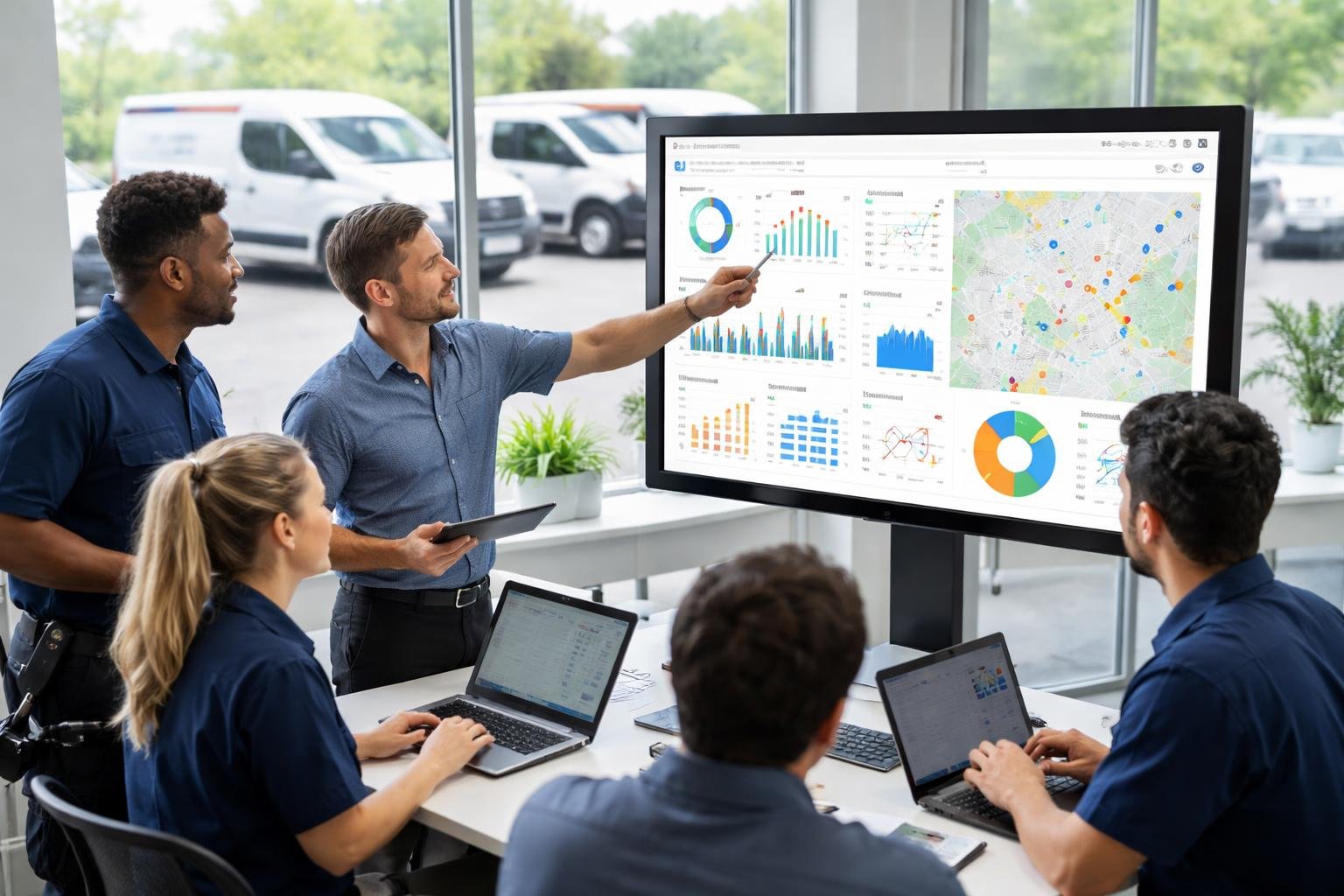
HVAC fleet reporting collects and analyzes data on vehicle location, maintenance, fuel use, and driver behavior. This helps contractors make better decisions about their mobile operations.
This reporting framework combines different data streams into clear information. It supports tasks like preventive maintenance scheduling and route planning.
Modern fleet reporting includes more than just tracking. It analyzes vehicle uptime, technician accountability, compliance records, and cost trends.
The following sections explain the key parts of fleet reporting, the technology behind it, and ways to use this data to improve efficiency and customer service.
What Is HVAC Fleet Reporting?
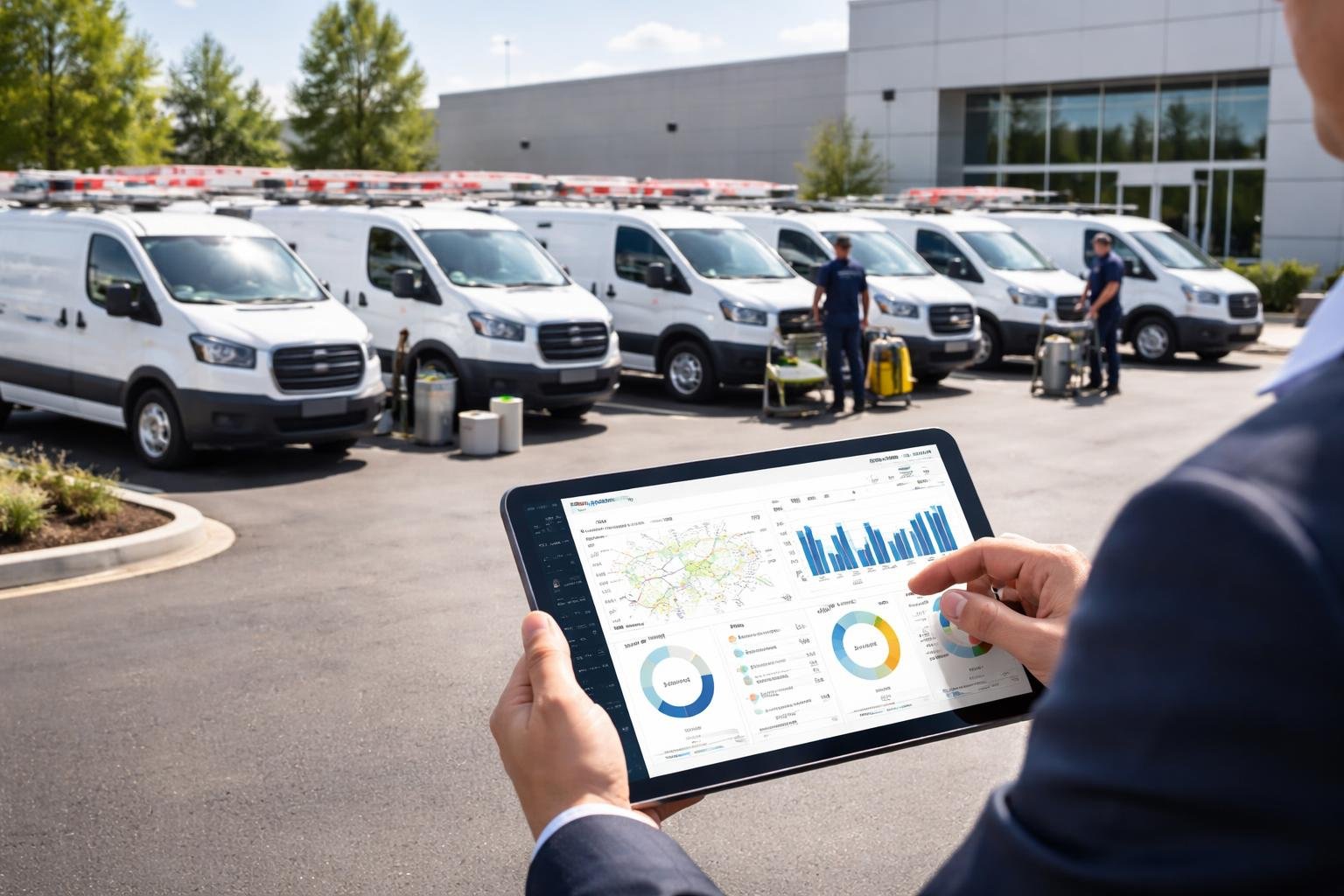
HVAC fleet reporting turns operational data into useful insights. Companies can track vehicle performance, technician productivity, and service efficiency.
These systems collect metrics from GPS devices, telematics, and maintenance software. This gives a complete view of fleet operations.
Definition and Importance
HVAC fleet reporting means collecting and analyzing data from service vehicles used in heating, ventilation, and air conditioning work. This includes tracking vehicle locations, fuel use, maintenance schedules, and service completion rates through specialized software.
The value of maintenance reporting goes beyond basic vehicle tracking. HVAC companies with comprehensive reporting systems can see hidden costs, like excessive idling, unauthorized vehicle use, and missed preventive maintenance.
Service fleets usually log between 12,000 and 15,000 miles per vehicle each year. Accurate reporting is essential for controlling these expenses.
Reporting platforms combine data from many sources into centralized dashboards. Fleet managers can access these dashboards in real time.
This visibility helps managers make faster decisions. It also makes it easier to find inefficiencies before they become expensive problems.
Key Metrics Captured
Vehicle Performance Data
- Mileage and odometer readings
- Fuel consumption and efficiency
- Engine diagnostics and fault codes
- Idle time and after-hours use
Maintenance Information
- Scheduled service intervals
- Repair history and costs
- Parts inventory and usage
- Vehicle downtime
Operational Metrics
- Route efficiency and drive time
- Technician productivity per vehicle
- Customer arrival times and service completion rates
- Cost per mile and total ownership cost
Modern HVAC fleet management platforms generate these metrics automatically. Fleet managers can customize reports for specific vehicles, time periods, or cost centers.
Reporting Standards in HVAC
HVAC fleet reporting follows industry standards designed for service operations. Service fleets need detailed tracking of technician activity at job sites, not just travel between locations.
Standard reports include daily vehicle inspection logs, monthly maintenance summaries, and quarterly cost breakdowns. Many companies set up automated reporting schedules to send key metrics to managers and stakeholders.
Compliance reporting covers safety regulations, emissions, and DOT requirements for commercial service vehicles. Automated reporting systems help HVAC companies stay compliant without manual record-keeping.
Core Components of HVAC Fleet Reporting
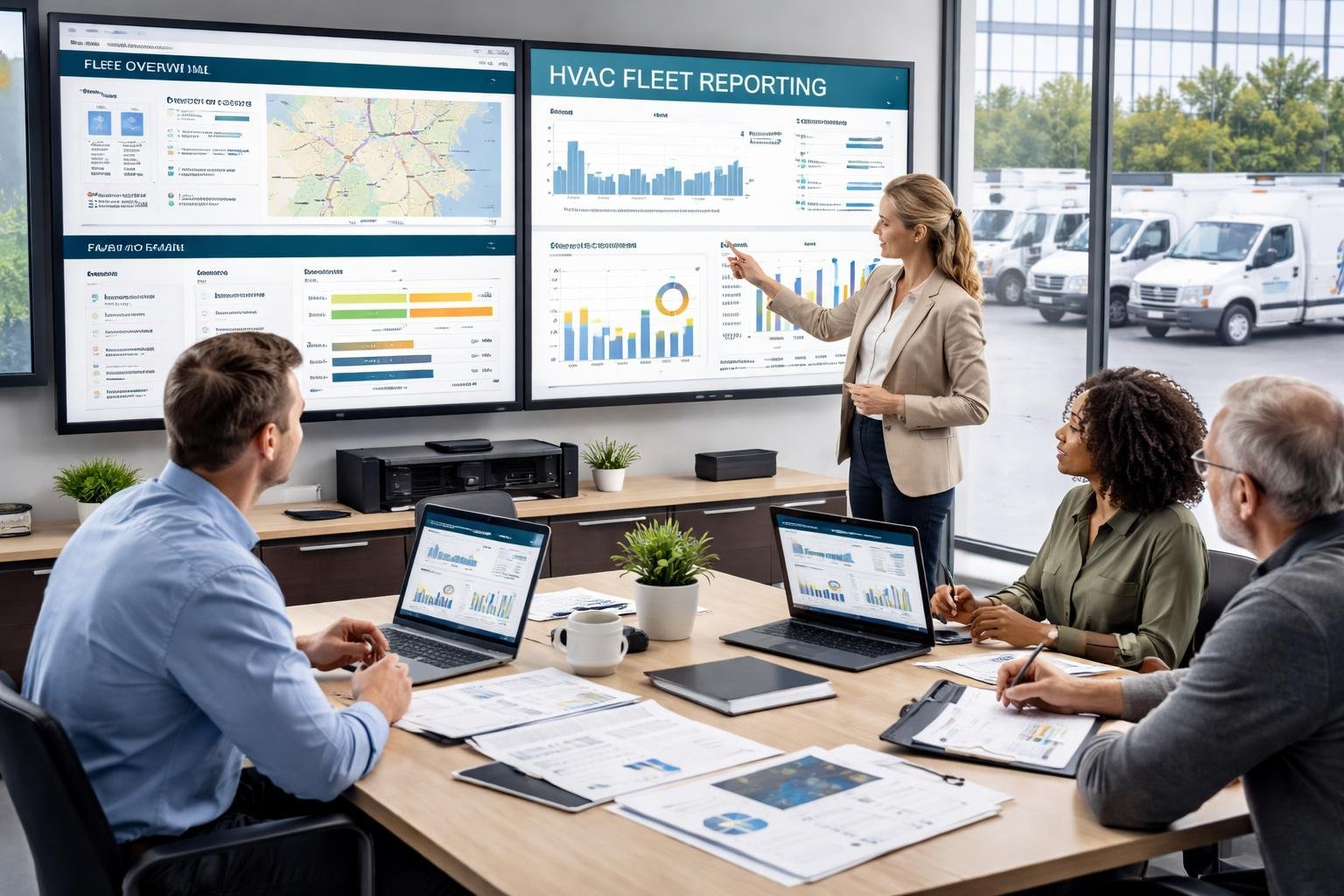
Effective HVAC fleet reporting depends on three main data streams. These streams help improve efficiency and control costs.
Fleet Maintenance Data
Fleet maintenance data is at the core of any reporting system for HVAC operations. It includes records of scheduled services, preventive maintenance, component replacements, and unexpected repairs.
Tracking maintenance history helps managers spot patterns in equipment failures and predict service needs. The data includes service dates, parts used, labor hours, and costs for each maintenance event.
Modern systems organize this information and alert managers before services become overdue. This reduces downtime and extends vehicle life.
Key maintenance metrics include:
- Preventive maintenance completion rate
- Mean time between failures
- Maintenance cost per mile
- Parts inventory turnover
- Vendor performance
Work Order and Service Call Tracking
Work orders and service calls provide important data on technician productivity and customer service. Each work order includes job location, time spent, parts used, and completion status.
Service call tracking links vehicle use to revenue-generating jobs. Managers can see which vehicles serve which customers, how fast they respond, and how many jobs each vehicle completes per day.
This part of reporting also tracks callbacks and warranty work. It helps identify recurring issues.
Accurate work order records support billing and provide documentation for customer disputes or warranty claims.
Vehicle Utilization Analysis
Vehicle utilization metrics show how well each asset is used. This includes tracking mileage, engine hours, idle time, and days in service versus days in the shop.
Knowing utilization rates helps managers decide if they have too many or too few vehicles. Vehicles with low use may mean overstaffing, while overused vehicles may show the need for more vehicles.
Utilization data also shows patterns in service demand and helps optimize vehicle deployment. Managers can spot vehicles that idle too much or travel without generating billable work.
Critical utilization indicators:
MetricPurposeMiles per vehicle per dayMeasures active useUtilization rate (%)Compares available hours to used hoursCost per mile operatedTracks total expensesRevenue per vehicleLinks use to profit
Technology and Tools in HVAC Fleet Reporting
Modern HVAC fleet reporting uses integrated technology platforms. These platforms combine GPS tracking, telematics data, and automated maintenance systems.
These tools turn raw data into insights that help control costs and improve service.
Fleet Management Software Solutions
Fleet management software acts as the central hub for HVAC operations. It brings together vehicle tracking, maintenance records, fuel use, and technician productivity in one place.
These systems create detailed reports on activity, costs, and performance metrics. They help inform business decisions.
HVAC fleet management software usually includes inventory tracking, work order management, and scheduling. Reporting features capture data on idle time, route efficiency, and vehicle utilization rates.
Managers can use real-time dashboards to see key performance indicators for the fleet.
Many platforms offer customizable reporting templates. Integration with other business systems like CRM and payroll gives a complete view of operations.
Integration with GPS and Telematics
GPS and telematics devices in HVAC vehicles send continuous data about location, speed, fuel use, and engine health. Real-time tracking helps dispatchers monitor technician locations and plan routes based on traffic and job priorities.
Telematics also collects data on driver behavior, such as harsh braking, rapid acceleration, and excessive idling. Managers use this information to identify training needs and cut fuel costs.
Asset tracking can include valuable equipment and tools carried by technicians.
Combining GPS tracking with telematics gives insight into both vehicle health and driver performance. Some systems also use dash cams to record incidents and add more context to reports.
Automated Maintenance Alerts
Maintenance software linked with fleet tracking monitors vehicle diagnostics and service schedules. The system sends alerts based on mileage, engine hours, or diagnostic codes.
Automated notifications help make sure preventive maintenance happens on time. Fleet managers get alerts for oil changes, tire rotations, and inspection deadlines.
The software tracks maintenance costs per vehicle and finds patterns that may signal recurring problems.
Maintenance alerts reduce paperwork by removing manual schedule tracking. Historical data helps forecast future service costs and plan vehicle replacements.
Optimizing Preventive and Predictive Maintenance Reporting
HVAC fleet reporting systems provide the data needed to manage scheduled maintenance tasks. They also help analyze equipment failures and control repair costs across fleets.
Effective reporting turns maintenance data into insights that reduce downtime and extend asset life.
Preventive Maintenance Schedule Compliance
Fleet managers use reports to track if scheduled maintenance tasks are completed on time. A preventive maintenance schedule sets intervals for filter changes, refrigerant checks, belt inspections, and electrical testing based on mileage, engine hours, or calendar days.
Reports show completion percentages by vehicle, technician, and service type. This helps managers see which units or technicians are falling behind.
Key metrics include:
- On-time completion rate (tasks finished within the scheduled window)
- Overdue maintenance count (services past their due date)
- Average delay time (days between scheduled and actual completion)
Digital systems send automatic alerts when maintenance windows are near or overdue. These notifications help prevent missed services and costly repairs.
Tracking Predictive Maintenance Events
Predictive maintenance uses sensor data and history to spot problems before they happen. HVAC fleet vehicles with IoT sensors monitor refrigerant pressure, compressor temperature, airflow, and electrical current in real time.
Reports collect sensor readings and flag unusual patterns. For example, a slow rise in compressor temperature can show bearing wear or refrigerant loss.
Fleet operators use these alerts to schedule repairs during planned downtime. The reporting system keeps a log of predictive alerts, inspections, and actions taken.
Critical data points include:
- Temperature changes from normal
- Pressure outside safe ranges
- Vibration patterns showing wear
- Higher energy use suggesting inefficiency
Root Cause Analysis for Failures
When equipment fails, detailed maintenance reports provide the history needed to find the real cause. Technicians look at past service records, parts replaced, and failure symptoms.
For example, repeated compressor failures may show a problem with refrigerant charging or contaminated system lines. Patterns across vehicles can reveal design flaws, supplier issues, or training gaps.
Documentation should include failure symptoms, conditions, operator notes, diagnostic codes, and corrective actions. This helps compare incidents and find common problems.
Root cause analysis helps stop repeated failures by fixing the main issue, not just the symptoms.
Maintenance Cost Control
Maintenance cost reporting breaks down expenses by vehicle, service category, parts, labor, and time period.
Fleet managers analyze spending patterns to identify cost drivers and optimization opportunities.
Reports compare planned preventive maintenance costs with unplanned repair expenses to show the financial impact of proactive service programs.
Fleets with strong preventive maintenance usually have lower overall maintenance costs, even if scheduled service spending is higher.
Cost CategoryTracked MetricsLaborTechnician hours, hourly rates, overtimePartsComponent costs, warranty claims, supplier pricingDowntimeRevenue loss, rental vehicle expensesExternal ServicesSubcontractor fees, emergency callouts
Variance analysis highlights vehicles with unusually high maintenance costs that may need replacement.
Trend reports show if costs increase steadily with vehicle age or spike due to major failures.
Budget forecasting uses past cost data and scheduled maintenance plans to estimate future expenses.
This planning helps with financial modeling and capital allocation.
Enhancing Accountability, Safety, and Compliance
Fleet reporting systems help HVAC companies track technician performance, monitor driving behaviors, and meet regulatory standards.
These tools address operational risks and create verifiable records for audits and compliance.
Technician and Driver Accountability
Fleet reporting platforms track technician movements, vehicle usage, and job completion times.
GPS data shows actual arrival and departure times at customer sites, removing discrepancies between reported and real service windows.
Digital reporting records tool inventory checks, vehicle inspections, and equipment usage by technician.
This data creates clear responsibility for company assets and helps spot patterns in equipment loss or damage.
Fleet managers can review records to evaluate technician reliability and identify training needs.
Key accountability metrics include:
- Vehicle location timestamps and route adherence
- Idle time and unauthorized stops
- Fuel card transactions matched to GPS coordinates
- Tool check-in/check-out records
- Service ticket completion rates
Driver Safety and Behavior Reporting
Driver behavior reports track speed, harsh braking, rapid acceleration, and cornering for each driver.
These metrics reveal risky driving habits that can lead to accidents and higher vehicle wear.
Integrated dash cameras capture video of driving events and incidents.
Footage syncs with GPS and vehicle data to create complete incident records.
Fleet managers get automated alerts for violations like speeding in school zones or not wearing seatbelts.
Safety scores across the fleet help managers recognize safe drivers and coach those at higher risk.
Driver safety reports provide objective data for disciplinary actions.
Compliance Documentation and Data Standards
HVAC fleet reporting creates documents needed for DOT regulations, environmental standards, and insurance audits.
Automated systems track vehicle inspection schedules, maintenance completion, and driver qualification updates.
Reports gather data on emissions, hazardous material handling, and hours-of-service compliance.
This documentation makes audits easier and reduces the risk of missing compliance deadlines.
Fleet data follows industry standards for retention and access.
Systems keep tamper-proof logs with timestamps and user authentication for all changes.
Export functions provide compliance reports in formats accepted by regulators and insurers.
Advanced Reporting Strategies for HVAC Fleets
Advanced reporting turns fleet data into actionable insights for operational improvements and cost savings.
Strategic analysis of efficiency metrics, location data, and real-time trends helps HVAC companies optimize resources and service delivery.
Fleet Efficiency and Productivity Analytics
Fleet efficiency reports show vehicle utilization, fuel use, and technician performance.
Metrics include miles driven per job, idle time, and service calls completed per vehicle per day.
Key efficiency metrics include:
- Vehicle utilization rates and productive time
- Fuel consumption and cost per mile
- Maintenance costs as a percentage of fleet budget
- Average response times from dispatch to arrival
Productivity analytics highlight which technicians complete the most jobs, have the highest customer satisfaction, and minimize travel time.
Reports by vehicle type, route, or service area reveal ways to improve productivity through better resource allocation.
Tracking downtime from maintenance or repairs helps managers schedule preventive services during slow periods.
This strategy can reduce downtime by 15-25% compared to reactive maintenance.
Utilizing Asset and Geofencing Data
Asset tracking provides real-time location data for all vehicles and valuable equipment.
This visibility lets dispatchers assign the nearest technician to urgent calls and give customers accurate ETAs.
Geofencing sets virtual boundaries around service areas, customer sites, and company facilities.
Reports from geofencing show when vehicles enter or leave zones, revealing route deviations and unauthorized stops.
Asset and geofencing reports monitor:
- Real-time vehicle locations and movement history
- Equipment inventory across job sites
- Arrival and departure times at customer locations
- Time spent in service zones
Combining asset tracking with job data highlights inefficient routes and excessive travel.
Fleet managers use this information to adjust service territories and balance workloads.
Geofencing alerts notify supervisors right away when vehicles leave planned routes, allowing quick action to resolve issues.
Real-Time Operational Trends and Actionable Insights
Real-time reporting platforms show the current fleet status and active jobs as they happen. They also highlight emerging issues as they occur.
Dashboards bring together data from GPS systems, maintenance logs, and service records. This unified view supports quick decision-making.
Trend analysis finds patterns in vehicle performance and seasonal demand changes. It also identifies recurring maintenance issues.
Reports compare current metrics to past benchmarks. This shows if operational changes are making a difference.
Real-time insights enable:
- Immediate reassignment of jobs when technicians face delays
- Proactive maintenance scheduling based on how vehicles are used
- Identification of training needs through performance comparisons
- Dynamic route optimization as traffic conditions change
Automated alerts notify managers when vehicles go over set limits for idle time, harsh braking, or maintenance intervals. These alerts help stop small issues from becoming bigger problems.
Reporting data can be integrated with dispatch systems. This allows for ongoing optimization of technician schedules and routes throughout the day.