Construction Fleet Cost Reduction: Proven Strategies to Lower Operating Expenses in 2026
How to start saving money
Lorem ipsum dolor sit amet, consectetur adipiscing elit lobortis arcu enim urna adipiscing praesent velit viverra sit semper lorem eu cursus vel hendrerit elementum morbi curabitur etiam nibh justo, lorem aliquet donec sed sit mi dignissim at ante massa mattis.
- Neque sodales ut etiam sit amet nisl purus non tellus orci ac auctor
- Adipiscing elit ut aliquam purus sit amet viverra suspendisse potent
- Mauris commodo quis imperdiet massa tincidunt nunc pulvinar
- Excepteur sint occaecat cupidatat non proident sunt in culpa qui officia
Why it is important to start saving
Vitae congue eu consequat ac felis placerat vestibulum lectus mauris ultrices cursus sit amet dictum sit amet justo donec enim diam porttitor lacus luctus accumsan tortor posuere praesent tristique magna sit amet purus gravida quis blandit turpis.

How much money should I save?
At risus viverra adipiscing at in tellus integer feugiat nisl pretium fusce id velit ut tortor sagittis orci a scelerisque purus semper eget at lectus urna duis convallis. porta nibh venenatis cras sed felis eget neque laoreet suspendisse interdum consectetur libero id faucibus nisl donec pretium vulputate sapien nec sagittis aliquam nunc lobortis mattis aliquam faucibus purus in.
- Neque sodales ut etiam sit amet nisl purus non tellus orci ac auctor
- Adipiscing elit ut aliquam purus sit amet viverra suspendisse potenti
- Mauris commodo quis imperdiet massa tincidunt nunc pulvinar
- Adipiscing elit ut aliquam purus sit amet viverra suspendisse potenti
What percentege of my income should go to savings?
Nisi quis eleifend quam adipiscing vitae aliquet bibendum enim facilisis gravida neque. Velit euismod in pellentesque massa placerat volutpat lacus laoreet non curabitur gravida odio aenean sed adipiscing diam donec adipiscing tristique risus. amet est placerat in egestas erat imperdiet sed euismod nisi.
“Nisi quis eleifend quam adipiscing vitae aliquet bibendum enim facilisis gravida neque velit euismod in pellentesque”
Do you have any comments? Share them with us on social media
Eget lorem dolor sed viverra ipsum nunc aliquet bibendum felis donec et odio pellentesque diam volutpat commodo sed egestas aliquam sem fringilla ut morbi tincidunt augue interdum velit euismod eu tincidunt tortor aliquam nulla facilisi aenean sed adipiscing diam donec adipiscing ut lectus arcu bibendum at varius vel pharetra nibh venenatis cras sed felis eget.
Construction fleet costs can consume 30% or more of total project operating expenses. This makes cost reduction a top priority for contractors and project managers.
Rising fuel prices, frequent equipment repairs, and inefficient asset use put pressure on project budgets. These challenges impact profitability for projects of all sizes.

Effective fleet cost reduction requires a systematic approach that addresses main expense drivers: fuel consumption, maintenance practices, equipment use, and operator behavior. Companies that use structured cost management strategies often achieve measurable savings while keeping projects on track.
This article covers proven ways to reduce construction fleet expenses through planning and operational improvements. Strategies include fuel management, preventive maintenance, telematics, and performance measurement systems.
Understanding Key Construction Fleet Cost Drivers

Construction fleet expenses fall into four main categories: fuel consumption, maintenance and downtime, labor and operational expenses, and asset depreciation. Each area needs attention to control spending and improve fleet profitability.
Fuel Expenses and Impacts
Fuel is one of the biggest variable costs in construction fleet operations, often making up 30-40% of total expenses. Heavy equipment and trucks use much more fuel than standard vehicles.
For example, excavators use 5-15 gallons per hour. Large haul trucks may get only 6-8 miles per gallon when loaded.
Idling can waste thousands of dollars per vehicle each year. If one machine idles for two hours daily, it can use 1-2 gallons per hour, costing $2,000-$4,000 per year at current diesel prices.
Route planning and job site logistics affect fuel use. Poor planning leads to more trips, longer distances, and higher fuel costs.
Maintenance Costs and Downtime
Maintenance costs include more than just parts and labor. Equipment downtime also adds hidden expenses.
Scheduled maintenance is usually 60-70% cheaper than emergency repairs. However, many fleets still wait for breakdowns before fixing issues.
Unplanned downtime is costly. A critical equipment breakdown during a project can mean lost productivity, delays, rental fees, and even contract penalties.
A single excavator breakdown can cost $500-$1,500 per day in lost productivity.
Managing parts inventory helps lower maintenance costs. Keeping common parts on hand can reduce downtime from days to hours. Emergency parts orders are often much more expensive.
Older equipment needs more maintenance. Machines older than 5-7 years may require 40-50% more maintenance than newer ones.
Labor and Operational Expenses
Operator wages are a significant fleet cost. Inefficient practices can increase these expenses.
Poor route planning, lack of training, and underused equipment lower the return on labor investment.
Driver behavior affects costs. Aggressive driving and hard braking use 15-30% more fuel and wear out parts faster.
Administrative tasks like dispatching, compliance, and reporting take up 10-15 hours weekly for fleets of 20-30 vehicles. This can add up to $30,000-$45,000 in annual labor costs.
Depreciation and Asset Lifecycle
Depreciation affects the total cost of ownership, even though it does not require immediate spending. Construction equipment typically loses 15-25% of its value in the first year and 10-15% each year after.
Knowing the asset lifecycle helps with replacement timing. Keeping equipment too long raises maintenance costs, while replacing it too early wastes value.
Most construction vehicles are most cost-effective between years 3-6 of use.
Maintaining good records and timely repairs helps preserve resale value. Well-maintained equipment can be worth 20-30% more at sale.
Equipment used beyond recommended hours loses value faster.
Fleet Management Strategies for Cost Reduction
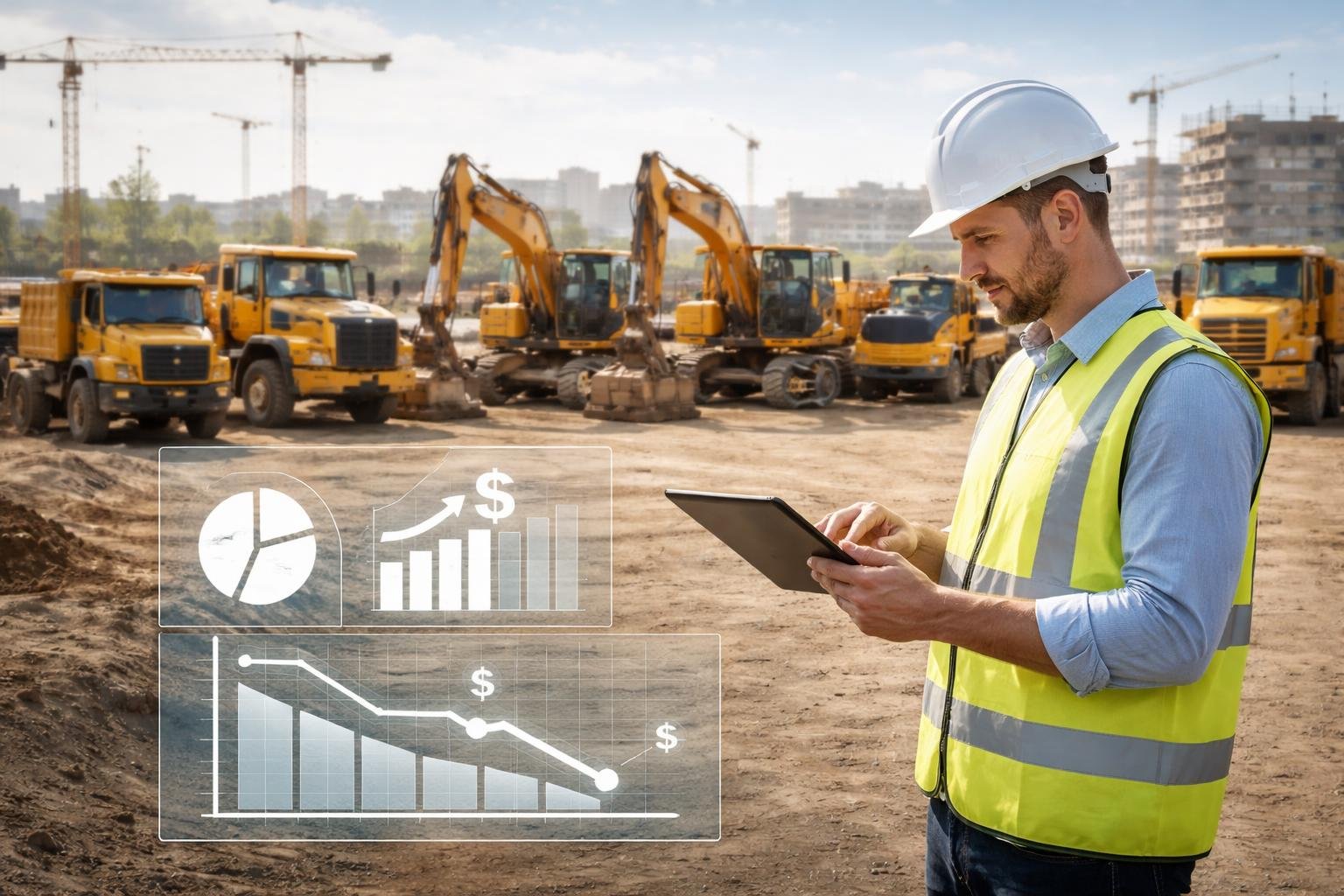
Effective fleet management focuses on three key areas: having the right number of assets, planning for their full lifespan, and getting the most use from each one. These strategies help eliminate waste and control costs.
Fleet Right-Sizing and Utilization
Right-sizing means matching the number and type of vehicles to actual needs. Many companies keep extra equipment that adds insurance, storage, and depreciation costs without adding value.
Utilization reports show which assets are underused. These reports track hours operated, idle time, and days in service.
Equipment used less than 60% of the time may be a candidate for sale or redeployment.
Fleet management software can generate utilization reports and flag idle equipment. Reviewing this data each month helps companies decide what to keep or sell.
The goal is a lean fleet where every asset is productive.
Lifecycle Planning and Predictable Budgeting
Lifecycle planning covers each asset from purchase to disposal. This replaces last-minute buying with strategic decisions based on age, condition, and cost.
With lifecycle planning, companies can budget for replacements in advance. This avoids surprise expenses and helps align purchases with project schedules.
Heavy equipment often reaches peak cost efficiency between years five and seven. Replacing equipment before maintenance costs rise helps prevent unexpected downtime.
Equipment Utilization Optimization
Optimizing asset use means getting the most work from existing equipment. This involves sharing equipment across sites, reducing idle time, and sending the right machine to the right place.
GPS tracking and telematics show real-time equipment location and status. Managers can quickly find idle assets and avoid unnecessary rentals.
Centralized data makes cross-project scheduling easier. Sharing equipment between projects raises utilization rates without extra investment.
A concrete pump idle at one site can be moved to another where it’s needed. This coordination improves overall fleet efficiency.
Fuel Management and Efficiency Solutions
Fuel can make up 30-40% of total fleet operating costs in construction. Digital monitoring, driver training, and smart equipment choices can cut these costs by 15-30% and extend vehicle life.
Fuel Management Systems and Monitoring
Modern fuel management systems provide real-time tracking of fuel use across the fleet. These systems monitor fuel purchases, calculate miles per gallon, and detect issues like theft or mechanical problems.
Digital tracking connects with telematics to give detailed fuel data. Managers can spot inefficient vehicles and find out why.
GPS-enabled fuel monitoring links consumption to specific job sites and routes.
Key metrics include:
- Fuel economy by vehicle and operator
- Cost per mile or hour
- Fuel purchases and reconciliation
- Unauthorized fueling events
Using these systems often cuts fuel costs by 10-15% in the first year. The data helps with decisions on vehicle replacement and maintenance.
Fuel-Efficient Driving and Driver Training
Driver habits have a big effect on fuel use. Aggressive driving and long idling can raise costs by up to 25%.
Training teaches operators to accelerate smoothly, keep steady speeds, and avoid unnecessary braking. Operators also learn when to power down equipment.
Many fleets reward drivers who improve fuel efficiency.
Telematics track driver performance and help with coaching. Ongoing training keeps habits sharp and savings consistent.
Alternative Fuels and Innovations
Biodiesel, renewable diesel, and electric powertrains offer ways to cut fuel costs and emissions. Renewable diesel can often be used in current equipment.
Electric equipment is useful for indoor or noise-sensitive projects. Battery-powered machines eliminate fuel costs for certain tasks.
Hybrid trucks save fuel in stop-and-go traffic. Fleets weigh alternative fuels by total cost, equipment fit, and local availability.
Some regions offer tax breaks or grants for cleaner fuel technologies.
Idle Time Minimization
Construction equipment often idles between tasks, wasting fuel. One hour of idling can use up to two gallons of fuel.
Automated idle shutdown systems turn off engines after set periods. Fleet policies set maximum idle times for each equipment type.
Real-time monitoring alerts supervisors when idle limits are exceeded.
Operators are trained to know when idling is needed and when to shut down. In most cases, engines can be turned off safely.
Cutting idle time by just five minutes per hour per vehicle can save a large fleet thousands each year.
Maintenance Optimization for Fleet Cost Savings
Structured maintenance can lower fleet operating costs by 20-30%. Preventive schedules, predictive tech, and detailed maintenance history tracking all help save money and reduce breakdowns.
Preventive Maintenance Programs
A preventive maintenance program sets fixed service intervals based on hours, mileage, or dates. This helps address wear before failures happen.
Fleets using preventive maintenance see 40-50% fewer emergency repairs than those using a reactive approach.
Programs include oil and filter changes, fluid checks, brake inspections, and tire rotations at recommended intervals. Managers should use standardized checklists for daily, weekly, and monthly inspections.
Key preventive maintenance components:
- Engine oil changes every 250-500 operating hours
- Hydraulic system checks every 100 hours
- Air filter changes based on conditions
- Coolant flushes seasonally
- Transmission service every 1,000-2,000 hours
Synthetic lubricants can extend service intervals by 50-100%, reducing labor and downtime. Although they cost more upfront, they often save $500-1,200 per vehicle each year through longer intervals and less wear.
Predictive Maintenance Applications
Predictive maintenance uses real-time data from sensors and telematics to identify problems before components fail. This approach focuses on actual equipment condition, preventing both premature service and unexpected breakdowns.
Telematics systems monitor engine performance, fluid temperatures, diagnostic trouble codes, and operating parameters. Fleet managers receive alerts when measurements exceed normal ranges, allowing targeted maintenance.
Vibration analysis detects bearing wear, alignment issues, and component imbalances in rotating equipment. Oil analysis reveals contamination, wear metals, and additive depletion that indicate internal engine or hydraulic system degradation before visible symptoms appear.
Construction fleets using predictive maintenance reduce maintenance costs by 15-25%. Equipment availability increases by 10-20% because the technology identifies specific components requiring attention.
Maintenance Scheduling and History
Maintenance scheduling coordinates service activities to minimize operational disruption. Digital fleet management systems automate scheduling based on usage data, eliminating manual tracking and missed services.
Centralized scheduling allows maintenance teams to batch similar tasks, order parts in advance, and allocate labor efficiently. Fleet managers schedule heavy maintenance during low-demand periods and coordinate multiple services during single downtime events.
Maintenance history documentation records all service activities, parts replaced, and costs incurred for each vehicle. This data identifies problematic units and supports resale value by demonstrating proper care.
Complete maintenance records enable analysis of total cost of ownership across equipment types, manufacturers, and model years. Fleet managers use this information to make decisions about vehicle replacement timing and maintenance strategy adjustments.
Leveraging Telematics and Real-Time Data for Operational Efficiency
Telematics systems combine GPS tracking with wireless communication to provide insights about fleet operations, equipment utilization, and driver performance. Construction companies using these technologies achieve cost reductions through improved fuel efficiency, reduced idle time, and better resource allocation.
Telematics for Driver Behavior and Fleet Monitoring
Telematics captures specific driver behaviors that impact operational costs. The technology records hard braking, rapid acceleration, excessive idling, and speeding incidents in real time.
Fleet managers receive immediate alerts when drivers exceed preset parameters. This enables prompt intervention and coaching.
Companies that implement driver behavior monitoring often see fuel consumption decrease by 10-15% within the first year. The data also supports safety improvements.
Insurance providers may reduce premiums for fleets that demonstrate safe driving practices through telematics records. Some construction firms report insurance cost reductions of 5-10% after establishing documented driver monitoring programs.
Telematics devices track unauthorized equipment use and after-hours operation. This visibility helps prevent theft and ensures operators follow assigned schedules and routes.
Data-Driven Decision-Making and Performance Metrics
Real-time data transforms fleet management from reactive to proactive. Performance metrics tracked through telematics include equipment utilization rates, fuel consumption per hour, maintenance intervals, and idle time percentages.
Construction managers use these metrics to identify underutilized equipment and redistribute assets across job sites. Only 40% of fleet managers actively use telematics data for operational decisions, representing an opportunity for improvement.
Key performance indicators to monitor include:
- Equipment utilization rate: Time machinery operates productively versus sitting idle
- Fuel efficiency: Gallons consumed per operating hour or per task
- Maintenance compliance: Adherence to scheduled service intervals
- Job site productivity: Time spent on active work versus transit or downtime
A mid-sized contractor reduced idle time by 40 hours weekly through data analysis, saving $12,000 in annual fuel costs. These outcomes show how performance metrics enable targeted improvements.
Real-Time Tracking and Monitoring
Real-time monitoring provides immediate visibility into fleet location, operational status, and equipment health. Managers access dashboard displays showing which machines are running, idle, or offline across job sites.
GPS tracking eliminates guesswork about equipment availability. Managers can quickly locate the nearest available unit instead of renting external equipment, reducing rental and transportation costs.
Geofencing creates virtual boundaries around job sites. The system sends automatic notifications when equipment enters or exits designated areas, preventing unauthorized movement and theft.
Real-time data enables predictive maintenance scheduling. Sensors monitor engine hours, fluid levels, and component wear. When parameters indicate upcoming service needs, managers schedule maintenance during planned downtime.
Advanced Cost Reduction Strategies and Implementation
Technology-driven solutions can reduce fleet operational costs by 20-30% while improving equipment availability and project delivery. These approaches require systematic planning and coordination between fleet managers, project supervisors, and field personnel.
Route Planning and Optimization
Route optimization software analyzes variables like traffic patterns, fuel consumption, delivery windows, and equipment specifications. Modern GPS-enabled systems provide real-time route adjustments based on road closures, weather, and job site access.
Fleet managers can reduce fuel costs by 15-25% through systematic route planning. The software calculates optimal departure times, considers vehicle capacity, and sequences stops to reduce travel distance.
Key optimization factors include:
- Vehicle payload capacity and weight restrictions
- Time-sensitive deliveries and concrete set times
- Equipment hauling regulations and permit requirements
- Site accessibility and staging area locations
Integration with telematics systems enables managers to monitor driver adherence to planned routes and identify improvement opportunities.
Scheduling Software and Resource Deployment
Construction scheduling platforms coordinate equipment deployment across job sites to maximize resource utilization. These systems track real-time equipment availability, maintenance windows, and project timelines to prevent scheduling conflicts and reduce idle time.
Automated scheduling reduces downtime by 18-23% compared to manual methods. The software accounts for mobilization times, operator availability, and task sequences when allocating machinery.
Resource utilization improves when fleet managers can visualize equipment demand patterns across all operations. Digital tools provide data on historical usage rates, enabling more accurate forecasting for future needs and fleet sizing.
Asset Management and Downtime Reduction
Asset management systems track each piece of equipment through its lifecycle, monitoring utilization, maintenance history, repair costs, and depreciation. These platforms generate automated alerts for scheduled maintenance, license renewals, and inspections.
Equipment downtime decreases by 30-40% when organizations implement predictive maintenance protocols based on actual usage hours and sensor data. This approach prevents unnecessary service and catches potential failures before they cause breakdowns.
Fleet managers establish minimum acceptable utilization thresholds (typically 65-75% for heavy equipment) to identify underperforming assets. Digital dashboards display real-time metrics on equipment location, status, and productivity.
Measuring, Reporting, and Sustaining Fleet Cost Reduction
Effective cost reduction strategies require continuous measurement and structured accountability. Transparent data tracking and standardized workflows help fleet managers identify cost drivers and sustain improvements.
Cost Dashboards and Budget Alerts
Cost dashboards centralize financial and operational data into a single interface. These systems provide real-time visibility into spending patterns across assets and the entire fleet.
Budget alerts notify managers when expenditures approach or exceed predefined thresholds. This early warning system enables immediate intervention before minor variances escalate.
Essential dashboard metrics include:
- Daily fuel costs per equipment type
- Maintenance expenses by preventive versus reactive repairs
- Utilization rates showing idle time and productive hours
- Cost per operating hour for each asset
Modern fleet management software integrates these data points and generates automated reports. This cost transparency allows managers to compare actual performance against projections and adjust operations as needed.
Continuous Improvement and Review
Regular performance reviews identify emerging cost trends and evaluate the effectiveness of reduction strategies. Monthly analysis sessions should examine variance reports, comparing current spending against historical baselines and industry benchmarks.
Quarterly strategic reviews assess broader patterns across the asset lifecycle. These sessions evaluate whether maintenance strategies are reducing total cost of ownership or if adjustments are needed.
Documentation of lessons learned creates institutional knowledge that prevents repeated mistakes. Standardizing successful cost reduction initiatives across similar equipment maximizes impact.
Benchmarking against comparable fleets provides external validation of performance levels. Construction companies often achieve 15-25% cost reductions when they systematically apply continuous improvement methodologies to fleet operations.
Standardized Workflows and Accountability
Standardized workflows create consistent processes for fuel purchases, maintenance scheduling, and equipment deployment. Written procedures help remove inefficiencies and reduce unnecessary costs.
Assigning accountability for specific cost categories encourages individuals to manage budgets carefully. One person should monitor fuel efficiency, another should handle parts procurement, and another should ensure preventive maintenance is completed.
Key accountability measures:
Responsibility AreaOwnerPerformance MetricFuel managementOperations supervisorCost per gallon, fuel efficiencyPreventive maintenanceMaintenance managerPM completion rate, downtime hoursParts procurementFleet administratorParts cost variance, inventory turnover
Regular training helps team members understand these standards. This keeps everyone focused on cost reduction and budget management as the team changes or grows.