How to start saving money
Lorem ipsum dolor sit amet, consectetur adipiscing elit lobortis arcu enim urna adipiscing praesent velit viverra sit semper lorem eu cursus vel hendrerit elementum morbi curabitur etiam nibh justo, lorem aliquet donec sed sit mi dignissim at ante massa mattis.
- Neque sodales ut etiam sit amet nisl purus non tellus orci ac auctor
- Adipiscing elit ut aliquam purus sit amet viverra suspendisse potent
- Mauris commodo quis imperdiet massa tincidunt nunc pulvinar
- Excepteur sint occaecat cupidatat non proident sunt in culpa qui officia
Why it is important to start saving
Vitae congue eu consequat ac felis placerat vestibulum lectus mauris ultrices cursus sit amet dictum sit amet justo donec enim diam porttitor lacus luctus accumsan tortor posuere praesent tristique magna sit amet purus gravida quis blandit turpis.

How much money should I save?
At risus viverra adipiscing at in tellus integer feugiat nisl pretium fusce id velit ut tortor sagittis orci a scelerisque purus semper eget at lectus urna duis convallis. porta nibh venenatis cras sed felis eget neque laoreet suspendisse interdum consectetur libero id faucibus nisl donec pretium vulputate sapien nec sagittis aliquam nunc lobortis mattis aliquam faucibus purus in.
- Neque sodales ut etiam sit amet nisl purus non tellus orci ac auctor
- Adipiscing elit ut aliquam purus sit amet viverra suspendisse potenti
- Mauris commodo quis imperdiet massa tincidunt nunc pulvinar
- Adipiscing elit ut aliquam purus sit amet viverra suspendisse potenti
What percentege of my income should go to savings?
Nisi quis eleifend quam adipiscing vitae aliquet bibendum enim facilisis gravida neque. Velit euismod in pellentesque massa placerat volutpat lacus laoreet non curabitur gravida odio aenean sed adipiscing diam donec adipiscing tristique risus. amet est placerat in egestas erat imperdiet sed euismod nisi.
“Nisi quis eleifend quam adipiscing vitae aliquet bibendum enim facilisis gravida neque velit euismod in pellentesque”
Do you have any comments? Share them with us on social media
Eget lorem dolor sed viverra ipsum nunc aliquet bibendum felis donec et odio pellentesque diam volutpat commodo sed egestas aliquam sem fringilla ut morbi tincidunt augue interdum velit euismod eu tincidunt tortor aliquam nulla facilisi aenean sed adipiscing diam donec adipiscing ut lectus arcu bibendum at varius vel pharetra nibh venenatis cras sed felis eget.
Vehicle mileage tracking is the systematic recording of miles driven for business purposes to support tax deductions, reimbursements, and operational management. For business owners and fleet managers, this practice directly affects the bottom line. The IRS standard mileage rate sits at 72.5 cents per mile for 2026, up from 70 cents in 2025. Every unrecorded business mile is a missed deduction. Beyond taxes, consistent mileage documentation reduces audit exposure, supports fair employee reimbursements, and gives fleet managers the data they need to control costs and plan routes effectively.
What are the primary benefits of tracking vehicle mileage?
Mileage tracking delivers four concrete advantages: tax savings, tax-free reimbursements, operational insight, and audit protection. Each one compounds the others when records are maintained consistently.
Tax savings through the IRS standard mileage rate
The IRS standard mileage rate converts every logged business mile into a direct reduction of taxable income. At 72.5 cents per mile in 2026, a driver who logs 20,000 business miles annually generates a $14,500 deduction. That number disappears entirely without a compliant mileage log. Business owners who treat mileage records with the same discipline as bookkeeping capture deductions that would otherwise be lost.
Tax-free reimbursements under accountable plans
Employers who reimburse employees for business driving must operate under an IRS accountable plan to keep those payments tax-free. Mileage tracking is foundational not just for deductions but as a risk management tool supporting legally compliant reimbursements. Without documented mileage, reimbursements become taxable compensation for the employee and a payroll liability for the employer.
Operational visibility and cost control
Accurate mileage data reveals how vehicles are actually being used. Fleet managers can identify underutilized vehicles, spot drivers with unusually high mileage, and build realistic fuel budgets. Digital tracking tools give fleet managers operational insights and reduce reimbursement disputes. That visibility converts raw mileage numbers into decisions about scheduling, vehicle rotation, and maintenance timing.

Pro Tip: Set a monthly mileage review on your calendar. Reviewing totals by vehicle and driver each month catches anomalies before they become budget problems.
Audit risk reduction
About 70% of disallowed mileage deductions result from inadequate, non-contemporaneous, or missing records. That statistic means poor documentation is the single largest driver of audit adjustments in this category. A complete, consistently maintained log is the most effective defense against disallowance.
How does the IRS require mileage to be tracked for compliance?
The IRS sets specific requirements for mileage substantiation. Meeting them is not optional if you intend to claim a deduction or operate a compliant reimbursement plan.
Required log components
The IRS requires a contemporaneous mileage log that includes five elements for every trip:
- Date of the trip
- Starting location and destination
- Business purpose of the trip
- Miles driven
- Total odometer reading at the start and end of the year
Each element serves a specific verification function. The business purpose entry is the one most often missing from manual logs, and its absence is a common trigger for disallowance.
Contemporaneous recording vs. reconstructed logs
“Contemporaneous” means recorded at or near the time of the trip, not compiled weeks later from memory. IRS audits often disallow deductions when logs appear reconstructed, such as entries written in uniform ink or submitted with batch timestamps. Reconstructed logs signal to auditors that the records are estimates rather than facts. The safest practice is recording each trip the same day it occurs.
Commuting miles are not deductible
Commuting miles between home and a primary workplace are excluded from deductible business mileage. This is the most common audit adjustment for fleet vehicles used predominantly for business. A driver who travels from home to the office and then to a client site can only deduct the office-to-client leg. Fleet managers must build this distinction into their tracking policy and communicate it clearly to drivers.
The limits of odometer readings
Annual odometer readings provide a verification baseline but do not meet IRS substantiation requirements on their own. An odometer reading tells the IRS how far a vehicle traveled in total. It does not explain which miles were for business, which were personal, and which were commuting. Trip-level logs with destination and business purpose are required to fill that gap.
Pro Tip: Back up digital mileage logs at year-end. Cloud-based backups protect against device loss and give you a clean audit trail if records are requested years later.
What are the most effective methods for tracking vehicle mileage?
Three main approaches exist: manual logbooks, digital apps, and GPS-automated tracking. Each has a distinct profile of accuracy, effort, and audit defensibility.
Manual logbooks
Paper logs are low-cost and require no technology. The drawbacks are significant. Manual logs depend entirely on driver discipline. A missed entry cannot be reconstructed accurately. Entries written in bulk at the end of the week are exactly the kind of records that raise IRS red flags. For fleets with more than a handful of vehicles, manual logs create an administrative burden that grows with every driver added.
Digital apps with GPS automation
GPS-based mileage tracking apps provide timestamped, objective trip data that satisfy IRS audit requirements more reliably than manual logs. The app detects trip start and end automatically, records the route, and stores the data with a timestamp. The driver adds the business purpose, and the record is complete. This approach removes the single largest source of manual log failure: forgetting to record a trip.
Automated GPS tracking also benefits service businesses that rely on contemporaneous mileage records to document client visits and reduce audit exposure. The timestamp on each trip entry is objective evidence that the record was created in real time.
Comparing the three approaches
| Method | Accuracy | Audit defensibility | Administrative effort |
|---|---|---|---|
| Paper logbook | Low | Low | High |
| Manual digital entry | Medium | Medium | Medium |
| GPS-automated app | High | High | Low |
GPS automation wins on every dimension that matters for compliance and efficiency. The only meaningful advantage of paper is zero technology cost, which is offset quickly by the risk of disallowed deductions.
Pro Tip: If your drivers use personal vehicles for business, a GPS-enabled app is the most practical way to separate business miles from personal miles without requiring drivers to submit paper forms.
How can mileage tracking improve fleet management and operations?
Consistent mileage data does more than satisfy the IRS. It gives fleet managers a factual foundation for decisions that directly affect operating costs and driver performance.

Visibility into vehicle utilization
Mileage records show which vehicles are working hard and which are sitting idle. A fleet manager who sees one truck logging 3,000 miles per month while another logs 800 can rebalance assignments, defer a vehicle purchase, or identify a driver behavior issue. Without mileage data, those decisions rely on guesswork.
Cost budgeting and expense control
Fuel, maintenance, and tire costs all scale with mileage. Accurate mileage records let finance teams build budgets based on actual usage rather than estimates. Automated GPS-based tracking improves administrative efficiency and creates audit-ready reports that benefit both employees and finance teams. That data also supports conversations with drivers about efficient routing and unnecessary trips.
Reimbursement fairness and employee trust
Drivers who submit accurate mileage logs get reimbursed accurately. Drivers who submit inflated or estimated logs create disputes. A GPS-based system removes the ambiguity. Every trip is recorded objectively, and reimbursement calculations are based on verified data. That transparency builds trust between employers and drivers, which matters for retention in competitive labor markets.
Scheduling tools that incorporate drive time and routing data further reduce wasted miles by building efficient routes into the workday from the start. Fewer miles driven means lower fuel costs and less vehicle wear.
Route optimization and schedule planning
Mileage data over time reveals patterns. A fleet manager can see which routes consistently generate high mileage relative to the number of stops completed. That data supports route redesign, territory adjustments, and scheduling changes that reduce total miles driven without reducing productivity.
Key Takeaways
Accurate, contemporaneous mileage records are the single most effective tool for reducing tax liability, protecting against audits, and controlling fleet operating costs.
| Point | Details |
|---|---|
| IRS rate drives tax savings | At 72.5 cents per mile in 2026, every logged business mile reduces taxable income directly. |
| Contemporaneous records are required | Logs must be recorded at or near trip time; reconstructed logs are the leading cause of audit disallowance. |
| Commuting miles are excluded | Failing to separate commuting from business miles is the most common audit adjustment for fleet vehicles. |
| GPS automation outperforms manual logs | Automated tracking provides timestamped, objective data that satisfies IRS requirements with minimal driver effort. |
| Mileage data improves fleet decisions | Consistent records support cost budgeting, route planning, and fair reimbursement across the fleet. |
What consistent mileage tracking has taught me about running a tighter operation
Most business owners start tracking mileage because their accountant tells them to. That is the wrong reason, and it leads to the wrong behavior. They log trips when they remember, skip the business purpose field, and hand over a half-complete spreadsheet at tax time. Then they wonder why their deduction gets questioned.
The businesses that get the most value from mileage tracking treat it as an operational discipline, not a tax chore. They start tracking on January 1st, or mid-year if they are late. Starting mileage tracking promptly is critical to capturing all legitimate deductions and avoiding gaps that increase audit risk. A gap in the log is not just a missing deduction. It is a signal to an auditor that the rest of the log may be unreliable.
The shift to GPS-based tracking changes the dynamic entirely. When the system records every trip automatically, the driver’s only job is to confirm the business purpose. That takes ten seconds. The result is a complete, timestamped log that holds up under scrutiny. I have seen fleet managers go from dreading tax season to treating it as a straightforward reporting exercise, simply because their data was clean.
The uncomfortable truth is that most mileage deductions that get disallowed were legitimate trips. The driver made the visit, drove the miles, and earned the deduction. The record just was not there to prove it. That is an entirely avoidable loss.
— Louis
Motowatchdog GPS tracking for accurate mileage logging
Business owners and fleet managers who want audit-ready mileage records without the cost of monthly subscriptions have a direct solution in Motowatchdog’s subscription-free GPS tracking.
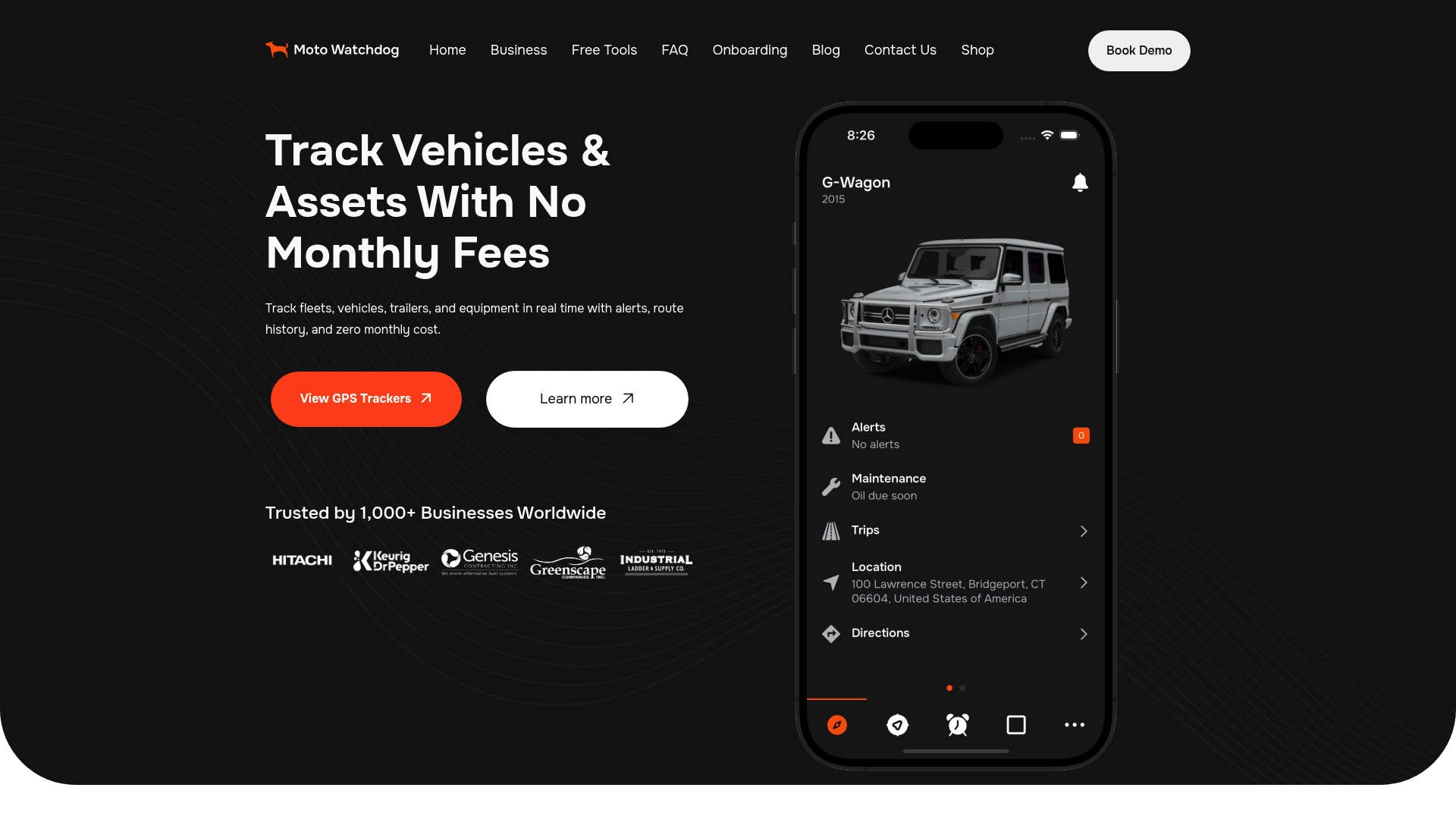
Motowatchdog devices record every trip automatically, generating timestamped logs that meet IRS substantiation requirements. Over 1,000 businesses rely on Motowatchdog for accurate mileage data, fleet visibility, and simplified reporting. The no-subscription model removes the ongoing cost barrier that makes many fleet managers hesitate on GPS adoption. Setup is straightforward, and the data integrates directly into reimbursement and tax reporting workflows.
FAQ
What is the IRS standard mileage rate for 2026?
The IRS standard mileage rate for business use is 72.5 cents per mile in 2026. Every logged business mile reduces taxable income by that amount.
What records does the IRS require for a mileage deduction?
The IRS requires a contemporaneous log with the date, starting location, destination, business purpose, and miles driven for each trip. Odometer readings at the start and end of the year are also required for verification.
Are commuting miles tax deductible?
Commuting miles between home and a primary workplace are not deductible. Only miles driven between business locations or from a workplace to a client site qualify as business mileage.
Why do GPS-based logs hold up better in an IRS audit?
GPS-based logs generate timestamped, objective trip data that auditors treat as more reliable than manual entries. Reconstructed or batch-entered logs are a leading cause of mileage deduction disallowance.
How does mileage tracking benefit fleet managers beyond taxes?
Mileage data gives fleet managers visibility into vehicle utilization, fuel costs, and driver behavior. That data supports route planning, maintenance scheduling, and fair employee reimbursement.