How to start saving money
Lorem ipsum dolor sit amet, consectetur adipiscing elit lobortis arcu enim urna adipiscing praesent velit viverra sit semper lorem eu cursus vel hendrerit elementum morbi curabitur etiam nibh justo, lorem aliquet donec sed sit mi dignissim at ante massa mattis.
- Neque sodales ut etiam sit amet nisl purus non tellus orci ac auctor
- Adipiscing elit ut aliquam purus sit amet viverra suspendisse potent
- Mauris commodo quis imperdiet massa tincidunt nunc pulvinar
- Excepteur sint occaecat cupidatat non proident sunt in culpa qui officia
Why it is important to start saving
Vitae congue eu consequat ac felis placerat vestibulum lectus mauris ultrices cursus sit amet dictum sit amet justo donec enim diam porttitor lacus luctus accumsan tortor posuere praesent tristique magna sit amet purus gravida quis blandit turpis.

How much money should I save?
At risus viverra adipiscing at in tellus integer feugiat nisl pretium fusce id velit ut tortor sagittis orci a scelerisque purus semper eget at lectus urna duis convallis. porta nibh venenatis cras sed felis eget neque laoreet suspendisse interdum consectetur libero id faucibus nisl donec pretium vulputate sapien nec sagittis aliquam nunc lobortis mattis aliquam faucibus purus in.
- Neque sodales ut etiam sit amet nisl purus non tellus orci ac auctor
- Adipiscing elit ut aliquam purus sit amet viverra suspendisse potenti
- Mauris commodo quis imperdiet massa tincidunt nunc pulvinar
- Adipiscing elit ut aliquam purus sit amet viverra suspendisse potenti
What percentege of my income should go to savings?
Nisi quis eleifend quam adipiscing vitae aliquet bibendum enim facilisis gravida neque. Velit euismod in pellentesque massa placerat volutpat lacus laoreet non curabitur gravida odio aenean sed adipiscing diam donec adipiscing tristique risus. amet est placerat in egestas erat imperdiet sed euismod nisi.
“Nisi quis eleifend quam adipiscing vitae aliquet bibendum enim facilisis gravida neque velit euismod in pellentesque”
Do you have any comments? Share them with us on social media
Eget lorem dolor sed viverra ipsum nunc aliquet bibendum felis donec et odio pellentesque diam volutpat commodo sed egestas aliquam sem fringilla ut morbi tincidunt augue interdum velit euismod eu tincidunt tortor aliquam nulla facilisi aenean sed adipiscing diam donec adipiscing ut lectus arcu bibendum at varius vel pharetra nibh venenatis cras sed felis eget.
Real time vehicle tracking is defined as the continuous, GPS-based monitoring of a vehicle’s location and telematics data, delivered to a user interface with near-zero delay. The industry term for this technology is telematics, which combines GPS positioning, cellular data transmission, and onboard diagnostics into a single system. Businesses use it to manage fleets, and individuals use it for theft recovery and family safety. Understanding how the technology works, what separates it from older tracking methods, and what practical benefits it delivers gives you a clear foundation for choosing the right system.
How does real time vehicle tracking technology work?
Real time vehicle tracking relies on three core hardware and software components working together: a GPS receiver, a cellular modem with a SIM card, and a cloud-based platform with a user dashboard.
The GPS receiver
The GPS receiver inside a tracking device picks up signals from multiple satellites orbiting Earth. Those signals calculate the device’s precise latitude, longitude, altitude, and speed. The receiver updates this position data continuously while the vehicle moves.

The cellular modem and data transmission
The cellular modem transmits that location data over a 4G LTE network to a secure cloud server. A typical real-time tracking architecture includes a GPS receiver, cellular modem or SIM, and a centralized cloud server with a user dashboard. This architecture means you see your vehicle’s position on a live map within seconds of it moving.
OBD-II integration and telematics data
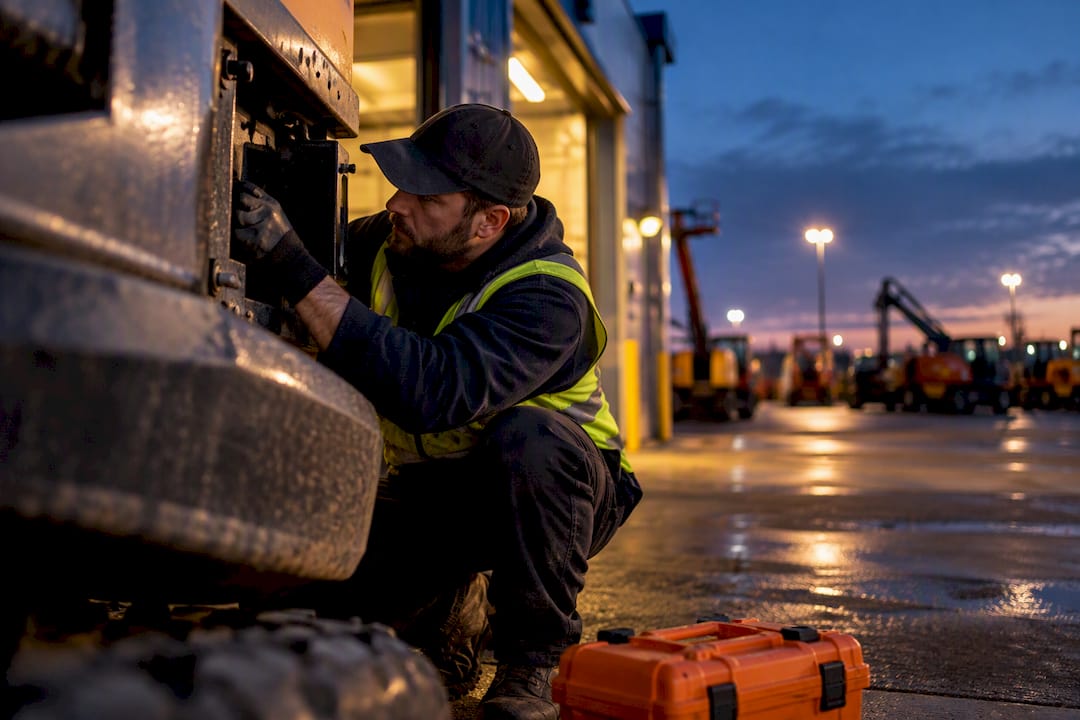
Many modern trackers plug directly into a vehicle’s OBD-II diagnostic port. This connection lets the device collect engine data alongside GPS coordinates. Fleet tracking units generate timestamped location pings with telematics data including speed, engine status, and diagnostics. That combination of location and vehicle health data is what separates a telematics system from a simple GPS dot on a map.
The cloud platform and user interface
The cloud server receives, processes, and stores every data point the device sends. Users access this data through a web dashboard or mobile app. The speed at which updates appear on screen depends heavily on the backend technology the platform uses. WebSocket technology enables sub-second, bidirectional streaming of location data, which is why the best platforms show movement almost instantly rather than refreshing every few minutes.
Pro Tip: When evaluating any tracking platform, open the live map and watch how quickly the vehicle icon moves after the vehicle starts. A delay of more than 10 seconds usually signals the platform is polling data rather than streaming it.
- GPS receiver: collects satellite position data
- Cellular modem: transmits data over 4G LTE to the cloud
- OBD-II port: adds engine diagnostics to location data
- Cloud server: stores and processes all incoming data
- User dashboard or app: displays live location and alerts
What are the differences between real-time and passive tracking?
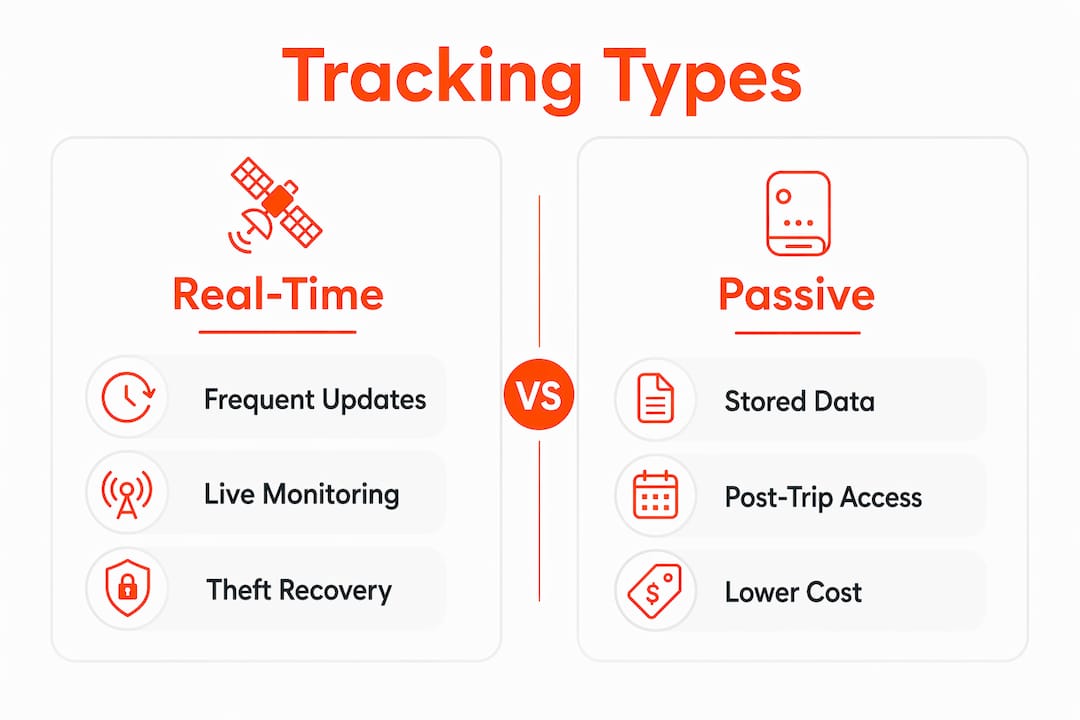
Passive tracking collects location data and stores it onboard the device. Passive systems rely on post-trip data retrieval, meaning you download the history after the vehicle returns, not while it is on the road. Real time GPS tracking pushes updates continuously, so you see where a vehicle is right now, not where it was two hours ago.
The practical gap between these two approaches is significant for security and fleet management.
| Feature | Real-time tracking | Passive tracking |
|---|---|---|
| Update frequency | Every 10–30 seconds while moving | After trip ends or manual download |
| Theft response | Immediate location for law enforcement | No live data during theft |
| Driver coaching | Live alerts for harsh braking or speeding | Review only after the fact |
| Power requirement | Higher, requires hardwired or frequent charging | Lower, battery lasts longer |
| Cost | Typically higher due to data connectivity | Lower upfront, limited live value |
For personal security, the difference is critical. Real-time location updates enable faster recovery of stolen vehicles because law enforcement gets a live position, not a last-known location from hours earlier. For fleet managers, passive data is useful for payroll verification but useless for rerouting a driver stuck in traffic right now.
Pro Tip: If your primary use case is theft recovery or live driver oversight, passive tracking is not a substitute. The time gap between data collection and retrieval is exactly when problems escalate.
What factors influence tracking accuracy and update frequency?
Update frequency is not fixed. Real-time systems use different cadences for moving versus idle vehicles, plus event-based reporting for critical changes. A vehicle moving at highway speed might send a location ping every 10 seconds. The same vehicle parked in a lot might send one every 1–5 minutes.
Motion-based and event-based reporting
This variable reporting design balances data freshness with power consumption. Typical moving intervals run 10–30 seconds; stopped intervals run 1–5 minutes for hardwired dispatch vehicles. Beyond scheduled pings, well-designed systems also fire immediate alerts on specific events: ignition on, ignition off, low battery, geofence entry or exit, and harsh braking. Event-based reporting often provides more operational value than constant streaming because it highlights the moments that actually matter.
Hardwired versus battery-powered devices
Power source directly affects how aggressively a device can report. Hardwired devices draw power from the vehicle’s electrical system, so they can send frequent updates without draining a battery. Battery-powered trackers must conserve energy, which forces longer intervals between pings when the vehicle is stationary. For fleet vehicles that run daily routes, hardwired is the standard choice. For assets like trailers or equipment that move infrequently, battery-powered devices with longer sleep intervals make more practical sense.
Backend streaming architecture
The platform’s backend determines how fast updates reach your screen after the device sends them. Sub-second dashboard responsiveness requires servers to push updates immediately upon receipt rather than relying on polling. Polling means the app asks the server “any new data?” on a schedule, which introduces lag. Server-push architecture, built on WebSocket connections, eliminates that lag. This distinction matters most when you need to watch a vehicle move in real time, not just check its last known position.
- Moving vehicles: updates every 10–30 seconds
- Stationary vehicles: updates every 1–5 minutes
- Event triggers: immediate alerts on ignition, geofence, or harsh events
- Hardwired devices: more frequent updates, no battery concern
- Battery devices: longer intervals to preserve power
What are the practical benefits of live vehicle location tracking?
The benefits of vehicle tracking split cleanly into two categories: personal security and business fleet management. Both categories gain the most value from real-time data rather than historical records.
Personal security and theft recovery
- Theft recovery speed. A real-time tracker gives law enforcement a live position the moment you report a theft. Recovery rates improve significantly when police can intercept a vehicle in motion rather than searching a cold trail.
- Family safety monitoring. Parents use live tracking to confirm a teen driver arrived at school or stayed within approved areas. Geofence alerts send an immediate notification when a vehicle crosses a boundary you set.
- Unauthorized use detection. A business owner can set an alert for any vehicle movement outside business hours. That alert fires the moment the ignition turns on, not the next morning when reviewing logs.
Fleet management and operational efficiency
- Driver coaching in real time. Telematics data improves safety through real-time alerts for harsh braking, rapid acceleration, and excessive idling. Drivers self-correct faster when they receive immediate feedback rather than a weekly report.
- Maintenance and diagnostics. OBD-II connected trackers read engine fault codes and mileage. Fleet managers schedule maintenance before a breakdown happens, which reduces costly roadside repairs and vehicle downtime.
- Route verification and payroll accuracy. Timestamped location data confirms when a driver arrived at a job site and how long they stayed. That data removes disputes over hours and mileage reimbursements.
- Fuel cost reduction. Idling alerts and route efficiency data give managers clear targets for reducing fuel consumption. Shorter idle times and better routes translate directly to lower fuel bills.
Continuous location tracking raises privacy concerns that businesses must address through clear data governance policies. Employees should know what data is collected, who can access it, and how long it is retained. Transparent policies protect both the business and the driver.
Key Takeaways
Real time vehicle tracking delivers live GPS and telematics data through a GPS receiver, cellular modem, and cloud platform, giving individuals and fleet managers immediate visibility that passive systems cannot match.
| Point | Details |
|---|---|
| Core architecture | Every real-time tracker needs a GPS receiver, cellular modem, and cloud platform to function. |
| Update frequency varies | Moving vehicles update every 10–30 seconds; stopped vehicles update every 1–5 minutes. |
| Real-time beats passive | Passive tracking stores data for later retrieval, making it useless for theft recovery or live oversight. |
| Event-based alerts add value | Geofence, ignition, and harsh-event alerts often matter more than continuous location pings. |
| Privacy requires policy | Continuous location data demands clear access controls and data retention rules to stay compliant. |
What I have learned from evaluating real-time tracking systems
The most common mistake I see businesses make is choosing a tracking platform based on how the dashboard looks rather than how the data actually behaves. A polished map interface means nothing if the tracker only updates every five minutes while a vehicle is stopped. That gap is exactly when a driver is at a job site, which is the moment fleet managers most need accurate dwell-time data.
My second observation is that update interval behavior is the single most revealing spec to ask a vendor about. Ask specifically: “What is your update interval when the vehicle is stationary?” A vendor who cannot answer that question clearly is selling you a dashboard, not a tracking system.
Privacy is also underweighted in most buying conversations. Continuous location tracking generates sensitive data about driver behavior, home addresses, and personal routines. Any business deploying trackers needs a written data governance policy before the first device goes live. This is not a legal formality. It is a practical protection for your business and your drivers.
Finally, subscription costs accumulate fast. A system that charges a monthly fee per vehicle across a fleet of 20 vehicles can cost thousands of dollars annually before you see a single operational benefit. Evaluating the total cost of ownership, including connectivity fees, is as important as evaluating the technology itself.
— Louis
Motowatchdog: subscription-free GPS tracking for fleets and individuals
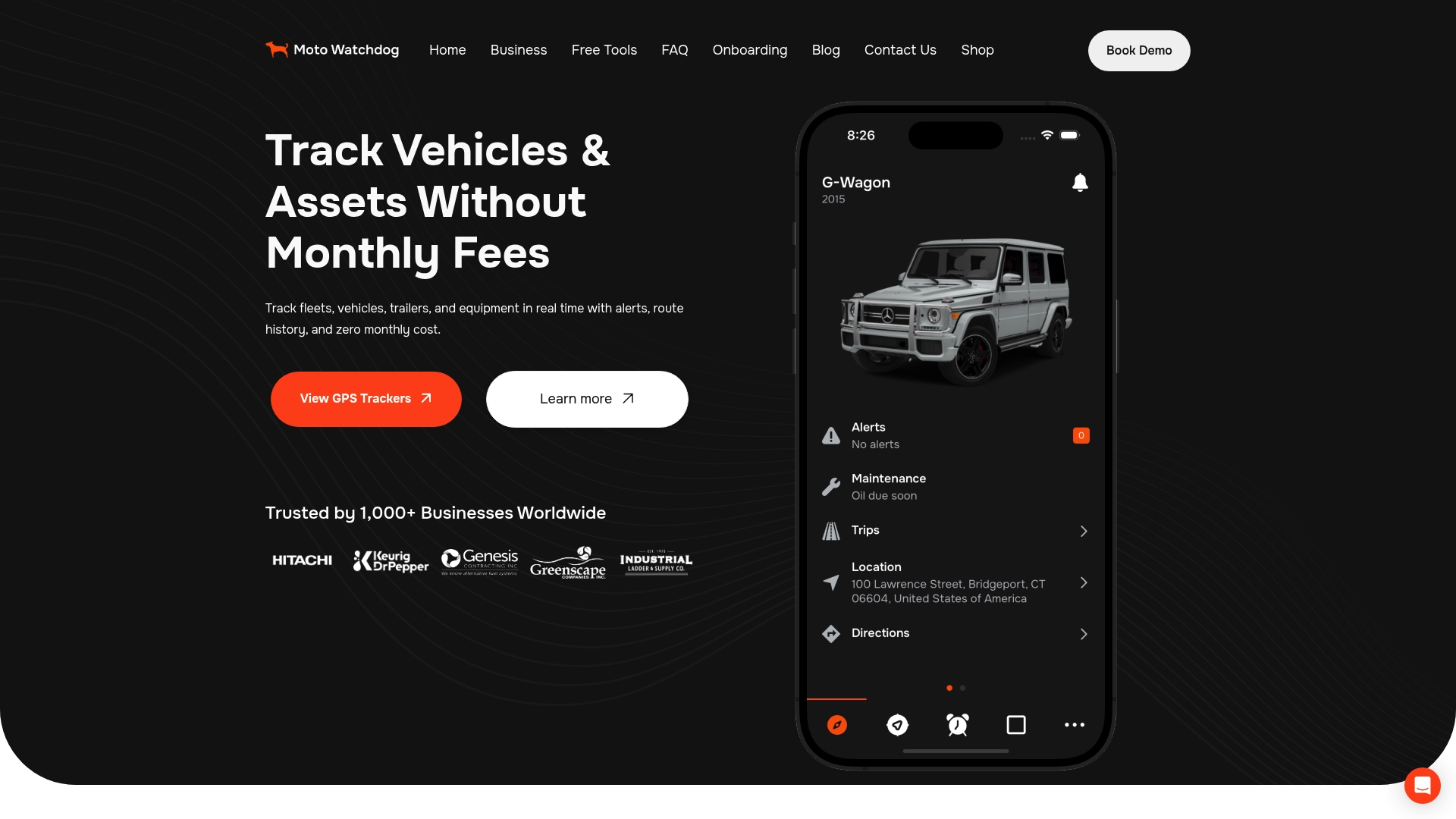
Motowatchdog provides subscription-free 4G GPS tracking built for businesses and individuals who want real-time vehicle visibility without paying monthly fees per device. The platform supports geofencing alerts, detailed mileage reporting, and long battery life options for assets that do not run daily. Over 1,000 businesses rely on Motowatchdog for accurate, consistent tracking across their fleets. For fleet managers comparing types of fleet GPS systems, Motowatchdog’s no-subscription model removes the ongoing cost barrier that makes real-time tracking impractical for smaller operations. Setup is straightforward, and the device works on 4G LTE networks for reliable connectivity across the United States.
FAQ
What is real time vehicle tracking?
Real time vehicle tracking is the continuous GPS-based monitoring of a vehicle’s location and telematics data, delivered to a user dashboard with near-zero delay. It uses a GPS receiver, cellular modem, and cloud platform to show live vehicle position and send immediate alerts.
How often does a real-time GPS tracker update its location?
Most real-time trackers update every 10–30 seconds while a vehicle is moving and every 1–5 minutes while stopped. Event-based triggers, such as ignition on or geofence crossing, fire immediately regardless of the standard interval.
What is the difference between real-time and passive GPS tracking?
Real-time tracking pushes live location data continuously, while passive tracking stores data onboard and requires manual retrieval after a trip. Real-time systems are necessary for theft recovery and live fleet oversight; passive systems suit post-trip analysis only.
Do real-time vehicle trackers require a monthly subscription?
Most real-time trackers require a monthly data plan to transmit location over cellular networks, but subscription-free options like Motowatchdog eliminate recurring fees by bundling connectivity into the device cost.
Is real-time vehicle tracking legal for businesses to use on employees?
Real-time tracking of company-owned vehicles is generally legal in the United States, but businesses must inform employees of the monitoring practice. Data governance policies covering access controls and data retention are required to stay compliant with applicable privacy regulations.