How to start saving money
Lorem ipsum dolor sit amet, consectetur adipiscing elit lobortis arcu enim urna adipiscing praesent velit viverra sit semper lorem eu cursus vel hendrerit elementum morbi curabitur etiam nibh justo, lorem aliquet donec sed sit mi dignissim at ante massa mattis.
- Neque sodales ut etiam sit amet nisl purus non tellus orci ac auctor
- Adipiscing elit ut aliquam purus sit amet viverra suspendisse potent
- Mauris commodo quis imperdiet massa tincidunt nunc pulvinar
- Excepteur sint occaecat cupidatat non proident sunt in culpa qui officia
Why it is important to start saving
Vitae congue eu consequat ac felis placerat vestibulum lectus mauris ultrices cursus sit amet dictum sit amet justo donec enim diam porttitor lacus luctus accumsan tortor posuere praesent tristique magna sit amet purus gravida quis blandit turpis.

How much money should I save?
At risus viverra adipiscing at in tellus integer feugiat nisl pretium fusce id velit ut tortor sagittis orci a scelerisque purus semper eget at lectus urna duis convallis. porta nibh venenatis cras sed felis eget neque laoreet suspendisse interdum consectetur libero id faucibus nisl donec pretium vulputate sapien nec sagittis aliquam nunc lobortis mattis aliquam faucibus purus in.
- Neque sodales ut etiam sit amet nisl purus non tellus orci ac auctor
- Adipiscing elit ut aliquam purus sit amet viverra suspendisse potenti
- Mauris commodo quis imperdiet massa tincidunt nunc pulvinar
- Adipiscing elit ut aliquam purus sit amet viverra suspendisse potenti
What percentege of my income should go to savings?
Nisi quis eleifend quam adipiscing vitae aliquet bibendum enim facilisis gravida neque. Velit euismod in pellentesque massa placerat volutpat lacus laoreet non curabitur gravida odio aenean sed adipiscing diam donec adipiscing tristique risus. amet est placerat in egestas erat imperdiet sed euismod nisi.
“Nisi quis eleifend quam adipiscing vitae aliquet bibendum enim facilisis gravida neque velit euismod in pellentesque”
Do you have any comments? Share them with us on social media
Eget lorem dolor sed viverra ipsum nunc aliquet bibendum felis donec et odio pellentesque diam volutpat commodo sed egestas aliquam sem fringilla ut morbi tincidunt augue interdum velit euismod eu tincidunt tortor aliquam nulla facilisi aenean sed adipiscing diam donec adipiscing ut lectus arcu bibendum at varius vel pharetra nibh venenatis cras sed felis eget.
A lifetime GPS tracker is a tracking device that operates without monthly subscription fees by embedding prepaid cellular connectivity or a lifetime SIM card directly into the hardware. The industry term for this category is “subscription-free GPS tracker,” and understanding the difference matters before you buy. These devices appeal to parents monitoring a teenager’s car, individuals protecting valuables, and anyone tired of paying $10–$30 per month just to know where something is. The trade-off is real: you pay more upfront and accept less frequent location updates. This guide explains exactly how these devices work, what to look for, and where they fall short.
What is a lifetime GPS tracker and how does it work?
A lifetime GPS tracker uses the same GPS satellite positioning as any other tracker. It receives signals from multiple satellites to calculate location, then transmits that data over a cellular network to a cloud server you access through an app. The key difference is how that cellular connection is paid for.
Most real-time GPS trackers require an active cellular data plan to transmit location over long distances. Without a plan, the device cannot send data to your phone. Lifetime trackers solve this by either embedding a prepaid SIM with a fixed data allowance built into the purchase price, or by using low-power network technologies like LTE-M or NB-IoT that cost far less per transmission.
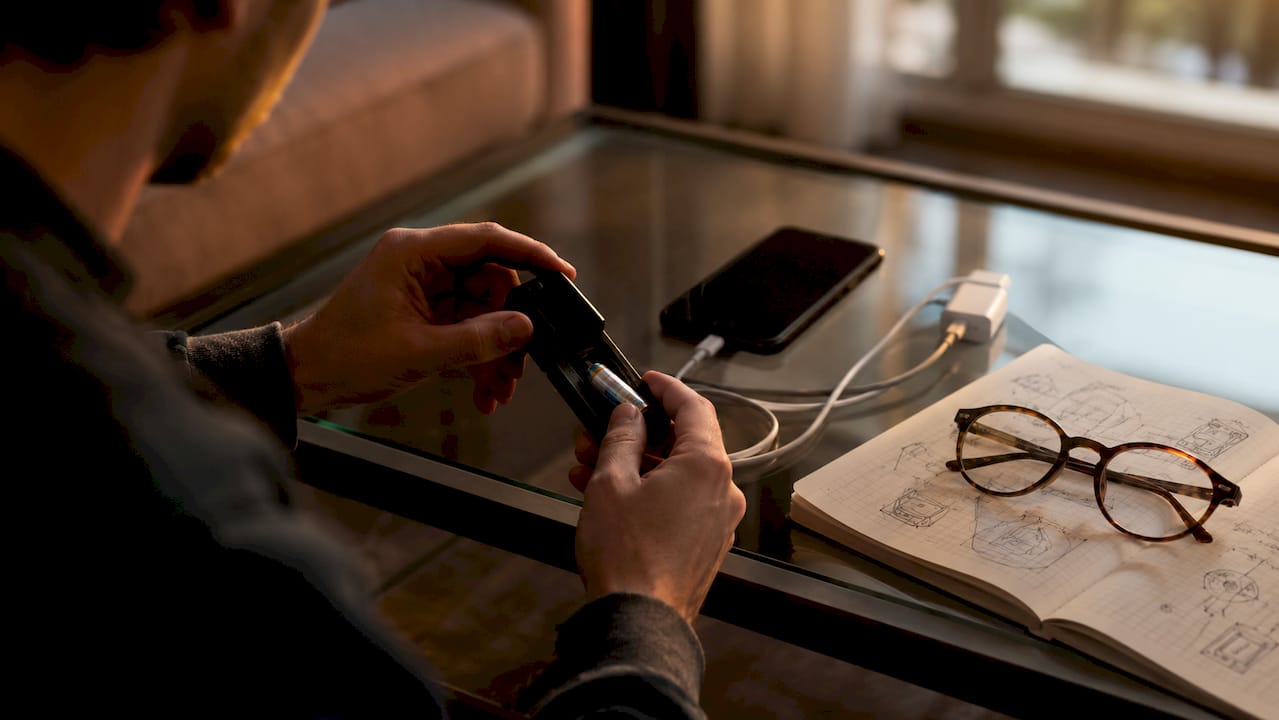
Here is where buyers get confused. The term “lifetime” is used two ways: some devices include a lifetime SIM card with prepaid data baked into the hardware cost, while others offer a “lifetime subscription” plan that is simply a one-time fee for ongoing service. These are very different products. A lifetime SIM device has no recurring cost at all. A lifetime subscription plan is a prepaid service that may still expire or change terms.
Battery life and update frequency trade-offs
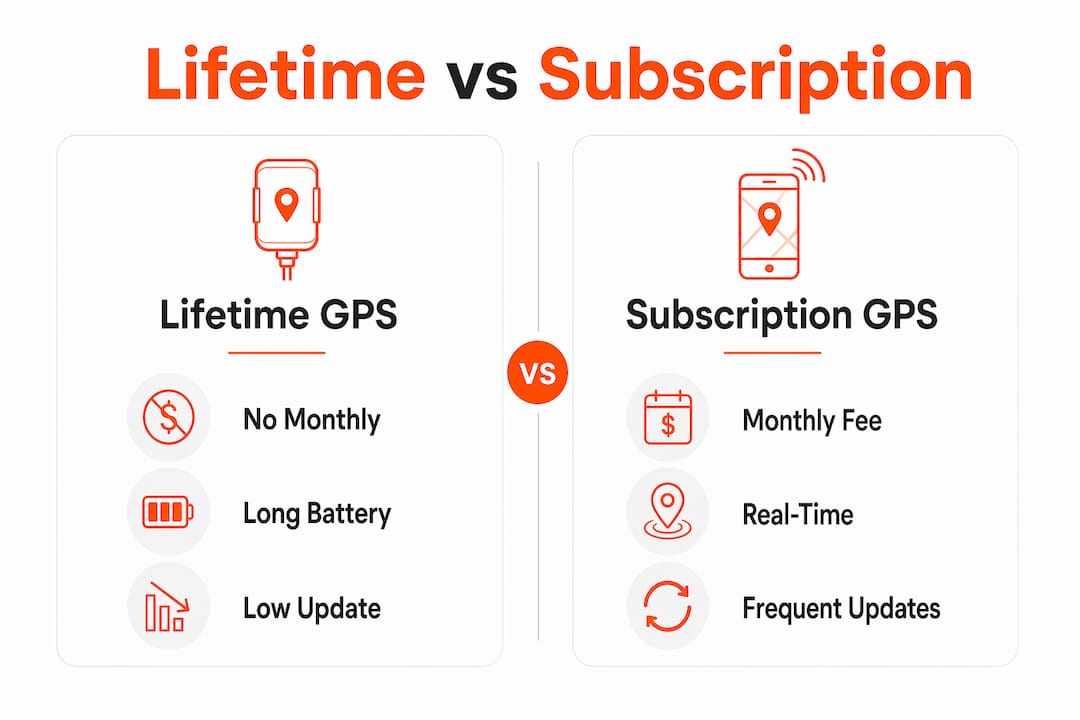
Battery management is the defining technical challenge for subscription-free GPS trackers. Battery life varies drastically by reporting interval: at a 10-second update interval, a battery lasts 2–5 days; at 5-minute intervals, it lasts 2–4 weeks; with daily updates, battery life can reach 3–6 years. That range tells you everything about the compromise you are accepting.
Lifetime GPS trackers with built-in SIM cards prioritize long battery life over frequent updates, with some non-rechargeable models offering up to 6 years of operation at one location report per day. That is useful for tracking a stored vehicle or a piece of equipment. It is not useful for tracking a moving teenager in real time.
To extend battery life further, many subscription-free devices use deep sleep mode, which keeps the device in an ultra-low power state between transmissions. The tracker wakes briefly, sends its location, then goes dark again. This also makes the device harder to detect with signal sweeps, which is useful for covert asset tracking.
Pro Tip: If you need location updates more than once per hour, a subscription-free tracker will likely disappoint you. Match your update frequency requirement to the device spec before purchasing.
What to look for when choosing a lifetime GPS tracking device
Choosing the right subscription-free tracker requires evaluating five specific factors. Most buyers focus only on price and miss the details that determine whether the device actually works for their situation.
-
Battery life and update interval. Confirm the exact battery life at your intended update frequency, not the maximum advertised figure. A device rated for 6 years assumes one daily report. At hourly updates, that same device may last only weeks.
-
Network compatibility. Check whether the device uses LTE-M, NB-IoT, or standard 4G LTE. LTE-M and NB-IoT offer better coverage in rural areas and lower power consumption. Standard 4G provides faster updates but drains battery faster.
-
Durability rating. Look for an IP67 or IP68 waterproof rating if the tracker will be mounted outside a vehicle or placed in a bag exposed to weather. Devices without a waterproof rating fail quickly in real-world conditions.
-
App and platform quality. The hardware means nothing if the app is unreliable. Check recent user reviews specifically for app stability, geofence alert accuracy, and customer support response times.
-
Vendor stability. This is the factor most buyers ignore. If the company providing the backend service goes out of business, the device becomes unusable regardless of how much you paid. Look for vendors with a track record of at least 3–5 years and clear documentation of their server infrastructure.
Pro Tip: Search the vendor’s name alongside “out of business” or “service discontinued” before buying. Several lifetime tracker brands have shut down, leaving customers with hardware that cannot connect to anything.
Lifetime GPS trackers vs. subscription-based trackers
The choice between a lifetime device and a subscription model comes down to how you plan to use the tracker and how much update frequency matters to you.
Subscription-free devices use lower-frequency reporting to conserve battery, while subscription-based models support frequent real-time updates. That gap in performance is significant for use cases like monitoring a vehicle in motion. For a parked asset or a piece of equipment that rarely moves, the gap is irrelevant.
For fleet managers considering cost-effective fleet tracking, subscription models often make more sense because real-time data drives route optimization and driver accountability. For a parent who just wants to confirm a car is parked at school, a lifetime tracker is more than sufficient.
| Feature | Lifetime GPS Tracker | Subscription-Based Tracker |
|---|---|---|
| Monthly cost | $0 after purchase | $10–$30 per month |
| Upfront cost | Higher ($50–$150+) | Lower ($20–$80) |
| Update frequency | Once daily to hourly | Every 10–60 seconds |
| Battery life | Months to years | Days to weeks |
| Real-time tracking | Limited or unavailable | Full capability |
| Best use case | Parked assets, belongings | Active vehicles, fleets |
| Vendor risk | High if company closes | Lower with established providers |
The cost math favors lifetime trackers over a 2–3 year horizon if you only need infrequent updates. A subscription tracker at $15 per month costs $360 over two years. A $100 lifetime device with no fees pays for itself in under 7 months. The savings are real. The performance compromise is also real.
It is also worth noting that Bluetooth-based crowd-sourced trackers like Apple AirTags are often marketed alongside GPS trackers but are not true GPS devices. They show a “last seen” location based on nearby devices in a crowd-sourced network. They have no cellular connection and no real-time GPS capability. Knowing this distinction prevents a costly mistake.
Practical applications for lifetime GPS tracking devices
Subscription-free trackers fit a specific set of use cases well. Understanding where they perform and where they fall short saves frustration.
- Luggage and travel bags. A lifetime tracker placed in checked luggage alerts you if your bag goes to the wrong city. One daily update is enough to catch a misdirected bag before it travels further.
- Parked vehicle theft prevention. A hidden tracker in a vehicle that rarely moves provides a location report if the car is stolen and driven away. For a hardwired GPS tracker comparison, hardwired models offer more frequent updates but require installation.
- Children’s backpacks and belongings. Parents use small lifetime trackers in school bags to confirm a child arrived at school. A single daily check-in satisfies this need without any monthly cost.
- Equipment and tool storage. Contractors tracking stored equipment between job sites benefit from a device that reports location once per day. The equipment does not move frequently, so real-time updates add no value.
- Motorcycles and seasonal vehicles. A vehicle stored for winter does not need 10-second updates. A lifetime tracker placed inside the vehicle reports its location if it moves unexpectedly.
Coverage gaps are a real limitation. In dense urban areas with strong cellular coverage, these devices perform well. In rural areas or underground parking structures, both GPS signal acquisition and cellular transmission can fail. GPS tracking in service business security applications shows that coverage reliability is the top operational concern for any tracking deployment.
Key takeaways
A lifetime GPS tracker delivers genuine value for low-frequency tracking needs, but the vendor stability risk and update frequency limits are non-negotiable trade-offs every buyer must evaluate before purchasing.
| Point | Details |
|---|---|
| “Lifetime” has two meanings | Verify whether the device includes a lifetime SIM or a one-time subscription plan before buying. |
| Battery life depends on update frequency | Daily updates can extend battery life to 6 years; hourly updates reduce it to weeks. |
| Vendor risk is the hidden danger | If the backend service shuts down, the device stops working regardless of upfront cost. |
| Best for low-movement assets | Parked vehicles, luggage, and stored equipment are ideal use cases for subscription-free trackers. |
| Subscription models win for real-time needs | Active vehicle monitoring and fleet tracking require subscription-based devices with frequent updates. |
The trade-off nobody talks about honestly
I have reviewed and tested GPS trackers across both categories for years, and the conversation around lifetime trackers is consistently misleading. Marketing copy emphasizes the “no monthly fee” benefit without ever explaining that the device may report your car’s location just once per day. That is not a minor footnote. That is the entire product.
The vendor stability issue is the one that genuinely concerns me. I have seen buyers invest in lifetime tracker hardware only to find the company’s app goes offline 18 months later. The hardware still works. The server it needs to communicate with does not. You are left with a device that connects to nothing. This is not a hypothetical risk. It has happened with multiple brands in this category.
My honest recommendation: use a lifetime tracker for anything that does not move often and where a delayed location report is acceptable. For a teenager’s car, a spouse’s vehicle, or any situation where you might need to act on location data quickly, a subscription model from an established provider is the smarter choice. The $15 per month is not wasted money. It is the cost of reliability.
If you are set on subscription-free tracking, prioritize vendors with at least five years of operating history, a clearly documented server infrastructure, and a support team that responds within 24 hours. Motowatchdog meets all three of those criteria, which is why I reference it for buyers who want subscription-free tracking without the vendor risk.
— Louis
Subscription-free GPS tracking from Motowatchdog
Motowatchdog offers subscription-free 4G GPS tracking built for individuals and businesses who want reliable location monitoring without monthly fees. Over 1,000 businesses rely on Motowatchdog for vehicle and asset tracking, and the platform supports customizable geofence alerts, detailed mileage reporting, and long battery life devices designed for real-world conditions.
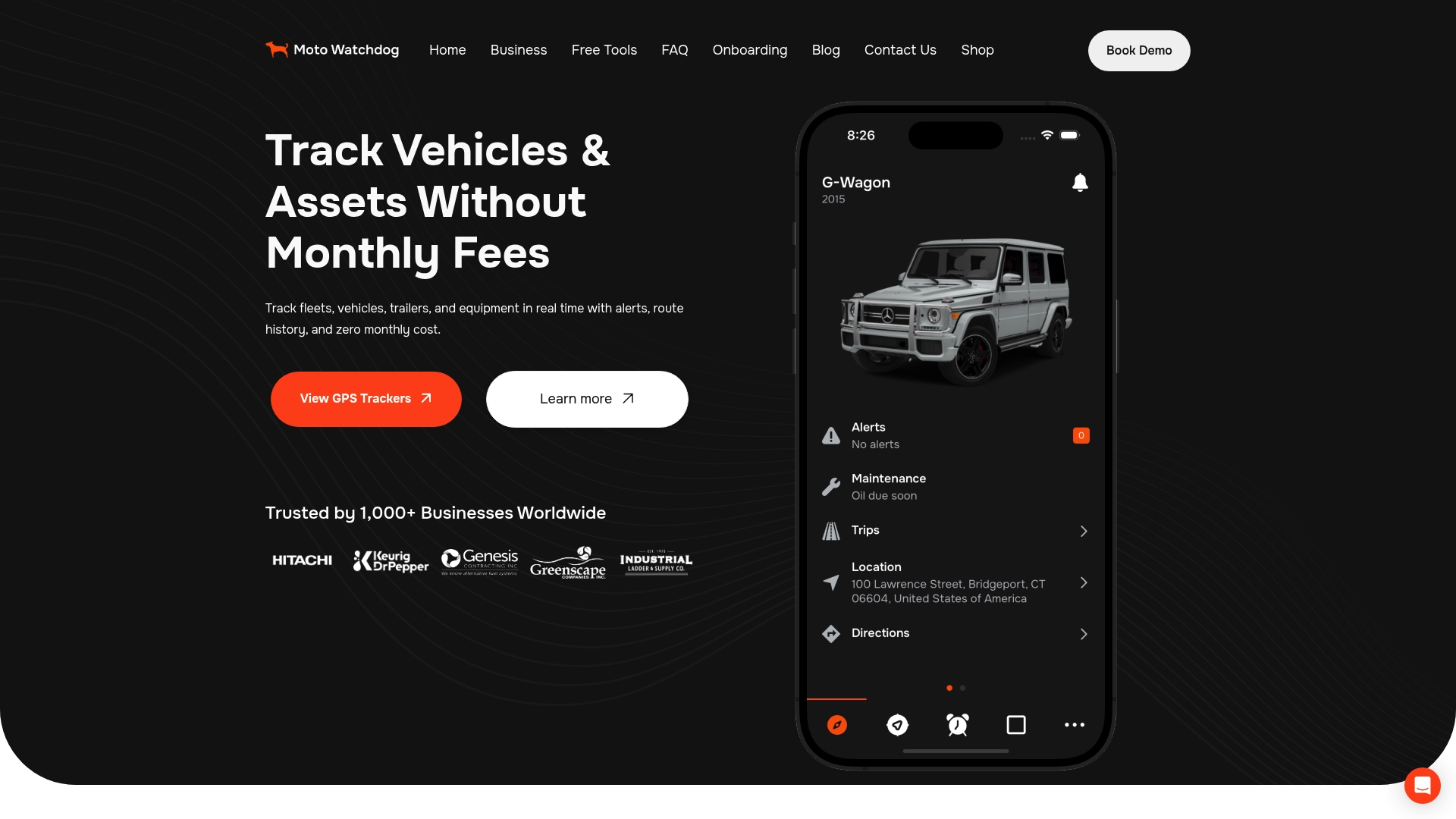
For parents monitoring a family vehicle or individuals protecting personal belongings, Motowatchdog provides the connectivity and platform stability that subscription-free tracking requires. The setup process is straightforward, and the 4G network coverage delivers reliable performance across the United States. Explore Motowatchdog’s lifetime GPS tracking options and see how subscription-free monitoring works in practice.
FAQ
What does “lifetime” mean on a GPS tracker?
“Lifetime” refers to either a prepaid SIM card embedded in the device with no recurring fees, or a one-time subscription plan that covers service for the device’s lifespan. Always confirm which type applies before purchasing to avoid unexpected costs.
How long does a lifetime GPS tracker battery last?
Battery life depends entirely on how often the device reports location. At one report per day, a non-rechargeable lifetime tracker can last up to 6 years. At hourly updates, the same device may last only weeks.
Can a lifetime GPS tracker provide real-time tracking?
Most subscription-free GPS trackers do not support true real-time tracking. They use low-frequency reporting to conserve battery, which means location updates may arrive once per hour or once per day rather than every few seconds.
What happens if the GPS tracker company goes out of business?
If the company providing the backend server or cloud software shuts down, the device stops functioning even if the hardware is intact. This is the primary risk of lifetime GPS trackers and the most important factor to evaluate when choosing a vendor.
Are bluetooth trackers the same as lifetime GPS trackers?
No. Bluetooth trackers like Apple AirTags use crowd-sourced networks to show a “last seen” location and have no cellular GPS capability. A lifetime GPS tracker uses satellite positioning and cellular data transmission, making it a fundamentally different and more capable technology.