How to start saving money
Lorem ipsum dolor sit amet, consectetur adipiscing elit lobortis arcu enim urna adipiscing praesent velit viverra sit semper lorem eu cursus vel hendrerit elementum morbi curabitur etiam nibh justo, lorem aliquet donec sed sit mi dignissim at ante massa mattis.
- Neque sodales ut etiam sit amet nisl purus non tellus orci ac auctor
- Adipiscing elit ut aliquam purus sit amet viverra suspendisse potent
- Mauris commodo quis imperdiet massa tincidunt nunc pulvinar
- Excepteur sint occaecat cupidatat non proident sunt in culpa qui officia
Why it is important to start saving
Vitae congue eu consequat ac felis placerat vestibulum lectus mauris ultrices cursus sit amet dictum sit amet justo donec enim diam porttitor lacus luctus accumsan tortor posuere praesent tristique magna sit amet purus gravida quis blandit turpis.

How much money should I save?
At risus viverra adipiscing at in tellus integer feugiat nisl pretium fusce id velit ut tortor sagittis orci a scelerisque purus semper eget at lectus urna duis convallis. porta nibh venenatis cras sed felis eget neque laoreet suspendisse interdum consectetur libero id faucibus nisl donec pretium vulputate sapien nec sagittis aliquam nunc lobortis mattis aliquam faucibus purus in.
- Neque sodales ut etiam sit amet nisl purus non tellus orci ac auctor
- Adipiscing elit ut aliquam purus sit amet viverra suspendisse potenti
- Mauris commodo quis imperdiet massa tincidunt nunc pulvinar
- Adipiscing elit ut aliquam purus sit amet viverra suspendisse potenti
What percentege of my income should go to savings?
Nisi quis eleifend quam adipiscing vitae aliquet bibendum enim facilisis gravida neque. Velit euismod in pellentesque massa placerat volutpat lacus laoreet non curabitur gravida odio aenean sed adipiscing diam donec adipiscing tristique risus. amet est placerat in egestas erat imperdiet sed euismod nisi.
“Nisi quis eleifend quam adipiscing vitae aliquet bibendum enim facilisis gravida neque velit euismod in pellentesque”
Do you have any comments? Share them with us on social media
Eget lorem dolor sed viverra ipsum nunc aliquet bibendum felis donec et odio pellentesque diam volutpat commodo sed egestas aliquam sem fringilla ut morbi tincidunt augue interdum velit euismod eu tincidunt tortor aliquam nulla facilisi aenean sed adipiscing diam donec adipiscing ut lectus arcu bibendum at varius vel pharetra nibh venenatis cras sed felis eget.
Solar GPS tracker equipment is a device that combines a photovoltaic solar panel with a rechargeable lithium battery and a GPS module to deliver continuous, maintenance-free location monitoring of assets in outdoor or remote environments. Unlike conventional battery-powered trackers that go dark when their charge runs out, solar-powered tracking equipment recharges itself during daylight hours and draws from stored power at night. This makes it the preferred choice for fleet managers, construction companies, and logistics operators who need reliable tracking on assets that sit outdoors for weeks or months at a time. Industrial-grade units typically meet IP67 durability standards and connect via LTE-M or NB-IoT networks, making them built for real-world conditions.
What is solar GPS tracker equipment and how does it work?
Solar GPS tracker equipment works by using a small photovoltaic panel to trickle charge a lithium battery throughout the day. That stored energy powers the GPS module and cellular radio around the clock. The GPS module acquires satellite signals to calculate the device’s location, then transmits that data over a low-power cellular network to a cloud platform where you can view it in real time.
The two network technologies most commonly used are LTE-M and NB-IoT. Both are low-power wide-area networks designed to maximize battery efficiency and signal reach in areas where standard 4G struggles. LTE Cat-M1 in particular consumes less power per transmission and penetrates better in signal-marginal environments, making it the preferred choice for rural asset tracking.
Battery capacity and panel size are the two variables that determine how long a device stays active without direct sunlight. Most industrial-grade solar GPS trackers are designed to operate through several consecutive overcast days without any recharge. That reserve capacity is what separates a well-engineered solar tracker from a cheap panel glued to a standard device.
- GPS module: Acquires satellite signals and calculates position coordinates.
- Solar panel: Converts sunlight into electrical current to recharge the battery.
- Lithium battery: Stores energy for nighttime and low-light operation.
- Cellular radio: Transmits location data via LTE-M, NB-IoT, or 4G networks.
- Housing: Protects all components; IP67 waterproof rating is the industry standard for outdoor deployment.
Pro Tip: When evaluating solar GPS tracking technology, ask the vendor how many consecutive overcast days the device can sustain at your target reporting frequency. That number tells you more about real-world reliability than panel wattage alone.
What are the benefits of solar GPS trackers over conventional trackers?
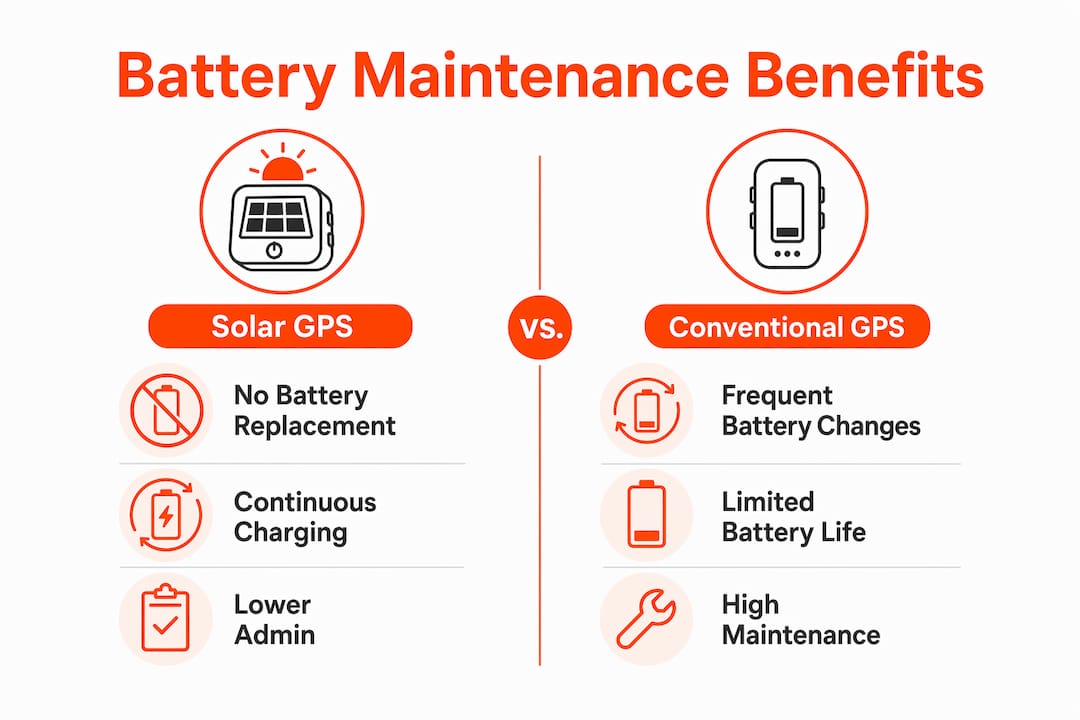
The most significant benefit of solar-powered tracking equipment is the elimination of battery replacement cycles. A conventional battery-powered tracker deployed on a remote trailer or shipping container can go dead within weeks, leaving you with a blind spot in your asset visibility. Solar charging removes that risk entirely.
Continuous solar charging decouples reporting frequency from battery longevity, which means you can set more frequent location updates without worrying about draining the device. More frequent updates translate directly to better theft response. Asset security professionals refer to the first hour after a theft as the “golden hour.” A tracker that stays active and reports every few minutes during that window gives recovery teams a real chance.
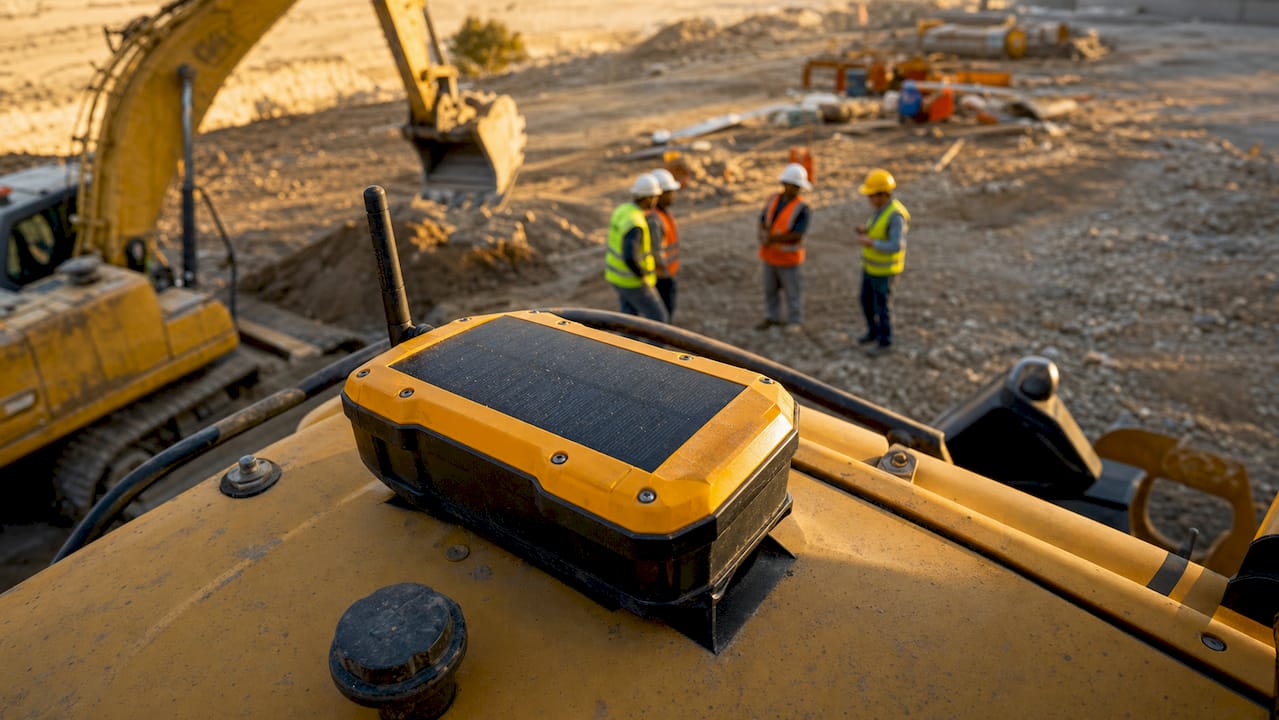
Solar GPS trackers also reduce the administrative burden of battery maintenance, which is especially problematic for assets in remote or inaccessible locations. Sending a technician to swap a battery on a piece of construction equipment parked at a rural job site costs time and money. A solar-powered device eliminates that trip entirely.
Beyond location, many solar GPS units support sensor integration for condition monitoring. Devices can integrate BLE sensors and smart locks for temperature, humidity, and access control monitoring. That capability matters in cold chain logistics, chemical transport, and any application where environmental conditions affect cargo value.
Key operational benefits at a glance:
- No battery replacement: Solar charging sustains the device indefinitely in outdoor conditions.
- Higher reporting frequency: More power means more frequent location pings without tradeoffs.
- Theft recovery support: Active tracking during the critical window after unauthorized movement.
- Lower maintenance costs: Fewer technician visits to remote or stationary assets.
- Sensor-ready: Supports environmental monitoring beyond basic GPS location.
How do you choose the right solar GPS tracker for your assets?
Selecting the best solar GPS tracking devices starts with understanding your asset type and how long it sits outdoors between physical inspections. An asset that moves daily through urban areas has different requirements than a shipping container parked at a port for three months.
Assess sunlight exposure and mounting options
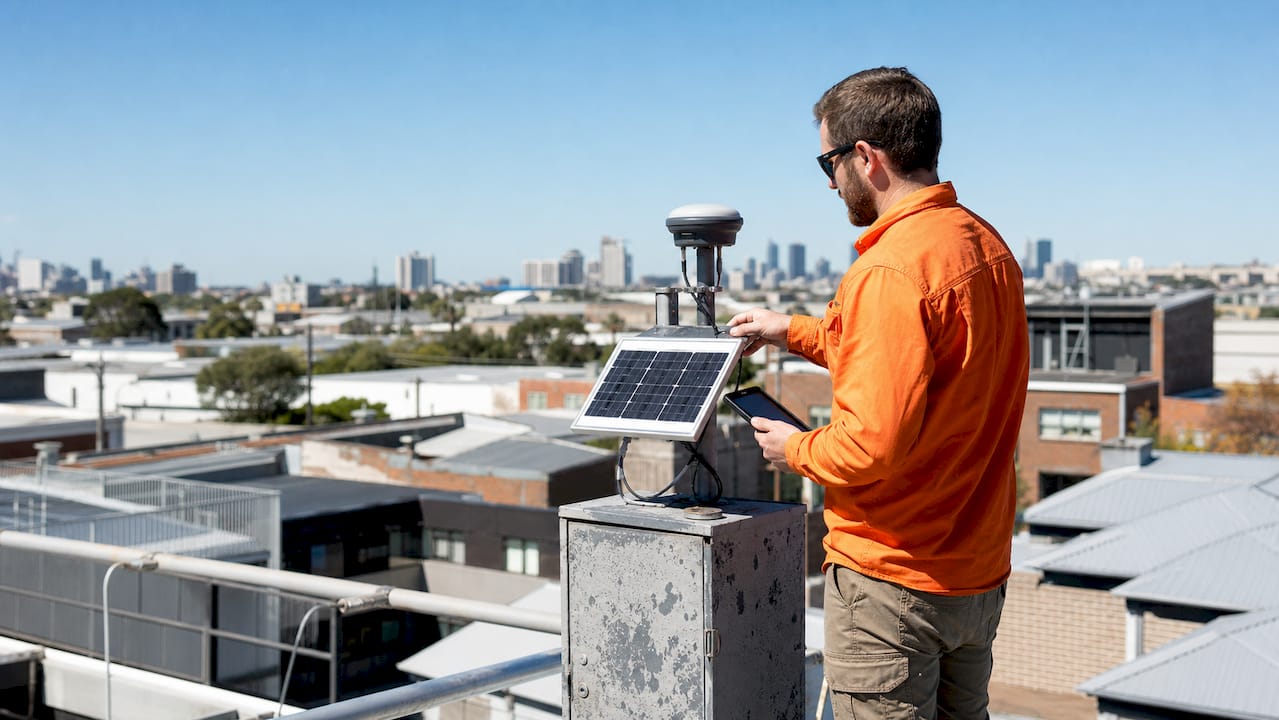
Panel efficiency depends heavily on where and how the device mounts. A tracker installed on a shaded surface or at a steep angle will underperform regardless of its rated wattage. Proper installation and mounting surface directly affect solar panel efficiency and charging performance. Flat, south-facing surfaces on trailers and containers typically deliver the best results.
Match network type to deployment location
Network compatibility is the most overlooked selection criterion. LTE-M and NB-IoT are the right choices for rural and semi-rural sites where standard 4G coverage is thin. LTE Cat-M1 is often preferred for rural environments because it uses less power per transmission and reaches further into low-signal areas. If your assets operate in dense urban zones, standard 4G connectivity may be sufficient and offer faster data throughput.
Evaluate data needs beyond location
Not every application needs sensor integration, but knowing whether you need it before you buy saves a costly device swap later. If you track refrigerated trailers or chemical containers, choose a unit with BLE sensor support. If you only need location and geofence alerts, a simpler unit with a larger battery reserve may be the better value.
Pro Tip: Check whether the device supports fleet GPS data integration with your existing management platform before purchasing. A tracker that cannot push data to your software creates a manual reporting burden that defeats the purpose of automation.
A quick selection framework:
| Criteria | What to evaluate |
|---|---|
| Asset type | Stationary vs. mobile; powered vs. non-powered |
| Sunlight exposure | Average daily sun hours at deployment site |
| Network coverage | LTE-M/NB-IoT for rural; 4G for urban |
| Data requirements | Location only vs. sensor integration |
| Durability rating | IP67 minimum for outdoor industrial use |
| Battery reserve | Days of operation without sunlight recharge |
What are the best deployment practices for solar GPS trackers?
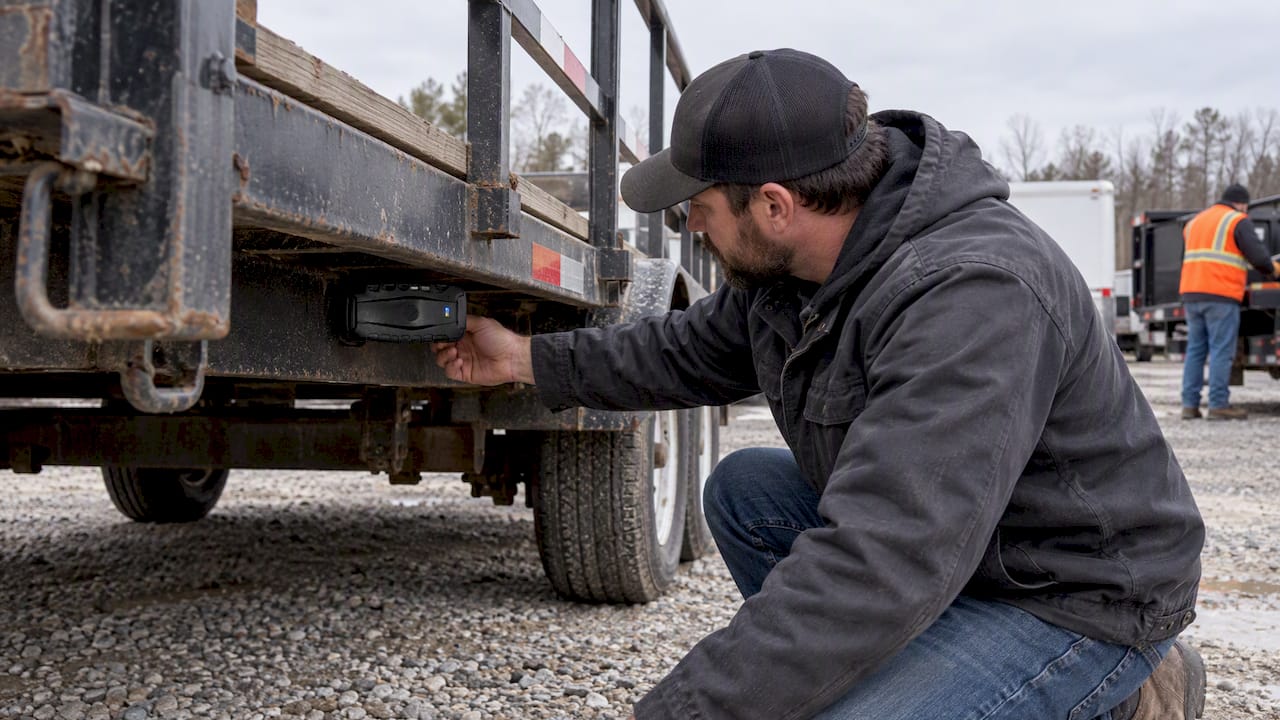
Assets that remain outdoors, move slowly, and are deployed long-term are the ideal candidates for solar GPS tracking. Shipping containers, trailers, railcars, heavy construction equipment, and agricultural machinery all fit this profile. These are assets that rarely connect to a vehicle power source and may sit in a field or yard for months without a technician visit.
Deployment best practices make a measurable difference in device performance and lifespan. Solar GPS tracker life expectancy ranges from seven to ten years depending on climate, mounting quality, and protection from the elements. Getting the installation right from day one protects that investment.
Follow these deployment guidelines for maximum performance:
- Mount on the highest, most exposed surface: Rooftops of trailers and containers outperform side-mounted positions.
- Orient the panel toward maximum sun exposure: In the Northern Hemisphere, south-facing panels capture the most daily light.
- Set reporting frequency based on asset risk level: High-value or theft-prone assets warrant more frequent pings; low-risk stationary assets can report less often to conserve power during extended overcast periods.
- Configure geofence alerts immediately after installation: Real-time alerts on unauthorized movement are the first line of defense against theft.
- Integrate with your fleet management system: Pushing GPS data into your existing platform gives you a single view of all assets. Review GPS fleet safety practices to get the most from your data.
- Document installation location and panel orientation: This information speeds up troubleshooting if charging performance drops over time.
Agricultural operations represent one of the most underserved use cases for solar GPS tracking. Equipment spread across large fields, often miles from the nearest cell tower, benefits from both the self-charging capability and the extended network reach of LTE-M. A single stolen tractor or combine can represent a six-figure loss. Solar-powered tracking keeps those assets visible without requiring a power source or regular battery swaps.
Key Takeaways
Solar GPS tracker equipment is the most practical solution for long-term, outdoor asset monitoring because it eliminates battery maintenance while delivering continuous, real-time location data.
| Point | Details |
|---|---|
| Self-sustaining power | Solar panels trickle charge a lithium battery, keeping the device active day and night. |
| Overcast resilience | Industrial-grade units operate through several consecutive cloudy days on stored battery charge. |
| Network matters | LTE-M or NB-IoT is the right choice for rural and remote asset deployments. |
| IP67 durability | Waterproof and dustproof housing is the minimum standard for outdoor industrial use. |
| Long service life | Properly installed solar GPS trackers last seven to ten years with minimal maintenance. |
Why solar GPS tracking changed how I think about asset security
The conventional wisdom used to be that solar GPS trackers were only worth deploying in sunny climates. I’ve seen that assumption cost businesses real money. Modern industrial-grade solar GPS trackers maintain power and reliable signal even in environments with limited sunshine, which means a fleet manager in the Pacific Northwest or the UK has just as much to gain as one in Arizona.
The insight that shifted my thinking was simpler than any technical specification. Solar charging is not a luxury but a necessity for assets deployed long-term without regular physical access. A tracker that goes dead on a stationary asset is not a tracker. It’s a false sense of security. The moment a battery-powered device loses charge is often the moment you need it most, right after a theft or unauthorized move.
The network selection question also gets far less attention than it deserves. Most buyers focus on the device and ignore the SIM. A well-built solar tracker on a weak 2G network in a rural area will underperform a simpler device on LTE-M every time. The combination of solar power and LPWAN connectivity is what makes these devices genuinely reliable for off-grid deployment, not either feature alone.
My recommendation for any business tracking assets that sit outdoors for more than two weeks at a time: treat solar charging as a baseline requirement, not a premium upgrade. The maintenance savings alone justify the cost difference within the first year.
— Louis
Motowatchdog’s subscription-free GPS tracking for off-grid assets
Businesses that need reliable asset tracking without recurring monthly fees have a direct path forward with Motowatchdog’s subscription-free 4G GPS trackers. Motowatchdog serves over 1,000 businesses that need real-time monitoring without the financial strain of ongoing subscription costs.
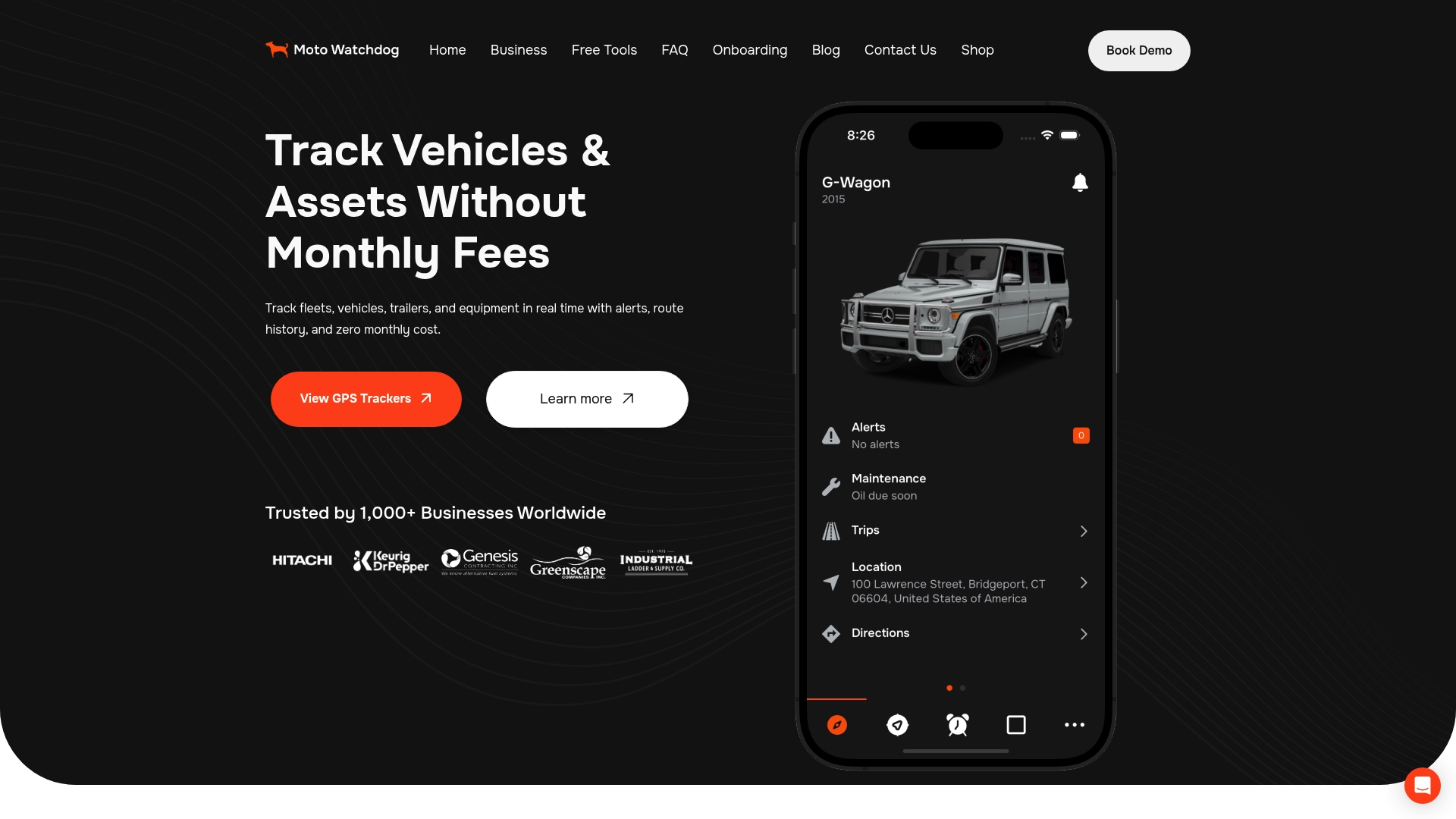
Motowatchdog’s devices are built for low-maintenance deployment, with long battery life and straightforward installation that works for both powered vehicles and stationary assets. Customizable geofence alerts and detailed location reporting give fleet managers the visibility they need without the overhead of a subscription model. For businesses evaluating subscription-free GPS tracking for their assets, Motowatchdog offers a practical, cost-effective starting point with proven reliability across diverse fleet and asset types.
FAQ
What is solar GPS tracker equipment?
Solar GPS tracker equipment is a GPS tracking device powered by an integrated solar panel and rechargeable lithium battery, enabling continuous location monitoring without manual battery replacement.
How does a solar GPS tracker work in cloudy weather?
Most industrial-grade solar GPS trackers store enough charge to operate through several consecutive overcast days without any sunlight recharge, using the energy stored in the lithium battery.
What network does a solar GPS tracker use?
Solar GPS trackers most commonly use LTE-M or NB-IoT networks, which consume less power per transmission and provide better signal reach in rural and remote environments than standard 4G.
What assets benefit most from solar GPS tracking?
Shipping containers, trailers, railcars, heavy construction equipment, and agricultural machinery are the best candidates because they remain outdoors for extended periods without access to a vehicle power source.
How long does a solar GPS tracker last?
Solar GPS tracker life expectancy typically ranges from seven to ten years depending on climate, mounting quality, and the level of protection the housing provides from the elements.