Jun 10, 2026

Small Fleet Tracking on Budget: A 2026 Guide

Small Fleet Tracking on Budget: A 2026 Guide

Small fleet tracking on a budget is achievable in 2026 with GPS tools that cost as little as $3 per vehicle per month, require zero professional installation, and lock you into no long-term contracts. The industry term for this category is fleet telematics, and it has become genuinely accessible to small business owners who once assumed enterprise pricing was the only option. This guide covers the hardware, software, setup process, and common mistakes that determine whether your budget fleet tracking program saves money or quietly drains it.

What tools and features matter for small fleet tracking on budget

The core features a small fleet actually needs are real-time location, geofencing alerts, basic route history, and maintenance reminders. Driver scorecards, advanced dispatching, and predictive analytics are enterprise features that add cost without proportional value for fleets under 20 vehicles. Knowing the difference before you sign up is the single most important budget decision you will make.

Woman monitoring fleet tracking dashboard in office

Hardware costs and what to expect

Affordable GPS tracking for small fleets typically runs $8 to $25 per vehicle per month, with hardware costs around $79 to $99 for OBD-II plug-in devices. Standard monthly rates average $12 per vehicle, though some platforms start as low as $3 per vehicle per month. That pricing range means a five-vehicle fleet can be fully tracked for under $75 per month, including hardware amortized over one year.

Some providers go further. Certain tracking platforms include free hardware with prepaid plans or charge a low one-time device fee, which removes the upfront capital barrier entirely. For very tight budgets, smartphone-based tracking lets fleets start immediately with zero hardware investment, using drivers’ existing phones as the tracking device. This is a practical starting point before committing to dedicated hardware.

Platform Starting Price Contract Key Features
FleetRabbit Free (up to 3 vehicles) Month-to-month Geofencing, maintenance alerts, route playback
ETA Track Plus Custom quote Flexible GPS tracking, diagnostics, enterprise-grade reporting
Surety Business ~$8/vehicle/month No contract Real-time GPS, OBD-II plug-in, driver alerts
Motowatchdog Subscription-free One-time hardware 4G GPS, no recurring fees

Pro Tip: Before comparing platforms, write down the three problems you most need to solve: unauthorized vehicle use, fuel waste, or missed maintenance. Match features to those three problems only. Every feature beyond that is a cost you don’t need.

How to evaluate affordable fleet tracking for your small business

Vendor selection for a small fleet comes down to four factors: pricing transparency, contract terms, hardware simplicity, and customer support quality. Getting any one of these wrong costs more than the monthly subscription fee.
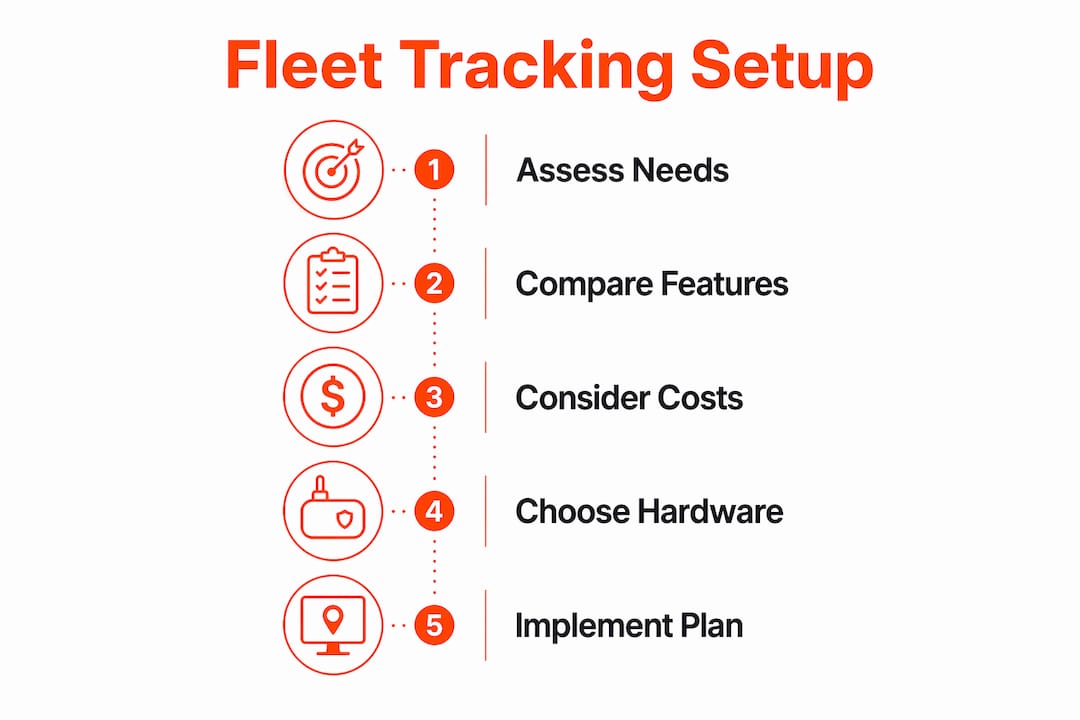
Infographic showing steps for evaluating small fleet tracking

The most significant shift in fleet telematics recently is the removal of enterprise pricing barriers, which now gives small fleets access to compliance and maintenance tools that were previously out of reach. Platforms like FleetRabbit offer free plans for up to three vehicles, with scalable paid tiers starting around $3 per vehicle per month. Over 3,200 fleet managers have adopted these models specifically to avoid expensive enterprise contracts.

Questions to ask any GPS tracking vendor

Before committing to a platform, ask these questions directly:

  1. Are all core features included in the base price, or are geofencing and maintenance alerts locked behind a higher tier?
  2. Is the contract month-to-month, or is there a minimum term with early termination fees?
  3. What hardware options are available, and can I self-install without voiding any warranty?
  4. What does customer support look like: phone, email, or chat, and during what hours?
  5. Can I add vehicles one at a time as my fleet grows, or do I need to commit to a minimum number upfront?

Industry experts recommend avoiding tiered pricing that hides geofencing, diagnostics, or route playback behind higher paywalls. Many platforms now bundle all core features into a single price tier, which simplifies budgeting and eliminates the frustration of discovering that the feature you actually need costs extra.

Pro Tip: Request a 14-day trial before paying for any hardware. A reputable budget tracking provider will let you test the software interface and alert system before you commit to devices. If they won’t, that tells you something.

Step-by-step setup for budget small fleet GPS tracking

Getting a small fleet online with GPS tracking takes less than a day when you choose the right hardware. The process below applies to OBD-II plug-in devices, which are the recommended starting point for any fleet under 20 vehicles.

Plug-and-play OBD-II devices allow non-technical staff to install a GPS unit in under two minutes, with no wiring, no tools, and no risk of voiding a vehicle warranty. Hardwired systems, by contrast, are a common failure point for small fleet installs and add unnecessary cost and complexity.

The setup process, step by step

  1. Create your account. Register on the platform’s website and select your plan. If a free tier is available for your fleet size, start there.
  2. Order hardware. Choose OBD-II plug-in devices for standard vehicles or long-life battery trackers for trailers and equipment without an OBD port.
  3. Install devices. Plug each OBD-II unit into the diagnostic port under the dashboard. The port is typically located within 18 inches of the steering column.
  4. Assign vehicles and drivers. Log into the platform and name each vehicle. Assign drivers if the software supports driver identification through PIN or key fob.
  5. Configure alerts. Set geofence boundaries around your yard or job sites, enable speed alerts, and schedule maintenance reminders based on mileage or engine hours.
  6. Test the system. Drive one vehicle around the block and confirm the platform updates location in real time and triggers any test alerts correctly.

Key alerts to activate immediately:

  • Geofence entry and exit for your primary locations
  • Speed threshold alerts set to your company policy
  • After-hours ignition alerts for theft prevention
  • Engine diagnostic code notifications for maintenance planning

Pro Tip: Start with two or three vehicles before rolling out to your full fleet. This gives you time to learn the platform, adjust alert thresholds, and train drivers without managing problems across every vehicle at once.

Small fleets using GPS tracking with automated maintenance scheduling see 40 to 60% fewer breakdowns and save 13 to 20% on fuel through route monitoring. Those numbers justify the investment even at the lowest budget tier.

Common mistakes in budget small fleet tracking

Most small fleet operators who overspend on tracking do so in one of three ways: they buy enterprise features they never use, they sign multi-year contracts without reading the terms, or they choose hardwired hardware that requires a technician every time a vehicle is added or swapped.

Most small fleets overpay by purchasing enterprise-grade features, paying for professional hardware installation, or signing multi-year contracts unnecessarily. Choosing a solution tailored to small fleet needs prevents this pattern entirely.

Common mistakes to avoid:

  • Signing a three-year contract before testing the platform for at least 30 days. Enterprise platforms often require three-year terms and charge $25 to $45 or more per vehicle per month, which is rarely justified for small fleets.
  • Choosing hardwired GPS units when OBD-II plug-in devices do the same job at a fraction of the cost and complexity.
  • Ignoring hidden fees such as activation charges, data overage fees, or charges for adding users to the account.
  • Skipping alert configuration after setup. A GPS device that only shows location without alerts is a passive tool. Alerts are what generate the daily value.
  • Paying for driver scorecards or advanced dispatching when your fleet’s primary need is simply knowing where vehicles are and whether maintenance is due.

“The best budget fleet tracking system is the one your drivers actually use. Complexity kills adoption. If the interface requires training, the data quality will suffer within 60 days.”

When GPS accuracy problems occur, the most common cause is device placement. OBD-II units in vehicles with heavy metal dashboards or tinted windshields may show position delays. Moving the device to a secondary port or using an external antenna adapter resolves most accuracy issues without replacing hardware.

Key takeaways

Effective small fleet tracking on a budget requires choosing month-to-month, all-inclusive pricing, self-installable OBD-II hardware, and a platform that matches features to actual small fleet needs rather than enterprise requirements.

Point Details
Hardware costs are predictable OBD-II plug-in devices cost $79 to $99 and install in under two minutes without technical help.
Free tiers exist for micro-fleets Platforms like FleetRabbit offer free tracking for up to three vehicles before any paid plan begins.
Avoid multi-year contracts Month-to-month pricing protects small fleets from being locked into platforms that don’t fit their needs.
Alerts drive ROI Configuring geofence, speed, and maintenance alerts immediately after setup is what converts tracking data into measurable savings.
Start small, then scale Begin with two or three vehicles to validate the platform before committing your full fleet.

Why simple beats sophisticated every time for small fleets

I have spent years watching small business owners get sold on fleet management platforms built for companies ten times their size. The pitch is always the same: advanced analytics, driver behavior scoring, predictive maintenance dashboards. And almost every time, those features sit unused within 90 days because the team doesn’t have the bandwidth to interpret them.

The operators who get the most from budget fleet tracking are the ones who set up three alerts, check the dashboard twice a week, and let the system do the quiet work of catching problems before they become expensive. One plumbing contractor I worked with cut his fuel bill by 14% in the first quarter simply by knowing which driver was idling for 40 minutes at lunch every day. He didn’t need a sophisticated platform. He needed a geofence and a speed alert.

My honest recommendation is to start with a free or low-cost plan, use OBD-II plug-in hardware, and resist every upsell until you have six months of data showing you actually need the next tier. The platforms worth trusting are the ones that make it easy to leave. Month-to-month terms are not just a pricing preference. They are a signal that the provider is confident enough in their product to compete on value rather than contract length.

Motowatchdog’s subscription-free model is the clearest expression of this philosophy I have seen in the market. No recurring fees means the cost calculation is simple, and simple cost calculations are exactly what small fleet operators need.

— Louis

Track your fleet without the recurring fees
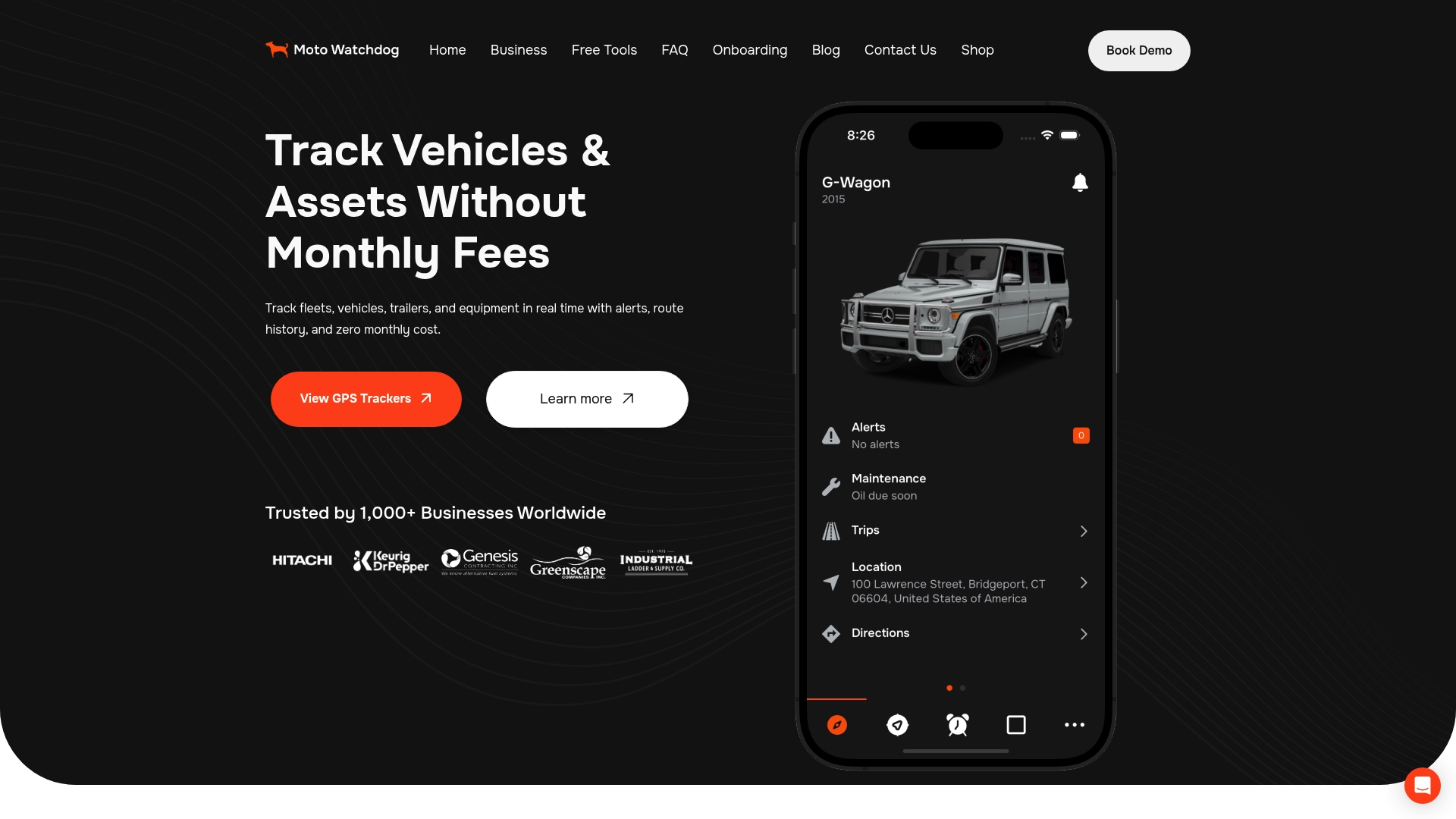
https://motowatchdog.com

Motowatchdog offers subscription-free 4G GPS tracking designed specifically for small fleets that want real-time vehicle visibility without monthly software costs eating into their margins. You pay for the hardware once and track your vehicles without an ongoing subscription. For a fleet of five vehicles, that model can save hundreds of dollars per year compared to standard per-vehicle monthly pricing. If you are ready to move from reactive problem-solving to data-driven fleet management without the enterprise price tag, Motowatchdog is the logical next step.

FAQ

What is the cheapest way to track a small fleet?

The cheapest approach is a smartphone-based GPS tracking app, which requires no hardware investment. For dedicated hardware, OBD-II plug-in devices starting at $79 to $99 paired with plans from $3 per vehicle per month represent the lowest-cost entry point with reliable data.

Do I need a contract for small business fleet GPS tracking?

No. Many platforms, including FleetRabbit and Surety Business, offer month-to-month pricing with no minimum term. Avoiding multi-year contracts is one of the most effective ways to control costs for a small fleet.

How long does it take to set up budget fleet tracking?

With OBD-II plug-in devices, setup takes under 30 minutes for a five-vehicle fleet. Device installation takes under two minutes per vehicle, and account configuration including alerts and geofences typically takes another 20 minutes.

Can I track a fleet of two or three vehicles affordably?

Yes. Platforms like FleetRabbit offer free plans for fleets of up to three vehicles, covering basic real-time tracking and maintenance alerts with no monthly fee.

What features should a small fleet prioritize in a tracking platform?

Real-time location, geofencing, maintenance reminders, and route history cover the needs of most small fleets. Features like driver scorecards, advanced dispatching, and predictive analytics add cost without proportional value for fleets under 20 vehicles.

Article generated by BabyLoveGrowth

Small fleet tracking on a budget is achievable in 2026 with GPS tools that cost as little as $3 per vehicle per month, require zero professional installation, and lock you into no long-term contracts. The industry term for this category is fleet telematics, and it has become genuinely accessible to small business owners who once assumed enterprise pricing was the only option. This guide covers the hardware, software, setup process, and common mistakes that determine whether your budget fleet tracking program saves money or quietly drains it.

What tools and features matter for small fleet tracking on budget

The core features a small fleet actually needs are real-time location, geofencing alerts, basic route history, and maintenance reminders. Driver scorecards, advanced dispatching, and predictive analytics are enterprise features that add cost without proportional value for fleets under 20 vehicles. Knowing the difference before you sign up is the single most important budget decision you will make.

Woman monitoring fleet tracking dashboard in office

Hardware costs and what to expect

Affordable GPS tracking for small fleets typically runs $8 to $25 per vehicle per month, with hardware costs around $79 to $99 for OBD-II plug-in devices. Standard monthly rates average $12 per vehicle, though some platforms start as low as $3 per vehicle per month. That pricing range means a five-vehicle fleet can be fully tracked for under $75 per month, including hardware amortized over one year.

Some providers go further. Certain tracking platforms include free hardware with prepaid plans or charge a low one-time device fee, which removes the upfront capital barrier entirely. For very tight budgets, smartphone-based tracking lets fleets start immediately with zero hardware investment, using drivers’ existing phones as the tracking device. This is a practical starting point before committing to dedicated hardware.

Platform Starting Price Contract Key Features
FleetRabbit Free (up to 3 vehicles) Month-to-month Geofencing, maintenance alerts, route playback
ETA Track Plus Custom quote Flexible GPS tracking, diagnostics, enterprise-grade reporting
Surety Business ~$8/vehicle/month No contract Real-time GPS, OBD-II plug-in, driver alerts
Motowatchdog Subscription-free One-time hardware 4G GPS, no recurring fees

Pro Tip: Before comparing platforms, write down the three problems you most need to solve: unauthorized vehicle use, fuel waste, or missed maintenance. Match features to those three problems only. Every feature beyond that is a cost you don’t need.

How to evaluate affordable fleet tracking for your small business

Vendor selection for a small fleet comes down to four factors: pricing transparency, contract terms, hardware simplicity, and customer support quality. Getting any one of these wrong costs more than the monthly subscription fee.

Infographic showing steps for evaluating small fleet tracking

The most significant shift in fleet telematics recently is the removal of enterprise pricing barriers, which now gives small fleets access to compliance and maintenance tools that were previously out of reach. Platforms like FleetRabbit offer free plans for up to three vehicles, with scalable paid tiers starting around $3 per vehicle per month. Over 3,200 fleet managers have adopted these models specifically to avoid expensive enterprise contracts.

Questions to ask any GPS tracking vendor

Before committing to a platform, ask these questions directly:

  1. Are all core features included in the base price, or are geofencing and maintenance alerts locked behind a higher tier?
  2. Is the contract month-to-month, or is there a minimum term with early termination fees?
  3. What hardware options are available, and can I self-install without voiding any warranty?
  4. What does customer support look like: phone, email, or chat, and during what hours?
  5. Can I add vehicles one at a time as my fleet grows, or do I need to commit to a minimum number upfront?

Industry experts recommend avoiding tiered pricing that hides geofencing, diagnostics, or route playback behind higher paywalls. Many platforms now bundle all core features into a single price tier, which simplifies budgeting and eliminates the frustration of discovering that the feature you actually need costs extra.

Pro Tip: Request a 14-day trial before paying for any hardware. A reputable budget tracking provider will let you test the software interface and alert system before you commit to devices. If they won’t, that tells you something.

Step-by-step setup for budget small fleet GPS tracking

Getting a small fleet online with GPS tracking takes less than a day when you choose the right hardware. The process below applies to OBD-II plug-in devices, which are the recommended starting point for any fleet under 20 vehicles.

Plug-and-play OBD-II devices allow non-technical staff to install a GPS unit in under two minutes, with no wiring, no tools, and no risk of voiding a vehicle warranty. Hardwired systems, by contrast, are a common failure point for small fleet installs and add unnecessary cost and complexity.

The setup process, step by step

  1. Create your account. Register on the platform’s website and select your plan. If a free tier is available for your fleet size, start there.
  2. Order hardware. Choose OBD-II plug-in devices for standard vehicles or long-life battery trackers for trailers and equipment without an OBD port.
  3. Install devices. Plug each OBD-II unit into the diagnostic port under the dashboard. The port is typically located within 18 inches of the steering column.
  4. Assign vehicles and drivers. Log into the platform and name each vehicle. Assign drivers if the software supports driver identification through PIN or key fob.
  5. Configure alerts. Set geofence boundaries around your yard or job sites, enable speed alerts, and schedule maintenance reminders based on mileage or engine hours.
  6. Test the system. Drive one vehicle around the block and confirm the platform updates location in real time and triggers any test alerts correctly.

Key alerts to activate immediately:

  • Geofence entry and exit for your primary locations
  • Speed threshold alerts set to your company policy
  • After-hours ignition alerts for theft prevention
  • Engine diagnostic code notifications for maintenance planning

Pro Tip: Start with two or three vehicles before rolling out to your full fleet. This gives you time to learn the platform, adjust alert thresholds, and train drivers without managing problems across every vehicle at once.

Small fleets using GPS tracking with automated maintenance scheduling see 40 to 60% fewer breakdowns and save 13 to 20% on fuel through route monitoring. Those numbers justify the investment even at the lowest budget tier.

Common mistakes in budget small fleet tracking

Most small fleet operators who overspend on tracking do so in one of three ways: they buy enterprise features they never use, they sign multi-year contracts without reading the terms, or they choose hardwired hardware that requires a technician every time a vehicle is added or swapped.

Most small fleets overpay by purchasing enterprise-grade features, paying for professional hardware installation, or signing multi-year contracts unnecessarily. Choosing a solution tailored to small fleet needs prevents this pattern entirely.

Common mistakes to avoid:

  • Signing a three-year contract before testing the platform for at least 30 days. Enterprise platforms often require three-year terms and charge $25 to $45 or more per vehicle per month, which is rarely justified for small fleets.
  • Choosing hardwired GPS units when OBD-II plug-in devices do the same job at a fraction of the cost and complexity.
  • Ignoring hidden fees such as activation charges, data overage fees, or charges for adding users to the account.
  • Skipping alert configuration after setup. A GPS device that only shows location without alerts is a passive tool. Alerts are what generate the daily value.
  • Paying for driver scorecards or advanced dispatching when your fleet’s primary need is simply knowing where vehicles are and whether maintenance is due.

“The best budget fleet tracking system is the one your drivers actually use. Complexity kills adoption. If the interface requires training, the data quality will suffer within 60 days.”

When GPS accuracy problems occur, the most common cause is device placement. OBD-II units in vehicles with heavy metal dashboards or tinted windshields may show position delays. Moving the device to a secondary port or using an external antenna adapter resolves most accuracy issues without replacing hardware.

Key takeaways

Effective small fleet tracking on a budget requires choosing month-to-month, all-inclusive pricing, self-installable OBD-II hardware, and a platform that matches features to actual small fleet needs rather than enterprise requirements.

Point Details
Hardware costs are predictable OBD-II plug-in devices cost $79 to $99 and install in under two minutes without technical help.
Free tiers exist for micro-fleets Platforms like FleetRabbit offer free tracking for up to three vehicles before any paid plan begins.
Avoid multi-year contracts Month-to-month pricing protects small fleets from being locked into platforms that don’t fit their needs.
Alerts drive ROI Configuring geofence, speed, and maintenance alerts immediately after setup is what converts tracking data into measurable savings.
Start small, then scale Begin with two or three vehicles to validate the platform before committing your full fleet.

Why simple beats sophisticated every time for small fleets

I have spent years watching small business owners get sold on fleet management platforms built for companies ten times their size. The pitch is always the same: advanced analytics, driver behavior scoring, predictive maintenance dashboards. And almost every time, those features sit unused within 90 days because the team doesn’t have the bandwidth to interpret them.

The operators who get the most from budget fleet tracking are the ones who set up three alerts, check the dashboard twice a week, and let the system do the quiet work of catching problems before they become expensive. One plumbing contractor I worked with cut his fuel bill by 14% in the first quarter simply by knowing which driver was idling for 40 minutes at lunch every day. He didn’t need a sophisticated platform. He needed a geofence and a speed alert.

My honest recommendation is to start with a free or low-cost plan, use OBD-II plug-in hardware, and resist every upsell until you have six months of data showing you actually need the next tier. The platforms worth trusting are the ones that make it easy to leave. Month-to-month terms are not just a pricing preference. They are a signal that the provider is confident enough in their product to compete on value rather than contract length.

Motowatchdog’s subscription-free model is the clearest expression of this philosophy I have seen in the market. No recurring fees means the cost calculation is simple, and simple cost calculations are exactly what small fleet operators need.

— Louis

Track your fleet without the recurring fees

https://motowatchdog.com

Motowatchdog offers subscription-free 4G GPS tracking designed specifically for small fleets that want real-time vehicle visibility without monthly software costs eating into their margins. You pay for the hardware once and track your vehicles without an ongoing subscription. For a fleet of five vehicles, that model can save hundreds of dollars per year compared to standard per-vehicle monthly pricing. If you are ready to move from reactive problem-solving to data-driven fleet management without the enterprise price tag, Motowatchdog is the logical next step.

FAQ

What is the cheapest way to track a small fleet?

The cheapest approach is a smartphone-based GPS tracking app, which requires no hardware investment. For dedicated hardware, OBD-II plug-in devices starting at $79 to $99 paired with plans from $3 per vehicle per month represent the lowest-cost entry point with reliable data.

Do I need a contract for small business fleet GPS tracking?

No. Many platforms, including FleetRabbit and Surety Business, offer month-to-month pricing with no minimum term. Avoiding multi-year contracts is one of the most effective ways to control costs for a small fleet.

How long does it take to set up budget fleet tracking?

With OBD-II plug-in devices, setup takes under 30 minutes for a five-vehicle fleet. Device installation takes under two minutes per vehicle, and account configuration including alerts and geofences typically takes another 20 minutes.

Can I track a fleet of two or three vehicles affordably?

Yes. Platforms like FleetRabbit offer free plans for fleets of up to three vehicles, covering basic real-time tracking and maintenance alerts with no monthly fee.

What features should a small fleet prioritize in a tracking platform?

Real-time location, geofencing, maintenance reminders, and route history cover the needs of most small fleets. Features like driver scorecards, advanced dispatching, and predictive analytics add cost without proportional value for fleets under 20 vehicles.

Article generated by BabyLoveGrowth

Small fleet tracking on a budget is achievable in 2026 with GPS tools that cost as little as $3 per vehicle per month, require zero professional installation, and lock you into no long-term contracts. The industry term for this category is fleet telematics, and it has become genuinely accessible to small business owners who once assumed enterprise pricing was the only option. This guide covers the hardware, software, setup process, and common mistakes that determine whether your budget fleet tracking program saves money or quietly drains it.

What tools and features matter for small fleet tracking on budget

The core features a small fleet actually needs are real-time location, geofencing alerts, basic route history, and maintenance reminders. Driver scorecards, advanced dispatching, and predictive analytics are enterprise features that add cost without proportional value for fleets under 20 vehicles. Knowing the difference before you sign up is the single most important budget decision you will make.

Woman monitoring fleet tracking dashboard in office

Hardware costs and what to expect

Affordable GPS tracking for small fleets typically runs $8 to $25 per vehicle per month, with hardware costs around $79 to $99 for OBD-II plug-in devices. Standard monthly rates average $12 per vehicle, though some platforms start as low as $3 per vehicle per month. That pricing range means a five-vehicle fleet can be fully tracked for under $75 per month, including hardware amortized over one year.

Some providers go further. Certain tracking platforms include free hardware with prepaid plans or charge a low one-time device fee, which removes the upfront capital barrier entirely. For very tight budgets, smartphone-based tracking lets fleets start immediately with zero hardware investment, using drivers’ existing phones as the tracking device. This is a practical starting point before committing to dedicated hardware.

Platform Starting Price Contract Key Features
FleetRabbit Free (up to 3 vehicles) Month-to-month Geofencing, maintenance alerts, route playback
ETA Track Plus Custom quote Flexible GPS tracking, diagnostics, enterprise-grade reporting
Surety Business ~$8/vehicle/month No contract Real-time GPS, OBD-II plug-in, driver alerts
Motowatchdog Subscription-free One-time hardware 4G GPS, no recurring fees

Pro Tip: Before comparing platforms, write down the three problems you most need to solve: unauthorized vehicle use, fuel waste, or missed maintenance. Match features to those three problems only. Every feature beyond that is a cost you don’t need.

How to evaluate affordable fleet tracking for your small business

Vendor selection for a small fleet comes down to four factors: pricing transparency, contract terms, hardware simplicity, and customer support quality. Getting any one of these wrong costs more than the monthly subscription fee.

Infographic showing steps for evaluating small fleet tracking

The most significant shift in fleet telematics recently is the removal of enterprise pricing barriers, which now gives small fleets access to compliance and maintenance tools that were previously out of reach. Platforms like FleetRabbit offer free plans for up to three vehicles, with scalable paid tiers starting around $3 per vehicle per month. Over 3,200 fleet managers have adopted these models specifically to avoid expensive enterprise contracts.

Questions to ask any GPS tracking vendor

Before committing to a platform, ask these questions directly:

  1. Are all core features included in the base price, or are geofencing and maintenance alerts locked behind a higher tier?
  2. Is the contract month-to-month, or is there a minimum term with early termination fees?
  3. What hardware options are available, and can I self-install without voiding any warranty?
  4. What does customer support look like: phone, email, or chat, and during what hours?
  5. Can I add vehicles one at a time as my fleet grows, or do I need to commit to a minimum number upfront?

Industry experts recommend avoiding tiered pricing that hides geofencing, diagnostics, or route playback behind higher paywalls. Many platforms now bundle all core features into a single price tier, which simplifies budgeting and eliminates the frustration of discovering that the feature you actually need costs extra.

Pro Tip: Request a 14-day trial before paying for any hardware. A reputable budget tracking provider will let you test the software interface and alert system before you commit to devices. If they won’t, that tells you something.

Step-by-step setup for budget small fleet GPS tracking

Getting a small fleet online with GPS tracking takes less than a day when you choose the right hardware. The process below applies to OBD-II plug-in devices, which are the recommended starting point for any fleet under 20 vehicles.

Plug-and-play OBD-II devices allow non-technical staff to install a GPS unit in under two minutes, with no wiring, no tools, and no risk of voiding a vehicle warranty. Hardwired systems, by contrast, are a common failure point for small fleet installs and add unnecessary cost and complexity.

The setup process, step by step

  1. Create your account. Register on the platform’s website and select your plan. If a free tier is available for your fleet size, start there.
  2. Order hardware. Choose OBD-II plug-in devices for standard vehicles or long-life battery trackers for trailers and equipment without an OBD port.
  3. Install devices. Plug each OBD-II unit into the diagnostic port under the dashboard. The port is typically located within 18 inches of the steering column.
  4. Assign vehicles and drivers. Log into the platform and name each vehicle. Assign drivers if the software supports driver identification through PIN or key fob.
  5. Configure alerts. Set geofence boundaries around your yard or job sites, enable speed alerts, and schedule maintenance reminders based on mileage or engine hours.
  6. Test the system. Drive one vehicle around the block and confirm the platform updates location in real time and triggers any test alerts correctly.

Key alerts to activate immediately:

  • Geofence entry and exit for your primary locations
  • Speed threshold alerts set to your company policy
  • After-hours ignition alerts for theft prevention
  • Engine diagnostic code notifications for maintenance planning

Pro Tip: Start with two or three vehicles before rolling out to your full fleet. This gives you time to learn the platform, adjust alert thresholds, and train drivers without managing problems across every vehicle at once.

Small fleets using GPS tracking with automated maintenance scheduling see 40 to 60% fewer breakdowns and save 13 to 20% on fuel through route monitoring. Those numbers justify the investment even at the lowest budget tier.

Common mistakes in budget small fleet tracking

Most small fleet operators who overspend on tracking do so in one of three ways: they buy enterprise features they never use, they sign multi-year contracts without reading the terms, or they choose hardwired hardware that requires a technician every time a vehicle is added or swapped.

Most small fleets overpay by purchasing enterprise-grade features, paying for professional hardware installation, or signing multi-year contracts unnecessarily. Choosing a solution tailored to small fleet needs prevents this pattern entirely.

Common mistakes to avoid:

  • Signing a three-year contract before testing the platform for at least 30 days. Enterprise platforms often require three-year terms and charge $25 to $45 or more per vehicle per month, which is rarely justified for small fleets.
  • Choosing hardwired GPS units when OBD-II plug-in devices do the same job at a fraction of the cost and complexity.
  • Ignoring hidden fees such as activation charges, data overage fees, or charges for adding users to the account.
  • Skipping alert configuration after setup. A GPS device that only shows location without alerts is a passive tool. Alerts are what generate the daily value.
  • Paying for driver scorecards or advanced dispatching when your fleet’s primary need is simply knowing where vehicles are and whether maintenance is due.

“The best budget fleet tracking system is the one your drivers actually use. Complexity kills adoption. If the interface requires training, the data quality will suffer within 60 days.”

When GPS accuracy problems occur, the most common cause is device placement. OBD-II units in vehicles with heavy metal dashboards or tinted windshields may show position delays. Moving the device to a secondary port or using an external antenna adapter resolves most accuracy issues without replacing hardware.

Key takeaways

Effective small fleet tracking on a budget requires choosing month-to-month, all-inclusive pricing, self-installable OBD-II hardware, and a platform that matches features to actual small fleet needs rather than enterprise requirements.

Point Details
Hardware costs are predictable OBD-II plug-in devices cost $79 to $99 and install in under two minutes without technical help.
Free tiers exist for micro-fleets Platforms like FleetRabbit offer free tracking for up to three vehicles before any paid plan begins.
Avoid multi-year contracts Month-to-month pricing protects small fleets from being locked into platforms that don’t fit their needs.
Alerts drive ROI Configuring geofence, speed, and maintenance alerts immediately after setup is what converts tracking data into measurable savings.
Start small, then scale Begin with two or three vehicles to validate the platform before committing your full fleet.

Why simple beats sophisticated every time for small fleets

I have spent years watching small business owners get sold on fleet management platforms built for companies ten times their size. The pitch is always the same: advanced analytics, driver behavior scoring, predictive maintenance dashboards. And almost every time, those features sit unused within 90 days because the team doesn’t have the bandwidth to interpret them.

The operators who get the most from budget fleet tracking are the ones who set up three alerts, check the dashboard twice a week, and let the system do the quiet work of catching problems before they become expensive. One plumbing contractor I worked with cut his fuel bill by 14% in the first quarter simply by knowing which driver was idling for 40 minutes at lunch every day. He didn’t need a sophisticated platform. He needed a geofence and a speed alert.

My honest recommendation is to start with a free or low-cost plan, use OBD-II plug-in hardware, and resist every upsell until you have six months of data showing you actually need the next tier. The platforms worth trusting are the ones that make it easy to leave. Month-to-month terms are not just a pricing preference. They are a signal that the provider is confident enough in their product to compete on value rather than contract length.

Motowatchdog’s subscription-free model is the clearest expression of this philosophy I have seen in the market. No recurring fees means the cost calculation is simple, and simple cost calculations are exactly what small fleet operators need.

— Louis

Track your fleet without the recurring fees

https://motowatchdog.com

Motowatchdog offers subscription-free 4G GPS tracking designed specifically for small fleets that want real-time vehicle visibility without monthly software costs eating into their margins. You pay for the hardware once and track your vehicles without an ongoing subscription. For a fleet of five vehicles, that model can save hundreds of dollars per year compared to standard per-vehicle monthly pricing. If you are ready to move from reactive problem-solving to data-driven fleet management without the enterprise price tag, Motowatchdog is the logical next step.

FAQ

What is the cheapest way to track a small fleet?

The cheapest approach is a smartphone-based GPS tracking app, which requires no hardware investment. For dedicated hardware, OBD-II plug-in devices starting at $79 to $99 paired with plans from $3 per vehicle per month represent the lowest-cost entry point with reliable data.

Do I need a contract for small business fleet GPS tracking?

No. Many platforms, including FleetRabbit and Surety Business, offer month-to-month pricing with no minimum term. Avoiding multi-year contracts is one of the most effective ways to control costs for a small fleet.

How long does it take to set up budget fleet tracking?

With OBD-II plug-in devices, setup takes under 30 minutes for a five-vehicle fleet. Device installation takes under two minutes per vehicle, and account configuration including alerts and geofences typically takes another 20 minutes.

Can I track a fleet of two or three vehicles affordably?

Yes. Platforms like FleetRabbit offer free plans for fleets of up to three vehicles, covering basic real-time tracking and maintenance alerts with no monthly fee.

What features should a small fleet prioritize in a tracking platform?

Real-time location, geofencing, maintenance reminders, and route history cover the needs of most small fleets. Features like driver scorecards, advanced dispatching, and predictive analytics add cost without proportional value for fleets under 20 vehicles.

Article generated by BabyLoveGrowth

Small Fleet Tracking on Budget: A 2026 Guide