

How to start saving money
Lorem ipsum dolor sit amet, consectetur adipiscing elit lobortis arcu enim urna adipiscing praesent velit viverra sit semper lorem eu cursus vel hendrerit elementum morbi curabitur etiam nibh justo, lorem aliquet donec sed sit mi dignissim at ante massa mattis.
- Neque sodales ut etiam sit amet nisl purus non tellus orci ac auctor
- Adipiscing elit ut aliquam purus sit amet viverra suspendisse potent
- Mauris commodo quis imperdiet massa tincidunt nunc pulvinar
- Excepteur sint occaecat cupidatat non proident sunt in culpa qui officia
Why it is important to start saving
Vitae congue eu consequat ac felis placerat vestibulum lectus mauris ultrices cursus sit amet dictum sit amet justo donec enim diam porttitor lacus luctus accumsan tortor posuere praesent tristique magna sit amet purus gravida quis blandit turpis.

How much money should I save?
At risus viverra adipiscing at in tellus integer feugiat nisl pretium fusce id velit ut tortor sagittis orci a scelerisque purus semper eget at lectus urna duis convallis. porta nibh venenatis cras sed felis eget neque laoreet suspendisse interdum consectetur libero id faucibus nisl donec pretium vulputate sapien nec sagittis aliquam nunc lobortis mattis aliquam faucibus purus in.
- Neque sodales ut etiam sit amet nisl purus non tellus orci ac auctor
- Adipiscing elit ut aliquam purus sit amet viverra suspendisse potenti
- Mauris commodo quis imperdiet massa tincidunt nunc pulvinar
- Adipiscing elit ut aliquam purus sit amet viverra suspendisse potenti
What percentege of my income should go to savings?
Nisi quis eleifend quam adipiscing vitae aliquet bibendum enim facilisis gravida neque. Velit euismod in pellentesque massa placerat volutpat lacus laoreet non curabitur gravida odio aenean sed adipiscing diam donec adipiscing tristique risus. amet est placerat in egestas erat imperdiet sed euismod nisi.
“Nisi quis eleifend quam adipiscing vitae aliquet bibendum enim facilisis gravida neque velit euismod in pellentesque”
Do you have any comments? Share them with us on social media
Eget lorem dolor sed viverra ipsum nunc aliquet bibendum felis donec et odio pellentesque diam volutpat commodo sed egestas aliquam sem fringilla ut morbi tincidunt augue interdum velit euismod eu tincidunt tortor aliquam nulla facilisi aenean sed adipiscing diam donec adipiscing ut lectus arcu bibendum at varius vel pharetra nibh venenatis cras sed felis eget.
Tamper-proof GPS devices deliver something standard trackers cannot: an instant alert the moment someone attempts to remove, disable, or interfere with the unit. For fleet managers and equipment rental operators, that difference translates directly into faster theft response, stronger asset accountability, and measurable cost savings across the board.
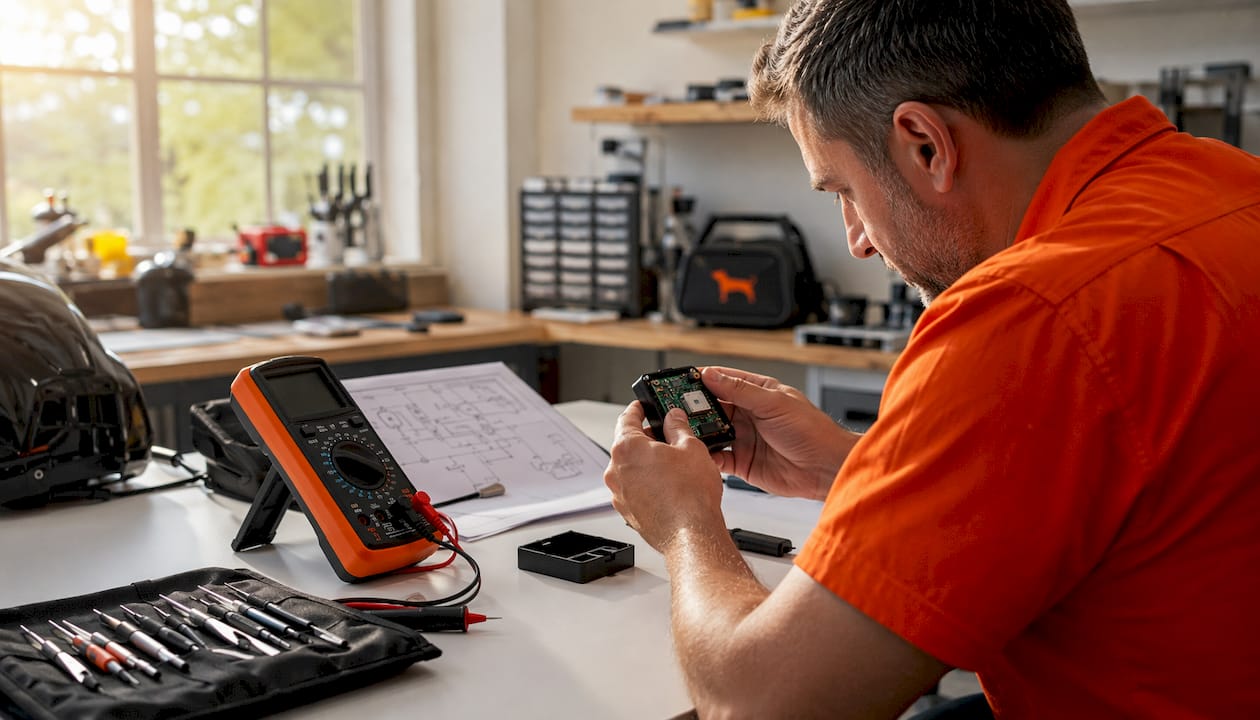
What are the core benefits of tamper-proof GPS devices?
The advantages of tamper-proof tracking devices go well beyond simple location monitoring. Here is what they deliver in practice:
- Instant tamper alerts: The device triggers a notification the moment it detects removal or interference, giving managers time to respond before an asset disappears.
- Continuous location accuracy: Uninterrupted tracking keeps asset location data reliable, even when a thief attempts to disable the unit.
- Insurance and liability advantages: Documented tamper events and recovery data support insurance claims and can reduce premium costs over time.
- Misuse prevention: Real-time monitoring catches unauthorized use during off-hours, protecting against fuel waste, wear, and liability exposure.
- Geofencing integration: Geofence alerts trigger automatically when an asset crosses a defined boundary, adding a second layer of protection beyond physical tamper detection.
- Signal authentication: Advanced devices validate GPS signal integrity, flagging spoofing attempts that would otherwise silently redirect location data.
How do thieves tamper with GPS devices, and how are attacks detected?
Understanding the threat makes the technology easier to evaluate. Tampering falls into two broad categories: physical and electronic.
Physical tampering includes direct removal, cutting power wires, or placing the device inside a signal-blocking pouch. These attacks are the most common on construction sites and rental yards. Electronic attacks are more sophisticated and increasingly accessible.
- Signal jamming: A low-cost jammer floods the GPS frequency, causing the device to lose satellite contact entirely. The asset goes dark on the manager’s dashboard.
- GPS spoofing: A transmitter sends false positioning signals, making the tracker report a fabricated location. Spoofing attacks are detected by secured receivers that look for signal anomalies, such as unusually high signal power or inconsistent navigation data.
- Power interruption: Cutting the device’s power supply is a fast, low-tech attack. Tamper-proof units with internal backup batteries continue reporting even after the main power line is severed.
Detection relies on a combination of physical tamper sensors, movement detection, signal anomaly identification, and encrypted communication channels. Devices that use encrypted GPS communication protect data integrity against interception, making it significantly harder for attackers to manipulate what the manager sees.
How do tamper alerts actually work inside a secure GPS device?
The alert system in a tamper-proof tracker operates through layered sensor logic. When any of the following conditions occur, the device generates a notification and transmits it to the fleet management platform:
- Physical removal: An accelerometer or case-open sensor detects that the unit has been moved or opened.
- Power disconnection: A voltage monitor registers a drop in main power and triggers an alert before the backup battery takes over.
- Signal anomaly: The device’s signal processing compares incoming satellite data against expected parameters. A spoofed signal typically arrives at higher power than a genuine satellite signal, flagging it as suspect.
- Movement outside defined zones: When paired with geofencing, the device alerts managers the moment an asset crosses a boundary without authorization.
Industry leaders are now integrating assured Positioning, Navigation, and Timing (PNT) systems that combine GPS with independent signal sources, such as the Iridium PNT ASIC, to detect sophisticated jamming and spoofing beyond simple physical tampering. This chip delivers cryptographically secure timing and location data, continuously validating signal integrity so managers receive a confidence score alongside every position update. Alerts reach fleet managers through mobile apps, SMS, or platform dashboards within seconds of detection.
How can fleet managers prevent GPS tracker tampering?
Prevention starts at installation. A device that is hard to find is hard to remove.
- Install in concealed, hardwired locations: Routing power directly from the vehicle’s electrical system and mounting the device behind panels or inside equipment cavities makes physical removal far more difficult. A dedicated fleet hardwiring guide covers the best mounting positions for common vehicle and equipment types.
- Use protective enclosures: Weatherproof, impact-resistant housings protect the device from both environmental damage and deliberate physical attacks.
- Schedule regular inspections: Periodic checks confirm the device is still in place, powered, and communicating. Gaps in location history are often the first sign of tampering.
- Configure geofence and movement alerts: Setting alerts for after-hours movement or boundary crossings catches unauthorized use before it escalates to theft.
- Pair tamper detection with signal authentication: Physical security alone does not stop electronic attacks. Devices that validate signal integrity close the gap that jammers and spoofers exploit.
Pro Tip: Set your tamper alert notification to reach both the fleet manager and a secondary contact. If the primary contact is unavailable, the backup can initiate a response immediately, cutting recovery time significantly.
Real-world use cases: protecting rental and fleet equipment
The practical value of secure GPS solutions becomes clearest in high-theft environments. Construction equipment and rental fleets represent two of the most vulnerable asset categories in the United States.

A rental operator tracking compact excavators and skid steers across multiple job sites faces a specific challenge: equipment moves legitimately between locations, so distinguishing authorized movement from theft requires more than a location ping. Tamper-proof devices solve this by alerting the operator the moment a unit is moved without a corresponding rental agreement or outside scheduled hours. Rapid detection and notification enable swift recovery and operational accountability in rental fleets.
Fleet managers report improved operational efficiency and reduced fuel costs after deploying tamper-proof GPS tracking with geofence and movement alerts, because the data exposes misuse patterns that were previously invisible. A driver using a company truck for personal errands after hours, or an operator idling equipment for extended periods, shows up immediately in the tracking dashboard. The financial impact compounds: lower fuel bills, reduced wear, and fewer insurance claims all follow from consistent monitoring.
For equipment rental operators, the accountability benefit extends to customers. When renters know their activity is tracked and tamper attempts are logged, unauthorized use drops. That accountability also simplifies dispute resolution when damage or loss occurs.
Subscription-free tamper-proof GPS solutions that reduce your costs
One of the most overlooked advantages of GPS tracking is the total cost of ownership. Monthly subscription fees accumulate quickly across a fleet, often exceeding the hardware cost within a year. Subscription-free GPS devices eliminate that ongoing expense while delivering the same tamper detection, real-time alerts, and geofencing capabilities.
Over 1,000 businesses rely on Motowatchdog’s accuracy, reliability, and user-friendly interface for asset tracking and tamper prevention. Customer feedback consistently highlights effective tamper detection and ease of setup as the two strongest points. Motowatchdog’s devices include customizable geofencing alerts, long battery life, and detailed mileage tracking, all without a recurring monthly fee. The combination of reliable hardware and zero subscription cost makes the return on investment straightforward to calculate, particularly for operators managing five or more assets.
Modern tamper-proof trackers also benefit from IoT connectivity advances. The role of eSIM in IoT devices enables GPS trackers to maintain reliable global connectivity without physical SIM swaps, which is especially useful for rental equipment that crosses state lines or operates in remote areas.
What are the legal and regulatory considerations around GPS tampering?
GPS tampering carries real legal consequences in the United States. Deliberately jamming GPS signals violates the Communications Act of 1934, and the Federal Communications Commission (FCC) actively enforces this prohibition. Selling, importing, or operating a GPS jammer is illegal for civilians, with penalties including fines and equipment seizure.
For fleet managers, the legal picture has two sides. Deploying GPS trackers on company-owned vehicles and equipment is generally lawful, provided employees are notified per applicable state labor laws. Several states, including California, require written disclosure when employees are tracked during work hours. Tracking rental equipment is broadly permitted, as operators have a legitimate property interest in monitoring their own assets.
Tamper-proof GPS data also carries evidentiary weight. Timestamped tamper alerts and location logs have been used in theft prosecutions and insurance fraud investigations. Maintaining clean, unaltered records from a device with encrypted communication strengthens that evidentiary value considerably.
Key Takeaways
Tamper-proof GPS devices protect fleet and rental assets through layered detection, from physical sensors to signal authentication, while eliminating subscription costs that erode ROI.
| Point | Details |
|---|---|
| Instant tamper alerts | Devices trigger notifications upon removal or power disconnection, enabling fast theft response. |
| Signal spoofing detection | Encrypted communication and anomaly detection flag false GPS signals before they mislead managers. |
| Legal compliance matters | FCC prohibits GPS jamming; fleet managers must follow state disclosure laws when tracking employees. |
| Subscription-free savings | Eliminating monthly fees lowers total cost of ownership without sacrificing tamper detection capability. |
| Motowatchdog reliability | Over 1,000 businesses use Motowatchdog for accurate, tamper-proof asset tracking with no recurring fees. |
Motowatchdog gives fleet managers tamper-proof tracking without monthly fees
Fleet managers who have read this far already know what they need: a device that alerts immediately, tracks reliably, and does not add a subscription line to the monthly budget. That is exactly what Motowatchdog delivers.
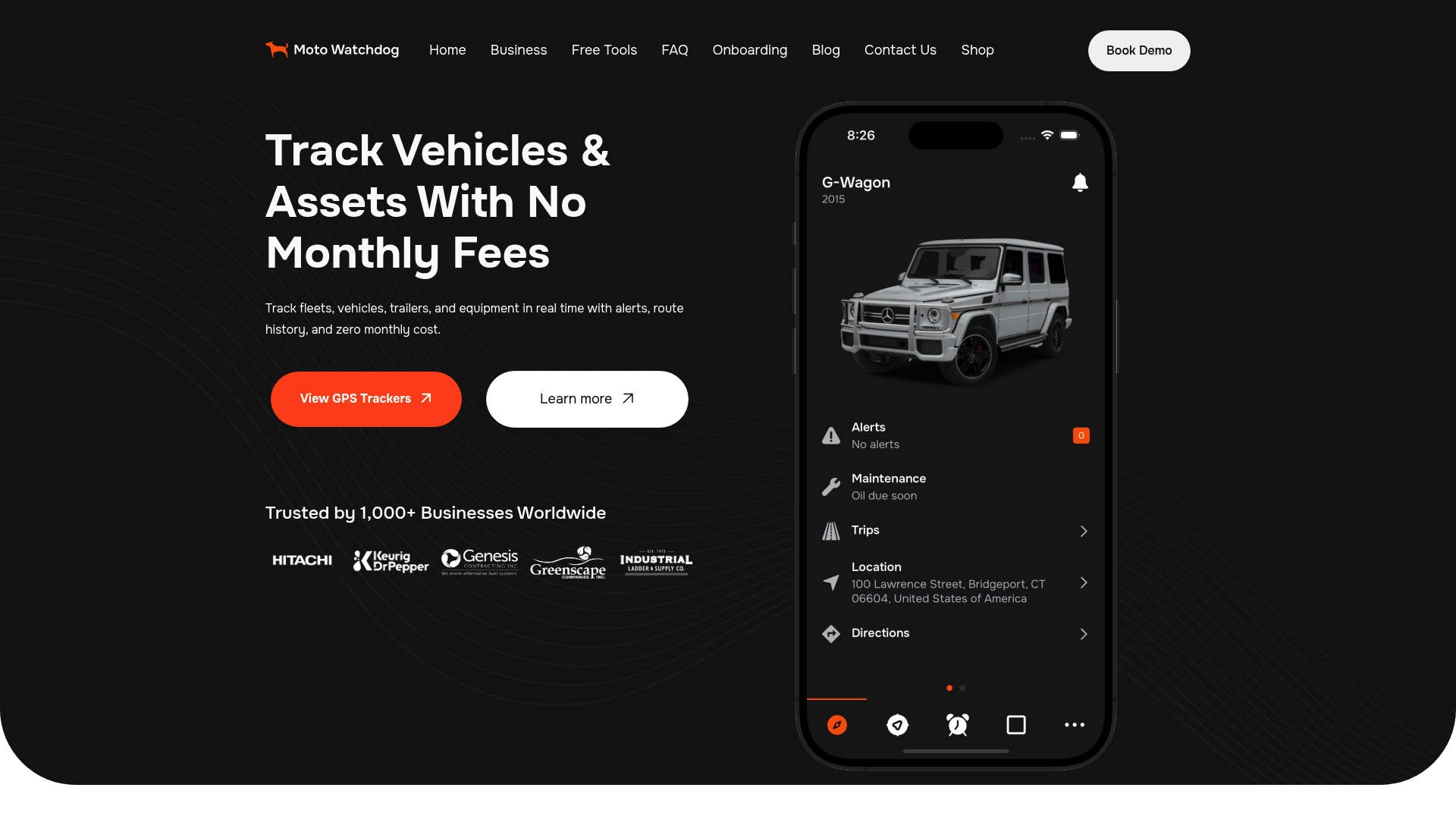
Motowatchdog offers subscription-free GPS tracking built specifically for businesses that need real-time tamper alerts, customizable geofencing, and long battery life across vehicles and equipment. There are no monthly fees, no contracts, and no trade-off on performance. The setup is straightforward, the alerts are immediate, and the cost savings are permanent. Visit Motowatchdog to check device options and get your fleet protected today.

