
How to start saving money
Lorem ipsum dolor sit amet, consectetur adipiscing elit lobortis arcu enim urna adipiscing praesent velit viverra sit semper lorem eu cursus vel hendrerit elementum morbi curabitur etiam nibh justo, lorem aliquet donec sed sit mi dignissim at ante massa mattis.
- Neque sodales ut etiam sit amet nisl purus non tellus orci ac auctor
- Adipiscing elit ut aliquam purus sit amet viverra suspendisse potent
- Mauris commodo quis imperdiet massa tincidunt nunc pulvinar
- Excepteur sint occaecat cupidatat non proident sunt in culpa qui officia
Why it is important to start saving
Vitae congue eu consequat ac felis placerat vestibulum lectus mauris ultrices cursus sit amet dictum sit amet justo donec enim diam porttitor lacus luctus accumsan tortor posuere praesent tristique magna sit amet purus gravida quis blandit turpis.

How much money should I save?
At risus viverra adipiscing at in tellus integer feugiat nisl pretium fusce id velit ut tortor sagittis orci a scelerisque purus semper eget at lectus urna duis convallis. porta nibh venenatis cras sed felis eget neque laoreet suspendisse interdum consectetur libero id faucibus nisl donec pretium vulputate sapien nec sagittis aliquam nunc lobortis mattis aliquam faucibus purus in.
- Neque sodales ut etiam sit amet nisl purus non tellus orci ac auctor
- Adipiscing elit ut aliquam purus sit amet viverra suspendisse potenti
- Mauris commodo quis imperdiet massa tincidunt nunc pulvinar
- Adipiscing elit ut aliquam purus sit amet viverra suspendisse potenti
What percentege of my income should go to savings?
Nisi quis eleifend quam adipiscing vitae aliquet bibendum enim facilisis gravida neque. Velit euismod in pellentesque massa placerat volutpat lacus laoreet non curabitur gravida odio aenean sed adipiscing diam donec adipiscing tristique risus. amet est placerat in egestas erat imperdiet sed euismod nisi.
“Nisi quis eleifend quam adipiscing vitae aliquet bibendum enim facilisis gravida neque velit euismod in pellentesque”
Do you have any comments? Share them with us on social media
Eget lorem dolor sed viverra ipsum nunc aliquet bibendum felis donec et odio pellentesque diam volutpat commodo sed egestas aliquam sem fringilla ut morbi tincidunt augue interdum velit euismod eu tincidunt tortor aliquam nulla facilisi aenean sed adipiscing diam donec adipiscing ut lectus arcu bibendum at varius vel pharetra nibh venenatis cras sed felis eget.
An IP67 GPS tracker is dust-tight and can survive accidental immersion in fresh water up to 1 meter deep for 30 minutes, which covers rain, puddles, and mud on vehicles or equipment. It is not built for high-pressure washdowns or continuous submersion. Before buying, check the datasheet for seal quality, cable-entry protection, and whether the unit carries a dual IP rating for jet exposure.
TL;DR:
- IP67 GPS trackers are suitable for environments with rain, puddles, and mud but are not designed for high-pressure washing or prolonged submersion.
- Failures often occur around cable entries and port covers due to aging, UV exposure, or improper installation, not because the enclosure itself failed the standard test.
- For saltwater or marine use, additional corrosion-resistant housing is necessary beyond the base IP67 rating.
- Mounting methods impact water exposure risk, with external mounts exposing cables more than sealed hardwired installations.
- Manufacturers should provide actual test reports and detailed sealing information, not just the rated IP number, for reliable long-term durability.
Table of Contents
- What Does IP67 Actually Mean for a GPS Tracker?
- IP65 vs. IP66 vs. IP67 vs. IP68: Which Rating Fits Your Asset?
- Where an IP67 GPS Tracker Makes Sense
- Why Waterproofing Fails Before the Electronics Do
- How to Choose the Right IP67 GPS Tracker for Your Assets
- How Motowatchdog Fits an IP67 Buyer’s Checklist
- What Actually Wears Out an IP67 Tracker Over Time
- Get an IP67-Rated Tracker Without the Monthly Fee
- Sources
What Does IP67 Actually Mean for a GPS Tracker?
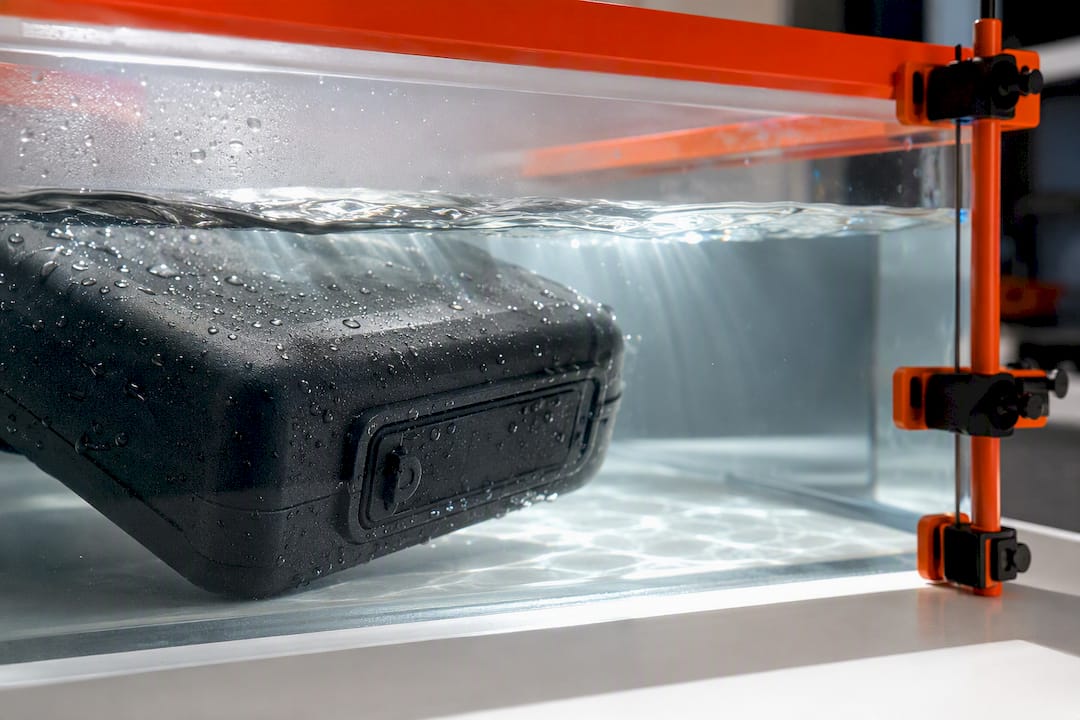
The IP67 rating comes from IEC 60529, the international standard that governs how enclosures resist dust and water. The two digits each test something different:
- First digit (6): Dust-tight. No particle ingress under lab-controlled conditions.
- Second digit (7): Temporary immersion in fresh water up to 1 meter deep for 30 minutes.
Labs run the immersion test in a controlled tank, then dry the unit and confirm it still functions. That is a narrower test than most buyers assume.
IP67 does not certify washdown resistance or saltwater durability. The test uses fresh water in a static tank, not a pressurized jet or a marina dock. Manufacturers sometimes print “waterproof” on packaging without specifying which IP digits back that claim, so the number on the datasheet matters more than the marketing copy around it.
IP65 vs. IP66 vs. IP67 vs. IP68: Which Rating Fits Your Asset?
IP ratings are not a ladder where higher always wins. Each digit tests a distinct hazard, and a tracker built for one scenario can fail badly in another. As the IP rating chart standard makes clear, immersion protection (digits 7 and 8) does not automatically confer resistance to pressurized water jets (digits 5 and 6).
- IP65: Protected against low-pressure water jets from any direction. Good for rain exposure, not for submersion.
- IP66: Protected against powerful jets, the kind used in pressure washing bays and washdown stations.
- IP67: Protected against temporary immersion up to 1 meter. Fine for a truck bed that floods in a storm, not for a jet spray.
- IP68: Immersion beyond 1 meter, but the manufacturer sets the depth and duration, so that spec is not standardized the way IP67’s is.
Quick rule of thumb: accidental puddles and rain call for IP67. Washdown stations and pressure cleaning call for IP66 or a dual-rated device. Anything that lives underwater for extended periods needs IP68 with a datasheet you have actually read.
Where an IP67 GPS Tracker Makes Sense
IP67 hits the sweet spot for most fleet and equipment tracking, but exposure varies a lot by asset type.
- Vehicle chassis and undercarriage mounts. These take road spray, rain, and occasional puddle submersion. IP67 handles it.
- Trailers and towed equipment. Exposed connectors and open beds mean frequent water contact but rarely pressurized jets. IP67 is appropriate.
- Construction equipment. Dust from job sites plus rain and mud make IP67’s dust-tight rating just as important as the water spec.
- Portable hand tools and small equipment. Devices that get dropped in wet grass or left out overnight need immersion protection, not jet resistance.
- Marine cabin electronics. IP67 covers rain and spray inside a cabin, but saltwater corrosion and washdown near the deck call for additional protection beyond the base rating.
Mounting method changes the real-world risk. A magnetic external mount is fast to install but exposes cable connections to the elements. A hardwired install routes through the vehicle’s own harness, which reduces exposed connectors but shifts the failure risk to whoever installed the splice.
Why Waterproofing Fails Before the Electronics Do
Most IP67 failures in the field are not because the enclosure itself failed the lab test. They happen because something installed or aged around that enclosure let water in anyway. Cable entries and rubber seals are the most common weak points, even on units that passed IP67 testing at the factory.
Watch for these specific failure patterns:
- Cable glands that were not torqued to spec during installation.
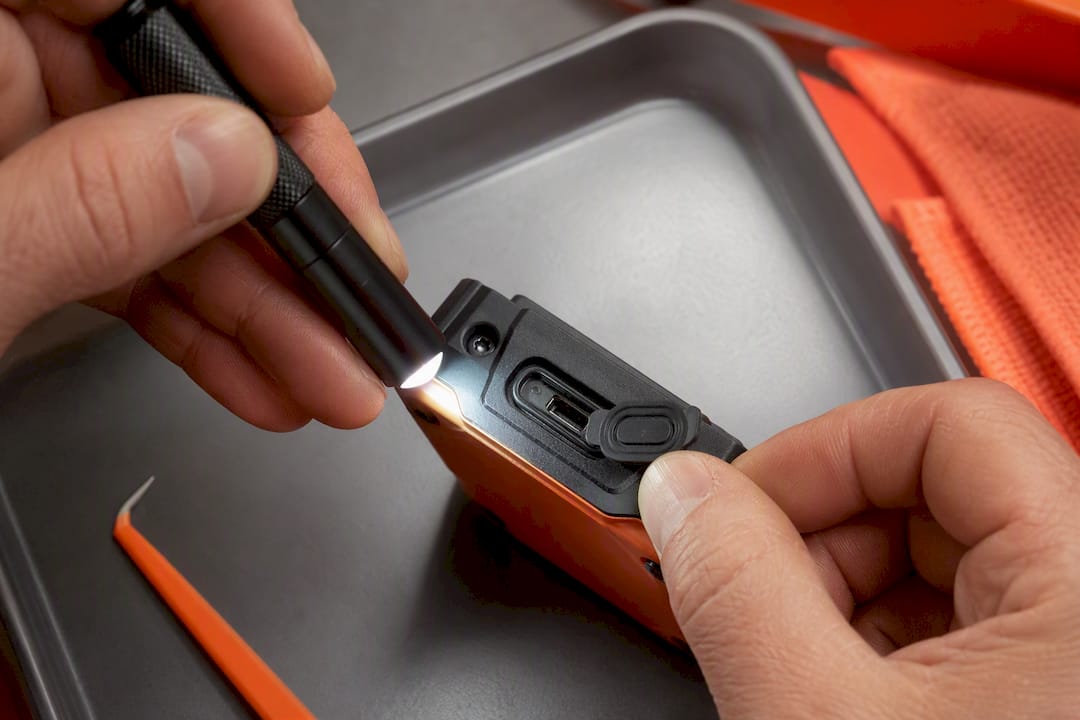
- Rubber port covers over USB or SIM slots that crack after months of UV exposure and vibration.
- Seals that compress and lose their fit after repeated hot/cold cycles.
- Circuit boards with no conformal coating, so any moisture that gets past the seal reaches bare components immediately.
Before you buy, ask the manufacturer three questions: Do they have a separate test report for the connector, not just the enclosure body? Is the printed circuit board conformal-coated, and was that coating tested along with the finished unit? What is the expected service life of the rubber port cover before it needs replacing?
Pro Tip: Inspect exposed seals and port covers every few months if the tracker lives outdoors year-round. A five-minute visual check catches a cracked cover long before it causes a failure you only notice when the device stops reporting.
How to Choose the Right IP67 GPS Tracker for Your Assets
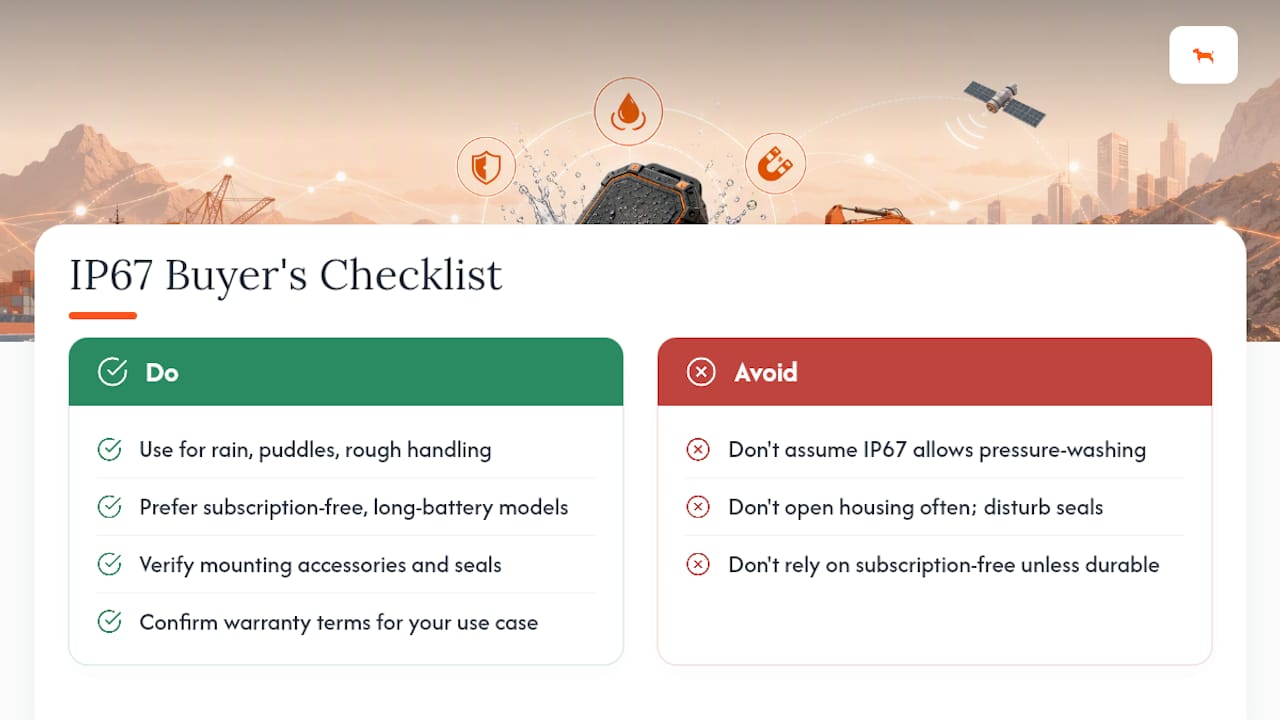
Match the device to your actual exposure risk, not the biggest number on the box. Work through these priorities in order:
- Exposure profile. Map out realistic scenarios: rain and puddles, pressure washing, or saltwater contact.
- Mounting method. Magnetic mounts are faster but expose more connectors; hardwired installs need a sealed splice.
- Connectivity. Confirm cellular band support for your carrier and region, especially for rural or industrial sites.
- Battery life. Longer battery life means fewer removals for charging, which means fewer chances to compromise the seal.
- Reporting features. Mileage logs and geofence alerts matter more once the hardware survives the environment.
- Warranty and support. A real warranty signals the manufacturer stands behind the seal, not just the sensor inside it.
| Scenario | Recommended rating | Why |
|---|---|---|
| Puddles, rain, occasional splash | IP67 | Matches the standard immersion test conditions |
| Pressure washdown stations | IP66 or dual-rated IP66/IP67 | Jet resistance is a separate test from immersion |
| Saltwater or marine deck exposure | IP67 plus corrosion-resistant housing | Standard IP67 testing uses fresh water only |
| Long-term underwater deployment | IP68 with documented test depth/duration | Manufacturer sets the actual limits, so verify them |
Insist on the manufacturer’s test report, not just the printed rating. A dual-coded device tells you it was tested against two separate hazards, which matters far more than a single impressive-looking number.
How Motowatchdog Fits an IP67 Buyer’s Checklist
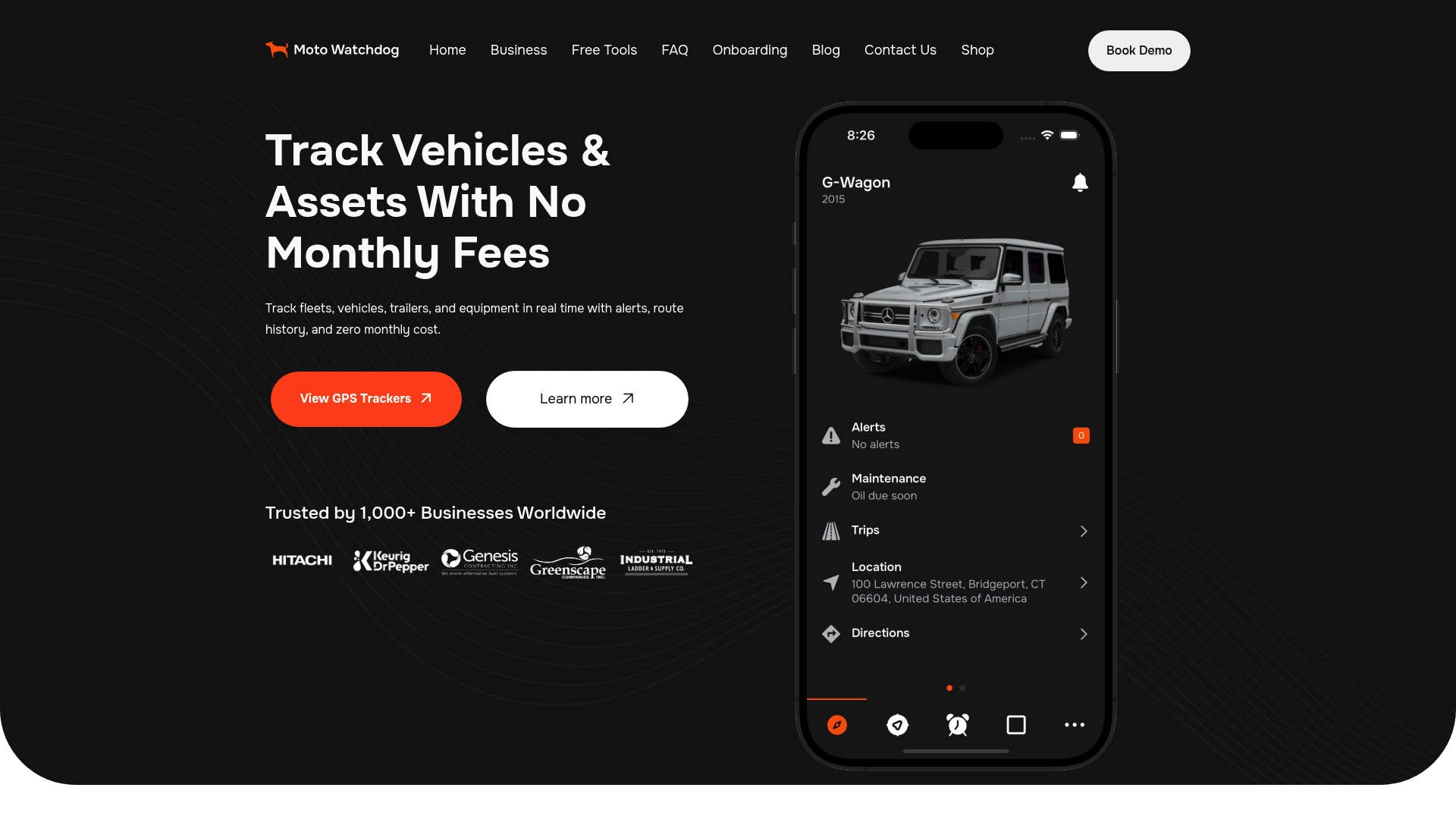
Motowatchdog builds its GPS trackers around the exposure profile most fleet and personal-asset owners actually face: rain, puddles, and rough handling rather than pressure-washing stations. The devices run subscription-free, with long battery life that reduces how often you need to open the housing and risk disturbing a seal. Geofencing and alert features let fleet managers and families track vehicles, trailers, and equipment without recurring fees, and the company reports over 1,000 businesses currently relying on its hardware for daily monitoring.
Before you commit, check the product page directly for mounting accessories, sealing specifics, and warranty terms tied to your specific use case. A subscription-free model only pays off if the hardware survives your environment long enough to matter.
What Actually Wears Out an IP67 Tracker Over Time
Seals rarely fail all at once. UV exposure and vibration crack rubber gradually, and the point of failure is almost always the cable entry or port cover, not the main housing. A realistic maintenance cadence is a visual seal check every few months for outdoor-mounted units, plus a firmware check when you swap batteries or reposition the device.
Battery decline and early corrosion at connector pins are the two clearest signals it is time to replace rather than repair a unit. On harsh sites, budget for that inspection the same way you budget for any other wear part on the vehicle.
— Louis
Get an IP67-Rated Tracker Without the Monthly Fee
Motowatchdog is the alternative to subscription-based tracking for anyone who wants durable hardware without a recurring bill eating into the savings. You pay once for the device, not once for the hardware and then again every month for the software that reads it. That structure matters most for fleet managers watching a dozen units add up over a year, and for families who just want peace of mind about a car or a trailer without a line item on the credit card statement.
Before you buy, verify the sealing details, mounting accessories, and warranty terms that matter for your specific exposure, whether that is a construction site, a trailer yard, or a family car. If your install involves running wires through a vehicle harness, the hardwiring guide for fleet managers walks through sealing the connection properly so the IP rating on the box still means something six months later.
Visit the Motowatchdog product page to check specs, compare mounting options, and place an order.
Sources
- IP Rating Chart: The Complete IEC 60529 Digit-by-Digit Reference
- IP ratings guide (Index Enclosures)

