

How to start saving money
Lorem ipsum dolor sit amet, consectetur adipiscing elit lobortis arcu enim urna adipiscing praesent velit viverra sit semper lorem eu cursus vel hendrerit elementum morbi curabitur etiam nibh justo, lorem aliquet donec sed sit mi dignissim at ante massa mattis.
- Neque sodales ut etiam sit amet nisl purus non tellus orci ac auctor
- Adipiscing elit ut aliquam purus sit amet viverra suspendisse potent
- Mauris commodo quis imperdiet massa tincidunt nunc pulvinar
- Excepteur sint occaecat cupidatat non proident sunt in culpa qui officia
Why it is important to start saving
Vitae congue eu consequat ac felis placerat vestibulum lectus mauris ultrices cursus sit amet dictum sit amet justo donec enim diam porttitor lacus luctus accumsan tortor posuere praesent tristique magna sit amet purus gravida quis blandit turpis.

How much money should I save?
At risus viverra adipiscing at in tellus integer feugiat nisl pretium fusce id velit ut tortor sagittis orci a scelerisque purus semper eget at lectus urna duis convallis. porta nibh venenatis cras sed felis eget neque laoreet suspendisse interdum consectetur libero id faucibus nisl donec pretium vulputate sapien nec sagittis aliquam nunc lobortis mattis aliquam faucibus purus in.
- Neque sodales ut etiam sit amet nisl purus non tellus orci ac auctor
- Adipiscing elit ut aliquam purus sit amet viverra suspendisse potenti
- Mauris commodo quis imperdiet massa tincidunt nunc pulvinar
- Adipiscing elit ut aliquam purus sit amet viverra suspendisse potenti
What percentege of my income should go to savings?
Nisi quis eleifend quam adipiscing vitae aliquet bibendum enim facilisis gravida neque. Velit euismod in pellentesque massa placerat volutpat lacus laoreet non curabitur gravida odio aenean sed adipiscing diam donec adipiscing tristique risus. amet est placerat in egestas erat imperdiet sed euismod nisi.
“Nisi quis eleifend quam adipiscing vitae aliquet bibendum enim facilisis gravida neque velit euismod in pellentesque”
Do you have any comments? Share them with us on social media
Eget lorem dolor sed viverra ipsum nunc aliquet bibendum felis donec et odio pellentesque diam volutpat commodo sed egestas aliquam sem fringilla ut morbi tincidunt augue interdum velit euismod eu tincidunt tortor aliquam nulla facilisi aenean sed adipiscing diam donec adipiscing ut lectus arcu bibendum at varius vel pharetra nibh venenatis cras sed felis eget.
After-hours use alerts are GPS-based notifications that fire when a vehicle moves or starts outside its pre-set authorized hours, pairing a written usage policy with telematics triggers such as ignition status and location. For fleet managers, the direct payoff is fast detection: we learn about unauthorized use while it’s happening, not after the fuel bill or mileage report tells the story.
TL;DR:
- Choose a trigger by risk: schedule rules flag movement outside authorized hours, geofences catch departures from approved areas, and ignition alerts detect starts before movement.
- Give drivers written notice before activation, defining permitted hours, personal use, data retention, and access; state tracking laws vary, so review local requirements.
- Pilot a small vehicle group for a week or two, then add grace periods and movement thresholds to filter brief stops and GPS drift.
- When an alert fires, check timestamp, location, and engine data, contact the driver, and treat telematics as supporting evidence, not sole grounds for discipline.
Table of Contents
- How after-hours alerts work: core inputs and trigger types
- Set up after-hours alerts: policy and technical checklist
- Tuning alerts and reducing false positives
- Operational response workflow when an after-hours alert fires
- Privacy, labor and legal considerations for after-hours monitoring
- Integrating after-hours alerts with other fleet management features
- Real-world scenarios where after-hours alerts make a difference
- Author’s best-practice checklist for launching after-hours alerts
- How Moto Watchdog supports after-hours use alerts
- FAQ
- Sources
How after-hours alerts work: core inputs and trigger types
An after-hours alert depends on a handful of data points working together. The telematics device on the vehicle reports its position, motion, and ignition status, and the platform compares that activity against a schedule you define.
The core inputs feeding every alert are:
- GPS location, updated continuously or at set intervals to confirm where the vehicle is.
- Engine-on or ignition status, which tells the system a vehicle is actually running, not just parked.
- Speed and movement, used to distinguish a vehicle in transit from one sitting idle.
- Scheduled time windows, the permitted hours you configure for each vehicle or group.
From those inputs, platforms typically support three trigger types. A schedule-only trigger fires any time the vehicle moves outside the defined hours, regardless of location. A geofence-plus-time trigger only fires when the vehicle leaves an approved zone, like a yard or job site, during restricted hours. An engine-on-outside-schedule trigger catches the vehicle the moment it starts, even before it moves, which is useful for catching unauthorized use early.
Once a trigger condition is met, the device sends the event to the cloud platform, which packages it into a notification. Common delivery channels include push notifications to a mobile app, SMS text alerts, email, and API webhooks for fleets that route alerts into their own dispatch or security software.
Set up after-hours alerts: policy and technical checklist
Reliable after-hours alerts start with policy, not settings menus. A written policy gives the alert program legal and practical footing, and it tells drivers exactly what to expect before any notification ever fires.
- Define permitted hours for each vehicle class or role, distinguishing, for example, take-home trucks from pool vehicles.
- Specify coverage: which vehicles, drivers, and contractors fall under the policy, and whether personal use after hours is permitted at all.
- State data use and retention: what telematics data is collected, how long it’s kept, and who can access it.
- Configure schedule rules in your platform to match the written policy, including separate rules for weekdays, weekends, and holidays.
- Set engine and movement triggers so alerts reflect real usage rather than brief diagnostic pings.
- Add recipient groups so the right dispatcher, supervisor, or safety officer gets each alert type.
- Test delivery across every channel (push, SMS, email) before relying on the system in production.
Access controls matter as much as the alert logic itself. Limit who can modify schedules or trigger rules, and separate that permission from who receives raw location and trip data, since broader access increases both operational risk and employee-relations friction.
Before full rollout, run through a short deployment checklist: confirm device placement allows a clean GPS signal, verify battery life or power pairing is adequate for the vehicle’s duty cycle, and pilot the setup on a handful of vehicles for a week or two before expanding fleet-wide. Our guide to adding a tracker to a vehicle walks through device placement and pairing in more detail.
Pro Tip: Pilot new alert rules on one vehicle group first; tuning based on real alerts beats guessing at thresholds from a spreadsheet.
Tuning alerts and reducing false positives
An alert system that fires on every brief idle or GPS drift quickly gets ignored, so tuning matters as much as setup. The goal is a program dispatchers and drivers both trust.
A few adjustments make the biggest difference:
- Add grace periods before a schedule violation triggers a notification, which can filter out quick stops just before or after shift boundaries.
- Set minimum movement thresholds so a vehicle rolling a few feet in a lot doesn’t register as unauthorized use.
- Build separate schedules by vehicle type or role, since a take-home truck and a shared pool vehicle have very different legitimate after-hours patterns.
- Batch low-priority alerts into a daily summary and reserve real-time notifications for higher-risk events, with escalation rules for repeated violations by the same vehicle or driver.
During the pilot period, watch alert volume closely. A flood of notifications may mean thresholds are too tight, and dialing them back can preserve the program’s credibility before it reaches the full fleet.
Operational response workflow when an after-hours alert fires
An alert is only useful if someone acts on it consistently. A simple, repeatable response workflow keeps investigations fair and well-documented.
- Check the basics immediately: the timestamp, the exact GPS location, and recent trip or engine-on data for that vehicle.
- Contact the driver or an on-site contact to verify the activity before assuming misuse, since legitimate exceptions (emergency callouts, approved overtime) happen.
- Document the incident in your fleet management system, attaching the telematics data as supporting evidence rather than the sole basis for any conclusion.
- Apply escalation criteria for repeated violations, apparent safety concerns, or suspected theft, looping in HR for personnel matters or law enforcement for suspected criminal activity.
This sequence matters because a public-sector telematics agreement specifically stipulates that telematics metrics should support discipline alongside other evidence, not stand alone as the single basis for action.
Privacy, labor and legal considerations for after-hours monitoring
Before switching on after-hours alerts, we recommend putting the legal and employee-relations groundwork in place. Written notice is the primary safeguard: it sets expectations, reduces disputes, and in some jurisdictions is a legal requirement rather than a courtesy.
A sound policy typically covers:
- Purpose of monitoring, stated plainly rather than left implied.
- Data types collected, such as location, speed, and ignition status.
- Retention period, specifying how long telematics records are kept and who can extend that window.
- Access controls, listing which roles can view raw data versus summary alerts.
A state fleet telematics policy requires interior decals notifying occupants that a vehicle is monitored and restricts personal or discriminatory use of the collected data, a model worth borrowing even outside government fleets. A letter of agreement between a public employer and its union states that telematics data may support discipline together with other evidence, but the employer agreed not to rely on it alone, which is consistent with guidance from that same agreement. Separately, New Jersey legislative text shows a statutory approach that prohibits certain tracking of employees without written notice and sets civil penalties for violations, a reminder that state rules on employer tracking vary and deserve a legal review before rollout. We also suggest periodic audits of who can access telematics data and a retention schedule modeled on the public-agency examples above.
Integrating after-hours alerts with other fleet management features
After-hours use alerts work best as one piece of a broader telematics setup rather than a standalone notification. When an alert fires, the same platform that flagged the schedule violation often already holds maintenance and driver behavior data that adds useful context.
Pairing after-hours alerts with maintenance scheduling means an unexpected after-hours trip also logs mileage toward the next service interval, keeping maintenance reminders accurate even when a vehicle sees off-schedule use. If the same platform tracks driver behavior, such as harsh braking or speeding, an after-hours alert tied to aggressive driving patterns tells a very different story than one tied to a quiet drive straight home.
Idle time tracking adds another layer: a vehicle idling after hours at an unexpected location is a different concern than one that’s simply parked. Combining these signals helps managers triage alerts faster, since a schedule violation paired with unusual driving behavior warrants a quicker response than one that looks routine.
For fleets managing trailers or unpowered equipment alongside vehicles, the same logic extends to assets that don’t have an ignition signal at all. Tracking options for trailers rely more heavily on movement and geofence triggers, since there’s no engine-on event to anchor the alert. Building a single dashboard that covers vehicles, trailers, and equipment keeps after-hours monitoring consistent across an entire fleet rather than fragmented across separate tools.

Real-world scenarios where after-hours alerts make a difference
A few common situations show why after-hours use alerts earn their place in a fleet management program.
Consider a contractor fleet where a pickup assigned to a job site is driven across town late at night. A schedule-only alert flags the movement within minutes, and the manager confirms with the driver that it wasn’t authorized, catching unauthorized personal use before it becomes a pattern. In a different case, a geofence-plus-time trigger on a parked fleet of vans at a secured lot alerts a dispatcher the moment one leaves after close, which is often the first sign of theft rather than an employee’s extra trip.
Take-home vehicles present a more nuanced scenario. A technician’s truck leaving a residential address at 2 AM might be an emergency callout or might not be, and the verification step (a quick call before any disciplinary action) is what keeps the program fair. Over time, fleets that track alert history alongside maintenance and idle data also notice patterns, like a specific vehicle logging after-hours engine time right before a mechanical issue shows up, turning a security alert into an early maintenance signal as well.
Author’s best-practice checklist for launching after-hours alerts
Based on how these programs tend to succeed or stall, a short launch sequence works better than flipping every alert on at once.
- Draft a short written policy and notify affected drivers before any alert goes live, not after.
- Pilot on a small group of vehicles and tune thresholds from real alert data.
- Put response roles, logging steps, and escalation thresholds in writing so any manager can follow them.
- Revisit alert rules and access lists quarterly, since fleet composition and shift patterns change.
Pro Tip: Treat the initial period of any after-hours alert program as a tuning period, not a verdict on the technology.
— Louis
How Moto Watchdog supports after-hours use alerts
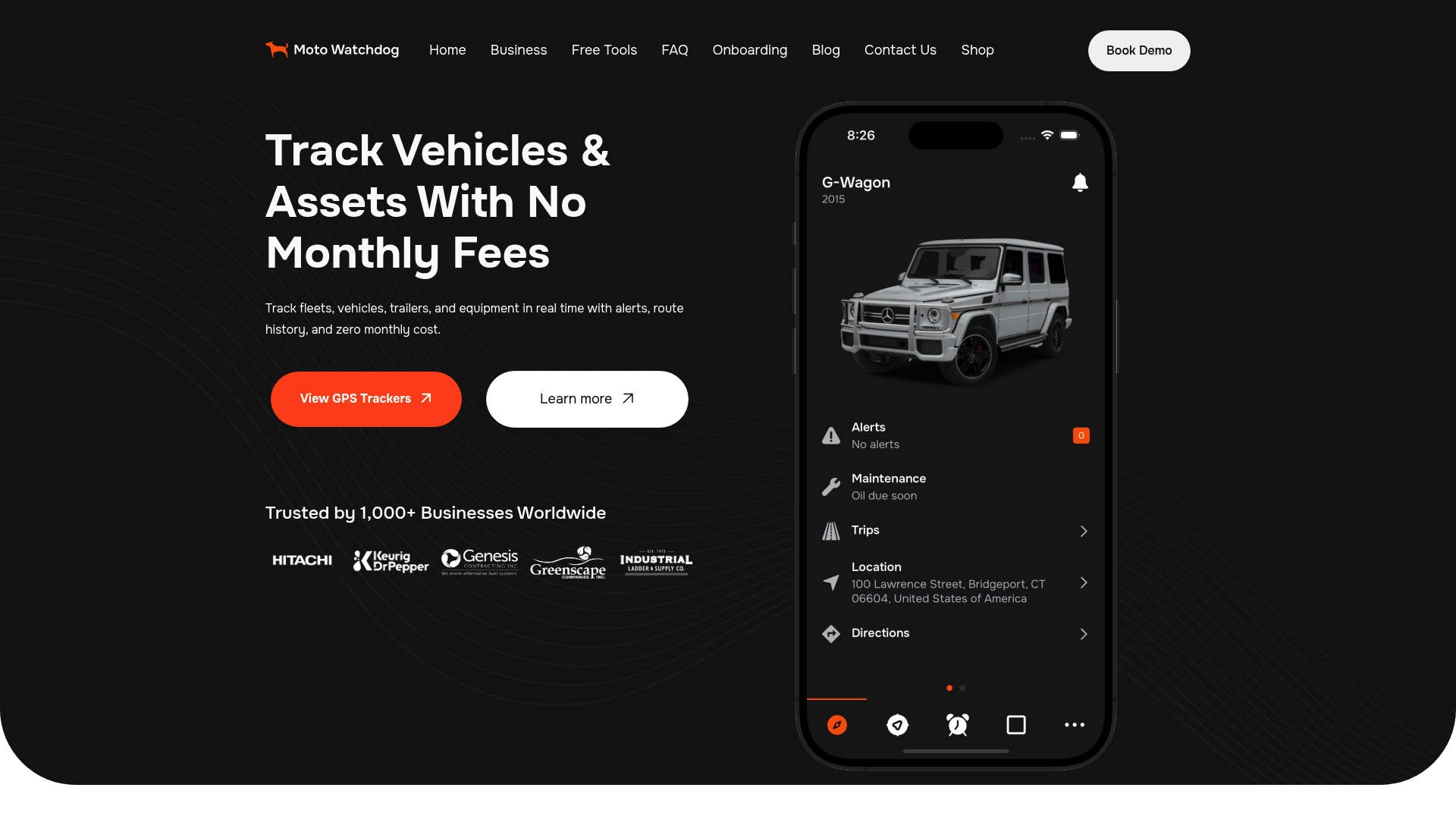
We built our GPS tracking devices around the kind of monitoring this article describes: customizable geofencing and alerts, real-time location tracking, and long battery life without a recurring subscription fee. For fleets that want to route after-hours alerts into their own dispatch or security software, our API access supports those integrations directly.
Before committing to any after-hours alert setup, it’s worth confirming that alerts fire reliably on your test vehicle and reach the right recipients.
- Review device specifications and pricing on our trackers page, where plans start from $124.99 one-off with no monthly fees.
- If vehicle security alongside after-hours monitoring is a priority, our guide to anti-theft tracking covers complementary protections worth pairing with a schedule alert.
FAQ
What counts as an after-hours use alert?
An after-hours use alert is a GPS-based notification triggered when a vehicle moves, starts, or leaves a defined zone outside the hours you’ve designated as authorized. It combines a written schedule policy with telematics signals like ignition status and location to flag unauthorized or unexpected use.
How do I reduce false alerts without missing real incidents?
Add a short grace period before a schedule violation triggers a notification, and set a minimum movement threshold so small shifts in parking don’t count as use. Running a pilot on a small vehicle group lets you tune these settings against real data before expanding fleet-wide.
Do employees need to be notified before after-hours tracking begins?
Written notice is a standard safeguard in telematics programs and a legal requirement in some states; a state fleet policy requires visible in-vehicle notice that monitoring is occurring. Checking your state’s specific rules before rollout is the safest approach, since requirements vary.
Can after-hours alert data alone justify disciplinary action?
Best practice, reflected in a public-sector labor agreement, treats telematics data as supporting evidence rather than sole justification for discipline. Verifying the event with the driver and documenting the incident alongside the alert data keeps the response fair and defensible.
What does Moto Watchdog cost for setting up after-hours alerts?
Current prices are on our trackers page. Fleets that need API integration for custom alert routing can request details through our business access page.

