

How to start saving money
Lorem ipsum dolor sit amet, consectetur adipiscing elit lobortis arcu enim urna adipiscing praesent velit viverra sit semper lorem eu cursus vel hendrerit elementum morbi curabitur etiam nibh justo, lorem aliquet donec sed sit mi dignissim at ante massa mattis.
- Neque sodales ut etiam sit amet nisl purus non tellus orci ac auctor
- Adipiscing elit ut aliquam purus sit amet viverra suspendisse potent
- Mauris commodo quis imperdiet massa tincidunt nunc pulvinar
- Excepteur sint occaecat cupidatat non proident sunt in culpa qui officia
Why it is important to start saving
Vitae congue eu consequat ac felis placerat vestibulum lectus mauris ultrices cursus sit amet dictum sit amet justo donec enim diam porttitor lacus luctus accumsan tortor posuere praesent tristique magna sit amet purus gravida quis blandit turpis.

How much money should I save?
At risus viverra adipiscing at in tellus integer feugiat nisl pretium fusce id velit ut tortor sagittis orci a scelerisque purus semper eget at lectus urna duis convallis. porta nibh venenatis cras sed felis eget neque laoreet suspendisse interdum consectetur libero id faucibus nisl donec pretium vulputate sapien nec sagittis aliquam nunc lobortis mattis aliquam faucibus purus in.
- Neque sodales ut etiam sit amet nisl purus non tellus orci ac auctor
- Adipiscing elit ut aliquam purus sit amet viverra suspendisse potenti
- Mauris commodo quis imperdiet massa tincidunt nunc pulvinar
- Adipiscing elit ut aliquam purus sit amet viverra suspendisse potenti
What percentege of my income should go to savings?
Nisi quis eleifend quam adipiscing vitae aliquet bibendum enim facilisis gravida neque. Velit euismod in pellentesque massa placerat volutpat lacus laoreet non curabitur gravida odio aenean sed adipiscing diam donec adipiscing tristique risus. amet est placerat in egestas erat imperdiet sed euismod nisi.
“Nisi quis eleifend quam adipiscing vitae aliquet bibendum enim facilisis gravida neque velit euismod in pellentesque”
Do you have any comments? Share them with us on social media
Eget lorem dolor sed viverra ipsum nunc aliquet bibendum felis donec et odio pellentesque diam volutpat commodo sed egestas aliquam sem fringilla ut morbi tincidunt augue interdum velit euismod eu tincidunt tortor aliquam nulla facilisi aenean sed adipiscing diam donec adipiscing ut lectus arcu bibendum at varius vel pharetra nibh venenatis cras sed felis eget.
GPS fleet management is defined as the integration of real-time vehicle tracking with telematics data to monitor driver behavior, detect unsafe events, and reduce crash risk across commercial fleets. Understanding how GPS improves fleet safety means going beyond simple location tracking. The real value lies in pairing GPS coordinates with behavior metrics like harsh braking, speeding, and distraction events to create a data-driven safety program. 80% of fleet professionals now rely on GPS for routing, compliance, and safety, an 11-point increase year over year. That adoption rate signals a clear industry shift toward GPS as a foundational safety tool, not just a routing convenience.
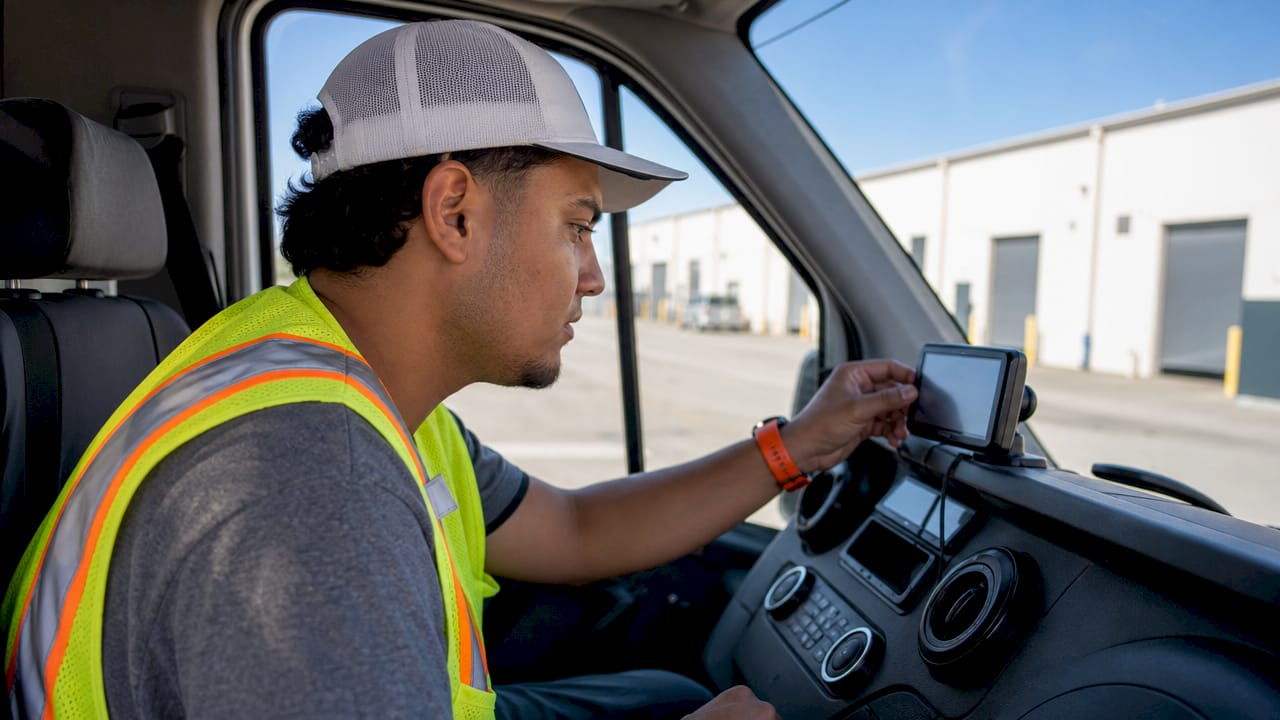
How GPS improves fleet safety through driver behavior detection
GPS-based telematics systems detect unsafe driving by capturing timestamped, location-tagged events that correlate directly with crash risk. The most studied of these is harsh braking. Each additional harsh braking event increases expected crash risk by roughly 1%, and repeated occurrences correlate with higher crash frequency across fleets. Because harsh braking happens far more often than actual crashes, it gives fleet safety officers a high-frequency, proactive signal to act on before an incident occurs.
Modern GPS telematics systems track a range of risky behaviors beyond braking. The most common events flagged include:
- Harsh braking: Sudden deceleration above a set threshold, a reliable proxy for tailgating or distracted following distance
- Speeding: Velocity above posted limits, captured by road segment using GPS map data
- Rapid acceleration: Aggressive throttle inputs that indicate poor speed management and increase fuel consumption
- Cell phone use: Detected through Bluetooth pairing gaps or AI camera analysis in advanced systems
- Lane departure and distraction alerts: Available in AI video telematics platforms integrated with GPS positioning
Speeding detection is particularly precise when GPS data is fused with road-segment speed limits. GPS usage reduces driving miles by 16% and travel time in unknown areas by 18%, which directly lowers exposure to high-risk road environments. Fewer miles on unfamiliar roads means fewer opportunities for speed-limit violations and navigation-related distractions.
Pro Tip: Set behavior thresholds by road type, not just by absolute speed. A driver doing 45 mph on a residential street is far more dangerous than one doing 45 mph on a highway. GPS road-segment tagging makes this distinction possible.
What real-time feedback and AI add to GPS safety data
GPS data alone captures what happened. Real-time alerts and AI video telematics determine what happens next. The difference between passive event logging and active driver feedback is the difference between a record and a result.
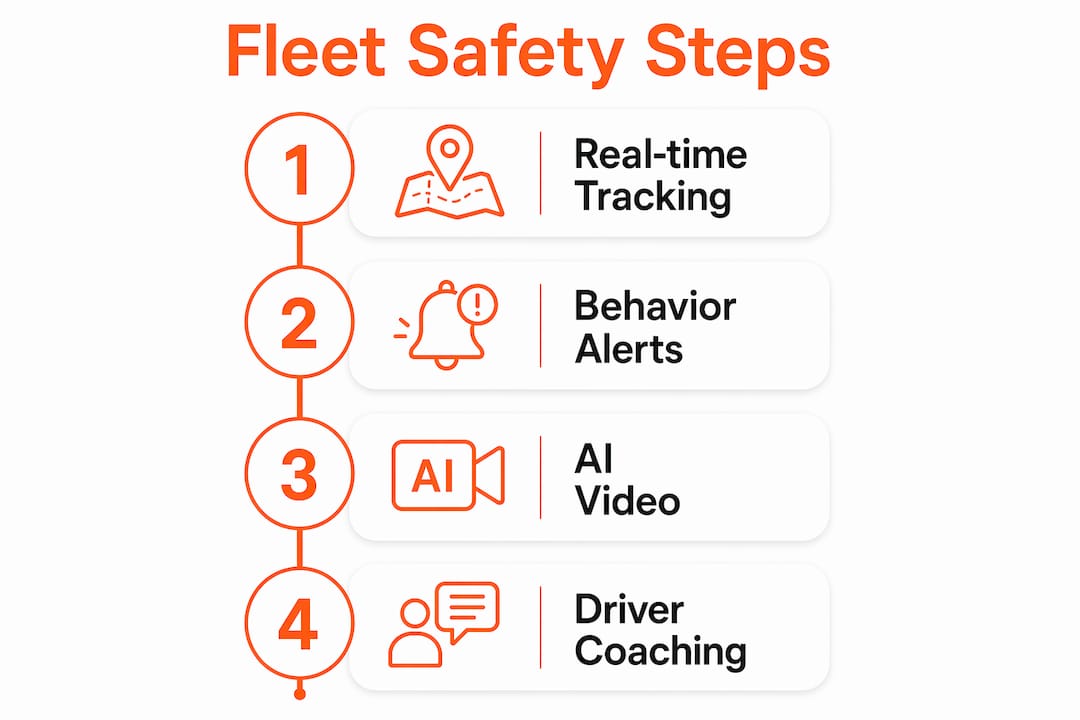
Live in-cab alerts notify drivers the moment a harsh braking or speeding event occurs. This immediacy matters because it connects the feedback to the behavior while the driver is still in context. Delayed reports reviewed days later produce far weaker behavioral change. Telematics-informed safety feedback reduces speeding by 11% to 13%, hard braking by 16% to 21%, and rapid acceleration by 16% to 25%, based on a Johns Hopkins randomized trial with 1,449 participants. These are statistically significant reductions, not marginal improvements.
AI video telematics takes this further by adding visual context to GPS event data. When a harsh braking event triggers, an AI camera system captures the seconds before and after, giving fleet managers footage to review rather than just a data point. 74% of fleets using AI video telematics reported improved driver safety, and 64% said it helped protect against false claims. That dual benefit, better coaching and liability protection, makes AI video one of the highest-return additions to a GPS fleet management program.
The practical workflow looks like this:
- GPS captures a speeding or braking event with timestamp and location
- AI camera records the event clip and tags it automatically
- Fleet manager reviews the clip and scores driver behavior
- Coaching session uses the footage as a concrete, objective reference
- Driver performance is tracked over the following weeks to verify improvement
Pro Tip: Use AI-flagged clips as the starting point for coaching conversations, not as evidence of wrongdoing. Drivers respond better when footage is framed as a learning tool rather than a disciplinary record.
Passive alerts versus active enforcement: which approach works better?
Not all GPS safety interventions carry equal weight. Passive alerts notify a driver that a violation occurred. Active enforcement technologies physically constrain the behavior. The gap in effectiveness between these two approaches is significant and worth understanding before you design your safety program.
| Approach | Mechanism | Effectiveness | Best use case |
|---|---|---|---|
| Passive alert | In-cab notification after event | Moderate; relies on driver response | Coaching and awareness programs |
| Driver scorecard | Post-trip behavior summary | Moderate; delayed feedback loop | Performance reviews and incentives |
| Active ISA | Limits acceleration above speed threshold | High; removes driver choice | High-risk routes and repeat offenders |
| AI video coaching | Event-triggered footage review | High when combined with follow-up | Dispute resolution and targeted coaching |
Active Intelligent Speed Assistance reduces time spent driving more than 11 mph over the speed limit by over 64%, based on analysis of 270 vehicles. Passive alerts alone do not come close to that reduction. The reason is straightforward: active ISA removes the decision from the driver entirely by constraining the throttle above a GPS-defined speed threshold. Passive alerts still require the driver to choose to comply.
That said, active enforcement is not always appropriate or practical. ISA works best on defined high-risk routes where GPS road-segment data is reliable and speed limits are consistent. For mixed urban and highway fleets, a combination of active ISA on high-risk corridors and AI coaching for general behavior monitoring produces the most balanced outcome.
Fusing GPS data with time and location improves the targeting of any intervention. A driver who consistently speeds on a specific highway segment at rush hour needs a different response than one who occasionally exceeds limits on varied routes. GPS geography and time-stamping make that distinction visible and actionable.
Pro Tip: Before deploying active ISA fleet-wide, run a 90-day pilot on your highest-incident routes. Use GPS event data from that corridor to establish a baseline, then measure the reduction post-deployment. The data will make the business case for broader rollout.
Best practices for building a GPS-powered fleet safety program
A GPS device in every vehicle does not automatically produce a safer fleet. The technology creates the data. The program creates the outcomes. Here is how to build a safety workflow that converts GPS data into measurable risk reduction.
-
Establish a behavior baseline first. Pull 60 to 90 days of GPS telematics data before setting targets. Identify your highest-frequency events by driver, route, and time of day. This baseline prevents arbitrary goal-setting and gives you a credible starting point for improvement measurement.
-
Set specific, behavior-level targets. Consistent measurement with clear risky-behavior targets outperforms one-off reviews. Define what “safe” looks like in concrete terms: fewer than two harsh braking events per 100 miles, zero speeding events above 10 mph over the limit, and so on. Vague goals produce vague results.
-
Build a closed-loop workflow. A closed-loop safety process captures events via GPS and telematics, triages severity, coaches the driver, and verifies performance changes over weeks. Without the verification step, coaching becomes a one-time conversation rather than a sustained behavior change.
-
Use driver scorecards as a communication tool, not a punishment mechanism. Scorecards generated from GPS telematics data give drivers a clear picture of their own performance. When shared regularly and transparently, they shift the conversation from “you did something wrong” to “here is where you stand and how to improve.”
-
Integrate GPS insights with formal training. GPS data identifies the what. Training programs address the why and how. Pairing telematics event data with targeted defensive driving modules produces faster improvement than either approach alone.
-
Review program effectiveness quarterly. Behavior patterns shift with seasons, routes, and driver turnover. A quarterly review of GPS event trends keeps your targets calibrated to current conditions and prevents safety fatigue from setting in.
The benefits of GPS for safety compound over time when the program is consistent. Fleets that treat GPS data as a continuous feedback loop rather than a periodic audit see the most durable reductions in incident rates.
Key takeaways
GPS improves fleet safety most effectively when real-time location data is combined with behavior metrics, AI video, and a closed-loop coaching workflow that verifies driver improvement over time.
| Point | Details |
|---|---|
| Harsh braking as crash proxy | Each additional harsh braking event raises crash risk by roughly 1%, making it a high-frequency early warning signal. |
| Active ISA outperforms passive alerts | Active speed assistance reduces speeding time by over 64%, far exceeding what passive in-cab alerts achieve alone. |
| AI video multiplies GPS value | 74% of fleets using AI video telematics reported improved safety, plus protection against false liability claims. |
| Closed-loop workflows drive results | Capturing events, triaging severity, coaching drivers, and verifying improvement over weeks produces durable behavior change. |
| Consistent targets beat one-off reviews | Johns Hopkins randomized data shows telematics feedback with clear behavior targets reduces speeding and hard braking by double digits. |
Why GPS alone is not enough, and what actually moves the needle
I have reviewed a lot of fleet safety programs, and the ones that underperform share a common pattern. They install GPS trackers, generate event reports, and then wait for behavior to improve on its own. It does not work that way.
The technology is only as good as the workflow behind it. GPS gives you the data. The closed-loop process, event capture, triage, coaching, and verification, is what converts that data into fewer crashes and lower liability exposure. Fleets that skip the verification step are essentially coaching into a void. They have no way to know whether the conversation changed anything.
What I find most underused is the geographic dimension of GPS data. Most fleet managers look at driver-level event counts. The smarter move is to look at where events cluster. If 40% of your harsh braking events happen on the same three road segments, that is a routing problem as much as a driver problem. GPS geography makes that visible. Rerouting or adding active ISA on those corridors can reduce events faster than any amount of coaching.
The AI video trend is real and worth taking seriously. The dual benefit of improved coaching quality and liability protection is a compelling case for upgrading from basic GPS to a full telematics and video platform. The fleets that will lead on safety in the next three years are the ones building that integrated capability now.
— Louis
How Motowatchdog supports your fleet safety program
Fleet managers who want real-time driver behavior data without the burden of monthly subscription fees have a direct path forward with Motowatchdog.
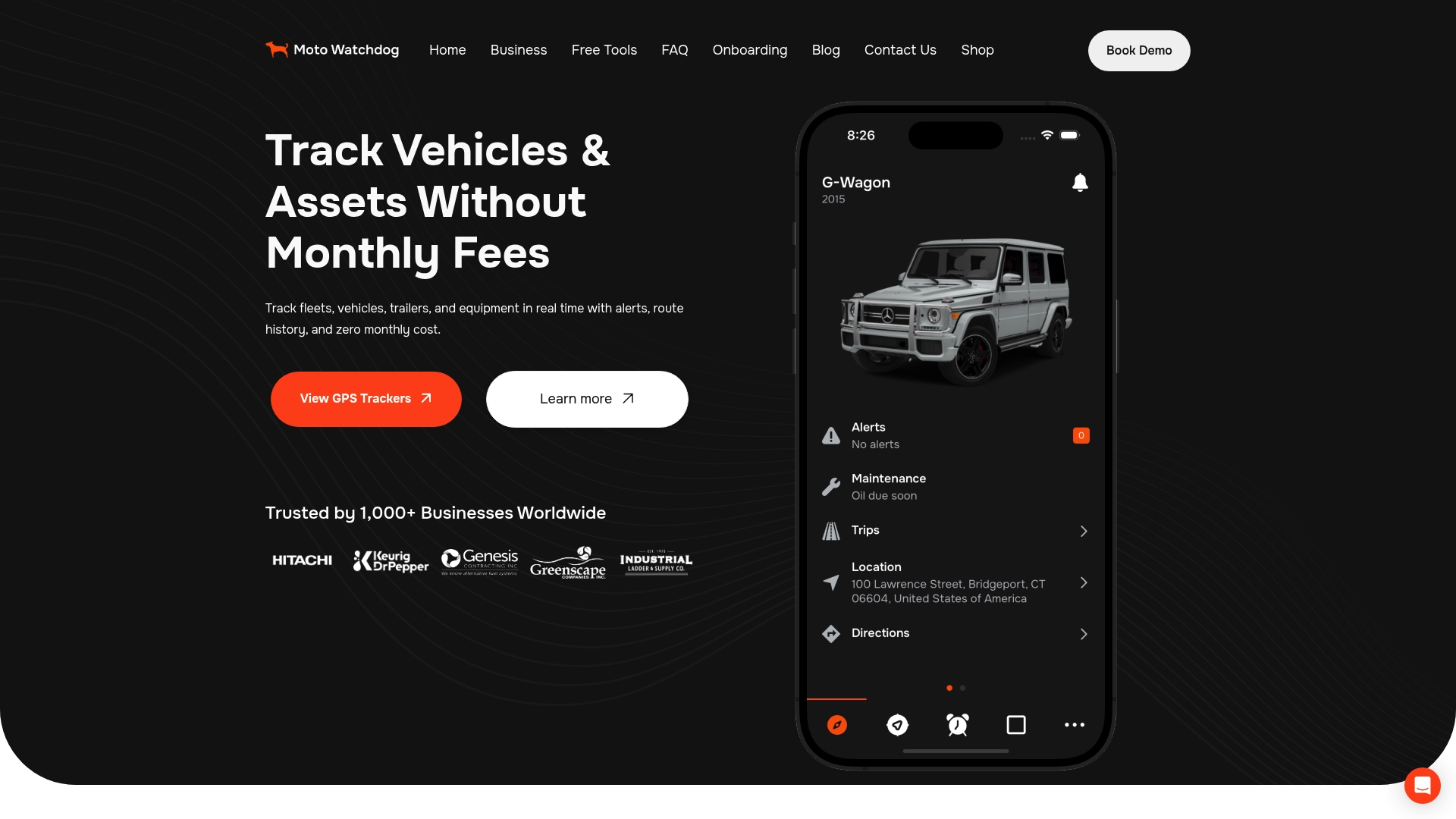
Motowatchdog’s subscription-free 4G GPS tracking gives you live vehicle location, geofencing alerts, and detailed mileage reporting without ongoing costs eating into your safety budget. Over 1,000 businesses rely on Motowatchdog for accurate, real-time monitoring that supports the kind of behavior-based safety programs this article describes. Whether you are building a driver scorecard system, identifying high-risk routes, or simply need reliable vehicle visibility, Motowatchdog delivers the data foundation your safety program requires. Explore the platform and see how GPS tracking fleet benefits translate directly into reduced risk and lower incident costs for your operation.
FAQ
How does GPS detect unsafe driving behaviors?
GPS telematics systems capture timestamped, location-tagged events such as harsh braking, speeding, and rapid acceleration by comparing vehicle speed and movement data against defined thresholds and road-segment speed limits. These events are logged automatically and can trigger real-time in-cab alerts or AI video recordings for review.
Is active speed assistance more effective than GPS alerts alone?
Active Intelligent Speed Assistance reduces time spent driving more than 11 mph over the speed limit by over 64%, compared to moderate reductions from passive alerts that still require driver compliance. For high-risk routes, active ISA is the more reliable intervention.
What is a closed-loop fleet safety workflow?
A closed-loop workflow captures GPS and telematics events, triages them by severity, delivers targeted driver coaching using that data, and then verifies whether behavior has improved over the following weeks. Without the verification step, coaching rarely produces lasting change.
How much can telematics feedback reduce speeding and hard braking?
A Johns Hopkins randomized trial with 1,449 participants found that telematics-informed feedback reduces speeding by 11% to 13%, hard braking by 16% to 21%, and rapid acceleration by 16% to 25%. These reductions are statistically significant and consistent across different feedback formats.
What role does AI video play in GPS fleet safety programs?
AI video telematics adds visual context to GPS event data by recording footage around triggered events, which improves coaching quality and provides objective evidence in liability disputes. According to the Verizon Connect 2026 Fleet Technology Trends Report, 74% of fleets using AI video reported improved driver safety.

