

How to start saving money
Lorem ipsum dolor sit amet, consectetur adipiscing elit lobortis arcu enim urna adipiscing praesent velit viverra sit semper lorem eu cursus vel hendrerit elementum morbi curabitur etiam nibh justo, lorem aliquet donec sed sit mi dignissim at ante massa mattis.
- Neque sodales ut etiam sit amet nisl purus non tellus orci ac auctor
- Adipiscing elit ut aliquam purus sit amet viverra suspendisse potent
- Mauris commodo quis imperdiet massa tincidunt nunc pulvinar
- Excepteur sint occaecat cupidatat non proident sunt in culpa qui officia
Why it is important to start saving
Vitae congue eu consequat ac felis placerat vestibulum lectus mauris ultrices cursus sit amet dictum sit amet justo donec enim diam porttitor lacus luctus accumsan tortor posuere praesent tristique magna sit amet purus gravida quis blandit turpis.

How much money should I save?
At risus viverra adipiscing at in tellus integer feugiat nisl pretium fusce id velit ut tortor sagittis orci a scelerisque purus semper eget at lectus urna duis convallis. porta nibh venenatis cras sed felis eget neque laoreet suspendisse interdum consectetur libero id faucibus nisl donec pretium vulputate sapien nec sagittis aliquam nunc lobortis mattis aliquam faucibus purus in.
- Neque sodales ut etiam sit amet nisl purus non tellus orci ac auctor
- Adipiscing elit ut aliquam purus sit amet viverra suspendisse potenti
- Mauris commodo quis imperdiet massa tincidunt nunc pulvinar
- Adipiscing elit ut aliquam purus sit amet viverra suspendisse potenti
What percentege of my income should go to savings?
Nisi quis eleifend quam adipiscing vitae aliquet bibendum enim facilisis gravida neque. Velit euismod in pellentesque massa placerat volutpat lacus laoreet non curabitur gravida odio aenean sed adipiscing diam donec adipiscing tristique risus. amet est placerat in egestas erat imperdiet sed euismod nisi.
“Nisi quis eleifend quam adipiscing vitae aliquet bibendum enim facilisis gravida neque velit euismod in pellentesque”
Do you have any comments? Share them with us on social media
Eget lorem dolor sed viverra ipsum nunc aliquet bibendum felis donec et odio pellentesque diam volutpat commodo sed egestas aliquam sem fringilla ut morbi tincidunt augue interdum velit euismod eu tincidunt tortor aliquam nulla facilisi aenean sed adipiscing diam donec adipiscing ut lectus arcu bibendum at varius vel pharetra nibh venenatis cras sed felis eget.
A recovery-ready fleet needs three things in place before a theft ever happens: resilient, recovery-grade trackers with backup power, theft-specific alert logic tied to geofences and ignition events, and a written SOP that puts live location data in front of police within minutes. U.S. vehicle thefts totaled 659,880 in 2025, a 23% year-over-year decline nationally, yet concentrated risk persists in high-theft jurisdictions. That national improvement does not protect your fleet if your vehicles operate in one of those hotspots.
Three actions to take this week:
- Choose recovery-grade hardware. Select hardwired GPS units with internal backup batteries, multi-constellation GNSS, and tamper detection. Add a covert secondary unit on high-risk vehicles.
- Configure geofence and ignition alerts. Set unauthorized-ignition events outside shift hours as high-priority, and confirm your platform can generate a live-share link on demand.
- Build a pre-populated incident file. For every asset, maintain a digital file with VIN, license plate, photos, driver assignment, and last known location. NHTSA recommends filing a police report promptly and notifying your insurer without delay.
Motowatchdog is one subscription-free option worth evaluating for fleets that want lower total cost of ownership without sacrificing live-share capability.
Table of Contents
- What does a complete fleet theft-recovery system include?
- How do you set up fleet vehicle theft recovery step by step?
- Installation and placement best practices for maximum survivability
- What is the SOP when a fleet vehicle is reported stolen?
- Physical and electronic hardening to reduce theft attempts
- How do you test and maintain a fleet theft-recovery system?
- What are the legal and privacy requirements for tracking employees in North America?
- What does a fleet theft-recovery rollout cost and how long does it take?
- How does theft recovery integrate with fleet management software?
- How do you coordinate with law enforcement beyond the initial report?
- How does a secured fleet affect insurance premiums and claims?
- Key Takeaways
- Why the technology alone will not save your fleet
- Motowatchdog gives fleets a subscription-free path to recovery-ready tracking
- Useful sources and further reading
What does a complete fleet theft-recovery system include?
A theft-recovery system is not a single device. It is a stack of components that must work together, and a gap in any layer reduces your recovery probability significantly.
Core hardware components:
- Recovery-grade GPS unit with multi-constellation GNSS (GPS, GLONASS, Galileo) for reliable positioning in urban canyons
- Backup battery that keeps the device transmitting after a thief cuts vehicle power, typically for 4–24 hours depending on the unit
- Tamper detection that triggers an alert the moment the device is disturbed or the vehicle’s power supply is interrupted
- Dash cam with live-feed capability so operations staff can pull a real-time or recent clip during an incident
- Cellular or satellite communications module to relay position data back to the platform
- Geofencing and alert engine configured for theft-specific events, not just routine fleet management
- Live-share functionality that generates a URL police can open on any device to see a moving target in real time
Recovery-grade units differ from consumer-grade trackers in ways that matter most during a theft. They include internal backup batteries, tamper-detection triggers, high-frequency reporting modes that activate on theft detection, and multi-constellation GNSS for reliable positioning in urban canyons. Firmware and covert installation matter as much as the spec sheet. A consumer tracker that goes dark after a power cut is operationally useless in a recovery scenario.
Device classes and trade-offs:
- Hardwired primary units draw from vehicle power, offer continuous reporting, and support ignition-status monitoring. Best for most fleet vehicles.
- Covert battery-operated backup units are concealed independently of the primary install. They keep reporting if the primary is found and disabled.
- OBD-II plug-in trackers are fast to deploy but sit in a visible, predictable location. OBD-II trackers are appropriate for low-risk assets or pilot testing, not as a sole recovery device on high-value vehicles.
- Satellite-connected units are the right call for remote routes where cellular coverage is unreliable.
Pro Tip: Match device survivability to your highest-risk routes. A vehicle that regularly travels through low-coverage rural corridors needs satellite connectivity; a vehicle that stays in a metro area needs multi-constellation GNSS and a backup battery rated for at least 12 hours.
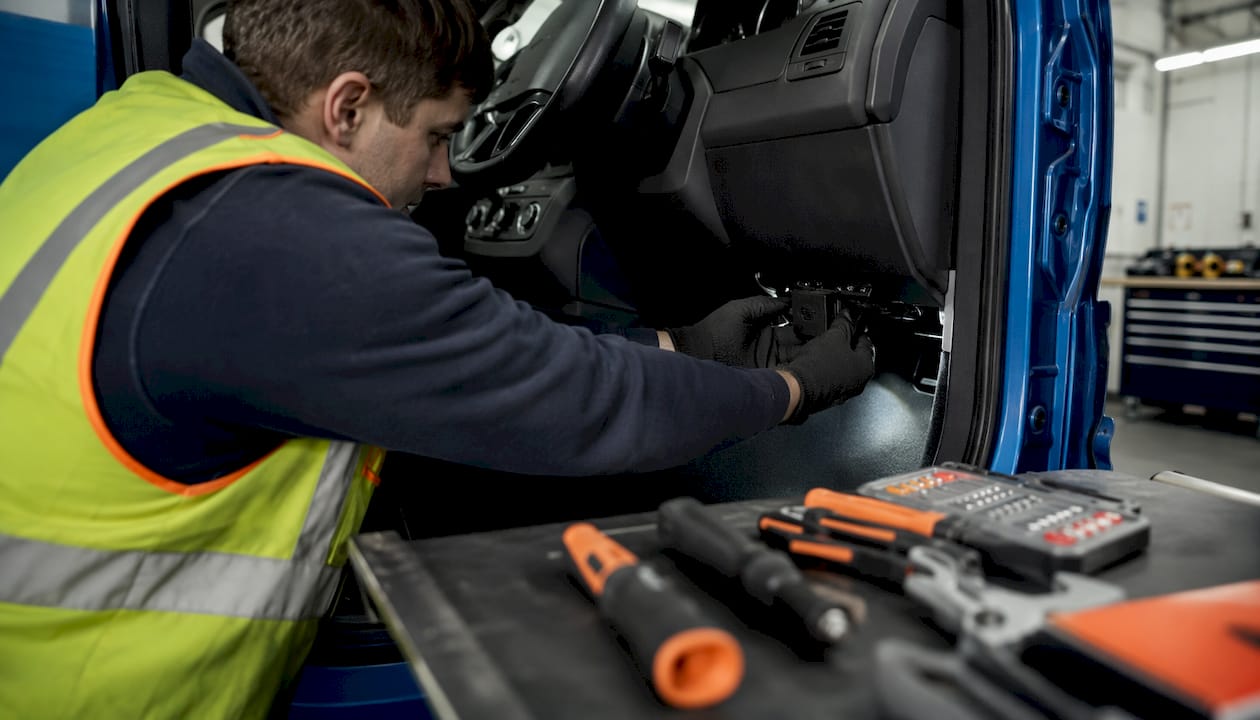
How do you set up fleet vehicle theft recovery step by step?

A structured rollout, from pilot to full fleet, prevents the most common failure: deploying hardware without validating that alerts and SOPs actually work under theft conditions.
Phase 1: Pilot planning (weeks 1–2)
- Select 3–5 vehicles from your highest-risk routes or highest-value asset class.
- Define success metrics: time-to-first-valid-alert under 3 minutes, false alarm rate under 10%, and confirmed backup-battery reporting after a simulated power cut.
- Capture a complete incident file for each pilot vehicle (VIN, plate, photos, driver assignment).
Phase 2: Device selection and installation (weeks 2–4)
- Require backup battery, multi-constellation GNSS, tamper detection, and a covert form factor for recovery-grade qualification.
- Confirm 4G/5G cellular coverage on your primary routes; add satellite connectivity for remote corridors.
- Follow a fleet hardwiring guide to connect the primary unit to both ignition and constant power, then install a concealed secondary unit in a non-obvious location.
Phase 3: Platform configuration
- Create depot safe zones as geofences with a 15–30 minute grace period after shift end.
- Set unauthorized-ignition-outside-shift as a high-priority alert that bypasses normal notification queues.
- Configure frequency escalation: standard 1-minute position updates during normal operations, switching to 10-second live-stream on theft-event trigger.
- Assign alert recipients: operations manager (primary), dispatch (secondary), and a designated incident owner.
- Test live-share link generation and confirm the URL is accessible without a platform login.
Phase 4: Training and validation
- Run a tabletop exercise with operations staff using the incident SOP before going live.
- Conduct a simulated unauthorized-ignition test and measure time-to-alert.
- Validate backup-battery reporting by disconnecting vehicle power and confirming the platform continues to receive position updates.
Pro Tip: Do not roll out fleet-wide until the pilot produces at least two clean validation cycles. One successful test can be luck; two consecutive clean runs confirm the system is configured correctly.
A proactive fleet asset-theft plan includes maintaining a digital inventory, installing GPS on all assets, setting geofence alerts, and sharing tracking data quickly with police and insurers. The pilot phase is where you confirm all four of those elements are operational.
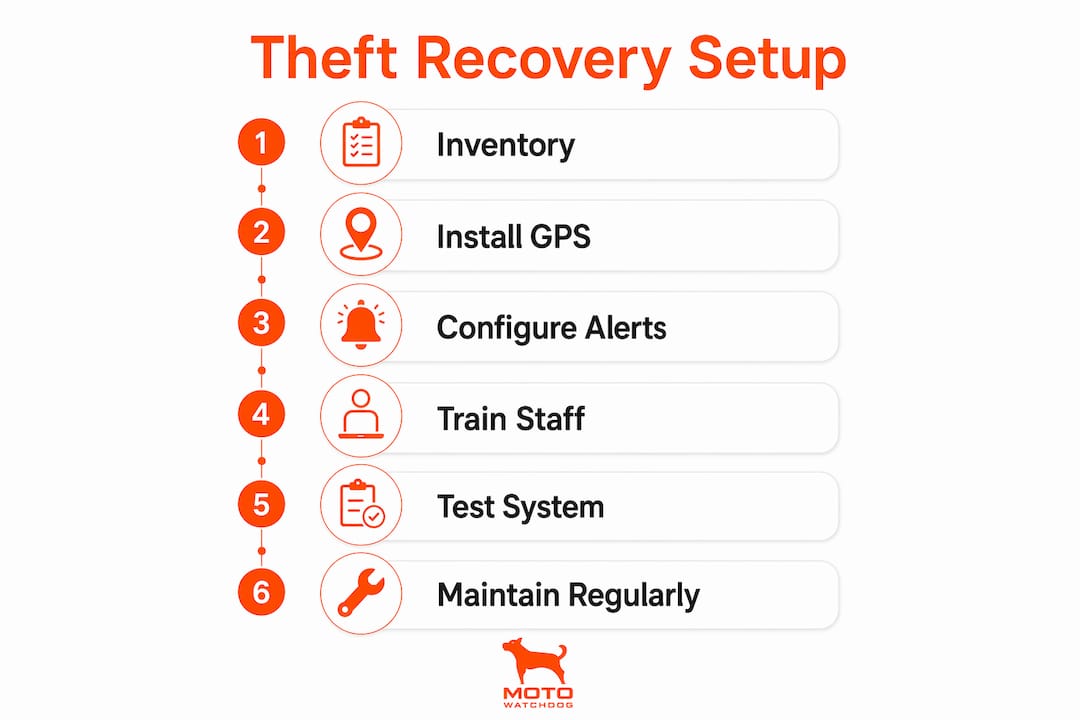
Installation and placement best practices for maximum survivability
Where and how a tracker is mounted determines whether it keeps reporting during an actual theft. Common failure modes include no backup battery, predictable installation locations, coverage gaps, and the absence of a clear incident workflow.
Placement rules:
- Avoid the OBD-II port, under the dashboard center console, and any location a professional thief checks first.
- Prefer locations that preserve GNSS sky view: near the roofline, under non-metallic body panels, or in the headliner.
- Install the primary unit in a location that is hardwired and tamper-alarmed; install the secondary unit in a completely separate location with its own power source.
- Never mount both units in the same vehicle zone.
Wiring best practices:
- Connect to a constant-power circuit (for backup battery charging) and a switched-ignition circuit (for ignition-status events).
- Route wiring through factory conduits to avoid visible aftermarket runs.
- Use tamper switches that trigger an alert if the device housing is opened.
Communications hardening:
- Prefer dual-band cellular modules (LTE Cat-M1 and NB-IoT) for urban resilience.
- Multi-constellation GNSS receivers maintain fix in dense urban environments where single-constellation units lose signal.
Pro Tip: A hardwired GPS tracker installed by a certified technician with concealed wiring is significantly harder to defeat than a plug-in unit. Budget for professional installation on your highest-value assets.
What is the SOP when a fleet vehicle is reported stolen?
Speed is the primary variable in vehicle recovery. The first hour determines whether police can intercept a moving vehicle or begin a cold search.
Immediate response (0–60 minutes)
- Verify the event. Log into the tracking platform and confirm the vehicle is moving outside authorized hours or locations. Rule out driver error before escalating.
- Activate high-frequency reporting. Switch the device to live-stream mode (10-second updates or faster if the platform supports it).
- Generate a live-share link. Copy the URL and prepare it for immediate transmission to law enforcement.
- Call law enforcement. Provide VIN, plate number, last known location, direction of travel, and the live-share URL. NHTSA advises filing a police report promptly; do not wait for internal confirmation.
- Notify your insurer. Contact your commercial auto insurer and open a claim file with the incident timestamp.
Incident file contents to send immediately:
- VIN and license plate
- Vehicle make, model, color, and year
- Driver assignment at time of theft
- Last confirmed location and timestamp
- Live-share URL (active link)
- Photos of the vehicle
Follow-up timeline (1–72 hours)
- 1–24 hours: Monitor platform continuously. Update police with position changes every 30–60 minutes or whenever the vehicle stops. Log all communications.
- 24–72 hours: Transfer full event history, position logs, and any dash cam footage to your insurer. Follow up with the assigned detective and provide the NICB Investigative Assistance contact (800.447.6282 ext. 7002) if the case involves suspected organized theft.
Pro Tip: Designate a single incident owner before any theft occurs. When two people are both calling the detective and updating the insurer, communications fragment and critical updates get missed.
Physical and electronic hardening to reduce theft attempts
Tracking recovers vehicles. Hardening prevents theft in the first place, and the two strategies work best together. Defense-in-depth hardening combines physical deterrents with electronic controls to reduce thief success and defeat common attack vectors like relay attacks and OBD programming.
Physical measures:
- Steering-wheel locks and pedal clamps on high-value or frequently targeted vehicles
- Catalytic converter shields on vehicles with high-theft converters (vans, trucks, hybrids)
- Keyed coupler locks on trailers and towed equipment
- Secure key storage: key cabinets with access logs, never keys left in vehicles
Electronic measures:
- OBD-II port locks to prevent plug-in programming attacks
- Faraday pouches for key fobs to block relay amplification attacks
- Aftermarket immobilizers on high-risk vehicles
- Remote cutoff/immobilization where your jurisdiction permits it and where it is operationally safe to activate
Tracker hardening:
- Backup battery units as secondary devices, concealed independently
- Tamper alerts configured to notify the incident owner immediately
- Redundant communications paths (cellular primary, satellite fallback on remote routes)
Driver training checklist items:
- Engine-off and keys-removed rule enforced at every stop
- Reporting suspicious behavior near the vehicle or depot
- Key fob management: Faraday pouch use when not in use
How do you test and maintain a fleet theft-recovery system?
A system that has not been tested recently should be treated as untested. Hardware fails, firmware updates change alert behavior, and staff turnover erodes SOP knowledge.
Recommended maintenance schedule
| Test / Activity | Frequency | Pass Criteria |
|---|---|---|
| Device health check (battery, signal, firmware) | Monthly | All units reporting; firmware current |
| Geofence breach simulation | Quarterly | Alert received within 3 minutes |
| Unauthorized-ignition simulation | Quarterly | High-priority alert triggered; live-share link generated |
| Power-cut / backup-battery test | Quarterly | Device continues reporting for minimum 4 hours after power disconnect |
| Live-share handoff drill (dummy law-enforcement contact) | Semi-annually | Link accessible without platform login; position updates confirmed |
| Full SOP tabletop exercise | Annually | Incident owner completes all steps within 60-minute simulation |
Specific test procedures
- Geofence breach test: Move a pilot vehicle outside its depot geofence during off-hours and confirm the alert fires within the configured threshold.
- Unauthorized-ignition test: Start the vehicle outside shift hours and confirm the high-priority alert reaches all designated recipients.
- Power-cut scenario: Disconnect the vehicle’s main power supply and confirm the backup battery sustains reporting. Log the duration.
- Live-share handoff: Generate a live-share link and open it on a device with no platform credentials. Confirm position updates are visible.
Alert hygiene: Review alert rules quarterly. Prune any alert that generates more than two false positives per week. Maintain a written escalation matrix that maps alert type to recipient and required response time. GPS platform features like alert analytics help identify which rules are generating noise versus genuine events.
What are the legal and privacy requirements for tracking employees in North America?
Fleet tracking is legally permissible across North American jurisdictions, but the legal framework requires written notice, purpose limitation, and defined data retention. Failing to document these steps creates liability exposure even when the tracking itself is lawful.
Core legal steps:
- Provide written notice to all drivers that company vehicles are tracked. Include the purpose (fleet management, theft recovery, safety), the data collected, and who has access.
- Obtain signed policy acceptance as part of driver onboarding and annual training.
- Restrict live-location access to personnel with a defined operational need (operations manager, incident owner, designated dispatcher).
- Define data retention periods: position history for 90 days is a common operational standard; incident data should be retained for the duration of any related insurance claim or legal proceeding.
Operational policy clauses to include:
- Purpose limitation: tracking data is used for fleet management and theft recovery, not performance monitoring outside defined operational metrics.
- Access controls: live-share links are generated only during confirmed theft events and shared only with law enforcement and insurers.
- Incident data sharing: document every live-share event in a log (timestamp, recipient, incident reference number).
- Data deletion schedule: automated purge of routine position history after the retention period.
Practical compliance actions:
- Keep a written log of every live-share event, including who received the link and the incident reference.
- Minimize personal data in live shares: share vehicle position, not driver identity, unless law enforcement specifically requests it.
- Consult legal counsel before activating remote immobilization. Legality and safety conditions vary by jurisdiction and vehicle type.
Pro Tip: Treat tracking policies like safety rules. Include them in driver onboarding, post them in the depot, and review them annually. A driver who understands why tracking exists is far less likely to challenge it.
What does a fleet theft-recovery rollout cost and how long does it take?
Cost and timeline vary significantly by fleet size, vehicle type, and connectivity requirements, but the structure of a rollout is consistent.
Cost categories:
- Per-vehicle hardware: Recovery-grade hardwired units with backup battery typically run higher than consumer-grade devices; covert secondary units add an additional per-vehicle cost.
- Installation labor: Professional hardwired installation per vehicle; budget more for concealed secondary units that require panel removal.
- Platform access: Subscription-based platforms charge monthly per vehicle; subscription-free or lifetime models (like Motowatchdog’s) eliminate recurring fees and reduce long-term total cost of ownership. See a detailed comparison of subscription-free GPS options for business fleets.
- Optional recovery partner fees: Some fleets contract with third-party recovery services that coordinate directly with law enforcement.
- Training and documentation: SOP development, driver training sessions, and tabletop exercises.
Sample rollout timeline:
- Weeks 1–4 (pilot): Deploy on 3–5 high-risk vehicles, validate alerts and backup-battery reporting, and run the first SOP tabletop exercise.
- Months 2–3 (phased deployment): Expand to remaining high-risk vehicles, tune alert thresholds based on pilot data, and complete driver training.
- Months 3–6 (full fleet validation): Complete installation across the fleet, run semi-annual live-share drill, and finalize incident SOP documentation.
Cost-shaping factors: Vehicle type (larger vehicles may require more complex installs), need for covert secondary units, satellite connectivity for remote routes, and volume discounts available at scale. Small fleet tracking on a budget is achievable with careful device selection and a phased rollout that prioritizes highest-risk assets first.
How does theft recovery integrate with fleet management software?
Theft recovery works best when it is not a separate system. Integrating tracker data with your existing fleet management software means stolen-vehicle alerts surface in the same dashboard your dispatchers already monitor, and incident data flows directly into maintenance and compliance records.
Practical integration points include: automatic incident ticket creation when a theft-event alert fires, position history accessible alongside driver logs and vehicle service records, and geofence data shared between the tracking platform and route-planning tools. Fleet GPS data integration examples show how position data can populate maintenance schedules and compliance reports without manual re-entry.
When evaluating platforms, confirm that the tracking system offers an open API or pre-built connectors for your fleet management software. A platform that operates as a silo requires manual data transfer during an incident, which slows response time precisely when speed matters most.
How do you coordinate with law enforcement beyond the initial report?
Filing the police report is the beginning of law enforcement coordination, not the end. Sustained follow-up significantly improves recovery outcomes, particularly for commercial vehicles that may be moved across jurisdictions.
Assign your incident owner to contact the assigned detective or case officer every 24 hours during the active recovery window. Provide updated position logs, any new dash cam footage, and a summary of platform activity since the last contact. If the vehicle crosses a county or state line, proactively notify the new jurisdiction and provide the case number from the originating agency.
The NICB’s Investigative Assistance Group operates 24/7 and can assist law enforcement with secondary vehicle identifier locations, partial VIN cross-referencing, and coordination on cases involving suspected organized theft rings. Providing the NICB contact to the assigned detective (IA@nicb.org or 800.447.6282 ext. 7002) at the time of the initial report gives investigators an additional resource at no cost to your fleet.
For fleets operating in high-theft jurisdictions, consider establishing a pre-incident relationship with your local law enforcement agency. Sharing your fleet’s vehicle inventory, VINs, and tracking platform capabilities in advance means officers already know how to use your live-share link when a theft occurs.
How does a secured fleet affect insurance premiums and claims?
Insurers treat verified theft-recovery systems as a material risk reduction, and that assessment shows up in both premium pricing and claims handling. Fleets with documented GPS tracking, geofencing, and a written incident SOP typically qualify for commercial auto premium discounts, though the specific percentage varies by carrier and coverage type.
More immediately, a secured fleet with active tracking changes the claims process. When a theft occurs, your insurer receives a timestamped position history, a live-share link, and a pre-populated incident file rather than a vague report of a missing vehicle. That documentation accelerates claim adjudication and reduces the likelihood of a disputed total-loss valuation.
Notify your commercial auto insurer before deploying a new tracking system and ask specifically about premium credits for GPS-equipped fleets. Some carriers require documentation of the device type, installation method, and alert configuration to apply a discount. Keep that documentation in your fleet management system alongside the incident files.
Key Takeaways
A recovery-ready fleet requires resilient hardware, theft-specific alert logic, and a written SOP that puts live location data in front of police within the first hour of a confirmed theft.
| Point | Details |
|---|---|
| Hardware survivability first | Backup battery and multi-constellation GNSS are the two features that determine whether a tracker keeps reporting after a thief cuts power. |
| Alert logic must be theft-specific | Unauthorized-ignition-outside-shift is a high-priority event; configure frequency escalation to live-stream on theft detection, not standard 1-minute intervals. |
| SOP before the theft happens | Pre-populate incident files for every asset and designate a single incident owner so the first 60 minutes are spent coordinating, not searching for information. |
| Test quarterly, not annually | Simulated power-cut, geofence breach, and live-share handoff tests run quarterly confirm the system works before a real event. |
| Motowatchdog for subscription-free pilots | Motowatchdog’s subscription-free 4G GPS option reduces long-term TCO and supports geofencing and live-share for fleets starting a pilot on high-risk vehicles. |
Why the technology alone will not save your fleet
The conventional wisdom in fleet security focuses almost entirely on device selection. Pick the right tracker, install it, and you are protected. That framing misses the operational reality that most failed recoveries share: the hardware worked, but the workflow did not.
Fleets that reliably recover stolen vehicles have one thing in common beyond good hardware. They have practiced the SOP. They know which dispatcher generates the live-share link, which manager calls the detective, and which incident owner owns the file from minute one to claim closure. When a theft happens at 2 AM on a Saturday, there is no time to figure out roles.
The backup battery and multi-constellation GNSS are necessary. But the single highest-leverage investment a fleet manager can make is a 90-minute tabletop exercise where the team walks through a simulated theft from alert to police handoff. Run it once and you will find three things that do not work. Fix those, run it again, and your fleet is genuinely recovery-ready. The technology is the enabler; the team and the process are what actually recover the vehicle.
Motowatchdog gives fleets a subscription-free path to recovery-ready tracking
Recurring per-vehicle subscription fees add up fast across a fleet, and they do not disappear when a vehicle is idle. Motowatchdog’s subscription-free 4G GPS tracking eliminates that ongoing cost while delivering the core capabilities a fleet vehicle theft recovery setup requires: real-time position updates, customizable geofencing alerts, long battery life for backup power scenarios, and live-share functionality that puts a moving target in front of law enforcement without requiring a platform login.
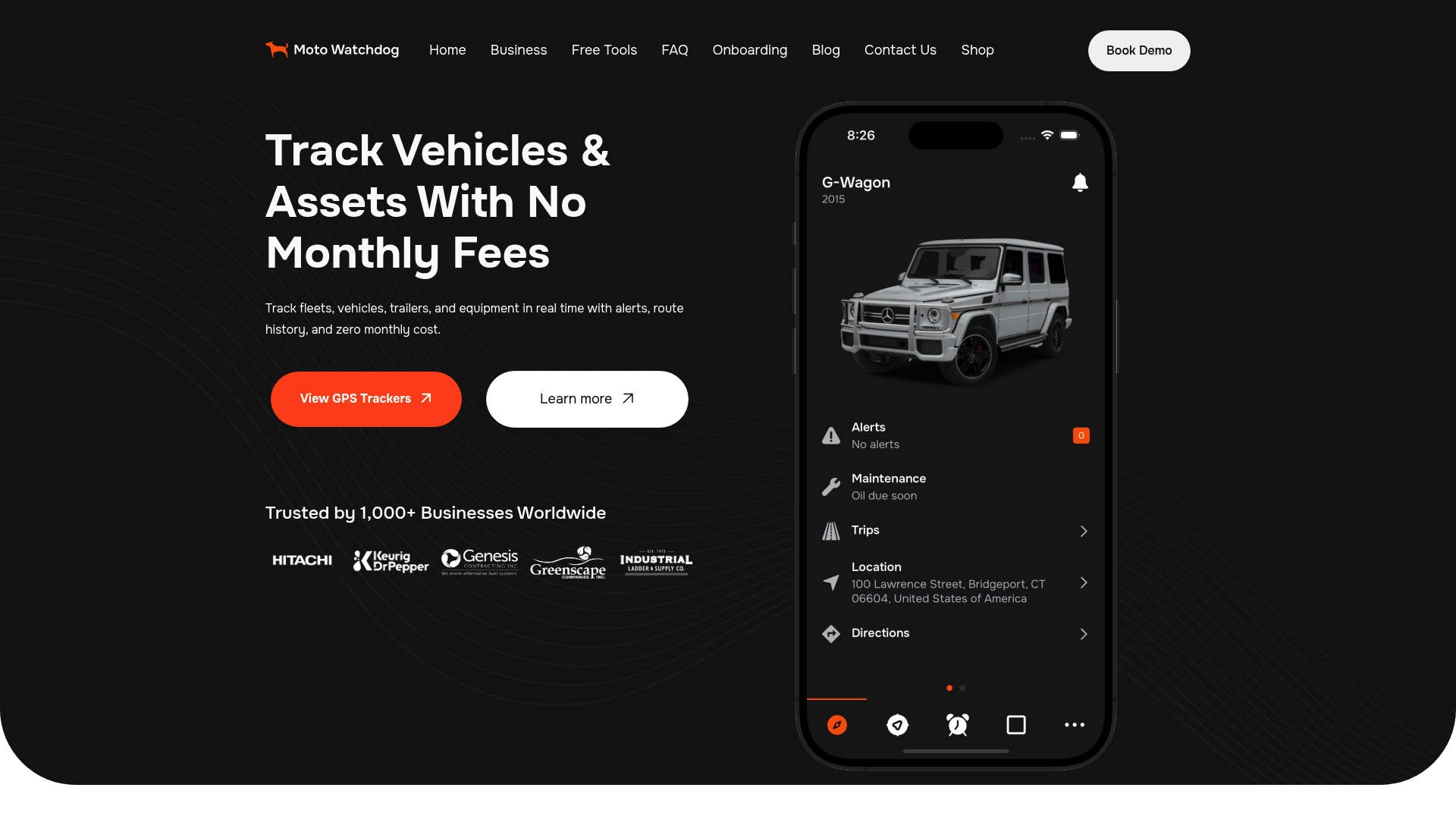
Over 1,000 businesses rely on Motowatchdog’s accuracy and ease of setup. For fleet managers ready to pilot the system, the recommended starting point is 3–5 of your highest-risk vehicles. Configure geofence and unauthorized-ignition alerts, validate backup-battery reporting, and run one live-share drill with a designated law-enforcement contact. That pilot takes 2–4 weeks and gives you the data to justify a full fleet rollout with confidence.
Visit Motowatchdog’s subscription-free GPS platform to review device options and start your pilot configuration today.
Useful sources and further reading
- NICB Vehicle Theft Toolkit (PDF) — Law enforcement resource covering LPR programs, bait cars, investigative assistance, and NICB regional office contacts. Recommend citing in any incident report shared with detectives.
- NICB — U.S. Vehicle Thefts Experience Historic Decline — Primary source for 2025 national theft statistics (659,880 thefts; 23% YoY decline) and high-theft jurisdiction data.
- NHTSA — Vehicle Theft Prevention — Official guidance on antitheft device categories and victim reporting steps. Reference when documenting your SOP for insurers.
- ErmTelematics — How to Track Stolen Vehicles Effectively — Practitioner guide covering recovery-grade hardware requirements, common failure modes, and alert logic design.
- Powerfleet Blog — How to Create a Fleet Asset Theft Plan — Operational template for fleet inventory, GPS deployment, geofencing, and communication plans.
- Protrack — Fleet Theft Is a Business-Killer — Covers defense-in-depth hardening including OBD-II locks, Faraday pouches, and relay attack mitigation.

