How to start saving money
Lorem ipsum dolor sit amet, consectetur adipiscing elit lobortis arcu enim urna adipiscing praesent velit viverra sit semper lorem eu cursus vel hendrerit elementum morbi curabitur etiam nibh justo, lorem aliquet donec sed sit mi dignissim at ante massa mattis.
- Neque sodales ut etiam sit amet nisl purus non tellus orci ac auctor
- Adipiscing elit ut aliquam purus sit amet viverra suspendisse potent
- Mauris commodo quis imperdiet massa tincidunt nunc pulvinar
- Excepteur sint occaecat cupidatat non proident sunt in culpa qui officia
Why it is important to start saving
Vitae congue eu consequat ac felis placerat vestibulum lectus mauris ultrices cursus sit amet dictum sit amet justo donec enim diam porttitor lacus luctus accumsan tortor posuere praesent tristique magna sit amet purus gravida quis blandit turpis.

How much money should I save?
At risus viverra adipiscing at in tellus integer feugiat nisl pretium fusce id velit ut tortor sagittis orci a scelerisque purus semper eget at lectus urna duis convallis. porta nibh venenatis cras sed felis eget neque laoreet suspendisse interdum consectetur libero id faucibus nisl donec pretium vulputate sapien nec sagittis aliquam nunc lobortis mattis aliquam faucibus purus in.
- Neque sodales ut etiam sit amet nisl purus non tellus orci ac auctor
- Adipiscing elit ut aliquam purus sit amet viverra suspendisse potenti
- Mauris commodo quis imperdiet massa tincidunt nunc pulvinar
- Adipiscing elit ut aliquam purus sit amet viverra suspendisse potenti
What percentege of my income should go to savings?
Nisi quis eleifend quam adipiscing vitae aliquet bibendum enim facilisis gravida neque. Velit euismod in pellentesque massa placerat volutpat lacus laoreet non curabitur gravida odio aenean sed adipiscing diam donec adipiscing tristique risus. amet est placerat in egestas erat imperdiet sed euismod nisi.
“Nisi quis eleifend quam adipiscing vitae aliquet bibendum enim facilisis gravida neque velit euismod in pellentesque”
Do you have any comments? Share them with us on social media
Eget lorem dolor sed viverra ipsum nunc aliquet bibendum felis donec et odio pellentesque diam volutpat commodo sed egestas aliquam sem fringilla ut morbi tincidunt augue interdum velit euismod eu tincidunt tortor aliquam nulla facilisi aenean sed adipiscing diam donec adipiscing ut lectus arcu bibendum at varius vel pharetra nibh venenatis cras sed felis eget.
Managing vehicles, equipment, and drivers efficiently is crucial for businesses that rely on transportation.
The right fleet management system helps track vehicles in real time and schedule preventive maintenance.
It also improves fuel efficiency and maintains compliance without extra complexity.
The best fleet management system uses automation, data analytics, and integration with business tools to optimize fleet operations.

Logistics, construction, and delivery companies now rely on advanced software to stay competitive.
Modern platforms offer features like predictive maintenance, safety reporting, and dashboards for full operational visibility.
Choosing the right system means understanding essential features and evaluating trusted providers.
Long-term scalability is also important.
With the right approach, fleets can reduce downtime, extend vehicle life, and control costs.
What Is a Fleet Management System?
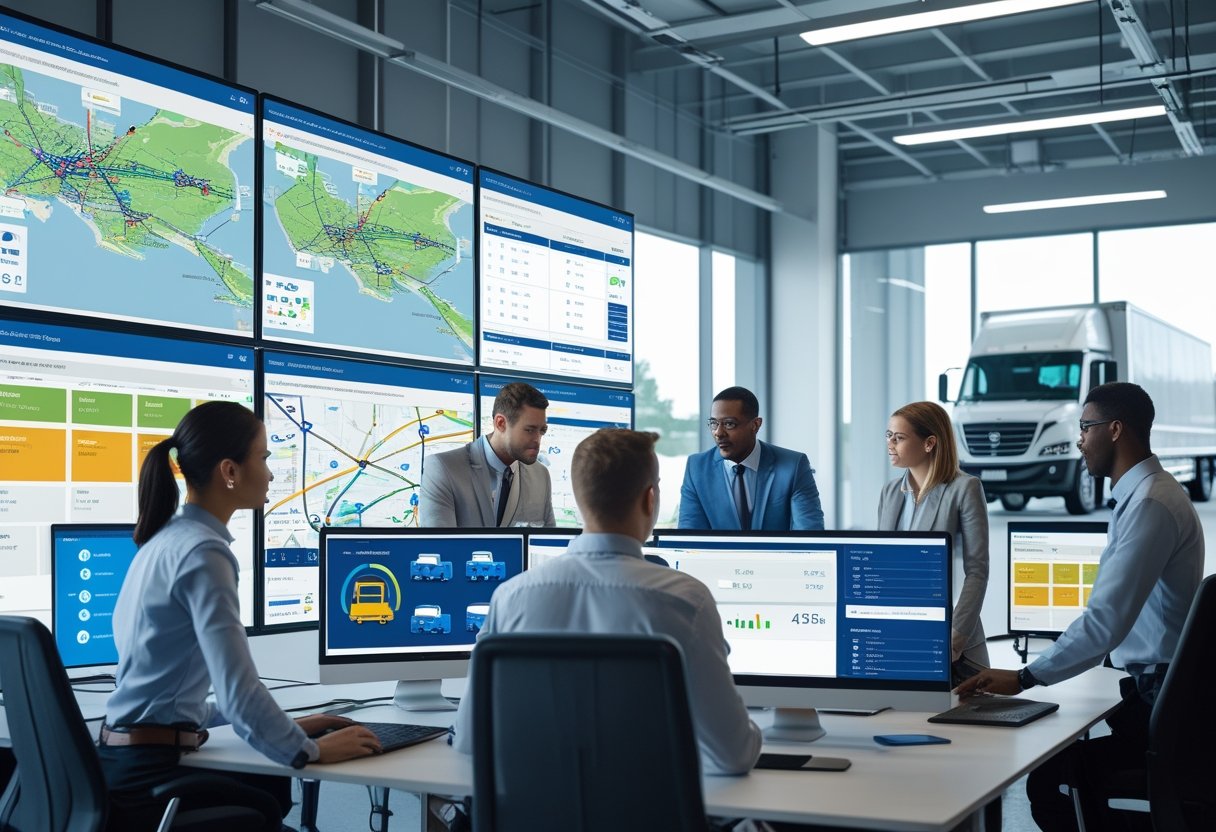
A fleet management system helps organizations monitor, coordinate, and optimize vehicles and mobile assets.
It offers tools for tracking, maintenance scheduling, compliance, and driver performance to improve operational efficiency and safety.
Core Concepts of Fleet Management
Fleet management involves controlling vehicles used for logistics, delivery, or service operations.
A centralized system lets managers oversee vehicle health, fuel use, and route efficiency in real time.
Modern systems use GPS tracking, telematics, and data analytics to provide insights for decision-making.
This technology reduces downtime and keeps vehicles on maintenance schedules.
Data integration supports reporting on cost per mile, utilization, and environmental impact.
Essential components include:
- Vehicle maintenance tracking
- Driver behavior monitoring
- Fuel and cost management
- Regulatory compliance tools
Coordinating these elements helps extend vehicle lifespans and maintain performance.
Fleet Management System vs. Fleet Tracking
Fleet tracking focuses on real-time location monitoring using GPS.
It is a feature within a fleet management platform but covers only part of the system’s capabilities.
A fleet management system (FMS) does more than track location.
It stores vehicle history, mileage, maintenance data, and driver safety metrics.
These systems integrate with dispatch and logistics tools, supporting route optimization and risk mitigation.
The key difference is in scope.
FunctionFleet TrackingFleet Management SystemMain FocusLocation monitoringFull operational oversightKey DataGPS coordinatesPerformance, maintenance, complianceBenefitVisibilityEfficiency and cost control
Businesses that grow often move from basic tracking to full FMS platforms for centralized oversight.
Key Stakeholders in Fleet Operations
Fleet operations involve several stakeholders.
Fleet managers oversee daily operations, vehicle allocation, and performance.
Drivers report safety issues, mileage, and vehicle condition.
Maintenance teams handle repairs and servicing, using system data to schedule work.
Finance and compliance officers track expenses, insurance, and regulatory adherence.
Executives use dashboards to assess cost efficiency and sustainability.
Shared system data helps organizations coordinate decisions and maintain regulatory standards.
Essential Features of the Best Fleet Management System
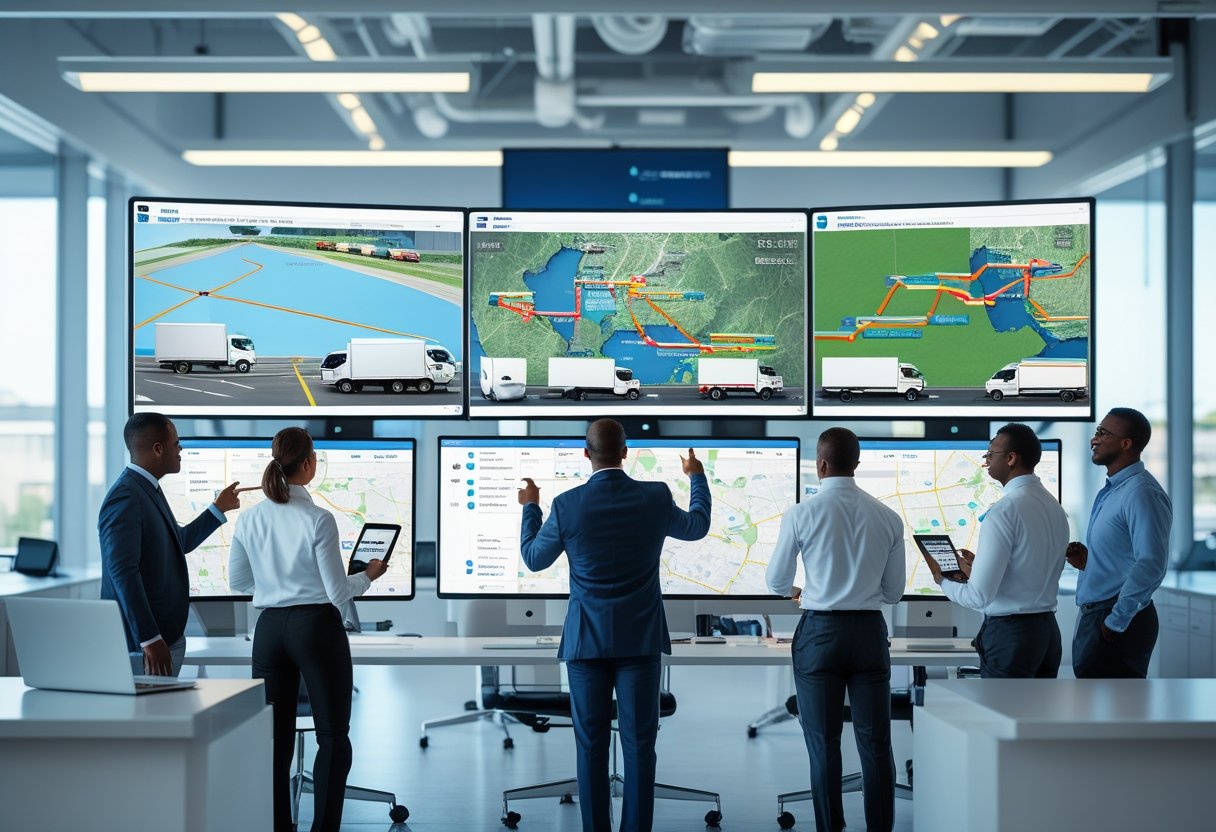
Top fleet management platforms combine real-time connectivity, analytics, and automated monitoring.
Systems that integrate telematics with route and driver management help fleets lower fuel use and maintain consistent performance.
Real-Time GPS Tracking and Telematics
Accurate real-time GPS tracking is essential for fleet management.
Platforms like Geotab use telematics to collect live data on location, speed, fuel use, and engine performance.
Managers access this information through dashboards or mobile apps.
This allows quick responses to route changes or maintenance alerts.
Telematics sensors detect engine faults and trigger service reminders.
With geofencing, alerts are sent when vehicles enter or leave zones.
This improves visibility and reduces unauthorized use.
When combined with dash cams, the system records events for accident clarification and driver coaching.
Precise tracking and diagnostics help optimize performance and meet safety regulations.
Route Planning and Optimization
Route planning and optimization software reduces mileage and keeps deliveries on schedule.
Algorithms consider traffic, delivery windows, and vehicle capacity.
This leads to efficient routes that cut idle time and fuel use.
Many systems offer real-time tracking and predictive analytics to reroute vehicles if conditions change.
Managers can update assignments from a central platform, syncing instantly to driver devices.
A comparison of route optimization benefits:
FeaturePrimary BenefitMeasurable OutcomeReal-time route updatesRespond to delays quicklyFewer late deliveriesTraffic data integrationAvoid congested areasLower idle timeLoad balancingOptimize vehicle capacityReduced fuel use
These features support reliable deliveries and efficiency gains.
Driver Management and Safety Monitoring
Driver management tools assess performance and improve compliance.
Fleet systems track driver behavior such as harsh braking, speeding, or idling.
Dashcams and telematics provide evidence for feedback and training.
Automated driver safety monitoring alerts managers to risky activity.
Some platforms use AI to detect fatigue or distraction.
This data guides coaching and encourages safer habits.
Clear reports help identify strong drivers and those needing support.
Consistent monitoring builds accountability and protects vehicles, cargo, and personnel.
Fleet Maintenance and Asset Management
Good fleet maintenance and asset management improve uptime and reduce repair costs.
Accurate asset tracking and integrated software keep vehicles and equipment running safely.
Maintenance Scheduling and Preventive Care
Maintenance scheduling prevents failures and keeps vehicles compliant.
Preventive maintenance uses mileage, engine hours, or time to schedule service before issues arise.
Inspection management tools help plan and record inspections.
Managers can spot patterns in wear, fuel use, and breakdowns.
Technicians use work order management features to assign and track repairs.
This ensures preventive tasks are not missed.
Automated alerts for oil changes, tire rotations, and brake checks reduce downtime.
A clear maintenance schedule helps with budget planning and aligns parts purchases with operational needs.
Asset Tracking and Inventory Management
Accurate asset tracking gives real-time visibility into vehicles and components.
GPS systems record location, usage hours, and engine status.
This helps decide when to use or replace assets.
Inventory management tracks parts and consumables.
Managers can respond quickly to shortages using dashboards or tables:
Item TypeReorder PointCurrent StockSupplierBrake Pads10 sets12OEM Supplier AOil Filters25 units30Distributor B
Combining asset and inventory data creates a full maintenance history.
This supports planning, depreciation tracking, and compliance.
Fleet Maintenance Software Integration
Modern fleet maintenance software brings scheduling, work orders, and asset tracking into one platform.
Centralization improves coordination between maintenance, finance, and operations.
Systems like MaintainX combine asset management and maintenance management for all assets.
Integration with telematics and GPS data enables condition-based maintenance.
If the software detects performance anomalies, it can generate alerts or work orders automatically.
Cloud-based platforms offer analytics for performance evaluation.
Managers can review cost-per-mile, downtime, and technician productivity using real data.
Fuel Management and Cost Control
Fleet operators need accurate data to reduce fuel waste and manage expenses.
Systems that combine fuel tracking with telematics, fuel cards, and reporting tools help spot inefficiencies and improve cost control.
Fuel Consumption Tracking
A good fuel management system records all fuel used across the fleet and links it to vehicle performance.
Managers can see consumption by driver, route, or vehicle type.
This makes it easier to improve fuel efficiency.
Modern platforms use GPS and telematics to track idling, unauthorized refueling, or high fuel usage.
Dashboards compare expected and actual usage.
Automated reports support compliance and help detect problems.
A sudden spike in fuel consumption may signal maintenance needs or inefficient driving.
Some solutions calculate optimal refueling schedules to avoid unnecessary stops.
Key advantages:
- Precise tracking of fuel by vehicle or driver
- Identification of trends that affect cost
- Integration with other fleet systems for unified data
Fuel Cards and Expense Optimization
Fuel cards streamline expense management by linking purchases to specific vehicles or drivers. They provide controlled access to fueling locations and capture every transaction in a central database.
This minimizes manual data entry and supports accurate expense reporting. Usage rules, spending limits, and authorized merchant lists help managers prevent unauthorized purchases and track pricing by region or supplier.
Many fuel management platforms automatically reconcile card data with fuel tracking systems for complete visibility. Advanced analytics help identify cost-saving opportunities, such as choosing lower-cost suppliers or fueling during off-peak pricing periods.
The system can produce detailed expense reports that show deviations from fleet fuel policies, making accountability clear. Combining card-based controls with fuel tracking gives decision-makers the data needed to reduce waste and improve budget accuracy.
Compliance, Safety, and Reporting
Effective fleet management depends on strict adherence to regulations, accurate recordkeeping, and actionable data. Strong compliance tools prevent costly violations, while standardized reporting improves safety oversight and operational decisions.
ELD and Regulatory Compliance
Electronic Logging Devices (ELDs) record driver hours automatically to ensure compliance with Hours of Service (HOS) regulations. These systems replace paper logs, reducing errors and tampering.
Fleet management platforms integrate ELDs to help companies meet Department of Transportation (DOT) and Federal Motor Carrier Safety Administration (FMCSA) requirements. Leading systems also track International Fuel Tax Agreement (IFTA) data and support Driver Vehicle Inspection Reports (DVIRs).
Automating these tasks lowers administrative workload and minimizes non-compliance risks. A reliable compliance management module should include:
FunctionPurposeHOS TrackingEnsures drivers follow legal rest periodsIFTA ReportingSimplifies fuel tax documentationDVIR IntegrationTracks vehicle inspections for safety
These tools maintain transparency and audit readiness, ensuring fleets remain within regulatory boundaries.
Driver Logs and Incident Reporting
Accurate driver logs form the foundation of accountability and safety. Modern systems allow digital documentation of daily activities and automatically sync with ELD data.
Drivers can record start times, delivery locations, and on-duty hours directly from mobile devices. Effective incident reporting captures details of accidents, mechanical failures, or compliance violations in real time.
Recording details promptly supports faster claim resolution and internal reviews. Systems that link logs and incident data provide managers with a unified view of performance and risk.
Standardized forms and automatic timestamps improve accuracy. Many fleet software solutions also store incident histories for safety audits and insurance verification.
Reporting and Analytics in Fleet Management
Comprehensive reporting transforms operational data into insights that improve efficiency and safety. Fleet management systems compile metrics on fuel usage, maintenance costs, driver behavior, and route performance.
Advanced analytics identify trends, such as frequent idling or recurring maintenance issues. Dashboards visualize key indicators, making compliance and efficiency easier to monitor.
Automated reporting supports regulatory submissions such as IFTA filings and DVIR documentation. By combining compliance data with performance analytics, fleets can align safety objectives with cost control and planning.
Integration, Scalability, and Customization
Modern fleet management systems depend on how well they integrate with other business tools and adapt to organizational growth. Real-world performance often comes from how effectively these systems connect operations, finance, and logistics under one unified digital framework.
ERP, TMS, and Third-Party Integrations
A strong fleet management platform connects smoothly with Enterprise Resource Planning (ERP), Customer Relationship Management (CRM), and Transportation Management Software (TMS). Integration with ERP systems like SAP or Oracle allows accurate cost tracking, inventory alignment, and invoice automation.
When linked with CRM, fleets can synchronize customer delivery data and improve response times. Third-party integrations—including fuel cards, telematics APIs, and compliance platforms—extend visibility and control.
Systems that support real-time data exchange through APIs or webhooks reduce duplicate data entry and improve operational consistency. Integration across systems allows managers to view maintenance expenses, driver performance, and route efficiency within a shared analytics environment.
Integration TypePrimary BenefitCommon ToolsERPUnified financial and asset dataSAP, Oracle NetSuiteCRMCustomer and delivery coordinationSalesforce, HubSpotTMSRoute and load optimizationDescartes, Trimble TMS
Customizable Dashboards and Data Visualization
Effective visualization tools convert constant data streams into actionable insights. A fleet management system should allow users to customize dashboards to track utilization rates, maintenance alerts, and fuel efficiency by department or region.
Custom filters help managers measure what matters most for their specific operations. Dashboards with drag-and-drop widgets and role-based access provide clear visibility without overwhelming users.
For example, maintenance teams might view service intervals and part inventories, while finance teams monitor total cost per mile. Color-coded charts and trend indicators make patterns easier to interpret.
The best systems export visuals to spreadsheet or BI tools so analysts can model costs or forecast resource needs directly from the fleet data.
Scalability for Different Fleet Sizes
Scalability ensures that performance and usability remain consistent as a company adds vehicles or expands geographies. Systems designed for growing fleets should maintain fast data synchronization and stable uptime whether tracking ten vans or thousands of assets.
Cloud-based architectures often offer tiered pricing and modular features, allowing organizations to scale features and costs as fleets expand. Core elements like user permissions, telematics integrations, and analytics modules should scale without requiring major reconfiguration.
Scalable software also supports various operational models—leasing, private ownership, or mixed fleets—without system slowdowns. When scalability aligns with licensing flexibility and integration readiness, organizations can extend their fleet management system’s lifecycle while maintaining data reliability.
Top Fleet Management System Providers
Fleet management platforms continue to evolve with better integration, real-time data insights, and automation tools that reduce administrative work. The strongest solutions combine GPS tracking, predictive maintenance, compliance support, and cost reporting in one interface.
Best Overall Fleet Management Systems
Samsara, Verizon Connect, and Motive are among the most established, feature-rich solutions. These systems offer real-time GPS tracking, route optimization, fuel consumption reports, and driver behavior monitoring.
Their dashboards provide detailed fleet analytics that help maintenance teams prevent equipment downtime. Verizon Connect integrates telematics, mobile apps, and compliance tools suitable for larger fleets.
Samsara’s cloud-based platform connects IoT devices with strong data visualization. Motive (formerly KeepTruckin) adds automated driver logs and safety alerts that align with federal ELD mandates.
ProviderCore StrengthBest ForSamsaraIntegrated IoT data & dashboardsMixed fleetsVerizon ConnectScalable tracking & complianceLarge enterprisesMotiveCompliance & driver safetyTrucking operations
These providers are common choices for companies balancing asset tracking, compliance, and reporting within one centralized system.
Specialized Fleet Software Solutions
Some organizations benefit from targeted platforms designed for niche use cases. Fleetio, Azuga, Onfleet, and Matrack focus on specific operational goals.
Fleetio emphasizes preventive maintenance scheduling, inventory tracking, and technician coordination. Azuga targets safety with driver scoring and video events.
Onfleet specializes in last-mile delivery management, offering route optimization and customer notifications for dispatch-intensive businesses. Matrack offers affordable GPS tracking options with reliable hardware for smaller fleets.
These alternatives fit companies that prefer modular tools or have smaller budgets. Each system integrates with accounting and dispatch tools but differs in data refresh rates, automation capabilities, and scalability.
Comparison of Leading Platforms
When comparing leading fleet management platforms, transparency of data, ease of implementation, and scalability are key differentiators. Teletrac Navman, Trimble, Quartix, Rhino Fleet Tracking, ATTI, and US Fleet Tracking illustrate different approaches to tracking and reporting.
Trimble offers advanced logistics analytics for freight and construction fleets. Teletrac Navman focuses on compliance and sophisticated driver analytics.
US Fleet Tracking and ATTI provide accurate GPS location data with rapid refresh intervals. Rhino Fleet Tracking and Quartix appeal to smaller operators needing straightforward reporting tools.
PlatformKey FeatureFleet Size SuitabilityTeletrac NavmanCompliance analyticsMedium–LargeTrimbleLogistics optimizationLargeQuartixSimple trackingSmall–MediumRhino Fleet TrackingAffordable GPSSmallATTIReal-time monitoringSmall–Medium
Choosing among these options depends on the level of customization and insight a company expects from its telematics data.
Buying Considerations and Pricing
Selecting a fleet management system involves balancing functionality, cost, and long-term value. Reliability, vendor stability, and the quality of customer service all play major roles in overall satisfaction.
Evaluating Fleet Management System Pricing
Fleet management software pricing typically follows subscription-based or per-vehicle models. Cloud-based systems often charge monthly fees starting around $10 to $35 per vehicle, depending on features and integrations.
Some vendors bundle GPS tracking, fuel monitoring, and maintenance tools, while others price each module separately. Buyers should compare total cost of ownership (TCO) rather than just base subscription prices.
Costs may include hardware installation, setup fees, and periodic software updates. For large fleets, volume discounts can reduce per-unit costs.
A simple comparison table can clarify differences:
Pricing FactorCommon RangeNotesMonthly fee per vehicle$10–$35Based on features and analytics toolsSetup fee$100–$500May include hardware or trainingContract length12–36 monthsRenewal terms affect total costAdd-onsVariableExamples: cameras, compliance modules
When assessing value, consider how automation and reduced downtime offset ongoing subscription expenses.
Key Factors in Vendor Selection
Choosing a fleet management company requires attention to compatibility, reliability, and regulatory compliance. Not every system integrates seamlessly with existing equipment or telematics sources.
Evaluating whether the software supports both mixed vehicle types and electric fleets can prevent replacement costs later. Buyers often weigh vendor track record and technology maturity.
Established providers usually offer broader integration options and cross-platform updates. Prospective clients should research independent ratings, user reviews, and security certifications to verify claims about uptime or data protection.
It helps to organize decision criteria using a checklist:
- Support for mobile and web access
- Real-time tracking accuracy
- Reporting and analytics quality
- Compliance with ELD or regional transport regulations
- Transparent data privacy policies
Consistent performance is often worth a higher monthly price if it ensures operational continuity.
Support, Training, and Customer Service
Even advanced systems lose value without proper implementation and support. Responsive customer service ensures that technical issues do not stall deliveries or compliance reporting.
Vendors offering 24/7 assistance or dedicated account managers provide smoother rollouts across large fleets. Training affects how quickly teams adopt new tools.
Some companies include online tutorials and live onboarding sessions, while others charge extra for instructor-led programs. Cloud-based platforms typically shorten setup time and require less IT overhead.
Service quality can be evaluated through indicators such as response time, ticket resolution rate, and customer satisfaction scores. Companies should document which level of support—standard, priority, or enterprise—matches daily operational needs before finalizing a contract.
Trends and Innovations in Fleet Management
Fleet management in 2025 continues to evolve through intelligent automation, digital integration, and sustainability mandates. Advances in analytics, connected technologies, and cleaner energy solutions are shaping how organizations manage vehicle performance, fuel usage, and logistics efficiency.
AI, Machine Learning, and Predictive Analytics
Artificial intelligence and machine learning play a central role in optimizing fleet operations. AI-powered tools process large amounts of telematics and maintenance data to predict vehicle issues before breakdowns.
Predictive analytics helps fleet managers schedule maintenance in advance. This reduces downtime and repair costs.
Machine learning models improve route planning and driver performance evaluation. By analyzing driver behavior and traffic conditions, these systems suggest safer and more efficient driving patterns.
This approach also helps with compliance management by identifying risks early.
Key uses of AI in fleet management include:
- Predictive maintenance scheduling
- Automatic route and dispatch optimization
- Driver safety scoring through behavior tracking
- Cost forecasting based on operational trends
These technologies help fleets make faster, more reliable decisions using real-time insights.
Future of Real-Time Visibility and Automation
Real-time visibility tools are now essential for logistics and delivery services. Modern GPS and IoT-based telematics systems track vehicle locations, cargo status, and fuel use minute by minute.
This transparency improves coordination across supply chains. It also reduces delays in last-mile delivery.
Automation is growing beyond just location tracking. Many fleets use automated workflows for reporting, route updates, and driver notifications.
Fleet control centers rely on integrated dashboards. These dashboards combine live data from vehicles, sensors, and fuel systems.
TechnologyFunctionBenefitIoT sensorsVehicle condition monitoringPrevents unexpected maintenance issuesGPS trackingReal-time location updatesImproves asset utilizationCloud platformsData integrationSupports multi-site operations
This level of automation reduces manual data entry. It provides a single source of truth for logistics management.
Sustainability and Green Fleet Initiatives
Environmental performance is now a major consideration in fleet planning. Fleets increasingly adopt electric and hybrid vehicles to meet carbon reduction goals and lower fuel costs.
Alternative fuels such as compressed natural gas (CNG) and biodiesel are now more accessible for larger vehicles. Software-driven energy monitoring helps track emissions and manage fuel use across mixed fleets.
Telematics reports show inefficient driving, idling, and chances to use cleaner routes or transport modes. Regulatory compliance is also pushing fleets toward sustainability.
Many regions now have stricter emissions policies, encouraging earlier transitions. These green initiatives help reduce the fleet’s environmental impact and improve public perception.