How to start saving money
Lorem ipsum dolor sit amet, consectetur adipiscing elit lobortis arcu enim urna adipiscing praesent velit viverra sit semper lorem eu cursus vel hendrerit elementum morbi curabitur etiam nibh justo, lorem aliquet donec sed sit mi dignissim at ante massa mattis.
- Neque sodales ut etiam sit amet nisl purus non tellus orci ac auctor
- Adipiscing elit ut aliquam purus sit amet viverra suspendisse potent
- Mauris commodo quis imperdiet massa tincidunt nunc pulvinar
- Excepteur sint occaecat cupidatat non proident sunt in culpa qui officia
Why it is important to start saving
Vitae congue eu consequat ac felis placerat vestibulum lectus mauris ultrices cursus sit amet dictum sit amet justo donec enim diam porttitor lacus luctus accumsan tortor posuere praesent tristique magna sit amet purus gravida quis blandit turpis.

How much money should I save?
At risus viverra adipiscing at in tellus integer feugiat nisl pretium fusce id velit ut tortor sagittis orci a scelerisque purus semper eget at lectus urna duis convallis. porta nibh venenatis cras sed felis eget neque laoreet suspendisse interdum consectetur libero id faucibus nisl donec pretium vulputate sapien nec sagittis aliquam nunc lobortis mattis aliquam faucibus purus in.
- Neque sodales ut etiam sit amet nisl purus non tellus orci ac auctor
- Adipiscing elit ut aliquam purus sit amet viverra suspendisse potenti
- Mauris commodo quis imperdiet massa tincidunt nunc pulvinar
- Adipiscing elit ut aliquam purus sit amet viverra suspendisse potenti
What percentege of my income should go to savings?
Nisi quis eleifend quam adipiscing vitae aliquet bibendum enim facilisis gravida neque. Velit euismod in pellentesque massa placerat volutpat lacus laoreet non curabitur gravida odio aenean sed adipiscing diam donec adipiscing tristique risus. amet est placerat in egestas erat imperdiet sed euismod nisi.
“Nisi quis eleifend quam adipiscing vitae aliquet bibendum enim facilisis gravida neque velit euismod in pellentesque”
Do you have any comments? Share them with us on social media
Eget lorem dolor sed viverra ipsum nunc aliquet bibendum felis donec et odio pellentesque diam volutpat commodo sed egestas aliquam sem fringilla ut morbi tincidunt augue interdum velit euismod eu tincidunt tortor aliquam nulla facilisi aenean sed adipiscing diam donec adipiscing ut lectus arcu bibendum at varius vel pharetra nibh venenatis cras sed felis eget.
For reliable yard trailer tracking, pair a yard management system (YMS) with the sensing approach that matches your yard: camera vision or RTLS for dense, high throughput yards, on trailer GPS or battery trackers for offsite staging and security, and RFID where low cost checkpoint accuracy is enough. Run a small pilot before committing to a full rollout, so you can confirm accuracy and integration before scaling.
TL;DR:
- GPS accuracy degrades within dense yards due to multipath interference, making gate checkpoints and RFID more reliable for precise trailer identification.
- Combining GPS trackers for security with RFID or camera systems for yard-position accuracy provides a balanced approach for operational visibility.
- Tracked data should be connected to yard and dock scheduling systems to enable real-time decision-making, dwell time, and detention management.
- A small, well-defined pilot lasting four to eight weeks helps validate system integration, KPIs, and specific use-case success before scaling up.
- Subscription-free GPS devices are ideal for offsite staging, after-hours security, and fleets where recurring telematics fees would otherwise add up significantly.
Table of Contents
- Why yard tracking is not the same job as on-road telematics
- Comparing GPS, RFID, RTLS, computer vision, and gate events
- What a yard management system needs to deliver on trailer tracking
- How to choose the right tracking approach for your yard
- Running a pilot: roles, tests, metrics, and pitfalls
- Where subscription-free GPS trackers fit an ops-first program
- Resources to verify the data and guide your pilot
- What the data actually tells you to prioritize
- Getting started with Moto Watchdog for trailer-level visibility
- Sources
- FAQ
Why yard tracking is not the same job as on-road telematics
On-road telematics answers a simple question: where is this truck right now, moving at highway speed with a clear view of the sky. Yard trailer tracking asks a harder one: which of two hundred trailers, parked six feet apart between steel-sided buildings, is the one dispatch needs at door 14 in the next twenty minutes. That is a different operational problem, and treating it as a smaller version of fleet telematics is where most tracking programs stall.
GPS accuracy degrades in dense yards because satellite signals reflect off trailers, buildings, and metal fencing, a problem known as multipath interference. A tracker that reports a trailer’s location within a few feet on the highway can be off by dozens of feet in a tightly packed yard, which is close to useless when a yard jockey needs a precise spot number. This is why gate events, RFID checkpoints, or camera-based positioning often outperform GPS alone inside the fence line, even though GPS remains the right tool once a trailer leaves the yard.
A yard management system solves a related but distinct problem. It is not a tracking device, it is the software layer that turns tracking data, gate scans, dock schedules, and driver check-ins into a single map of yard-side truth: what is here, where it sits, how long it has sat there, and what should move next. Telematics tells you where an asset is. A YMS tells you what that location means for your operation.
The gap between these layers shows up in the numbers. According to The State of Dock & Yard Management 2025, 63% of organizations now rank real-time yard visibility as a top priority, and integration with WMS and TMS platforms ranks close behind. That is a clear signal that visibility alone is not the finish line: it has to connect to the systems that plan freight movement.
- Multipath interference distorts GPS accuracy between tightly parked trailers and metal buildings.
- Gate events and RFID checkpoints confirm arrivals and departures even when GPS signal is unreliable.
- A YMS converts raw location data into dwell time, dock assignments, and shag lists.
63% of organizations prioritize real-time yard visibility, according to The State of Dock & Yard Management 2025, which puts yard-side accuracy on par with dock scheduling as an investment priority.
Comparing GPS, RFID, RTLS, computer vision, and gate events
Each sensing method has a different accuracy ceiling, a different installation burden, and a different cost shape. Matching the method to the yard, rather than picking the newest technology available, is what makes a pilot pay off.
GPS and battery-powered asset trackers mount directly on a trailer’s frame or landing gear and report location over cellular networks. Installation takes minutes, there is no yard infrastructure to build, and battery-powered units can run for extended periods without external power, which matters for trailers that sit unpowered for weeks. Accuracy is strong outside the yard and adequate for confirming whether a trailer is on site, off site, or at a customer location, but it loses precision for pinpointing an exact row or slot in a dense lot.
RFID uses passive or active tags read by fixed readers at gates or checkpoints. It is inexpensive per tag, well understood, and reliable for confirming that a trailer passed a specific point, which makes it a strong fit for gate check-in and check-out logging. It does not provide continuous location inside the yard, only checkpoint confirmation, so a trailer between reads is effectively invisible until it crosses another checkpoint.
RTLS (real-time location systems) use a network of fixed anchors, often ultra-wideband or Wi-Fi based, to triangulate a tag’s position continuously within a few feet. This is the closest thing to indoor GPS and works well in dense yards where row-and-slot precision matters, but it requires infrastructure investment, anchor placement, and ongoing calibration, which raises both the upfront cost and the maintenance burden compared with GPS or RFID.
Camera and computer vision systems read trailer license plates or ID markings at gates and, increasingly, across the yard itself, automating what used to require a guard walking a lot with a clipboard. According to a buyer’s guide from Supply Chain Research, AI-driven vision is shifting gate processing from manual check-in to automated trailer identification and condition checks, often with a fast payback because it replaces labor-intensive gate tasks directly.
Gate event systems, whether RFID, vision, or manual entry paired with software, create the timestamped record that a YMS needs to calculate dwell time and detention. Without a reliable gate event, every downstream metric in the yard is built on a guess.
- GPS or battery trackers: fastest to install, best for offsite staging and security, weaker on exact yard positioning.
- RFID: low cost per tag, strong for checkpoint accuracy, blind between reads.
- RTLS: continuous, precise yard positioning, higher infrastructure cost and calibration effort.
- Camera and computer vision: automates gate identification and condition checks, strongest payback at high-volume gates.
Pro Tip: Combine a low-cost GPS tracker for security and offsite visibility with a camera or RFID system at the gate: the tracker covers the trailer everywhere, the gate system delivers the precision your yard map actually needs.
What a yard management system needs to deliver on trailer tracking
A YMS earns its keep by turning gate scans and tracker pings into decisions a yard team can act on the same shift. A platform that only stores location data without connecting it to dock schedules and detention rules leaves most of the potential value on the table.
The core feature set that matters for trailer tracking specifically includes:
- Gate check-in and check-out, capturing trailer ID, carrier, seal number, and arrival time automatically rather than on paper.
- A live trailer map showing every spot, dock door, and trailer location updated as movements happen.
- Dock scheduling that assigns appointments and adjusts dynamically as trailers arrive early, late, or out of sequence.
- Dwell and detention logging that calculates how long a trailer has sat and flags it once it crosses a threshold.
- Shag lists that tell yard jockeys which trailers to move next, in priority order, instead of relying on radio calls.
None of these features work in isolation. Integration with a warehouse management system and a transportation management system lets the YMS ingest carrier ETAs and warehouse readiness signals, so dock schedules adjust before a trailer arrives rather than after a yard jockey notices it sitting in the wrong spot. A multi-site YMS implementation documented reduced manual yard checks and improved gate-to-dock workflows once these systems were tied together, giving operators a single view instead of separate spreadsheets for gate logs, dock schedules, and trailer inventory.
For fleets moving quickly, two features tend to deliver payback fastest: dynamic dock scheduling, because it cuts idle dock time immediately, and automated dwell alerts, because they catch detention costs before they compound over a week. Automated gate processing, whether through RFID or vision, follows close behind once volume justifies the hardware.
How to choose the right tracking approach for your yard
Start with an honest inventory before comparing vendors or technologies. The right sensing mix depends on facts about your yard, not on what a sales rep recommends first.
Collect these details before evaluating any system:
- Trailer count and mix, including how many are powered, unpowered, or owned versus leased.
- Number of gates and docks, along with peak-hour gate throughput.
- Yard layout and density, since a sprawling lot behaves differently than a tightly packed urban yard.
- Power availability at parking spots, which determines whether hardwired sensors are practical.
- Security risk profile, since high-theft regions or high-value freight change the calculus toward stronger tracking.
Once you have that inventory, score candidate approaches against four criteria: accuracy needed for your densest area, budget for hardware and installation, ease of integration with your existing WMS or TMS, and how fast you need to roll out. A yard with fewer than fifty trailers and simple gate throughput rarely justifies RTLS; a high-volume cross-dock with hundreds of daily moves often cannot function without it.
Set minimum pilot targets before you start so success is measurable rather than a matter of opinion: a target search time under five minutes per trailer, a measurable reduction in average dwell, and a gate event ingestion rate that reliably feeds your YMS without manual correction.
Pro Tip: Score each sensing option on a simple 1 to 5 scale for accuracy, cost, and integration effort, then weight the scores by what matters most for your yard profile: a security-focused yard weighs accuracy differently than a high-throughput cross-dock.
Running a pilot: roles, tests, metrics, and pitfalls
A pilot should be small, time-boxed, and specific enough to produce a clear go or no-go decision. Four to eight weeks, covering one yard or one shift, is usually enough to surface integration issues without committing to full hardware spend.
- Define scope and duration, naming the specific gate, dock area, or trailer group included in the test.
- Run integration and acceptance tests against your WMS and TMS to confirm gate events and location pings arrive accurately and on time.
- Assign stakeholders: a yard operations lead, an IT or integration contact, and someone accountable for acting on dwell and detention alerts.
- Track core KPIs throughout, including time-to-find a trailer, average dwell, and gate-to-dock time.
- Review results against your pilot targets before deciding whether to expand.
Common pitfalls tend to repeat across implementations. According to FreightWaves, technology installed without defined gate-in and spot-assignment rules causes rapid data drift, meaning the map stops matching reality within days. A 2025 update on yard management systems recommends starting with a single high-value use case, such as dynamic dock scheduling or a geofence-based security check, rather than attempting full-yard hardware rollout on day one.
- Data ownership should be assigned before launch, so alerts have a clear owner rather than being ignored in a shared inbox.
- Governance should define who can override a system-assigned dock or spot recommendation.
- A rollout timeline beyond the pilot should extend hardware and integration gradually, gate by gate, rather than all at once.
Where subscription-free GPS trackers fit an ops-first program
Trackers like Moto Watchdog are not a replacement for gate scanning or yard vision, but they fill a specific gap that neither handles well: knowing where a trailer is once it leaves the fence line, or catching movement after hours when no gate event fires. Some subscription-free GPS tracking devices operate with no monthly fees, include geofencing alerts, offer long battery life suited to unpowered trailers sitting for weeks, and provide mileage and trip reporting that supports usage records across a fleet of any size.
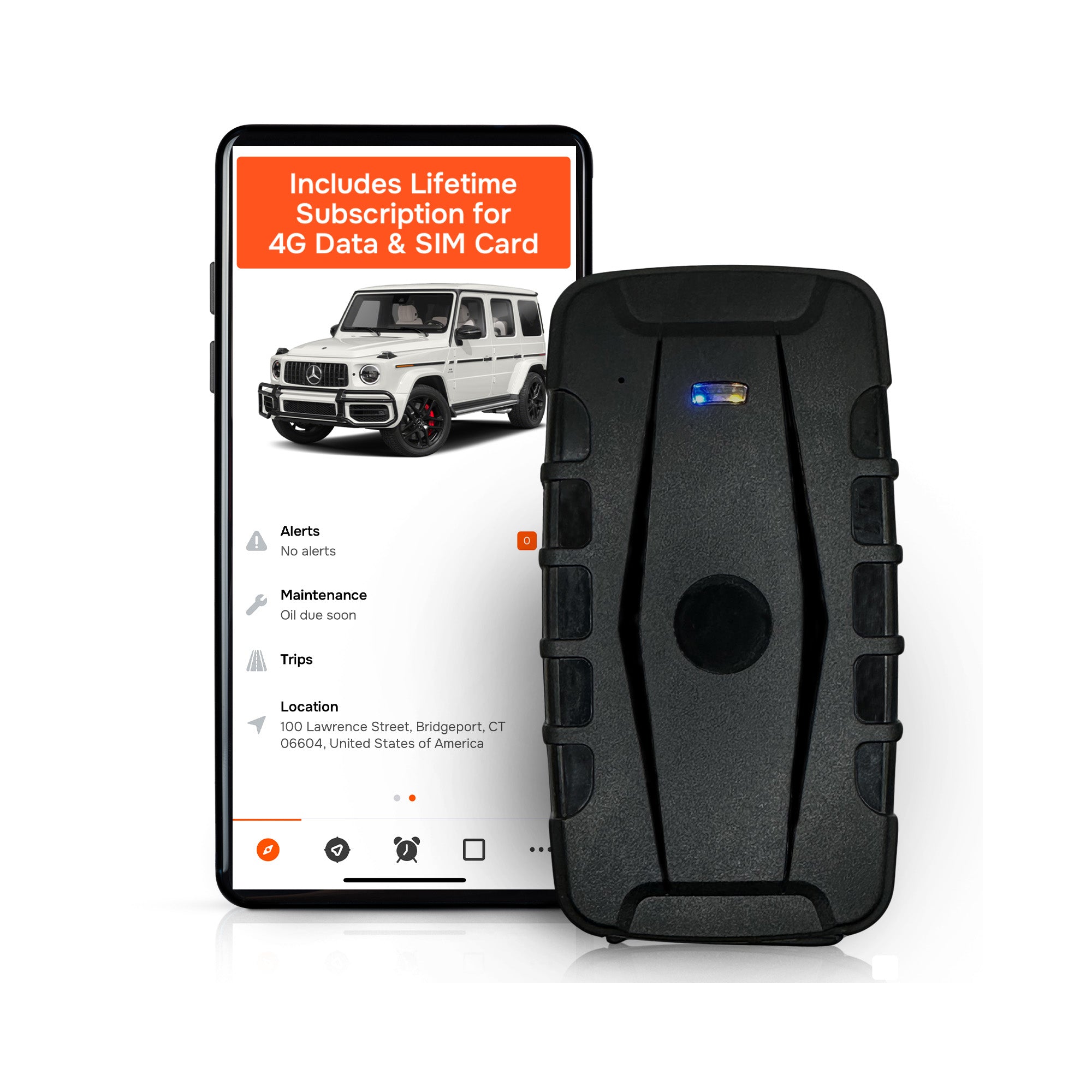
That combination makes the most sense in a few scenarios: offsite staging lots where trailers sit outside a monitored yard, after-hours theft prevention where a geofence breach triggers an alert before a driver ever checks in, and mixed fleets where dozens of trailers need coverage without the recurring cost of subscription-based telematics stacking up per unit. For a deeper look at how battery-powered devices hold up in cold weather or on trailers without a power source, see our notes on cold weather tracker performance and no-power installation strategies.
For a pilot, the integration path runs through API access, ingesting device events, geofence breaches, and location pings, into the YMS workflow so a security alert and a gate scan appear on the same trailer map instead of two disconnected dashboards.
- Geofence alerts map directly to security workflows: a breach outside business hours should trigger the same escalation as a missed gate check.
- Battery-powered units suit unpowered trailers that sit for extended periods without draining a truck’s electrical system.
- Mileage and trip reports simplify usage records without adding a subscription line item per trailer.
Pro Tip: Pilot subscription-free trackers on your offsite or highest-risk trailers first: that is where GPS earns its cost fastest, before deciding whether to extend coverage yard-wide.
Resources to verify the data and guide your pilot
- The State of Dock & Yard Management 2025, survey data on visibility priorities and integration requirements.
- Yard Management & Dock Scheduling buyer’s guide, core YMS capabilities and hardware scoping advice.
- Trailer telematics for yards market report, adoption trends and market growth for yard telematics.
- Multi-site YMS implementation case study, documented outcomes from a real rollout.
What the data actually tells you to prioritize
The industry conversation around yard tracking spends too much time comparing hardware specs and not enough time asking whether a yard even has clean gate events to build on. A camera system or RTLS network installed on top of inconsistent gate-in rules will produce a precise map of the wrong information, which is worse than no map at all in some cases.
The judgment this research supports is simple: fix your gate event discipline and your dwell definitions before spending on sensing hardware, then choose the sensing mix that matches your yard’s density rather than its budget for new technology. Subscription-free asset trackers earn a place in that program by covering the security and offsite gap cheaply, not by replacing the gate or the YMS. Readers should treat a pilot’s KPI results, not a vendor’s feature list, as the deciding evidence before scaling anything yard-wide.
— Louis
Getting started with Moto Watchdog for trailer-level visibility
Certain subscription-free GPS trackers fit the part of a yard trailer tracking program that on-site sensing cannot cover: offsite staging lots, after-hours security, and mixed trailer fleets where per-unit subscription costs add up fast under other providers. Some devices carry no monthly fees, include lifetime 4G data, and support multiple vehicles and users on one dashboard, which helps keep a multi-trailer pilot’s cost predictable from the first unit to the fiftieth.
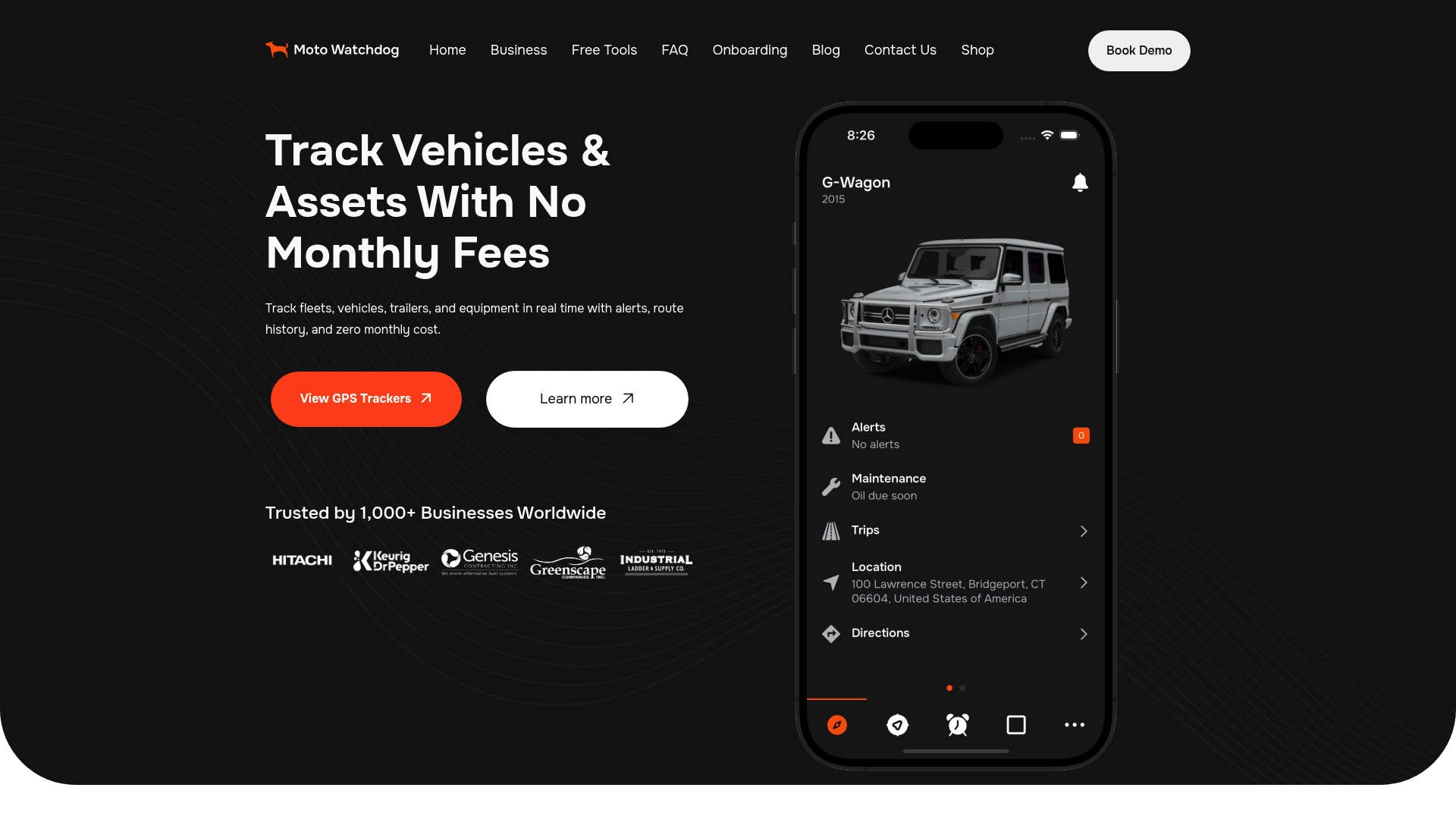
For a fleet manager testing sensing options before a larger YMS rollout, Moto Watchdog’s Trackers start at $124.99 one-off per device with no recurring fees, and the API access option lets you feed geofence and location events directly into your yard software for a real pilot rather than a standalone dashboard. Check device options and get a device shipped to start your own trailer pilot this week.
Sources
- The State of Dock & Yard Management 2025
- Yard Management & Dock Scheduling | Supply Chain Research
- YMS implementation case study (Wang, 2026)
- Trailer telematics for yards market report
FAQ
How can I track my trailer?
Mount a GPS tracker on the trailer frame or landing gear for continuous location updates, and pair it with gate scanning or a yard management system if the trailer operates inside a dense facility. Battery-powered trackers work well on unpowered trailers, while RFID or camera systems handle precise positioning within a busy yard.
What is the best tracking device for a trailer?
The right device depends on whether the trailer sits in a monitored yard or travels between sites: subscription-free GPS trackers like Moto Watchdog suit offsite staging and security use cases with long battery life and no recurring fees. For precise in-yard positioning among dozens of parked trailers, RFID or camera-based systems typically outperform standalone GPS.
What is the 60/40 rule on trailers?
Definitions of trailer weight and loading rules vary by context and jurisdiction, and no single source in this research confirms a specific loading rule as a standard industry term. Readers should check axle weight and load distribution requirements with their carrier or a regulatory source rather than rely on an informal rule of thumb.
Which freight tracking software is the best?
There is no single best platform: the right choice depends on yard size, gate volume, and whether integration with an existing WMS or TMS matters most. A buyer’s guide from Supply Chain Research recommends scoping core features like gate check-in, dock scheduling, and detention tracking before comparing vendors.
How long does a yard trailer tracking pilot usually take?
Most pilots run four to eight weeks and cover a single yard, gate, or shift to keep the test manageable. That window is typically enough to confirm integration with a WMS or TMS and to measure early results on dwell time and gate-to-dock speed before deciding on a full rollout.