How to start saving money
Lorem ipsum dolor sit amet, consectetur adipiscing elit lobortis arcu enim urna adipiscing praesent velit viverra sit semper lorem eu cursus vel hendrerit elementum morbi curabitur etiam nibh justo, lorem aliquet donec sed sit mi dignissim at ante massa mattis.
- Neque sodales ut etiam sit amet nisl purus non tellus orci ac auctor
- Adipiscing elit ut aliquam purus sit amet viverra suspendisse potent
- Mauris commodo quis imperdiet massa tincidunt nunc pulvinar
- Excepteur sint occaecat cupidatat non proident sunt in culpa qui officia
Why it is important to start saving
Vitae congue eu consequat ac felis placerat vestibulum lectus mauris ultrices cursus sit amet dictum sit amet justo donec enim diam porttitor lacus luctus accumsan tortor posuere praesent tristique magna sit amet purus gravida quis blandit turpis.

How much money should I save?
At risus viverra adipiscing at in tellus integer feugiat nisl pretium fusce id velit ut tortor sagittis orci a scelerisque purus semper eget at lectus urna duis convallis. porta nibh venenatis cras sed felis eget neque laoreet suspendisse interdum consectetur libero id faucibus nisl donec pretium vulputate sapien nec sagittis aliquam nunc lobortis mattis aliquam faucibus purus in.
- Neque sodales ut etiam sit amet nisl purus non tellus orci ac auctor
- Adipiscing elit ut aliquam purus sit amet viverra suspendisse potenti
- Mauris commodo quis imperdiet massa tincidunt nunc pulvinar
- Adipiscing elit ut aliquam purus sit amet viverra suspendisse potenti
What percentege of my income should go to savings?
Nisi quis eleifend quam adipiscing vitae aliquet bibendum enim facilisis gravida neque. Velit euismod in pellentesque massa placerat volutpat lacus laoreet non curabitur gravida odio aenean sed adipiscing diam donec adipiscing tristique risus. amet est placerat in egestas erat imperdiet sed euismod nisi.
“Nisi quis eleifend quam adipiscing vitae aliquet bibendum enim facilisis gravida neque velit euismod in pellentesque”
Do you have any comments? Share them with us on social media
Eget lorem dolor sed viverra ipsum nunc aliquet bibendum felis donec et odio pellentesque diam volutpat commodo sed egestas aliquam sem fringilla ut morbi tincidunt augue interdum velit euismod eu tincidunt tortor aliquam nulla facilisi aenean sed adipiscing diam donec adipiscing ut lectus arcu bibendum at varius vel pharetra nibh venenatis cras sed felis eget.
A battery-powered real-time GPS tracker, paired with visible physical deterrents, is the most effective trailer theft prevention setup available today. Real-time movement alerts and geofence notifications catch a theft in progress instead of hours later, which is what actually drives faster police recovery and stronger insurance documentation. Subscription-free tracking models exist and remove the recurring cost objection that keeps many fleets from equipping every trailer.
TL;DR:
- Real-time GPS trackers with long battery life and weatherproof design are essential for effective trailer theft prevention and rapid law enforcement response.
- Combining physical deterrents like coupler locks and reflective decals with GPS tracking significantly increases theft resistance and recovery chances.
- Installing trackers in hidden, durable locations and setting up accurate, low-fence alerts ensure faster detection and faster police notification.
- Battery strategies such as motion-triggered reporting and solar assistance extend tracker lifespan during long periods of trailer inactivity.
- Prioritizing reliable alerts and quick response protocols is more important than device specs or mount type for successful trailer recovery.
Table of Contents
- What to Prioritize When Choosing a GPS Tracker for Trailer Theft Prevention
- Why Locks Plus GPS Beats Either One Alone
- Mounting and Installation Best Practices for Trailer GPS Tracking Systems
- Battery Strategy for Trailers That Sit Idle for Months
- How to Configure Alerts So You Catch a Theft Fast
- What to Do the Moment You Get a Theft Alert
- Proof Points Behind This Guidance
- Legal and Privacy Considerations for GPS Tracking
- Why Customer Support Reliability Matters More Than the Spec Sheet
- Real-World Examples of GPS Stopping Trailer Theft
- Louis’s Take: Stop Optimizing for the Spec Sheet
- Get Real-Time Protection Without a Monthly Bill
- Primary Sources Used
- Sources
- FAQ
What to Prioritize When Choosing a GPS Tracker for Trailer Theft Prevention
Not every device marketed for trailer security tracks the same way. The gap between “real-time” and “periodic ping” tracking is the single biggest factor separating a tracker that catches a theft in progress from one that just tells you where your trailer ended up three hours later.
Real-time units report movement continuously once triggered, which drains battery faster but gives you the alert window you need. Periodic pingers check in every few hours to preserve battery life, a fine trade-off for trailers that sit idle most of the year but a poor one for high-value equipment on job sites.
When comparing trailer anti-theft devices, weigh these factors:
- Battery life and idle expectations: some trailer-specific units run multiple years on a charge because they only report when triggered, rather than pinging constantly like a vehicle tracker.
- Ruggedness: look for an IP67 or IP68 rating, since trailers sit exposed to rain, road salt, and temperature swings that consumer-grade electronics were never built to handle.
- Mounting form: magnetic mounts install in seconds but can be pried off; bolted or hidden mounts take longer to install but survive a determined thief.
- Tamper and disconnect alerts: a unit that fires a notification the moment it’s removed or shielded is worth more than one that just goes silent.
- Connectivity: 4G LTE coverage matters more in rural yards and job sites than most buyers expect, and it directly affects how fast an alert actually reaches your phone.
Why Locks Plus GPS Beats Either One Alone
Physical deterrents and GPS tracking solve two different problems, and that’s exactly why combining them works. A coupler lock or kingpin lock doesn’t stop a professional theft ring with bolt cutters and a flatbed, but it does stop the much larger population of opportunistic thieves who are looking for an easy, fast grab. Local law enforcement guidance consistently recommends physical deterrents like coupler locks, wheel clamps, and reflective decals as the first line of defense, precisely because they change a thief’s math before the trailer ever moves.
GPS is the layer that handles what locks can’t: awareness and recovery once the trailer is gone. A basic checklist for hardening a trailer against theft:
- Install a coupler or kingpin lock rated for your hitch type.
- Add a wheel clamp or boot for trailers parked longer than a few days.
- Weld or stamp an identification number into the frame where it’s hard to grind off.
- Apply reflective “Tracked” decals, since visible signage deters thieves even when the actual device is hidden.
- Install a real-time GPS tracker as the recovery backstop.
Pro Tip: Put the GPS decal somewhere obvious and the actual tracker somewhere else entirely. A visible warning label does the deterrence work; a hidden device does the recovery work.
Mounting and Installation Best Practices for Trailer GPS Tracking Systems
Where and how you mount a tracker determines whether it still works six months from now. Magnetic mounts are fast and require no tools, but they’re also the first thing a thief checks and removes. Bolted or wired-in units take more effort up front and survive far better.
If you’re hardwiring into a trailer’s lighting harness, check for a constant 12-volt source with a multimeter first. Wiring into a non-essential or lighting circuit is a common mistake that leaves the tracker powerless the moment the trailer is unhitched from the tow vehicle.
A short install checklist worth following every time:
- Test signal strength in the actual parking or yard location before finalizing placement, not just on the workbench.
- Mount the unit inside a frame rail, gooseneck box, or other spot that’s covert but still recoverable by an officer following a description.
- Photograph and log the mounting location for your own records and to hand off to police if needed.
- Run a health check every 60 to 90 days, since a tracker that silently died months ago provides zero protection.
Battery Strategy for Trailers That Sit Idle for Months
Ping frequency is a direct trade against battery life, and understanding that trade-off is what separates a tracker that lasts through winter storage from one that’s dead by spring. A device set to report every few minutes gives you near-instant movement detection but can burn through a charge in weeks under heavy use. A device set to check in every few hours, or only on motion trigger, can stretch a single battery across multiple years.
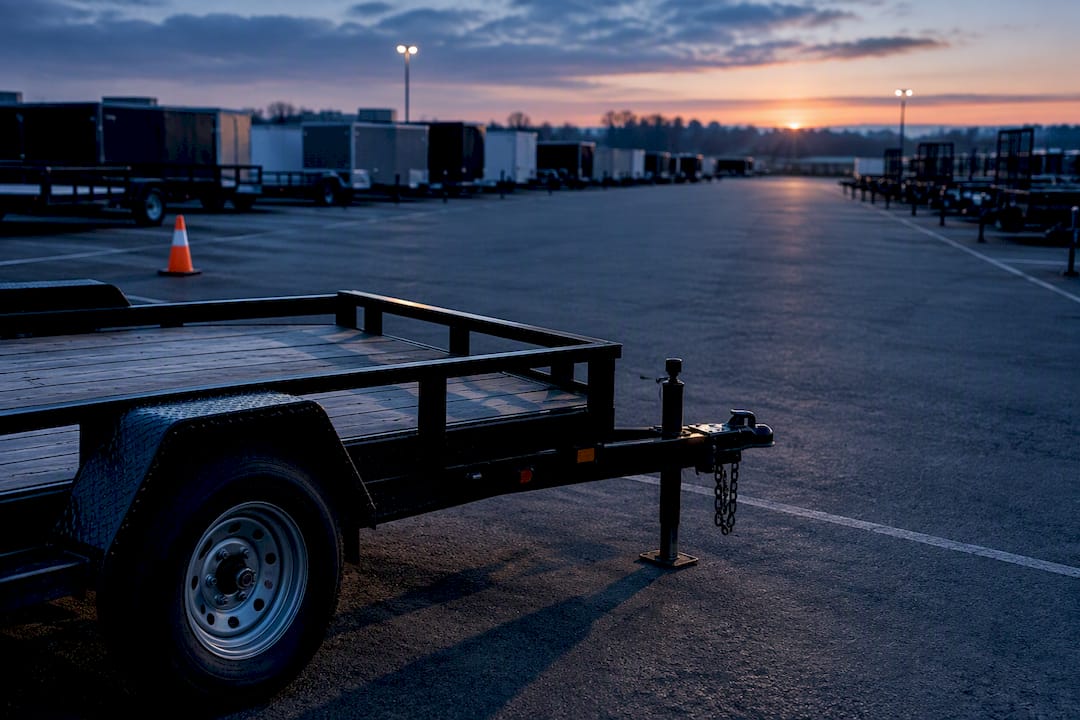
That gap matters because cargo and trailer theft losses have been climbing, and a dead tracker on a stolen trailer is functionally the same as having no tracker at all.
Practical battery configuration points:
- Motion-triggered reporting conserves battery during long idle stretches and switches to frequent updates only once the trailer actually moves.
- Solar-assisted units make sense for trailers stored outdoors year-round, since they offset the drain from more frequent reporting.
- Set low-battery alerts to notify you well before a full shutdown, not after.
- Build a seasonal check into your maintenance routine, especially before storage season when a trailer might not move for months.
How to Configure Alerts So You Catch a Theft Fast
A geofence is only useful if it’s tuned to how the trailer actually gets used. Set the boundary tight around your yard or job site, then build in time-based exceptions for scheduled deliveries or job relocations so you’re not drowning in false alerts you eventually start ignoring.
Escalation matters as much as detection. A single alert to one person’s phone is a weak link if that person is asleep, in a meeting, or out of signal range. Structure notifications so they reach:
- The trailer’s primary owner or operator first.
- A fleet manager or dispatcher as a secondary contact.
- A designated security contact for after-hours coverage.
Motion-only triggers catch simple theft, but tilt and tow sensors catch the more common real-world scenario: someone hitching up and pulling away, which a pure motion sensor might read as normal handling. For fleets running multiple trailers, tuning geofence rules across a dashboard beats checking individual devices one at a time, and basic API access lets larger operations feed alerts straight into dispatch software instead of a phone app.
What to Do the Moment You Get a Theft Alert
Speed matters more than anything else once an alert fires. Follow this sequence:
- Verify the data. Open the app and confirm the timestamped location and movement pattern before assuming the worst, since a rare false trigger does happen.
- Call local law enforcement immediately. Provide the VIN, license plate, and a live or near-live location feed rather than a static address.
- Notify your insurer and preserve the tracker’s location history, since documented GPS logs meaningfully improve recovery odds and claims outcomes compared to a report with no location evidence.
- Do not pursue the trailer yourself. Share your live tracking feed with police and let them coordinate the recovery; confronting a theft in progress puts you at unnecessary risk.
Vendor data on unrecovered trailers shows recovery rates without GPS are very low, a number that underscores why speed in these first steps counts more than almost anything else you can do after the fact.
Proof Points Behind This Guidance
This guidance is built on documented law enforcement recommendations, published fleet-industry loss data, and the operational reality of tracking assets that have no engine, no battery, and no power source of their own. Moto Watchdog’s own product approach reflects the same priorities covered throughout this piece: subscription-free real-time tracking, long battery life built for idle trailers, and instant movement alerts rather than delayed check-ins. Over 1,000 businesses currently rely on Moto Watchdog for tracking accuracy, and customer feedback consistently points to straightforward setup as a major factor in satisfaction.
This article was written by Louis, whose focus on GPS tracking technology centers on the operational side of the problem: how devices perform in the field, not just on a spec sheet, and how battery, mounting, and alert design interact in ways that matter far more to trailer owners than marketing copy usually suggests.
Legal and Privacy Considerations for GPS Tracking
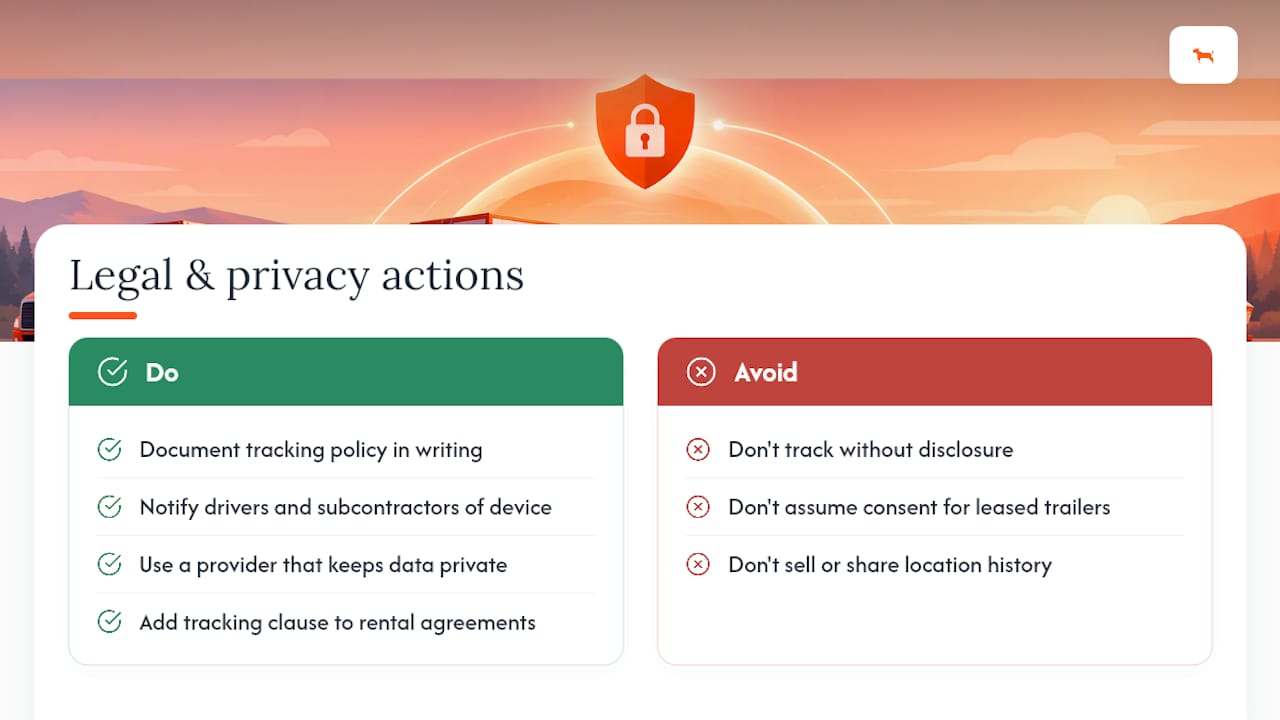
Tracking a trailer you own outright is legally straightforward in the United States. The consideration gets more complicated the moment a trailer is leased, financed, or used by multiple parties, since consent and disclosure expectations shift depending on who has an ownership or usage interest in the asset.
For fleet operators tracking company-owned trailers, the clearest practice is documenting the tracking policy in writing and making sure drivers and subcontractors know a device is installed. This isn’t just good faith. It also protects you if a dispute ever arises over whether tracking was disclosed. Most GPS tracking disputes involving vehicles and trailers in the U.S. center on employee vehicles used for personal purposes, not company trailers, but the same disclosure principle applies: tracking an asset you own for security purposes is a different legal question than tracking a person’s movements without their knowledge.
Data handling is the other half of the privacy conversation. Location history is sensitive information, particularly for trailers carrying high-value cargo or equipment, since that data reveals patterns about routes, job sites, and storage locations. Choose a provider that keeps location data private to your account and doesn’t sell or share tracking history with third parties. If you’re leasing trailers to other operators or renting equipment, spell out tracking terms in the rental agreement rather than leaving it as an assumption. A short clause covering device presence and data use avoids awkward conversations later and keeps the arrangement transparent for everyone involved.
Why Customer Support Reliability Matters More Than the Spec Sheet
A GPS tracker is only as useful as the support behind it when something goes wrong, and something eventually will. A device that stops reporting, an app that won’t sync, or a geofence alert that fires incorrectly at 2 a.m. all need a real answer, not a ticket number that sits untouched for a week.
Before buying, check how a company actually handles support requests. Same-day responses to sales and support questions signal a company that treats its device fleet as a real product, not a one-time transaction. That distinction becomes obvious the first time you need help fast, usually right when a trailer has gone missing and every hour counts.
App reliability deserves the same scrutiny as customer service. A tracking dashboard that’s confusing to navigate under stress defeats the purpose of real-time alerts, since a delayed or misread notification erases the speed advantage that real-time tracking is supposed to provide. Look for a straightforward mobile app interface, clear historical location logs, and the ability to manage multiple devices from one login if you’re running more than a single trailer. For fleet managers specifically, a single dashboard covering every trailer beats juggling separate logins or apps for each unit, especially when an incident demands a fast, coordinated response across several assets at once.
Real-World Examples of GPS Stopping Trailer Theft
The clearest pattern across documented trailer recoveries is speed: the faster a tracker fires an alert, the faster law enforcement can act on a location that’s still accurate. A trailer stolen overnight from an unattended lot and reported within the hour gives police a live location to work with. The same trailer discovered missing the next morning, with no tracking data, gives them almost nothing beyond a description and a hope that it turns up in a salvage yard or gets flagged during a routine stop.
Fleet-industry loss data backs up why this timing gap matters so much. Cargo and trailer theft incidents have climbed, with certain regions functioning as consistent hot spots for organized theft rings that specifically target unattended equipment trailers and cargo trailers left in predictable overnight locations. Contractors and equipment rental operators, who often can’t supervise every trailer around the clock, represent a disproportionate share of these losses simply because their assets sit exposed in parking lots, job sites, and staging yards for extended stretches.
The operational lesson from these patterns is consistent: trailers equipped with real-time GPS and a tuned geofence get reported stolen within minutes rather than hours, and that window is what turns a “gone forever” loss into “recovered within the same day.” Trailers without any tracking depend entirely on visual discovery, license plate readers, or luck. None of those are a strategy you can plan around.
Louis’s Take: Stop Optimizing for the Spec Sheet
Most trailer theft prevention advice fixates on device specs, battery milliamp ratings, and GPS accuracy to the meter. Those numbers matter less than people think. What actually determines whether you get your trailer back is whether the alert reaches a real person fast enough to act, and whether the device is mounted well enough to survive being unhitched.
The conventional advice oversells magnetic mount trackers as a complete solution. They’re not. They’re a starting point that a thief with ten seconds and a flashlight can defeat. The mounting decision, and whether someone actually checks the app when an alert fires, matters more than whether a device pings every 30 seconds or every 5 minutes.
If you’re prioritizing one thing first, prioritize the escalation path, not the hardware. A great tracker with no one watching the alerts is worse than a modest tracker with a fleet manager who checks it daily. Subscription-free tracking removes the excuse of cost creep discouraging wider deployment across every trailer, not just the expensive ones. That’s the real lever most operators are underusing.
— Louis
Get Real-Time Protection Without a Monthly Bill
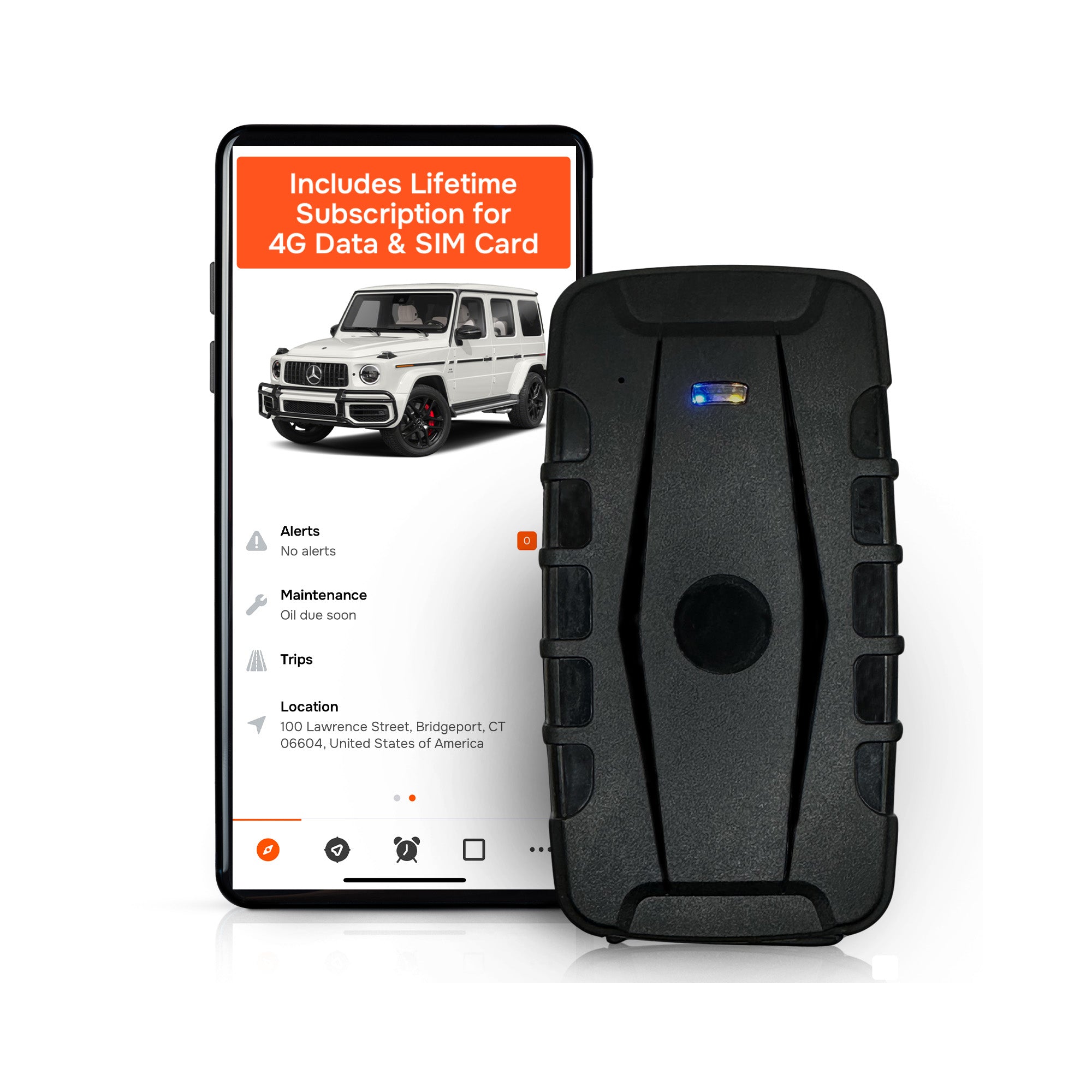
A subscription-free service provides real-time GPS trackers with lifetime 4G data and long battery life built in, without recurring fees or activation charges.
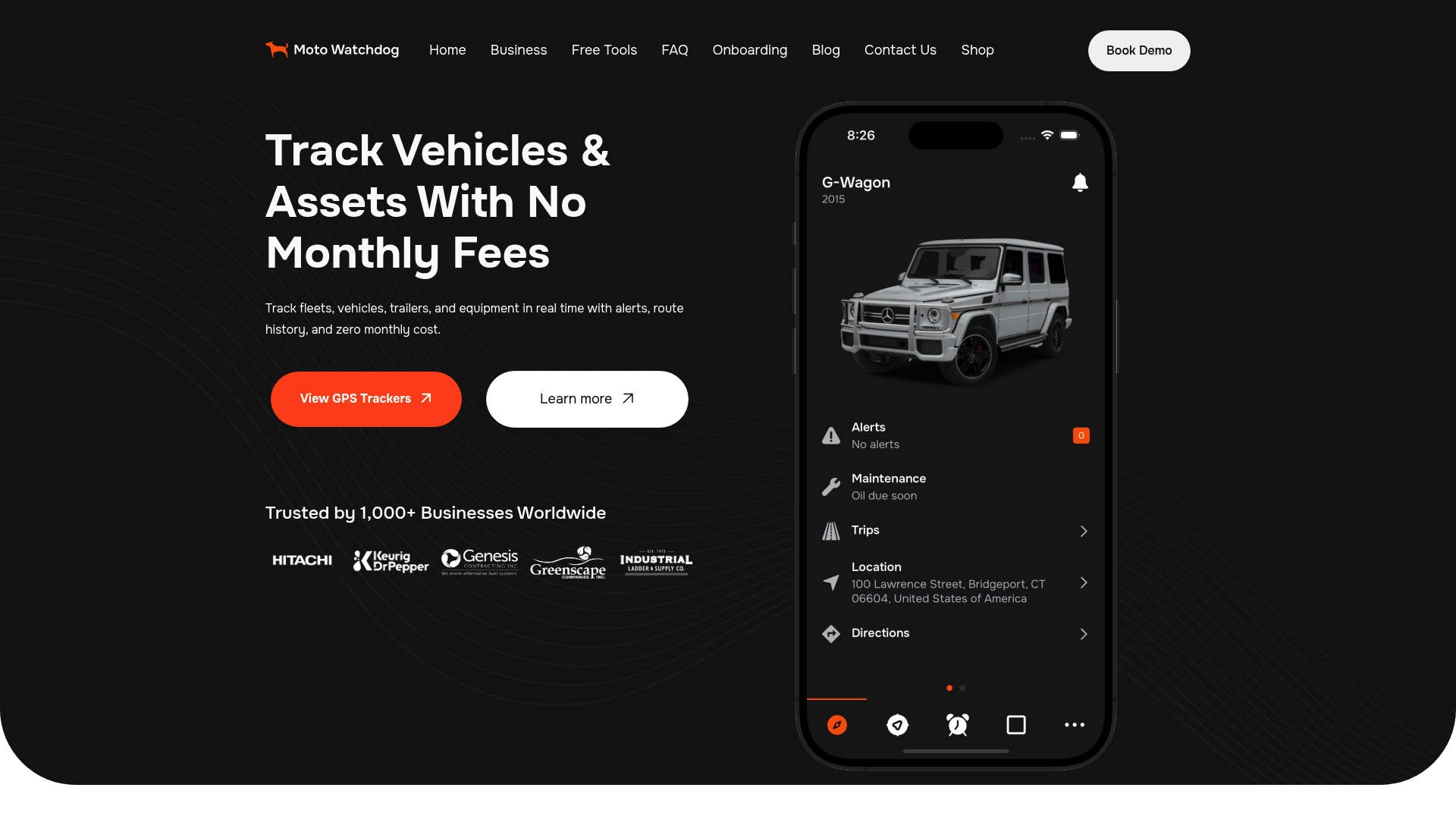
Whether you’re protecting a single utility trailer or running a small fleet of equipment trailers across job sites, Motowatchdog’s subscription-free trackers support unlimited vehicles and users on a single dashboard, with same-day support replies when you actually need help fast. Contractors and rental operators managing multiple trailers can explore business and API access for fleet-wide deployment, or check the trailer tracking options built specifically for unpowered assets. Order a tracker today and get it mounted before the next job site leaves your trailer exposed overnight.
Primary Sources Used
The claims and recommendations in this article draw on a small set of authoritative sources rather than general marketing copy:
- Berkeley County Sheriff’s Office trailer theft prevention guidance, for physical deterrent and reporting recommendations.
- FleetOwner’s 2025 cargo theft research, for industry-wide loss trends and financial context.
Sources
- Trailer Theft Prevention – Berkeley County Sheriff’s Office
- Trucking By the Numbers 2025: Safety and cargo theft | FleetOwner
FAQ
What Is the Best GPS Tracker for Trailers?
The best trailer GPS tracker combines real-time location reporting, an IP67 or higher weatherproof rating, and battery life built for months or years of idle time. Motowatchdog’s trackers cover all three without a monthly subscription, which makes them a practical fit for trailers that sit unpowered between jobs.
What Are Some Effective Anti-Theft Devices for Trailers?
Coupler locks, kingpin locks, and wheel clamps remain the most effective physical deterrents, since they slow down or stop opportunistic thieves before a trailer ever moves. Local sheriff guidance recommends pairing these with visible identification marking and reflective decals for added deterrence.
Is There a GPS Tracker for a Trailer That Doesn’t Require a Monthly Fee?
Yes. Motowatchdog sells GPS trackers with no monthly or recurring fees, starting from $124.99 one time, including lifetime 4G data. That removes the ongoing cost that keeps many owners from tracking every trailer in a fleet.
What Is the Best GPS Tracker for Anti-Theft Purposes?
A tracker built for anti-theft use needs real-time alerts, not periodic check-ins, since a delayed notification erases the recovery window that makes GPS effective in the first place. Devices with tamper alerts and tow/motion sensors, like those covered in this guide, catch a theft the moment it starts rather than hours later.