How to start saving money
Lorem ipsum dolor sit amet, consectetur adipiscing elit lobortis arcu enim urna adipiscing praesent velit viverra sit semper lorem eu cursus vel hendrerit elementum morbi curabitur etiam nibh justo, lorem aliquet donec sed sit mi dignissim at ante massa mattis.
- Neque sodales ut etiam sit amet nisl purus non tellus orci ac auctor
- Adipiscing elit ut aliquam purus sit amet viverra suspendisse potent
- Mauris commodo quis imperdiet massa tincidunt nunc pulvinar
- Excepteur sint occaecat cupidatat non proident sunt in culpa qui officia
Why it is important to start saving
Vitae congue eu consequat ac felis placerat vestibulum lectus mauris ultrices cursus sit amet dictum sit amet justo donec enim diam porttitor lacus luctus accumsan tortor posuere praesent tristique magna sit amet purus gravida quis blandit turpis.

How much money should I save?
At risus viverra adipiscing at in tellus integer feugiat nisl pretium fusce id velit ut tortor sagittis orci a scelerisque purus semper eget at lectus urna duis convallis. porta nibh venenatis cras sed felis eget neque laoreet suspendisse interdum consectetur libero id faucibus nisl donec pretium vulputate sapien nec sagittis aliquam nunc lobortis mattis aliquam faucibus purus in.
- Neque sodales ut etiam sit amet nisl purus non tellus orci ac auctor
- Adipiscing elit ut aliquam purus sit amet viverra suspendisse potenti
- Mauris commodo quis imperdiet massa tincidunt nunc pulvinar
- Adipiscing elit ut aliquam purus sit amet viverra suspendisse potenti
What percentege of my income should go to savings?
Nisi quis eleifend quam adipiscing vitae aliquet bibendum enim facilisis gravida neque. Velit euismod in pellentesque massa placerat volutpat lacus laoreet non curabitur gravida odio aenean sed adipiscing diam donec adipiscing tristique risus. amet est placerat in egestas erat imperdiet sed euismod nisi.
“Nisi quis eleifend quam adipiscing vitae aliquet bibendum enim facilisis gravida neque velit euismod in pellentesque”
Do you have any comments? Share them with us on social media
Eget lorem dolor sed viverra ipsum nunc aliquet bibendum felis donec et odio pellentesque diam volutpat commodo sed egestas aliquam sem fringilla ut morbi tincidunt augue interdum velit euismod eu tincidunt tortor aliquam nulla facilisi aenean sed adipiscing diam donec adipiscing ut lectus arcu bibendum at varius vel pharetra nibh venenatis cras sed felis eget.
A tow alert GPS tracker detects movement while your engine is off and sends an immediate notification with your vehicle’s location, giving you the chance to catch unauthorized towing before it becomes a total loss. The core mechanism behind this is what the industry calls a tow alarm: a triggered response that fires the moment a parked, ignition-off vehicle starts moving.
This matters because early notice changes outcomes:
- Faster recovery — you and law enforcement get a live location instead of a cold trail hours later
- Lower loss and downtime — a vehicle or trailer found in hours costs less than one missing for days
- Documentation for police and insurers — timestamped GPS logs support claims and reports
For continuous protection with no ongoing bill, a hardwired, subscription-free device like Moto Watchdog covers this use case well.
Key Takeaways
A tow alert GPS tracker works by combining ignition-off motion detection, geofence exit logic, and tamper alerts to notify owners the moment unauthorized movement starts.
| Point | Details |
|---|---|
| Detection needs layered signals | Combine accelerometer, ignition state, and geofence rules to catch real tows and skip false alarms. |
| Hardwired beats plug-in for reliability | Hardwired units keep constant power and stronger tamper detection than easy-to-unplug OBD-II devices. |
| Backup battery is non-negotiable | A tracker without backup power stops reporting the moment someone cuts the main wire. |
| Act fast but stay safe | Verify the alert, call police with a live location link, and never confront anyone at the scene. |
| Moto Watchdog fits subscription-free needs | Its hardwired, one-time-purchase devices cover ignition input, backup battery, and configurable alerts without monthly fees. |
Table of Contents
- How Tow Detection Actually Works
- Types of GPS Trackers Used for Tow Alerts
- Key Features That Matter for Reliable Tow Alerts
- Installing and Testing Your Tow Alert System
- What to Do the Moment You Get a Tow Alert
- Subscription vs. Subscription-Free: Which Model Fits You?
- A Subscription-Free Setup Built Around Fast Tow Alerts
- Why Hardwired Setups Win for Anything Theft-Prone
- Get Continuous Tow Protection Without a Monthly Bill
- Sources
How Tow Detection Actually Works
A tow-alert system rarely relies on a single sensor. It layers signals together to decide whether movement means “someone drove off” or “someone is towing this vehicle away.”
The core logic pairs an accelerometer with ignition state. If the tracker detects motion while the ignition circuit reads “off,” it flags the event as a probable tow rather than routine driving. Add a geofence, and the system tightens further: a truck that leaves a depot boundary at 2 a.m., with the engine never started, is a stronger signal than movement alone. Trailers and equipment often add tilt or orientation sensors, since a trailer being hitched and lifted behaves differently than a car being pushed.
- Accelerometer + ignition-off state flags physical movement without a driver
- Geofence and schedule rules catch after-hours boundary exits
- Tilt sensors on trailers detect hitching and lifting motion
Delivery speed depends on network conditions, but most systems push a notification within seconds to a couple of minutes through the app, with SMS or email as backup. Layering these rules reduces false positives compared to relying on motion detection alone.
Pro Tip: Set your geofence radius a little wider than your actual parking spot and add a five-minute delay before the alert fires. This filters out normal jostling from wind, plows, or someone bumping your bumper, without dulling your real tow alerts.
Types of GPS Trackers Used for Tow Alerts
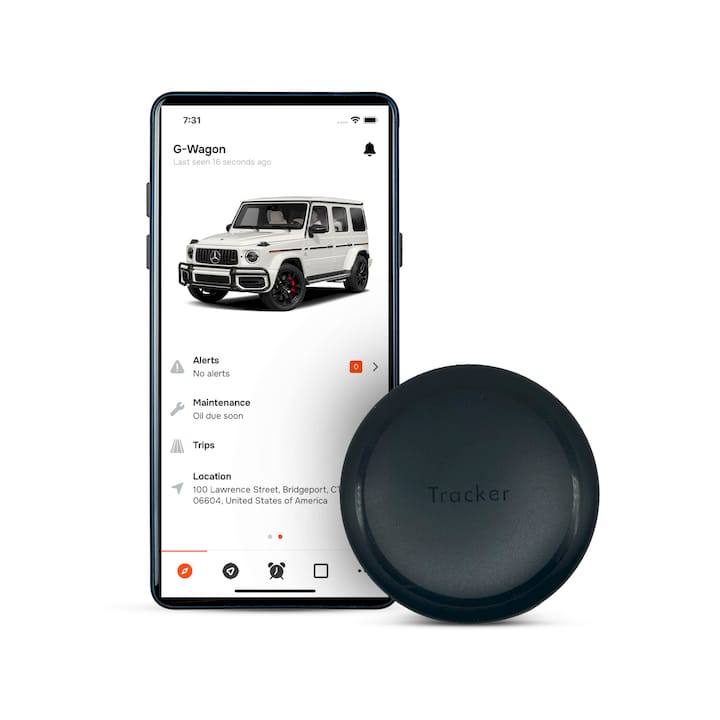
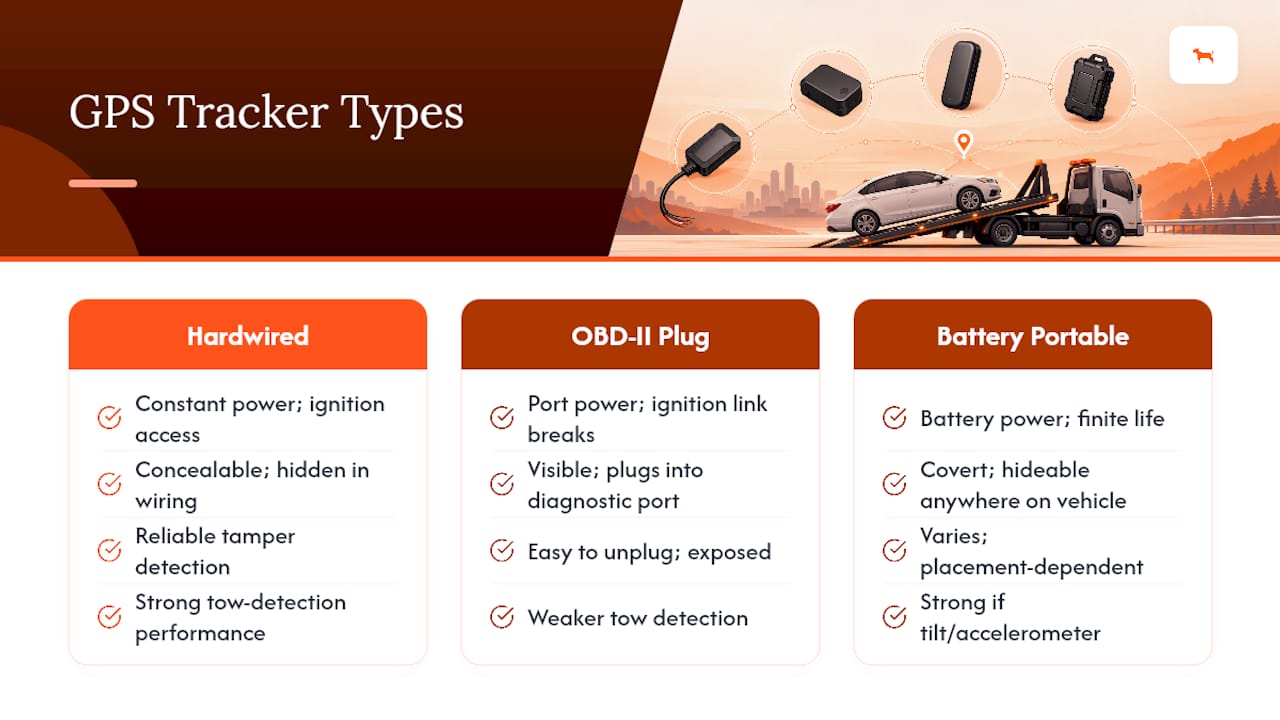
Device choice determines whether your tow detection is reliable or theoretical. Three categories dominate the market, each with a different balance of power, concealment, and tamper resistance.
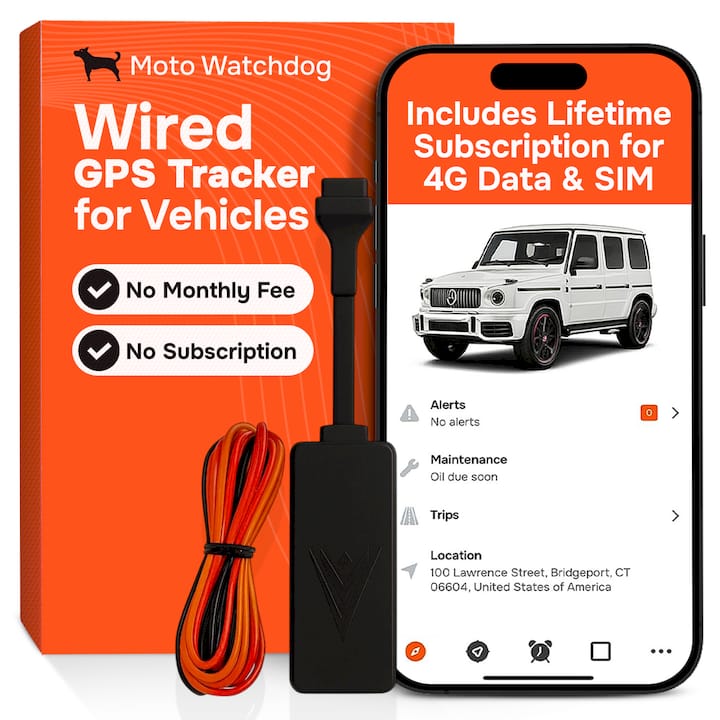
Hardwired devices connect directly to your vehicle’s electrical system, giving constant power and clean access to ignition state. Pros: reliable tamper detection, no battery to manage. Cons: professional installation is usually required.
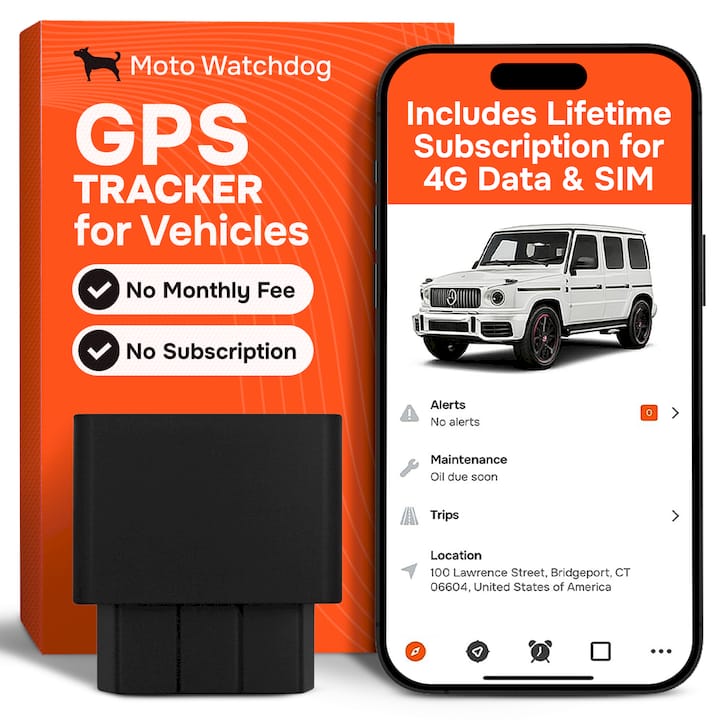
OBD-II plug-in trackers slide into the diagnostic port for an easy, tool-free setup. Pros: no wiring skills needed. Cons: visible and easy to unplug, and many models lose tow-detection accuracy once the ignition circuit is disconnected.
Battery-powered portable trackers can be hidden almost anywhere on a vehicle, trailer, or piece of equipment. Pros: flexible, covert placement. Cons: battery life is finite and needs periodic recharging or replacement.
For dependable tow detection specifically, hardwired units and portables built with tilt/accelerometer sensors tend to outperform basic OBD-II plug-ins.
Key Features That Matter for Reliable Tow Alerts
Not every GPS tracker marketed for “security” actually detects towing well. Use this checklist while comparing devices:
- Ignition input wired for accurate on/off state detection
- Accelerometer or tilt sensor for motion-while-parked detection
- Backup battery that keeps reporting if main power is cut
- Tamper detection that flags disconnection or wire cutting
- Real-time reporting with low-latency push, SMS, or email alerts
- Configurable geofence logic tied to schedules
- Precise GPS accuracy for a usable live location, not just a rough area
Minimum Specs Callout: Look for a backup battery rated for at least several hours of standalone reporting, an accelerometer sensitive enough to catch slow-roll towing (not just hard impacts), and a GPS fix interval of one to five minutes while parked.
Operationally, the strongest systems let you set custom alert rules per vehicle, notify multiple people or channels at once, and generate a shareable location link you can hand directly to police. Power-loss alerts round this out. Combining ignition-state, geofence, and motion rules avoids the noise that comes from motion-only triggers, which is the single biggest reason cheap trackers get disabled or ignored.
Installing and Testing Your Tow Alert System
Installation varies by device type, but the goal is the same: a stable power source, a clean ignition-input connection where applicable, and a mounting spot that survives daily use.
- Hardwired units connect to constant and ignition-switched power, typically behind the dash or under a seat.
- OBD-II units plug directly into the diagnostic port, usually under the steering column.
- Portable units get mounted magnetically or bolted into a weatherproof cavity, with battery access planned in advance.
Before trusting any setup, test it:
- Simulate towing by moving the vehicle a short distance with the ignition off
- Drive outside your geofence boundary to confirm the exit alert fires
- Confirm push notifications and SMS both arrive within your expected window
Professional installation makes more sense for fleets and high-value assets, since a technician can conceal wiring and verify tamper resistance that a rushed DIY job might miss.
What to Do the Moment You Get a Tow Alert
Speed and composure both matter here. Work through these steps in order:
- Verify the alert in your app and confirm the live location, not just the last known position.
- Call local law enforcement and share the live location link so they can dispatch or confirm legitimate impound activity.
- If the tow appears authorized (an impound lot, a lender repossession), contact the towing company directly using the location to confirm.
- Do not personally pursue the tow truck or confront anyone at the scene.
- Share your live location with a trusted contact or a recovery service as a second layer of visibility.
Screenshots of the alert timestamp, the movement path, and any geofence exit event give police and insurers concrete evidence to work with, rather than a verbal account after the fact.
Pro Tip: Save your local non-emergency police number in your phone next to your GPS app shortcut. In a tow-alert scenario, seconds spent searching for a number are seconds your vehicle keeps moving.
Subscription vs. Subscription-Free: Which Model Fits You?
Subscription-based trackers commonly bundle cloud storage, professional monitoring, and sometimes recovery coordination into a recurring fee. That can be worth it for large fleets that need centralized dashboards and dedicated support contracts.
Subscription-free devices flip the math: you pay once, own the hardware outright, and get predictable long-term costs with no recurring bill eating into your budget every month. The trade-off is that some advanced platform features or bundled recovery services may not be included.
- Subscriptions often run a recurring monthly cost per vehicle, which adds up fast across a fleet
- Subscription-free models trade some platform extras for a flat, one-time hardware cost
Enterprise fleets with dedicated monitoring staff may lean toward subscription services. Personal vehicle owners, families, and small fleets watching every dollar generally come out ahead with a subscription-free setup.
A Subscription-Free Setup Built Around Fast Tow Alerts
Moto Watchdog’s hardwired and portable devices are built around the exact features this article just walked through: ignition input for accurate tow detection, backup battery for continued reporting if power is cut, and configurable geofence and motion alerts that flag towing without flooding your phone with noise.
This fits several real situations well:
- Personal vehicles parked on the street or in shared lots overnight
- Trailers and seasonal equipment left at job sites or storage yards
- Small fleets that need reliable alerts without a per-vehicle monthly bill
Because the hardware is a one-time purchase, owners get continuous tow-alert protection without watching a subscription clock run every month, which lowers total cost of ownership the longer the device stays in service.
Why Hardwired Setups Win for Anything Theft-Prone
If an asset sits outside overnight or in an unattended lot, I favor hardwiring it every time. Constant power means no dead battery undermines your alert exactly when you need it most, and tamper detection catches a wire cut before someone finishes the job. Portable trackers still earn their place on seasonal trailers, rental equipment, or anything moved between vehicles too often to justify a permanent install.
Get Continuous Tow Protection Without a Monthly Bill
Moto Watchdog gives you hardwired tow-alert protection with a one-time purchase instead of a recurring contract, so your total cost stays fixed no matter how long you keep the device installed.
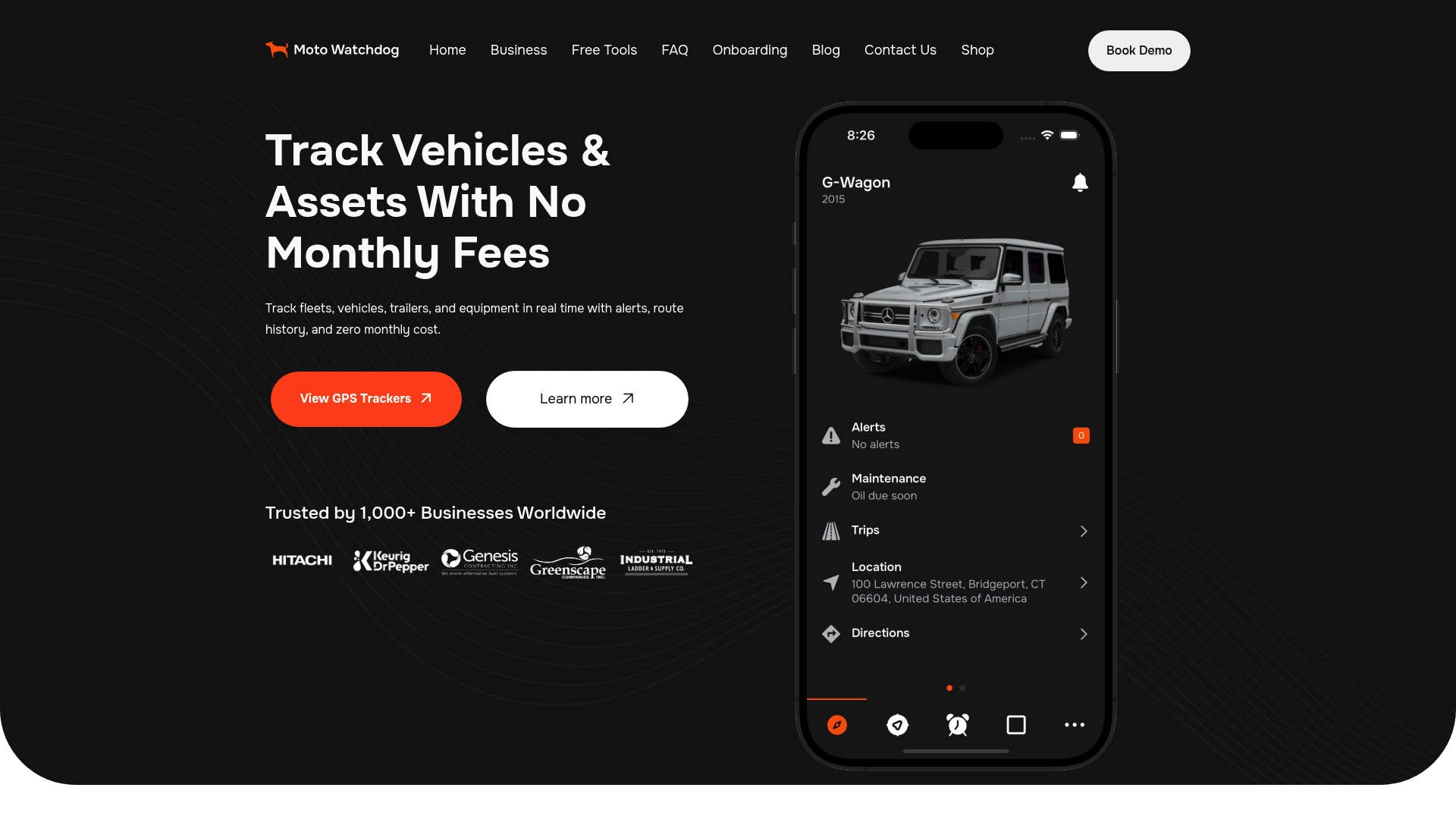
A Moto Watchdog order includes:
- A GPS tracking device with ignition input, accelerometer, and backup battery
- Free companion app with real-time location and configurable geofence alerts
- No monthly fees, ever, for core tracking and alert features
- Warranty coverage and access to setup and support resources
Head to the Moto Watchdog product page to check specs against your vehicle or trailer and place your order.
Sources
For deeper technical or legal context beyond this guide:
- Definition of Tow Alarm | EasyNet Technologies
- GPS Tracker Alerts Explained: How to Set Geofences, Motion and Anti-Theft Notifications That Actually Matter - Europe Connection World
- The Best Way to Track Your Car If It Gets Towed - Road Trips Travel