How to start saving money
Lorem ipsum dolor sit amet, consectetur adipiscing elit lobortis arcu enim urna adipiscing praesent velit viverra sit semper lorem eu cursus vel hendrerit elementum morbi curabitur etiam nibh justo, lorem aliquet donec sed sit mi dignissim at ante massa mattis.
- Neque sodales ut etiam sit amet nisl purus non tellus orci ac auctor
- Adipiscing elit ut aliquam purus sit amet viverra suspendisse potent
- Mauris commodo quis imperdiet massa tincidunt nunc pulvinar
- Excepteur sint occaecat cupidatat non proident sunt in culpa qui officia
Why it is important to start saving
Vitae congue eu consequat ac felis placerat vestibulum lectus mauris ultrices cursus sit amet dictum sit amet justo donec enim diam porttitor lacus luctus accumsan tortor posuere praesent tristique magna sit amet purus gravida quis blandit turpis.

How much money should I save?
At risus viverra adipiscing at in tellus integer feugiat nisl pretium fusce id velit ut tortor sagittis orci a scelerisque purus semper eget at lectus urna duis convallis. porta nibh venenatis cras sed felis eget neque laoreet suspendisse interdum consectetur libero id faucibus nisl donec pretium vulputate sapien nec sagittis aliquam nunc lobortis mattis aliquam faucibus purus in.
- Neque sodales ut etiam sit amet nisl purus non tellus orci ac auctor
- Adipiscing elit ut aliquam purus sit amet viverra suspendisse potenti
- Mauris commodo quis imperdiet massa tincidunt nunc pulvinar
- Adipiscing elit ut aliquam purus sit amet viverra suspendisse potenti
What percentege of my income should go to savings?
Nisi quis eleifend quam adipiscing vitae aliquet bibendum enim facilisis gravida neque. Velit euismod in pellentesque massa placerat volutpat lacus laoreet non curabitur gravida odio aenean sed adipiscing diam donec adipiscing tristique risus. amet est placerat in egestas erat imperdiet sed euismod nisi.
“Nisi quis eleifend quam adipiscing vitae aliquet bibendum enim facilisis gravida neque velit euismod in pellentesque”
Do you have any comments? Share them with us on social media
Eget lorem dolor sed viverra ipsum nunc aliquet bibendum felis donec et odio pellentesque diam volutpat commodo sed egestas aliquam sem fringilla ut morbi tincidunt augue interdum velit euismod eu tincidunt tortor aliquam nulla facilisi aenean sed adipiscing diam donec adipiscing ut lectus arcu bibendum at varius vel pharetra nibh venenatis cras sed felis eget.
The most effective way to manage remote drivers is to combine a written tracking policy, real-time GPS telematics, and a weekly coaching loop. Start this week with three steps: deploy GPS devices on a small number of vehicles, pick three KPIs to baseline, and schedule a weekly driver scorecard review.
What to expect from a well-run remote driver program:
- GPS location accuracy within 10–30 feet using 4G LTE cellular uplink
- FMCSA ELD compliance for DOT-regulated carriers operating commercial motor vehicles
- Subscription-free hardware options like Motowatchdog that eliminate recurring monthly fees
- Predictive maintenance alerts, route optimization, and fuel-efficiency scoring now standard on AI-enhanced platforms
Key Takeaways
Effective remote driver management combines GPS telematics, a written tracking policy, and a weekly coaching loop, with ROI typically validated within a 60–90 day pilot.
| Point | Details |
|---|---|
| Start with a pilot | Deploy on 5–10 vehicles for 60–90 days before scaling to the full fleet. |
| Track three KPIs first | Idle time, harsh events, and on-time arrival cover fuel, safety, and service in one pass. |
| Coach weekly | Scorecards without coaching produce little improvement; weekly reviews drive behavior change. |
| Disclose before activating | Written policy and signed driver acknowledgement are required before any device goes live. |
| Motowatchdog for pilots | Subscription-free hardware eliminates monthly fees, making a low-risk pilot financially straightforward. |
Table of Contents
- Which driver and fleet metrics actually move your ROI?
- What hardware and software do you actually need?
- How do you roll out GPS tracking without disrupting operations?
- What are the legal and privacy rules for tracking drivers in North America?
- How do you calculate ROI and prove the program is working?
- What questions should you ask before choosing a tracking vendor?
- How do you keep remote drivers engaged and motivated?
- What communication tools and protocols work best for remote drivers?
- How should you onboard and train remote drivers on tracking systems?
- How do you integrate fleet software without creating data silos?
- How do you protect driver data and keep remote monitoring secure?
- What most fleet owners get wrong about remote driver programs
- Motowatchdog makes subscription-free fleet tracking practical
- Sources
Which driver and fleet metrics actually move your ROI?
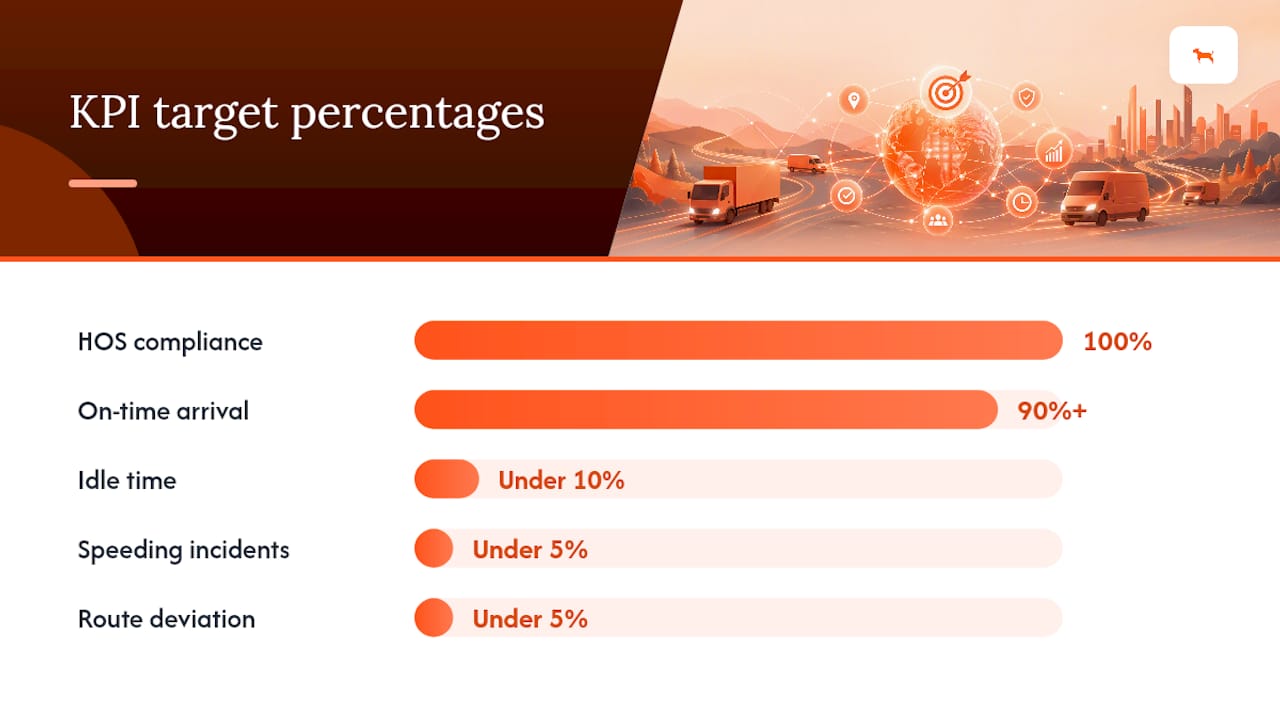
Tracking everything produces noise. Tracking the right six metrics produces results. Prioritize by your biggest pain point first.
| Metric | Definition | Sample Target | Best For |
|---|---|---|---|
| Idle time | Engine-on minutes with zero movement | Under 10% of engine hours | Fuel cost reduction |
| Harsh events | Braking, acceleration, cornering per 100 miles | Under 3 events per 100 miles | Safety and insurance |
| Speeding incidents | Trips with speed exceeding posted limit | Under 5% of trip time | Safety and liability |
| On-time arrival | Stops completed within scheduled window | 90%+ on-time rate | Customer service |
| Route deviation | Miles driven off assigned route | Under 5% of total miles | Efficiency and fuel |
| HOS compliance rate | Logs meeting FMCSA Hours of Service rules | 100% for regulated carriers | DOT compliance |
Fleets that implement anti-idling policies supported by tracking data typically reduce fuel consumption by 5–15%, with savings commonly reaching 10–20% when tracking is paired with consistent coaching. That range is wide because fleet type, geography, and driver tenure all affect the baseline.
Statistic: Fleets using driver scorecards built from speeding, harsh braking, rapid acceleration, and cornering reduce preventable accidents and insurance exposure when coaching is applied consistently. Fleets that install technology but never coach see little improvement.
Driver behavior scorecards tied to a weekly coaching cadence are the mechanism that converts raw telematics data into measurable cost reduction.
What hardware and software do you actually need?
Device types and installation effort
Three hardware categories cover nearly every fleet scenario:
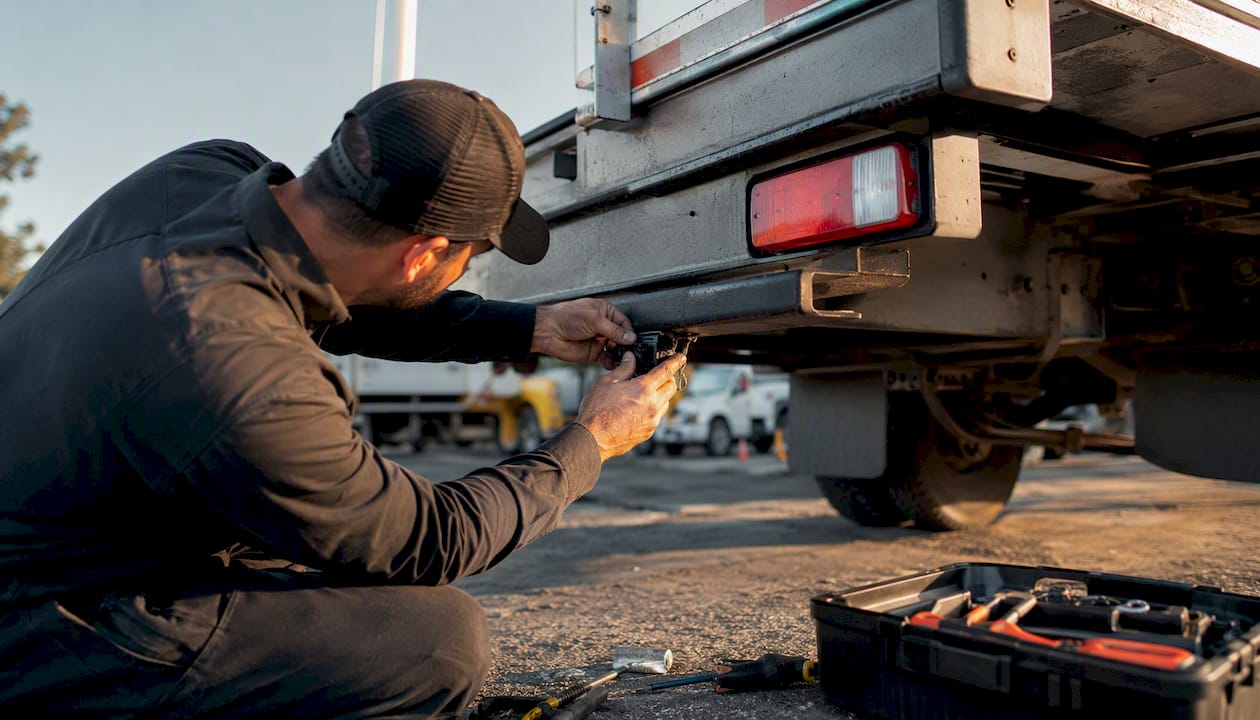
- OBD-II plug-in trackers connect to the vehicle’s diagnostic port. Most units install quickly and require no tools, making them ideal for rapid pilots and leased vehicles.
- Hardwired trackers require professional installation but offer tamper resistance and work on assets without OBD ports, including trailers, generators, and heavy equipment.
- Battery-powered asset trackers attach magnetically or with a bracket to non-powered equipment. Battery life varies widely by update frequency; subscription-free models extend usable life by transmitting only on movement or schedule.
Active vs. passive tracking
Active tracking transmits location every 10–60 seconds over 4G LTE, giving dispatchers a live map. Passive tracking stores location data onboard and uploads when the vehicle returns to Wi-Fi or a base station. Active tracking is the right choice for dispatch-intensive operations, lone-worker safety, and theft recovery. Passive tracking suits mileage reporting and route auditing where real-time visibility is not required.
Software integrations that matter
Integrating telematics with dispatch, fuel cards, and maintenance systems before adding AI-driven automation is the correct sequence. Clean, governed data yields reliable automation recommendations; ungoverned data amplifies confusion. Priority integrations:
- Dispatch board (route assignment and job status)
- ELD/HOS platform (for DOT-regulated carriers)
- Dashcam system (video corroboration of harsh events)
- Maintenance system (odometer-triggered service alerts)
- Fuel card reconciliation (flag fill-ups outside assigned routes)
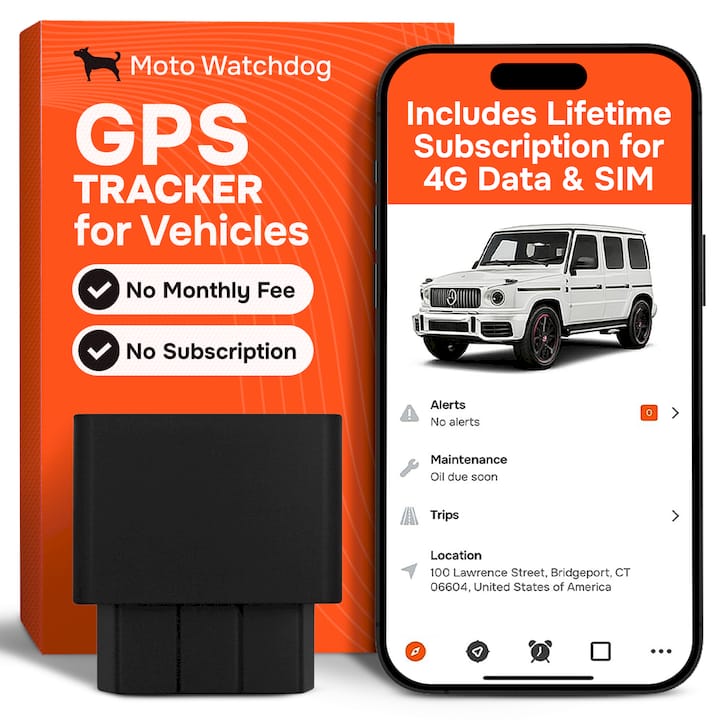
Motowatchdog fits mixed fleets well: subscription-free 4G GPS devices with geofencing, idle tracking, mileage reports, and hardwire options, managed through a mobile app with no recurring fees. See the OBD GPS tracker buyer’s guide for a detailed device comparison.
Pro Tip: For mixed fleets with both OBD-equipped vehicles and non-OBD assets, buy one hardwired unit and one battery tracker in your pilot batch. You will know within 60 days which form factor fits each asset class before committing to a full fleet order.
How do you roll out GPS tracking without disrupting operations?
A structured rollout prevents the two most common failures: poor install quality and driver resistance.
| Phase | Milestone | Timeline |
|---|---|---|
| Pre-install | Vehicle fitment audit, wiring choice, driver notification, legal disclosure signed | Week 1–2 |
| Pilot install | 5–10 vehicles, VIN verified, GPS accuracy confirmed, device online | Week 3 |
| Pilot monitoring | Baseline KPIs captured, weekly scorecard reviews begin | Weeks 4–10 |
| ROI validation | Compare fuel, maintenance, and incident costs vs. pre-pilot baseline | Week 10–12 |
| Scale decision | Go/no-go based on validated savings; standardize install photos and metadata | Week 11–12 |
| Full rollout | Remaining fleet installed, coaching cadence formalized, support SLAs confirmed | Week 15+ |
Validate every install with VIN verification, a GPS accuracy check, and confirmed online status before the pilot clock starts. Maintain an installation log; it speeds future support calls and reduces warranty disputes.
A 60–90 day pilot on 5–10 vehicles is the recommended validation path. Many fleets recover tracking costs within 3–6 months once coaching, idle reduction, and maintenance alerts combine.
What are the legal and privacy rules for tracking drivers in North America?
Core disclosure requirements
Shift-bounded tracking and explicit driver disclosure are the two non-negotiable principles for field monitoring in North America. Continuous off-hours GPS tracking creates legal exposure and destroys driver trust faster than any other mistake.
Practical compliance checklist:
- Provide written notice that company vehicles are tracked during working hours
- Obtain a signed driver acknowledgement before device activation
- Define data retention: most fleets keep 90–180 days of location history
- Restrict data access to dispatchers, safety officers, and fleet managers only
- Set geofencing alerts to trigger only during assigned shifts
- Disable or suspend tracking outside duty hours for employee-owned vehicles used for work
ELD requirements for regulated carriers
Commercial motor vehicles operating under FMCSA jurisdiction and meeting the hours-of-service mandate require a certified ELD. An integrated telematics platform that combines GPS tracking with ELD logging reduces duplicate data entry and simplifies roadside inspections.
Pro Tip: When introducing tracking to drivers, lead with the safety benefit: “If you break down or have an incident, we can find you immediately.” That framing is honest, and it shifts the conversation from surveillance to support.
State-specific rules on employee monitoring vary. Consult employment counsel before deploying tracking in California, Illinois, or New York, where privacy statutes carry additional requirements.
How do you calculate ROI and prove the program is working?
ROI formula and example
Monthly savings = (Fuel reduction) + (Maintenance savings) + (Incident cost avoidance) + (Theft recovery value)
Example for a 10-vehicle contractor fleet:
- Idle reduction of 15% cuts fuel spend by roughly $200/month across the fleet
- One avoided preventable accident saves $3,000–$8,000 in insurance and repair costs
- One predictive maintenance alert prevents a roadside breakdown worth $500–$2,000 in towing and downtime
| Reporting Cadence | Report Type | Audience |
|---|---|---|
| Daily | Exception alerts (speeding, geofence breach, harsh event) | Dispatcher |
| Weekly | Driver scorecard with ranking and trend | Fleet manager, safety officer |
| Monthly | Financial summary: fuel, maintenance, incident costs | Owner, CFO |
Statistic: Fleets pairing tracking with coaching commonly achieve fuel savings in the 10–20% range. Variability depends on fleet type, driver tenure, and how consistently the coaching loop runs.
To validate behavioral change, run an A/B pilot: coach one group of drivers weekly and leave a second group uncoached for 60 days. The gap in harsh-event rates between the two groups quantifies the coaching contribution. Fleet GPS data integration with your dispatch and fuel systems makes this comparison clean and auditable.
What questions should you ask before choosing a tracking vendor?
Vendor selection comes down to fit for your pain point, not feature count. Ask these questions before signing anything:
- Hardware warranty: What is the replacement policy for failed devices, and how long is coverage?
- Data ownership: Do you own your historical location data if you switch vendors?
- API integrations: Does the platform connect natively to your dispatch, fuel card, or maintenance system?
- ELD certification: Is the platform FMCSA-registered if you operate regulated vehicles?
- Dashcam integration: Can video clips link automatically to harsh-event alerts?
- Update cadence: How often does firmware update, and are updates pushed automatically?
- Tamper detection: Does the device alert when unplugged or moved?
- Contract flexibility: Is a month-to-month pilot available, or is a multi-year commitment required?
For small fleets (under 20 vehicles), prioritize a month-to-month pilot and hardware you own outright. Subscription-free devices eliminate the risk of a long-term software contract that outlasts your business need. For larger fleets, API depth and support SLAs matter more than upfront hardware cost. See the small fleet tracking guide for budget-specific procurement tips.
How do you keep remote drivers engaged and motivated?
Data without recognition produces resentment. The most effective remote driver programs pair scorecard transparency with a structured reward system. Publish weekly rankings so top performers see their standing. Recognize the top three drivers publicly, even briefly, in a group message or safety meeting. For underperformers, keep coaching private and specific: “Your harsh braking rate was 8 events per 100 miles last week; the fleet average is 3. Here is what that costs in brake wear and fuel.”
Small, consistent rewards outperform large annual bonuses for behavior change. A $25 fuel card for a driver who holds a clean scorecard for 30 days costs less than one avoidable accident. Gamification features built into modern telematics platforms, such as leaderboards and streak tracking, reinforce the habit without requiring manager time every day.
What communication tools and protocols work best for remote drivers?
Real-time communication between dispatchers and field drivers requires a layered approach. In-cab two-way messaging through the fleet platform keeps communication logged and searchable, which matters for liability. Push notifications from the GPS platform alert drivers to geofence entries, route changes, and urgent stops without requiring a phone call.
For daily coordination, a structured check-in protocol reduces missed stops and miscommunication: drivers confirm departure, arrival at each stop, and end-of-shift via the app. Dispatchers review the live map for exceptions rather than calling every driver. Reserve voice calls for genuine exceptions, not routine status checks.
How should you onboard and train remote drivers on tracking systems?
Training before device activation prevents the most common driver objections. Cover three things in the first session: what data is collected, who sees it, and how it affects their pay or performance review. Drivers who understand the system before it goes live are far less likely to tamper with devices or game metrics.
A written driver safety policy that explains the scoring methodology, coaching process, and data access rules is the foundation. Pair it with a 30-minute walkthrough of the driver-facing app so each driver can see their own scorecard. Follow up at the 30-day mark with a one-on-one review of their first month’s data.
How do you integrate fleet software without creating data silos?
Integration sequencing matters. Connect telematics to dispatch first, then fuel cards, then maintenance. Each layer adds context that makes the previous layer more useful. A speeding alert means more when you can see the driver was running late on a dispatch board. A fuel fill-up outside the assigned route means more when it appears alongside the day’s GPS track.
Most modern fleet platforms offer REST APIs or pre-built connectors for common dispatch and fuel card systems. Confirm API availability before purchase, not after. For fleets not ready for full API integration, CSV exports on a daily schedule feed most maintenance and accounting systems adequately. The fleet GPS data integration guide covers connector options and governance steps in detail.
How do you protect driver data and keep remote monitoring secure?
Driver location data is sensitive. Limit access using role-based permissions: dispatchers see live maps, safety officers see scorecards, and owners see financial summaries. No single user needs all three views. Audit access logs quarterly to confirm permissions match current staff roles.
Encrypt data in transit and at rest. Most enterprise telematics platforms handle this by default, but confirm it in writing before signing a contract. For subscription-free hardware like Motowatchdog devices, the companion app manages data locally and through the device’s cellular uplink, keeping the data footprint simple.
Define a data retention policy before you go live. Ninety days of location history covers most dispute resolution needs. Retaining data longer than necessary increases your liability surface without adding operational value.
What most fleet owners get wrong about remote driver programs
The technology is rarely the problem. Most programs that fail do so because the coaching loop never gets built. Managers install devices, watch the dashboard for a week, and then let the data accumulate without acting on it. Drivers notice quickly when nothing changes after the trackers go in, and they stop taking the scoring seriously.
The second most common mistake is tracking off-hours without disclosure. Even when it is technically legal in a given state, drivers who discover covert monitoring become the most vocal opponents of the entire program. The trust damage takes months to repair.
What actually works is transparency from day one, a written policy, and a weekly 15-minute scorecard review that every driver knows is happening. The driver behavior monitoring guide puts it plainly: transparency, a written safety policy, and a coaching framework are necessary to convert telematics data into long-term behavior change.
One more thing most operators underestimate: the pilot is not just a technical test. It is a cultural test. How drivers respond to the first 60 days of tracking tells you more about your management culture than about the technology. Use that window to build trust, not just to collect data.
Motowatchdog makes subscription-free fleet tracking practical
Recurring monthly fees are the reason most small fleets delay GPS tracking. Motowatchdog removes that barrier with a one-time hardware purchase and no subscription required. You get real-time 4G location, customizable geofencing, idle time tracking, mileage reports, and multi-device management through a free mobile app, all without a monthly bill.
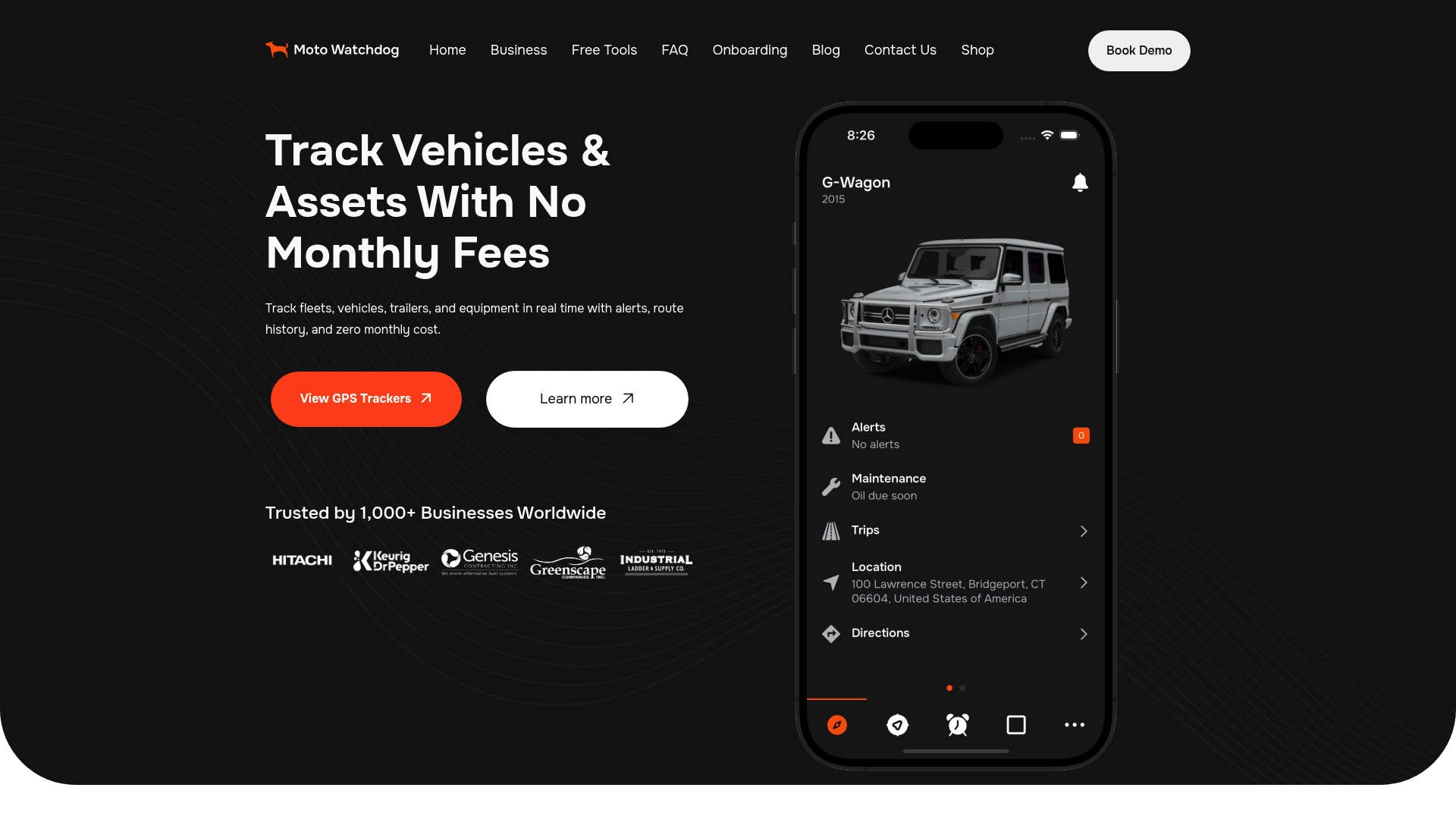
For a pilot, buy 5–10 Motowatchdog devices, install them in your highest-cost vehicles, and run the 60–90 day validation described in this guide. The hardwiring guide covers professional install steps and tamper-resistant mounting for vehicles that need it. Over 1,000 businesses rely on Motowatchdog’s accuracy today. Start your pilot at Motowatchdog and validate your ROI before committing to anything larger.
Sources
- GPS fleet tracking in 2026 — what has changed and what still matters
- Telematics Installation Best Practices for Fleet Management
- Effective Contractor Fleet Tracking in 2026
- Monitoring Field Service Technicians: A Practical | eMonitor
- 10 Fleet Management Best Practices for 2026
- Driver Behavior Monitoring Best Practices: A 2026 Strategic Guide for Fleet Managers