How to start saving money
Lorem ipsum dolor sit amet, consectetur adipiscing elit lobortis arcu enim urna adipiscing praesent velit viverra sit semper lorem eu cursus vel hendrerit elementum morbi curabitur etiam nibh justo, lorem aliquet donec sed sit mi dignissim at ante massa mattis.
- Neque sodales ut etiam sit amet nisl purus non tellus orci ac auctor
- Adipiscing elit ut aliquam purus sit amet viverra suspendisse potent
- Mauris commodo quis imperdiet massa tincidunt nunc pulvinar
- Excepteur sint occaecat cupidatat non proident sunt in culpa qui officia
Why it is important to start saving
Vitae congue eu consequat ac felis placerat vestibulum lectus mauris ultrices cursus sit amet dictum sit amet justo donec enim diam porttitor lacus luctus accumsan tortor posuere praesent tristique magna sit amet purus gravida quis blandit turpis.

How much money should I save?
At risus viverra adipiscing at in tellus integer feugiat nisl pretium fusce id velit ut tortor sagittis orci a scelerisque purus semper eget at lectus urna duis convallis. porta nibh venenatis cras sed felis eget neque laoreet suspendisse interdum consectetur libero id faucibus nisl donec pretium vulputate sapien nec sagittis aliquam nunc lobortis mattis aliquam faucibus purus in.
- Neque sodales ut etiam sit amet nisl purus non tellus orci ac auctor
- Adipiscing elit ut aliquam purus sit amet viverra suspendisse potenti
- Mauris commodo quis imperdiet massa tincidunt nunc pulvinar
- Adipiscing elit ut aliquam purus sit amet viverra suspendisse potenti
What percentege of my income should go to savings?
Nisi quis eleifend quam adipiscing vitae aliquet bibendum enim facilisis gravida neque. Velit euismod in pellentesque massa placerat volutpat lacus laoreet non curabitur gravida odio aenean sed adipiscing diam donec adipiscing tristique risus. amet est placerat in egestas erat imperdiet sed euismod nisi.
“Nisi quis eleifend quam adipiscing vitae aliquet bibendum enim facilisis gravida neque velit euismod in pellentesque”
Do you have any comments? Share them with us on social media
Eget lorem dolor sed viverra ipsum nunc aliquet bibendum felis donec et odio pellentesque diam volutpat commodo sed egestas aliquam sem fringilla ut morbi tincidunt augue interdum velit euismod eu tincidunt tortor aliquam nulla facilisi aenean sed adipiscing diam donec adipiscing ut lectus arcu bibendum at varius vel pharetra nibh venenatis cras sed felis eget.
A low battery alert from a GPS tracker is a warning that the device is close to losing power and will soon stop reporting its location. Sometimes the tracker’s own battery is running down. On a hardwired unit, the alert can instead mean the vehicle’s battery voltage has dropped. Either way, the right response is the same: find out which battery is low, restore power, and confirm the tracker is reporting again before the asset leaves your sight.
This guide is written for fleet managers, contractors and heavy equipment rental operators. It explains what the alert means, what triggers it, what to check, how to set thresholds, and how to keep a dead tracker from turning into a blind spot.
TL;DR
- A low battery alert means either the tracker’s internal battery is nearly empty or the host vehicle’s battery voltage has dropped. Identify which before you act.
- Heavy equipment that sits idle for days is the most common place for a quiet drain, so check alerts on parked assets first.
- Set a warning early enough that someone can reach the asset and recharge or replace power before the tracker goes dark.
- Treat every low battery alert as a tracked task with an owner and a deadline, not a notification to swipe away.
- Choose trackers with long battery life and no recurring data fees, so power management is the only routine you have to run.
Table of Contents
- What a low battery alert actually tells you
- What triggers a low battery alert on fleet vehicles and rented equipment
- Does GPS tracking drain a tracker’s battery?
- What to check when the alert arrives
- Setting thresholds and notification frequency
- Preventing missed alerts and tracker downtime
- Our perspective
- Choosing a tracker that makes battery management easier
- Moto Watchdog trackers for fleets and equipment
- FAQ
- Sources
What a low battery alert actually tells you
A GPS tracker watches its own power supply. When the reading falls below a preset level, it sends a push notification, text or email. The purpose is simple: you learn about the problem while the device can still report, not after it has gone silent.
Two different situations produce the same wording, and mixing them up wastes time:
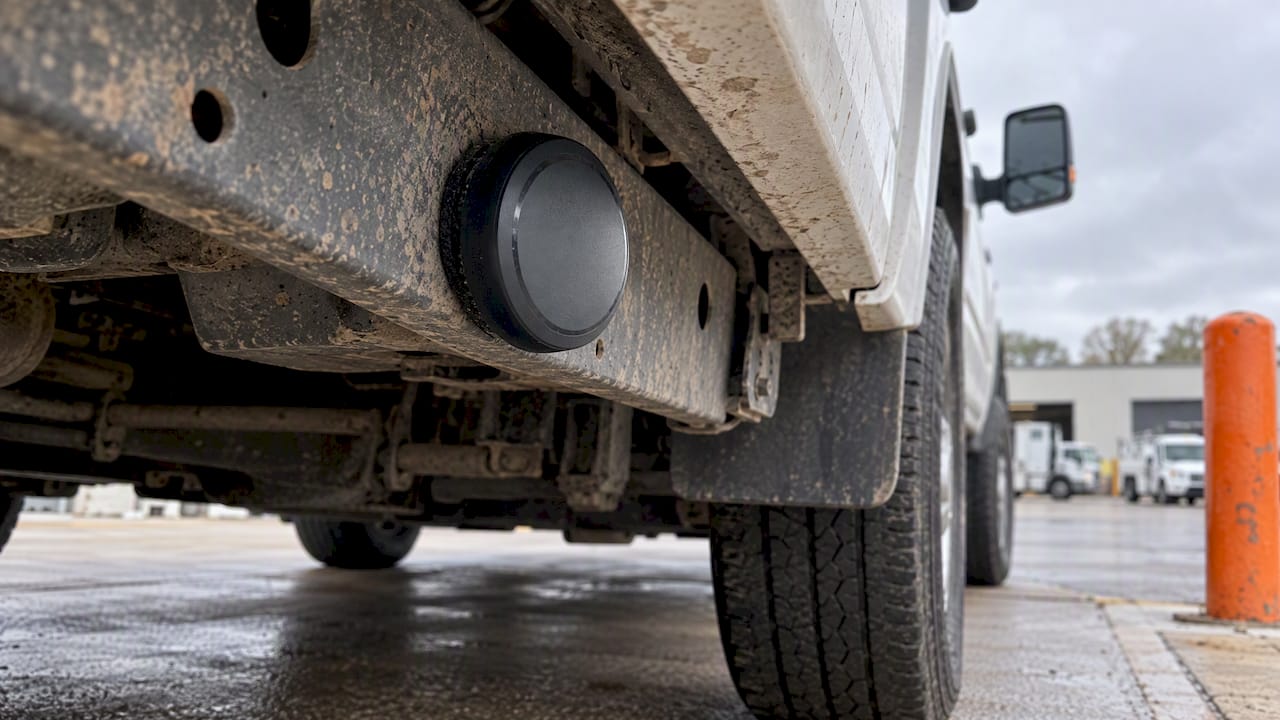
- Internal battery low. This applies to portable, battery-powered trackers attached to trailers, generators, skid steers, towable equipment or personal assets. The cell inside the device is nearly empty. The fix is to recharge or replace power.
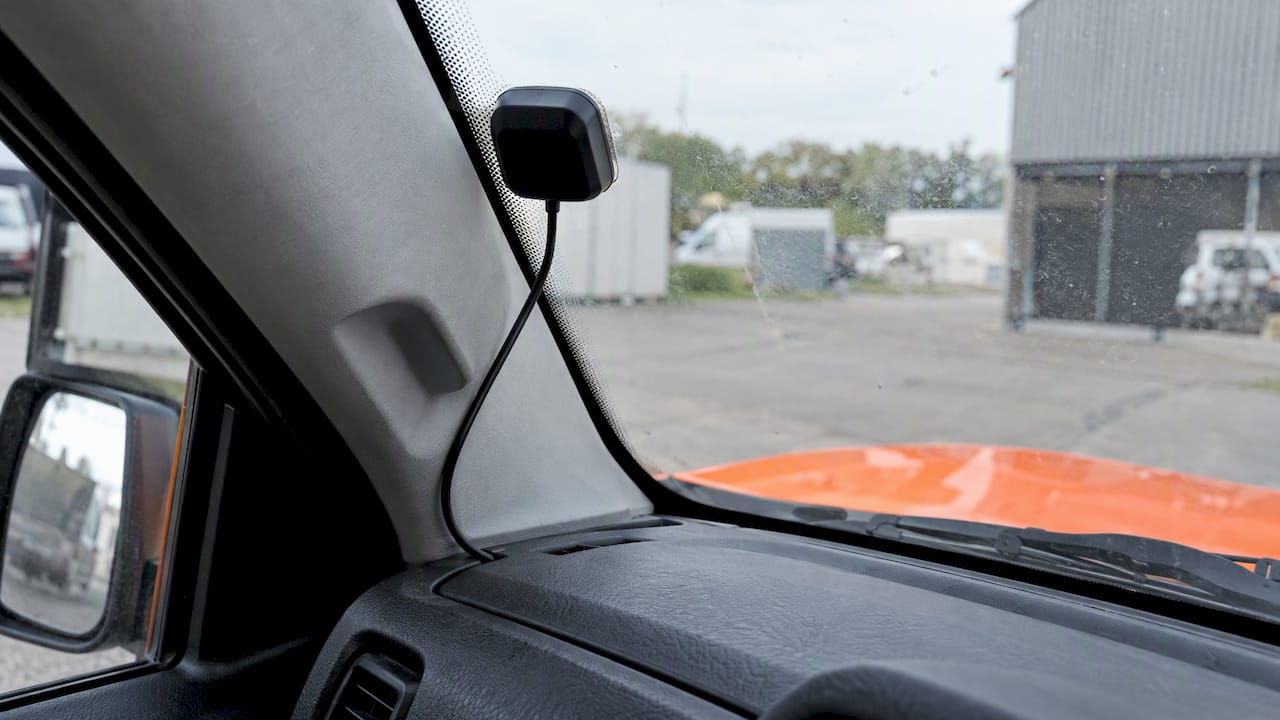
- Vehicle battery voltage low. This applies to trackers wired to a vehicle or machine. The tracker is reporting that the host battery is sagging. The tracker itself may be fine, and the real problem is a weak battery, a charging fault or a parasitic draw.
The second case is the more valuable one for a fleet. A tracker that warns you about a weakening vehicle battery can flag a no-start before a crew shows up to a dead machine.
What triggers a low battery alert on fleet vehicles and rented equipment
A handful of causes account for most alerts in a contractor or rental fleet.
Long idle periods
Rental equipment often sits in a yard between jobs. A battery-powered tracker keeps checking in while it waits, and a vehicle battery slowly loses charge with no alternator to refill it. Weeks of inactivity are the classic setup for a low battery alert.
Frequent location updates
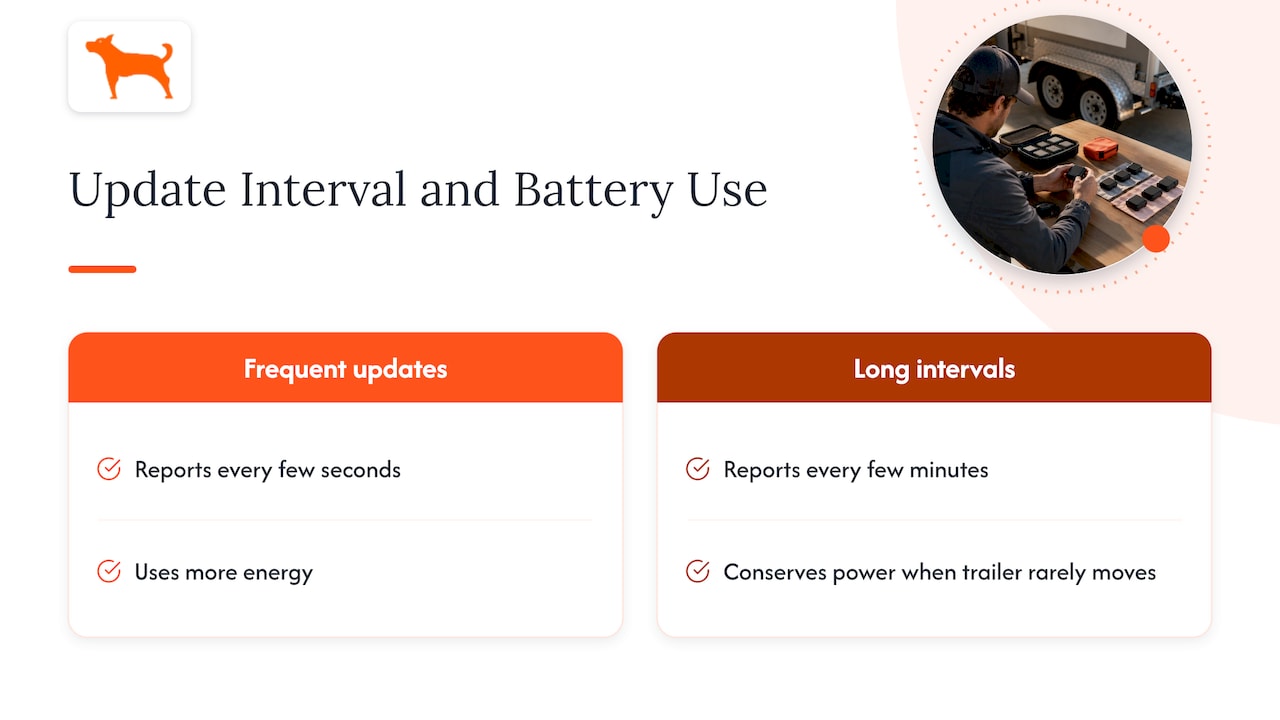
A tracker that reports its position every few seconds uses more energy than one that reports every few minutes. Update interval is one of the main settings that determines how long a charge lasts. If you track a trailer that rarely moves, a long interval conserves power without losing the information you need.
Weak signal areas
A device that struggles to find a cellular or satellite signal works harder. Job sites in basements, steel buildings, deep cuts or remote terrain can shorten battery life compared with open lots.
Cold weather and aging cells
Batteries of every kind deliver less in the cold, and older cells hold less charge. A tracker that lasted all summer may start alerting in January. Plan checks for the seasons when equipment sits longest and temperatures drop.
Vehicle electrical systems that cut power on purpose
Some modern trucks protect their batteries by shutting off accessory circuits when voltage falls. Federal safety documents describe this in detail. A technical service bulletin filed with NHTSA covers a progressive low voltage disconnect on certain Western Star 57X trucks: correctly installed devices on the RP1226 pin 1 connection shut off when the disconnect activates at 12.3 volts. The same bulletin notes that third-party devices connected to RP1226 can draw power from the house batteries after the truck is off, which can leave those batteries dead.
The lesson applies well beyond one model. Where and how a tracker is wired changes how it behaves when voltage drops. If you manage heavy trucks, ask your installer which circuit the device uses and whether the vehicle has any low voltage cutoff.
Does GPS tracking drain a tracker’s battery?
Yes, in the sense that every function uses some power. Three things matter most:
- How often the device wakes and reports. More frequent reports mean more energy used.
- How hard it works to connect. Poor coverage and signal searching cost power.
- How many features run at once. Motion alerts, geofence checks and trip logging all add small loads.
That is why manufacturers quote battery life under specific conditions. A figure for one reporting interval does not carry over to another. When you compare trackers, ask what interval and conditions the stated battery life assumes, and test one unit on your own equipment before you buy for the whole yard.
Tracking a vehicle does not meaningfully drain a healthy hardwired vehicle battery in normal daily use, but a tracker with a poor installation or a machine left parked for weeks can. The alert is there to catch exactly that.
What to check when the alert arrives
Work through the same sequence every time. It keeps crews consistent and shortens response time.
- Read the alert. Does it name the tracker’s battery or the vehicle’s voltage? Note the asset, the time and the last reported location.
- Look at the history. Open the app and check whether battery level has fallen steadily or dropped suddenly. A steady decline points to normal use. A sudden fall points to a fault, a loose connection or extreme cold.
- Check the last movement and idle time. If the asset has been parked for a long period, an idle drain is the likely cause.
- Go to the asset. Confirm the device is seated, the cable is intact and the mounting is secure. Look for corrosion on terminals or a damaged power lead.
- Restore power. Recharge or replace the tracker’s battery, or test and charge the vehicle battery. For a weak vehicle battery, have it load tested rather than only topped up.
- Verify reporting. Wait for a fresh location ping and a normal battery reading before you close the task.
- Adjust the cause. If the same asset alerts repeatedly, lengthen the reporting interval, move the device to a better signal position or replace an aging battery.
If an alert appears on an asset that should be in use right now, such as a machine on a rented job site, call the renter or site lead. A low battery on active equipment can precede an unexpected shutdown.
Setting thresholds and notification frequency
Two settings decide whether battery alerts help or just add noise: the level that triggers the alert and how often it repeats.
Pick a threshold that leaves time to act
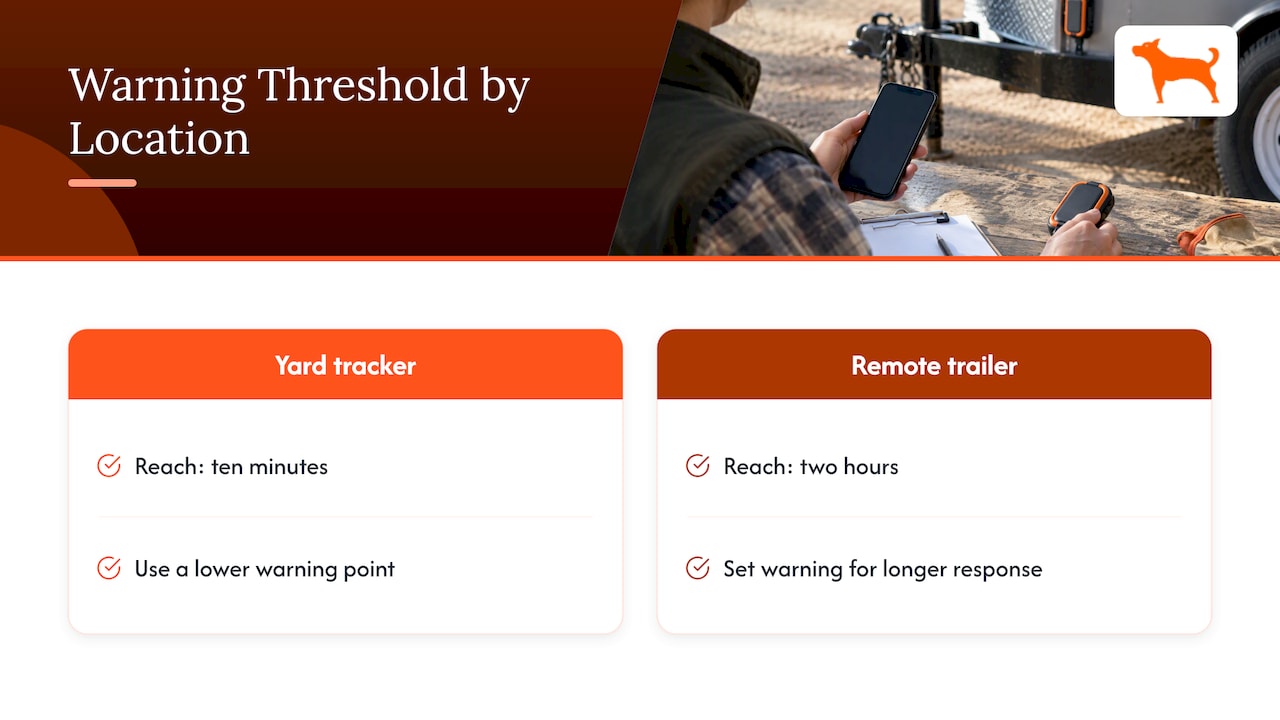
The right level depends on how fast your crew can reach the asset. A yard tracker ten minutes from your office can use a lower warning point than a trailer parked on a remote job site two hours away. Set the warning early enough to cover your longest realistic response time, then adjust after a month of real alerts.
Understand repeat behavior
Many systems send a battery alert once and then stay quiet until the level changes or the device is recharged. Users have raised this on support forums, noting that a single notification can be easy to miss. Do not assume a second reminder will arrive. Instead:
- Send low battery alerts to more than one person or a shared dispatch inbox.
- Use push notifications plus email so one missed message does not end the chain.
- Review the battery status screen weekly rather than relying only on alerts.
Keep alerts meaningful
If every tracker alerts at once, people stop reading. Group assets by type and importance. Revenue-critical rental machines and high-value trailers deserve tighter thresholds and escalation to a manager. Low-use attachments can use a gentler setting.
Preventing missed alerts and tracker downtime
The best low battery alert is the one you never have to answer. Build these habits into your fleet routine.
- Assign an owner. Every alert should land with a named person, with a backup for days off.
- Create a recharge schedule. For portable trackers, add the battery check to your equipment inspection or return checklist.
- Check assets before and after rental. Confirm battery level at pickup and return so a customer never leaves with a nearly empty device.
- Use maintenance reminders. Tie battery checks to the same calendar as oil changes and inspections.
- Watch idle time reports. Assets with long idle stretches are the first candidates for a drained battery.
- Keep spares. A few charged replacement devices let you swap a tracker in minutes and keep the asset visible.
- Test geofence and alert delivery. Trigger a test alert once a quarter and confirm everyone who should receive it does.
- Standardize on one dashboard. Managing every device in one place makes it easier to spot batteries that are trending down.
Cost matters here too. A tracker that charges a monthly data fee can be switched off or left to lapse when budgets tighten, and a lapsed plan looks like a dead device. Our overview of what a GPS tracker yearly fee really costs shows how those recurring charges add up across a fleet.
Our perspective
Fleets rarely lose track of an asset because tracking technology failed. They lose track because power ran out and nobody noticed in time. That is why we treat battery management as part of tracking itself, not an accessory to it.
We design our trackers around long battery life, real-time location, customizable geofencing and push notifications, so the information you need reaches you while you can still act on it. Our devices are built for the way contractors and rental companies work: many assets, many users, one dashboard, and no monthly fees or activation charges to track.
The practical advice is simple. Decide who receives battery alerts, set the warning early enough to reach the asset, and review battery status as part of every inspection. When tracking costs nothing after the purchase, you never have to choose between keeping a device active and protecting your budget. That frees you to spend your attention on the real work: keeping equipment visible, rentable and safe.
Louis
Choosing a tracker that makes battery management easier
When you evaluate trackers for a fleet or rental yard, compare them on the points that affect battery routines:
| What to compare | Why it matters |
|---|---|
| Battery life at your reporting interval | Stated figures depend on how often the device reports, so match the test to your use |
| Power type | Portable units suit trailers and attachments, while hardwired units suit vehicles and powered machines |
| Alert options | Push, email and the ability to send to several people reduce missed warnings |
| Update interval control | Longer intervals save power on assets that rarely move |
| Multi-device dashboard | One view of every battery level speeds up your weekly review |
| Ongoing fees | Recurring data charges add cost and can leave devices inactive if payments lapse |
Moto Watchdog trackers for fleets and equipment
Our GPS trackers are built for contractors, fleet owners and heavy equipment rental companies that want real-time location without a monthly bill. They include customizable geofencing and alerts, push notifications, trip and mileage reporting, idle time tracking, maintenance reminders and multi-device management in a free mobile app. Trackers start from $124.99 as a one-time purchase.
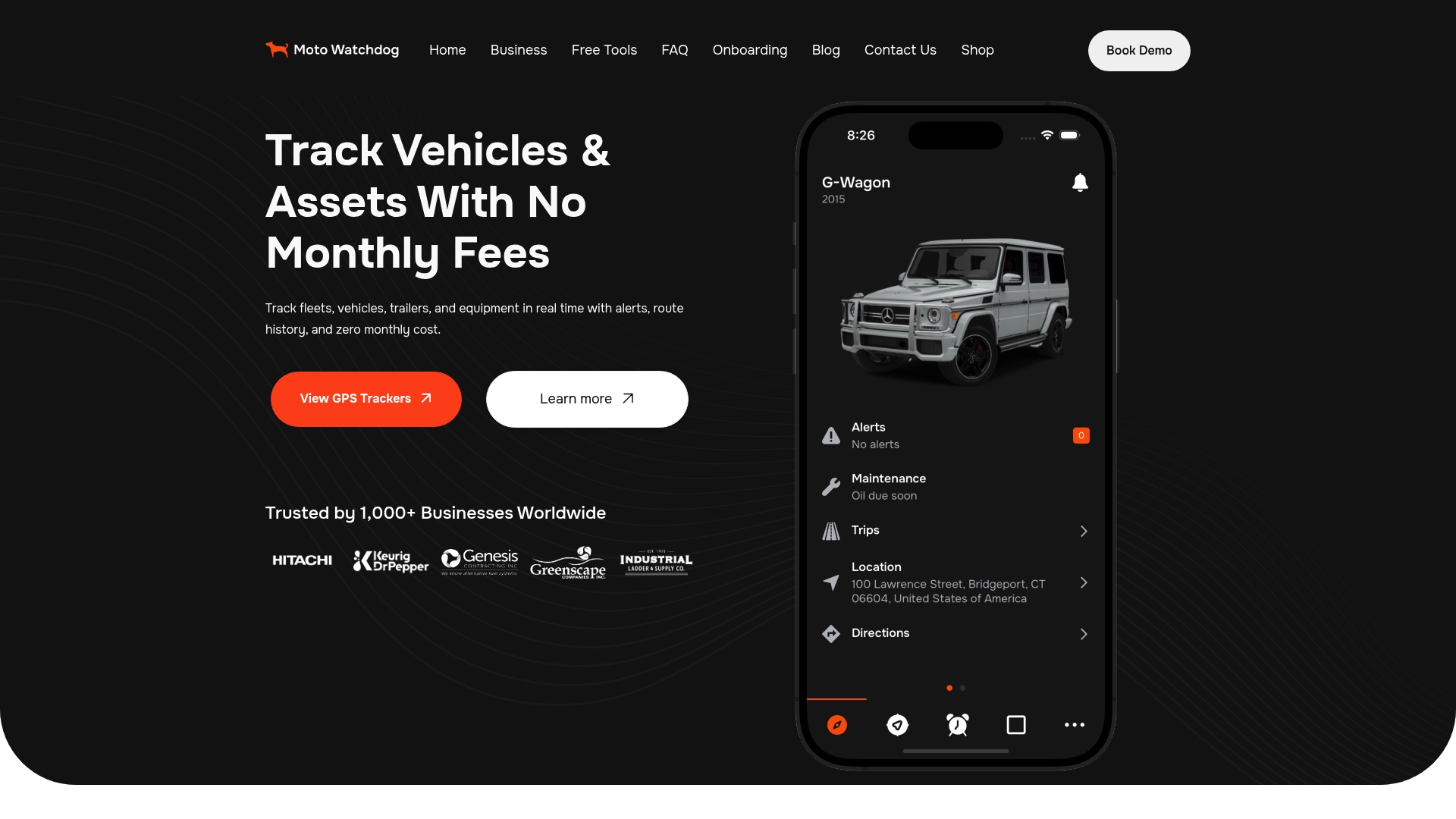
If you are ready to put every trailer, truck and machine on one dashboard, see the Moto Watchdog trackers and choose the model that fits your assets.
FAQ
What does a low battery alert on a GPS tracker mean?
It means the device’s power is running down and it may soon stop reporting. On a portable tracker, the internal battery is nearly empty. On a hardwired tracker, the alert can mean the vehicle’s battery voltage has dropped. Check which one before you act.
How long after a low battery alert will the tracker keep working?
That depends on the device, its reporting interval and conditions such as temperature and signal strength. Treat the alert as a deadline to act the same day rather than a long countdown. Recharge or replace power as soon as you can reach the asset.
Does GPS tracking drain the battery faster?
Tracking uses power, and more frequent location updates, weak signal and extra features use more of it. Lengthening the reporting interval on assets that rarely move is the simplest way to extend battery life between charges.
How do I avoid missing a low battery alert?
Send alerts to more than one person, use both push notifications and email, and review battery status in your dashboard each week. Add battery checks to rental pickup, return and inspection routines so a weak device is caught before the asset leaves.