
How to start saving money
Lorem ipsum dolor sit amet, consectetur adipiscing elit lobortis arcu enim urna adipiscing praesent velit viverra sit semper lorem eu cursus vel hendrerit elementum morbi curabitur etiam nibh justo, lorem aliquet donec sed sit mi dignissim at ante massa mattis.
- Neque sodales ut etiam sit amet nisl purus non tellus orci ac auctor
- Adipiscing elit ut aliquam purus sit amet viverra suspendisse potent
- Mauris commodo quis imperdiet massa tincidunt nunc pulvinar
- Excepteur sint occaecat cupidatat non proident sunt in culpa qui officia
Why it is important to start saving
Vitae congue eu consequat ac felis placerat vestibulum lectus mauris ultrices cursus sit amet dictum sit amet justo donec enim diam porttitor lacus luctus accumsan tortor posuere praesent tristique magna sit amet purus gravida quis blandit turpis.

How much money should I save?
At risus viverra adipiscing at in tellus integer feugiat nisl pretium fusce id velit ut tortor sagittis orci a scelerisque purus semper eget at lectus urna duis convallis. porta nibh venenatis cras sed felis eget neque laoreet suspendisse interdum consectetur libero id faucibus nisl donec pretium vulputate sapien nec sagittis aliquam nunc lobortis mattis aliquam faucibus purus in.
- Neque sodales ut etiam sit amet nisl purus non tellus orci ac auctor
- Adipiscing elit ut aliquam purus sit amet viverra suspendisse potenti
- Mauris commodo quis imperdiet massa tincidunt nunc pulvinar
- Adipiscing elit ut aliquam purus sit amet viverra suspendisse potenti
What percentege of my income should go to savings?
Nisi quis eleifend quam adipiscing vitae aliquet bibendum enim facilisis gravida neque. Velit euismod in pellentesque massa placerat volutpat lacus laoreet non curabitur gravida odio aenean sed adipiscing diam donec adipiscing tristique risus. amet est placerat in egestas erat imperdiet sed euismod nisi.
“Nisi quis eleifend quam adipiscing vitae aliquet bibendum enim facilisis gravida neque velit euismod in pellentesque”
Do you have any comments? Share them with us on social media
Eget lorem dolor sed viverra ipsum nunc aliquet bibendum felis donec et odio pellentesque diam volutpat commodo sed egestas aliquam sem fringilla ut morbi tincidunt augue interdum velit euismod eu tincidunt tortor aliquam nulla facilisi aenean sed adipiscing diam donec adipiscing ut lectus arcu bibendum at varius vel pharetra nibh venenatis cras sed felis eget.
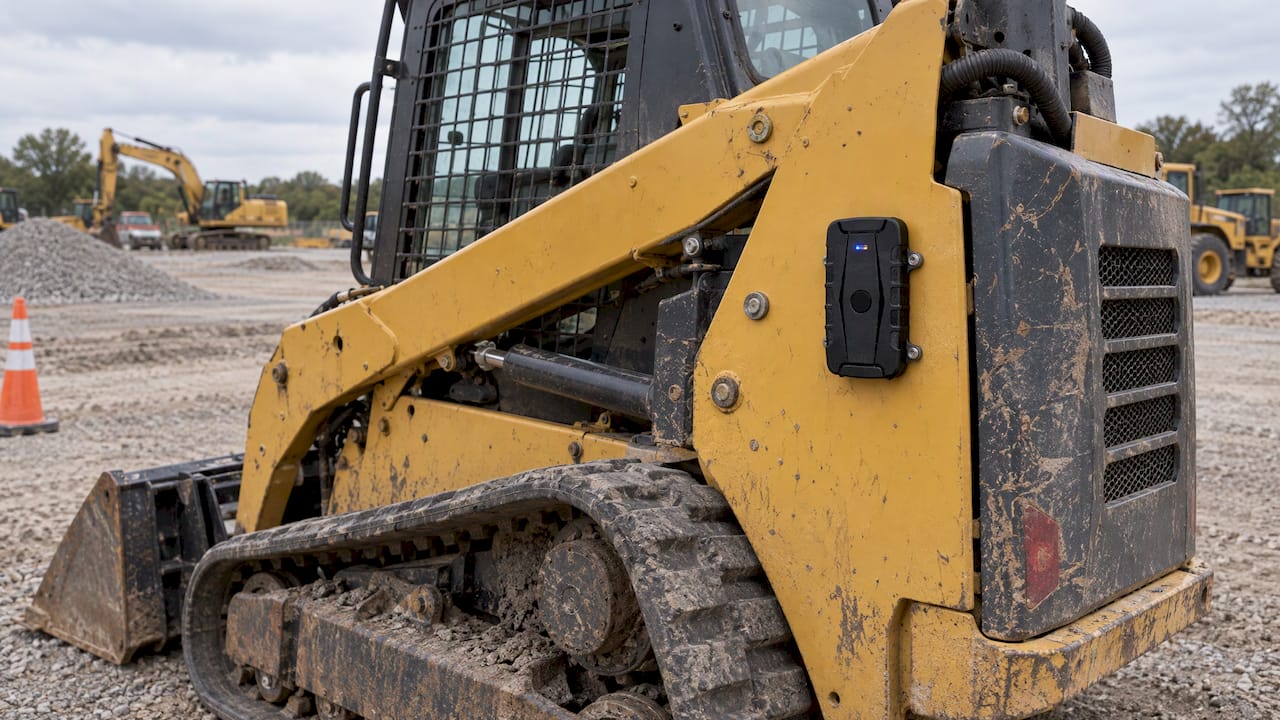
Heavy equipment tracking puts a GPS tracker on each machine so you can see where it is, when it moves, how long it idles and whether it leaves the job site. For fleets and rental companies, the lowest-cost way to get there is a tracker you buy once and run without a monthly bill. Moto Watchdog trackers start at $124.99 one-off, with no monthly or recurring fees and lifetime 4G data included, so tracking twenty machines does not add twenty subscriptions to your overhead.
TL;DR
- GPS tracking on excavators, loaders, skid steers, trailers and generators gives you live location, geofence alerts, idle time and trip history in one dashboard.
- Theft is the loudest reason to start, but idle time, maintenance timing and rental disputes usually repay the investment faster.
- Subscription pricing scales with your fleet size. A one-time purchase with lifetime data keeps the cost of each added machine fixed.
- Set benchmarks (idle hours, utilization, cost per machine) and review them on a schedule. Data alone changes nothing.
- Moto Watchdog trackers start at $124.99 one-off and support unlimited vehicles and users on one dashboard.
Table of Contents
- What heavy equipment tracking is and how it works
- Which assets to track
- Theft prevention and recovery
- Using tracking data to cut idle time and fuel
- Maintenance based on actual use
- Tracking for rental fleets and customer disputes
- What to consider before you choose a tracker
- A rollout plan for a mixed fleet
- Why we build trackers without subscriptions
- Put a tracker on your first machines
- FAQ
- Sources
What heavy equipment tracking is and how it works
A heavy equipment tracking system has three parts: a tracker fixed to the machine, a cellular connection that carries its position, and software (here, a mobile app and dashboard) that shows the result on a map.
The tracker reads its position from GPS satellites. It then sends that position over a 4G network to the dashboard. You see where the machine is, where it has been, and how long it has been stopped or running. Because the position travels over a cellular network, the tracker needs data service. Many trackers charge for that service monthly. Moto Watchdog includes lifetime 4G data in the purchase price, with global coverage.
The features a contractor or rental yard relies on every day come down to a short list:
- Real-time location for any machine, trailer or attachment carrying a tracker.
- Geofencing: a virtual boundary around a yard, job site or county line. The tracker triggers an alert when a machine crosses it.
- Push notifications that reach your phone the moment a boundary is crossed or a machine moves when it should not.
- Trip and mileage reports that turn movement into records for billing, hauling and tax reporting.
- Idle time tracking that shows how long a machine ran without working.
- Maintenance reminders that you set against use.
Which assets to track
Not every item on your yard needs the same coverage. A simple way to decide is to rank assets by replacement cost and by how easily they can be driven or hauled away.
Self-propelled machines. Excavators, loaders, skid steers, backhoes and dozers are the core of most fleets. They are expensive, they get moved between sites, and they accumulate idle time.
Trailers and towed equipment. Equipment trailers, light towers, compressors and generators are among the easiest things to hook up and take. They rarely have a key to remove and often sit unattended overnight. A tracker on the trailer protects both the trailer and whatever is on it.
Rental units. For a rental company, every unit out on a contract is an asset you cannot see. Tracking tells you where it is, whether it has left the permitted area and how many hours it actually worked.
Support vehicles. Pickups, service trucks and haulers move your crews and your machines. Mileage records and trip history help with fuel, scheduling and reimbursement.
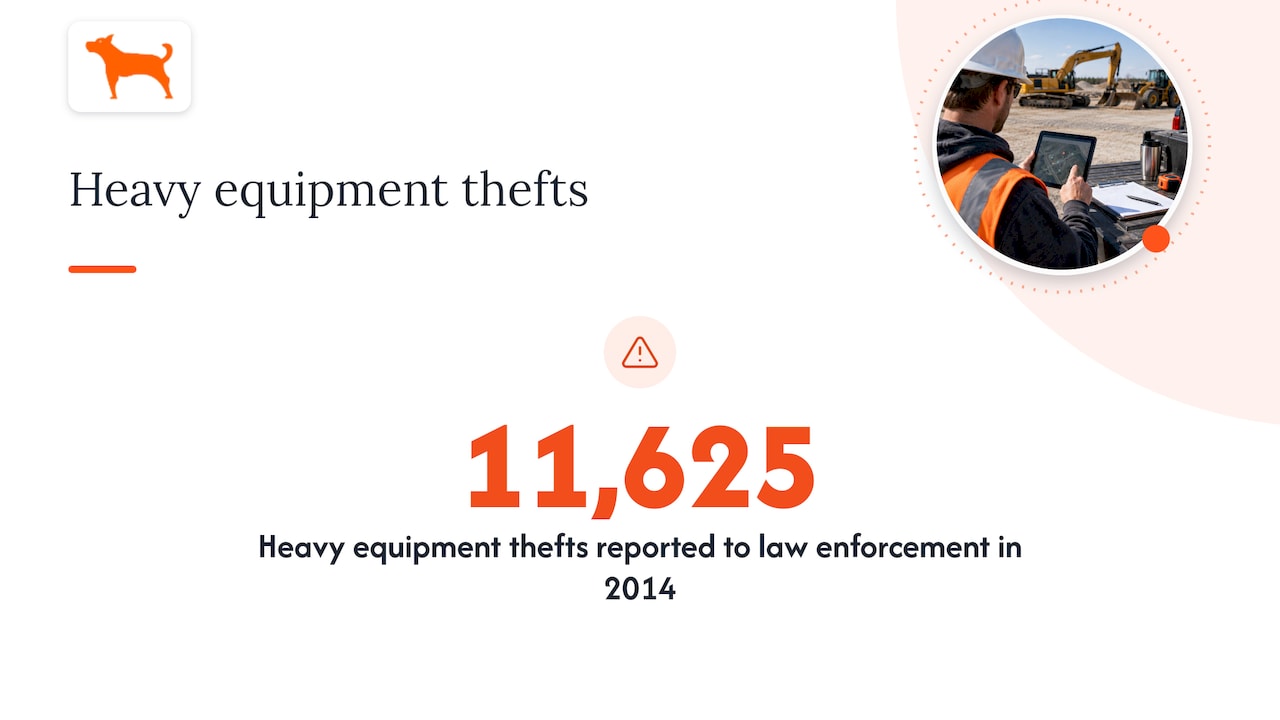
The National Insurance Crime Bureau (NICB) has reported what is at stake in the machine category. Its report on 2014 thefts counted 11,625 heavy equipment thefts reported to law enforcement, with Texas, North Carolina, Florida, South Carolina and Georgia leading by state. That is the most recent detailed public report in the NICB series, and it shows how widespread the problem is across the Sun Belt in particular.
Theft prevention and recovery
Theft is where most fleet owners start, so it deserves a clear plan rather than a gadget.
Set a geofence on every yard and site
Draw a boundary around your yard, each active job site and any storage lot. Set alerts so that a machine leaving the boundary outside working hours sends a push notification to the people who can act on it. The value is time: a theft noticed at 2 a.m. is a theft you can report while the machine is still within reach.
Know the normal pattern
An alert only helps if you know what is unusual. Review a week of trip history for each machine so you know when it normally moves and where it normally sits. A loader that travels at 11 p.m. on a Sunday stands out against a pattern of weekday daylight work.
Hide the tracker and track the trailer
Place the tracker where a thief would not look first, and track the trailers and transport vehicles as well as the machines. A stolen machine usually travels on a trailer.
Act with the data and with law enforcement
When an alert fires, check the live location and the trip history, then call the police and give them the live position and the machine’s serial number. Do not approach the machine yourself. The location data is what speeds up the report.
A caution on shortcuts: Bluetooth item-finder tags depend on nearby phones to relay their location. They suit a tool crib or a toolbox, but outdoors on a remote site they leave you without a live position. A cellular GPS tracker reports on its own.
Using tracking data to cut idle time and fuel
Theft is occasional. Idling happens every day. Construction Executive reports that telematics monitoring engine activity can flag machines with unusually high idle times, and that comparing patterns across similar machines reveals coordination problems, such as dump trucks waiting on a single loader. Those problems can often be fixed by adjusting the loading schedule. The same article notes that reviewing GPS routes helps cut unnecessary travel and fuel costs.
A practical routine looks like this:
- Pick a baseline period. Two to four weeks of normal work is enough to see typical idle time per machine.
- Compare like with like. Compare one excavator against another excavator, not against a skid steer.
- Look for the outliers. A machine idling far more than its peers points to scheduling, operator habits or a site layout problem.
- Change one thing and re-measure. Move a loading sequence or retrain a crew, then check whether idle time falls.
Idle time tracking and trip reports in the Moto Watchdog app give you these figures without a spreadsheet exercise. Mileage reporting also simplifies the records a business needs for reporting.
Maintenance based on actual use
Calendar-based service intervals ignore how hard a machine worked. Construction Executive’s reporting on fleet data points out that usage data lets teams schedule service on actual use rather than calendar intervals, and that tracking repeated repairs and downtime helps decide when a machine is no longer worth keeping.
With maintenance reminders in the app, you set a service alert against your own interval and receive a notification when it comes due. A machine that sat idle for a month does not get serviced early, and one that ran double shifts does not get serviced late.
Benchmarks that make the data useful
The same Construction Executive article stresses that collecting data is only the first step. It recommends setting performance benchmarks such as fuel per operating hour, average idle time, maintenance cost per machine and utilization rate, then reviewing them over time and connecting them to financial decisions. A machine with low utilization and high maintenance cost can be cheaper to rent than to own.
A simple starting table for your own fleet:
| Benchmark | What it tells you | How often to review |
|---|---|---|
| Idle time per machine | Wasted fuel and wear | Weekly |
| Utilization rate | Whether the machine earns its place | Monthly |
| Maintenance cost per machine | When repair costs outrun value | Quarterly |
| Miles or trips per vehicle | Hauling and fuel load | Monthly |
Tracking for rental fleets and customer disputes
If you rent out heavy equipment, tracking protects the contract as well as the machine. Three situations come up repeatedly.
Where is it? A unit that left the yard on Monday should be on the site named in the contract. A geofence around the permitted location alerts you if it goes elsewhere.
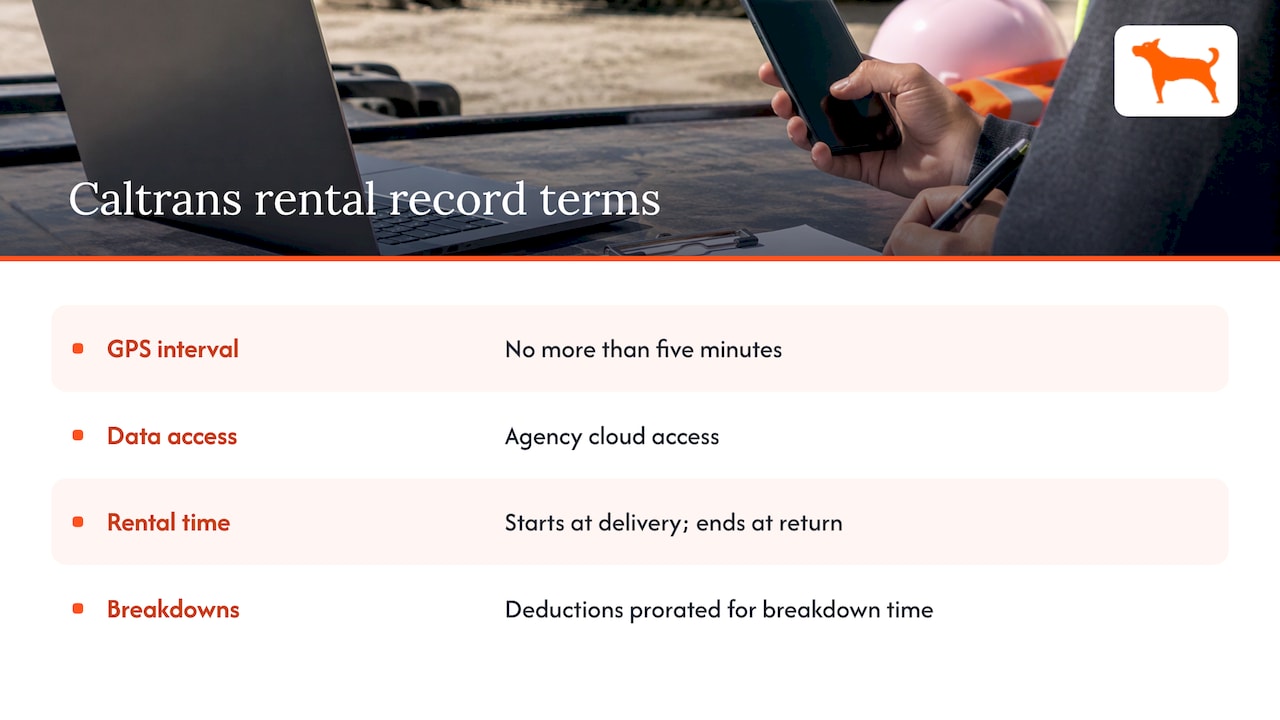
How long did it really run? Disputes about rental time are easier to settle with a location and movement record than with memory. Public buyers already expect this. The California Department of Transportation’s standard terms for rental equipment require GPS that records run time and location, with dates and times at no more than five-minute intervals, and give the agency cloud access to that data. The same terms start rental time at delivery, end it at return and prorate deductions for breakdown time. Even if you never bid on public work, that is a useful model for what a defensible record looks like.
Who moved it? Trip history shows whether a machine traveled between sites without authorization, which helps you enforce terms on territory and use.
Because Moto Watchdog supports unlimited vehicles and users on one dashboard, a dispatcher, a yard manager and an owner can each look at the same fleet view without separate logins to buy.
What to consider before you choose a tracker
Use these criteria to compare options for your fleet.
Total cost over the life of the machine
Add up hardware, activation, data plan and add-ons, over three to five years. A low sticker price with a monthly fee often costs more than a higher one-time price. Moto Watchdog is a one-off purchase from $124.99, with no monthly fees, no activation fees and no add-ons for the full feature set.
Coverage
Heavy equipment works in quarries, rural highway projects and remote sites. Check that the tracker’s data coverage reaches where you work. Moto Watchdog includes lifetime 4G data and global coverage.
Battery life and placement
Trailers, containers and attachments often have no power source. Long battery life lets a tracker report for extended periods without service. Moto Watchdog devices are built for long battery life.
Alerts you can tune
Too many alerts are ignored, too few miss the event. Look for geofences you can shape to each site and push notifications you can send to the right people.
Fleet scale and access
A system that charges per user or per device makes growth costly. Look for one dashboard that handles many devices and many users, as well as a mobile app for the field. Businesses that want to connect tracking data to their own software can also ask about API access on the business page.
Setup and support
A tracker that takes a day to configure often stays in a drawer. Easy setup and fast replies matter. Moto Watchdog replies to sales and support questions the same day, without a sales sequence.
A rollout plan for a mixed fleet
- List your assets by replacement cost and theft exposure. Start with the top third.
- Place trackers on machines and on the trailers that move them.
- Draw geofences for the yard and each active site, and set after-hours alerts.
- Assign alert recipients by site, so a single person is not the bottleneck.
- Run a baseline for two to four weeks, then set idle and utilization benchmarks.
- Set maintenance reminders by hours or mileage on your own schedule.
- Review monthly and extend tracking to the rest of the yard.
Why we build trackers without subscriptions
We started from a plain observation: a tracker is a one-time tool, so it should be a one-time cost. A fleet of twenty machines with a monthly fee on each one is a bill that never stops, and it grows every time you buy equipment.
So Moto Watchdog devices come with lifetime 4G data, global coverage and the full feature set. There are no activation fees and no add-ons. Geofencing alerts, mileage tracking, idle time and maintenance reminders all sit in the same free app, and one dashboard handles unlimited vehicles and users.
More than 1,000 businesses rely on our accuracy, and we want contractors and rental yards to be able to put a tracker on every asset worth protecting, not only the biggest ones. Fleet managers move from reacting to theft and breakdowns to making decisions from data. That is the change we care about.
Louis
Put a tracker on your first machines
If you are ready to start, Moto Watchdog trackers begin at $124.99 as a one-time purchase, with lifetime 4G data included and no monthly fees. Start with the machines and trailers most exposed to theft, then add the rest of the yard as you set your benchmarks.
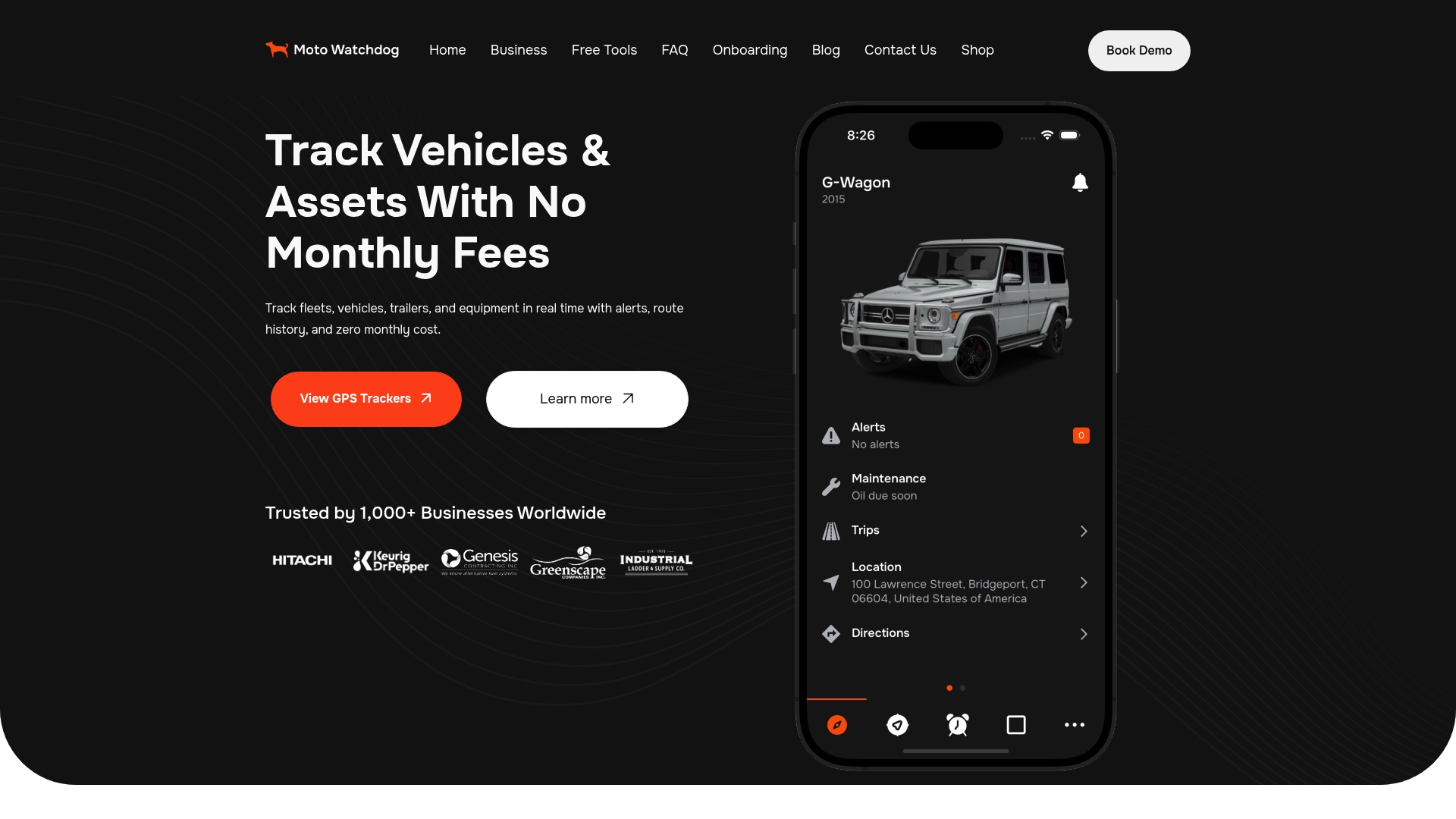
You manage the whole fleet from the free mobile app: live location, geofence alerts, trip and mileage reports, idle time and maintenance reminders.
FAQ
How much does heavy equipment GPS tracking cost?
It depends on the pricing model. Many systems charge a device price plus a monthly or annual service fee. Moto Watchdog trackers start at $124.99 as a one-time purchase, with no monthly fees and lifetime 4G data included, so the cost per machine stays fixed as your fleet grows.
Can I track construction equipment that has no power source?
Yes. Trailers, generators, light towers and containers often have no ignition or constant power. A tracker with long battery life reports their position without being wired in, and you can set a geofence to alert you if they leave the site.
Can AirTags track heavy equipment?
They are a poor fit. Bluetooth tags rely on nearby phones to relay their position, so on remote job sites there may be none to help. A cellular GPS tracker reports on its own, which is what outdoor equipment and rental units need.
Does tracking help with equipment theft recovery?
It gives you a live position and a trip history within minutes of an alert. Give both to law enforcement along with the machine’s serial number, and let them handle the recovery. A geofence alert shortens the time between the theft and the report.
How many machines can I manage on one account?
Moto Watchdog supports unlimited vehicles and users on one dashboard, and you can manage them from the mobile app.

