How to start saving money
Lorem ipsum dolor sit amet, consectetur adipiscing elit lobortis arcu enim urna adipiscing praesent velit viverra sit semper lorem eu cursus vel hendrerit elementum morbi curabitur etiam nibh justo, lorem aliquet donec sed sit mi dignissim at ante massa mattis.
- Neque sodales ut etiam sit amet nisl purus non tellus orci ac auctor
- Adipiscing elit ut aliquam purus sit amet viverra suspendisse potent
- Mauris commodo quis imperdiet massa tincidunt nunc pulvinar
- Excepteur sint occaecat cupidatat non proident sunt in culpa qui officia
Why it is important to start saving
Vitae congue eu consequat ac felis placerat vestibulum lectus mauris ultrices cursus sit amet dictum sit amet justo donec enim diam porttitor lacus luctus accumsan tortor posuere praesent tristique magna sit amet purus gravida quis blandit turpis.

How much money should I save?
At risus viverra adipiscing at in tellus integer feugiat nisl pretium fusce id velit ut tortor sagittis orci a scelerisque purus semper eget at lectus urna duis convallis. porta nibh venenatis cras sed felis eget neque laoreet suspendisse interdum consectetur libero id faucibus nisl donec pretium vulputate sapien nec sagittis aliquam nunc lobortis mattis aliquam faucibus purus in.
- Neque sodales ut etiam sit amet nisl purus non tellus orci ac auctor
- Adipiscing elit ut aliquam purus sit amet viverra suspendisse potenti
- Mauris commodo quis imperdiet massa tincidunt nunc pulvinar
- Adipiscing elit ut aliquam purus sit amet viverra suspendisse potenti
What percentege of my income should go to savings?
Nisi quis eleifend quam adipiscing vitae aliquet bibendum enim facilisis gravida neque. Velit euismod in pellentesque massa placerat volutpat lacus laoreet non curabitur gravida odio aenean sed adipiscing diam donec adipiscing tristique risus. amet est placerat in egestas erat imperdiet sed euismod nisi.
“Nisi quis eleifend quam adipiscing vitae aliquet bibendum enim facilisis gravida neque velit euismod in pellentesque”
Do you have any comments? Share them with us on social media
Eget lorem dolor sed viverra ipsum nunc aliquet bibendum felis donec et odio pellentesque diam volutpat commodo sed egestas aliquam sem fringilla ut morbi tincidunt augue interdum velit euismod eu tincidunt tortor aliquam nulla facilisi aenean sed adipiscing diam donec adipiscing ut lectus arcu bibendum at varius vel pharetra nibh venenatis cras sed felis eget.
The most reliable way to run GPS tracking through winter combines cold-rated battery chemistry (or oversized capacity), a mounting location that keeps the device warmer than ambient air, and a reporting interval set conservatively for subzero conditions. Moto Watchdog offers subscription-free trackers built with this kind of runtime margin in mind. Before the first hard freeze, check your device’s cold-rating, confirm battery capacity against your reporting schedule, and run an in-situ cold test.
TL;DR:
- Battery chemistry options like Li-SOCl2 and LiFePO₄ are essential for maintaining performance in severe cold, with oversizing capacity by 50% to 200% recommended.
- Devices should be rated for at least negative 40 degrees Fahrenheit and mounted where they can stay warmer than ambient air for reliable operation in winter.
- Cold weather significantly reduces battery life and affects signal acquisition, making testing and adjusting reporting intervals crucial before deployment.
- Enclosures must have high IP ratings and proper sealing, with routine checks to prevent moisture ingress and ice buildup that can impair electronics and GPS signals.
- Hardwiring assets to vehicle power or using larger, cold-rated batteries helps ensure continuous, reliable GPS tracking during extended offline periods in winter conditions.
Table of Contents
- Why Cold Breaks Trackers: Batteries, Voltage Sag, and Buffers
- How to Choose a GPS Tracker for Winter: What the Spec Sheet Should Say
- Installing and Running a Tracker Through Winter Without Losing Data
- Does Cold Weather Affect GPS Signal Accuracy?
- What Cold-Weather Deployments Actually Look Like
- Protecting the Enclosure From Ice, Snow, and Moisture
- Auxiliary Power and Heating: When Do You Need Them?
- Managing Power When Temperatures Swing Up and Down
- What the Industry Gets Wrong About Cold-Weather Tracking
- Get Your Fleet Winter-Ready With Moto Watchdog
- Sources
- FAQ
Why Cold Breaks Trackers: Batteries, Voltage Sag, and Buffers
Cold weather doesn’t just slow a GPS tracker down. It attacks the battery chemistry directly. Below freezing, lithium cells deliver noticeably less usable capacity, and voltage sags hard during transmission bursts, which means a tracker rated for months of runtime in mild weather can fall far short once winter hits.
Here’s the mechanism. Internal resistance inside a lithium cell rises sharply as temperature drops, and that resistance spikes further right when the modem keys up to send a location ping. Engineering analysis shows internal resistance can increase substantially at negative 20 degrees Celsius, and that spike can push voltage below the cutoff a device needs to stay powered. The result is a brownout. The tracker shuts down mid-transmission, even though the battery gauge still shows charge remaining.
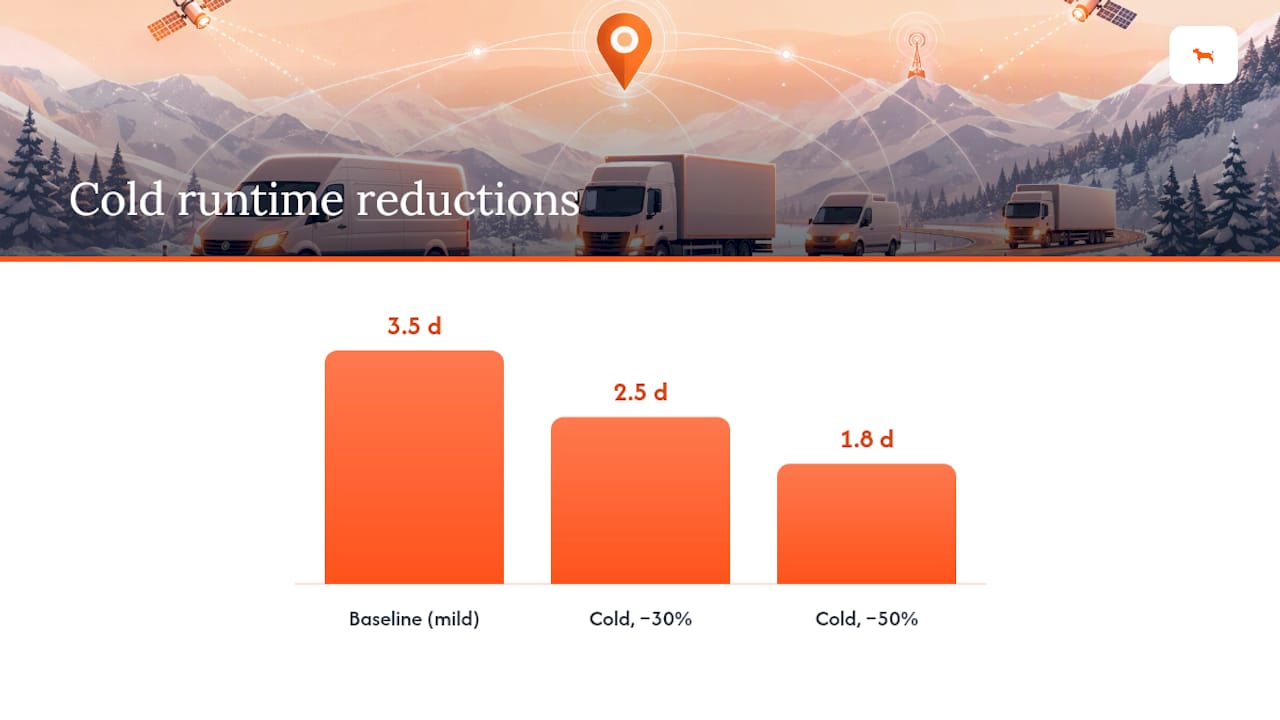
Reporting frequency multiplies the problem. Cold air also slows GPS signal acquisition, so the device burns more energy per fix just to lock onto satellites. Field-testing shows a 3,000 mAh tracker reporting every five minutes lasts only three to four days, and cold weather combined with weak signal can cut that runtime another 30% to 50%.
There’s a data-integrity risk hiding underneath all of this. Most consumer-grade trackers store unsent location points locally when signal drops, then forward them once connectivity returns. Those buffers are typically sized for hours of outage, not weeks, and in extended offline periods the buffer fills up and starts overwriting itself. From the operator’s chair, the device just goes silent. There’s no alert, no warning. The location history simply disappears.
Hardware engineers address these failure points with a handful of proven fixes:
- Oversized primary cells that carry 50% to 200% more capacity than the “advertised” runtime requires
- Li-SOCl₂ (lithium thionyl chloride) cells for multi-year deployments in extreme cold, often paired with a supercapacitor
- LiFePO₄ chemistry where rechargeable operation is needed, since it holds capacity better below negative 10 degrees Celsius than standard lithium-ion
- Supercapacitors that absorb the current spike during a transmission burst so the battery only has to supply a slow, steady trickle
- “Cold mode” firmware that widens reporting intervals automatically once internal temperature sensors detect a hard freeze
Statistic to remember: a device that shows “up to 12 months” of battery life on the box is almost always measuring a stationary tracker sending one report a day in mild, room-temperature conditions. Moving vehicles, frequent reporting, and winter temperatures can shrink that number to a fraction of the advertised figure.
How to Choose a GPS Tracker for Winter: What the Spec Sheet Should Say
Picking a cold-weather GPS locator comes down to reading the datasheet correctly, not trusting the marketing copy on the box. Four fields matter more than any others.
- Minimum operating temperature. This is the manufacturer’s actual cold rating, not the storage temperature. A device rated to negative 4 degrees Fahrenheit will behave very differently than one rated to negative 40.
- Battery chemistry. Standard lithium-ion loses the most capacity in the cold. Li-SOCl2 spiral wound cells, often paired with a hybrid pulse capacitor, are the recommended power solution for multi-year operation in extreme cold, while LiFePO₄ is the better rechargeable option when the device needs periodic charging.
- Capacity versus reporting interval. Scale battery size to how often the device reports, not the other way around. A five-minute reporting interval demands dramatically more capacity than an hourly one, and winter conditions eat into that margin further.
- Buffer capacity. Match the device’s local storage to your worst-case offline window. If a trailer or piece of equipment might sit without signal for a week during a storm, a buffer built for a few hours of outage will overwrite itself before service resumes.
Ruggedness matters just as much as electronics. An IP67 or IP68 rating tells you the enclosure resists dust and water intrusion, which becomes critical once snowmelt and road salt get involved. Look, too, for configurable update intervals and motion-based wake, both of which let the device sleep during long idle stretches and wake fully only when the vehicle or asset actually moves.
Pro Tip: Don’t trust the headline runtime number on the box. Test the exact device, at the exact reporting interval you plan to use, in the coldest conditions you expect to encounter, before you deploy a full fleet. A weekend of real-world testing catches problems no spec sheet will warn you about.
Designers who work on cold-climate deployments consistently recommend overspecing battery capacity by 50% to 200% beyond what mild-weather math suggests. It costs more upfront. It also means far fewer service calls once the temperature drops.
Installing and Running a Tracker Through Winter Without Losing Data
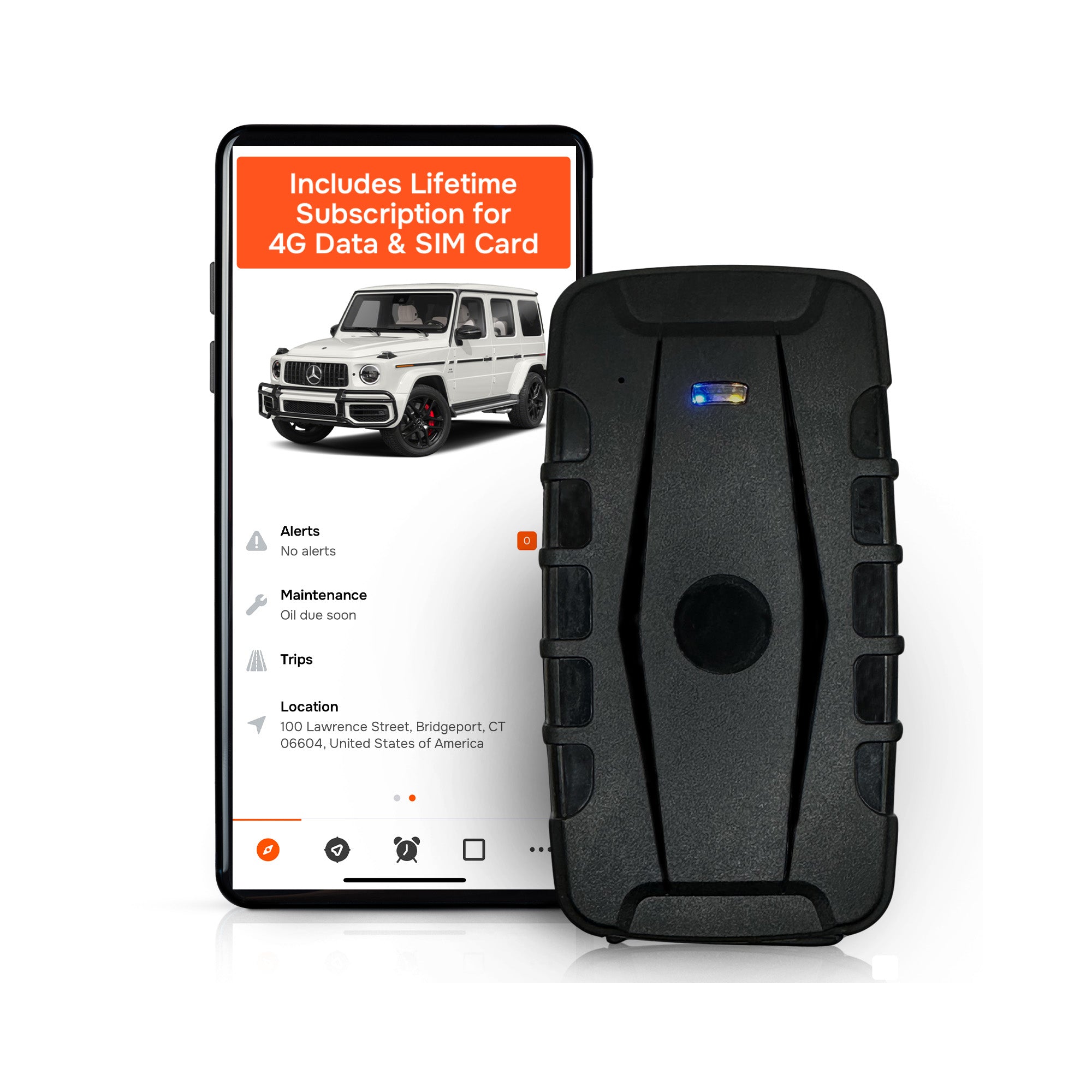
Where you mount the device matters almost as much as what’s inside it. A tracker installed against a cold metal panel with no thermal mass nearby will run colder than the surrounding air, while one tucked into a cabin void or wheel well with some engine warmth nearby stays several degrees ahead. The goal is a sheltered spot with a clear sky view for GPS signal, away from direct engine heat that could cook the electronics on the other end of the spectrum.
Run through this checklist before the first cold snap:
- Fully charge the device and confirm it holds charge overnight in a cold garage or unheated space.
- Test the buffer by disconnecting cellular signal deliberately and confirming how many hours or days of data the device retains before overwriting.
- Update firmware, since manufacturers frequently patch cold-mode power management between seasons.
- Run an in-situ test at your planned reporting interval for at least 48 hours before relying on the device for a real deployment.
- Widen the reporting interval for stationary assets and enable motion-based wake so the tracker only reports frequently when something is actually moving.
Solar-assisted trackers deserve a specific warning. Short winter days and snow cover on panels mean solar charging becomes unreliable exactly when you need it most, so size the battery for full autonomy through the darkest stretch of the season rather than counting on solar top-up.
Pro Tip: If a device suddenly stops reporting during a cold spell but shows a full charge in its last transmission, suspect voltage sag before you suspect theft or tampering. Bring the unit somewhere warm, let it sit for an hour, and check whether it reconnects on its own.
Does Cold Weather Affect GPS Signal Accuracy?
Cold air itself has a modest effect on GPS accuracy, but it’s rarely the dominant problem. Temperature changes alter atmospheric density slightly, which can shift signal timing by a small margin, and heavy snow cover can attenuate signal strength if it accumulates directly on an antenna. Neither of those effects typically moves a tracker’s reported position by more than a few yards.
The real accuracy problem in winter is indirect. Cold slows the chemical reactions inside GPS chipsets just enough to lengthen the “time to first fix,” the interval a device needs to lock onto enough satellites for an accurate position. A tracker that normally acquires a fix in 15 seconds might take a minute or more in deep cold, and if the battery is already struggling with voltage sag, that extended acquisition window draws down charge faster than expected.
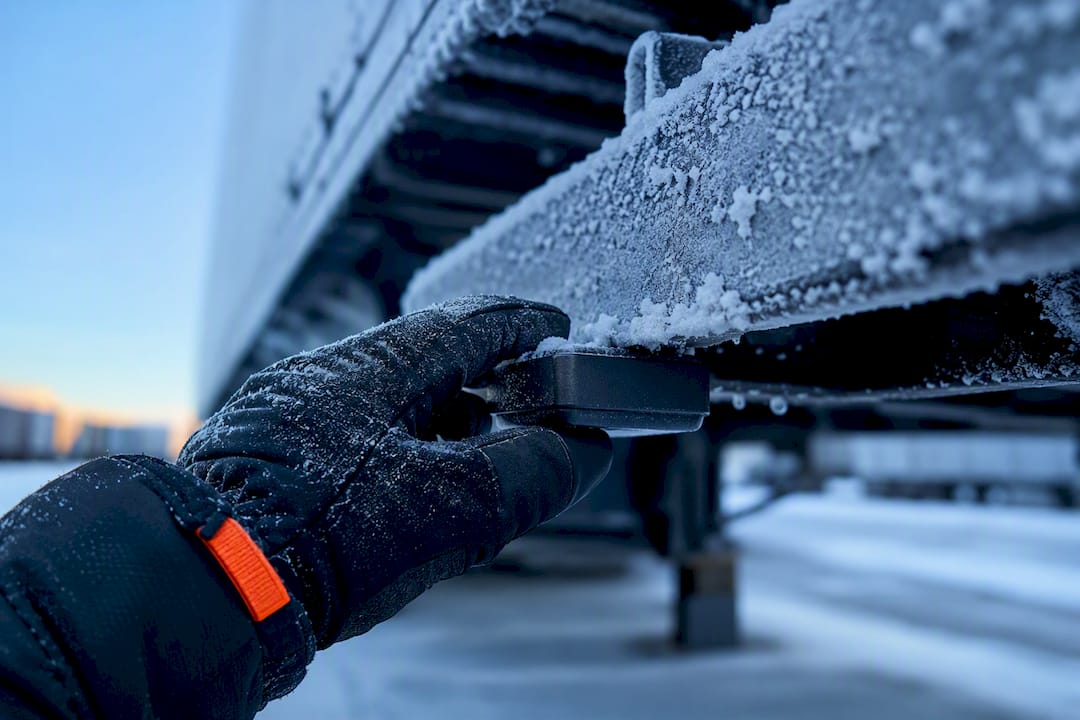
Metal surfaces compound the issue. A tracker mounted flush against a steel trailer frame or tucked deep inside a wheel well can lose sky view to snow buildup or ice accumulation, which degrades signal quality independent of temperature. The fix is straightforward: mount with a clear line to the sky wherever the vehicle or asset design allows it, and check the mounting point after the first heavy snowfall of the season to confirm nothing has drifted or iced over.
What Cold-Weather Deployments Actually Look Like
Contractors running seasonal equipment offer the clearest real-world lesson in cold-weather tracking. A skid steer or generator that sits idle on a job site for weeks during winter shutdown needs a tracker that survives long stretches without a charge and without a warm cab nearby. Fleet operators managing plow trucks face the opposite challenge: constant movement, frequent reporting, and hours of engine vibration in subzero temperatures, all of which stress the battery and mounting hardware differently than a stationary asset would.
Unattended trailers sitting in a yard through a Midwest winter represent one of the toughest cases, since there’s no vehicle electrical system to draw from and no predictable schedule for when the trailer moves again. That’s exactly the scenario where buffer capacity and battery overspec matter most, because a device that goes quiet for two weeks has no way to signal whether it failed or simply had nothing to report.
The consistent theme across these cases: failures cluster around the same few points. A battery that measured full at installation but wasn’t rated for the temperature it actually encountered. A buffer sized for a weekend outage that met a two week one instead. A mounting spot that seemed sheltered in October and turned out to be buried in a snow bank by January. None of these are exotic failure modes. They’re predictable, and every one of them is preventable with the checklist covered earlier in this guide.
Protecting the Enclosure From Ice, Snow, and Moisture
A tracker’s electronics can be perfectly specced for cold and still fail if water gets inside the housing. Freeze-thaw cycles are the real enemy here, not the cold itself. Moisture that seeps into a seam during a warm afternoon can freeze overnight, expand, and crack a seal that held fine all summer.
Start with the IP rating on the datasheet. IP67 means the enclosure survives temporary submersion; IP68 goes further and holds up under sustained exposure. Either rating matters more in winter than most buyers assume, since road spray, slush, and packed snow around a wheel well create conditions closer to submersion than to simple rain.
A few practical habits go a long way toward keeping moisture out:
- Check gaskets and seals each fall before the first freeze, since UV exposure and heat over summer can dry out rubber seals.
- Avoid mounting directly in the wheel well spray path if an alternative sheltered spot exists nearby.
- Clear accumulated snow or ice from around the device periodically rather than letting it pack in and melt against the housing repeatedly.
- Point any exposed connector or port downward, so gravity sheds water instead of collecting it.
Ice buildup on an external antenna, where applicable, deserves a quick visual check after major storms. A half inch of ice rarely blocks signal completely, but it can degrade the fix quality enough to matter for precise geofencing.
Auxiliary Power and Heating: When Do You Need Them?
Most GPS trackers don’t need an active heating element. The battery chemistry and firmware “cold mode” adjustments covered earlier handle the vast majority of winter deployments without adding a heater to the design. Heating elements draw meaningful power themselves, which can create a net loss in extreme cold if the heater consumes more energy than it saves in restored battery efficiency.
Auxiliary power sources matter more than heating for most fleet and asset use cases. A hardwired connection to a vehicle’s electrical system, for instance, sidesteps the entire cold-battery problem for vehicles that run regularly, since the tracker draws from the vehicle’s own power rather than relying solely on an internal cell. That approach works well for plow trucks, work vans, and other vehicles that see daily use through the winter months, and it’s worth reading through a fleet hardwiring guide if hardwiring fits your fleet’s setup.
Where hardwiring isn’t an option, such as an unattended trailer or a piece of stored equipment, the answer is almost always a larger, cold-rated battery rather than an active heater. A Li-SOCl₂ cell paired with a supercapacitor, the combination the extreme-cold battery industry treats as standard for multi-year deployments, handles the cold without adding a power-hungry heating circuit to the equation. Save active heating for genuinely extreme applications, like remote sensor stations in arctic conditions, where no other option keeps the electronics within their operating range.
Managing Power When Temperatures Swing Up and Down
Fluctuating winter temperatures are harder on a battery than steady cold. A device that cycles between a heated garage overnight and a subzero parking lot during the day puts more stress on internal chemistry than one that simply stays cold throughout. Each freeze-thaw cycle causes minor expansion and contraction inside the cell, and repeated cycling can accelerate capacity loss over a season faster than constant cold alone.
The practical response is to build in margin rather than try to predict every swing. Set reporting intervals conservatively rather than aggressively, since a device reporting once an hour instead of every five minutes has far more room to absorb a bad day of extreme cold without running out of charge. Enable motion-based wake wherever the firmware supports it, so the tracker draws minimal power while an asset sits idle and only ramps up reporting when it actually starts moving.
Temperature swings also make consistent testing more valuable than a single cold-weather trial. A device that performs fine during a mild 20 degree Fahrenheit day might behave very differently during a polar vortex event a week later. Check battery voltage readings periodically through the season if your tracker’s app or dashboard exposes that data, rather than assuming a device that worked in December will still perform the same way in February. A subscription-free tracking setup makes this kind of ongoing monitoring easier to justify, since there’s no recurring cost pressure pushing you toward the cheapest device on the shelf instead of the most reliable one.
What the Industry Gets Wrong About Cold-Weather Tracking
Most buying guides treat cold-weather GPS tracking as a battery problem alone, and that’s an incomplete picture. The battery matters enormously, but the failures Moto Watchdog hears about most often trace back to mismatches between reporting interval, mounting location, and buffer capacity working against each other rather than any single component failing outright.
A subscription-free model and long battery life design reflect a deployment philosophy built around exactly this kind of margin. Trailers and equipment that sit unattended through winter without access to external power are precisely the use case where oversized capacity and conservative reporting intervals matter most, and it’s the scenario contractors with seasonal vehicles run into every year once temperatures drop. Detailed mileage tracking and geofencing alerts only deliver value if the device stays powered long enough to generate that data in the first place, which is why the engineering choices behind battery life matter as much as the features layered on top.
Many businesses rely on subscription-free GPS tracking for accuracy, and cold-weather performance is a common reason fleet managers evaluate options before winter sets in. If you’re planning a deployment across trailers, contractor vehicles, or equipment that won’t see a warm garage all season, reach out for a specific recommendation rather than guessing at capacity.
— Louis
Get Your Fleet Winter-Ready With Moto Watchdog
Subscription-free GPS trackers remove recurring costs that can make fleet managers hesitate to equip every vehicle and trailer with a tracker, which matters most in winter when you need units on assets sitting idle in the yard, not just trucks running daily routes. Trackers built with expanded battery capacity improve cold-weather performance, and some devices include lifetime cellular data with no monthly fee attached.
If you’re outfitting a fleet or protecting unattended trailers through the cold months, start by checking device specs against your own reporting needs on the Moto Watchdog trackers page. Contractors managing vehicles that only see seasonal use should look at the contractor vehicle tracking page for guidance suited to that use case, and fleet operations that need broader system integration can review API access for business accounts. Same-day replies mean you’ll get a straight answer about which device fits your winter deployment, not a sales sequence.
Sources
- GPS Tracker Battery Life Explained | Mo’ Saci Science
- Ahotech
- GPS Tracker Voltage Sag in Cold Weather Failure Analysis and Solutions
- How Long Does a GPS Tracker Battery Last? Fleet Management Guide
FAQ
What Battery Type Is Best for GPS Trackers in Extreme Cold?
Li-SOCl2 (lithium thionyl chloride) cells handle extreme cold better than standard lithium-ion, and pairing them with a supercapacitor for pulse power is the recommended approach for multi-year deployments. LiFePO₄ is a solid rechargeable alternative when the device needs periodic charging rather than a sealed primary cell.
How Much Does Cold Weather Reduce GPS Tracker Battery Life?
Cold and weak signal together can cut typical battery runtime by 30% to 50% compared to the same device operating in moderate temperatures. The exact drop depends heavily on reporting interval, since more frequent updates multiply the effect.
Can I Use a Solar-Powered GPS Tracker in Winter?
Solar charging becomes unreliable in winter due to shorter days and snow cover on panels, so it shouldn’t be your primary power plan for a cold-season deployment. Size the battery for full autonomy through the darkest stretch of winter and treat solar as a bonus top-up rather than a dependable source.
Does Moto Watchdog Offer Trackers Suited for Cold Climates?
Moto Watchdog trackers are built with long battery life and subscription-free operation, which supports the kind of capacity margin cold-weather deployments need. Pricing for Moto Watchdog trackers starts from $124.99 one time, with no monthly fees added afterward.
Why Did My Tracker Stop Reporting During a Cold Snap?
The most common cause is voltage sag, where rising internal resistance in cold temperatures drops output voltage below the device’s cutoff during a transmission burst, even with charge remaining in the battery. Bring the unit somewhere warm for an hour and check whether it reconnects before assuming a hardware failure or tampering.