
How to start saving money
Lorem ipsum dolor sit amet, consectetur adipiscing elit lobortis arcu enim urna adipiscing praesent velit viverra sit semper lorem eu cursus vel hendrerit elementum morbi curabitur etiam nibh justo, lorem aliquet donec sed sit mi dignissim at ante massa mattis.
- Neque sodales ut etiam sit amet nisl purus non tellus orci ac auctor
- Adipiscing elit ut aliquam purus sit amet viverra suspendisse potent
- Mauris commodo quis imperdiet massa tincidunt nunc pulvinar
- Excepteur sint occaecat cupidatat non proident sunt in culpa qui officia
Why it is important to start saving
Vitae congue eu consequat ac felis placerat vestibulum lectus mauris ultrices cursus sit amet dictum sit amet justo donec enim diam porttitor lacus luctus accumsan tortor posuere praesent tristique magna sit amet purus gravida quis blandit turpis.

How much money should I save?
At risus viverra adipiscing at in tellus integer feugiat nisl pretium fusce id velit ut tortor sagittis orci a scelerisque purus semper eget at lectus urna duis convallis. porta nibh venenatis cras sed felis eget neque laoreet suspendisse interdum consectetur libero id faucibus nisl donec pretium vulputate sapien nec sagittis aliquam nunc lobortis mattis aliquam faucibus purus in.
- Neque sodales ut etiam sit amet nisl purus non tellus orci ac auctor
- Adipiscing elit ut aliquam purus sit amet viverra suspendisse potenti
- Mauris commodo quis imperdiet massa tincidunt nunc pulvinar
- Adipiscing elit ut aliquam purus sit amet viverra suspendisse potenti
What percentege of my income should go to savings?
Nisi quis eleifend quam adipiscing vitae aliquet bibendum enim facilisis gravida neque. Velit euismod in pellentesque massa placerat volutpat lacus laoreet non curabitur gravida odio aenean sed adipiscing diam donec adipiscing tristique risus. amet est placerat in egestas erat imperdiet sed euismod nisi.
“Nisi quis eleifend quam adipiscing vitae aliquet bibendum enim facilisis gravida neque velit euismod in pellentesque”
Do you have any comments? Share them with us on social media
Eget lorem dolor sed viverra ipsum nunc aliquet bibendum felis donec et odio pellentesque diam volutpat commodo sed egestas aliquam sem fringilla ut morbi tincidunt augue interdum velit euismod eu tincidunt tortor aliquam nulla facilisi aenean sed adipiscing diam donec adipiscing ut lectus arcu bibendum at varius vel pharetra nibh venenatis cras sed felis eget.
Fleet tracking ROI is the measurable financial return a business earns from investing in GPS telematics systems relative to the total cost of deployment. The industry term is “telematics ROI,” and fleet managers use it to justify technology budgets with hard numbers. Fleet tracking ROI examples show returns of 300% to 500% in the first year, with high-performing fleets exceeding 800%. The typical payback period runs just 2 to 4 months. With 47% of fleets achieving positive ROI in under a year, the question is no longer whether tracking pays off. The question is which cost categories deliver the most savings for your specific operation.
1. How do fuel savings drive fleet tracking ROI?
Fuel savings represent the single largest ROI category in GPS telematics. Fuel savings account for 40–50% of total GPS tracking ROI, making them the most reliable place to start any financial justification. Fuel typically consumes 25–40% of a fleet’s total operating budget, so even modest percentage reductions produce significant dollar amounts.
Tracking systems generate fuel savings through three mechanisms: idle time reduction, route optimization, and driver behavior monitoring. A driver idling for 30 minutes per shift burns fuel with zero productive output. GPS systems flag that behavior in real time, and managers can address it directly. AI-powered route optimization takes this further. AI route optimization reduces fuel budgets by approximately 19.3%, which is nearly double what manual dispatching achieves.
Here is how the math works across fleet sizes:
- 5-vehicle fleet: Each vehicle spends $1,500 per month on fuel. A 12% reduction saves $180 per vehicle, or $900 per month fleet-wide.
- 10-vehicle fleet: Each vehicle spends $2,000 per month on fuel. A 12% reduction saves $240 per vehicle monthly, totaling $2,880 per month.
- 50-vehicle fleet: Each vehicle spends $2,000 per month on fuel. A 12% reduction saves $14,400 per month, or $172,800 annually.
Pro Tip: Track idle time by driver, not just by vehicle. Drivers who see their own idle reports reduce idle behavior faster than those who receive only fleet-wide summaries.
2. Maintenance and repair cost reductions: practical ROI examples
Preventive maintenance is the second-largest ROI driver in fleet telematics. Tracking systems monitor engine diagnostics, mileage intervals, and fault codes in real time, which shifts maintenance from reactive to scheduled. That shift prevents the expensive failures that come from deferred service.

Typical maintenance cost savings range from 10–25% for fleets that use tracking data to schedule service proactively. A mid-sized fleet of 20 vehicles spending $8,000 per month on maintenance and repairs saves $800 to $2,000 per month at that range. Over a year, that is $9,600 to $24,000 returned directly to the bottom line.
The most overlooked benefit is defect-to-work-order integration. When a driver reports a defect through a telematics platform, the system can automatically generate a work order and schedule the repair. This shortens the repair cycle and prevents a minor issue from becoming a major failure. A single avoided transmission replacement can save $4,000 to $8,000 on a commercial vehicle.
Key maintenance ROI behaviors that tracking enables:
- Scheduled oil and filter changes based on actual mileage rather than calendar estimates
- Tire pressure monitoring that prevents premature wear and blowouts
- Engine fault code alerts that flag issues before they cause roadside breakdowns
- Service interval tracking across the entire fleet from a single dashboard
Pro Tip: Set maintenance alerts at 90% of the service interval, not at 100%. That buffer gives your shop time to schedule the vehicle without disrupting operations.
3. Labor and productivity gains: real-world examples impacting fleet ROI
Labor costs are the most underestimated ROI category in fleet tracking. Fleet managers often focus on fuel and maintenance, but labor savings from verified hours, reduced overtime, and administrative efficiency frequently match or exceed those categories.
GPS tracking reduces overtime expenses by verifying when drivers actually start and end shifts. Fleet tracking reduces overtime by 10–15% by cross-referencing GPS timestamps with payroll records. For a fleet carrying $300,000 in annual overtime costs, a 12% reduction saves $36,000 per year. That single metric often covers the entire cost of a telematics subscription.
Time theft recovery adds another layer of savings. Without tracking, drivers can log hours they did not work, take extended breaks, or run personal errands on company time. GPS data creates an objective record that eliminates disputes and closes those gaps. Fleets that implement tracking consistently report a measurable drop in unverified time claims within the first 90 days.
Administrative efficiency compounds these gains. Automated mileage reporting, Hours of Service logs, and compliance documentation eliminate manual data entry. A fleet coordinator spending 10 hours per week on manual reporting can redirect that time to dispatching, customer service, or route planning. The productivity gain is real even when it does not appear as a line item on a savings report.
- Verify shift start and end times with GPS timestamps
- Cross-reference driver logs with actual vehicle movement data
- Automate mileage and Hours of Service reporting
- Use dispatch data to increase billable jobs per vehicle per day
- Reduce administrative overhead by eliminating manual log entry
4. Insurance premium discounts and accident cost reductions
Insurance savings are among the most defensible ROI metrics in fleet telematics. Insurance premium discounts typically range from 5–15% for fleets that can demonstrate verified risk mitigation through GPS data. Insurers respond to documented evidence of safe driving behavior, lower accident frequency, and faster incident response.
The accident cost reduction side of this equation is even more significant. AI dash cams and safety features can prevent up to 10 accidents per year, saving over $588,000 annually in combined costs. That figure includes vehicle damage, medical claims, legal fees, and lost productivity. A single prevented accident can pay for an entire year of telematics investment.
GPS data also resolves disputes faster. When a third party files a fraudulent or exaggerated claim, objective location and speed data from the tracking system provides a clear record. Fleets that use this data in claim disputes report significant reductions in settlement costs. The savings from even one successfully disputed claim can offset months of tracking costs.
Key insurance ROI metrics to document and share with your insurer:
- Driver behavior scores showing hard braking, speeding, and harsh cornering rates
- Incident response times supported by GPS timestamps
- Geofence compliance records demonstrating vehicles stay within authorized zones
- Year-over-year accident frequency trends tied to telematics deployment
Pro Tip: Maintain report-ready GPS data packages for your insurer at renewal time. Presenting organized data proactively positions your fleet as lower risk and strengthens your negotiating position on premiums.
5. Unauthorized vehicle use reduction and compliance improvements
Unauthorized vehicle use is a direct cost that most fleet managers underestimate until they start tracking it. GPS monitoring reduces unauthorized use by up to 60%, and the savings add up to approximately $500 per vehicle annually. For a 20-vehicle fleet, that is $10,000 per year recovered from a problem that was previously invisible.
The mechanism is straightforward. Geofencing alerts notify managers when a vehicle leaves an authorized zone outside of business hours. After-hours movement reports show exactly where vehicles traveled and for how long. Drivers who know their vehicles are tracked change their behavior quickly. The reduction in unauthorized use typically appears within the first 30 days of deployment.
Compliance cost reductions add another measurable ROI layer. Fleets operating under Department of Transportation regulations face fines for Hours of Service violations, incomplete inspection records, and missing maintenance documentation. Telematics systems automate these records, reducing audit preparation time and eliminating the fines that come from incomplete paperwork.
Compliance ROI categories worth tracking independently:
- Hours of Service violation fines avoided
- DVIR (Driver Vehicle Inspection Report) completion rates
- Audit preparation time reduced through automated record-keeping
- Geofence policy enforcement reducing fuel and wear from personal use
For fleet GPS data integration, connecting telematics data to your existing compliance and payroll systems multiplies these savings by eliminating duplicate data entry across platforms.
Key takeaways
Fleet tracking ROI is measurable, category-specific, and typically recovers the full investment within 2 to 4 months when managed actively.
| Point | Details |
|---|---|
| Fuel savings lead ROI | Fuel reductions of 10–19% represent 40–50% of total GPS tracking ROI. |
| Maintenance savings compound over time | Preventive maintenance cuts repair costs by 10–25% and prevents major failures. |
| Labor recovery is underestimated | Overtime reduction of 10–15% alone can save $36,000 annually on a mid-sized fleet. |
| Insurance data pays dividends | Documented GPS data supports 5–15% premium discounts and faster claim resolution. |
| Unauthorized use adds up fast | GPS monitoring saves approximately $500 per vehicle annually from unauthorized use. |
What I’ve learned from tracking ROI category by category
Most fleet managers make the same mistake when they first deploy telematics. They look at a single aggregate savings number, compare it to the monthly cost, and call it done. That approach misses most of the value and makes it nearly impossible to justify expanding the system or negotiating better insurance rates.
Track each ROI category as an independent KPI rather than lumping everything together. When fuel savings, maintenance reductions, labor recovery, and insurance discounts each have their own line in your reporting, you can see exactly where the system is performing and where it needs attention. You can also present those numbers to executives, insurers, and lenders in a format they trust.
The other thing I have seen consistently is that driver engagement determines whether the savings actually materialize. A telematics system that managers ignore after installation delivers a fraction of its potential. The fleets that hit 800% ROI are the ones where managers review driver behavior reports weekly, hold brief accountability conversations, and tie performance data to recognition or coaching. The technology creates the visibility. The management creates the savings.
For larger operations, 5-year NPV and discounted cash flow analyses give stakeholders a complete picture of long-term value. One documented case shows a 1.8-month payback and over 1,200% ROI over three years. Those numbers are achievable, but only when the system is used actively and the data is acted on.
— Louis
Motowatchdog GPS tracking built for real fleet ROI
Fleet managers who want to capture the savings described in this article need a tracking solution that delivers reliable data without adding a recurring monthly cost to the budget.
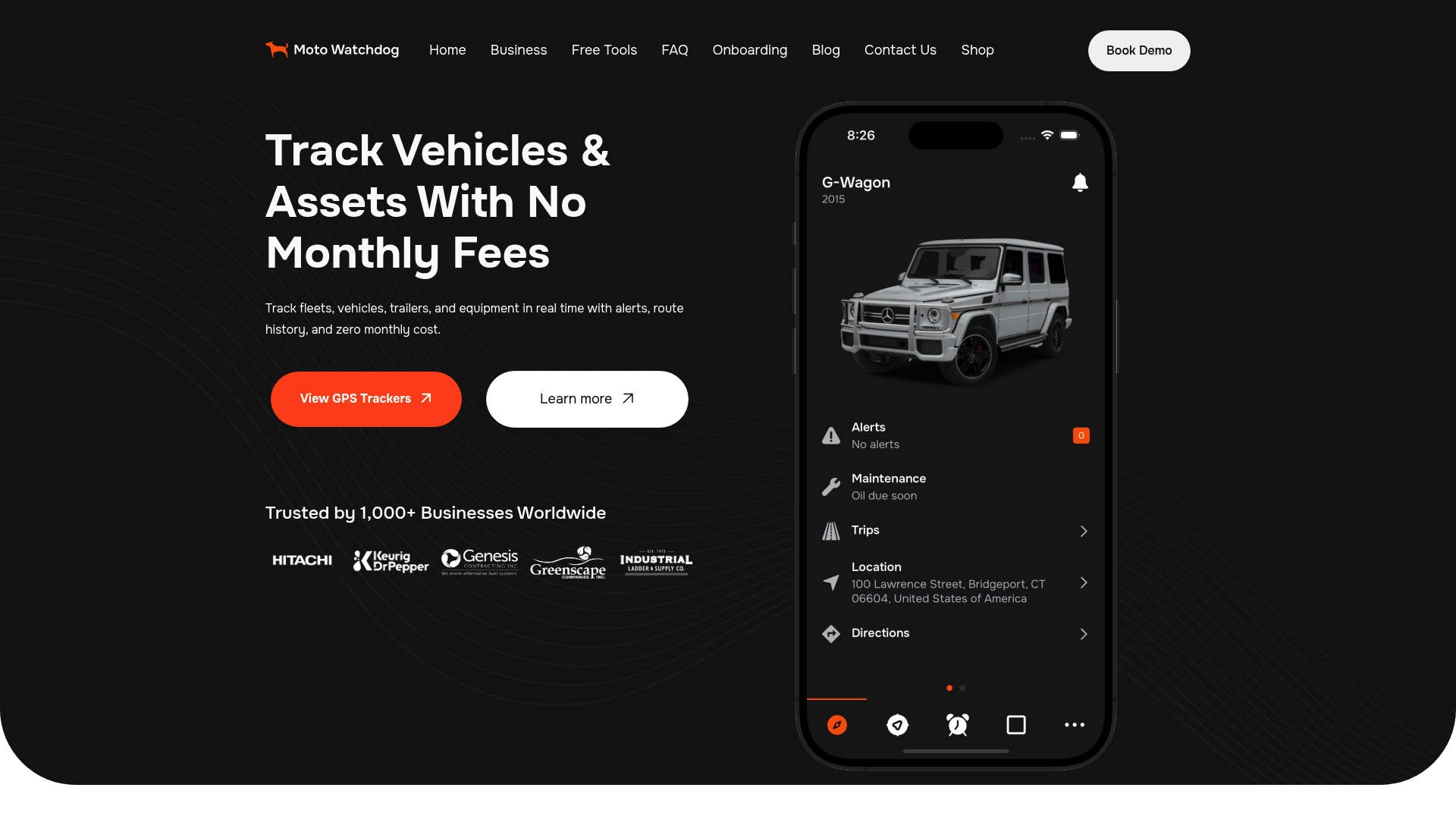
Motowatchdog provides subscription-free 4G GPS tracking built for businesses that need real-time vehicle visibility without ongoing fees. Over 1,000 businesses rely on Motowatchdog for geofencing alerts, detailed mileage reporting, and the driver behavior data that supports insurance discounts and labor accountability. For fleet managers building the ROI case for telematics, removing the subscription cost from the equation makes the payback period even shorter. If you manage a smaller operation, the small fleet tracking guide shows how to apply these ROI principles on a tighter budget.
FAQ
What is a realistic ROI for fleet GPS tracking?
Fleet tracking systems return 300% to 500% ROI in the first year, with high-performing fleets exceeding 800%. The typical payback period is 2 to 4 months.
Which cost category delivers the most fleet tracking ROI?
Fuel savings deliver the largest single share of GPS tracking ROI, representing 40–50% of total returns. Fuel reductions of 10–19% are typical across fleets that use idle monitoring and route optimization.
How do I calculate fleet tracking ROI for my fleet?
Track each savings category independently: fuel, maintenance, labor, insurance, and unauthorized use. Add the annual savings across all categories, subtract the total cost of the tracking system, and divide by that cost to get your ROI percentage.
Can small fleets achieve meaningful ROI from GPS tracking?
Yes. A 5-vehicle fleet spending $1,500 per vehicle monthly on fuel saves approximately $900 per month from a 12% fuel reduction alone. That figure typically exceeds the cost of a basic tracking deployment within the first month.
How does GPS data reduce insurance premiums?
Insurers grant discounts of 5–15% to fleets that provide documented evidence of safe driving behavior, lower accident frequency, and verified incident data. Presenting organized GPS reports at renewal strengthens the case for lower premiums.