How to start saving money
Lorem ipsum dolor sit amet, consectetur adipiscing elit lobortis arcu enim urna adipiscing praesent velit viverra sit semper lorem eu cursus vel hendrerit elementum morbi curabitur etiam nibh justo, lorem aliquet donec sed sit mi dignissim at ante massa mattis.
- Neque sodales ut etiam sit amet nisl purus non tellus orci ac auctor
- Adipiscing elit ut aliquam purus sit amet viverra suspendisse potent
- Mauris commodo quis imperdiet massa tincidunt nunc pulvinar
- Excepteur sint occaecat cupidatat non proident sunt in culpa qui officia
Why it is important to start saving
Vitae congue eu consequat ac felis placerat vestibulum lectus mauris ultrices cursus sit amet dictum sit amet justo donec enim diam porttitor lacus luctus accumsan tortor posuere praesent tristique magna sit amet purus gravida quis blandit turpis.

How much money should I save?
At risus viverra adipiscing at in tellus integer feugiat nisl pretium fusce id velit ut tortor sagittis orci a scelerisque purus semper eget at lectus urna duis convallis. porta nibh venenatis cras sed felis eget neque laoreet suspendisse interdum consectetur libero id faucibus nisl donec pretium vulputate sapien nec sagittis aliquam nunc lobortis mattis aliquam faucibus purus in.
- Neque sodales ut etiam sit amet nisl purus non tellus orci ac auctor
- Adipiscing elit ut aliquam purus sit amet viverra suspendisse potenti
- Mauris commodo quis imperdiet massa tincidunt nunc pulvinar
- Adipiscing elit ut aliquam purus sit amet viverra suspendisse potenti
What percentege of my income should go to savings?
Nisi quis eleifend quam adipiscing vitae aliquet bibendum enim facilisis gravida neque. Velit euismod in pellentesque massa placerat volutpat lacus laoreet non curabitur gravida odio aenean sed adipiscing diam donec adipiscing tristique risus. amet est placerat in egestas erat imperdiet sed euismod nisi.
“Nisi quis eleifend quam adipiscing vitae aliquet bibendum enim facilisis gravida neque velit euismod in pellentesque”
Do you have any comments? Share them with us on social media
Eget lorem dolor sed viverra ipsum nunc aliquet bibendum felis donec et odio pellentesque diam volutpat commodo sed egestas aliquam sem fringilla ut morbi tincidunt augue interdum velit euismod eu tincidunt tortor aliquam nulla facilisi aenean sed adipiscing diam donec adipiscing ut lectus arcu bibendum at varius vel pharetra nibh venenatis cras sed felis eget.
Field service vehicle tracking puts every truck, trailer and machine on one live map, so dispatchers send the closest crew, billing uses real mileage and equipment that leaves the yard is never out of sight. For a fleet or a heavy equipment rental company, the hardware is the easy part. The cost that stays with you is the recurring fee per unit. Moto Watchdog trackers start at $124.99 as a one-time purchase, with lifetime 4G data included and no monthly fees, so adding the fiftieth unit costs the same as adding the first.
TL;DR
- Field service tracking combines live location, geofence alerts, trip history and mileage so dispatch, billing and maintenance run from facts instead of phone calls.
- GPS tells you where an asset is. Telematics adds engine and driver data. Many yards and service fleets get most of their value from the location layer first.
- Rental fleets use tracking for check-in and check-out events, billing mileage, idle time and theft response.
- Per-unit subscriptions grow with every truck and trailer you add. A one-time device with no monthly fees keeps the cost of growth flat.
- Pick the install style (plug-in, magnetic or hardwired) by asset type, then set geofences and alerts before the first dispatch.
Table of Contents
- What field service vehicle tracking actually does
- Where tracking pays off for service crews
- Tracking heavy equipment and rental assets
- GPS tracking versus telematics
- The real cost: subscriptions scale with every unit
- Choosing the right tracker for each asset
- Setting up tracking so it gets used
- Our view: own the device, skip the meter
- Start tracking your fleet with Moto Watchdog
- FAQ
- Sources
What field service vehicle tracking actually does
A GPS tracker is a small device fitted to a vehicle or asset. It communicates with satellites, reports latitude and longitude coordinates, and a web or app dashboard turns those coordinates into a position on a map. ServiceFusion’s guide to GPS fleet tracking describes the same chain: device, satellites, coordinates, map.
For a field service operation, four capabilities carry most of the daily value. The U.S. Department of Energy’s federal fleet telematics guide lists two of them as core: real-time location to pinpoint vehicles during operations, and geofencing, which sets virtual boundaries and alerts you when a vehicle enters or leaves a zone such as a depot, a service area or a restricted area.
In practice that gives you:
- Live location. See where every unit is right now, not where the driver said they would be.
- Trip history. Review routes, stops and time on site after the fact.
- Geofence alerts. Get a push notification when a truck leaves the yard, arrives at a job site or enters a zone you did not authorize.
- Mileage and idle reporting. Turn raw movement into numbers you can bill, schedule maintenance against and audit.
Moto Watchdog trackers cover all four: real-time location, customizable geofencing and alerts, trip and mileage reporting, and idle time tracking, managed from a free mobile app.
Where tracking pays off for service crews
Dispatching the nearest truck
The clearest win is the urgent call. A National Safety Council case study of Owen Tree Service, a Michigan tree-care and landscaping company, describes schedulers who see the whole fleet on a digital map and, when an urgent request comes in, identify and reroute the nearest available crew. The same study notes that mechanics use vehicle status to schedule service without disrupting active jobs, and that crews showed stronger focus once they knew monitoring was in place, with fewer extended breaks and unauthorized stops.
The pattern applies to any service trade. A plumber, an HVAC tech and a mobile mechanic all face the same question when the phone rings: who is closest and free? A live map answers it in seconds.
Billing and maintenance from real mileage
When mileage comes from a device instead of a driver’s memory, invoices, mileage reimbursement and service intervals rest on the same numbers. Trip and mileage reporting is built into Moto Watchdog devices, and maintenance reminders let you schedule oil changes and inspections by actual use, not by guesswork.
Cutting idle time
Idle time is the engine running while nobody is working. Seeing it by vehicle and by day shows where a truck sits running at a job site or at the yard. You do not need to confront anyone to improve it: once idle reports exist, the habit usually changes by itself. Moto Watchdog includes idle time tracking.
Tracking heavy equipment and rental assets
Rental yards have a different problem from a plumbing fleet. The asset is on someone else’s job site, and you need to know three things: where it is, whether it is being used and whether it is coming back.
Trade publication RentalFleetPro outlines how rental fleets use telematics: automated status updates when a unit enters the lot or the ignition goes off at a customer location, accurate mileage for billing and maintenance scheduling, fuel monitoring for return charges, and linking impact events to a specific rental when damage is investigated. It also advises that rental agreements should clearly disclose telematics monitoring. Add that clause to your contract before you roll out devices.
A practical setup for a rental yard looks like this:
- Geofence the yard. An alert when a unit leaves or returns replaces the manual check-out log.
- Geofence the contracted job site. An alert when equipment leaves the area it was rented for gives you a chance to call the customer the same day.
- Watch idle and movement. A machine that moves overnight, or one that idles for hours, deserves a look.
- Share the location when it helps. Sharing features let you give a customer, a driver or a recovery contact a view of one unit without handing over the whole account.
- Use mileage for billing. Where a rate depends on distance or hours of travel, the report is your record.
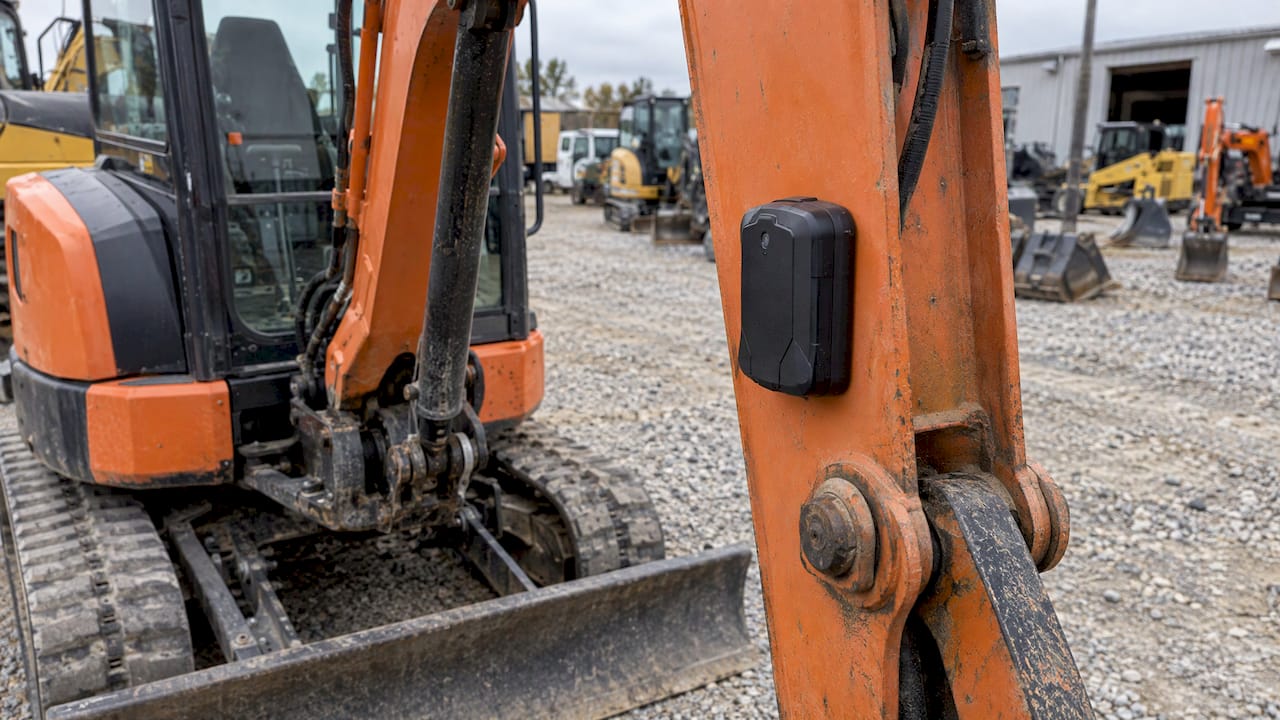
Because Moto Watchdog supports unlimited vehicles and users on one dashboard, a yard manager, a dispatcher and an owner can all see the same fleet. Multi-device management means trucks, trailers, skid steers and generators sit in a single list.
GPS tracking versus telematics
You will see both terms, and vendors blur them. The difference is simple. According to RentalFleetPro, GPS provides location data: real-time position, trip history, geofence alerts, theft prevention and recovery, and basic mileage. Telematics adds engine diagnostic codes and health indicators, fuel level and consumption rates, driver behavior metrics, battery voltage, odometer readings and predictive maintenance indicators.
| Question | GPS tracking | Full telematics |
|---|---|---|
| Where is the unit? | Yes | Yes |
| Did it leave the yard or job site? | Yes, with geofencing | Yes |
| How many miles did it run? | Yes | Yes, plus odometer readings |
| Engine codes and battery voltage | No | Yes |
| Driver behavior scoring | No | Yes |
| Works on trailers and unpowered assets | Yes | Limited to what can be wired in |
The useful way to choose is by asset. A trailer, a light tower or a compressor has no engine data worth reading, so location, alerts and a long battery life are what matter. A service van benefits from location plus mileage and maintenance timing. Most fleets get a large share of the benefit from the location layer, and it is the layer that every unit in the fleet can have.
The real cost: subscriptions scale with every unit
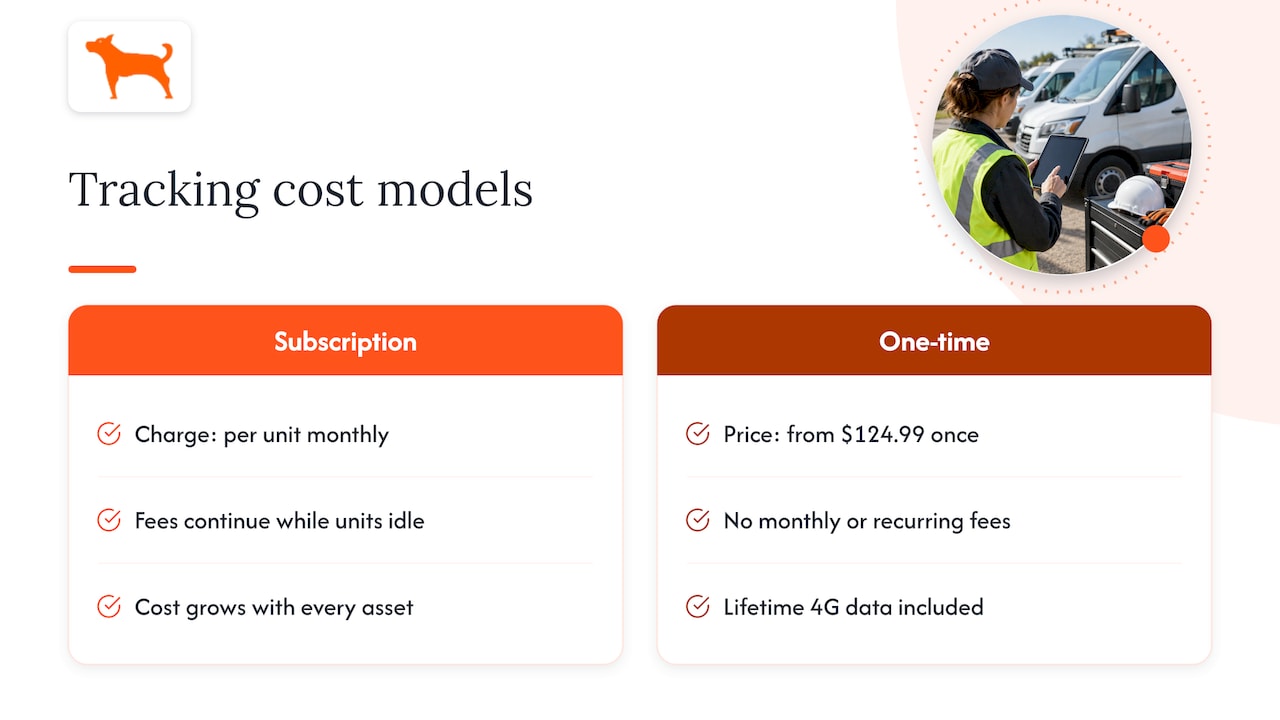
Most tracking systems charge per unit per month. That is manageable for five vans. For a rental yard with dozens of trailers, light towers and machines, the recurring line grows with every asset, and it never stops, including during the months a unit sits idle in the yard.
A one-time device changes the math. Moto Watchdog trackers start from $124.99 as a one-off purchase. There are no monthly or recurring fees, no activation fees and no add-ons: the full feature set is included, and lifetime 4G data is part of the purchase. Add a unit when you buy a unit, and the cost ends there. For a rental business that rotates assets in and out of service, that also means a device on a retired machine is not a bill you forgot to cancel.
To estimate your own total, multiply your unit count by the device price, then compare it against any per-unit monthly quote multiplied by the number of months you expect to run the fleet. The longer the horizon, the more the recurring fee matters.
Choosing the right tracker for each asset
Match the device to how it gets installed and how long it must run unattended.
Service vans and trucks: plug-in or hardwired
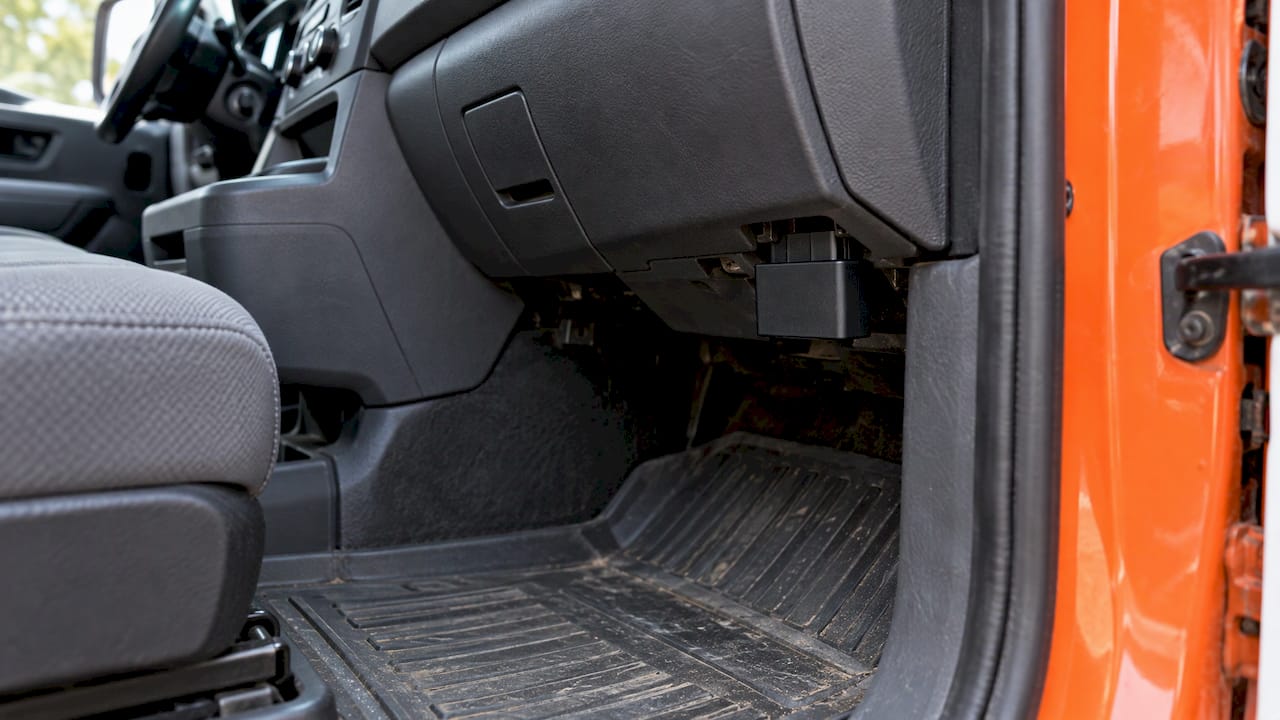
For vehicles with a standard OBD port, the OBD plug-in 4G GPS tracker goes in without tools, which suits a fleet where you want a truck tracked the same afternoon the device arrives. For vehicles where you want a concealed, permanent install, the hardwired 4G GPS tracker (HW-200) is built for a hidden install.
Trailers, equipment and anything without power: magnetic
The MW-20000 magnetic tracker with a 1-year battery attaches to steel and runs on its own battery, which suits trailers, attachments and machines that have no always-on power. Long battery life is what keeps a check-in schedule realistic: fewer trips to swap or charge devices on equipment scattered across job sites.
A short checklist before you buy
- Count assets by type. Vans, trailers and machines each need a different mounting style.
- Decide who gets access. Dispatch, yard staff, owners and, where relevant, customers.
- List the alerts you need. Yard exit, job site exit, after-hours movement, long idle.
- Confirm coverage. Moto Watchdog’s trackers use 4G data with global coverage, so a unit that travels out of state keeps reporting.
- Plan the rental clause. Add telematics disclosure to your agreements.
Setting up tracking so it gets used
A tracker only pays off when dispatch looks at it. A simple rollout works well:
- Start with the highest-value or highest-risk assets. Typically the machines most often stolen or the vans with the most daily jobs.
- Name every device after the unit. Use the fleet number, not a serial number, so a dispatcher finds it at a glance.
- Draw geofences around the yard and your recurring job areas. Then set alerts for exit and entry.
- Give access by role. Everyone who needs the map gets it on the same dashboard.
- Tell drivers. Crews who know the fleet is visible stay on task, as the Owen Tree case study found.
- Review the weekly report. Mileage, idle time and maintenance reminders belong in a standing weekly check.
If you want to connect tracking data to your own dispatch or rental software, Moto Watchdog offers API access through its business page.
Our view: own the device, skip the meter
We built Moto Watchdog around one idea: the location of your truck or trailer should not come with a monthly bill. A fleet manager or yard owner should buy a tracker once and get the full feature set: real-time location, geofencing, alerts, trip and mileage reports, idle tracking and maintenance reminders, with lifetime 4G data included.
For field service and rental operations, that matters because fleets change. Units come in, units get sold, seasons slow down. When there is no subscription, nobody has to decide whether an asset is “worth” its monthly fee, so every asset that can be tracked is tracked.
We also think setup should take an afternoon, not a project. Our trackers come in plug-in, magnetic and hardwired versions so each asset gets the right install, and one dashboard supports unlimited vehicles and users. Sales and support questions get a same-day reply.
That is why more than 1,000 businesses use our trackers to see their fleets clearly and keep costs predictable.
Louis
Start tracking your fleet with Moto Watchdog
If you run a service fleet or a rental yard, the fastest route is to pick the install style for each asset type and order from our tracker line. Trackers start from $124.99 as a one-time purchase, with no monthly fees and lifetime 4G data included. Browse the full range on the Moto Watchdog tracker page.
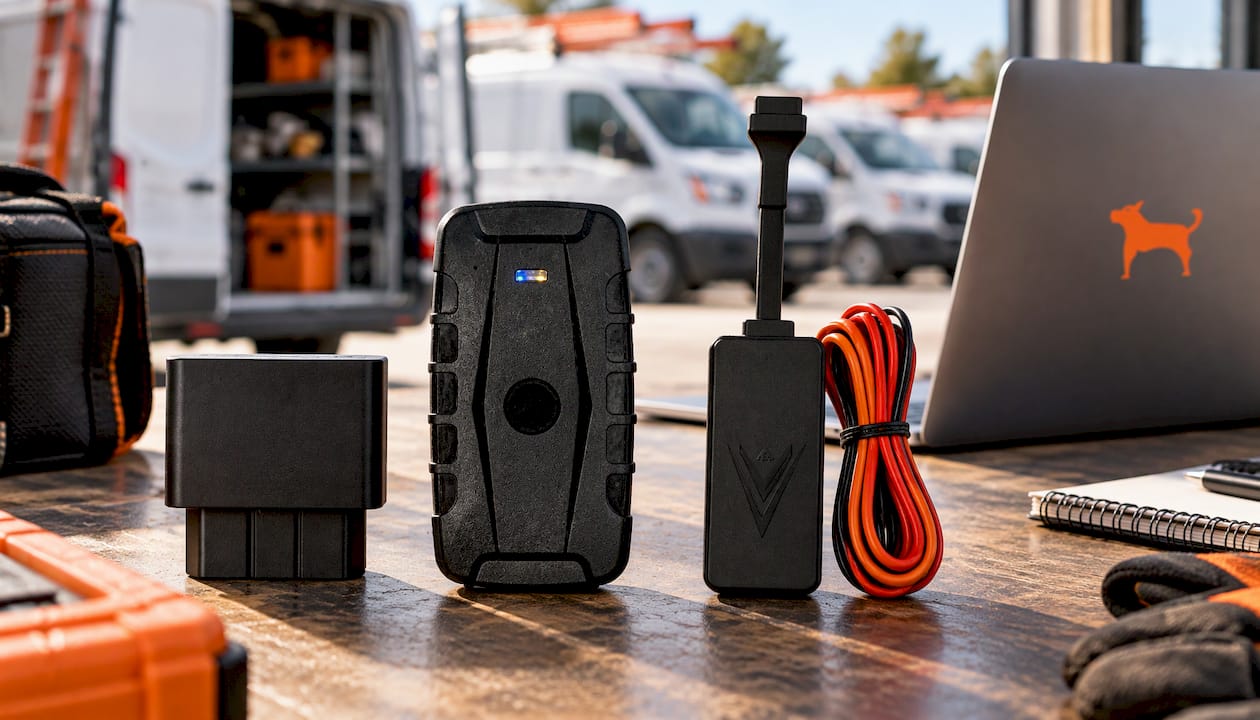
For vans and trucks, start with the OBD plug-in or hardwired units. For trailers and equipment, the magnetic tracker with a 1-year battery is the match.
FAQ
What is a GPS fleet tracker?
A GPS fleet tracker is a device fitted to a vehicle or asset that reports its location to a dashboard or mobile app. You see each unit on a map, review trip history and get alerts when a unit crosses a geofence. Moto Watchdog trackers add mileage reporting, idle time tracking and maintenance reminders.
Is telematics different from GPS tracking?
Yes. GPS tracking reports where a unit is, where it has been and how far it has gone. Telematics adds engine diagnostics, fuel data and driver behavior metrics, according to RentalFleetPro. For trailers and unpowered equipment, location and alerts are the essential layer.
Can I track trailers and heavy equipment, not just trucks?
Yes. A magnetic tracker with a long-life battery attaches to steel trailers, attachments and machines without wiring. The Moto Watchdog MW-20000 has a 1-year battery and no monthly fees, and you can manage it alongside your vehicles in the same app.
How much does a Moto Watchdog tracker cost?
Trackers start from $124.99 as a one-time purchase. There are no monthly or recurring fees and no activation fees, and lifetime 4G data is included. The full feature set comes with the device.
Do I need to tell customers or drivers that units are tracked?
It is good practice. RentalFleetPro advises that rental agreements should clearly disclose telematics monitoring. For employees, tell crews that vehicles are tracked, which the Owen Tree Service case study links to better focus on the job.
Sources
- Telematics for Federal Fleets: A Guide for Efficient Fleet Management (U.S. Department of Energy)
- From Guesswork to GPS: Owen Tree Service’s Tech Journey (National Safety Council)
- GPS, Telematics, and CRM Integration Basics (RentalFleetPro)
- What Is GPS Fleet Tracking for Field Service Management? (ServiceFusion)