How to start saving money
Lorem ipsum dolor sit amet, consectetur adipiscing elit lobortis arcu enim urna adipiscing praesent velit viverra sit semper lorem eu cursus vel hendrerit elementum morbi curabitur etiam nibh justo, lorem aliquet donec sed sit mi dignissim at ante massa mattis.
- Neque sodales ut etiam sit amet nisl purus non tellus orci ac auctor
- Adipiscing elit ut aliquam purus sit amet viverra suspendisse potent
- Mauris commodo quis imperdiet massa tincidunt nunc pulvinar
- Excepteur sint occaecat cupidatat non proident sunt in culpa qui officia
Why it is important to start saving
Vitae congue eu consequat ac felis placerat vestibulum lectus mauris ultrices cursus sit amet dictum sit amet justo donec enim diam porttitor lacus luctus accumsan tortor posuere praesent tristique magna sit amet purus gravida quis blandit turpis.

How much money should I save?
At risus viverra adipiscing at in tellus integer feugiat nisl pretium fusce id velit ut tortor sagittis orci a scelerisque purus semper eget at lectus urna duis convallis. porta nibh venenatis cras sed felis eget neque laoreet suspendisse interdum consectetur libero id faucibus nisl donec pretium vulputate sapien nec sagittis aliquam nunc lobortis mattis aliquam faucibus purus in.
- Neque sodales ut etiam sit amet nisl purus non tellus orci ac auctor
- Adipiscing elit ut aliquam purus sit amet viverra suspendisse potenti
- Mauris commodo quis imperdiet massa tincidunt nunc pulvinar
- Adipiscing elit ut aliquam purus sit amet viverra suspendisse potenti
What percentege of my income should go to savings?
Nisi quis eleifend quam adipiscing vitae aliquet bibendum enim facilisis gravida neque. Velit euismod in pellentesque massa placerat volutpat lacus laoreet non curabitur gravida odio aenean sed adipiscing diam donec adipiscing tristique risus. amet est placerat in egestas erat imperdiet sed euismod nisi.
“Nisi quis eleifend quam adipiscing vitae aliquet bibendum enim facilisis gravida neque velit euismod in pellentesque”
Do you have any comments? Share them with us on social media
Eget lorem dolor sed viverra ipsum nunc aliquet bibendum felis donec et odio pellentesque diam volutpat commodo sed egestas aliquam sem fringilla ut morbi tincidunt augue interdum velit euismod eu tincidunt tortor aliquam nulla facilisi aenean sed adipiscing diam donec adipiscing ut lectus arcu bibendum at varius vel pharetra nibh venenatis cras sed felis eget.
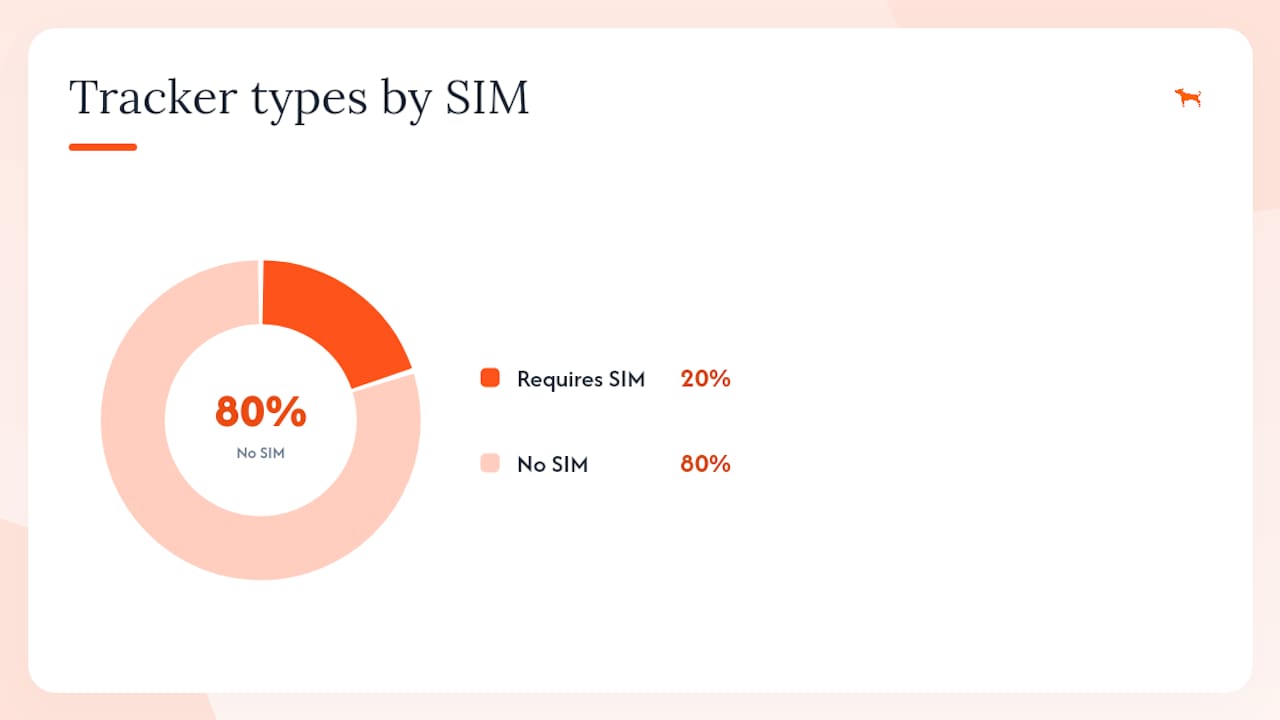
Most real-time GPS trackers do need a SIM card to send location data to your phone or fleet platform. The GPS chip itself receives satellite signals without any SIM or internet connection, but that position data stays locked inside the device until a separate transmission step pushes it out. Whether that step requires a SIM depends entirely on how the tracker communicates.
The short answer by tracker type:
- Cellular real-time trackers — yes, a SIM is required (data plan or SMS)
- Offline data loggers — no SIM needed; location history downloads when you plug in the device
- Bluetooth crowd-sourced trackers — no SIM in the device itself; they piggyback on nearby phones
- Satellite communicators — no cellular SIM; they use a separate satellite subscription
- LoRaWAN/LPWAN devices — no traditional SIM; they connect through fixed gateways
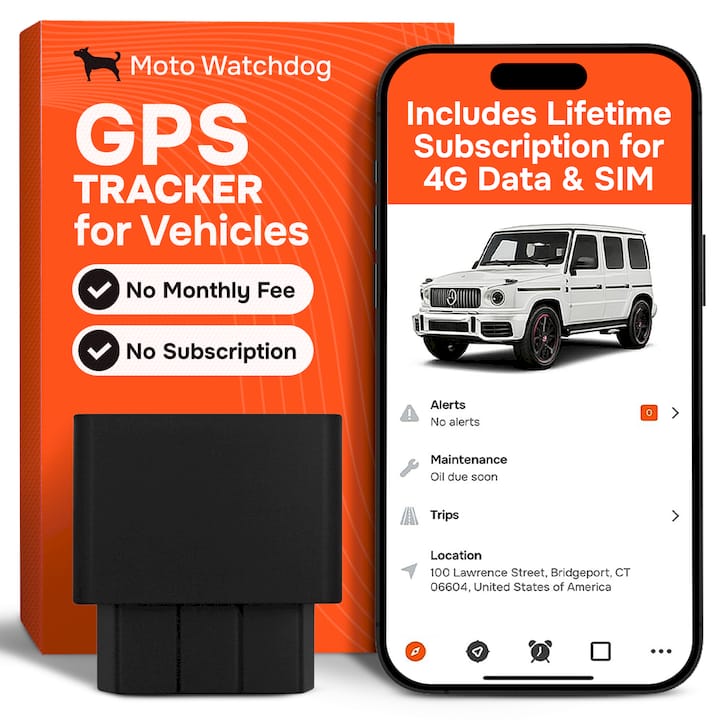
For businesses and individuals who want live tracking without monthly fees, Motowatchdog offers a subscription-free 4G GPS option that sidesteps the recurring-cost trap most cellular trackers carry.
Key Takeaways
Most GPS trackers need a SIM card only for the transmission step, not for GPS reception itself, and subscription-free 4G hardware eliminates the recurring monthly cost without sacrificing real-time tracking.
| Point | Details |
|---|---|
| GPS reception needs no SIM | The GPS chip passively receives satellite signals; a SIM is only required when the device transmits location data. |
| Real-time tracking requires a connection | Cellular, satellite, or LPWAN connectivity is needed for live updates; offline loggers need none. |
| SIM type affects battery life | NB-IoT and LTE-M SIMs use simplified connection protocols that extend battery life versus standard 4G LTE consumer SIMs. |
| Carrier lock is a real risk | Devices with non-removable or locked SIMs limit your carrier choices and can force long-term subscription pricing. |
| Motowatchdog removes monthly fees | Motowatchdog’s subscription-free 4G devices deliver real-time tracking, geofencing, and mileage reporting with no recurring per-device charge. |
Table of Contents
- How GPS reception and data transmission are two separate things
- Which tracker types need a SIM and which don’t
- What SIM cards GPS trackers actually use
- How to insert, activate, and troubleshoot a SIM in a GPS tracker
- Costs, battery life, and coverage tradeoffs
- How to choose the right tracker for your needs
- When a subscription-free 4G tracker makes practical sense
- Privacy and security considerations
- Alternative communication technologies for trackers without SIM cards
- How SIM card choice affects battery life and device performance
- The part most buyers get wrong about SIM-based trackers
- Real-time GPS tracking without the monthly bill
- Sources
How GPS reception and data transmission are two separate things
The confusion around whether a GPS tracker needs a SIM usually comes from treating the GPS receiver and the cellular modem as one unit. They are not.
A GPS receiver is a passive listener. It picks up radio signals broadcast by a constellation of satellites and uses timing math to calculate latitude, longitude, and altitude. No SIM, no internet connection, and no outbound signal of any kind is involved in that calculation. As S3 Semiconductor explains, the GPS chip simply receives; it never transmits.
The transmission step is a completely separate hardware component, typically a cellular modem. Once the GPS chip has a position fix, the modem packages those coordinates and sends them to a server over a cellular network, which is where the SIM comes in. Swap the cellular modem for a satellite modem, a LoRaWAN radio, or a Bluetooth chip, and the SIM requirement disappears entirely.
A simple way to picture the data path:
Satellites → GPS receiver (calculates position) → transmission module (cell modem / satellite / LoRa / Bluetooth) → server → your app
The GPS receiver works at every step. The SIM is only relevant at the “transmission module” stage, and only when that module is a cellular modem.
Pro Tip: Power a tracker on in a cellular dead zone and check whether it still logs coordinates. If it does, the GPS receiver is working independently. If the app shows nothing, the device may be transmitting-only with no local storage, which means it needs a live SIM connection to function at all.
Which tracker types need a SIM and which don’t
Not every tracking device is built the same way, and the right choice depends on whether you need location data in real time or can retrieve it later.
Cellular real-time trackers are the most common category for vehicles, fleets, and personal assets. They embed a cellular modem alongside the GPS chip and require an active SIM with a data plan. Coverage follows the carrier’s network, which is excellent in urban North America but can drop in remote areas. Fleet managers and theft-recovery use cases almost always land here because live alerts and dispatch depend on continuous connectivity.
Offline data loggers record GPS coordinates to internal memory with no outbound transmission. You retrieve the trip history by plugging the device into a computer via USB or Bluetooth. No SIM, no subscription, no monthly cost. Researchers tracking wildlife migration, drivers logging mileage for tax purposes, and anyone who only needs a historical record find loggers perfectly adequate.
Bluetooth crowd-sourced trackers contain no GPS chip at all in many cases. They broadcast a Bluetooth signal, and when a nearby smartphone running the network’s app detects it, that phone reports the tag’s approximate location to a cloud server. The SIM lives in the stranger’s phone, not your tracker. Coverage is dense in cities and near zero in rural areas.
Satellite communicators bypass cellular networks entirely by connecting directly to low-earth-orbit or geostationary satellite constellations. They work anywhere on Earth with a clear sky view, making them the standard choice for wilderness safety, offshore vessels, and remote equipment monitoring. The tradeoff is cost: satellite airtime subscriptions run significantly higher than cellular data plans, and update intervals are often measured in minutes rather than seconds.
LoRaWAN and other LPWAN devices use long-range, low-power radio to reach fixed gateways, which then forward data to a server. The LoRa Alliance defines LoRaWAN as a protocol designed for battery-powered sensors that send small data packets infrequently. No traditional SIM is involved. Coverage depends entirely on whether a gateway exists in range, which makes LoRaWAN practical for campus-scale deployments, smart cities, and industrial yards but unreliable for open-road vehicle tracking.
| Tracker type | Needs SIM? | Real-time? | Best for | Typical cost model |
|---|---|---|---|---|
| Cellular real-time | Yes | Yes | Fleets, theft recovery, dispatch | Hardware + monthly data plan |
| Offline data logger | No | No | Mileage logging, research, trip history | One-time hardware |
| Bluetooth crowd-sourced | No (device) | Near-real-time in cities | Keys, luggage, short-range items | Hardware + optional subscription |
| Satellite communicator | No (cellular) | Yes (slower intervals) | Remote wilderness, offshore | Hardware + satellite airtime |
| LoRaWAN/LPWAN | No | Near-real-time on gateway | Industrial yards, campus assets | Hardware + gateway infrastructure |
For off-grid tracking options and their practical tradeoffs, this breakdown of trackers without cell service covers the satellite, LoRaWAN, and Bluetooth crowd-sourcing approaches in detail.
What SIM cards GPS trackers actually use
A SIM in a GPS tracker serves one purpose: giving the cellular modem access to a carrier’s network so it can send small data packets containing coordinates, timestamps, and status flags. That is a narrower job than a smartphone SIM, and it shapes which plan and form factor you actually need.
Data vs. SMS vs. voice. Most modern 4G LTE trackers transmit purely over data. Older or budget devices sometimes use SMS commands to request a location update or configure settings remotely, so a data-only SIM will break those features. Jolt Mobile’s guidance on SIM requirements specifically warns against pairing legacy SMS-dependent trackers with data-only plans.
Practical rule: if your tracker’s manual mentions SMS commands or SMS alerts, confirm the SIM plan includes SMS before activating. A data-only IoT SIM will leave those features silent.
Form factor. Consumer trackers typically use nano-SIM or micro-SIM slots. Many newer fleet-grade devices use embedded SIMs (eSIM), which are provisioned over the air and cannot be physically swapped. eSIM simplifies bulk deployments but locks you into whatever carriers the manufacturer has pre-negotiated.
APN settings. Every carrier assigns an Access Point Name that tells the modem how to route data. Consumer phone SIMs often configure APN automatically, but IoT and M2M SIMs frequently require manual entry. A wrong or missing APN is the single most common reason a tracker powers on but never uploads a location.
Carrier lock and MVNO options. Some trackers ship with a non-removable SIM locked to one carrier. For North American fleets operating across multiple states or provinces, a multi-operator or MVNO SIM that roams across AT&T, T-Mobile, and regional networks offers better coverage without carrier-switching headaches. LTE and NB-IoT band support also matters: North American LTE band planning shows why a device that supports only Band 12 or Band 71 will outperform a 2G-era device in rural coverage, since major carriers have sunset 2G and 3G networks across most of the continent.
Pro Tip: For fleets of five or more vehicles, an M2M or IoT data plan from an MVNO almost always costs less per device per month than adding lines to a consumer account. IoT plans are designed for low-data, always-on connections and often include multi-carrier roaming by default.
How to insert, activate, and troubleshoot a SIM in a GPS tracker
Getting a SIM-based tracker online is straightforward when you follow the steps in order. Skipping the APN step is where most activations fail.
Activation steps:
- Power off the tracker completely before opening the SIM tray.
- Confirm the SIM size matches the slot (nano, micro, or standard); trim only if the manufacturer explicitly supports it.
- Insert the SIM with the gold contacts facing the correct direction per the device diagram.
- If the device uses eSIM, follow the carrier’s QR code provisioning process before powering on.
- Enter the carrier’s APN in the tracker’s configuration app or web portal before the first power-on.
- Power on the device outdoors or near a window for a clear GPS fix.
- Register the device’s IMEI in the companion app or fleet portal.
- Wait 3–5 minutes, then confirm a location appears in the dashboard.
Troubleshooting checklist:
- “No network” or no signal bars — confirm the SIM is activated on the carrier’s side, not just inserted; call the carrier to verify the line is live.
- “No location upload” — recheck APN settings; a single typo prevents all data transmission.
- “SIM not recognized” — reseat the SIM; check whether the device requires a specific SIM size or carrier unlock.
- “Roaming disabled” — if the tracker is outside the SIM’s home network area, the plan may block roaming; switch to a multi-operator SIM.
- LED stays red or blinks error pattern — consult the device manual for LED codes; most manufacturers publish a diagnostic table.
For hardwired installations where power draw and wiring affect activation, the GPS tracker fleet hardwiring guide covers power-source considerations that interact with SIM connectivity.
Costs, battery life, and coverage tradeoffs
The decision between a SIM-based tracker and a non-SIM alternative is ultimately a cost and coverage calculation, and the numbers look different depending on fleet size and geography.
Subscription vs. one-time cost. Cellular trackers carry an ongoing data plan cost on top of hardware. The total cost of ownership over two to three years can be two to four times the device purchase price when monthly fees compound across a fleet. Offline loggers and LoRaWAN devices eliminate that recurring line item, but they sacrifice live alerts.
Battery impact. Every cellular transmission draws power. A tracker set to report every 30 seconds will drain its battery far faster than one reporting every 5 minutes. Motion-triggered reporting, where the device only transmits when the asset moves, can extend battery life significantly on assets that sit idle for long periods. LoRaWAN and NB-IoT devices are engineered specifically for low-power operation, which is why they can run on coin-cell batteries for months.
Coverage. Cellular coverage in North American cities is dense and reliable on 4G LTE. Rural and remote areas are a different story: dead zones exist along highways, in mountain corridors, and across agricultural regions. Satellite trackers cover those gaps but at higher per-message cost. LPWAN coverage is gateway-dependent and generally not suitable for open-road tracking unless a carrier has deployed a national NB-IoT network.
For small fleets weighing these tradeoffs against a tight budget, the small fleet tracking guide breaks down the cost-per-vehicle math in practical terms.
How to choose the right tracker for your needs
Before buying any GPS tracking device, work through this checklist. It will surface the right technology category before you compare specific products.
Decision checklist:
- Do you need location updates in real time (under 5 minutes)? If yes, you need a cellular or satellite tracker with an active SIM or satellite subscription.
- Will the asset operate in areas without cellular coverage? If yes, consider satellite or LoRaWAN.
- How long must the device run on battery? Longer battery requirements push toward lower-frequency reporting or LPWAN.
- Does the device need to fit inside a vehicle port, attach magnetically, or hide in a small asset? Form factor narrows the field quickly.
- Do you need integration with a fleet management system or TMS? Confirm the tracker supports data export in a compatible format.
Minimum specs to verify for North America:
- LTE Band 4 (AWS) and Band 12 or Band 71 for rural T-Mobile coverage
- APN field accessible in the configuration interface
- Replaceable SIM slot or documented eSIM provisioning process
- Configurable reporting interval (not fixed by the manufacturer)
- Documented 4G LTE support (2G and 3G networks are largely retired in North America)
Red flags to avoid:
- Non-removable SIM with no carrier choice disclosed
- No APN settings visible in the app or portal
- Subscription pricing not disclosed before purchase
- No published band support list
- Privacy policy that does not specify data retention period or third-party data sharing
Questions to ask vendors:
- Which North American carriers does the SIM support, and does it roam across networks?
- Can I bring my own SIM or MVNO plan?
- What is the minimum reporting interval, and can I adjust it?
- Where is location data stored, and for how long?
When a subscription-free 4G tracker makes practical sense
For contractors, fleet owners, and small businesses, the math on per-device monthly fees adds up fast. A fleet of 20 vehicles paying even a modest monthly fee per tracker generates a meaningful annual line item with no end date. That is the scenario where subscription-free 4G hardware changes the calculation.
Motowatchdog’s devices use 4G LTE for real-time location transmission without attaching a recurring subscription to each unit. The features that matter most for fleet procurement are all present: real-time tracking, customizable geofencing alerts, long battery life, trip and mileage reporting, push notifications, and multi-device management through a mobile app.
The practical use cases where this model fits best include contractor fleets that track vehicles between job sites, equipment rental companies monitoring trailers and machinery, and families tracking vehicles without committing to a long-term service contract. For a deeper look at how the subscription-free model compares to traditional plans, the lifetime GPS tracker guide explains the ownership model in detail.
Pro Tip: When evaluating total cost of ownership for a fleet rollout, add up 36 months of per-device fees across your full vehicle count. That figure, compared against a one-time hardware purchase, often makes the subscription-free case obvious.
Privacy and security considerations
A GPS tracker that transmits location data over a cellular network creates a data trail, and understanding who can access that trail matters as much as the technical setup.
Who can see the location data? On cellular trackers, coordinates pass through the device manufacturer’s or platform provider’s servers before reaching your app. That means the platform operator has access to your asset’s location history. Review the privacy policy before purchase: look for explicit statements about whether location data is sold to third parties, shared with law enforcement without a warrant, or retained after you cancel service.
SIM-level security. The SIM itself is a potential attack surface. SIM swapping, where a bad actor convinces a carrier to transfer your number to their SIM, is primarily a consumer phone threat but can affect trackers on consumer-grade plans. M2M and IoT SIMs on dedicated platforms are generally less exposed because they are not tied to a phone number that can be socially engineered.
Data retention. Some platforms retain location history indefinitely; others purge it after 30, 60, or 90 days. For businesses, data retention interacts with legal obligations: employment law in several U.S. states requires that employees be notified when company vehicles are tracked. Retaining that data longer than necessary increases legal exposure without operational benefit.
Consent and disclosure. Tracking a vehicle or asset you own is generally legal in North America, but tracking a person without their knowledge raises serious legal and ethical issues. Always disclose tracking to employees operating company vehicles and confirm your state’s specific consent requirements before deploying.
Alternative communication technologies for trackers without SIM cards
When cellular coverage is unavailable, impractical, or too expensive, several established technologies fill the gap. Each operates on fundamentally different infrastructure assumptions.
LoRaWAN is the most widely deployed LPWAN standard for IoT. Devices transmit small data packets over unlicensed radio spectrum to fixed gateways, which forward data to a network server and then to your application. The LoRa Alliance maintains the open standard, and public LoRaWAN networks now cover significant portions of North American cities. Range between device and gateway can reach several miles in open terrain. The limitation is that coverage outside gateway range is zero, making LoRaWAN unsuitable for tracking assets across open highways.
Sigfox operates a proprietary narrowband network with a similar gateway model. Sigfox’s network is designed for ultra-low-power devices sending very small messages infrequently, which suits stationary asset monitoring better than vehicle tracking. Coverage in North America is more limited than LoRaWAN’s public network.
NB-IoT (Narrowband IoT) runs on licensed cellular spectrum and is deployed by major carriers as a low-power extension of their LTE networks. Unlike LoRaWAN, NB-IoT uses a SIM, but it is a specialized IoT SIM on a low-data plan rather than a standard consumer SIM. It offers better indoor penetration than standard LTE and is well-suited for stationary or slow-moving assets.
Bluetooth crowd-sourcing requires no infrastructure investment. The device broadcasts a short-range signal, and any participating smartphone within range reports its location anonymously. Coverage is a function of user density, which makes this approach highly effective in airports, shopping centers, and dense urban areas but unreliable in low-traffic zones.
How SIM card choice affects battery life and device performance
The SIM itself does not drain battery directly. The cellular modem it activates does, and the SIM’s network type determines how hard that modem works.
A tracker on a 4G LTE connection with a standard consumer SIM will negotiate a full LTE connection every time it wakes to transmit. That negotiation cycle, called the radio resource control (RRC) connection setup, consumes a burst of power even before the data packet is sent. Devices on NB-IoT or LTE-M SIMs use a simplified connection protocol designed to minimize that overhead, which is why NB-IoT trackers can achieve battery lives measured in years rather than days.
Reporting frequency compounds the effect. A device transmitting every 10 seconds keeps the modem active almost continuously. The same device set to report every 5 minutes spends most of its time in a low-power sleep state. For battery-powered assets like trailers, equipment, and personal valuables, choosing a SIM plan that supports NB-IoT or LTE-M and configuring a longer reporting interval can extend battery life by an order of magnitude compared with a standard 4G LTE consumer SIM at high frequency.
Carrier network quality also matters. A tracker on a weak signal constantly retransmits failed packets, which burns power without delivering data. Selecting a multi-operator SIM that automatically connects to the strongest available network in each location reduces failed transmissions and the battery drain they cause.
The part most buyers get wrong about SIM-based trackers
The conventional advice on GPS trackers focuses almost entirely on features: real-time updates, geofencing, battery life. That is useful, but it skips the question that actually determines long-term satisfaction: who controls the data connection, and at what cost?
Most buyers discover the subscription trap after purchase. The hardware price looks reasonable, the monthly fee looks small, and then three years later the total spend is two to three times the device cost with no exit. The SIM is locked, the APN is hidden, and switching carriers requires buying new hardware.
The smarter approach is to treat the SIM architecture as a first-order procurement criterion, not an afterthought. Ask about carrier lock before you ask about update frequency. Confirm APN access before you evaluate the app interface. Verify band support for your specific operating geography before you compare price.
The technical distinction between GPS reception and data transmission is not just an interesting fact. It is the framework that lets you evaluate any tracker honestly. A device that receives GPS signals perfectly but transmits over a locked, overpriced SIM is a worse long-term choice than a device with slightly less polished hardware and full SIM flexibility.
For most North American fleets and individuals, subscription-free 4G hardware with a replaceable SIM slot and documented band support is the configuration that ages best. The monthly fee you avoid compounds just as surely as the one you pay.
Real-time GPS tracking without the monthly bill
Motowatchdog builds subscription-free 4G GPS trackers for businesses and individuals who want live location data without committing to a per-device monthly fee. Where most cellular trackers lock you into a carrier and a recurring charge, Motowatchdog’s hardware is a one-time purchase that delivers real-time tracking, customizable geofencing alerts, trip and mileage reporting, and push notifications through a free companion app.
The fit is clearest for contractor fleets, equipment rental companies, and small businesses that need reliable 4G coverage across North America without the budget uncertainty of monthly subscriptions. Over 1,000 businesses already rely on Motowatchdog for vehicle and asset monitoring. Check out the full device lineup and see which tracker fits your fleet at Motowatchdog.
Sources
The following resources provide deeper technical and practical detail on the topics covered in this article.
Key reference: S3 Semiconductor’s explainer on GPS trackers and SIM cards is the clearest publicly available breakdown of why GPS reception and cellular transmission are separate functions, and why that distinction determines whether your device needs a SIM at all.
- Do GPS Trackers Need a SIM Card?
- How Do Gps Trackers Work With No Cell Phone Service
- LTE overview (university course material)
- LoRa Alliance
- Sigfox