How to start saving money
Lorem ipsum dolor sit amet, consectetur adipiscing elit lobortis arcu enim urna adipiscing praesent velit viverra sit semper lorem eu cursus vel hendrerit elementum morbi curabitur etiam nibh justo, lorem aliquet donec sed sit mi dignissim at ante massa mattis.
- Neque sodales ut etiam sit amet nisl purus non tellus orci ac auctor
- Adipiscing elit ut aliquam purus sit amet viverra suspendisse potent
- Mauris commodo quis imperdiet massa tincidunt nunc pulvinar
- Excepteur sint occaecat cupidatat non proident sunt in culpa qui officia
Why it is important to start saving
Vitae congue eu consequat ac felis placerat vestibulum lectus mauris ultrices cursus sit amet dictum sit amet justo donec enim diam porttitor lacus luctus accumsan tortor posuere praesent tristique magna sit amet purus gravida quis blandit turpis.

How much money should I save?
At risus viverra adipiscing at in tellus integer feugiat nisl pretium fusce id velit ut tortor sagittis orci a scelerisque purus semper eget at lectus urna duis convallis. porta nibh venenatis cras sed felis eget neque laoreet suspendisse interdum consectetur libero id faucibus nisl donec pretium vulputate sapien nec sagittis aliquam nunc lobortis mattis aliquam faucibus purus in.
- Neque sodales ut etiam sit amet nisl purus non tellus orci ac auctor
- Adipiscing elit ut aliquam purus sit amet viverra suspendisse potenti
- Mauris commodo quis imperdiet massa tincidunt nunc pulvinar
- Adipiscing elit ut aliquam purus sit amet viverra suspendisse potenti
What percentege of my income should go to savings?
Nisi quis eleifend quam adipiscing vitae aliquet bibendum enim facilisis gravida neque. Velit euismod in pellentesque massa placerat volutpat lacus laoreet non curabitur gravida odio aenean sed adipiscing diam donec adipiscing tristique risus. amet est placerat in egestas erat imperdiet sed euismod nisi.
“Nisi quis eleifend quam adipiscing vitae aliquet bibendum enim facilisis gravida neque velit euismod in pellentesque”
Do you have any comments? Share them with us on social media
Eget lorem dolor sed viverra ipsum nunc aliquet bibendum felis donec et odio pellentesque diam volutpat commodo sed egestas aliquam sem fringilla ut morbi tincidunt augue interdum velit euismod eu tincidunt tortor aliquam nulla facilisi aenean sed adipiscing diam donec adipiscing ut lectus arcu bibendum at varius vel pharetra nibh venenatis cras sed felis eget.
GPS equipment without monthly fees is defined as any tracking device that eliminates recurring subscription charges by embedding connectivity costs upfront or using alternative data transmission methods. Fleet managers and business owners increasingly ask why avoid monthly fees equipment GPS when evaluating their tracking options, and the answer comes down to long-term cost control and budget predictability. Subscription-free GPS trackers avoid recurring billing cycles by relying on technologies like prepaid SIM cards, Bluetooth relay networks, or internal data storage. The trade-off is real: no monthly fee does not always mean no ongoing cost, and understanding that distinction is what separates a smart purchase from a false economy.
Why avoid monthly fees for equipment GPS?
The financial case for skipping GPS subscriptions is straightforward. Monthly subscription fees for GPS trackers typically range from $10 to $30 per device, covering cloud software, real-time tracking, and detailed reporting. For a fleet of 20 vehicles or assets, that adds up to $2,400 to $7,200 per year in recurring charges alone.
The operational motivations go beyond the raw dollar figure. Fleet managers cite these primary reasons for choosing no-subscription GPS options:
- Budget predictability. A one-time payment GPS system removes the risk of price increases, billing errors, or surprise charges at renewal. You know the full cost on day one.
- Reduced overhead for small fleets. A contractor running five trucks does not need the same enterprise-grade cloud platform as a national logistics company. Paying for features you never use is a direct loss.
- Ownership vs. access. With a subscription model, you are paying for continued access to your own data. A one-time payment GPS device gives you the hardware outright, with no vendor lock-in.
- Simplified accounting. Eliminating monthly billing cycles reduces accounts payable complexity, especially for businesses managing multiple vendor contracts.
Pro Tip: Calculate your total cost of ownership over 36 months before comparing no-fee and subscription devices. A $200 no-fee tracker often costs less than 12 months of subscription fees on a standard plan.
The benefits of no monthly GPS fees are most pronounced for businesses with stable fleets and predictable tracking needs. If your assets stay within a defined geographic area and you do not need real-time updates every 30 seconds, a no-subscription device can deliver full value at a fraction of the long-term cost.

How do no-fee GPS trackers work, and what are their limits?
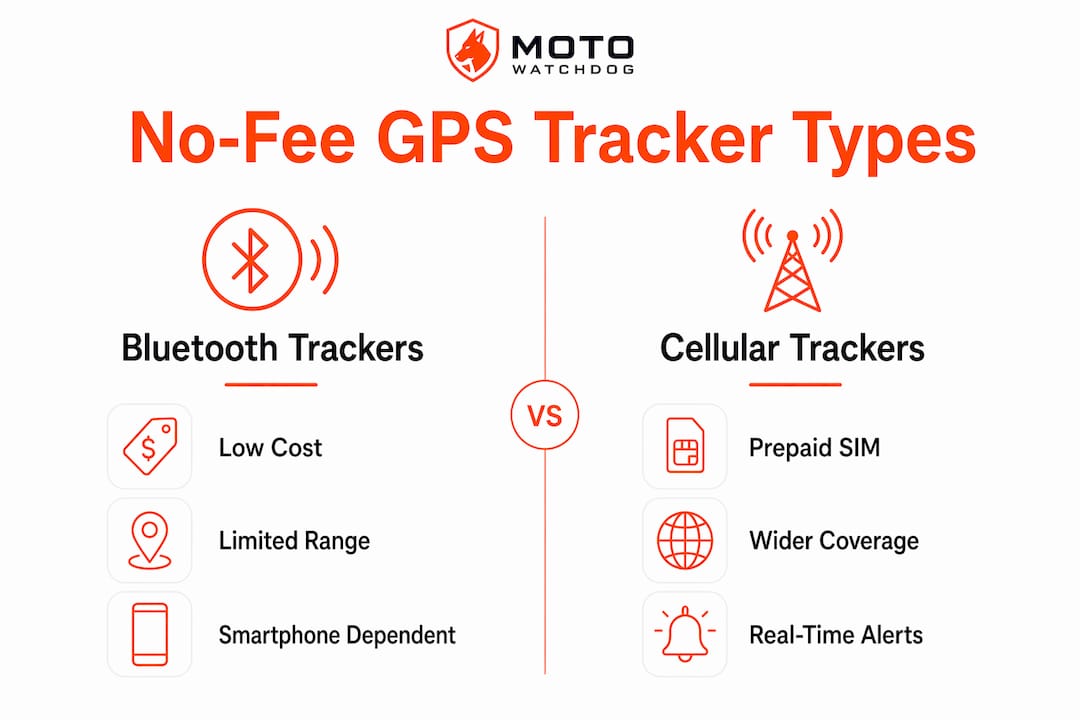
No-fee GPS trackers avoid ongoing charges by changing how and when data moves from the device to you. No-fee devices rely on alternative transmission methods including internal storage, Bluetooth relay, Wi-Fi sync, or prepaid embedded SIM cards rather than active cellular subscriptions. Each method carries specific performance trade-offs that directly affect fleet management value.
| Transmission method | Monthly cost | Real-time tracking | Rural coverage | Typical use case |
|---|---|---|---|---|
| Bluetooth relay | None | No | Very limited | Short-range asset tagging |
| Wi-Fi sync | None | No | None | Yard or depot tracking |
| Internal storage | None | No | Full (passive) | Post-trip data review |
| Prepaid SIM cellular | None ongoing | Yes | Good to full | Field equipment tracking |
| Active subscription cellular | $10–$30/month | Yes | Full | Real-time fleet management |
Bluetooth trackers have an effective range of only 30 to 200 feet and depend on nearby smartphones to relay location data. That dependency makes them unreliable on remote job sites where no crowd network exists.
No-subscription GPS trackers usually provide only basic location tracking and lack advanced features like real-time alerts, geofencing, and route history. Those features require cloud access, which is what subscription fees fund. Fleet managers who need geofencing alerts or movement notifications will find most entry-level no-fee devices fall short without a cellular connection.
Trackers that avoid telecom fees sacrifice data frequency and coverage area. A device that updates location every 10 minutes is useful for monitoring parked equipment overnight. It is not useful for tracking a delivery truck through a city in real time.
What types of no-fee GPS equipment are available?
No-subscription GPS equipment falls into three broad categories, each with a distinct cost structure and capability profile.
Bluetooth and crowd network trackers carry the lowest upfront cost, typically $25 to $50 per unit. They work well for tracking items within a building, yard, or dense urban area. For construction equipment on a rural site or a truck traveling between states, they are not a practical solution.
Internal storage GPS loggers record location data to onboard memory without transmitting anything. You retrieve the data by physically connecting the device or bringing it within Wi-Fi range. These devices suit post-trip mileage reporting and compliance logging but offer zero real-time visibility.
Prepaid SIM embedded cellular trackers represent the most capable no-subscription option. Prepaid SIM trackers bundle data costs into the upfront hardware price, eliminating monthly subscriptions while maintaining cellular connectivity. Over three years, the price difference between prepaid and monthly subscription models for 10 assets ranges $1,500 to $2,000, but that gap can be offset by theft prevention value alone.
Key cost considerations when comparing device types:
- Upfront hardware cost: $25 to $300+ depending on connectivity type
- Data plan embedded cost: included in hardware for prepaid SIM models
- Replacement cycle: most GPS hardware lasts 3 to 5 years before performance degrades
- Integration fees: some no-fee devices charge for software dashboards separately
Pro Tip: For high-value equipment like generators, trailers, or heavy machinery, choose a prepaid SIM cellular tracker over a Bluetooth option. The coverage difference pays for itself the first time a piece of equipment goes missing outside cell range.
The advantages of buying GPS outright rather than leasing access through a subscription are clearest in this category. A prepaid cellular tracker gives you real-time data, nationwide coverage, and no billing cycle, all in a single purchase.
What should businesses consider before choosing no-fee GPS equipment?
Selecting a no-subscription GPS tracker requires more than comparing upfront prices. Fleet managers need to evaluate five practical factors before committing.
-
Historical data retention. No-fee GPS platforms often cap location history to 7 to 30 days. That window is too short for billing disputes, insurance claims, or regulatory audits that may require proof of location from 60 to 90 days prior. Verify the data retention policy before purchase.
-
Coverage area. Bluetooth and Wi-Fi dependent devices fail completely in rural or remote areas. If your fleet operates outside dense population centers, only cellular-based trackers provide reliable coverage. Check whether the device uses LTE Cat-M1 or NB-IoT networks, both of which are designed for low-power IoT devices with broad geographic reach.
-
Software and reporting compatibility. Many no-fee hardware devices do not integrate with fleet management software platforms. If your business uses dispatch, payroll, or maintenance software, confirm that the GPS device exports data in a compatible format. GPS data integration with existing fleet tools is often the deciding factor between a device that saves time and one that creates extra manual work.
-
Alert and notification capabilities. Geofencing, movement alerts, and ignition detection require a live data connection. Devices that store data locally or sync only via Wi-Fi cannot send real-time alerts. If theft prevention or unauthorized use is a priority, passive storage devices will not meet that need.
-
Total labor cost. A device that requires manual data retrieval adds staff time to every reporting cycle. Calculate the labor cost of retrieving and processing data from passive devices before concluding they are cheaper than a subscription-based alternative.
No monthly fee GPS trackers shift operating costs rather than eliminate them. The most effective GPS trackers balance cost with reliable alerting, reporting, and coverage. Choosing based on price alone without evaluating these factors often results in a device that works in the office demo but fails in the field.
Key Takeaways
Avoiding monthly GPS fees saves money long-term, but only when the chosen device matches the fleet’s actual coverage, data retention, and alert requirements.
| Point | Details |
|---|---|
| Monthly fees add up fast | Subscription costs of $10–$30 per device reach thousands annually across a fleet. |
| Bluetooth trackers have hard limits | A 30–200 foot range makes them unsuitable for remote or mobile equipment tracking. |
| Data retention matters | Many no-fee devices cap history at 7–30 days, too short for audits or insurance claims. |
| Prepaid SIM is the strongest no-fee option | Cellular coverage with no billing cycle offers the best balance of cost and capability. |
| Integration determines real value | A no-fee tracker that does not connect to your fleet software creates manual work that offsets savings. |
The hidden cost of “free” GPS tracking
Fleet managers often come to me after they have already made the mistake. They bought a batch of low-cost Bluetooth trackers, installed them on their equipment, and discovered within 60 days that half the fleet was invisible to the system whenever assets left the yard. The trackers were technically working. The fleet was not actually tracked.
The phrase “no monthly fee” carries a psychological weight that overrides careful analysis. I have seen businesses accept significant feature gaps because the upfront price felt like a win. The real question is not whether you pay a monthly fee. The real question is whether the device does what you need it to do when you need it most.
My recommendation is to run a 30-day pilot with any no-fee device before deploying it fleet-wide. Test it in the worst-case scenario: the most remote job site, the asset that moves the most, the situation where you would most need a real-time alert. If it performs there, it will perform everywhere. If it fails that test, no amount of upfront savings justifies the operational risk.
Subscription-free GPS for businesses has matured significantly in recent years. The technology now exists to deliver real-time cellular tracking without a billing cycle. The key is knowing which devices actually deliver that capability versus which ones simply market themselves on the absence of a fee.
— Louis
Motowatchdog’s subscription-free GPS tracking for fleets
Motowatchdog offers subscription-free 4G GPS trackers that embed connectivity costs into the hardware, eliminating monthly billing while maintaining nationwide cellular coverage. Over 1,000 businesses rely on Motowatchdog for real-time vehicle and asset monitoring without recurring charges.
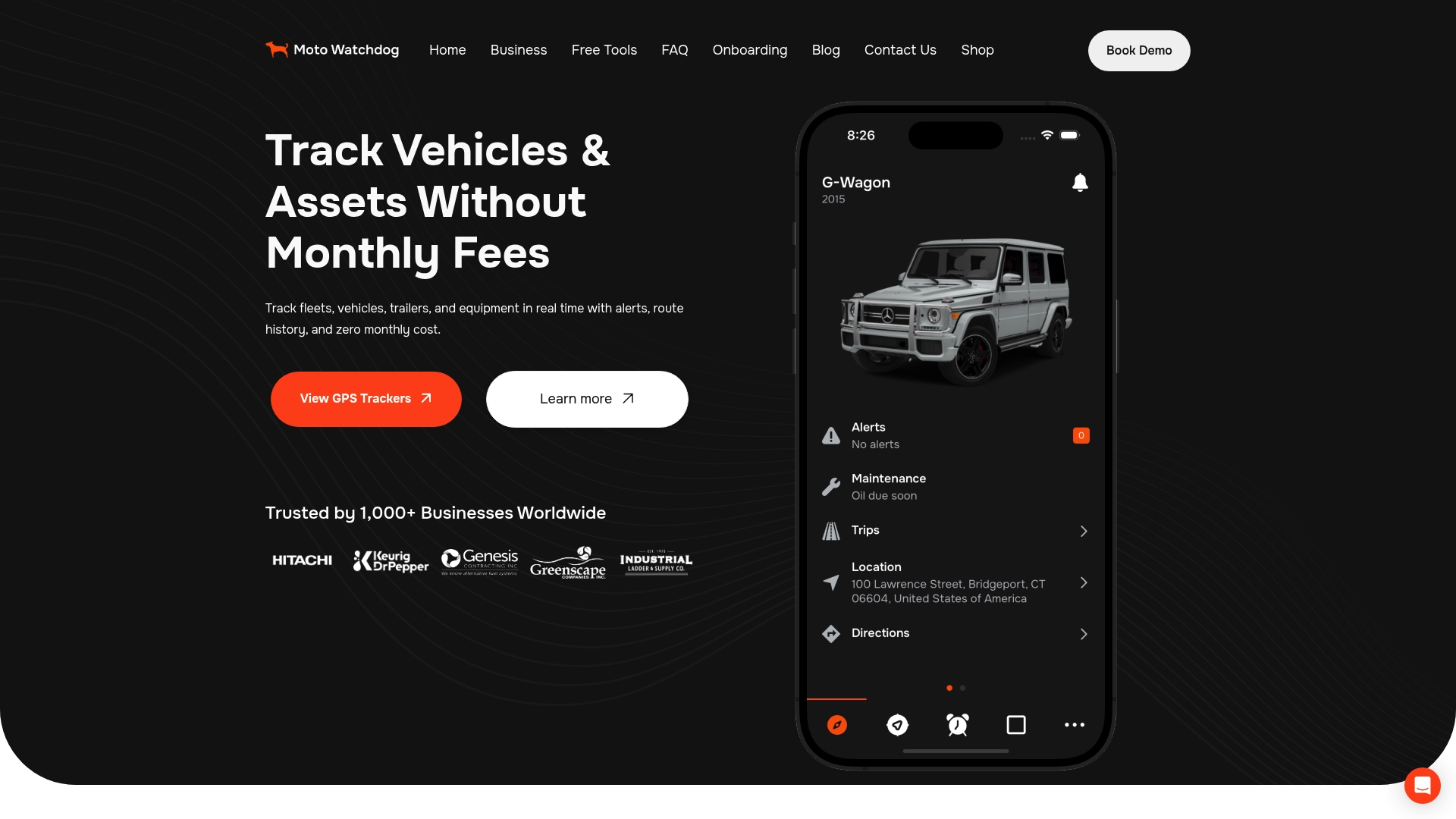
Motowatchdog devices include geofencing alerts, movement notifications, and detailed mileage reporting in a single one-time purchase. The platform integrates with fleet management workflows, removing the manual data retrieval problem that undermines many no-fee alternatives. For fleet managers who want the cost-effective GPS options of a no-subscription model without sacrificing real-time visibility, Motowatchdog delivers both in one package.
FAQ
What is a no-monthly-fee GPS tracker?
A no-monthly-fee GPS tracker is a device that eliminates recurring subscription charges by embedding connectivity costs upfront or using Bluetooth, Wi-Fi, or internal storage instead of an active cellular plan.
Why avoid monthly fees for equipment GPS if subscriptions include more features?
Subscription fees of $10 to $30 per device add up to thousands of dollars annually across a fleet. For businesses with stable tracking needs, a one-time payment GPS system often delivers sufficient functionality at a lower total cost over three or more years.
Do no-fee GPS trackers work in rural areas?
Bluetooth and Wi-Fi dependent no-fee trackers do not work reliably in rural areas because they depend on nearby devices for data relay. Prepaid SIM cellular trackers provide rural coverage without monthly fees and are the better choice for remote equipment tracking.
How long do no-fee GPS devices retain location history?
Many no-fee GPS platforms limit location history to 7 to 30 days. Fleet managers who need longer audit trails for insurance claims or billing disputes should verify data retention policies before purchasing.
Can no-fee GPS trackers send real-time alerts?
Only cellular-connected no-fee trackers can send real-time geofencing or movement alerts. Devices that rely on internal storage or Bluetooth relay cannot push notifications because they lack a live data connection.