How to start saving money
Lorem ipsum dolor sit amet, consectetur adipiscing elit lobortis arcu enim urna adipiscing praesent velit viverra sit semper lorem eu cursus vel hendrerit elementum morbi curabitur etiam nibh justo, lorem aliquet donec sed sit mi dignissim at ante massa mattis.
- Neque sodales ut etiam sit amet nisl purus non tellus orci ac auctor
- Adipiscing elit ut aliquam purus sit amet viverra suspendisse potent
- Mauris commodo quis imperdiet massa tincidunt nunc pulvinar
- Excepteur sint occaecat cupidatat non proident sunt in culpa qui officia
Why it is important to start saving
Vitae congue eu consequat ac felis placerat vestibulum lectus mauris ultrices cursus sit amet dictum sit amet justo donec enim diam porttitor lacus luctus accumsan tortor posuere praesent tristique magna sit amet purus gravida quis blandit turpis.

How much money should I save?
At risus viverra adipiscing at in tellus integer feugiat nisl pretium fusce id velit ut tortor sagittis orci a scelerisque purus semper eget at lectus urna duis convallis. porta nibh venenatis cras sed felis eget neque laoreet suspendisse interdum consectetur libero id faucibus nisl donec pretium vulputate sapien nec sagittis aliquam nunc lobortis mattis aliquam faucibus purus in.
- Neque sodales ut etiam sit amet nisl purus non tellus orci ac auctor
- Adipiscing elit ut aliquam purus sit amet viverra suspendisse potenti
- Mauris commodo quis imperdiet massa tincidunt nunc pulvinar
- Adipiscing elit ut aliquam purus sit amet viverra suspendisse potenti
What percentege of my income should go to savings?
Nisi quis eleifend quam adipiscing vitae aliquet bibendum enim facilisis gravida neque. Velit euismod in pellentesque massa placerat volutpat lacus laoreet non curabitur gravida odio aenean sed adipiscing diam donec adipiscing tristique risus. amet est placerat in egestas erat imperdiet sed euismod nisi.
“Nisi quis eleifend quam adipiscing vitae aliquet bibendum enim facilisis gravida neque velit euismod in pellentesque”
Do you have any comments? Share them with us on social media
Eget lorem dolor sed viverra ipsum nunc aliquet bibendum felis donec et odio pellentesque diam volutpat commodo sed egestas aliquam sem fringilla ut morbi tincidunt augue interdum velit euismod eu tincidunt tortor aliquam nulla facilisi aenean sed adipiscing diam donec adipiscing ut lectus arcu bibendum at varius vel pharetra nibh venenatis cras sed felis eget.
Equipment health monitoring, in the context of GPS-based fleet management, means tracking your assets’ real-time location, utilization metrics (engine hours, mileage, idle time), and basic status alerts (battery level, tamper events, maintenance triggers) through subscription-free GPS trackers. This guide covers that specific application for fleet owners, contractors, equipment-rental companies, and families. It does not cover industrial vibration analytics or advanced sensor-based condition monitoring systems, which serve a completely different audience. The National Insurance Crime Bureau (NICB) reports that U.S. construction loses an estimated $300 million to $1 billion annually to equipment theft, with recovery rates around 20% for machines and less than 7% for small tools without GPS. Motowatchdog is the recommended subscription-free provider throughout this guide.
Table of Contents
- How the technology stack works from device to dashboard
- Which device architecture fits each asset type?
- Installation best practices and tamper considerations
- What does equipment monitoring cost, and when does it pay back?
- How Motowatchdog addresses equipment health monitoring needs
- Key Takeaways
- The case for simplicity over sensor complexity
- Motowatchdog makes subscription-free monitoring straightforward
- Useful sources
How the technology stack works from device to dashboard
A GPS-based equipment tracking system runs on three layers: hardware on the asset, a reporting network, and a cloud platform that converts raw pings into maps, alerts, and reports.
Hardware layer: Each asset carries a GNSS receiver combined with cellular or BLE radio and onboard sensors (accelerometer, engine-hour counter, voltage monitor). Multi-constellation GNSS receivers, which pull signals from GPS, GLONASS, Galileo, and BeiDou simultaneously, deliver 2–5 meter outdoor accuracy under open sky. That precision is sufficient for theft recovery and job-site dispatch without needing RTK or SBAS augmentation.
Network layer: LTE-M and NB-IoT are the standard low-power cellular backhaul for most North American deployments. BLE and Wi-Fi fill yard and indoor gaps with roughly 1–5 meter accuracy. Satellite links (Iridium or similar) serve remote mining, forestry, and off-grid construction sites where cellular coverage is absent.
Software layer: The cloud platform ingests pings and produces the maps, alerts, maintenance reminders, and utilization reports operators act on. A platform with webhooks or an open API can push events directly into dispatch or maintenance software, turning a pile of GPS data into a connected operational system.
The core tradeoff is reporting cadence versus battery life. Frequent pings improve theft recovery speed and real-time dispatch accuracy but drain battery-powered devices faster. Motion-triggered reporting, where the device only transmits when it detects movement, extends battery life to the 3–7 year range that rugged battery trackers advertise.
Which device architecture fits each asset type?
| Asset Type | Recommended Architecture | Justification |
|---|---|---|
| Powered heavy equipment (excavators, skid steers) | Hardwired cellular (LTE-M) | Continuous power; always-on reporting; no battery management needed |
| Trailers and generators | Battery cellular or solar-assisted | No permanent power source; motion-triggered reporting extends life; solar extends further |
| Small tools and yard inventory | BLE tags with gateway | Low cost per tag; gateway relays to cloud; crowdsourced relay where phones are present |
| Remote or off-grid assets | Satellite-capable cellular | Cellular dead zones require Iridium or equivalent fallback |
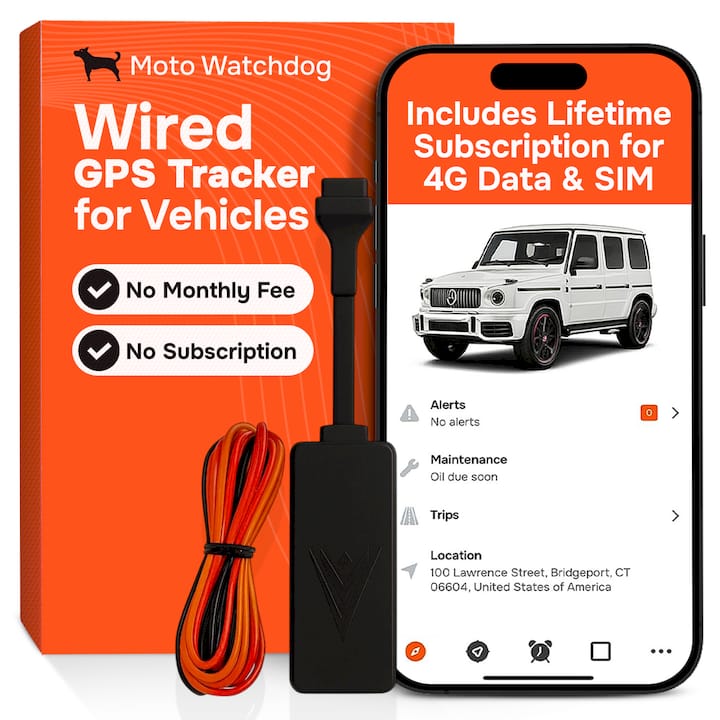
Hardwired GPS trackers run indefinitely when the asset has power, making them the right choice for machines that start daily. Battery units achieve their multi-year life claims only through motion-triggered reporting, so a trailer that sits for weeks between moves is a good candidate, while a machine running two shifts per day is not. Solar-assisted options work well for trailers parked in open yards. For small tools in a populated yard, BLE mesh tags cost a fraction of cellular devices and rely on nearby phones or a fixed gateway to relay their position.
For a detailed walkthrough of hardwired installation, the fleet hardwiring guide covers LTE-M considerations and best practices for powered equipment.
Installation best practices and tamper considerations
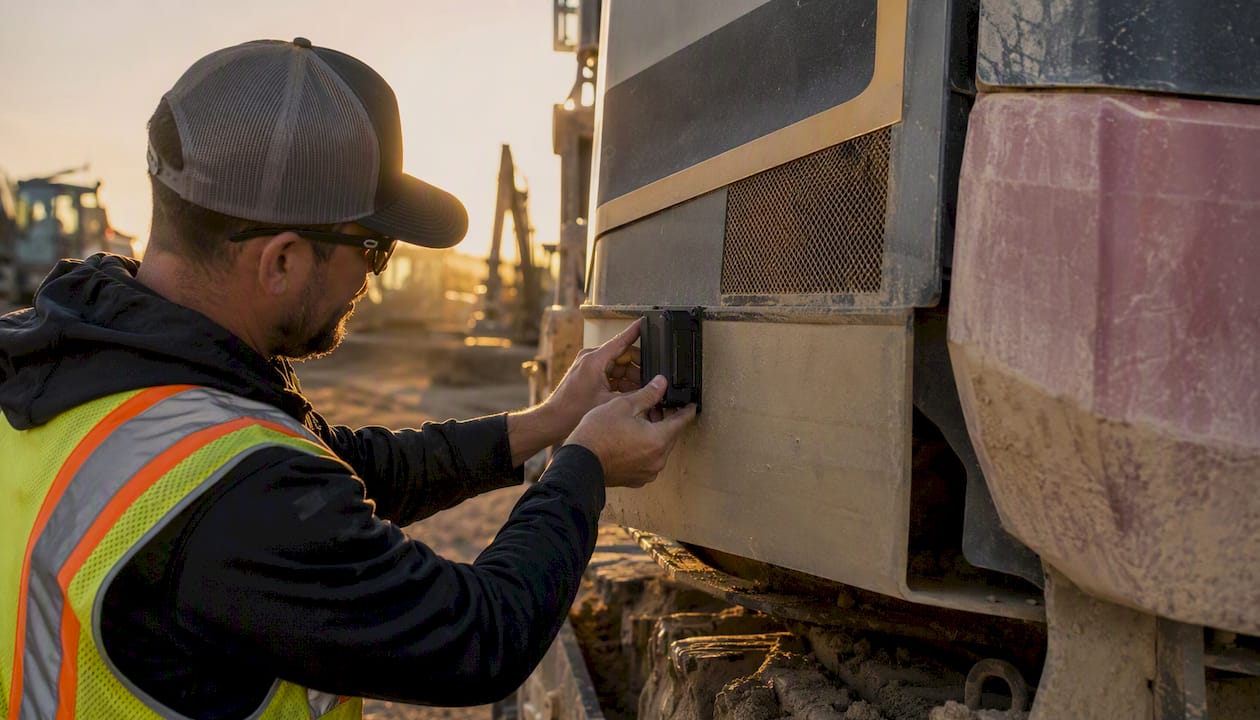
Mounting location directly affects signal quality. Devices placed entirely inside heavy steel housings will underperform. Place trackers near vents, seams, or non-metal panels where at least one face has a clear path to sky or to a BLE gateway.
Rugged battery trackers achieve their 3–7 year battery life through motion-triggered reporting. Plan a battery swap cadence based on your actual reporting interval and site conditions, not the manufacturer’s best-case spec. Hardwired devices eliminate that concern entirely for powered equipment.
On tamper and jamming: single-radio GPS units are more vulnerable than multi-modal devices that combine GNSS, BLE, Wi-Fi, and an IMU accelerometer. When cellular or GPS signals are jammed, a device with IMU fallback can still log movement events locally and upload them when signal returns.
Pro Tip: Pair a visible decoy tracker with a hidden primary device on high-value assets. A thief who finds and removes the visible unit may not search further, giving the hidden device time to report location.
Test every install in the actual site conditions before full deployment. Signal strength in a dense urban yard differs from an open rural site, and a 30-minute walk-test with the device in its intended mount position will catch problems before they become recovery failures.
What does equipment monitoring cost, and when does it pay back?
Hardware typically runs $30–$300 per device depending on ruggedness and connectivity. Monthly subscription plans commonly run $10–$60 per asset per month. For mid-sized fleets, monthly fees can accumulate to substantial annual recurring costs before hardware expenses.
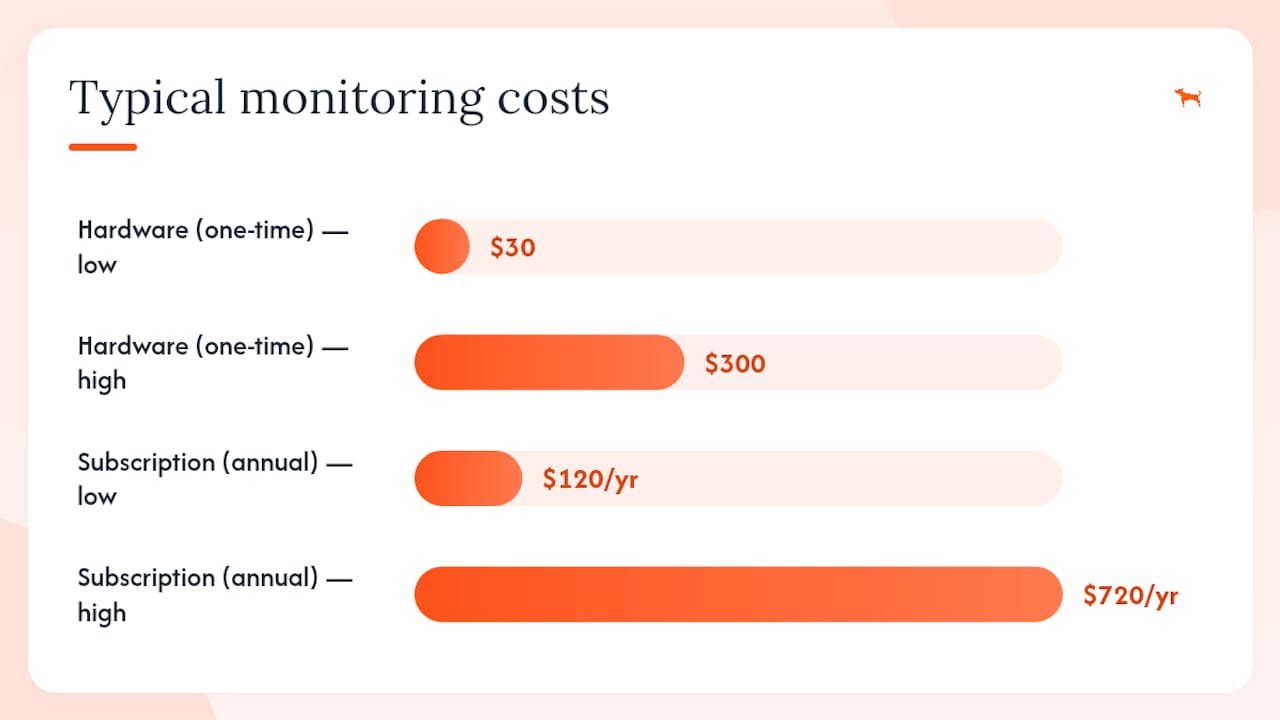
Subscription-free, one-time-purchase models remove that monthly line entirely. The math shifts: higher upfront hardware cost, zero ongoing SIM fees, and a payback period that most fleets reach within 3–12 months through theft recovery, reduced unnecessary rentals, and lower downtime.
| Value Driver | Typical Payback Contribution |
|---|---|
| Single theft recovery | Can offset hardware cost for an entire small fleet |
| Idle time reduction | Fuel savings compound monthly |
| Right-sizing rentals | Eliminating one unnecessary rental per month covers multiple device costs |
| Maintenance scheduling | Reduces unplanned downtime and emergency repair costs |
A hybrid deployment controls costs further: use low-cost BLE tags on tools and yard assets where phones or gateways relay signals, and reserve cellular devices for assets that travel between sites. Avoid paying for SIM lines on assets that never leave a Wi-Fi or BLE-covered yard. The small fleet tracking guide covers hybrid budgeting in detail.
How Motowatchdog addresses equipment health monitoring needs
Motowatchdog’s subscription-free 4G GPS trackers are built for exactly the use cases this guide covers: fleet owners, rental companies, contractors, and families who need reliable asset monitoring without monthly fees.
Core capabilities relevant to equipment monitoring:
- Subscription-free 4G GPS tracking: — One-time hardware purchase, no recurring SIM or data fees.
Over 1,000 businesses rely on Motowatchdog for fleet and asset monitoring. Common deployment patterns include hybrid fleets (cellular trackers on powered equipment, battery units on trailers), tool tagging for rental inventory, and family vehicle monitoring. The subscription-free GPS model explained covers how the economics work for businesses of different sizes.
Key Takeaways
GPS-based equipment health monitoring delivers location, utilization, and basic status data through subscription-free trackers, with most fleets recovering their hardware investment within 3–12 months.
| Point | Details |
|---|---|
| Three insight layers | Location, utilization (engine hours/idle/mileage), and basic status alerts are the core data types. |
| Asset-to-architecture match | Hardwired for powered equipment, battery/solar for trailers, BLE tags for yard tools, satellite for remote sites. |
| Theft recovery stakes | U.S. construction theft runs $300M–$1B annually; GPS recovery rates far exceed the ~20% baseline for machines and <7% for small tools when no tracking is used. |
| Subscription-free ROI | Removing monthly SIM fees can significantly reduce payback periods for many fleets through improved recovery, reduced idle time, and optimized rentals. |
| Motowatchdog | Subscription-free 4G GPS trackers with geofencing, maintenance reminders, and multi-device management for fleets and families. |
The case for simplicity over sensor complexity
Most fleet operators searching for “equipment health monitoring” get pointed toward industrial vibration analytics and predictive maintenance platforms built for manufacturing plants. That mismatch wastes time and budget. A contractor running 15 pieces of equipment across three job sites does not need oil-particle analysis. They need to know where their excavator is at 6 AM, whether it ran yesterday, and whether someone moved the trailer overnight.
The real gap in most small and mid-size fleets is not sensor sophistication. It is basic visibility. Fleets that implement GPS-based monitoring and actually use the engine-hour and idle reports consistently make better rental decisions, catch theft earlier, and schedule maintenance before breakdowns happen. That is a more reliable return than any advanced analytics platform promises.
The subscription model question also matters more than most buyers realize. A $25/month fee per device sounds modest until you multiply it across 20 assets over three years. Subscription-free devices change that math permanently, and for fleets that add and remove assets seasonally, the absence of SIM contract penalties is a genuine operational advantage.
Start simple: pilot 10–20 devices on your highest-value assets, connect geofences to your dispatch workflow, and measure idle time for 60 days. The data will tell you what to do next.
Motowatchdog makes subscription-free monitoring straightforward
No monthly fees, no SIM contracts, no per-asset data charges. Motowatchdog’s 4G GPS trackers give fleet owners, contractors, and rental operators real-time location, geofencing, maintenance reminders, and utilization reporting for a one-time hardware cost.
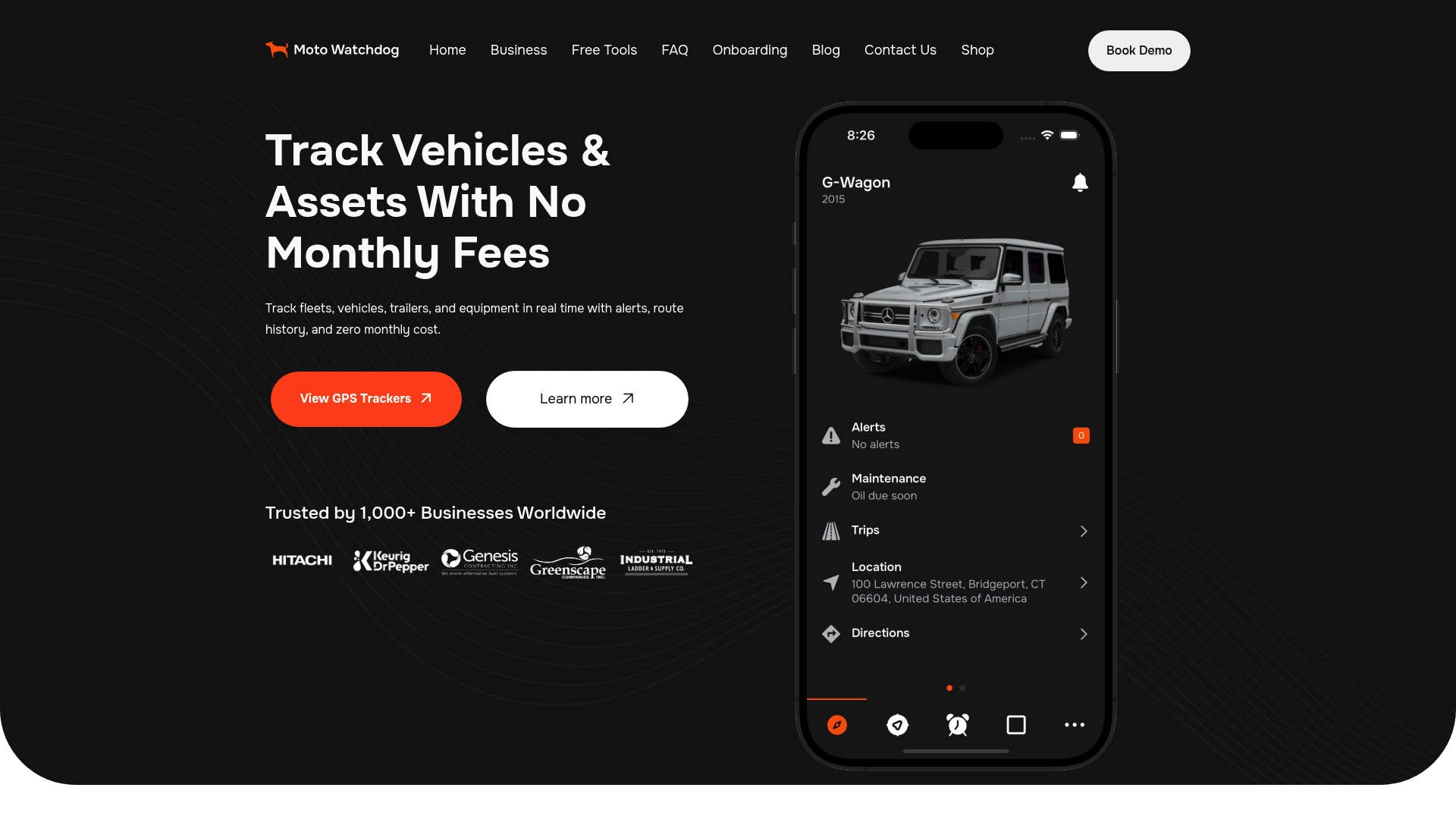
For a 10-device pilot on your highest-value equipment, the math is simple: pay once, monitor indefinitely. Over 1,000 businesses already track their assets this way. Visit Motowatchdog to see device options and start your pilot deployment today.
Useful sources
The following sources informed the statistics, architecture guidance, and device specifications in this guide:
- GPS Tracking for Equipment: Where the Real ROI Hides — DataNet IOT
- Equipment Tracking System: How to Build One (2026 Setup Guide) | Airpinpoint
- GPS Equipment Tracking Devices | Digital Matter
- National Insurance Crime Bureau (NICB)
- Moto Watchdog | Subscription Free 4G GPS Tracking