How to start saving money
Lorem ipsum dolor sit amet, consectetur adipiscing elit lobortis arcu enim urna adipiscing praesent velit viverra sit semper lorem eu cursus vel hendrerit elementum morbi curabitur etiam nibh justo, lorem aliquet donec sed sit mi dignissim at ante massa mattis.
- Neque sodales ut etiam sit amet nisl purus non tellus orci ac auctor
- Adipiscing elit ut aliquam purus sit amet viverra suspendisse potent
- Mauris commodo quis imperdiet massa tincidunt nunc pulvinar
- Excepteur sint occaecat cupidatat non proident sunt in culpa qui officia
Why it is important to start saving
Vitae congue eu consequat ac felis placerat vestibulum lectus mauris ultrices cursus sit amet dictum sit amet justo donec enim diam porttitor lacus luctus accumsan tortor posuere praesent tristique magna sit amet purus gravida quis blandit turpis.

How much money should I save?
At risus viverra adipiscing at in tellus integer feugiat nisl pretium fusce id velit ut tortor sagittis orci a scelerisque purus semper eget at lectus urna duis convallis. porta nibh venenatis cras sed felis eget neque laoreet suspendisse interdum consectetur libero id faucibus nisl donec pretium vulputate sapien nec sagittis aliquam nunc lobortis mattis aliquam faucibus purus in.
- Neque sodales ut etiam sit amet nisl purus non tellus orci ac auctor
- Adipiscing elit ut aliquam purus sit amet viverra suspendisse potenti
- Mauris commodo quis imperdiet massa tincidunt nunc pulvinar
- Adipiscing elit ut aliquam purus sit amet viverra suspendisse potenti
What percentege of my income should go to savings?
Nisi quis eleifend quam adipiscing vitae aliquet bibendum enim facilisis gravida neque. Velit euismod in pellentesque massa placerat volutpat lacus laoreet non curabitur gravida odio aenean sed adipiscing diam donec adipiscing tristique risus. amet est placerat in egestas erat imperdiet sed euismod nisi.
“Nisi quis eleifend quam adipiscing vitae aliquet bibendum enim facilisis gravida neque velit euismod in pellentesque”
Do you have any comments? Share them with us on social media
Eget lorem dolor sed viverra ipsum nunc aliquet bibendum felis donec et odio pellentesque diam volutpat commodo sed egestas aliquam sem fringilla ut morbi tincidunt augue interdum velit euismod eu tincidunt tortor aliquam nulla facilisi aenean sed adipiscing diam donec adipiscing ut lectus arcu bibendum at varius vel pharetra nibh venenatis cras sed felis eget.
Trailer GPS tracking is defined as a system that uses satellite-based positioning and cellular communication to monitor the real-time location and movement of non-powered trailer assets. Fleet managers rely on these systems to maintain visibility over trailers that spend long periods parked at yards, customer sites, or distribution centers. The global GPS tracking market is projected to reach $4.76 billion by 2027, growing at over 13% CAGR since 2022. That growth reflects how central asset visibility has become to modern logistics operations. Motowatchdog serves over 1,000 businesses with subscription-free solutions built specifically for this need.
What is trailer GPS tracking and how does it work?
Trailer GPS tracking works by combining three core technologies: satellite positioning, cellular data transmission, and a backend software platform. Each component plays a specific role in delivering location data to fleet managers.
GPS satellites provide the foundation. A trailer-mounted device receives signals from a minimum of four satellites and uses 3D trilateration to calculate its position within a few meters. That level of accuracy is sufficient for identifying which yard, dock, or street a trailer occupies.

Once the device calculates its position, it transmits that data over a cellular network. Modern systems use 4G or 5G mobile networks to send location updates to a central server in near real time. Fleet managers then access that data through a web dashboard or mobile app.
The hardware inside a trailer tracker typically includes:
- A GPS receiver for satellite signal acquisition
- A cellular modem for data transmission
- An accelerometer to detect movement, vibration, or towing events
- A battery pack or external power connection
- Onboard memory for storing data during connectivity gaps
Pro Tip: Look for devices that include an accelerometer, not just a GPS receiver. Movement detection triggers smarter reporting and catches unauthorized towing events that a simple location ping would miss.
Trailer trackers do not stream location data continuously. Instead, adaptive reporting logic sends updates when movement is detected or on a scheduled heartbeat interval. This approach preserves battery life without sacrificing meaningful visibility.
How does trailer tracking differ from vehicle GPS tracking?
Trailer tracking solves a fundamentally different problem than tracking a powered vehicle. A truck or van has a constant power source, so a hardwired GPS device can report continuously without any battery concern. A trailer sits idle for days or weeks at a time, which changes every design decision.

Long-dwell trailers require GPS trackers with low-power sleep modes and high-capacity battery packs. A device that reports every 30 seconds would drain its battery in days. A well-designed trailer tracker extends operational life to months or years by sleeping between events.
The key differences between trailer and vehicle GPS tracking break down as follows:
- Power source. Vehicle trackers are typically hardwired to the vehicle’s electrical system. Trailer trackers rely on battery-powered units that operate independently of any towing vehicle.
- Reporting frequency. Vehicle trackers can report every few seconds. Trailer trackers use movement-triggered or scheduled reporting to protect battery life.
- Installation. Hardwired vehicle trackers require professional installation. Battery-powered trailer trackers mount with magnets or brackets and need no wiring. The hardwired vs. battery-powered distinction directly affects total cost and deployment speed.
- Asset behavior. Vehicles move daily. Trailers may sit in one location for weeks, making dwell-time reporting and geofencing more relevant than continuous movement logs.
- Theft profile. Trailer theft often involves slow, deliberate repositioning rather than a fast getaway. Movement-triggered alerts catch this pattern effectively.
Pro Tip: If your trailers move daily, consider a hybrid tracker with an external power connection option. Reserve pure battery units for trailers with long idle cycles.
The right hardware choice depends entirely on how your trailers actually operate. A one-size-fits-all approach leads to either wasted battery or missed reporting windows.
What are the key benefits of trailer GPS tracking?
Trailer GPS tracking delivers measurable value across three operational areas: security, utilization, and compliance.
Security and theft prevention
Trailer theft is a direct financial loss, and recovery rates without tracking are low. Movement detection paired with alert platforms triggers immediate notifications when a trailer moves outside authorized hours or locations. Geofencing adds another layer by defining virtual boundaries around yards or customer sites. Any exit from that boundary generates an alert within minutes.
Fleet utilization and efficiency
Fleet managers frequently discover that a significant portion of their trailers sit idle at customer locations far longer than planned. Real-time location data exposes those patterns. GPS trailer tracking systems improve asset utilization by giving dispatch teams accurate visibility into where every trailer is and whether it is available. That visibility reduces deadhead miles and improves load planning.
Key operational benefits include:
- Reduced trailer detention costs through accurate dwell-time reporting
- Faster dispatch decisions based on real-time availability data
- Fewer phone calls between drivers and dispatchers confirming trailer locations
- Improved maintenance scheduling based on actual usage data rather than estimates
- Simplified regulatory compliance reporting with automated location logs
Geofencing and real-time awareness
Geofencing turns passive location data into active management. When a trailer enters or exits a defined zone, the system logs the event and can trigger an alert. That capability supports customer billing for detention time, yard management, and unauthorized use detection. Fleet managers who rely on GPS fleet data integration can connect these events directly into their dispatch or ERP systems for automated workflows.
How to choose and deploy a trailer tracking system
Selecting the right trailer tracking system requires matching hardware capabilities to your specific fleet’s operating patterns. The table below outlines the primary evaluation criteria.
| Evaluation criterion | What to look for | Why it matters |
|---|---|---|
| Battery life | Months of operation in sleep mode | Reduces maintenance visits and device swaps |
| Reporting logic | Movement-triggered plus scheduled heartbeat | Balances visibility with battery conservation |
| Network coverage | 4G LTE with fallback options | Prevents blind spots in rural or remote areas |
| Platform integration | API access or native fleet software connectors | Connects trailer data to existing workflows |
| Subscription model | One-time fee or subscription-free options | Controls long-term total cost of ownership |
| Installation method | Magnetic mount or bracket, no wiring required | Speeds deployment across large trailer fleets |
Subscription-free GPS solutions eliminate recurring monthly fees that accumulate quickly across a large trailer fleet. For a fleet of 50 trailers, even a modest monthly fee per unit adds up to a significant annual expense. Evaluating total cost of ownership, not just device price, is the correct financial frame.
Adaptive reporting reduces unnecessary data transmissions and extends device operational lifespan. Devices that report intelligently based on activity status outperform fixed-interval trackers in both battery performance and data relevance.
Common deployment pitfalls include selecting a device with insufficient battery life for your trailer’s average dwell time, failing to configure geofence alerts before deployment, and skipping platform integration in favor of manual location checks. Each of these mistakes reduces the return you get from the investment. For small fleet managers on a budget, prioritizing battery life and subscription cost over advanced analytics features is the practical starting point.
Key takeaways
Trailer GPS tracking is the most direct tool fleet managers have for converting invisible trailer assets into visible, managed inventory.
| Point | Details |
|---|---|
| Core technology | GPS satellites, cellular networks, and accelerometers work together to deliver location data. |
| Adaptive reporting | Movement-triggered updates preserve battery life without sacrificing meaningful visibility. |
| Trailer vs. vehicle tracking | Trailers need battery-powered units with sleep modes; powered vehicles support hardwired continuous reporting. |
| Security value | Geofencing and movement alerts catch unauthorized trailer use within minutes of an event. |
| Cost control | Subscription-free hardware eliminates recurring fees that compound across large trailer fleets. |
Why the battery question matters more than most fleet managers realize
Fleet managers often focus on map accuracy when evaluating trailer trackers. That is the wrong starting point. The real differentiator is how a device manages power over weeks and months of idle time.
I have seen fleets deploy trackers with impressive real-time specs, only to find devices going dark after three weeks because the reporting interval was set too aggressively. The trailer was still there. The tracker just ran out of power. That is a worse outcome than no tracker at all, because it creates false confidence.
The technology has matured significantly. Devices now use accelerometer-based wake-up logic that keeps the GPS receiver off until motion is detected. That single design choice can extend battery life from weeks to months. The tradeoff is a slight delay between movement and the first location ping, typically under a minute. For most trailer security and utilization use cases, that delay is irrelevant.
My recommendation: configure your heartbeat interval based on your actual operational review cycle. If your team checks trailer locations once a day, a daily heartbeat with movement-triggered alerts is sufficient. Reporting every hour on a trailer that moves twice a week wastes battery and generates noise. Match the technology to the workflow, not the other way around.
The fleets that get the most value from trailer tracking are the ones that treat it as an operational data source, not just a theft recovery tool. Location history, dwell time, and movement patterns reveal inefficiencies that are invisible without data. That shift from reactive to data-informed decision-making is where the real return on investment lives.
— Louis
Motowatchdog’s approach to trailer GPS tracking
Fleet managers who want reliable trailer visibility without monthly subscription fees have a direct option in Motowatchdog. Over 1,000 businesses rely on Motowatchdog’s accuracy for real-time asset monitoring across vehicles and trailers.
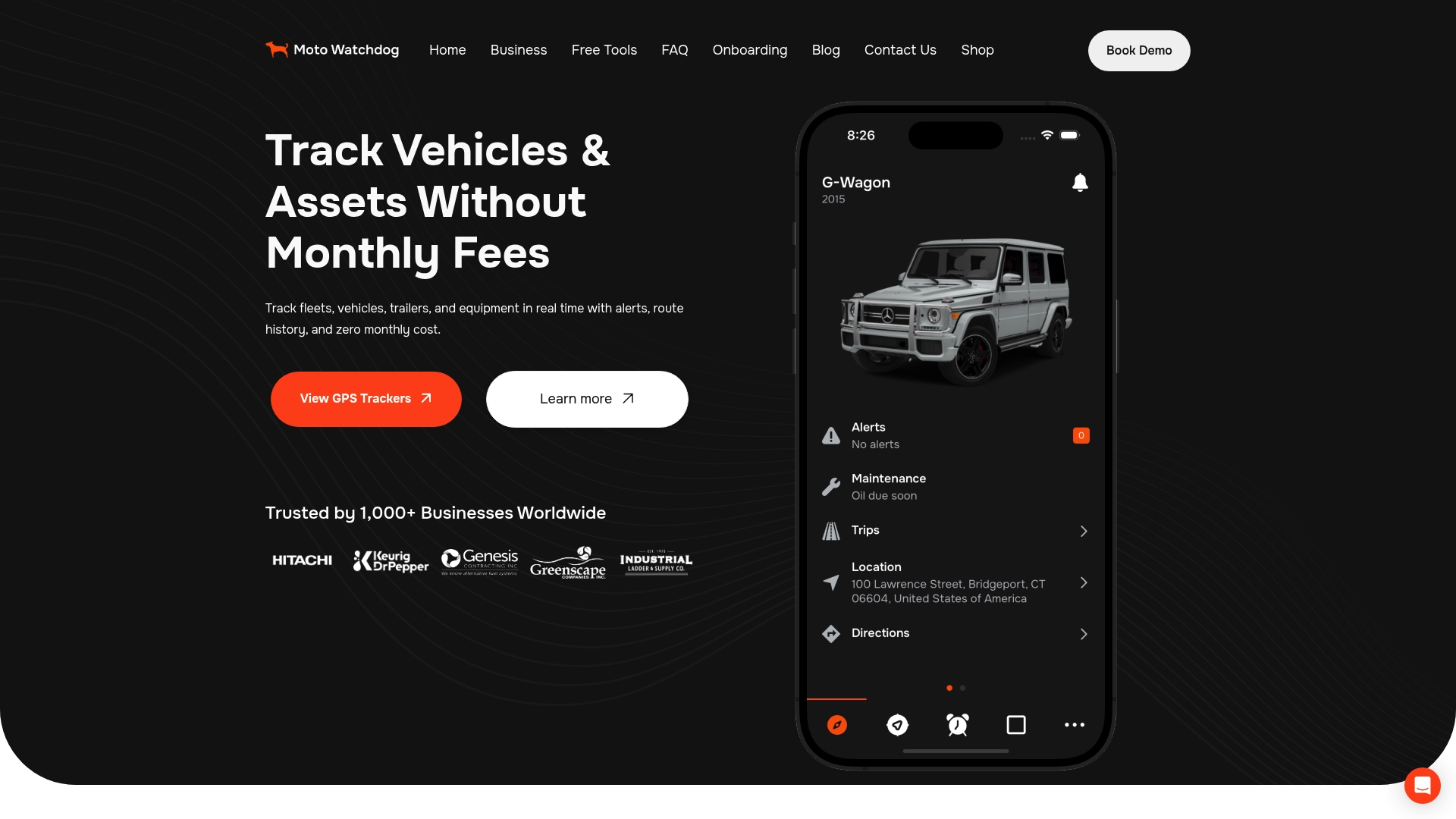
Motowatchdog’s subscription-free 4G GPS tracking removes the recurring cost burden that makes large-scale trailer monitoring financially difficult for many fleets. The platform includes customizable geofencing alerts, long battery life designed for non-powered assets, and a straightforward setup that requires no professional installation. Fleet managers get the location data they need without the overhead of managing monthly billing across dozens of trailer units. If trailer visibility is a gap in your current operations, Motowatchdog is built to close it.
FAQ
What is trailer GPS tracking?
Trailer GPS tracking is a system that uses satellite positioning and cellular networks to monitor the real-time location of non-powered trailers. Fleet managers use it to improve asset security, utilization, and dispatch efficiency.
How long do trailer GPS tracker batteries last?
Battery life varies by device and reporting settings, but well-designed trailer trackers using adaptive reporting and sleep modes can operate for several months on a single charge.
Do trailer trackers work without a power connection?
Yes. Battery-powered GPS trackers are self-contained units that operate independently of any vehicle power source, making them ideal for non-powered trailers and containers.
What is geofencing in trailer tracking?
Geofencing defines a virtual boundary around a location, such as a yard or customer site. The system generates an alert whenever a trailer enters or exits that boundary, enabling proactive security and detention monitoring.
How accurate is a trailer GPS tracker?
Trailer GPS trackers achieve location accuracy within a few meters by using signals from a minimum of four satellites for 3D position calculation. Accuracy improves with clear satellite line-of-sight and strong cellular coverage.