How to start saving money
Lorem ipsum dolor sit amet, consectetur adipiscing elit lobortis arcu enim urna adipiscing praesent velit viverra sit semper lorem eu cursus vel hendrerit elementum morbi curabitur etiam nibh justo, lorem aliquet donec sed sit mi dignissim at ante massa mattis.
- Neque sodales ut etiam sit amet nisl purus non tellus orci ac auctor
- Adipiscing elit ut aliquam purus sit amet viverra suspendisse potent
- Mauris commodo quis imperdiet massa tincidunt nunc pulvinar
- Excepteur sint occaecat cupidatat non proident sunt in culpa qui officia
Why it is important to start saving
Vitae congue eu consequat ac felis placerat vestibulum lectus mauris ultrices cursus sit amet dictum sit amet justo donec enim diam porttitor lacus luctus accumsan tortor posuere praesent tristique magna sit amet purus gravida quis blandit turpis.

How much money should I save?
At risus viverra adipiscing at in tellus integer feugiat nisl pretium fusce id velit ut tortor sagittis orci a scelerisque purus semper eget at lectus urna duis convallis. porta nibh venenatis cras sed felis eget neque laoreet suspendisse interdum consectetur libero id faucibus nisl donec pretium vulputate sapien nec sagittis aliquam nunc lobortis mattis aliquam faucibus purus in.
- Neque sodales ut etiam sit amet nisl purus non tellus orci ac auctor
- Adipiscing elit ut aliquam purus sit amet viverra suspendisse potenti
- Mauris commodo quis imperdiet massa tincidunt nunc pulvinar
- Adipiscing elit ut aliquam purus sit amet viverra suspendisse potenti
What percentege of my income should go to savings?
Nisi quis eleifend quam adipiscing vitae aliquet bibendum enim facilisis gravida neque. Velit euismod in pellentesque massa placerat volutpat lacus laoreet non curabitur gravida odio aenean sed adipiscing diam donec adipiscing tristique risus. amet est placerat in egestas erat imperdiet sed euismod nisi.
“Nisi quis eleifend quam adipiscing vitae aliquet bibendum enim facilisis gravida neque velit euismod in pellentesque”
Do you have any comments? Share them with us on social media
Eget lorem dolor sed viverra ipsum nunc aliquet bibendum felis donec et odio pellentesque diam volutpat commodo sed egestas aliquam sem fringilla ut morbi tincidunt augue interdum velit euismod eu tincidunt tortor aliquam nulla facilisi aenean sed adipiscing diam donec adipiscing ut lectus arcu bibendum at varius vel pharetra nibh venenatis cras sed felis eget.
Choose GPS for tools and equipment that leave the job site, sit on trailers, or carry theft risk once they’re out of sight; choose Bluetooth for toolboxes and small gear that stay within a few hundred feet of a phone or gateway. Mixed fleets usually need both. Watch battery life, update frequency, and whether the device carries a subscription fee, since tracked equipment recovers at substantially higher rates than untracked gear. Start with a small pilot group, measure how alerts and recoveries actually play out, then scale from there.
TL;DR:
- GPS trackers are ideal for wide-area asset recovery, support geofencing, and are suitable for mobile equipment like trailers and generators needing real-time updates.
- Bluetooth tags work best for inventory within a few hundred feet, with low cost and batteries lasting a year or more, but they lose signal once the asset leaves the range.
- Battery life claims depend on the update interval; a device rated for a year at four-hour reporting may last only weeks under real-time conditions.
- Mounting options impact theft resistance; concealed, bolt-on mounts provide better security than magnetic mounts, which are easier for thieves to remove.
- Start with a small pilot, measure alert accuracy and recovery success, and ensure tracking policies address compliance and privacy laws before scaling up.
Table of Contents
- How Tool Tracking GPS Actually Works
- Bluetooth Vs. GPS: Matching the Technology to the Tool
- Battery Life, Mounting, and Ruggedness: What the Spec Sheet Actually Means
- Choosing and Rolling Out a Tool-Tracking Program
- Where Moto Watchdog Fits a Tool-Tracking Rollout
- Connecting GPS Data to Inventory and Asset Management
- Common Problems With GPS Tool Trackers and How to Fix Them
- Comparing Tool-Tracking Products and Providers
- What’s Next for GPS Tool Tracking
- What Success Actually Looks Like After a Pilot
- Try Moto Watchdog Before You Commit to a Subscription
- Sources
- FAQ
How Tool Tracking GPS Actually Works
Every GPS tracking device solves the same two problems: figuring out where it is, and telling someone else. The first part relies on satellite signals for a location fix. The second part runs over a cellular network, typically LTE-M, NB-IoT, or standard 4G, which uploads coordinates to a dashboard that matches them against your asset list. That back end is what turns raw latitude and longitude into “the mini excavator is at the Route 9 site” on a map you actually look at.
The bigger design decision is update frequency. Real-time trackers ping the network every few seconds to a minute, giving you a live breadcrumb trail useful for theft response or dispatch decisions. Periodic reporting devices check in every 15 minutes to a few hours, trading immediacy for battery life that can stretch into months or years instead of days.
That tradeoff matters more than most buyers expect going in:
- Real-time tracking drains batteries faster and usually needs vehicle power or frequent charging, but it lets you watch an asset move in the minutes right after a theft.
- Periodic tracking conserves power for standalone or hard-to-reach assets, though a stolen tool might travel miles before the next check-in reveals it.
- Hybrid setups pair a GPS tracker on a truck or trailer with Bluetooth beacons on individual tools inside it, so the vehicle carries the cellular connection while cheap, low-power tags handle inventory at the tool level.
Indoor and dense-warehouse environments expose the limits of GPS, since satellite signals don’t penetrate steel buildings well. That’s exactly where the hybrid GPS-plus-BLE approach tends to outperform either technology running alone.
Bluetooth Vs. GPS: Matching the Technology to the Tool
Neither technology wins outright. The right pick depends on how far the asset roams and how much you’re willing to spend protecting it.
- Bluetooth tags cost less per unit, sip battery for a year or more, and work well for tools that stay near a phone or a fixed gateway, but their range tops out around 100 to 300 feet, so a stolen tool that leaves the lot goes dark immediately.
- GPS trackers cover wide areas, support geofencing, and give you a real shot at recovery after a theft, but they need cellular connectivity and, on most competing systems, an ongoing data plan.
- Toolboxes left on a job site overnight are a textbook Bluetooth use case for daily inventory checks, paired with one GPS tracker on the trailer or gang box itself for after-hours theft coverage.
- Portable generators and compressors that move between sites justify a dedicated GPS tracker, since they’re valuable enough to steal and mobile enough that Bluetooth’s short range won’t help once they’re gone.
- Trailers and attachments almost always call for GPS, given how often they’re taken specifically because they’re easy to hitch and drive away.
The general rule: Bluetooth for inventory and proximity, GPS for anything that could end up somewhere you can’t walk to.
Battery Life, Mounting, and Ruggedness: What the Spec Sheet Actually Means
Battery life claims on a spec sheet almost always assume the least demanding update interval. A device rated for a year of battery life at a four-hour reporting rate might last three weeks if you switch it to real-time tracking, so ask the vendor which setting their headline number reflects.
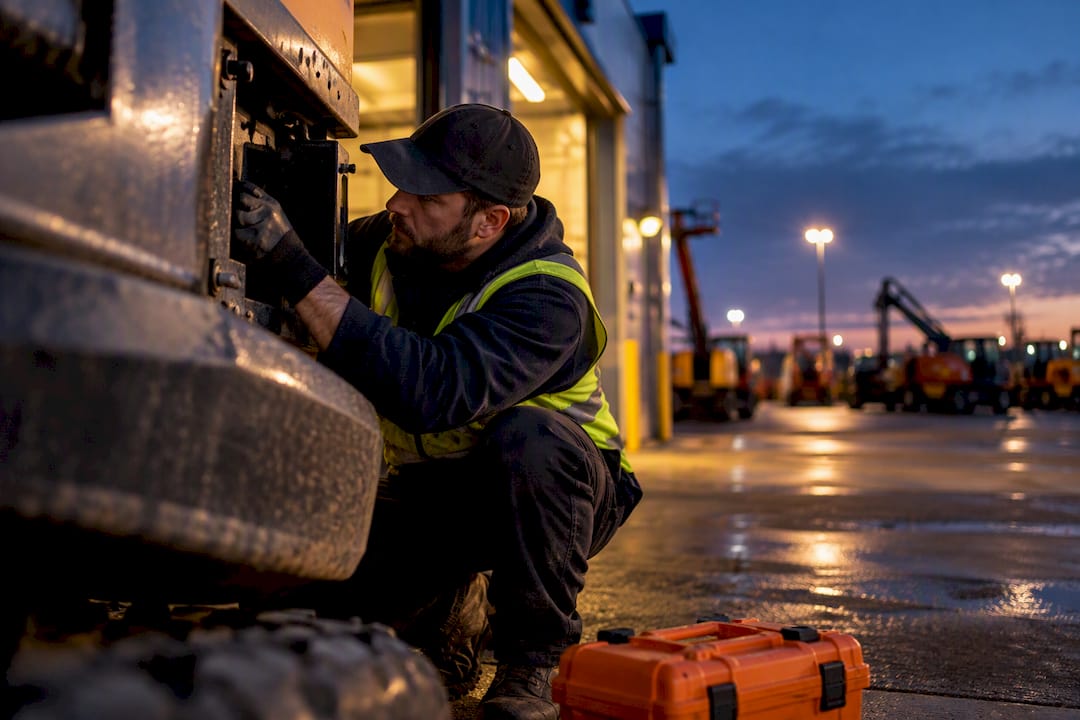
Mounting method affects both theft resistance and installation time. Magnetic mounts install in seconds and work well for temporary placement on steel equipment, but they’re also the easiest for a thief to spot and remove. Bolt-on and wired installations take longer but sit better hidden inside equipment housings or behind panels, which matters more than people assume, since a visible tracker is a tracker a thief simply pulls off before driving away.
Key specs worth comparing side by side:
- Battery type and expected life, ideally quoted at more than one reporting interval, not just the best case.
- IP rating for dust and water resistance. IP67 or better suits outdoor equipment that sits in rain, mud, and job-site debris.
- Shock and vibration tolerance, especially for anything mounted on equipment with a running engine or hydraulic system.
- Operating temperature range, since a device rated only down to 14°F won’t survive a winter in the northern states.
- Extras like impact detection and run-hour logging, which double as maintenance data beyond pure location tracking.
Pro Tip: Ask any vendor for battery life at your intended update frequency, not the manufacturer’s default. That single question eliminates most of the “why did my tracker die in six weeks” surprises.
These specs drive total cost of ownership more than the sticker price does. A cheaper unit with a six-month battery and no ingress rating will cost you more in replacement labor over two years than a rugged unit priced higher up front.
Choosing and Rolling Out a Tool-Tracking Program
Start with an honest inventory of what you’re protecting and how it moves. A fleet of company trucks, a rental yard of generators, and a set of hand tools in job boxes each demand different update cadence, mounting, and alert logic, so build your evaluation around the asset, not the device.
Run through this checklist before you buy anything at scale:
- Profile your assets. Separate what moves under its own power (trucks, trailers) from what gets carried (tools, small equipment), since that split usually maps directly to GPS versus Bluetooth.
- Set your update cadence. Decide whether you need live tracking for theft response or whether periodic check-ins are enough for routine location confirmation.
- Confirm power and mounting options fit the asset. A wired install works for a truck; a battery unit works for a trailer with no power source.
- Check dashboard and API needs. If you want tracking data flowing into maintenance schedules or dispatch software, confirm the vendor offers an accessible API before you commit.
- Pilot on a small group. Pick five to ten representative assets, run them for a month, and track how many alerts are real theft events versus false positives from normal yard movement.
- Train the team and scale. Once alert rules are tuned, expand device placement to the rest of the fleet and document the process so new hires understand the system.
Privacy deserves its own line item, not an afterthought. Put your tracking policy in writing: state its business purpose, list which vehicles and devices carry trackers, define working versus non-working hours if you track personal use of company vehicles, and set a clear data-retention period. Several states, including Connecticut, Delaware, New York, and Maine, require written notice before electronic monitoring of employees, so check your state’s specific rules before deployment, and treat company-owned vehicle tracking differently from any device on an employee’s personal vehicle.
Once live, assign someone specific to respond to tamper and geofence alerts, and build a monthly inventory reconciliation step so a missing tool surfaces in days, not months.
Where Moto Watchdog Fits a Tool-Tracking Rollout
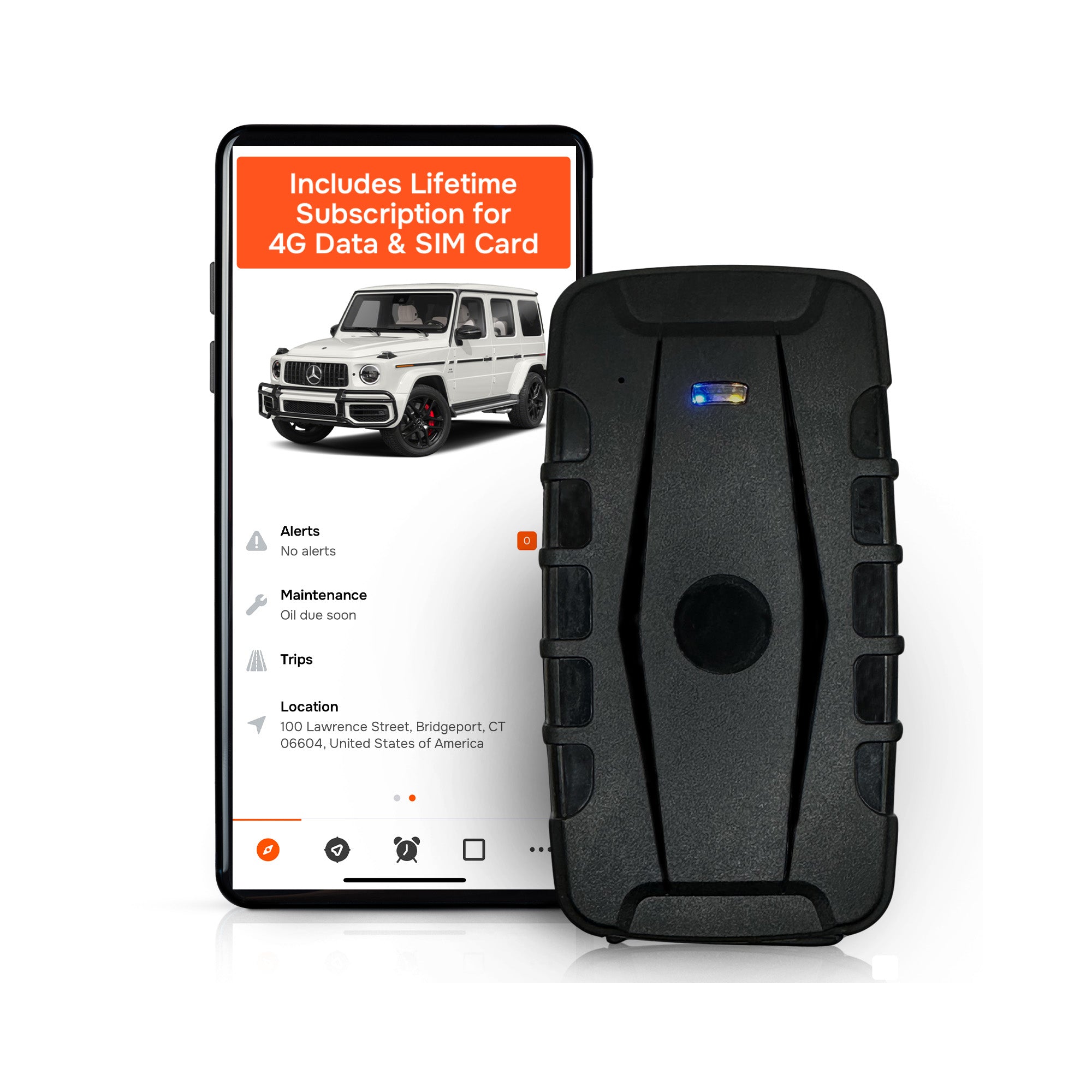
Moto Watchdog’s core pitch is straightforward: subscription-free GPS tracking with lifetime 4G data included, so a contractor buying a dozen trackers doesn’t watch monthly fees stack up across a fleet. That structure matters most for buyers who’ve already priced out competing systems and found the device cost was the easy part, with the data plan the real long-term expense.
The stated feature set lines up with what construction and fleet operations actually need day to day:
- Real-time location tracking with no recurring subscription
- Customizable geofencing and alerts for job sites and yards
- Long battery life rated for extended field deployment
- Trip and mileage reporting for business reporting and reimbursement
- Multi-device management from a single dashboard
- API access for teams integrating tracking data into dispatch or maintenance systems
Fleet managers running a mixed inventory of trucks, trailers, and equipment tend to be the best fit, since the mileage and maintenance-reminder features solve two problems (location and upkeep) with one device instead of two separate tools. Small rental equipment companies and contractors managing scattered job sites represent a similar profile: assets that move often, sit unattended overnight, and carry real replacement cost if stolen.
Connecting GPS Data to Inventory and Asset Management
A GPS tracker that only shows a dot on a map is solving half the problem. The other half is knowing what that dot represents, when it last moved, and whether it’s due for service. That’s where integration with inventory and asset management systems earns its keep.
Comparative reviews of asset-tracking platforms consistently find that no single tagging method covers every asset type well, which is why the strongest setups pair GPS data with barcode, QR, or BLE-based inventory records rather than relying on GPS alone for tool-level detail. A truck’s GPS tracker confirms it’s at the right site; a QR scan or Bluetooth check-in confirms which specific tools are actually loaded on it.
Practical integration points to look for:
- Maintenance triggers. Run-hour and mileage data from a tracker can feed directly into service schedules, flagging an oil change or inspection without manual tracking.
- Dispatch visibility. Location data synced to a dispatch tool lets a scheduler assign the nearest available truck or trailer instead of guessing.
- Check-in/check-out logs. Combining GPS location with a simple scan-based checkout system creates a paper trail for who had a tool last, which speeds up both routine audits and theft investigations.
- API or export access. If your existing inventory software supports data imports, confirm your tracker vendor can push location and usage data into it rather than trapping everything in a standalone app.
The goal isn’t more dashboards. It’s fewer places you have to look before you know where something is and whether it’s working.
Common Problems With GPS Tool Trackers and How to Fix Them
Most support tickets for tool-tracking devices trace back to a handful of repeat issues, and nearly all of them have straightforward fixes.
Weak or lost signal indoors. Metal buildings, shipping containers, and underground parking block GPS reception reliably. If a tracker regularly goes quiet in the same location, that’s a coverage gap, not a device failure, and it’s the strongest argument for pairing GPS with a Bluetooth tag for indoor visibility.
Battery drains faster than expected. This almost always comes down to update frequency set higher than necessary. Dropping from real-time tracking to a 15 or 30 minute interval on stationary equipment can multiply battery life several times over.
False theft alerts from geofence drift. GPS accuracy varies by a few dozen feet depending on satellite visibility, which can trigger a geofence alert even when equipment hasn’t actually moved. Widening the geofence radius slightly, especially in dense urban sites, cuts down on nuisance alerts without meaningfully reducing theft detection.
Device found but signal never updated. Cellular dead zones exist even in areas with strong phone coverage, since IoT connectivity doesn’t always match consumer network maps. Check the vendor’s coverage documentation for the specific carrier network the device uses before assuming it’s broken.
Mounting comes loose or gets removed. Magnetic mounts are convenient but vulnerable. Moving to a bolted or concealed mount on high-value or frequently targeted equipment solves most tampering complaints within one recovery cycle.
Comparing Tool-Tracking Products and Providers
The GPS tool-tracking market splits into a few clear categories rather than one crowded field of identical products. Subscription-based enterprise fleet platforms offer deep integrations and dedicated account support, but they charge monthly per-device fees that add up fast across a large fleet. Subscription-free hardware, Moto Watchdog’s category, shifts the cost to a one-time purchase and removes the recurring bill entirely, which changes the math for a contractor buying trackers by the dozen. Pure Bluetooth tag ecosystems sit at the low-cost end, ideal for tool-level inventory but limited to short range.
When comparing options, weigh these factors against your actual use case rather than a feature checklist:
| Factor | What to check |
|---|---|
| Pricing structure | One-time hardware cost versus recurring subscription fees, and total cost over two to three years |
| Update frequency | Real-time versus periodic reporting, and whether it’s adjustable per device |
| Battery life | Rated life at your realistic update interval, not the vendor’s best case |
| Coverage | Cellular network used and documented dead zones in your operating region |
| Integration | API availability for feeding data into maintenance or dispatch systems |
| Support model | Whether help is available same-day and whether setup requires a technician |
Moto Watchdog’s Trackers are available for purchase with pricing details listed on their website, positioned specifically against the recurring-fee model common across the category, with no activation fees or add-on charges layered on top.
What’s Next for GPS Tool Tracking
Battery technology is the quiet bottleneck holding back real-time tracking adoption. Every improvement in low-power chipsets and solar-assisted charging pushes devices closer to offering live updates without the six-week battery life real-time tracking currently demands, which would remove the single biggest tradeoff buyers face today.
Artificial intelligence is starting to show up in theft-pattern detection rather than just location display. Instead of a fixed geofence triggering every alert equally, pattern-based systems can learn a piece of equipment’s normal movement and flag genuine anomalies, cutting down on the false-positive fatigue that makes teams start ignoring alerts altogether.
Expect tighter integration between tracking hardware and maintenance software to keep accelerating too, since the same GPS unit already capturing run hours and mileage is a natural feed for predictive maintenance scheduling, not just location. The equipment that gets tracked and the equipment that gets serviced on schedule are increasingly the same conversation, not two separate systems bolted together after the fact.
What Success Actually Looks Like After a Pilot
GPS tracking meaningfully raises the odds of getting a stolen tool back, but it doesn’t stop theft from happening. Treat it as one layer in a system that also includes locks, signage, and cameras, the same “mark it, lock it, light it, surveil it” logic municipal crime-prevention guidance has pushed for years. After a pilot, judge success by alert accuracy and recovery outcomes, not just whether the dashboard looks impressive, then expand device placement once those numbers hold up.
— Louis
Try Moto Watchdog Before You Commit to a Subscription
Moto Watchdog is the alternative to subscription-based fleet trackers for contractors and equipment managers who don’t want a monthly bill attached to every device on the truck. Lifetime 4G data is included with the hardware, so a ten-tracker rollout doesn’t turn into a recurring line item on next year’s budget.
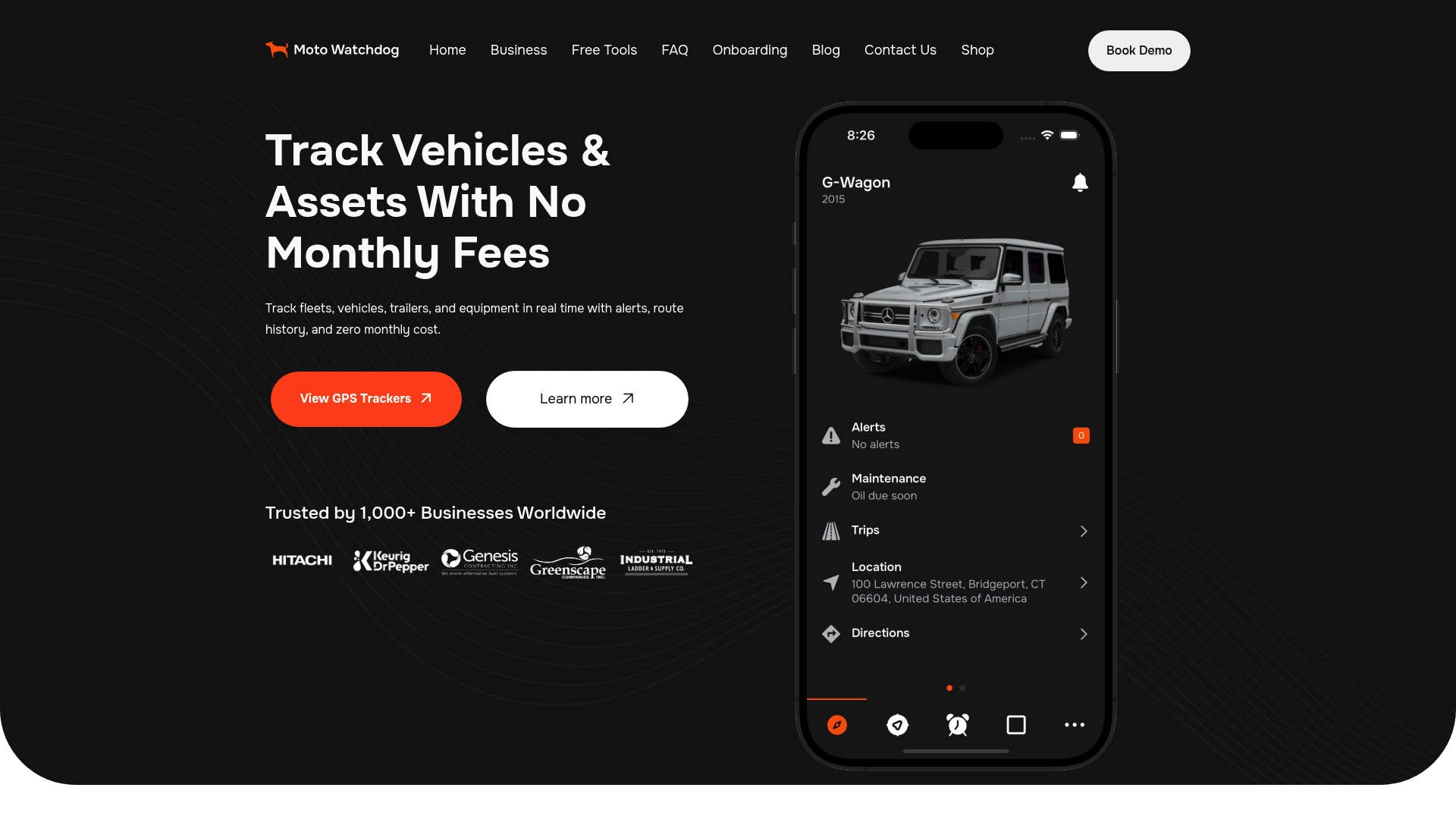
If you’re evaluating a pilot, start with the Trackers product page to see current pricing and device specs, or head to the business and API access page if you’re planning to feed location data into an existing dispatch or maintenance system. Contractors specifically weighing mileage reporting and geofencing for job-site vehicles can review the contractor-focused tracking page for a closer match to that use case. Order a small batch, mount them on your highest-risk assets, and check the dashboard after the first month before deciding whether to scale.
Sources
- Construction Site Crime Prevention — Louisville Police Department
- Construction Equipment Theft Statistics 2026: Complete Data Reference — Drone Strategic Partners
- Employee GPS tracking policy rules and legal limits — LegalClarity
FAQ
What Is the Best GPS Tracker for Tools?
The best choice depends on whether your tools stay on one site or move between locations regularly. For mobile equipment and trailers, a subscription-free GPS tracker like Moto Watchdog’s product line avoids recurring fees while still delivering real-time location and geofencing alerts.
Can I Put a Tracker on My Tools?
Yes, small GPS trackers and Bluetooth tags can be mounted, embedded, or attached to most hand tools, generators, and equipment. Choose Bluetooth for tools that stay near a fixed location and GPS for anything that travels between job sites or carries higher theft risk.
What Is the Best GPS Tracker for Equipment Tracking?
For larger equipment like generators, trailers, and heavy machinery, a GPS tracker with geofencing and long battery life is the better fit over Bluetooth, since it covers wide areas without needing a nearby phone or gateway. Look for a rugged IP67 rating and mounting options that hide the device from casual view.
What Can I Use to Track My Tools?
Options range from Bluetooth tags for indoor inventory to full GPS trackers for equipment that leaves the site, with hybrid setups combining both for mixed fleets. Municipal crime-prevention guidance recommends pairing GPS with basic physical security like locks and cameras rather than relying on tracking alone.