
How to start saving money
Lorem ipsum dolor sit amet, consectetur adipiscing elit lobortis arcu enim urna adipiscing praesent velit viverra sit semper lorem eu cursus vel hendrerit elementum morbi curabitur etiam nibh justo, lorem aliquet donec sed sit mi dignissim at ante massa mattis.
- Neque sodales ut etiam sit amet nisl purus non tellus orci ac auctor
- Adipiscing elit ut aliquam purus sit amet viverra suspendisse potent
- Mauris commodo quis imperdiet massa tincidunt nunc pulvinar
- Excepteur sint occaecat cupidatat non proident sunt in culpa qui officia
Why it is important to start saving
Vitae congue eu consequat ac felis placerat vestibulum lectus mauris ultrices cursus sit amet dictum sit amet justo donec enim diam porttitor lacus luctus accumsan tortor posuere praesent tristique magna sit amet purus gravida quis blandit turpis.

How much money should I save?
At risus viverra adipiscing at in tellus integer feugiat nisl pretium fusce id velit ut tortor sagittis orci a scelerisque purus semper eget at lectus urna duis convallis. porta nibh venenatis cras sed felis eget neque laoreet suspendisse interdum consectetur libero id faucibus nisl donec pretium vulputate sapien nec sagittis aliquam nunc lobortis mattis aliquam faucibus purus in.
- Neque sodales ut etiam sit amet nisl purus non tellus orci ac auctor
- Adipiscing elit ut aliquam purus sit amet viverra suspendisse potenti
- Mauris commodo quis imperdiet massa tincidunt nunc pulvinar
- Adipiscing elit ut aliquam purus sit amet viverra suspendisse potenti
What percentege of my income should go to savings?
Nisi quis eleifend quam adipiscing vitae aliquet bibendum enim facilisis gravida neque. Velit euismod in pellentesque massa placerat volutpat lacus laoreet non curabitur gravida odio aenean sed adipiscing diam donec adipiscing tristique risus. amet est placerat in egestas erat imperdiet sed euismod nisi.
“Nisi quis eleifend quam adipiscing vitae aliquet bibendum enim facilisis gravida neque velit euismod in pellentesque”
Do you have any comments? Share them with us on social media
Eget lorem dolor sed viverra ipsum nunc aliquet bibendum felis donec et odio pellentesque diam volutpat commodo sed egestas aliquam sem fringilla ut morbi tincidunt augue interdum velit euismod eu tincidunt tortor aliquam nulla facilisi aenean sed adipiscing diam donec adipiscing ut lectus arcu bibendum at varius vel pharetra nibh venenatis cras sed felis eget.
Switching from a subscription GPS tracker to a one-time purchase alternative is the most direct way to cut recurring vehicle monitoring costs without sacrificing real-time visibility. The industry term for these alternatives is “non-subscription GPS trackers,” and they cover three main categories: SIM-based cellular devices, OBD-II plug-in units, and crowd-sourced Bluetooth trackers. Buyers who make this switch can save $500–$700 over three years compared to paying $20–$25 per month on a vendor subscription. That figure climbs to $2,600–$3,500 for a five-vehicle fleet over the same period. Motowatchdog has built its entire product line around this model, serving over 1,000 businesses that track vehicles and assets without monthly fees.
Why switch from a subscription GPS tracker?
The financial case is straightforward. Typical cellular subscriptions run $5–$25 per month per device, and those fees compound fast across a fleet or over multiple years. A non-subscription GPS tracker replaces that recurring cost with a one-time device purchase and, in most cases, a low-cost prepaid SIM card.
Beyond cost, non-subscription trackers give you full control over your data plan. You choose the carrier, the data tier, and the renewal schedule. Subscription-based services lock you into their platform, their pricing, and their cancellation terms. For small business owners and individual vehicle owners, that flexibility matters as much as the savings.

Subscription GPS trackers often offer polished apps and extra features like kill-switch controls and extended historical data logging. One-time purchase trackers trade some of that polish for major long-term savings. Knowing that trade-off upfront helps you set the right expectations before you switch.
What to know before you make the switch
Not every non-subscription tracker fits every situation. Understanding the three main device types prevents a costly mismatch.
- SIM-based magnetic trackers: These devices use a prepaid SIM card and a cellular network to report location in real time. A device like the TKSTAR TK905 4G offers 10-meter tracking accuracy with a prepaid SIM costing around $5 per month. Setup requires SMS command programming, which takes patience but is manageable for most users.
- OBD-II plug-in trackers: These plug directly into a vehicle’s OBD-II diagnostic port, eliminating battery concerns entirely. OBD-II GPS trackers with built-in data suit family cars and small fleets well. Motowatchdog offers an OBD-II option with no monthly subscription.
- Crowd-sourced Bluetooth trackers: Devices that use networks like Apple Find My carry no SIM or subscription cost. A crowd-sourced tracker can cost as little as $26 with multi-year battery life. The trade-off is that crowd-sourced networks work well for theft recovery but lack the real-time, high-frequency updates needed for active vehicle monitoring.
Before purchasing, verify that your chosen device supports 4G LTE or 5G connectivity. Older 3G devices are being phased out across major U.S. carriers, and a tracker that loses network support becomes useless. Also check whether the device’s companion app is compatible with your smartphone’s operating system.
Pro Tip: Before buying any SIM-based tracker, check coverage maps for the prepaid carrier you plan to use in the specific areas where your vehicles operate. Rural routes with weak coverage will undermine even the best hardware.
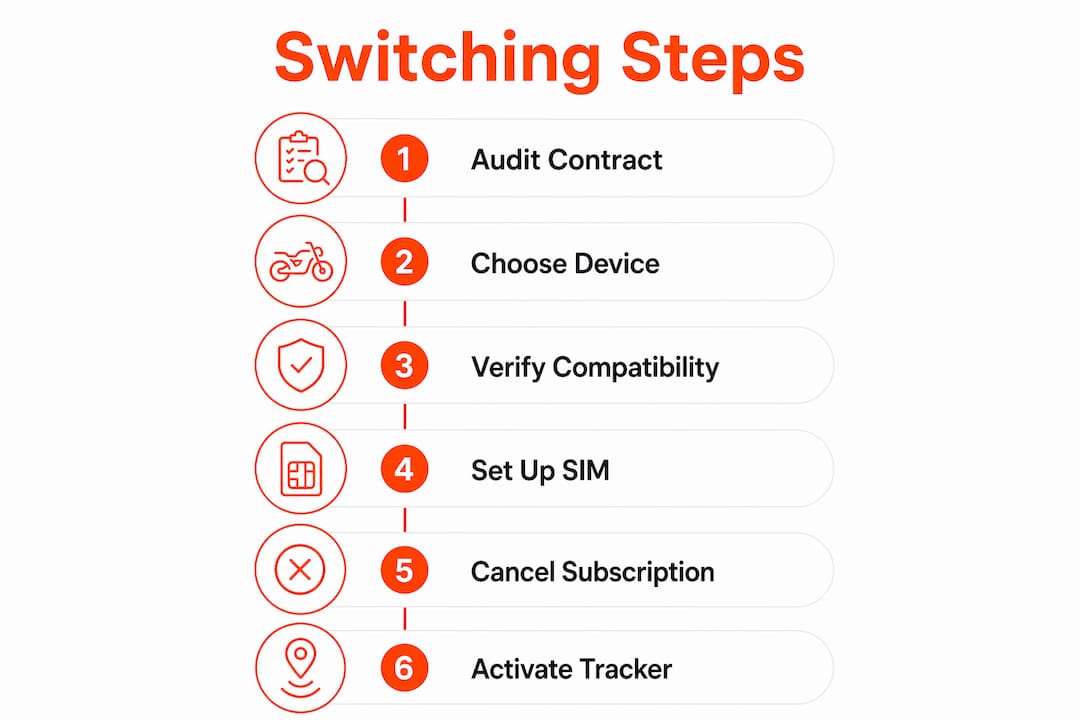
How to switch step-by-step
Follow these six steps to move from a subscription-based device to a non-subscription alternative without gaps in coverage.
-
Audit your current contract. Check your subscription’s cancellation terms and notice period. Some providers require 30 days’ written notice. Canceling early without checking can trigger fees that erase your first year of savings.
-
Define your tracking requirements. Write down the specific use cases: theft recovery, fleet mileage reporting, geofence alerts, or real-time location sharing. Your requirements determine which tracker category fits best. A small fleet tracking budget guide can help you match needs to device types.
-
Select and purchase your device. Choose a device that matches your use case and network requirements. For vehicle fleets, an OBD-II plug-in or a 4G magnetic tracker with a prepaid SIM covers most needs. For individual asset monitoring with an iPhone, a crowd-sourced option may suffice.
-
Obtain and activate a prepaid SIM. Purchase a prepaid SIM from a carrier with strong coverage in your area. Activate it before installing the tracker so you can confirm connectivity immediately. Prepaid data plans for GPS trackers typically run $5–$10 per month, far below vendor subscription rates.
-
Install and configure the device. Setup complexity varies by device type. SMS-based trackers like the TKSTAR TK905 require sending specific command strings to configure tracking intervals and alerts. DIY setup typically takes 20–30 minutes. OBD-II plug-in units are faster: plug in, download the app, and follow on-screen prompts.
-
Test thoroughly before canceling your old service. Run both trackers simultaneously for at least 48 hours. Confirm that geofence alerts fire correctly, that location updates appear on schedule, and that the app reports accurate coordinates. Only cancel your subscription after you have confirmed the new device works reliably.
Pro Tip: Keep a screenshot of your subscription cancellation confirmation. Some providers continue billing after cancellation and require proof to issue refunds.
The table below summarizes the key steps and estimated time for each.
| Step | Action | Estimated Time |
|---|---|---|
| 1. Audit contract | Review cancellation terms and notice period | 15 minutes |
| 2. Define requirements | List use cases and coverage needs | 20 minutes |
| 3. Purchase device | Select and order tracker | 30 minutes |
| 4. Activate SIM | Set up prepaid SIM and confirm signal | 20 minutes |
| 5. Install and configure | Physical install and app or SMS setup | 20–30 minutes |
| 6. Test and cancel | Parallel test, then cancel old subscription | 48 hours |
Common challenges and how to resolve them
Most problems that arise when switching fall into four categories: setup errors, connectivity gaps, battery management, and accuracy expectations.
- SMS command errors: SIM-based trackers that use SMS programming are sensitive to exact command syntax. A single wrong character returns an error or no response. Always copy commands directly from the manufacturer’s manual rather than typing them from memory.
- SIM card not recognized: If the tracker fails to connect after SIM insertion, confirm the SIM is fully activated on the carrier’s network. Some prepaid SIMs require a first call or data session from a phone before they work in a secondary device.
- Weak signal in specific locations: Cellular GPS trackers depend on both GPS satellite signal and cellular data coverage. Underground parking garages and dense urban canyons degrade both. Position magnetic trackers on the vehicle’s exterior roof or trunk for the strongest satellite acquisition.
- Update frequency differences: Subscription services often default to 10-second or 30-second update intervals. Prepaid SIM trackers may default to 60 seconds or longer to conserve data. Adjust the update interval via SMS command or app settings to match your monitoring needs.
Consumers commonly confuse crowd-sourced Bluetooth tracking with cellular GPS tracking. Crowd-sourced devices report location only when another network user’s phone passes near the tracker. That delay can be hours in low-traffic areas, making them unsuitable for active theft recovery in real time. Cellular OBD-II and SIM-based trackers report continuously and are the right choice when live recovery matters.
Is switching right for your situation?
The answer depends on three factors: how often you need location updates, how many vehicles you track, and whether real-time theft recovery is a priority.
For individual vehicle owners who check location once or twice a day, a crowd-sourced tracker at $26 with no ongoing fees is a practical, low-cost option. For families tracking a teenager’s car or a single company vehicle, a 4G SIM-based magnetic tracker with a $5 monthly prepaid plan covers real-time needs at a fraction of subscription pricing. For subscription-free GPS for businesses managing five or more vehicles, the savings compound quickly and the operational benefits are clear.
Pro Tip: OBD-II plug-in trackers are the best fit for fleet managers who want zero installation complexity and no battery management. They draw power directly from the vehicle and report continuously as long as the vehicle is in use.
The table below compares the three main non-subscription tracking approaches across the factors that matter most.
| Tracking type | Ongoing cost | Real-time updates | Best use case |
|---|---|---|---|
| SIM-based magnetic | ~$5–$10/month prepaid | Yes, configurable | Theft recovery, fleet monitoring |
| OBD-II plug-in | None or minimal data fee | Yes, continuous | Family cars, small fleets |
| Crowd-sourced Bluetooth | None | No, passive only | Low-value asset location, luggage |
Key Takeaways
Switching to a non-subscription GPS tracker delivers measurable cost savings and operational flexibility, but the right device type depends entirely on your real-time tracking requirements and fleet size.
| Point | Details |
|---|---|
| Cost savings are significant | Savings of $500–$700 per device over three years compared to standard subscriptions. |
| Device type determines capability | OBD-II and SIM-based trackers provide real-time updates; crowd-sourced trackers do not. |
| SIM selection matters | Choose a prepaid carrier with strong coverage in your specific operating area before buying. |
| Test before canceling | Run old and new trackers in parallel for 48 hours to confirm reliability before ending your subscription. |
| Fleet savings multiply fast | Five vehicles save $2,600–$3,500 over three years by switching to prepaid SIM-based tracking. |
What I’ve learned after watching fleets make this switch
The most common mistake I see is treating all non-subscription trackers as equivalent. A fleet manager buys a crowd-sourced Bluetooth device because it has no fees, then calls it unreliable when it fails to show a stolen vehicle’s real-time location. The device did exactly what it was designed to do. The problem was a mismatch between expectation and technology.
The buyers who get this right spend 20 minutes mapping their actual use cases before they shop. They ask one question: do I need to know where this vehicle is right now, or do I just need to know where it ended up? That single question separates the crowd-sourced buyers from the cellular buyers, and it prevents most of the frustration I see post-purchase.
I also think the app quality gap between subscription and non-subscription trackers is closing faster than most people realize. Two years ago, the interface difference was stark. Today, OBD-II plug-in options from providers like Motowatchdog deliver clean, functional apps without the monthly fee attached. The technology has matured enough that you no longer have to accept a poor user experience to save money. For anyone running a hardwired GPS tracker or considering one, the same principle applies: the hardware quality at the non-subscription tier has caught up significantly.
The one area where subscription services still hold a genuine edge is advanced fleet analytics. If you need automated mileage reports, driver behavior scoring, or integration with dispatch software, a subscription platform may still be worth the cost. But for the majority of individual owners and small fleets, those features are rarely used. Paying $25 per month for features you access twice a year is not a sound business decision.
— Louis
Motowatchdog’s subscription-free GPS tracking
Motowatchdog provides subscription-free 4G GPS tracking for vehicles and assets, with no monthly fees attached to the device. Over 1,000 businesses rely on Motowatchdog for real-time location monitoring, geofence alerts, and detailed mileage reporting.
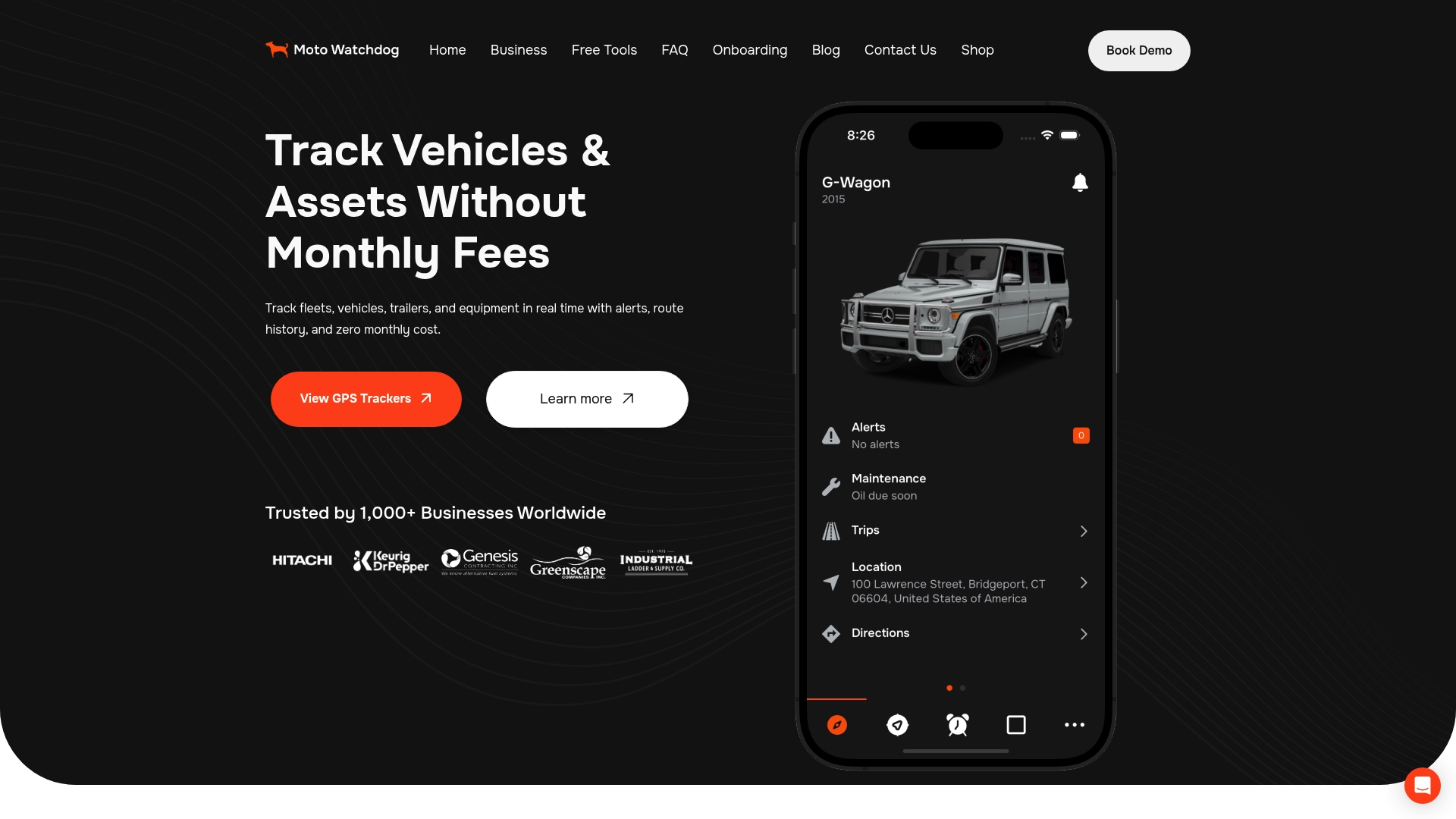
The OBD-II plug-in option requires no installation tools and starts reporting location within minutes of setup. Geofencing alerts, battery-efficient operation, and a clean app interface come standard. For fleet managers and individual owners who want reliable tracking without the recurring billing cycle, Motowatchdog is a practical, tested option worth reviewing before you finalize your device choice.
FAQ
How much can I save by switching to a no-subscription GPS tracker?
Switching to a prepaid SIM-based tracker saves $500–$700 per device over three years compared to a standard $20–$25 monthly subscription. For a five-vehicle fleet, total savings reach $2,600–$3,500 over the same period.
Do no-subscription GPS trackers provide real-time tracking?
SIM-based and OBD-II plug-in trackers provide real-time location updates. Crowd-sourced Bluetooth trackers do not update in real time and are not suitable for active theft recovery.
What is the easiest no-subscription GPS tracker to set up?
OBD-II plug-in trackers are the easiest to install. They require no wiring, draw power directly from the vehicle, and configure through a smartphone app in under 10 minutes.
Can I use a no-subscription GPS tracker for a small fleet?
Yes. SIM-based and OBD-II trackers scale well for small fleets. Motowatchdog’s subscription-free platform supports multi-vehicle monitoring with geofencing and mileage reporting built in.
What happens if my prepaid SIM runs out of data?
The tracker stops reporting location until the SIM is recharged or the data plan renews. Set a calendar reminder before your prepaid plan expires to avoid coverage gaps.