
How to start saving money
Lorem ipsum dolor sit amet, consectetur adipiscing elit lobortis arcu enim urna adipiscing praesent velit viverra sit semper lorem eu cursus vel hendrerit elementum morbi curabitur etiam nibh justo, lorem aliquet donec sed sit mi dignissim at ante massa mattis.
- Neque sodales ut etiam sit amet nisl purus non tellus orci ac auctor
- Adipiscing elit ut aliquam purus sit amet viverra suspendisse potent
- Mauris commodo quis imperdiet massa tincidunt nunc pulvinar
- Excepteur sint occaecat cupidatat non proident sunt in culpa qui officia
Why it is important to start saving
Vitae congue eu consequat ac felis placerat vestibulum lectus mauris ultrices cursus sit amet dictum sit amet justo donec enim diam porttitor lacus luctus accumsan tortor posuere praesent tristique magna sit amet purus gravida quis blandit turpis.

How much money should I save?
At risus viverra adipiscing at in tellus integer feugiat nisl pretium fusce id velit ut tortor sagittis orci a scelerisque purus semper eget at lectus urna duis convallis. porta nibh venenatis cras sed felis eget neque laoreet suspendisse interdum consectetur libero id faucibus nisl donec pretium vulputate sapien nec sagittis aliquam nunc lobortis mattis aliquam faucibus purus in.
- Neque sodales ut etiam sit amet nisl purus non tellus orci ac auctor
- Adipiscing elit ut aliquam purus sit amet viverra suspendisse potenti
- Mauris commodo quis imperdiet massa tincidunt nunc pulvinar
- Adipiscing elit ut aliquam purus sit amet viverra suspendisse potenti
What percentege of my income should go to savings?
Nisi quis eleifend quam adipiscing vitae aliquet bibendum enim facilisis gravida neque. Velit euismod in pellentesque massa placerat volutpat lacus laoreet non curabitur gravida odio aenean sed adipiscing diam donec adipiscing tristique risus. amet est placerat in egestas erat imperdiet sed euismod nisi.
“Nisi quis eleifend quam adipiscing vitae aliquet bibendum enim facilisis gravida neque velit euismod in pellentesque”
Do you have any comments? Share them with us on social media
Eget lorem dolor sed viverra ipsum nunc aliquet bibendum felis donec et odio pellentesque diam volutpat commodo sed egestas aliquam sem fringilla ut morbi tincidunt augue interdum velit euismod eu tincidunt tortor aliquam nulla facilisi aenean sed adipiscing diam donec adipiscing ut lectus arcu bibendum at varius vel pharetra nibh venenatis cras sed felis eget.
Finding a GPS tracking device that avoids recurring subscription fees while offering reliable fleet or equipment monitoring is difficult. Too many brands require monthly payments or lock premium features behind ongoing subscriptions, raising ownership costs over time. This comparison highlights lifetime license and low-cost GPS tracker options so you can choose predictable pricing for your organization or personal fleet.
Table of contents
Moto watchdog
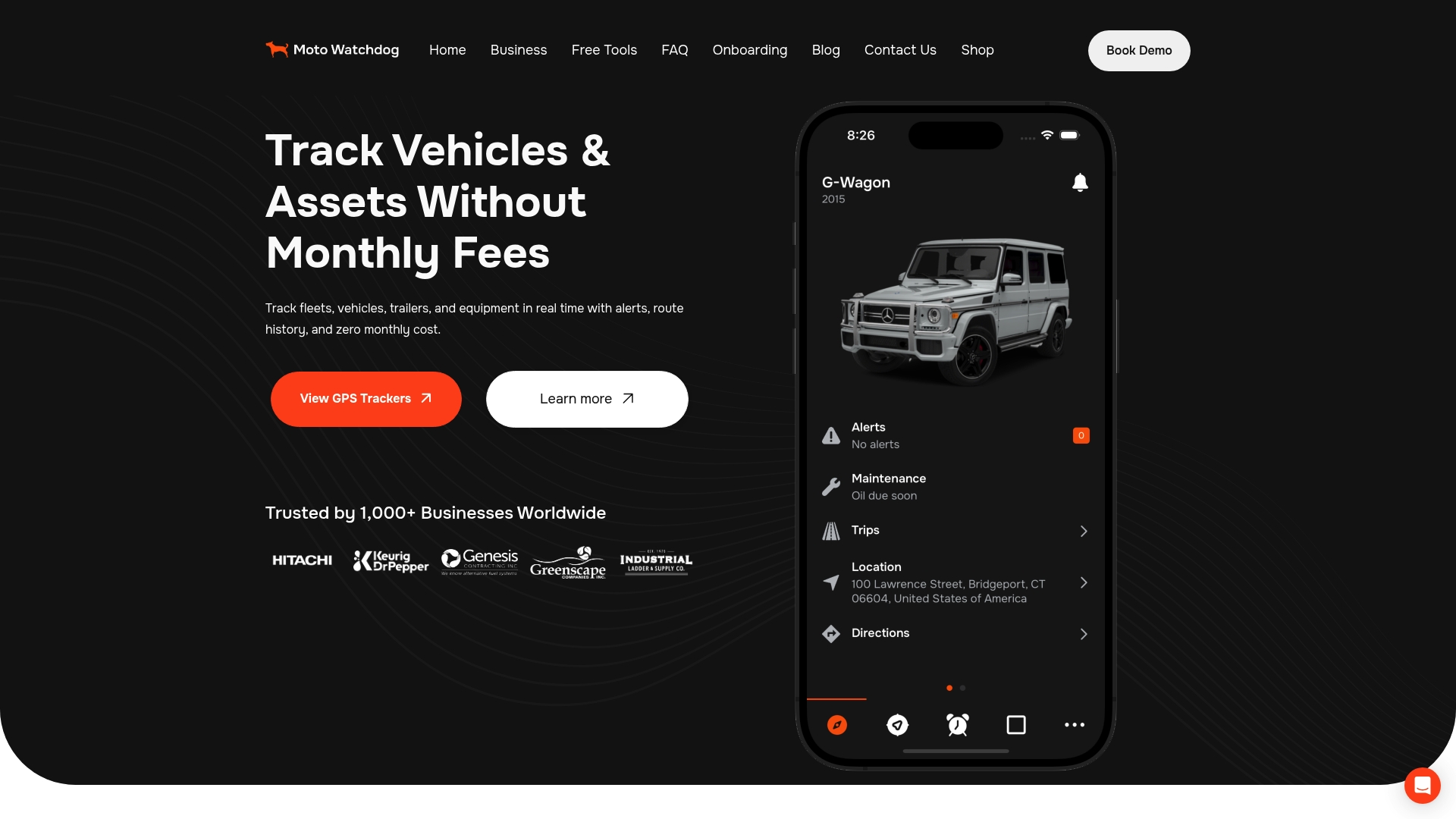
At a glance
Lifetime 4G GPS tracking without monthly fees is the standout feature here. The trackers work with a mobile app on iOS and Android for real-time location, alerts, and route history. Devices cover vehicles, motorcycles, bikes, luggage, and other equipment for business or personal use.
Core features
The product includes customizable geofencing and instant alerts for movement, speed, and boundary breaches. The app records route history and provides detailed mileage data that simplifies reporting for business use. Devices emphasize long battery life and promise ongoing operation without recurring subscription charges.
Key differentiator
The key differentiator is the lifetime subscription-free model paired with an easy device management app. That combination reduces recurring operating costs for fleets and individuals while keeping tracking control within the vendor ecosystem. For operators who prefer owning hardware and avoiding monthly billing, this is a direct economic advantage.
Pros
-
Easy setup with plug-and-play devices. Installation is straightforward for OBD plug-in units and small asset trackers, so you can deploy a fleet quickly.
-
No ongoing subscription fees. You pay for the hardware and the app is free, so long term tracking costs are predictable.
-
The vendor advertises over 1,000 businesses using the system. That scale suggests real-world use cases across small and larger fleets.
-
The company reports high customer satisfaction and highlights ease of setup in testimonials. That support and user feedback shorten the learning curve for new teams.
-
Broad asset compatibility supports vans, trucks, motorcycles, luggage, and portable equipment. Managers can use one tracker type across different asset classes.
Cons
- Limited to the brand’s own hardware and app ecosystem; there is no official third-party integration option.
Who it’s for
This product fits cost-conscious business owners, fleet managers, and individuals who want reliable GPS tracking without monthly costs. It suits small logistics firms, construction contractors, and families who need vehicle security and basic mileage reporting. Choose it if you prefer device ownership over subscription relationships.
Unique value proposition
Lifetime tracking with no monthly fees changes the ownership math for fleets. Paying upfront for hardware shifts ongoing telematics spend into a one-time capital expense. For a small fleet that runs vehicles for many years, that change reduces annual operating expense and avoids recurring vendor billing.
Real world use case
A small logistics operator installs trackers across five delivery vans, adds devices in the app, and monitors routes and statuses in real time. Alerts notify managers of unauthorized movement or boundary breaches so teams can respond quickly. Mileage reporting feeds simple expense logs and supports client billing without monthly platform charges.
Pricing
There are no monthly fees. Devices range from basic OBD plug-in units to advanced asset trackers. The app is free. Standard device packages are available for immediate purchase and vary by model and capability.
Website: https://motowatchdog.com
LoneStar tracking
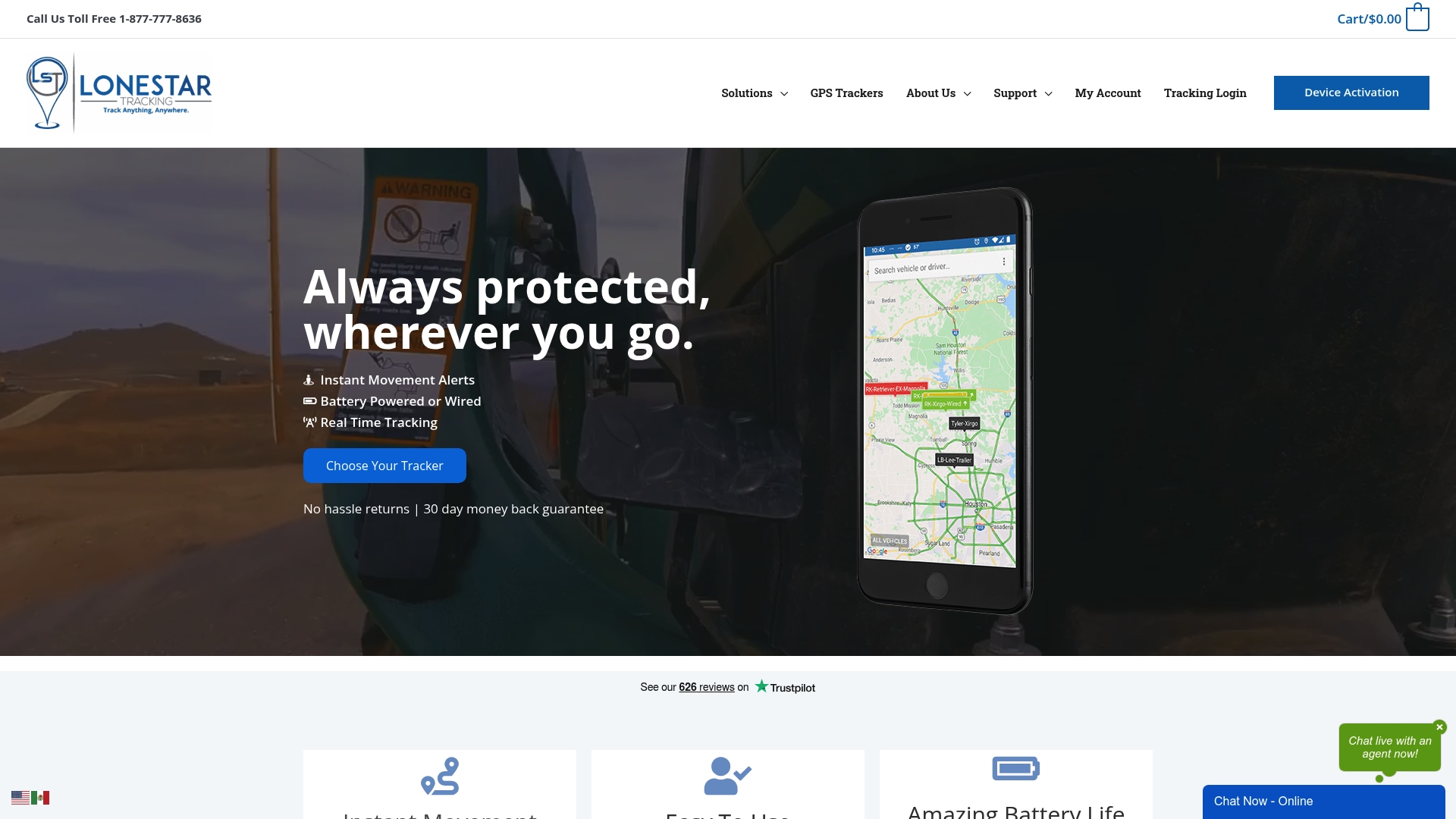
At a glance
LoneStar Tracking reports up to 5+ years of battery life in some models. That long running time targets unattended assets and trailers where swapping batteries is costly. The product line pairs that battery claim with real time tracking and mobile app access for on the go monitoring.
Core features
- Real-time GPS tracking with broad satellite monitoring for consistent position updates.
- Long lasting battery options that the vendor says can extend beyond five years in select units.
- Mobile app compatibility for Android and iPhone with live location and alerts.
- A mix of battery powered, wired, and solar powered trackers for vehicles, trailers, boats, and equipment.
- Customer support and warranty services to assist with setup and device issues.
Key differentiator
LoneStar centers its offering on prolonged battery life paired with continuous location updates. That product focus makes the brand practical for assets stored off grid or parked long term. Combined support and rugged hardware aim to reduce downtime for businesses managing dispersed equipment.
Pros
- High reliability for location reporting. The devices emphasize steady satellite coverage for fewer blind spots while tracking moving assets.
- Long battery life reduces maintenance work and replacement costs for remote assets. That battery emphasis suits trailer fleets and seasonal equipment.
- Simple mobile access via Android and iPhone apps lets managers check positions and set alerts from a phone.
- Durable, weather resistant cases fit marine trailers and construction gear that face harsh environments.
- Wide product range covers wired vehicle installs and solar charged trackers for equipment that lacks regular power.
Cons
- Price is premium for models with extended battery life and rugged housings. Expect higher upfront spend on top end models.
- The brand sells mostly online and has limited physical retail locations for same day pickup or hands on inspection.
- Full real time features often require a subscription plan, adding an ongoing cost to total ownership.
When it may not fit
Customers who need a no subscription ownership model will likely find LoneStar a poor match since many features rely on paid service. Buyers outside the company coverage areas or with incompatible network needs may not get the advertised tracking performance. Small hobby users who want the cheapest tracker rather than long life may prefer lower cost alternatives.
Who it’s for
Small to large business owners who manage vehicle fleets, trailers, or dispersed equipment will get the most value. Private owners with boats or seasonal gear who want long battery life and rugged devices will also benefit. The typical buyer values reliability and can absorb higher upfront cost for lower maintenance over time.
Real world use case
A small contractor fits trackers on service trucks and trailers. The owner uses the mobile app to watch live locations and set instant movement alerts for trailers left at job sites. Driver scorecards and event logs help reduce idle time and identify unsafe driving for follow up.
Pricing
Most trackers range from $59 to $460 depending on form factor and battery options. Monthly subscription plans are quoted between $10 and $35 for real time tracking and alert services. Higher cost models such as OysterLTE and SolarMAX add rugged enclosures and extended battery claims.
Website: https://lonestartracking.com
SIZZAPP
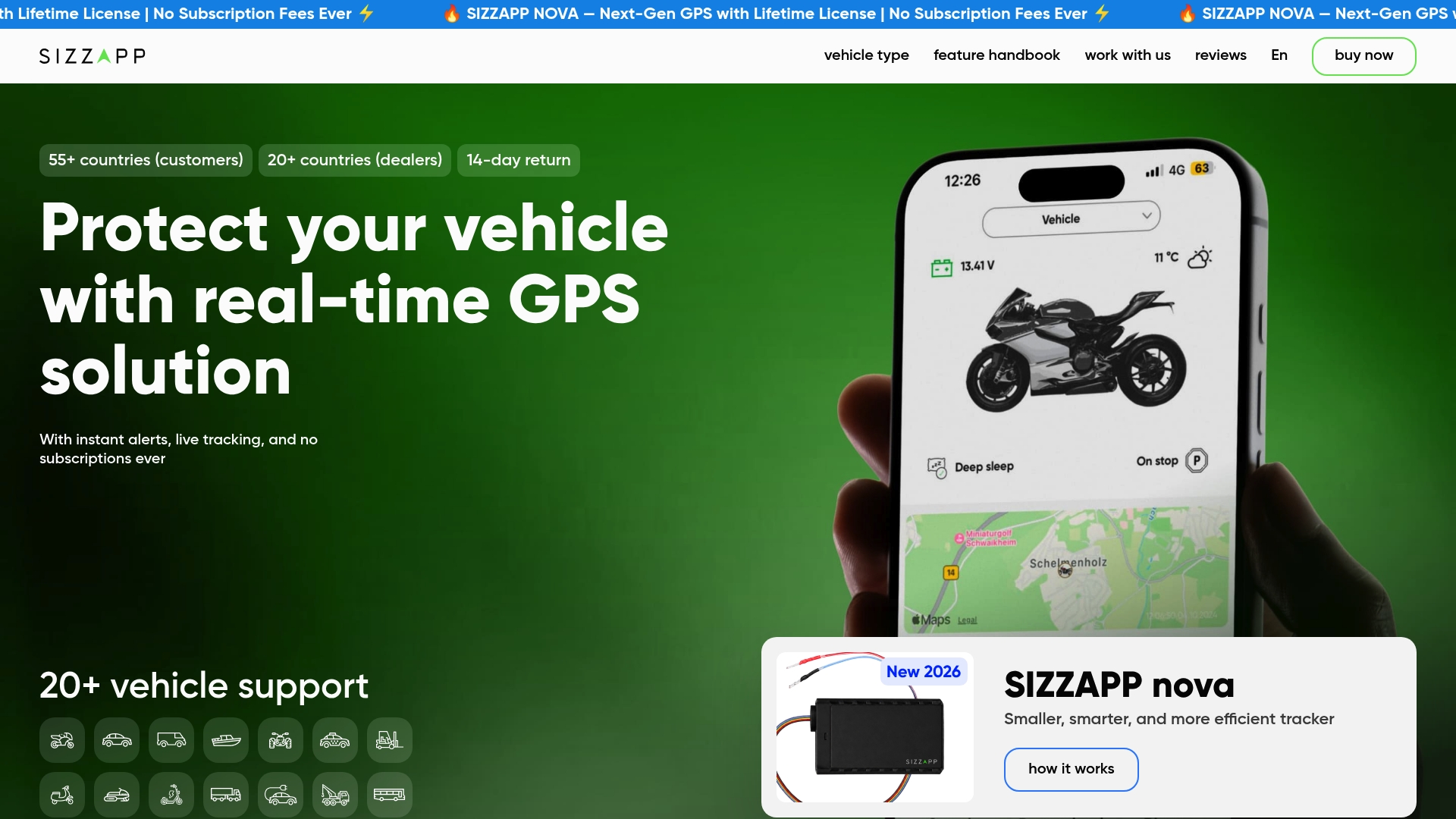
At a glance
SIZZAPP reports support for over 20 vehicle types, a notable claim for a single device family. The company advertises shipping in two weeks for certain models. The product pairs lifetime licenses and no subscription fees with a mobile app focused on real time tracking and security alerts.
Core features
- Lifetime license on all devices so you buy the device once and keep receiving updates.
- No subscription fees because ongoing updates and firmware come at no extra cost according to the vendor.
- Advanced security features such as crash detection, disconnected power alerts, and unauthorized movement notifications.
- A mobile app for real time tracking, route sharing, speed monitoring, and basic vehicle data display.
Key differentiator
SIZZAPP centers on rider needs. The hardware and feature set reflect input from bikers and vehicle owners. This product focuses more narrowly on motorcycles and similar vehicles than Motowatchdog, which targets broader fleet and business monitoring. That focus shows in device size, mount options, and ride sharing tools.
Pros
- No ongoing subscription costs. Buying a device covers future app and firmware updates, which lowers lifetime ownership cost.
- Broad vehicle support. The product claims coverage across many vehicle classes, which helps owners who manage mixed assets.
- App features match rider workflows. Route sharing and remote alerts let riders share rides with friends and watch a bike remotely during stops.
- Customer support appears responsive. User reports mention fast replies and helpful troubleshooting.
- Regular firmware and app updates improve features over time and keep the device compatible with new networks.
Cons
- Limited third party connectivity. The system is primarily standalone and lacks wide platform integrations for enterprise telematics.
- Network dependency. Devices require LTE M or 4G coverage in the region, which rules out some rural or offshore locations.
- Missing convenience features. Users request easier GPX export and customizable vehicle images, and those requests are not fully implemented yet.
When it may not fit
SIZZAPP is not a good match for fleets that need deep integrations with dispatch or maintenance systems. It will frustrate buyers who operate in regions without LTE M or consistent 4G service. Large fleet purchasers may prefer systems with centralized enterprise dashboards and API access.
Who it’s for
Vehicle owners who want a low cost, durable tracker without recurring fees will like SIZZAPP. It fits motorcycle enthusiasts, small fleet operators who prioritize ownership cost over integrations, and watercraft owners needing compact devices and remote alerts.
Real world use case
A rider installs a SIZZAPP unit under a seat and pairs it with the mobile app. During a long trip they share the route with friends and monitor the bike at rest. Alerts notify them of unexpected movement, and the lifetime license removes subscription budgeting concerns.
Pricing
Devices sell for roughly 295€ to 455$ depending on model and accessories. The purchase is a one time payment and the vendor states no subscription fees apply. The product also advertises free updates for the device for life and the shipping claim noted above.
Website: https://sizzapp.com
Comparison of alternatives
Choosing the right GPS tracker for your fleet or personal assets depends heavily on your preferences for features, cost models, and integration capabilities.
Cost considerations and fee structures
Among the options, Moto Watchdog offers a distinction by eliminating subscription fees entirely, providing a one-time-purchase model with lifetime usage. Conversely, LoneStar Tracking and SIZZAPP provide subscription plans accompanying their hardware, adding recurring costs that may accumulate depending on fleet size and duration of use.
Focused specialization in use cases
SIZZAPP excels in catering to motorcycle and small asset owners, as evidenced by their hardware mount solutions and mobile application designed for riders. In comparison, Moto Watchdog and LoneStar Tracking target broader fleet management applications with diverse device compatibility.
Best fit
- For cost-sensitive operators prioritizing subscription-free GPS tracking solutions, Moto Watchdog offers customizable alerts and route data without recurring fees.
- For businesses managing long-term parked or off-grid assets, LoneStar Tracking stands out with extended battery models projecting up to five years of service between replacements.
- For motorcycle or compact vehicle enthusiasts, SIZZAPP provides tailored tools for localized and secure personal monitoring.
Our pick
Moto Watchdog is the recommended choice for those seeking a sustainable and cost-efficient GPS tracking solution that emphasizes hardware ownership without recurring monthly charges. For scenarios that depend on extended off-grid deployments or specialized vehicle monitoring, investigating the alternatives may offer the feature set.
Identify the GPS tracking solution that best aligns with your goals by comparing features, costs, and differentiators across available options.
| Product | Key Differentiator | Best For | Pricing | Notable Limitation |
|---|---|---|---|---|
| Motowatchdog | Lifetime GPS with no subscription fees | Cost-conscious businesses | Not disclosed | Limited to vendor’s own hardware and app |
| LoneStar Tracking | Devices with extended battery life options | Remote asset monitoring | $59–$460 plus $10–$35/month | Premium cost for advanced devices |
| SIZZAPP | Compact devices tailored for motorcycle use | Motorcycle enthusiasts | $295–$455, no subscriptions | Requires LTE M or 4G coverage |
Discover a cost-effective alternative to spacehawkgps.com with Motowatchdog
If ongoing subscription fees for GPS tracking weigh on your budget, Motowatchdog offers a solution that eliminates these recurring costs while delivering reliable, real-time vehicle and asset monitoring. Designed for both businesses and individuals, Motowatchdog features lifetime 4G GPS tracking, customizable geofencing alerts, and comprehensive mileage data without monthly charges. This model empowers fleet managers and families alike to maintain control and optimize operations without surprise expenses.
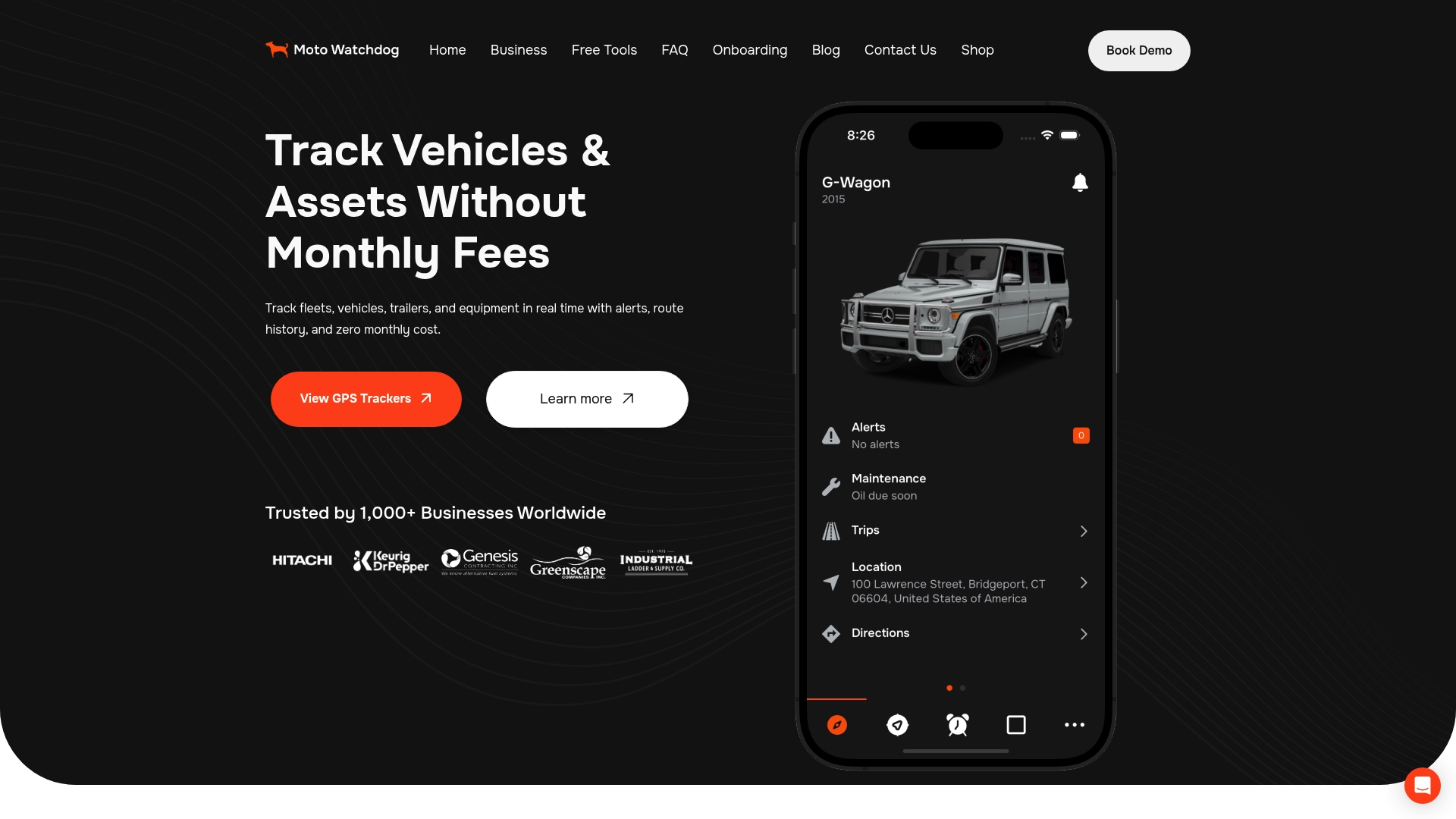
Explore how Motowatchdog’s subscription-free approach can reduce your telematics expenses and simplify your asset management. Visit Motowatchdog today to learn more and start tracking with confidence.
FAQ
What features make Motowatchdog a strong alternative to spacehawkgps.com?
Motowatchdog offers lifetime 4G GPS tracking without monthly fees, providing real-time location tracking and detailed alerts. The product’s long battery life and ability to manage multiple asset types contribute to its appeal for both personal and business use. For those looking for predictable tracking costs without additional charges, Motowatchdog is an excellent choice.
How does Motowatchdog compare to LoneStar tracking?
LoneStar Tracking emphasizes extended battery life of up to 5+ years, making it ideal for unattended assets. Motowatchdog, on the other hand, focuses on a subscription-free model that supports a variety of asset types without ongoing costs. Choosing between them depends on whether you prioritize battery longevity or cost predictability.
Can i find a GPS tracking device like Motowatchdog that supports longer battery life?
While Motowatchdog provides efficient tracking, LoneStar Tracking is specifically designed for extended battery life, suitable for assets that are not frequently accessed. If battery longevity is critical, you might want to explore LoneStar Tracking alongside Motowatchdog.
What are the potential downsides of using Motowatchdog compared to other GPS tracking devices?
One limitation of Motowatchdog is its confinement to its proprietary hardware and app ecosystem, which may not integrate with third-party systems. Users who require comprehensive integrations or advanced reporting might need to consider other options.
What pricing model does Motowatchdog offer for its tracking devices?
Motowatchdog offers a one-time payment model without ongoing subscription fees, allowing users to manage tracking costs easily. This predictability in budgeting is advantageous for those managing smaller fleets or personal assets.