

How to start saving money
Lorem ipsum dolor sit amet, consectetur adipiscing elit lobortis arcu enim urna adipiscing praesent velit viverra sit semper lorem eu cursus vel hendrerit elementum morbi curabitur etiam nibh justo, lorem aliquet donec sed sit mi dignissim at ante massa mattis.
- Neque sodales ut etiam sit amet nisl purus non tellus orci ac auctor
- Adipiscing elit ut aliquam purus sit amet viverra suspendisse potent
- Mauris commodo quis imperdiet massa tincidunt nunc pulvinar
- Excepteur sint occaecat cupidatat non proident sunt in culpa qui officia
Why it is important to start saving
Vitae congue eu consequat ac felis placerat vestibulum lectus mauris ultrices cursus sit amet dictum sit amet justo donec enim diam porttitor lacus luctus accumsan tortor posuere praesent tristique magna sit amet purus gravida quis blandit turpis.

How much money should I save?
At risus viverra adipiscing at in tellus integer feugiat nisl pretium fusce id velit ut tortor sagittis orci a scelerisque purus semper eget at lectus urna duis convallis. porta nibh venenatis cras sed felis eget neque laoreet suspendisse interdum consectetur libero id faucibus nisl donec pretium vulputate sapien nec sagittis aliquam nunc lobortis mattis aliquam faucibus purus in.
- Neque sodales ut etiam sit amet nisl purus non tellus orci ac auctor
- Adipiscing elit ut aliquam purus sit amet viverra suspendisse potenti
- Mauris commodo quis imperdiet massa tincidunt nunc pulvinar
- Adipiscing elit ut aliquam purus sit amet viverra suspendisse potenti
What percentege of my income should go to savings?
Nisi quis eleifend quam adipiscing vitae aliquet bibendum enim facilisis gravida neque. Velit euismod in pellentesque massa placerat volutpat lacus laoreet non curabitur gravida odio aenean sed adipiscing diam donec adipiscing tristique risus. amet est placerat in egestas erat imperdiet sed euismod nisi.
“Nisi quis eleifend quam adipiscing vitae aliquet bibendum enim facilisis gravida neque velit euismod in pellentesque”
Do you have any comments? Share them with us on social media
Eget lorem dolor sed viverra ipsum nunc aliquet bibendum felis donec et odio pellentesque diam volutpat commodo sed egestas aliquam sem fringilla ut morbi tincidunt augue interdum velit euismod eu tincidunt tortor aliquam nulla facilisi aenean sed adipiscing diam donec adipiscing ut lectus arcu bibendum at varius vel pharetra nibh venenatis cras sed felis eget.
There is no single federal statute that governs GPS tracking of rental cars. The rules come from a patchwork: state rental statutes (California’s is the strictest), state laws on tracking devices and employee monitoring, and the contract the renter signs. In practice, a rental company that owns its vehicles and equipment can generally track them, but how it uses the data, and what it must tell the customer, depends on the state and on the rental agreement.
This guide is written for fleet owners and heavy equipment rental operators who want to track assets without creating legal exposure, and for renters who want to know what is being recorded.
TL;DR
- Owning or leasing a vehicle is the foundation of lawful tracking. Putting a tracker on a vehicle you do not own or lease is where most legal trouble starts.
- California limits what a rental company may do with tracking data about a renter, and Connecticut and Montana require disclosure in certain cases. Check every state where you rent.
- Disclose tracking in the rental agreement in plain language, even where no statute demands it.
- Employee drivers are a separate issue: some states, including New York and Connecticut, require written notice of electronic monitoring.
- Use tracking for theft recovery, utilization, maintenance and mileage, and keep a written policy for who can see the data.
Table of Contents
- Do rental cars have GPS trackers?
- What rental companies can collect
- The legal framework in the United States
- What the rental agreement should say
- Heavy equipment and trailers
- Tracking your own employees
- A compliant tracking policy in six steps
- Perspective: why the cost model matters for compliance
- Tracking rental assets without monthly fees
- For renters: protect your own data
- FAQ
- Sources
Do rental cars have GPS trackers?
Many do. Rental brands say so in their own terms. One major rental group’s privacy notice states that some vehicles have devices that send and receive vehicle information, including GPS geolocation data, and that these devices are on all the time. Another large brand’s U.S. terms say some vehicles may have OnStar, which can help locate the car if the renter fails to return it, and that not every vehicle has active equipment.
So the honest answer for a renter is: assume it is possible, and read the agreement. For an operator, the question is not whether tracking is common but how to use it within the rules.
What rental companies can collect
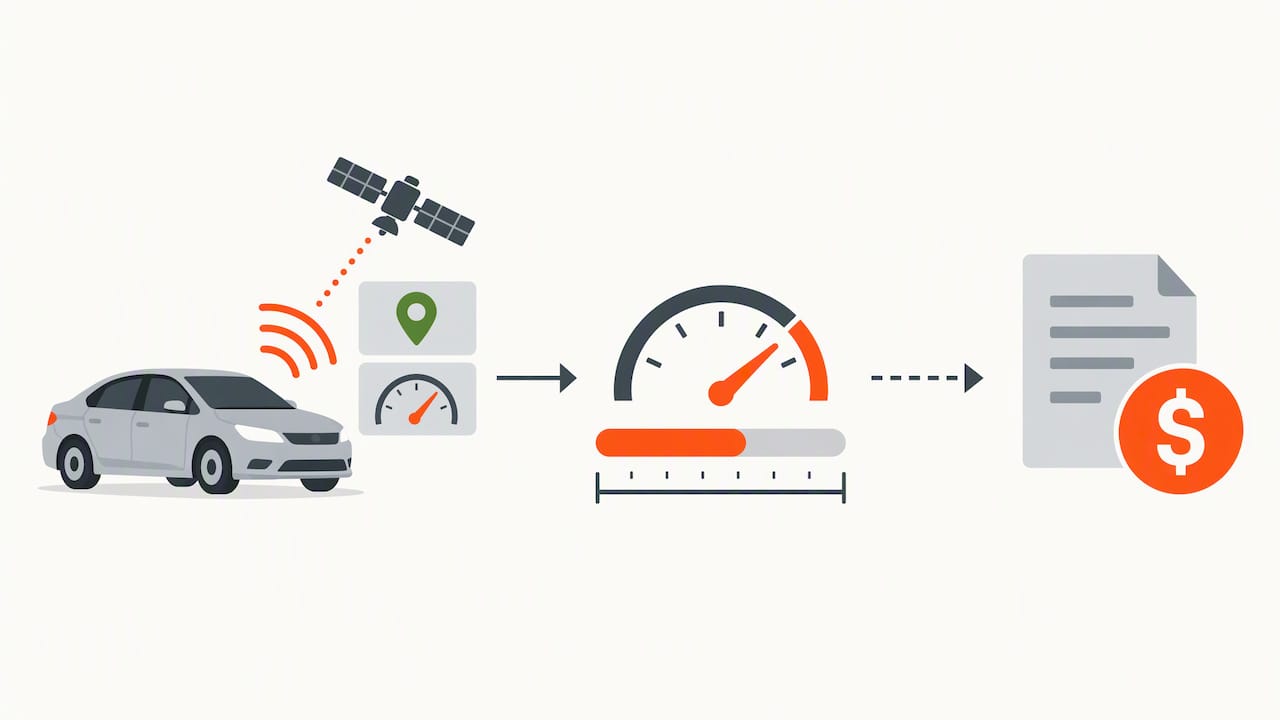
The data goes well beyond a dot on a map. The same privacy notice lists fuel level, odometer, speed, diagnostic and performance data, tire pressure, accident or damage data, and location and direction of travel. It also says this data may be used for remote services, accident response, locating unreturned or stolen vehicles, responding to law enforcement and determining certain service fees.

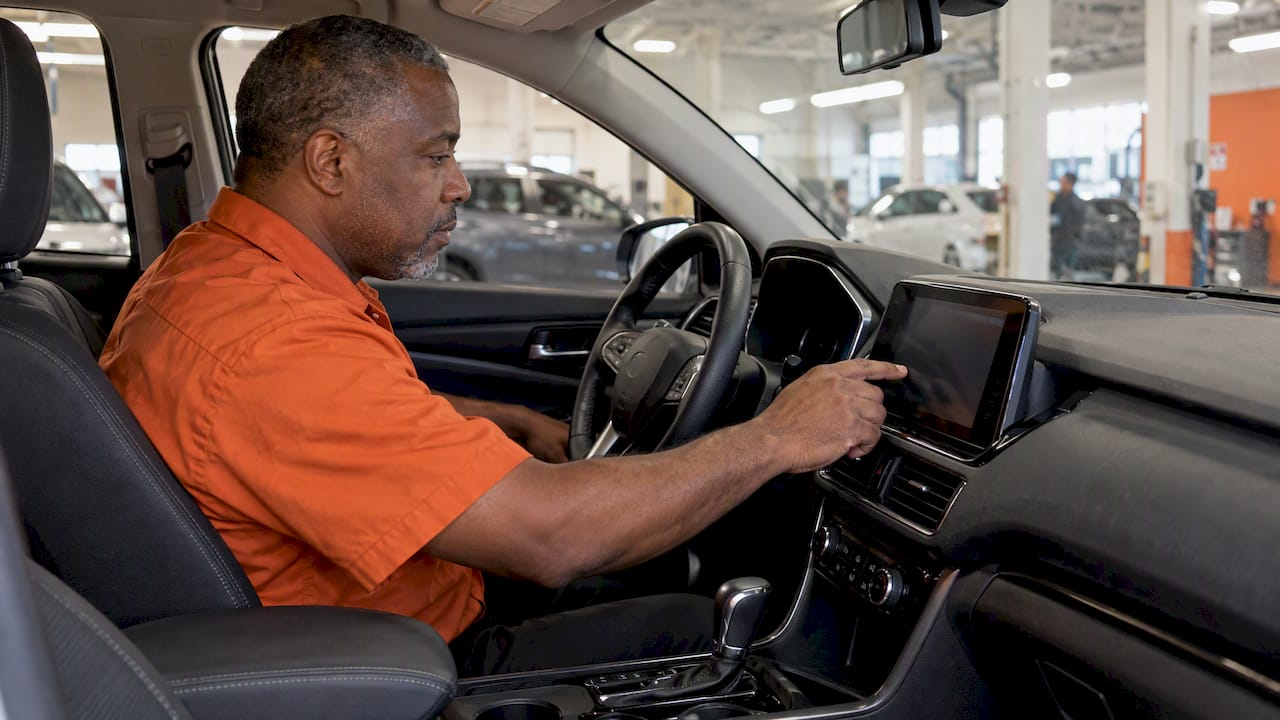
There is also a second data trail: the car’s infotainment system. The Federal Trade Commission notes that many newer rental cars have connected systems and that GPS destinations, phone numbers, call logs, contacts and texts may remain in the car after return unless the renter deletes them. That is a renter-side risk, and operators should have a process to clear the system between rentals.
The legal framework in the United States
Federal law
Federal law does not give rental businesses a specific tracking rulebook. The most cited case is about the government, not private companies: in United States v. Jones (2012), the Supreme Court held that installing a GPS device on a vehicle and using it to monitor movements is a Fourth Amendment search. It matters for context, because it shows courts treat vehicle location history as sensitive. Private operators are mostly governed by state law, contract law and consumer protection rules.
State rental statutes
A few states regulate tracking in the rental context directly.
| State | What the rule does | What it means for operators |
|---|---|---|
| California | Civil Code § 1939.23 generally bars a rental company from using electronic surveillance technology to obtain information about the renter’s use of the vehicle, with listed exceptions such as locating a stolen, abandoned or missing vehicle, roadside assistance requests, and recording return time, mileage and fuel level | Do not use tracking to monitor how renters drive. Document the exception you rely on. |
| California (overdue vehicles) | The statute requires an advisement in the rental agreement, acknowledged by initials, that surveillance may be activated if a vehicle is more than 24 hours overdue, with notice generally due 24 hours before activation | Build the initialed advisement into your contract and your overdue-vehicle workflow. |
| Connecticut | Mandates disclosure of telematics use on rental vehicles and sets a structured process for using GPS in repossession | Disclose in writing and follow the process before recovering a vehicle. |
| Montana | Requires disclosure of GPS use to renters if it is used for purposes other than simply locating the vehicle | If you use data for anything beyond recovery, tell the renter. |
California’s exceptions are narrow, and the statute has more detail than a table can carry, including limits on geofencing use. If you rent in California, have counsel review your agreement against the current text.
Why surprise uses get companies in trouble
A well-known Connecticut case shows the risk of undisclosed use. A rental company charged customers $150 each time its GPS showed the car at 80 mph or more for over two minutes, and customers received no indication that the device was transmitting. The lesson applies everywhere: if tracking data triggers a fee, the customer should have been told in advance, in the contract.
What the rental agreement should say
Even in states with no rental-specific tracking statute, a clear contract clause protects you. Other rental brands already do this. One says some rental operations may use a device that monitors rental-vehicle use and that, where applicable, its use will be disclosed at the time of rental.
A workable clause covers:
- That a tracking device is installed on the vehicle or equipment.
- What it collects: location, mileage, engine hours, idle time, fuel or battery data, as applicable.
- Why: theft recovery, maintenance scheduling, contract compliance, emergency response.
- When location is actively reviewed: for example, only on overdue returns, suspected theft, a breakdown call or a lawful request.
- Who can see it: named roles in your company and any third party.
- How long you keep it.
- The renter’s acknowledgment, by signature or initials.
If the renter’s own drivers or employees will operate the equipment, the renter needs to pass that notice on. One large truck lessor’s telematics terms put this on the customer, saying clients are solely responsible for ensuring drivers and occupants understand that the vehicle’s location can be tracked. Your own contract can do the same, and it is worth stating clearly.
Heavy equipment and trailers
Most rental car statutes were written for passenger cars. Excavators, skid steers, lifts, generators and trailers fall into a less defined space, but the same principles hold. You own the asset, you disclose the device, and you collect only what you need.
Tracking equipment is also easier to justify. Rental equipment is a high-theft category, it often sits on remote job sites, and billing depends on usage. Reasonable, disclosed uses include:
- Geofence alerts when a machine leaves the job site or yard without authorization.
- Utilization reporting so you can see which units earn their keep.
- Maintenance reminders based on actual hours or miles.
- Recovery if a unit is not returned.
A small battery-powered tracker hidden in a trailer tongue or machine housing is common practice, but hiding it does not remove the need to disclose it in the contract. Hidden from thieves is fine. Hidden from the customer is a problem.
Tracking your own employees
This is the question many operators miss. Your delivery drivers, yard staff and service technicians use your vehicles, and employee monitoring has its own rules.
There is no single federal GPS rule for employers, so state law decides. Based on one 2026 employer guide, New York requires written notice before electronic monitoring, acknowledged by the employee and posted in the workplace, and attorneys often advise treating GPS as covered. The same guide reports that Connecticut’s monitoring-notice law is being expanded, with new, more specific notice requirements taking effect October 1, 2026, and that Delaware makes it a crime to put a tracker on a vehicle without the consent of its owner, lessor or lessee, while employers can generally track vehicles they own or lease.
A safe approach for any state:
- Track company-owned vehicles and equipment only.
- Give employees written notice and collect a signed acknowledgment.
- Limit tracking to work hours where vehicles are taken home, or use a privacy mode if your system has one.
- Never place a tracker on a personal vehicle without the owner’s informed consent.
A compliant tracking policy in six steps
- Map your states. List every state where units are rented or operated, and check each for rental, tracking-device and employee-monitoring rules.
- Write the purpose. Theft recovery, maintenance and utilization are defensible. Policing how customers drive usually is not, and in California it is restricted.
- Update the contract. Add the clause above and get the acknowledgment.
- Restrict access. Only named roles see location history, and you log who looked.
- Set retention. Keep what you need for billing disputes and claims, then delete.
- Train staff. Dispatchers should know when they may act on an alert, for example a geofence breach on a unit that is on rent.
The broader operational side, such as cutting idle time and scheduling by real usage, is covered in our guide to fleet optimization strategies.
Perspective: why the cost model matters for compliance
We build subscription-free trackers, and we see a pattern in rental fleets: when tracking costs a monthly fee per unit, operators track only their most valuable assets and leave trailers, small equipment and older cars dark. Those untracked units are often the ones that disappear.
From a legal view, we think consistent coverage is easier to defend than patchy coverage. One policy, one contract clause, one dashboard for every unit means the same disclosure applies to everything you rent. Our devices include lifetime 4G data, so adding a unit does not add a recurring bill, and one dashboard supports unlimited vehicles and users. That makes it practical to track the whole fleet, and to apply the same rules to all of it.
The technology does not decide what is lawful. Your contract, your purpose and your restraint do. We would rather a customer track a little less, tell the renter plainly, and keep a clean record.
— Louis
Tracking rental assets without monthly fees
If you are building a compliant program, the hardware should not add a recurring cost. Moto Watchdog trackers start from $124.99 as a one-time purchase, with real-time location, customizable geofencing and alerts, trip and mileage reports, idle time tracking, maintenance reminders and multi-device management in a mobile app. There are no activation fees and no add-ons.
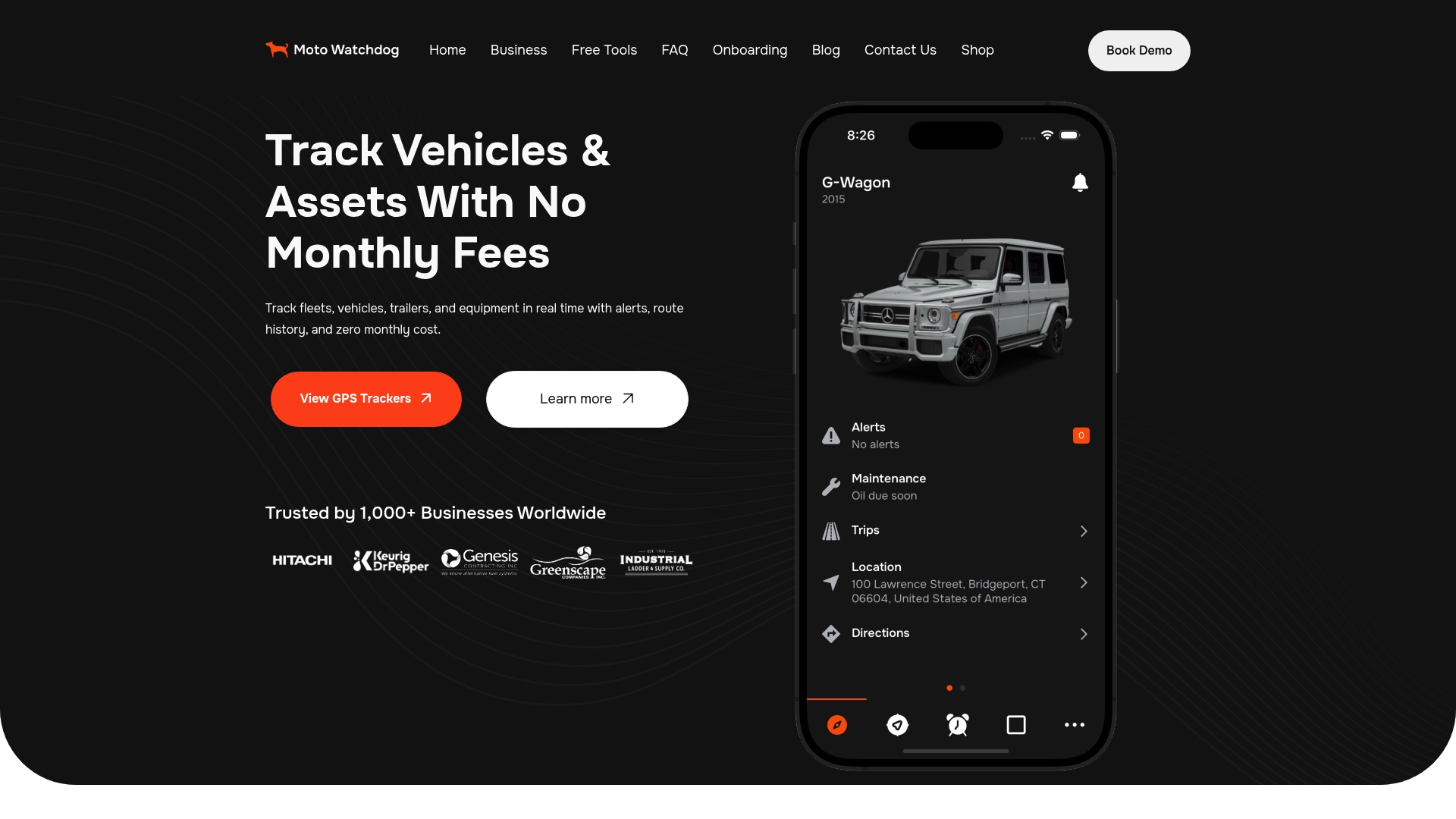
See the Moto Watchdog trackers for vehicles, trailers and equipment, or look at API access for business if you want to connect location data to your own rental software. To compare options, our guides on no-subscription GPS trackers and anti-theft trackers explain what to look for.
For renters: protect your own data
If you are the customer, a few habits help:
- Read the tracking and privacy section of the agreement before you sign, and ask the counter agent if it is unclear.
- Ask what data is collected and whether any fees are triggered by it, such as speed or geographic limits.
- Do not pair your phone with the infotainment system unless you need to. If you do, check permissions and delete your data before returning the car.
- Keep your rental receipt and return time documented, in case of a dispute over mileage or late fees.
FAQ
Is it legal for a rental company to track its own cars?
Generally yes, because the company owns the vehicle. The limits are on how it uses the data about a renter, and what it must disclose. California, for example, restricts use of surveillance data to listed exceptions, and Connecticut and Montana require certain disclosures.
Can a rental company track me during my rental?
The device may be active, but many states do not let the company monitor your driving for any reason it likes. Rental brands say the data may be used for things like locating unreturned or stolen vehicles and responding to law enforcement. Your agreement should describe the specifics.
Do I need to tell customers a piece of rental equipment has a tracker?
No single federal rule requires it, but disclosure in the contract is the safest practice and is required in some states for rental vehicles. Put it in the agreement in plain words, along with what you collect and why.
Can I put a tracker on a car I do not own?
Usually not without the owner’s consent. Some states, such as Delaware, make it a crime to install a tracking device on a vehicle without consent of its owner, lessor or lessee. If a vehicle is rented to you, get the owner’s written permission before attaching anything.
Do employee drivers have to be told about GPS tracking?
In some states, yes. New York requires written notice of electronic monitoring, and Connecticut has a monitoring-notice law that is being tightened. Even where it is not required, a written notice and signed acknowledgment are good practice.
This article is general information, not legal advice. Before you change your rental agreement or monitoring policy, have an attorney in your state review it.
Sources
- Privacy Notice, Budget Car Rental
- Avis Preferred rental terms and conditions, United States
- Renting a Car, Federal Trade Commission consumer advice
- United States v. Jones, Legal Information Institute
- California Civil Code § 1939.23, public.law
- California Civil Code § 1939.23, FindLaw
- Understanding Legalities Around Telematics, Auto Rental News
- Equipment options and special requirements FAQ, Payless
- Telematics Integration Terms and Conditions, Penske Truck Leasing
- GPS Tracking Laws by State: 2026 Employer Guide, OnTheClock
- Tracking Every Move You Make, FindLaw
