How to start saving money
Lorem ipsum dolor sit amet, consectetur adipiscing elit lobortis arcu enim urna adipiscing praesent velit viverra sit semper lorem eu cursus vel hendrerit elementum morbi curabitur etiam nibh justo, lorem aliquet donec sed sit mi dignissim at ante massa mattis.
- Neque sodales ut etiam sit amet nisl purus non tellus orci ac auctor
- Adipiscing elit ut aliquam purus sit amet viverra suspendisse potent
- Mauris commodo quis imperdiet massa tincidunt nunc pulvinar
- Excepteur sint occaecat cupidatat non proident sunt in culpa qui officia
Why it is important to start saving
Vitae congue eu consequat ac felis placerat vestibulum lectus mauris ultrices cursus sit amet dictum sit amet justo donec enim diam porttitor lacus luctus accumsan tortor posuere praesent tristique magna sit amet purus gravida quis blandit turpis.

How much money should I save?
At risus viverra adipiscing at in tellus integer feugiat nisl pretium fusce id velit ut tortor sagittis orci a scelerisque purus semper eget at lectus urna duis convallis. porta nibh venenatis cras sed felis eget neque laoreet suspendisse interdum consectetur libero id faucibus nisl donec pretium vulputate sapien nec sagittis aliquam nunc lobortis mattis aliquam faucibus purus in.
- Neque sodales ut etiam sit amet nisl purus non tellus orci ac auctor
- Adipiscing elit ut aliquam purus sit amet viverra suspendisse potenti
- Mauris commodo quis imperdiet massa tincidunt nunc pulvinar
- Adipiscing elit ut aliquam purus sit amet viverra suspendisse potenti
What percentege of my income should go to savings?
Nisi quis eleifend quam adipiscing vitae aliquet bibendum enim facilisis gravida neque. Velit euismod in pellentesque massa placerat volutpat lacus laoreet non curabitur gravida odio aenean sed adipiscing diam donec adipiscing tristique risus. amet est placerat in egestas erat imperdiet sed euismod nisi.
“Nisi quis eleifend quam adipiscing vitae aliquet bibendum enim facilisis gravida neque velit euismod in pellentesque”
Do you have any comments? Share them with us on social media
Eget lorem dolor sed viverra ipsum nunc aliquet bibendum felis donec et odio pellentesque diam volutpat commodo sed egestas aliquam sem fringilla ut morbi tincidunt augue interdum velit euismod eu tincidunt tortor aliquam nulla facilisi aenean sed adipiscing diam donec adipiscing ut lectus arcu bibendum at varius vel pharetra nibh venenatis cras sed felis eget.
You prevent unauthorized trailer use by layering four things: physical locks that slow a thief down, key and dispatch rules that limit who can move a unit, a GPS tracker that tells you the moment it moves without approval, and records that make recovery fast. No single lock stops a determined thief, but a trailer that is hard to hitch, watched around the clock and easy to identify is a poor target. The same layers also catch the quieter problem: an employee or renter taking a trailer on an unapproved trip.
TL;DR
- Time is the thief’s enemy, so stack obstacles: coupler locks, hitch pin locks, wheel locks, chains and smart parking.
- Control who can take a trailer. Give keys and dispatch authority by role, and pull a unit from service in the system when it is flagged.
- A hidden GPS tracker with a geofence and push alerts turns a theft that you discover tomorrow into one you see in minutes.
- Keep VIN, plate, photos and markings on file for each unit so a police report can be filed in one call.
- Write the routine down: a check before every use, a deeper inspection weekly.
Table of Contents
- Why fleet and rental trailers get taken
- Layer one: make the trailer physically hard to take
- Layer two: control keys, access and dispatch
- Layer three: detect movement the moment it happens
- Layer four: records that speed recovery
- What to do the moment a trailer is gone
- Build a repeatable trailer security routine
- Our perspective
- Putting a tracker on every trailer
- FAQ
- Sources
Why fleet and rental trailers get taken
Trailers are the easy part of the theft equation. Thieves target high-value machinery that is simple to move, including small trailers, skid steers and backhoes, and they take it from worksites, dealer lots and while it is in transit. Rental businesses add another weak point: vetting the customer who drives off with the unit, which is where unauthorized use often starts.
The cost is large. Travelers puts annual construction equipment theft losses in the United States between $300 million and $1 billion, according to its mobile equipment dealer risk guidance. The American Rental Association has pointed out that the damage reaches past the replacement cost, including disrupted projects, strained operations and higher insurance rates.
For a fleet manager, there are really two threats to separate:
- Theft by outsiders. Someone hitches up a parked trailer at a yard, a jobsite or a rest stop.
- Unauthorized use by insiders or renters. A driver takes a trailer home for a weekend job, a renter keeps a unit past the agreed return, or a unit leaves the approved work area.
Locks mostly address the first. Access rules and tracking address both.
Layer one: make the trailer physically hard to take
Purdue Extension’s trailer security guidance states the core idea plainly: the more time a thief needs, the greater the risk of being caught. Its recommendation is to use obstacles such as locks, fencing or blocking that force a criminal to spend longer at the scene.
Locks that matter
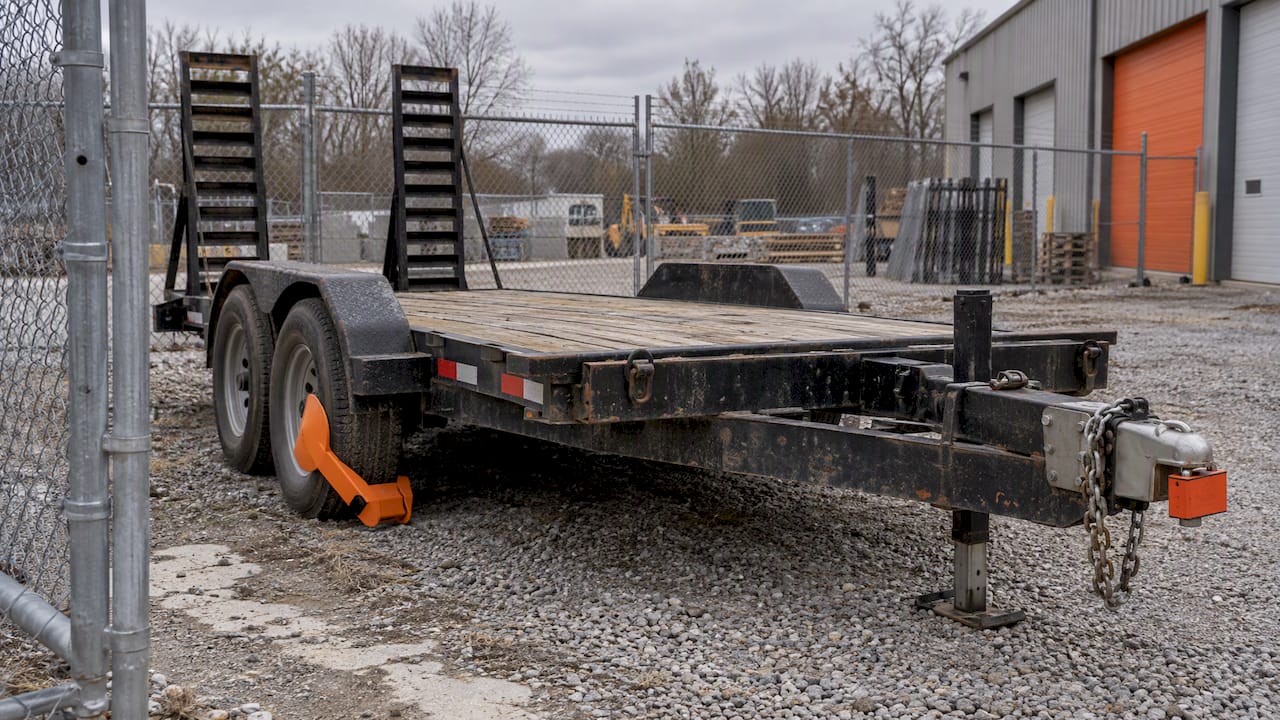
Purdue’s guide lists the basics: coupler ball locks, locking hitch receiver pins and wheel locks. Use them in combination. A coupler lock alone can be defeated, but a coupler lock plus a wheel lock plus a chain means a thief needs three separate tools and several minutes.
For semi-trailers, CargoNet’s security guidance recommends hardened padlocks with ISO 17712-compliant barrier seals on loaded and unloaded trailers, and kingpin locks on trailers that are not attached to a tractor. The same guidance warns against leaving a loaded trailer unattended when employees are not on site.
Disable the trailer, not just lock it
Fleet operators can also pull emergency brake cables and store them inside the locked cab, or chain trailers to immovable objects, as outlined in Aviva’s vehicle and trailer security guidance. A trailer with no brake line connection is awkward and unsafe to tow, which is exactly what you want a thief to discover.
Park with intent
Where a trailer sits is a lock of its own. Purdue recommends parking against a fence, wall, tree or curb so it cannot be hitched or opened easily, and using cut-resistant fencing, locked buildings and security lighting. Aviva adds site-level controls such as controlled areas and video coverage, and suggests avoiding parking near perimeter fencing where practicable.
A simple yard rule set works well:
- Back trailers so doors face a wall or another trailer.
- Keep high-value units nearest to the office and camera coverage.
- Never leave a trailer coupled to nothing and unlocked, even for an hour.
- Keep the yard lit all night.
Use deterrent signage
Purdue Extension also advises placing conspicuous decals on all four sides saying the trailer is GPS tracked, even where it is not, because thieves may pause to wonder if the warning is real. On a unit that actually carries a tracker, the decal is honest and costs almost nothing.
Layer two: control keys, access and dispatch
Every trailer that leaves your yard should leave because someone with authority approved it. That sounds obvious, but many small fleets and rental counters run on a key board and trust.
Keycafe’s fleet security guidance recommends role- and shift-based access instead of open key access, applying least privilege so drivers, dispatchers, technicians and supervisors get only what their jobs require. It also recommends disabling key access when maintenance flags a unit and restoring it once the repair is closed, so a unit marked out of service is not dispatched by mistake.
Translated into a practical policy:
- One approver per release. A named dispatcher or counter lead signs off each trailer release, with date, driver or renter, destination and expected return.
- Separate keys from paperwork. The person who holds the coupler lock key should not be the only person who knows the schedule.
- Flag out-of-service units. When a trailer has a brake or lighting defect, lock it out and note it where dispatch can see it.
- Rental vetting. Verify identity and license, record the details, and tie them to the unit number before it leaves.
If you want a deeper look at the key side, our overview of a fleet key management system for vehicle security covers how access and tracking work together.
Layer three: detect movement the moment it happens
Locks and rules reduce risk. They do not tell you when something goes wrong. That is the job of GPS tracking.
Aviva’s guidance notes that GPS tracking can monitor vehicle and trailer movements against planned routes, flag geofence deviations or unexpected dwell periods, and help with recovery. For unauthorized use, those three functions map directly onto real situations.
What to set up
| Situation | Tracker feature | What you see |
|---|---|---|
| Trailer hitched and pulled from the yard overnight | Geofence around the yard with exit alert | Push notification the moment it crosses the boundary |
| Driver takes a unit on an unapproved side trip | Trip and mileage reporting | Extra miles and stops on the trip log |
| Rental unit not returned on time | Live location and sharing | Where it is right now, without calling the renter |
| Unit sitting idle on a jobsite longer than planned | Idle and dwell tracking | Unexpected dwell flagged for review |
| Theft in progress | Real-time location | Coordinates to give law enforcement |
Make the tracker hard to find and keep it alive
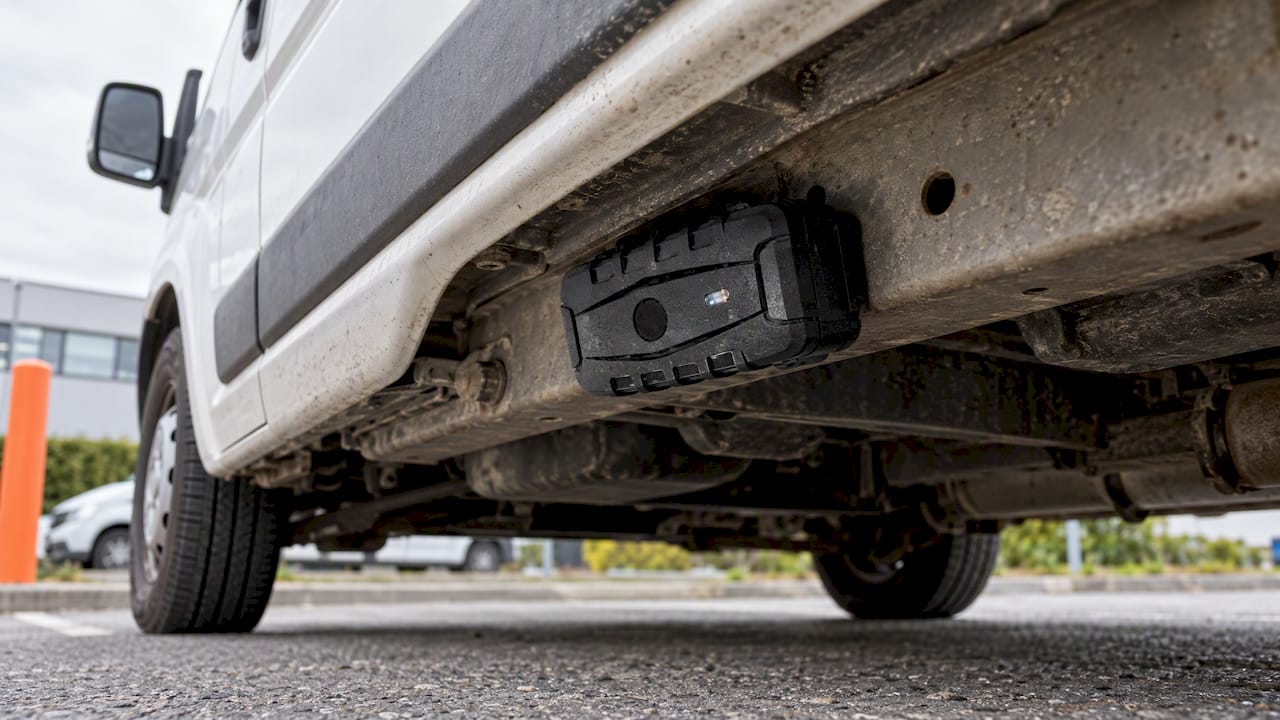
Trailers are rarely powered, so battery life decides whether a tracker is useful. A device that dies in six weeks leaves a silent gap that thieves may exploit. Choose a long-life, battery-powered unit, then mount it where it will not be noticed or knocked loose. Our guide to waterproof GPS tracker mounting walks through placement for exposed equipment and trailers.
Why subscription costs matter on trailers
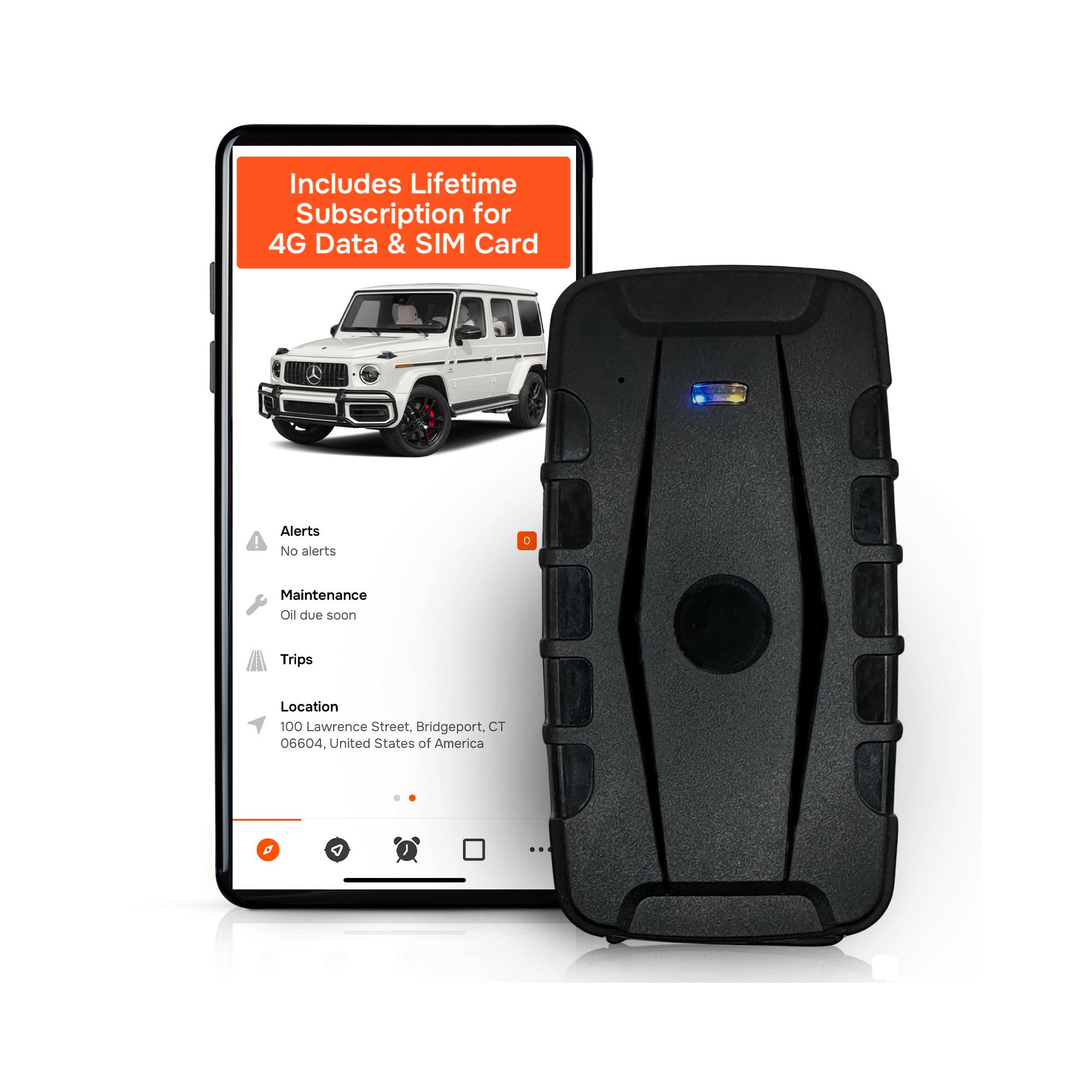
A fleet with 30 trailers and a few dozen pieces of rental equipment pays recurring fees on every unit, every month, for as long as they are tracked. Trailers sit idle for long stretches, so many fleets are tempted to leave the least-used ones untracked, and those are often the easiest to steal. Hardware with no monthly fee removes that temptation: you pay once and every unit can stay covered.
Layer four: records that speed recovery
When a trailer disappears, the first hour counts. Purdue Extension advises keeping each trailer’s VIN, plate number, make and model, photographs, distinctive markings and information about its contents on file.
A one-page record per unit is enough:
- Unit number, VIN and plate
- Make, model, year and color
- Photos from four sides, plus any dents, stickers or custom welds
- Tracker device ID and the login that can see it
- Typical cargo or attached equipment
For heavy equipment, NER encourages industry personnel to report suspicious activity to local law enforcement and points to equipment ownership registration data and fleet records through NICB or its online search. Keeping your records tidy makes those lookups useful.
What to do the moment a trailer is gone
Purdue’s advice is to call law enforcement as soon as the theft is discovered and give the make and model, plate number, VIN, markings, location, and what was in or on the trailer. With a tracker in place, add the live location.
A short sequence keeps people calm:
- Confirm it was not moved by your own dispatch or a renter.
- Open the tracker app and note the current position and the last movement time.
- Call local law enforcement and provide the record sheet and live location.
- Do not approach the trailer yourself. Share updates with officers instead.
- Notify your insurer and, for equipment, check the registration data your industry associations point to.
- Pull the trip history so you can show the route and timing.
Decide ahead of time who makes these calls. When it is unclear whose job it is, the first hour disappears.
Build a repeatable trailer security routine
Aviva recommends documenting routine trailer checks before each use, with more in-depth inspections weekly that check locking mechanisms and seal integrity where seals are used. Rocky Mountain Construction makes a related point: an unplanned, piecemeal approach can be ineffective, and integrating physical security, access control and IT systems can help deter theft.
A workable routine for a small to mid-size fleet or rental yard:
Before every release
- Confirm authorization and record the driver or renter.
- Check the lock, hitch and tracker status in the app.
On return
- Log the condition, mileage and any damage.
- Re-apply every lock and re-park per the yard plan.
Weekly
- Inspect locks, chains and decals.
- Review geofence alerts and idle reports for patterns.
- Confirm every tracker is reporting.
Quarterly
- Refresh photos and records.
- Review who holds keys and app logins, and remove anyone who has left or changed roles.
If you manage the data from several tools, a single dashboard helps. Our article on a fleet management app for efficient operations explains what to look for.
Our perspective
We build trackers for fleets and equipment rental companies, and the pattern we see is consistent: the businesses that lose the least are the ones that stop treating security as a single purchase. A lock is a delay. A tracker is a warning. A written routine is what makes both work on a Tuesday when everyone is busy.
We also think recurring fees quietly weaken trailer security. When every tracked unit adds a monthly bill, managers decide which trailers deserve protection, and the idle, older or lower-value units get skipped. Those are the ones nobody is watching. That is why our trackers carry no monthly or activation fees, include 4G data for the life of the device, and let you manage unlimited vehicles and users on one dashboard. The goal is simple: every trailer is covered, and the cost does not grow as the fleet does.
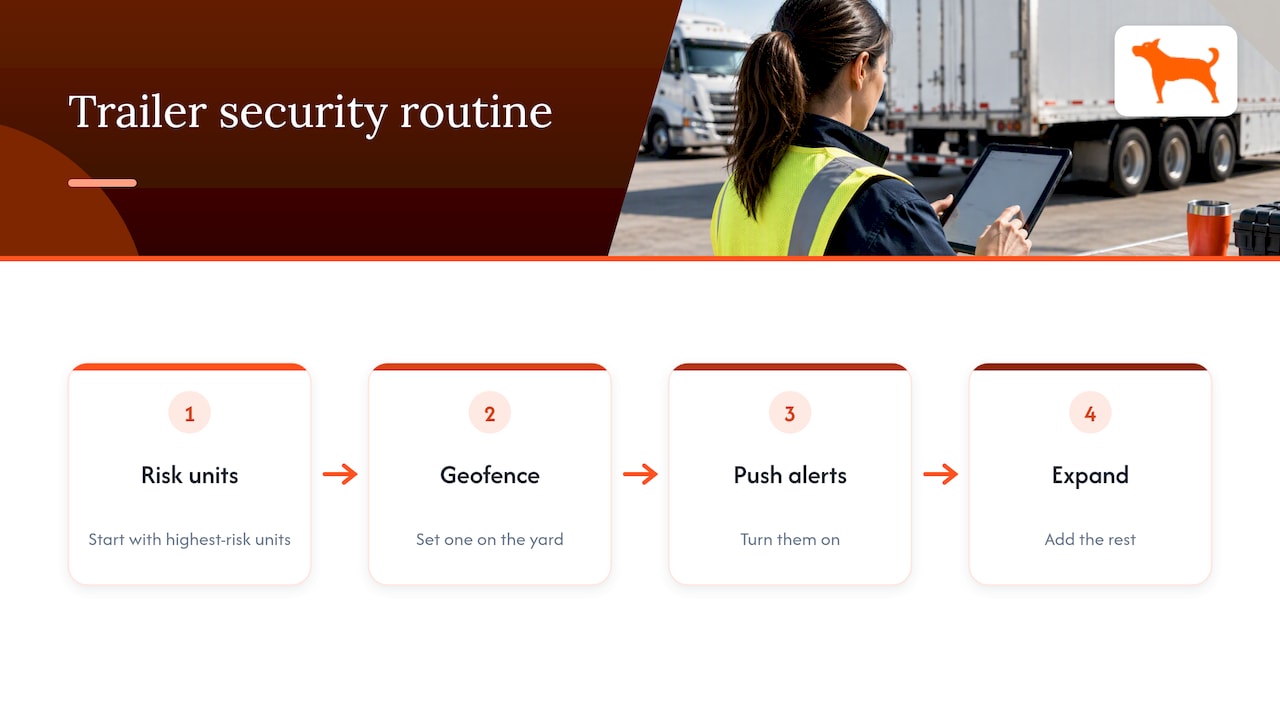
Our advice is to start with your highest-risk units, set a geofence on the yard, turn on push alerts, and add the rest as you go. Move from reactive problem-solving to data-driven decision-making, and you will spot unauthorized use in minutes, not at the next inventory count.
— Louis
Putting a tracker on every trailer
Moto Watchdog GPS trackers start from $124.99 as a one-time purchase, with no monthly fees. They offer real-time location, customizable geofencing with push alerts, trip and mileage reporting, idle time tracking, maintenance reminders and multi-device management through a free mobile app. If you need to connect tracking data to your own systems, API access is available for business accounts, and you can learn more on that page.
FAQ
What is the best way to stop someone from stealing a trailer?
Use several measures together: a coupler lock, a locking hitch pin, a wheel lock or chain, and parking that blocks access. Then add a hidden GPS tracker with a geofence so you are alerted if the trailer moves anyway. Each layer buys time and improves your chance of recovery.
How can I stop employees or renters from using a trailer without permission?
Release trailers only against a recorded authorization with a named driver, destination and return time. Limit key access by role, and use trip history, geofence exits and dwell alerts to spot unapproved use. Reviewing those reports weekly makes the pattern visible.
Do fake GPS decals really work?
Purdue Extension recommends decals on all four sides saying the trailer is tracked, since thieves may hesitate. They are a deterrent, not protection. They work best on trailers that actually carry a tracker, so the warning is true.
What should I do if my trailer is stolen?
Call law enforcement right away with the make, model, plate, VIN, markings, location and contents. Share the tracker’s live location and history with officers, and do not try to retrieve the trailer yourself. Then notify your insurer.
Sources
- Risks to Mobile Equipment Dealers, Travelers Insurance
- Equipment Theft Is $100 Million Problem, American Rental Association
- Protect Your Trailers and Contents from Theft, Purdue Extension (PDF)
- Protect Your Trailers and Contents from Theft, Purdue Extension (web)
- CargoNet Labor Day Cargo Theft Trends and security tips
- Goods in Transit: Vehicle and Trailer Security, Aviva
- Automated Key Control for Fleet Safety and Compliance, Keycafe
- Labor Day Heavy Equipment Theft Trends, NER
- Preventing Heavy Equipment Theft, Rocky Mountain Construction